Introduction
Accurate measurement of the ECG QTc interval is essential for effective cardiovascular care, yet many developers encounter significant challenges in this process. This guide explores essential tools, techniques, and best practices for mastering QTc measurement. By doing so, developers can enhance diagnostic accuracy and improve patient safety. Developers must find ways to overcome challenges like device limitations and data inconsistencies to achieve reliable results.
Understand the QTc Interval: Definition and Importance
Accurate measurement of ECG QTc duration is vital for assessing cardiovascular risk and ensuring patient safety. The ECG QTc duration, or corrected QT duration, is a key indicator that reflects the time it takes for the heart's ventricles to depolarize and repolarize. Specifically, it is measured from the onset of the Q wave to the conclusion of the T wave. The ECG QTc is essential as it accounts for fluctuations in heart rate, enabling a standardized evaluation of the QT duration across various patient groups. A prolonged ECG QTc duration is associated with an increased risk of life-threatening arrhythmias, emphasizing the importance of accurate measurement in clinical environments.
In Canada, studies show that patients with QTc durations over 500 milliseconds face a 19% mortality rate, compared to just 5% for those below this threshold. This stark contrast emphasizes the ECG QTc duration's role as a prognostic tool in cardiovascular risk evaluation, with a risk-adjusted hazard ratio of 2.38 for death following coronary artery bypass surgery linked to prolonged QTc. Furthermore, integrating ECG QTc analysis into preoperative assessments has been shown to enhance risk stratification, particularly in high-risk groups such as elderly patients and those with pre-existing cardiovascular conditions, with a risk-adjusted hazard ratio of 1.47 for overall death associated with preoperative ECG QTc.
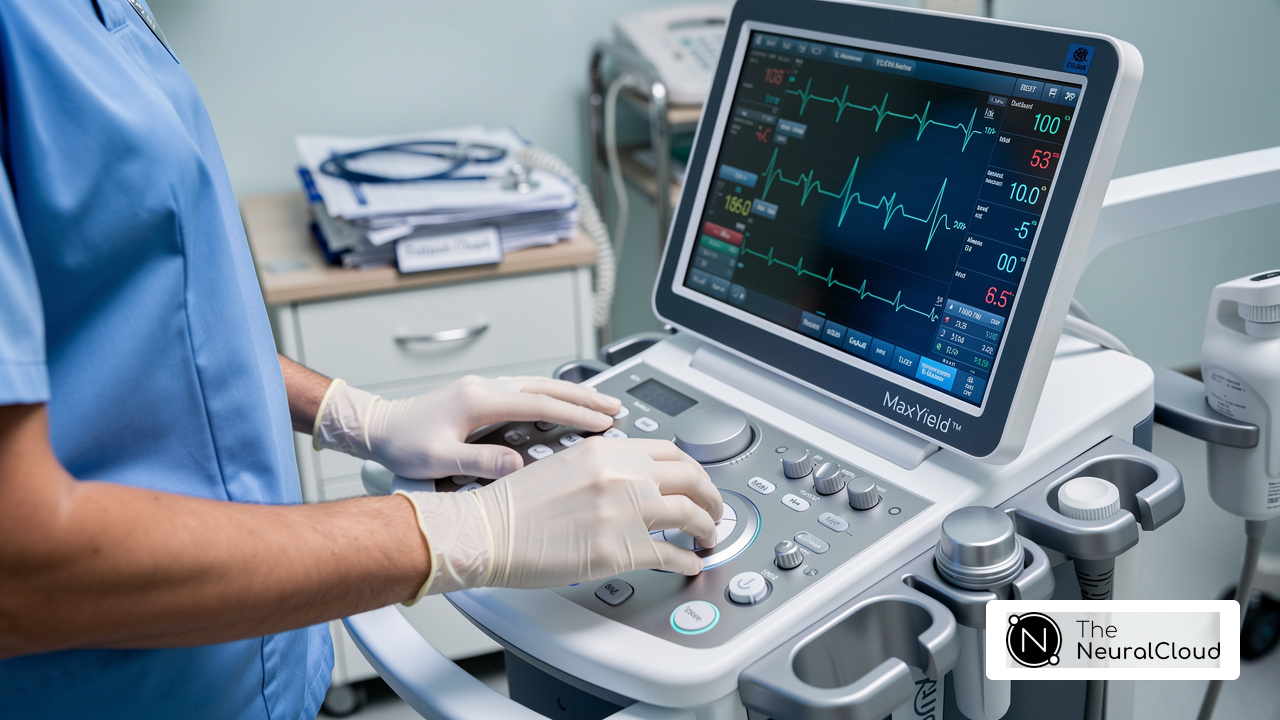
Understanding the significance of ECG QTc measurement helps developers create tools that improve diagnostic accuracy and enhance patient safety in cardiovascular care. Neural Cloud Solutions Inc.'s MaxYield™ platform exemplifies this innovation, utilizing advanced neural networks to automate ECG analysis, ensuring clarity and precision even in noisy recordings. Experts such as Dr. Alan Rabinowitz, Dr. Brett Heilbron, and Dr. Marc W. Deyell highlight that MaxYield™ matches human interpretation in accuracy and provides notable noise reduction benefits. Additionally, it is essential to note that the MaxYield™ platform is currently pending FDA Class II SaMD clearance, ensuring compliance with regulatory standards.
There is an urgent requirement for standardized national guidelines on ECG QTc monitoring in Canada to address the substantial gap in knowledge and confidence regarding ECG QTc measurement among healthcare providers. Addressing the knowledge gap in ECG QTc measurement is essential for improving patient outcomes in cardiovascular care.

Gather Essential Tools: ECG Devices and Software Solutions
Accurate measurement of the ECG QTc interval is crucial for effective cardiovascular care, yet many face challenges due to device limitations and data inconsistencies. To accurately measure the QTc interval, developers should gather essential tools, including:
- ECG Devices: Choose high-quality ECG machines that deliver clear and precise readings. Suggested devices include 12-lead ECG machines for thorough analysis and portable single-lead ECG units, like the KardiaMobile 6L, known for its reliability and ability to provide accurate ECG QTc evaluations, especially in remote monitoring situations. MaxYield™ from Neural Cloud Solutions Inc. boosts device accuracy by minimizing motion noise and ensuring consistent data across all devices.
- Software Solutions: Implement ECG analysis software capable of processing raw ECG data and calculating the ecg qtc interval. Choosing software that supports various correction formulas, like Bazett's or Fridericia, enhances the calculation flexibility for ecg qtc. MaxYield™ offers advanced noise reduction and artifact handling, significantly improving the quality of ECG data analysis.
- Calibration Tools: Ensure ECG devices are properly calibrated to maintain reading accuracy. Regular maintenance and calibration checks are vital for upholding data integrity, particularly for devices like the KardiaMobile 6L, which require consistent performance for reliable ECG QTC readings. Integrating MaxYield™ helps maintain calibration accuracy by delivering clean, reliable data inputs.
- Reference Materials: Maintain access to clinical guidelines and research articles outlining QTc assessment methodologies and best practices. This resource assists in troubleshooting and enhancing evaluation techniques, ensuring adherence to the latest standards in cardiovascular care. Insights from recent studies can deepen understanding of ECG QTc evaluation across various patient populations. Specialists such as Dr. Alan Rabinowitz and Dr. Brett Heilbron support MaxYield™ for its accuracy in ECG QTc evaluations, competing with human analysis and greatly minimizing noise, which is essential for precise assessments. Additionally, it is important to note that MaxYield™ is currently pending FDA Class II SaMD clearance, ensuring compliance with regulatory standards. With MaxYield™, healthcare professionals can enhance their ECG analysis, ultimately improving patient care and outcomes in cardiovascular health.

Execute the Measurement: Step-by-Step Process for QTc Calculation
Accurate measurement of ECG QTc is essential for effective analysis and patient care. To execute the QTc measurement accurately, follow these steps:
- Prepare the Patient: Ensure the patient is in a comfortable position and has been resting for at least 5 minutes before the ECG recording to minimize heart rate variability.
- Select the Lead: Choose the appropriate lead for assessment, typically Lead II or V5, as these leads provide the clearest T wave morphology. Measurements should be conducted in these leads to ensure accuracy, as recommended by experts in the field.
- Record the ECG: Record the patient's heart activity using the ECG device. Make sure the recording is high quality, showing clear P, QRS, and T waves. Manual assessment is favored over automated techniques due to possible inaccuracies with unusual T wave patterns.
- Measure the QT Duration: Identify the QT duration by measuring from the beginning of the Q wave to the end of the T wave. Use either the tangent method or the threshold method for manual measurement. The tangent method is easier to learn and may be more reproducible among physicians, although it may miss the last part of repolarization.
- Calculate the RR Duration: Measure the RR duration, which is the time between two successive R waves. This step is crucial for ensuring accurate QT duration correction. Precise RR duration assessment is essential, as it directly influences the ECG QTc.
- Apply the Correction Formula: Use the chosen correction formula (e.g., Bazett's formula: QTc = QT / √RR) to calculate the QTc interval. While Bazett's formula is the most commonly used for determining the ECG QTc, be aware of its limitations at extreme heart rates, as it can overcorrect at high heart rates and undercorrect at low heart rates. Alternative formulas like Fridericia's and Rautaharju's may provide more accurate results in certain cases.
- Document the Results: Record the QTc value along with the patient's details and any relevant clinical observations for future reference. Ensure that the documentation includes the method used for assessment and any potential limitations noted during the process. A QTc value above 480 ms may indicate long QT syndrome (LQTS), which requires careful monitoring.

Troubleshoot Common Issues: Overcoming Measurement Challenges
Developers often encounter challenges when assessing the ECG QTc duration, impacting the accuracy of ECG analysis. Here are some troubleshooting tips:
- Poor Signal Quality: If the ECG recording is unclear, check the electrode placement. Ensure good skin contact to minimize motion artifacts that can distort ECG peaks.
- Artifact Interference: Movement artifacts can significantly affect the ECG signal. Ensure the patient remains still during the recording. Consider using filters in the software to minimize noise, particularly from muscle movements or sweating, which can increase skin-electrode impedance.
- Incorrect Lead Selection: If the T wave is not clearly visible, try switching to a different lead that may provide a better view of the T wave. This adjustment can assist in precisely determining the end of the T wave, which is essential for accurate QT duration assessment.
- Measurement Errors: If the QT interval seems unusually long or short, double-check the technique used for obtaining the reading. Make sure to accurately identify where the T wave ends, as misinterpretation can lead to incorrect calculations. Regular calibration of devices is essential to maintain precision.
- Formula Selection: Be aware that different correction formulas may yield different QTc values. The adjusted ECG QTc formula, which accounts for QRS duration, is commonly used and should be chosen based on the clinical context and patient characteristics.
- Documentation Discrepancies: Ensure that all dimensions and calculations are documented accurately to avoid confusion in clinical settings. Regularly review and update protocols based on the latest research and guidelines, as nearly 30% of individuals without heart failure exhibit QT prolongation, underscoring the importance of precise monitoring.
Integrating MaxYield™ into your ECG analysis workflow can effectively address these common challenges: Poor signal quality, artifact interference, incorrect lead selection, measurement errors, formula selection, and documentation discrepancies. With MaxYield™, you can ensure precision in ECG QTc interval assessments that can significantly impact patient care.

Conclusion
Accurate ECG QTc measurement remains a significant challenge in cardiovascular care, impacting patient safety and risk assessment. By understanding the QTc interval's importance and employing the right tools and techniques, developers can enhance diagnostic accuracy and improve patient outcomes. Integrating advanced solutions like MaxYield™ from Neural Cloud Solutions Inc. shows how technology can make ECG analysis more efficient and accurate, providing the clarity and precision essential in clinical settings.
Throughout this guide, we've shared key insights, including the importance of:
- Selecting appropriate ECG devices
- Utilizing effective software solutions
- Following a systematic approach to QTc measurement
We've addressed challenges such as poor signal quality and measurement errors, along with practical troubleshooting tips to overcome these obstacles. By adhering to best practices and leveraging innovative tools, healthcare professionals can ensure reliable QTc assessments that are vital for patient care.
The significance of mastering ECG QTc measurement cannot be overstated. As the healthcare landscape continues to evolve, embracing standardized guidelines and advanced technologies will be crucial in enhancing cardiovascular risk evaluation. Developers and clinicians alike are encouraged to prioritize accurate QTc measurement, as it shapes not only individual patient care but also the future of cardiovascular health in Canada.
Frequently Asked Questions
What is the QTc interval and why is it important?
The QTc interval, or corrected QT duration, is a key indicator that reflects the time it takes for the heart's ventricles to depolarize and repolarize. Accurate measurement of the QTc duration is vital for assessing cardiovascular risk and ensuring patient safety.
How is the QTc interval measured?
The QTc interval is measured from the onset of the Q wave to the conclusion of the T wave on an ECG. It accounts for fluctuations in heart rate, allowing for standardized evaluation across various patient groups.
What are the risks associated with a prolonged QTc duration?
A prolonged QTc duration is associated with an increased risk of life-threatening arrhythmias. In Canada, patients with QTc durations over 500 milliseconds face a 19% mortality rate, compared to just 5% for those below this threshold.
How does the QTc interval relate to cardiovascular risk evaluation?
The QTc interval serves as a prognostic tool in cardiovascular risk evaluation, with a risk-adjusted hazard ratio of 2.38 for death following coronary artery bypass surgery linked to prolonged QTc. It enhances risk stratification, particularly in high-risk groups.
What role does ECG QTc analysis play in preoperative assessments?
Integrating ECG QTc analysis into preoperative assessments has been shown to improve risk stratification, especially for elderly patients and those with pre-existing cardiovascular conditions, with a risk-adjusted hazard ratio of 1.47 for overall death associated with preoperative ECG QTc.
How does Neural Cloud Solutions Inc.'s MaxYield™ platform contribute to ECG analysis?
MaxYield™ utilizes advanced neural networks to automate ECG analysis, ensuring clarity and precision even in noisy recordings. It matches human interpretation in accuracy and provides notable noise reduction benefits.
What is the current status of the MaxYield™ platform regarding regulatory compliance?
The MaxYield™ platform is currently pending FDA Class II SaMD clearance, ensuring compliance with regulatory standards.
What is the need for standardized national guidelines on ECG QTc monitoring in Canada?
There is an urgent requirement for standardized national guidelines to address the substantial gap in knowledge and confidence regarding ECG QTc measurement among healthcare providers, which is essential for improving patient outcomes in cardiovascular care.
List of Sources
- Understand the QTc Interval: Definition and Importance
- CJCCN | A call for standardized national guidelines on QT/QTc monitoring in Canada (https://cjccn.ca/featured-article/a-call-for-standardized-national-guidelines-on-qt-qtc-monitoring-in-canada)
- The QTc interval: An Essential Tool in Every Clinician's Toolbox (https://gehealthcare.com/en-us/insights/article/the-qtc-interval-an-essential-tool-in-every-clinicians-toolbox?srsltid=AU7gw4W17hmHsq-lvHH6lGMio95YiEyCUGVDporfj7J1mi2IxMQZl992)
- QT interval prolongation: clinical assessment, risk factors and quantitative pharmacological considerations - PMC (https://pmc.ncbi.nlm.nih.gov/articles/PMC12594730)
- Gather Essential Tools: ECG Devices and Software Solutions
- Initial Experience in Monitoring QT Intervals Using a Six-lead Contactless Mobile Electrocardiogram in an Inpatient Setting (https://innovationsincrm.com/cardiac-rhythm-management/articles-2021/march/1732-initial-experience-in-monitoring-qt-intervals)
- Practicality of Home QT Measurement (https://gehealthcare.com/en-us/insights/article/practicality-of-home-qt-measurement?srsltid=AU7gw4Xj8iBUn0omGgg83oqsOuq5ECJlIF5HiqJVtccJIllukl3kiLjU)
- AliveCor | Newsroom (https://alivecor.com/press)
- Execute the Measurement: Step-by-Step Process for QTc Calculation
- How to: measure the QT interval? (https://escardio.org/communities/councils/genomics/scientific-documents-and-publications/cardiogenomics-insights/volume-9/how-to-measure-the-qt-interval)
- QTc: So many formulae, but which one to use? (https://acep.org/toxicology/newsroom/feb2021/qtc-so-many-formulae-but-which-one-to-use)
- Mayo Clinic research yields breakthrough in mobile determination of QT prolongation - Mayo Clinic News Network (https://newsnetwork.mayoclinic.org/discussion/mayo-clinic-research-yields-breakthrough-in-mobile-determination-of-qt-prolongation)
- A Practical Method for QTc Interval Measurement (https://cureus.com/articles/45836-a-practical-method-for-qtc-interval-measurement)
- Troubleshoot Common Issues: Overcoming Measurement Challenges
- theneuralcloud.com (https://theneuralcloud.com/post/master-qtc-monitoring-essential-tools-and-troubleshooting-steps)
- ECG Signal Quality: A Practical Guide for ECG Readings (https://gehealthcare.com/en-sg/insights/article/ecg-signal-quality-a-practical-guide-for-ecg-readings?srsltid=AU7gw4UZxtyvtNvfGcXAsQ8hJI0HPSd71ZVrYETfU-I3HltAWlFl48x7)
- Robustness of electrocardiogram signal quality indices - PMC (https://pmc.ncbi.nlm.nih.gov/articles/PMC9006023)
- What are Common Pitfalls in Measuring the QTc in Hospitalized Adult Patients? - The Hospitalist (https://the-hospitalist.org/hospitalist/article/35250/clinical-guidelines/what-are-common-pitfalls-in-measuring-the-qtc-in-hospitalized-adult-patients)