Introduction
Clinicians often struggle with the complexities of electrocardiogram (ECG) interpretation, where missteps can have dire consequences for patient outcomes. Let’s explore ten essential ECG criteria that are vital for diagnosing myocardial infarction (MI), and see how advancements like Neural Cloud Solutions Inc.'s MaxYield can enhance diagnostic precision. As cardiac diagnostics evolve, healthcare professionals must adapt to navigate the complexities of ECG interpretation and avoid common pitfalls.
Neural Cloud Solutions: MaxYield for Enhanced ECG Data Processing
ECG analysis faces significant challenges due to noisy signals that can obscure critical cardiac data. Neural Cloud Solutions has introduced MaxYield, a cutting-edge intelligence layer that significantly enhances ECG data processing by effectively isolating and cleaning these noisy signals. This advanced technology uses patented signal mapping algorithms. These algorithms deliver high-fidelity cardiac data, which is crucial for accurate diagnosis according to the ECG criteria for MI. By transforming raw ECG recordings from a variety of devices into structured, machine-readable data, MaxYield empowers medical professionals to analyze cardiac signals with exceptional clarity. This leads to more accurate diagnoses and better patient care.
In recent case studies, MaxYield has demonstrated its effectiveness in real-world applications across Canada. For example, its incorporation into Circular Health's smart ring technology has enhanced ECG capabilities, allowing for clearer signal capture and better health management. This collaboration aims to provide richer biometric insights, paving the way for AI-enhanced cardiac monitoring in new markets.
Current statistics highlight the growing reliance on AI-driven ECG data processing in Canada, with healthcare providers increasingly adopting technologies that facilitate remote monitoring and predictive analytics. The MaxYield platform offers several key features:
- Detection of multiple cardiac abnormalities
- Comprehensive cardiac health reports
These capabilities enable clinicians to track cardiovascular signals effectively.
As of 2026, Neural Cloud Solutions continues to lead the charge in transforming cardiac diagnostics, with MaxYield positioned as a vital tool for enhancing the accuracy and efficiency of ECG analysis. As AI technology evolves, the integration of MaxYield into clinical practice will redefine cardiac diagnostics and patient outcomes.

ST-Elevation Criteria: Key Indicators for STEMI Diagnosis
Diagnosing ST-Elevation Myocardial Infarction (STEMI) presents significant challenges, particularly in accurately identifying ST-segment elevation on ECGs. The primary ECG criteria for MI diagnosis is the presence of ST-segment elevation of at least 1 mm in two or more contiguous leads on a 12-lead ECG. This elevation must be measured at the J-point, which is crucial for differentiating STEMI from other cardiac conditions. In men, the elevation threshold is set at 2 mm in at least two contiguous leads, while women require a minimum of 1.5 mm in leads V2 and V3 or 1 mm in other contiguous chest leads. Accurately identifying the ECG criteria for MI is crucial for prompt treatment. Delays can significantly raise morbidity and mortality rates. Studies show that conventional STEMI criteria can miss acute coronary occlusions in over half of cases. This highlights the need for clinicians to recognize atypical presentations and new ECG patterns.
Additionally, incorporating AI-driven tools like MaxYield from Neural Cloud Solutions Inc. enhances assessment precision, allowing for real-time detection of STEMI and related conditions. MaxYield's advanced noise filtering and distinct wave recognition capabilities enable it to salvage previously obscured sections of lengthy Holter, 1-Lead, and patch monitor recordings, ensuring that critical data is not lost in high-noise environments. Expert endorsements from Dr. Alan Rabinowitz, Dr. Brett Heilbron, and Dr. Marc W. Deyell highlight MaxYield’s precision, rivaling human interpretation and significantly reducing noise-related errors. This advancement is especially important in Canada, where timely diagnosis is vital for better patient outcomes.
Moreover, Insight360 serves as a customizable visualization and reporting tool that transforms MaxYield’s clean ECG data into interactive dashboards and clinical-ready reports. Case studies show that adhering to the ECG criteria for MI improves STEMI management, thereby reducing the risk of complications such as heart failure and sudden cardiac death. Regulatory compliance details, such as the pending FDA Class II SaMD clearance, bolster the credibility of MaxYield's offerings. This underscores the importance of accurate diagnosis for timely therapeutic decisions.

Reciprocal Changes: Understanding Their Role in MI Diagnosis
Reciprocal changes in ECG readings can complicate the diagnosis of myocardial infarctions, yet they are important for the ECG criteria for MI. These changes are defined as ST-segment depressions seen in leads opposite to those showing ST-segment elevation during a heart attack (MI). For instance, if ST elevation is detected in leads II, III, and aVF, reciprocal ST depression may manifest in leads I and aVL. Recognizing these changes is crucial, as they provide additional evidence of heart damage, significantly aiding in the confirmation of MI diagnoses, especially when considering the ECG criteria for MI in ambiguous cases.
In Canada, the prevalence of reciprocal changes in MI cases is notable. Studies indicate that approximately 75% of individuals with inferior wall acute myocardial infarctions (AMIs) exhibit these changes. This high incidence underscores the importance of identifying reciprocal ST-segment depression as a clinical marker according to the ECG criteria for MI. Furthermore, reciprocal changes are observed in about 77% of individuals with acute coronary artery occlusion, emphasizing their clinical usefulness.
Case studies illustrate the critical role of reciprocal changes in ECG interpretation. For example, a 57-year-old woman with a history of hypertension and diabetes presented with chest pain and was found to have subtle inferior STEMI. The presence of reciprocal changes in her ECG strongly supported the diagnosis, leading to urgent percutaneous coronary intervention (PCI) for a proximal right coronary artery lesion.
Expert insights reveal that the evaluative utility of reciprocal changes goes beyond simple confirmation of the ECG criteria for MI. They can also localize the culprit coronary artery and provide prognostic information regarding infarct size and mortality. According to the American Heart Association (AHA), the levels of ST-segment elevation and reciprocal ST-segment depression can differ because of how leads are positioned and angled, which is why interpreting these changes accurately is so important.
To improve assessment precision and support clinical decision-making, health tech developers should consider integrating algorithms that analyze reciprocal changes into their ECG interpretation systems. Leveraging Neural Cloud Solutions Inc.'s MaxYield™, which utilizes advanced noise filtering and distinct wave recognition, can transform lengthy and noisy ECG recordings into clean, crisp signals. This device-agnostic ECG intelligence layer integrates seamlessly via API, SDK, or CDK, ensuring that diagnostic processes are both efficient and precise. Additionally, it is important to note that MaxYield™ is currently pending FDA Class II SaMD clearance, ensuring compliance with regulatory standards. Expert endorsements from Dr. Alan Rabinowitz, Dr. Brett Heilbron, and Dr. Marc W. Deyell emphasize that MaxYield’s precision rivals human interpretation, making it an invaluable tool in the realm of ECG analysis. Recognizing and interpreting these changes can ultimately lead to more accurate diagnoses and improved patient care.

T-Wave Inversions: Diagnostic Indicators of Myocardial Infarction
T-wave inversions serve as critical indicators in diagnosing heart attacks, yet their implications extend far beyond initial detection. These inversions are often linked with heart ischemia and typically manifest in contiguous leads, developing within hours to days after the onset of a myocardial infarction (MI). Their presence signals ongoing ischemic processes, necessitating further evaluation and management to prevent progression to more severe cardiac events. Managing inverted T waves suspected of myocardial ischemia involves anti-ischemic, anti-thrombotic, and anti-platelet therapies. Understanding these therapies is crucial for health tech developers regarding the clinical implications of T-wave inversions.
In Canada, particularly in cities like Toronto and Calgary, T-wave inversions are frequently observed in patients diagnosed with MI, underscoring their significance in clinical practice. For instance, studies indicate that symmetric T-wave inversions in leads I and aVL are often associated with acute ischemia. Additionally, dynamic T-wave inversions on serial ECGs can signal acute coronary syndrome. The assessment method emphasizes the importance of correlating T-wave abnormalities with clinical history and symptoms, such as chest pain or dyspnea, which may indicate underlying ischemic conditions. Furthermore, T-wave inversions can suggest other conditions, such as pulmonary embolism or pericarditis, providing a more comprehensive view of the differential diagnosis associated with T-wave inversions.
Case studies illustrate the diagnostic utility of T-wave inversions. One notable case involved a patient presenting with symptoms consistent with acute coronary syndrome, where the ECG revealed significant T-wave inversions alongside a biphasic T-wave in lead V2. This finding helped diagnose ischemic T-wave inversions, highlighting the importance of combining clinical presentation with ECG results.
Expert opinions further reinforce the relevance of T-wave inversions in heart tissue ischemia. Dr. Alan Rabinowitz emphasizes that acute heart attack is the most common condition associated with T-wave abnormalities, and precise interpretation of these changes is crucial for timely intervention. Dr. Brett Heilbron adds that integrating advanced technologies like MaxYield™ can enhance the clarity and efficiency of ECG analysis, ensuring that clinicians can effectively distinguish between ischemic and non-ischemic T-wave inversions. In challenging cases, clinicians are advised to focus on the suspected life-threatening disorder, ensuring that appropriate management strategies are implemented promptly. Additionally, comparing current ECG tracings to prior tracings can provide insights into the chronicity of T-wave abnormalities, which is relevant for health tech developers focused on improving ECG analysis capabilities.
Overall, T-wave inversions are vital diagnostic markers for heart attacks based on the ECG criteria for MI. Health tech developers must enhance ECG analysis capabilities to improve outcomes, particularly through advanced technologies like MaxYield™. Incorporating regulatory compliance details, including FDA Class II SaMD clearance-pending status, and utilizing Insight360 as a visualization tool can further support the effective application of these insights in clinical settings.

Pathological Q-Waves: A Key ECG Criterion for MI Identification
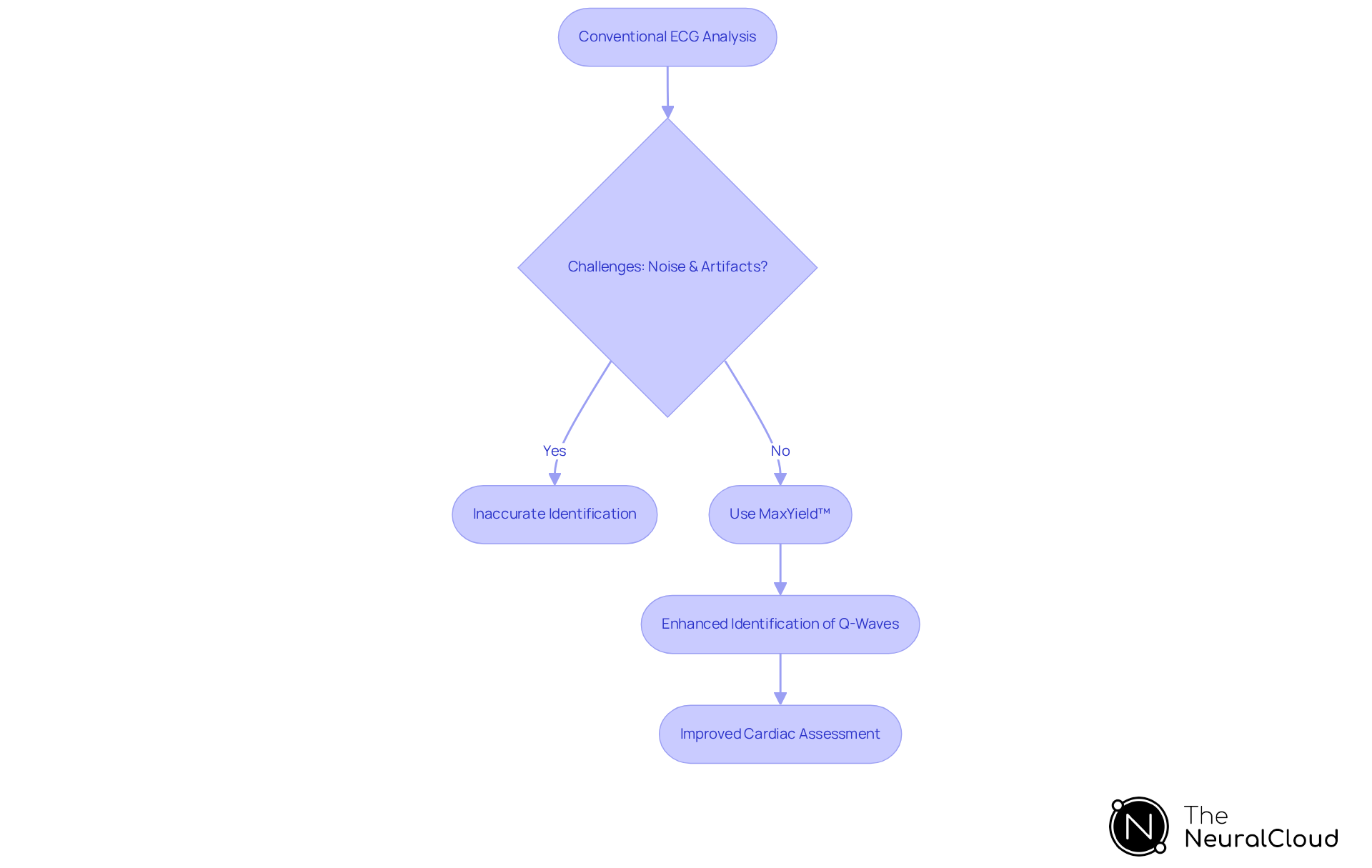
Identifying pathological Q-waves is essential for accurate cardiac assessments, yet conventional methods often face challenges due to noise and artifacts. Pathological Q-waves are defined as Q-waves that are wider than 40 ms and/or deeper than 25% of the preceding R-wave amplitude. The ECG criteria for MI indicate heart tissue death and serve as a hallmark of a prior heart attack. Identifying these waves is crucial for understanding the patient's cardiac history and guiding further management.
With Neural Cloud Solutions Inc.'s MaxYield™, the identification of pathological Q-waves is significantly enhanced through advanced noise filtering and distinct wave recognition capabilities. MaxYield™ effectively isolates ECG waves, even in recordings with high noise and artifacts. This ensures that critical data is never overlooked. As Dr. Alan Rabinowitz notes, "MaxYield™ rivals human interpretation in precision, making it an invaluable tool for clinicians." This capability is particularly useful when conventional ECG analysis struggles, thereby improving both accuracy and efficiency in heart attack evaluations based on the ECG criteria for MI.
Furthermore, MaxYield™ is currently pending FDA Class II SaMD clearance, ensuring compliance with regulatory standards. The incorporation of Insight360 enables customizable visualization and reporting, converting clean ECG data into interactive dashboards and clinical-ready reports, further improving the evaluation process.
Hyperacute T-Waves: Early Indicators of Myocardial Infarction
Timely diagnosis of heart attacks is often complicated by subtle early indicators, such as hyperacute T-waves. Hyperacute T-waves are characterized by their tall, peaked appearance and are recognized as one of the earliest signs of myocardial infarction (MI). These T-waves typically appear within minutes of coronary occlusion, often preceding ST-segment elevation. Their recognition is critical for timely diagnosis and intervention in acute coronary syndromes. Recent studies indicate that hyperacute T-waves can be identified in approximately 49% of individuals diagnosed with occlusion myocardial infarction (OMI) prior to angiography, underscoring their potential as early detection indicators.
The HATW score quantifies hyperacute T-waves and has shown significant clinical utility, achieving 98.4% specificity and 20.7% sensitivity for identifying acute coronary occlusion in patients without traditional STEMI criteria. This highlights the importance of incorporating advanced algorithms, like those in MaxYield™, into ECG interpretation to enhance diagnostic accuracy. MaxYield™ effectively identifies and labels critical data, even in noisy recordings. It rapidly isolates ECG waves affected by baseline wander, movement, and muscle artifact. This capability is crucial for salvaging previously obscured sections of lengthy Holter, 1-Lead, and patch monitor recordings.
In clinical practice, hyperacute T-waves have been documented in case studies, including those from Canadian healthcare settings. Their identification has led to successful interventions, such as stenting occluded arteries. Experts suggest treating hyperacute T-waves as STEMI equivalents according to the ECG criteria for MI, which may warrant emergent reperfusion therapy, even without conventional ST-segment elevation. Dr. Herman has noted the low sensitivity of STEMI criteria for OMI, reinforcing the need to recognize hyperacute T-waves as critical indicators according to the ECG criteria for MI in heart attack management. As research continues to validate their importance, integrating hyperacute T-wave evaluation into clinical practice could significantly enhance patient care in acute coronary syndrome management. Furthermore, Dr. Alan Rabinowitz, Dr. Brett Heilbron, and Dr. Marc W. Deyell have endorsed MaxYield™ for its precision rivaling human interpretation and its noise reduction benefits, further supporting its role in enhancing ECG analysis efficiency. It is important to note that MaxYield™ is currently pending FDA Class II SaMD clearance, ensuring compliance with regulatory standards and audit-ready documentation supporting GxP inspections.

Left Bundle Branch Block: Implications for STEMI Diagnosis
The presence of left bundle branch block (LBBB) poses significant challenges in accurately diagnosing ST-elevation heart attack (STEMI). LBBB can create ST-segment elevation patterns that mimic those seen in STEMI, leading to potential misdiagnosis. Clinicians must remain vigilant to this assessment challenge and utilize additional criteria, such as the ECG criteria for MI, which help distinguish between true heart attacks and the false elevations caused by LBBB.
Recent studies indicate that LBBB is prevalent in approximately 0.06% to 0.1% of the general population, with higher rates observed in older adults, particularly those over 70, where prevalence can reach 1% to 5%. This demographic is crucial because the ECG criteria for MI classify LBBB in individuals with acute coronary syndromes as an ST-segment elevation equivalent, indicating a higher risk for heart attack.
Experts point out that LBBB can hide important ST-segment changes that are essential for accurately diagnosing STEMI, complicating clinical assessments and the application of ECG criteria for MI. For instance, the Rotterdam Study highlighted that asymptomatic individuals with LBBB face increased cardiovascular risks, including heart failure and mortality. This underscores the importance of careful ECG interpretation in this population.
Neural Cloud Solutions Inc.'s MaxYield™ platform addresses these challenges by employing advanced noise filtering and distinct wave recognition capabilities. This device-agnostic ECG intelligence layer integrates seamlessly via API, SDK, or CDK, enhancing the efficiency of ECG analysis by rapidly isolating ECG waves from recordings with baseline wander, movement, and muscle artifact. Additionally, the Insight360 tool transforms MaxYield’s clean ECG data into interactive dashboards and clinical-ready reports, further illustrating the platform's value. As Dr. Alan Rabinowitz observes, "MaxYield™ competes with human interpretation in precision, significantly reducing noise and enhancing accuracy in assessments."
Case studies further illustrate how LBBB affects the ECG criteria for MI diagnosis. One notable case involved an individual with newly diagnosed LBBB who presented with acute myocardial infarction symptoms. Employing the modified Sgarbossa criteria as part of the ECG criteria for MI enabled a more precise diagnosis, illustrating the need for advanced diagnostic strategies in managing individuals with LBBB.
In Canada, the ECG criteria for MI show that LBBB significantly impacts STEMI diagnosis, requiring healthcare professionals to navigate these complexities for timely and accurate patient care. Regular monitoring and suitable management strategies, including potential cardiac resynchronization therapy, are essential for enhancing outcomes in individuals with LBBB, especially those with underlying structural heart disease. Cooperation among healthcare experts, including cardiologists and electrophysiologists, is essential to improve care and ensure comprehensive management.

Differential Diagnoses: Distinguishing ST-Segment Elevations in MI
Differential diagnoses for ST-segment elevation present significant challenges that can complicate the identification of myocardial infarction (MI). Conditions such as early repolarization, pericarditis, and left ventricular hypertrophy can mimic MI, each producing unique ST-segment changes. These variations necessitate careful evaluation to prevent unnecessary interventions and ensure proper treatment based on the underlying cause.
For instance, early repolarization is often observed in younger, healthy individuals and can present with similar ST-segment elevations. Pericarditis, characterized by inflammation of the pericardial sac, typically shows ST-segment elevation across multiple leads, which can be confused with MI. Left ventricular hypertrophy, resulting from chronic pressure overload, can also lead to ST-segment changes that may be misinterpreted as ischemic events.
Misdiagnosis can lead to serious consequences, making accurate differentiation essential. Current studies in Canada highlight the significance of improving assessment criteria to enhance patient outcomes. The STEMI-DTU trial, for example, emphasizes the need for improved techniques in distinguishing between these conditions, ultimately aiming to reduce the incidence of misdiagnosis and optimize treatment pathways.
Expert opinions stress that a thorough understanding of these differential diagnoses is essential for healthcare professionals. Using advanced tools like Neural Cloud Solutions Inc.'s MaxYield platform, which automates ECG labeling and data extraction, helps clinicians navigate the complexities of ST-segment elevation more effectively. MaxYield enhances assessment efficiency by providing clear signals for precise analysis, enabling technicians to focus on cases that require human expertise. Furthermore, with FDA Class II SaMD clearance-pending status and audit-ready documentation supporting GxP inspections, MaxYield stands out as a reliable solution for clinicians and diagnostic testing facilities across Canada.

Sgarbossa Criteria: Diagnosing STEMI in the Presence of LBBB
Diagnosing ST elevation heart attack (STEMI) in patients with left bundle branch block (LBBB) presents significant challenges for healthcare professionals. The Sgarbossa criteria serve as a vital framework for diagnosing STEMI in individuals with LBBB, comprising three primary components:
- Concordant ST elevation of at least 1 mm in leads with a positive QRS complex.
- Concordant ST depression of at least 1 mm in V1, V2, or V3.
- Excessively discordant ST elevation exceeding 5 mm in leads with a negative QRS complex.
A cumulative score of 3 or higher is considered favorable for heart attack, with the initial criteria demonstrating a specificity exceeding 90% but a sensitivity of only 20%, according to a meta-analysis of 11 studies involving 2,100 individuals.
Recent advancements, particularly the Smith-modified Sgarbossa criteria, aim to enhance diagnostic accuracy for occlusion myocardial infarction (OMI) in individuals with LBBB. Instead of a strict ST elevation requirement, this modification introduces a proportional criterion, which helps improve sensitivity without losing specificity. For example, concordant ST elevation of 1 mm or more in any lead scores 5 points, while concordant ST depression of 1 mm or more in V1-V3 scores 3 points.
Case studies illustrate the practical application of these criteria. One notable case involved an individual with LBBB and elevated cardiac enzymes, where the ECG revealed 1 mm concordant ST elevation in aVL, alongside other abnormalities indicating a high lateral infarction. Another case demonstrated positive Sgarbossa criteria in an individual with a ventricular paced rhythm, where concordant ST depression in leads V2-5 suggested a posterior STEMI, ultimately leading to necessary percutaneous coronary intervention (PCI).
Clinicians must understand and apply the ECG criteria for MI, as LBBB complicates the recognition of acute STEMI. The presence of LBBB can hinder ECG interpretation, often resulting in delays in diagnosis and treatment. By refining the Sgarbossa criteria and utilizing advanced tools, clinicians can make quicker, more accurate diagnoses, ultimately benefiting patient care. Furthermore, with the MaxYield™ platform from Neural Cloud Solutions Inc., clinicians can leverage advanced ECG analysis that includes automated labeling of P, QRS, and T wave onsets, offsets, and time-series intervals. This beat-by-beat tabulation, provided in CSV format, allows for easy integration into current workflows, enabling users to analyze more data in less time with clear data sets and clean signals. Experts like Dr. Alan Rabinowitz and Dr. Brett Heilbron emphasize that MaxYield™ rivals human interpretation in precision and significantly reduces noise, enhancing diagnostic yield. Additionally, the platform is pending FDA Class II SaMD clearance and features Insight360, a customizable visualization and reporting tool that transforms MaxYield’s clean ECG data into interactive dashboards and clinical-ready reports. The integration of MaxYield™ not only streamlines ECG analysis but also empowers clinicians to make timely, informed decisions that can save lives.

Evolution of ECG Changes: Tracking Myocardial Infarction Progression
Understanding the evolution of ECG criteria for MI during a heart attack is crucial for effective diagnosis and treatment. The progression typically follows a well-defined trajectory. Initially, hyperacute T-waves emerge, signaling the onset of ischemia. This is followed by ST-segment elevation, a crucial sign of acute heart injury. Over time, the development of Q-waves occurs, reflecting the progression to necrosis. Monitoring these changes is essential. It helps assess the infarction's progression and determine the best timing for interventions like reperfusion therapy.
Statistics indicate that the number of leads showing MI changes on a 12-lead ECG correlates with infarct size and prognosis. This underscores the importance of comprehensive analysis based on the ECG criteria for MI. For instance, two-thirds of MIs presenting to emergency rooms evolve into non-Q wave MIs, often displaying ST segment depression or T wave inversion. These changes can complicate diagnosis.
Case studies illustrate the evolution of ECG changes in various MI scenarios. For example, in an inferior MI with right bundle branch block, the ECG reveals Q waves in leads II, III, and aVF, alongside an rSR' pattern in lead V1. This facilitates prompt diagnosis and management. Similarly, in cases of anterior MI with bifascicular block, pathologic Q waves in leads V1-4 highlight the complexities of interpreting ECGs in the presence of conduction abnormalities.
Experts stress how important it is to recognize evolving ST-T changes, which may include convex downward ST segment depression and symmetrical T wave inversion, according to the ECG criteria for MI. These are crucial for diagnosing non-Q wave myocardial infarctions. The Canadian Cardiovascular Society (CCS) advocates for quick ECG interpretation. Timely recognition of these changes can greatly impact patient outcomes, reinforcing the idea that 'time is muscle' during acute coronary events.

Conclusion
Accurate diagnosis of myocardial infarction (MI) hinges on understanding essential ECG criteria. The integration of advanced technologies like Neural Cloud Solutions Inc.'s MaxYield improves the clarity and precision of ECG analysis, enabling clinicians to make timely and informed decisions that can significantly impact patient outcomes.
Key points include:
- Recognizing ST-segment elevation
- Identifying reciprocal changes
- Understanding T-wave inversions
- Detecting pathological Q-waves
- Noting hyperacute T-waves
Each of these indicators plays a vital role in diagnosing MI. The challenges posed by conditions like left bundle branch block (LBBB) and the need for differential diagnoses underscore the complexity of ECG interpretation. The Sgarbossa criteria and the evolution of ECG changes further illustrate the necessity for healthcare providers to stay informed and utilize advanced tools for accurate assessments.
In conclusion, mastering these ECG criteria is crucial for effective diagnosis. As the landscape of cardiac diagnostics continues to evolve, embracing innovative solutions like MaxYield will empower clinicians to enhance their diagnostic capabilities. This commitment to improving ECG analysis not only fosters better patient care but also transforms patient care in critical situations.
Frequently Asked Questions
What is MaxYield and how does it enhance ECG data processing?
MaxYield is an advanced intelligence layer developed by Neural Cloud Solutions Inc. that enhances ECG data processing by effectively isolating and cleaning noisy signals. It uses patented signal mapping algorithms to deliver high-fidelity cardiac data, crucial for accurate diagnosis according to ECG criteria for myocardial infarction (MI).
How does MaxYield improve the accuracy of ECG analysis?
MaxYield transforms raw ECG recordings from various devices into structured, machine-readable data, allowing medical professionals to analyze cardiac signals with exceptional clarity. This leads to more accurate diagnoses and better patient care.
Can you provide an example of MaxYield's application in real-world scenarios?
MaxYield has been incorporated into Circular Health's smart ring technology, enhancing ECG capabilities for clearer signal capture and better health management. This collaboration aims to provide richer biometric insights and facilitate AI-enhanced cardiac monitoring.
What are the key features of the MaxYield platform?
The MaxYield platform offers features such as the detection of multiple cardiac abnormalities and comprehensive cardiac health reports, enabling clinicians to effectively track cardiovascular signals.
What are the ECG criteria for diagnosing ST-Elevation Myocardial Infarction (STEMI)?
The primary ECG criteria for MI diagnosis include the presence of ST-segment elevation of at least 1 mm in two or more contiguous leads on a 12-lead ECG, measured at the J-point. Men require a 2 mm elevation in at least two contiguous leads, while women need a minimum of 1.5 mm in leads V2 and V3 or 1 mm in other contiguous chest leads.
How does MaxYield assist in the detection of STEMI?
MaxYield enhances assessment precision by providing real-time detection of STEMI and related conditions through advanced noise filtering and distinct wave recognition capabilities, ensuring critical data is not lost in high-noise environments.
What role do reciprocal changes play in MI diagnosis?
Reciprocal changes, defined as ST-segment depressions in leads opposite to those showing ST-segment elevation, are important for confirming MI diagnoses. They provide additional evidence of heart damage and are prevalent in many MI cases.
Why is it important to recognize reciprocal changes in ECG readings?
Recognizing reciprocal changes is crucial as they can localize the culprit coronary artery and provide prognostic information regarding infarct size and mortality, aiding in accurate diagnosis and treatment decisions.
How does MaxYield integrate with existing ECG interpretation systems?
MaxYield is device-agnostic and can integrate seamlessly via API, SDK, or CDK, ensuring that diagnostic processes are efficient and precise while enhancing the quality of ECG analysis.
What is the regulatory status of MaxYield?
MaxYield is currently pending FDA Class II SaMD clearance, which underscores its compliance with regulatory standards and enhances the credibility of its offerings in cardiac diagnostics.
List of Sources
- Neural Cloud Solutions: MaxYield for Enhanced ECG Data Processing
- Neural Cloud Enters Distribution Agreement with Intelimed to Expand into Latin America (https://aiml-innovations.com/press-release/neural-cloud-enters-distribution-agreement-with-intelimed-to-expand-into-latin-america)
- AI/ML Innovations: Neural Cloud Signs Reseller Agreement with European Digital Cardiac Monitoring Platform (https://greenstocknews.com/news/otcmkts/aimlf/neural-cloud-signs-reseller-agreement-with-european-digital-cardiac-monitoring-platform)
- Major AI Health Partnership: MaxYield ECG Tech Powers Next-Gen Smart Ring Through Multi-Year License Deal (https://stocktitan.net/news/AIMLF/aiml-subsidiary-neural-cloud-signs-loi-with-circular-health-to-2oh9lpuw71dy.html)
- AIML Subsidiary Neural Cloud Signs LOI with Circular Health to License MaxYield(TM) ECG Signal Processing (https://ca.finance.yahoo.com/news/aiml-subsidiary-neural-cloud-signs-110000964.html)
- ST-Elevation Criteria: Key Indicators for STEMI Diagnosis
- STEMI: ST-segment Elevation Myocardial Infarction - The Cardiology Advisor (https://thecardiologyadvisor.com/ddi/stemi-st-elevation-myocardial-infarction)
- ST Elevation Myocardial Infarction / Disease or Syndrome — News & Research (https://medicalxpress.com/concepts/disease-syndrome/st-elevation-myocardial-infarction)
- STEMI ECG Criteria: ST-Elevation Thresholds (https://powerfulmedical.com/blog/stemi-ecg-criteria)
- ST-segment Elevation Myocardial Infarction: Challenges in Diagnosis (https://uscjournal.com/articles/st-segment-elevation-myocardial-infarction-challenges-diagnosis?language_content_entity=en)
- New Myocardial Infarction Definition Simplifies Diagnosis: ESC 2026 (https://emjreviews.com/cardiology/news/new-myocardial-infarction-definition-simplifies-diagnosis-esc-2026)
- Reciprocal Changes: Understanding Their Role in MI Diagnosis
- Reciprocal Change Supports STEMI Dx | Patient Care Online (https://patientcareonline.com/view/reciprocal-change-supports-stemi-dx)
- Reciprocal Changes in Acute Myocardial Ischemia: From Myth to Mastery (https://medicusofhouston.com/reciprocal-change)
- New global definition of myocardial infarction aims to improve diagnosis, treatment and patient understanding (https://escardio.org/news/press/press-releases/new-global-definition-of-myocardial-infarction-aims-to-improve-diagnosis-treatment-and-patient-understanding)
- T-Wave Inversions: Diagnostic Indicators of Myocardial Infarction
- A 61-Year-Old Woman with a 2-Day History of Chest Pain (https://jucm.com/a-61-year-old-woman-with-a-2-day-history-of-chest-pain/2)
- EKG- Disorders of T Waves (https://cancertherapyadvisor.com/home/decision-support-in-medicine/hospital-medicine/ekg-disorders-of-t-waves)
- Rare Giant T-Wave Inversions Associated With Myocardial Stunning: Report of 2 Cases - PMC (https://pmc.ncbi.nlm.nih.gov/articles/PMC4602420)
- The Inverted T Wave Differential Diagnosis in the Adult Patient | HCPLive (https://hcplive.com/view/inverted-t-wave-differential-diagnosis-adult-patient-0)
- Investigating Inversions To A Tee | ACOEP RSO (https://acoep-rso.org/the-fast-track/investigating-inversions-to-a-tee)
- Pathological Q-Waves: A Key ECG Criterion for MI Identification
- ECG signs of myocardial infarction: pathological Q-waves & pathological R-waves (https://ecgwaves.com/articles/ecg-criteria-myocardial-infarction-pathological-q-waves-r-waves)
- Prevalence and incidence of Q-wave unrecognized myocardial infarction in general population: Diagnostic value of the electrocardiogram. The REGICOR study (https://sciencedirect.com/science/article/abs/pii/S0167527316327644)
- Q Wave (https://litfl.com/q-wave-ecg-library)
- Hyperacute T-Waves: Early Indicators of Myocardial Infarction
- Early Diagnosis of Acute Myocardial Infarction with Hyperacute T Waves | www.PhysiciansWeekly.com (https://physiciansweekly.com/post/early-diagnosis-of-acute-myocardial-infarction-with-hyperacute-t-waves)
- Hyperacute T-Waves: ECG Signs of Early MI (https://powerfulmedical.com/blog/hyperacute-t-waves)
- Hyperacute T Waves | ECG Stampede (https://ecgstampede.com/glossary/hyperacute-t-waves)
- Hyperacute T Waves Are Specific for Occlusion Myocardial Infarction, Even Without Diagnostic ST-Segment Elevation - PMC (https://pmc.ncbi.nlm.nih.gov/articles/PMC12791876)
- Actually, Hyperacute T Waves Can Help Identify Occlusion MI - JournalFeed (https://journalfeed.org/article-a-day/2023/actually-hyperacute-t-waves-can-help-identify-occlusion-mi)
- Left Bundle Branch Block: Implications for STEMI Diagnosis
- Impact of Newly Diagnosed Left Bundle Branch Block on Long-Term Outcomes in Patients with STEMI - PubMed (https://pubmed.ncbi.nlm.nih.gov/39336966)
- Left Bundle Branch Block - StatPearls - NCBI Bookshelf (https://ncbi.nlm.nih.gov/books/NBK482167)
- Differential Diagnoses: Distinguishing ST-Segment Elevations in MI
- Discerning STEMI Mimics in the Field (https://jems.com/patient-care/emergency-medical-care/discerning-stemi-mimics-field)
- New ST-elevation myocardial infarction protocol trial data provide deeper insight into patient outcomes (https://medicalxpress.com/news/2026-04-st-elevation-myocardial-infarction-protocol.html)
- New global definition of myocardial infarction aims to improve diagnosis, treatment and patient understanding (https://escardio.org/news/press/press-releases/new-global-definition-of-myocardial-infarction-aims-to-improve-diagnosis-treatment-and-patient-understanding)
- ST-segment Elevation Myocardial Infarction: Challenges in Diagnosis (https://uscjournal.com/articles/st-segment-elevation-myocardial-infarction-challenges-diagnosis?language_content_entity=en)
- Sgarbossa Criteria: Diagnosing STEMI in the Presence of LBBB
- Sgarbossa Criteria: Diagnosing OMI on ECG (https://powerfulmedical.com/blog/sgarbossa-criteria)
- STEMI in the Presence of LBBB | Emergency Physicians Monthly (https://epmonthly.com/article/stemi-in-the-presence-of-lbbb)
- ST Elevation Myocardial Infarction in LBBB (https://coreem.net/core/stemi-lbbb)
- Sgarbossa Criteria (https://litfl.com/sgarbossa-criteria-ecg-library)
- Evolution of ECG Changes: Tracking Myocardial Infarction Progression
- New global definition of myocardial infarction aims to improve diagnosis, treatment and patient understanding (https://escardio.org/news/press/press-releases/new-global-definition-of-myocardial-infarction-aims-to-improve-diagnosis-treatment-and-patient-understanding)
- ECG Learning Center - An introduction to clinical electrocardiography (https://ecg.utah.edu/lesson/9)
- The Canadian Cardiovascular Society welcomes the Fifth Universal Definition of Myocardial Infarction - Canadian Cardiovascular Society (https://ccs.ca/news/the-canadian-cardiovascular-society-welcomes-the-fifth-universal-definition-of-myocardial-infarction)
- STEMI - Electrocardiogram - M3 Curriculum | SAEM (https://saem.org/about-saem/academies-interest-groups-affiliates2/cdem/for-students/online-education/m3-curriculum/group-electrocardiogram-(ecg)-rhythm-recognition/stemi)