Introduction
For health tech developers, grasping the nuances of ECG analysis is key to improving cardiac care. As advanced technologies like Neural Cloud Solutions Inc.'s MaxYield™ emerge, accurately interpreting key ECG findings becomes increasingly essential. In this article, we’ll explore ten essential ECG indicators that developers must master to boost diagnostic accuracy and enhance patient outcomes. What if traditional methods fail to recognize these critical signs? Exploring this reveals how integrating AI-driven solutions can transform cardiac diagnostics.
Neural Cloud Solutions: Transforming ECG Analysis with MaxYield™
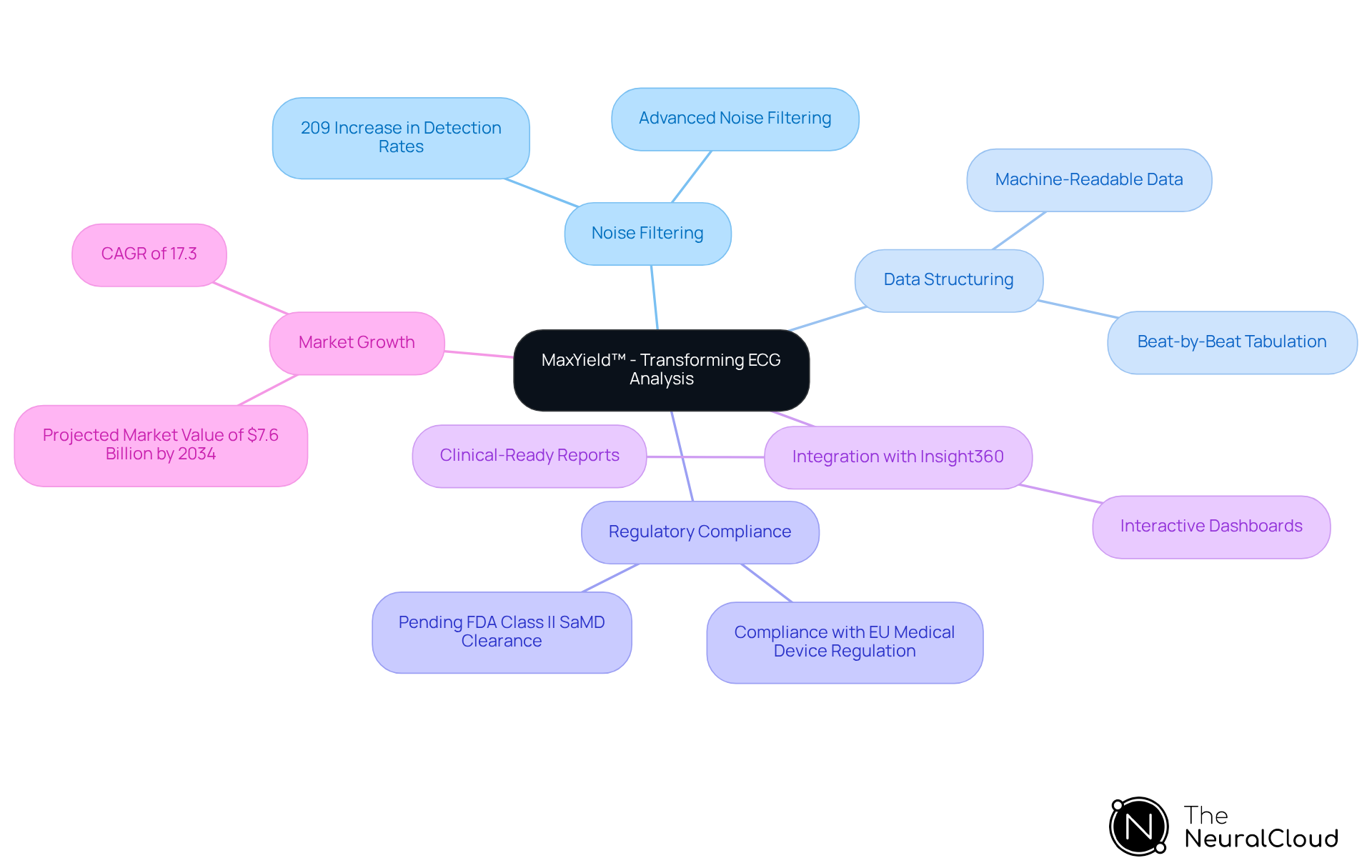
Healthcare professionals often struggle with noisy ECG signals that hinder accurate analysis, but Neural Cloud Solutions is transforming this landscape with its flagship product, MaxYield™. This cutting-edge AI-driven technology enhances ECG workflows by effectively isolating and cleaning noisy signals, resulting in high-fidelity cardiac data. MaxYield™ takes raw ECG recordings from various devices and turns them into structured, machine-readable data that’s easy for medical professionals to interpret. This innovation boosts diagnostic accuracy and streamlines reporting processes, making it an essential tool for healthcare providers.
With advanced noise filtering and unique wave recognition features, MaxYield™ helps clinicians identify critical ECG data even in tough recordings. The technology's ability to analyze continuous ECG data enables the detection of significant arrhythmias, with studies indicating that long-term monitoring can increase detection rates by 209% compared to traditional methods. Furthermore, MaxYield™ is pending FDA Class II SaMD clearance, ensuring compliance with regulatory standards, which is crucial for its adoption in clinical settings. The accompanying audit-ready documentation supports GxP inspections, enhancing its credibility.
The integration of MaxYield™ into existing workflows is supported by Insight360, a customizable visualization tool that transforms clean ECG data into interactive dashboards and clinical-ready reports. This combination improves the presentation of ECG data, facilitating better decision-making and timely interventions for individuals at risk of cardiac events. As the global ECG Interpretation AI market is projected to reach $7.6 billion by 2034, with a CAGR of 17.3%, the demand for such innovative solutions is clear.
Neural Cloud Solutions' commitment to ongoing education and training in ECG diagnosis ensures that healthcare professionals can effectively leverage AI tools like MaxYield™ to improve patient care outcomes. By mastering fundamental ECG concepts and utilizing advanced technologies, clinicians can enhance their diagnostic capabilities, ultimately leading to better management of cardiovascular risks.
ST-Segment Elevation: A Key Indicator of Myocardial Infarction
Recognizing ST-segment elevation on an ECG is vital for timely intervention in heart attack cases, according to my ECG findings. ST-segment elevation, as shown in my ECG findings, is a crucial sign of heart attack (MI), characterized by an elevation of the ST segment above the baseline in two or more adjacent leads. This elevation usually signals a complete blockage of a coronary artery, leading to reduced blood flow. It's crucial to recognize ST-segment elevation quickly, as immediate medical intervention is essential to restore blood flow and mitigate heart damage.
Recent studies emphasize that over 3 million individuals experience ST-elevation heart attack (STE-MI) each year, with a notable occurrence observed in developed nations. In Canada, the prevalence of MI among individuals over 60 years is approximately 9.5%, highlighting the need for heightened awareness and timely diagnosis in this demographic.
Case studies illustrate the critical role of early diagnosis in improving patient outcomes. For instance, the use of a 12-lead ECG is fundamental in evaluating suspected STE-MI cases, as it helps differentiate between various types of myocardial infarctions using mi ecg findings. Furthermore, the TIMI risk score, which assesses various risk factors, aids clinicians in predicting mortality risk and guiding treatment decisions.
Expert opinions underscore the necessity for health tech developers to integrate advanced ECG analysis tools into existing workflows. These tools can enhance the accuracy of STE-MI detection, ultimately leading to better patient management and outcomes. By adopting these tools, healthcare professionals can significantly improve patient outcomes and streamline their diagnostic processes. As the landscape of cardiovascular care evolves, the ability to swiftly identify and respond to ST-segment elevation will remain a cornerstone of effective cardiac diagnostics.

Pathological Q Waves: Indicators of Previous Myocardial Infarction
Identifying pathological Q waves is essential for accurate cardiac assessments, yet many ECG analysis tools struggle with this task. Pathological Q waves serve as critical indicators of prior heart attack (MI), characterized by their specific depth and width. These waves typically manifest in leads that correspond to the affected myocardial territory, signaling that myocardial necrosis has occurred. Their identification is essential for evaluating an individual's cardiac history and guiding clinical decisions. Developers of ECG analysis tools must ensure their systems can accurately detect these waves, as they provide vital insights into the patient's condition.
Pathological Q waves are more than just diagnostic markers; they indicate the electrical inactivity of the heart muscle that has been damaged. For example, anterior heart attack is indicated by Q waves in leads V1-V4, often linked to the Left Anterior Descending artery. Conversely, inferior heart attack is characterized by Q waves in leads II, III, and aVF, typically involving the Right Coronary artery or Left Circumflex artery. This localization of pathological Q waves aids in determining the specific coronary artery affected, enhancing the diagnostic accuracy.
Recent studies indicate that pathological Q waves may resolve in up to 30% of patients with inferior infarction, highlighting the dynamic nature of ECG findings. The criteria for identifying these waves include:
- A duration of at least 0.04 seconds
- A depth that is 25% of the succeeding R wave or greater, or more than 2 mm deep in contiguous leads
Such precise measurements are crucial for differentiating between benign variants and clinically significant findings.
Case studies illustrate the importance of recognizing these waves. For instance, in anterior heart attack, the presence of pathological Q waves in leads V1-V4 correlates with significant involvement of the Left Anterior Descending artery. Similarly, posterior myocardial infarction may not produce direct Q waves but can present as tall R waves in V1-V2, indicating the involvement of the Right Coronary artery or Left Circumflex artery.
In summary, the precise identification of pathological Q waves is crucial for health tech developers seeking to improve tools for MI ECG findings evaluation. By integrating these insights into their systems, developers can significantly improve the diagnostic capabilities and clinical outcomes in cardiovascular care. Furthermore, with MaxYield™, Neural Cloud Solutions Inc. provides an automated ECG evaluation platform that excels in isolating and labeling key features in every heartbeat, including pathological Q waves. By converting noisy recordings into detailed insights, MaxYield™ provides beat-by-beat evaluations, producing a review of 200,000 heartbeats in under 5 minutes. This feature boosts the accuracy of detecting pathological Q waves and helps clinicians make informed decisions. As Dr. Alan Rabinowitz notes, "MaxYield™ rivals human interpretation in precision, significantly reducing noise and improving workflow efficiency." For developers, integrating MaxYield™ into their ECG analysis tools means overcoming traditional limitations and ensuring that critical cardiac events are highlighted effectively. By leveraging MaxYield™, developers can ensure that critical cardiac events are not overlooked, ultimately enhancing patient care.

T-Wave Inversions: Significance in Myocardial Ischemia
T-wave inversions are critical indicators of heart tissue ischemia, yet their detection remains a challenge in ECG analysis. These inversions often occur when the heart muscle lacks sufficient oxygen, which can happen during episodes of angina or acute heart attack. The significance of T-wave inversions in cases of heart tissue ischemia is well-documented, with studies showing that anterior and lateral T-wave inversions are independently linked to an increased risk of coronary heart disease (CHD). For example, anterior T-wave inversions have a hazard ratio of 2.37 for new CHD diagnoses, while lateral inversions carry a hazard ratio of 1.65. This highlights just how crucial it is to detect these changes in clinical practice.
In Canada, T-wave inversions are frequently observed in individuals with myocardial ischemia, highlighting the need for robust evaluation systems for mi ecg findings. Developers must ensure their systems can accurately identify these inversions, as they provide essential insights into an individual's cardiac status and potential ischemic events. Recent studies have shown that mi ecg findings, such as T-wave inversions, can reflect underlying asymptomatic CHD, emphasizing the necessity for careful interpretation in clinical settings.
MaxYield™, developed by Neural Cloud Solutions Inc., offers advanced noise filtering and distinct wave recognition features that enhance the efficiency of ECG evaluations. By rapidly isolating ECG waves from recordings affected by baseline wander, movement, and muscle artifact, MaxYield™ salvages previously obscured sections of lengthy Holter, 1-Lead, and patch monitor recordings. This device-agnostic ECG intelligence layer integrates seamlessly via API, SDK, or CDK, ensuring that developers can enhance their existing systems without requiring hardware changes. Furthermore, MaxYield™ is currently pending FDA Class II SaMD clearance, ensuring compliance with regulatory standards.
The Insight360 tool works alongside MaxYield™ to convert clean ECG data into interactive dashboards and clinical-ready reports, offering actionable insights for healthcare professionals. Expert endorsements from Dr. Alan Rabinowitz, Dr. Brett Heilbron, and Dr. Marc W. Deyell emphasize that MaxYield™ rivals human interpretation in precision and significantly reduces noise, making it an invaluable tool for health tech developers. Case studies, such as those utilizing the BaleDoneen Method, demonstrate the effectiveness of advanced tests and imaging in assessing heart risks associated with T-wave inversions. These methods focus on recognizing root causes and creating tailored prevention strategies, illustrating how technology can improve health outcomes. As the understanding of T-wave inversions evolves, health tech developers must prioritize integrating these insights into their ECG analysis solutions to improve healthcare delivery and patient outcomes.

Reciprocal Changes: Understanding Their Role in MI Diagnosis
Reciprocal changes on an ECG serve as critical indicators of heart attack (MI), yet they are often overlooked in traditional analyses of MI ECG findings. Characterized by ST-segment depressions in leads opposite to those exhibiting ST-segment elevation, these changes confirm an MI and provide insights into the extent of myocardial damage as indicated by the MI ECG findings. Studies show that MI ECG findings, such as reciprocal ST-segment depression, are prevalent in about 77% of individuals with acute coronary artery occlusion, making it a vital diagnostic marker. Furthermore, recognizing these reciprocal changes in MI ECG findings can assist healthcare professionals in identifying the affected coronary artery and assessing the level of occlusion, which is crucial for targeted treatment strategies.
In Canada, recent MI ECG findings underscore the significance of these reciprocal changes in enhancing diagnostic accuracy. A study involving 85 individuals revealed that reciprocal ST-segment depression could occur in any lead, with the infarct area acting as the negative electrode. This challenges traditional interpretations of ECG readings and highlights why developers should integrate algorithms that can detect these reciprocal changes, thereby enhancing the diagnostic capabilities of their ECG analysis tools.
Expert insights further reinforce the importance of recognizing these patterns. Clinicians have noted that failure to identify reciprocal changes in MI ECG findings can lead to delayed diagnoses of treatable STEMI/OMI. Dr. D. Luke Glancy, a cardiologist, stated, 'Both indicative and reciprocal changes are striking in this electrocardiogram, but at times, the MI ECG findings indicate that reciprocal or mirror-image changes are more easily recognized than indicative changes and are the clue to the correct diagnosis.' With MaxYield™, developers can leverage a device-agnostic ECG intelligence layer that integrates seamlessly into existing platforms, enhancing the clarity and automation of cardiac diagnostics. Additionally, the platform is pending FDA Class II SaMD clearance, ensuring regulatory compliance and audit-ready documentation supporting GxP inspections.
As the landscape of cardiovascular care evolves, incorporating advanced algorithms like those in MaxYield™ that can accurately identify and analyze reciprocal changes will be essential for improving outcomes and streamlining diagnostic workflows. Furthermore, utilizing Insight360, the customizable visualization tool, transforms MaxYield’s clean ECG data into interactive dashboards, providing additional value to healthcare professionals.

Left Bundle Branch Block: Implications for Myocardial Infarction Diagnosis
Diagnosing heart attacks in patients with left bundle branch block (LBBB) presents significant challenges due to its potential to obscure key MI ECG findings. In patients exhibiting LBBB, ST-segment elevation may not necessarily indicate an MI, which can lead to confusion in interpreting MI ECG findings. This diagnostic confusion can delay critical treatment. Studies indicate that LBBB can conceal ongoing myocardial ischemia, which may lead to normal MI ECG findings even during acute ST-segment elevation myocardial infarction (STEMI).
For health tech developers, it is essential to ensure that ECG analysis tools accurately interpret signals in the context of LBBB. Neural Cloud Solutions Inc.'s MaxYield is one of those advanced technologies that really enhances LBBB detection precision. Its innovative algorithm identifies and labels critical data, even in recordings with high levels of noise and artifact, achieving a positive predictive accuracy of 80% and a negative predictive accuracy of 90.4% for cardiovascular conditions. This capability is vital for avoiding misdiagnosis and ensuring timely interventions.
Experts in the field, such as Dr. Alan Rabinowitz, Dr. Brett Heilbron, and Dr. Marc W. Deyell, endorse MaxYield for its precision in rivaling human interpretation and its effective noise reduction benefits. Case studies highlight the importance of recognizing LBBB as a potential indicator of underlying cardiac issues. For example, individuals with new or presumed new LBBB have a higher prevalence of coronary artery disease, with rates reaching 19.2%, compared to 10.1% in those without LBBB. Furthermore, LBBB is associated with a sevenfold increase in the risk of heart failure, underscoring the need for careful assessment in emergency department settings.
Regulatory compliance details, including FDA Class II SaMD clearance-pending status, further support the credibility of MaxYield. Expert views highlight that clinicians should manage individuals with LBBB and signs of heart ischemia in the same manner as those with evident STEMI, since the existence of LBBB does not lessen the urgency of the situation. This method is endorsed by the 2023 European Society of Cardiology guidelines, which suggest that individuals with LBBB and indications of ongoing heart muscle ischemia be treated as if they have definitive STEMI based on MI ECG findings.
In summary, LBBB complicates MI diagnosis, highlighting the need for innovative ECG analysis solutions like MaxYield to enhance patient outcomes and streamline workflows.

Right Ventricular Myocardial Infarction: ECG Recognition and Management
Right ventricular heart attack (RVMI) often complicates inferior heart attacks, presenting unique challenges in ECG analysis. Recognizing RVMI is crucial. It requires distinct management strategies, including fluid resuscitation to maintain cardiac output and prevent shock. In Canada, the incidence of RVMI coexisting with inferior wall left ventricular dysfunction ranges from 10% to 50%. This underscores the need for heightened awareness among healthcare professionals.
Experts agree that diagnosing RVMI takes a keen eye, especially when acute hemodynamic changes are absent. Initial evaluations may not reveal evolving ischemia in the right ventricle, complicating the clinical picture. Furthermore, studies indicate that ST segment elevation in lead III greater than in lead II is highly suggestive of RVMI. This prompts the need for a right-sided ECG for confirmation.
Recent advancements in diagnostic technology are improving RVMI recognition, including:
- AI-based ECG interpretation, which outperformed traditional methods, accurately identifying obstructive myocardial infarction in 84% of cases.
- Noninvasive diagnostic modalities, such as echocardiography, which can detect right ventricular dysfunction earlier than conventional tests.
These advancements indicate that using AI tools in ECG evaluation can greatly enhance early diagnosis and treatment of RVMI. Case studies further illustrate the importance of accurate RVMI detection. As RVMI often presents with risk factors for coronary artery disease, including hypertension and diabetes, developers must ensure their ECG analysis systems are equipped to recognize these critical findings. By integrating advanced diagnostic tools, healthcare professionals can enhance their ability to detect RVMI, ultimately improving patient care.

ST-Segment Depression: A Marker of Myocardial Ischemia
Detecting ST-segment depression is vital for timely intervention in heart tissue ischemia, yet many ECG tools fall short. This condition occurs when the ST segment drops below the baseline in two or more contiguous leads. It indicates that the heart muscle isn't getting enough blood, which can lead to ischemic events. In Canada, the significance of ST-segment depression in heart tissue ischemia is underscored by research showing that older individuals with ischemic ST-segment depression of 1 mm or more are 3.1 times more likely to face new coronary events compared to those without significant ST-segment depression. Therefore, developers of ECG analysis tools, such as Neural Cloud Solutions Inc., must prioritize the detection of ST-segment depression to enable timely interventions.
Expert insights from Dr. Alan Rabinowitz, Dr. Brett Heilbron, and Dr. Marc W. Deyell emphasize that MaxYield’s precision rivals human interpretation, significantly reducing noise and improving diagnostic yield. MaxYield uses a Continuous Learning Model that improves with each use, boosting accuracy and efficiency in ECG interpretation. This approach tackles issues like physiological variability and signal noise, providing clear ECG signals for accurate interpretation. Additionally, Insight360 serves as a customizable visualization and reporting tool that transforms MaxYield’s clean ECG data into interactive dashboards and clinical-ready reports.
Case studies have shown that early diagnosis and treatment of heart ischemia can significantly enhance outcomes for individuals, reinforcing the importance of integrating advanced detection capabilities into ECG technologies. It is also essential to note that the MaxYield platform is currently pending FDA Class II SaMD clearance, ensuring compliance with regulatory standards. The MaxYield platform's advanced capabilities could redefine ECG analysis, ultimately saving lives through timely diagnosis.

Differential Diagnosis of ST Elevation: Beyond Myocardial Infarction
While ST-segment elevation is often associated with myocardial infarction, it can also signal other serious conditions, complicating ECG interpretation. It's crucial to recognize these different diagnoses for accurate ECG interpretation and to prevent misdiagnosis that could lead to unnecessary treatments. Take pericarditis, for example; it usually shows more ST elevation in lead II compared to lead III, which is the opposite of what you’d see in STEMI. Furthermore, early repolarization patterns can resemble ST elevation observed in myocardial infarction, especially in young athletes, requiring thorough assessment of clinical context and individual history.
Did you know that about 10-36% of people with ST-segment elevation don’t actually have acute coronary occlusion when checked with angiography? This shows just how important precise diagnostic tools are. Case studies from Canada illustrate the challenges faced in differentiating these conditions. For instance, one case involved an individual with LBBB who exhibited discordant ST elevation but was ultimately ruled out for MI, emphasizing the importance of thorough ECG assessment.
Developers of ECG analysis tools should prioritize features that can effectively distinguish between these conditions, thereby enhancing diagnostic accuracy and improving patient outcomes. Integrating advanced algorithms that analyze ECG patterns can greatly assist in distinguishing genuine heart attacks from STEMI mimics, ultimately enhancing the diagnostic process in emergency environments. With better diagnostic accuracy, healthcare professionals can provide timely and appropriate care for their patients.

Integrating Advanced ECG Technologies: Enhancing MI Diagnosis with AI
The challenges in ECG analysis often stem from the limitations of traditional methods, which can overlook critical details in heart health. Integrating advanced ECG technologies, such as AI and machine learning, can significantly enhance the diagnosis of myocardial infarction. Neural Cloud Solutions Inc.'s MaxYield platform exemplifies this integration by mapping ECG signals through noise, allowing for quick analysis of large data sets, revealing subtle patterns that traditional methods might miss. With MaxYield's advanced noise filtering and adaptive algorithms, developers can create ECG evaluation tools that enhance diagnostic accuracy and streamline workflows, ultimately leading to better patient outcomes.
Experts such as Dr. Alan Rabinowitz, Dr. Brett Heilbron, and Dr. Marc W. Deyell support MaxYield’s accuracy, highlighting its capability to match human interpretation while reducing noise and artifacts. By leveraging AI-driven insights from MaxYield, health tech developers can enhance their ECG analysis capabilities, ensuring that critical cardiac events are accurately identified and addressed. This innovative method improves beat-to-beat assessments and boosts workflow efficiency, making it essential for clinicians and diagnostic facilities throughout Canada.

Conclusion
For health tech developers, mastering the nuances of ECG findings related to myocardial infarction (MI) is essential for enhancing diagnostic precision and patient care. With advanced technologies like Neural Cloud Solutions Inc.'s MaxYield™, clinicians can better interpret complex ECG data, ensuring timely interventions that can save lives. By focusing on key indicators such as:
- ST-segment elevation
- Pathological Q waves
- T-wave inversions
- Reciprocal changes
developers can create tools that significantly improve the detection and management of cardiac events.
Throughout the article, critical insights were shared regarding the importance of recognizing various ECG patterns and their implications for diagnosing myocardial infarction. Identifying ST-segment elevation is crucial for immediate treatment, while understanding the significance of pathological Q waves and T-wave inversions plays a vital role in assessing cardiac health. Additionally, the challenges posed by conditions like left bundle branch block and right ventricular myocardial infarction underscore the need for sophisticated analysis tools that can navigate these complexities.
As the landscape of cardiovascular care continues to evolve, the call to action for health tech developers is clear: prioritize the integration of advanced ECG analysis technologies. By harnessing AI-driven solutions like MaxYield™, developers can significantly boost their diagnostic capabilities, ensuring that healthcare professionals are equipped with the tools necessary to deliver timely and effective patient care. Embracing these innovations not only improves diagnostic accuracy but also contributes to better management of cardiovascular risks, ultimately leading to improved health outcomes across Canada. The future of cardiovascular care hinges on the adoption of innovative ECG analysis technologies that empower healthcare professionals to act swiftly and effectively.
Frequently Asked Questions
What is MaxYield™ and how does it enhance ECG analysis?
MaxYield™ is an AI-driven technology developed by Neural Cloud Solutions Inc. that enhances ECG workflows by isolating and cleaning noisy signals, resulting in high-fidelity cardiac data. It transforms raw ECG recordings into structured, machine-readable data, improving diagnostic accuracy and streamlining reporting processes for healthcare providers.
How does MaxYield™ improve the detection of arrhythmias?
MaxYield™ analyzes continuous ECG data, enabling the detection of significant arrhythmias. Studies indicate that long-term monitoring with this technology can increase detection rates by 209% compared to traditional methods.
What regulatory status does MaxYield™ have?
MaxYield™ is pending FDA Class II SaMD clearance, ensuring compliance with regulatory standards, which is crucial for its adoption in clinical settings.
How does Insight360 support the use of MaxYield™?
Insight360 is a customizable visualization tool that integrates with MaxYield™, transforming clean ECG data into interactive dashboards and clinical-ready reports, thereby improving the presentation of ECG data and facilitating better decision-making.
What is the significance of ST-segment elevation in ECG analysis?
ST-segment elevation is a crucial indicator of myocardial infarction (heart attack), characterized by an elevation of the ST segment above the baseline in two or more adjacent leads. Recognizing this elevation quickly is vital for timely medical intervention to restore blood flow and mitigate heart damage.
What is the prevalence of ST-elevation heart attacks in Canada?
In Canada, the prevalence of myocardial infarction among individuals over 60 years is approximately 9.5%, highlighting the need for heightened awareness and timely diagnosis in this demographic.
What role do pathological Q waves play in ECG analysis?
Pathological Q waves are critical indicators of prior myocardial infarction, signaling that myocardial necrosis has occurred. Their identification is essential for evaluating a patient's cardiac history and guiding clinical decisions.
What are the criteria for identifying pathological Q waves?
The criteria for identifying pathological Q waves include a duration of at least 0.04 seconds and a depth that is 25% of the succeeding R wave or greater, or more than 2 mm deep in contiguous leads.
How does MaxYield™ assist in detecting pathological Q waves?
MaxYield™ provides an automated ECG evaluation platform that excels in isolating and labeling key features in every heartbeat, including pathological Q waves. It converts noisy recordings into detailed insights, allowing for accurate beat-by-beat evaluations.
What impact does MaxYield™ have on clinical decision-making?
By improving the accuracy of detecting critical cardiac events like pathological Q waves, MaxYield™ helps clinicians make informed decisions, ultimately enhancing patient care and outcomes in cardiovascular management.
List of Sources
- Neural Cloud Solutions: Transforming ECG Analysis with MaxYield™
- AI ECG Analysis - Global Strategic Business Report (https://researchandmarkets.com/reports/6110003/ai-ecg-analysis-global-strategic-business-report?srsltid=AfmBOoqGLMQOvT51djxmodAkDFeqfYcIeoySh0kGjLGIlaUiHJQpkcNg)
- theneuralcloud.com (https://theneuralcloud.com/post/best-practices-for-effective-ecg-diagnosis-using-ai-solutions)
- Remote heart monitoring gets cleaner ECG data under Europe deal (https://stocktitan.net/news/AIMLF/neural-cloud-signs-reseller-agreement-with-european-digital-cardiac-odr4kyyg9lzi.html)
- ECG Interpretation AI Market Research Report 2034 (https://dataintelo.com/report/ecg-interpretation-ai-market)
- Neural Cloud Signs Reseller Agreement with European Digital Cardiac Monitoring Platform | Mediabistro (https://mediabistro.com/media-news/neural-cloud-signs-reseller-agreement-with-european-digital-cardiac-monitoring-platform)
- ST-Segment Elevation: A Key Indicator of Myocardial Infarction
- Research Data Reveal Trends in Cardiovascular Risk Factors and Preventive Medication Use Prior to Heart Attacks│American College of Cardiology's Scientific Session (ACC.24) | Minneapolis Heart Institute Foundation (https://mplsheart.org/news/research-data-reveal-trends-cardiovascular-risk-factors-prevention-medication)
- Heart attack deaths rose between 2011 and 2022 among adults younger than age 55 (https://newsroom.heart.org/news/releases-20260219)
- The global prevalence of myocardial infarction: a systematic review and meta-analysis - BMC Cardiovascular Disorders (https://link.springer.com/article/10.1186/s12872-023-03231-w)
- STEMI: ST-segment Elevation Myocardial Infarction - The Cardiology Advisor (https://thecardiologyadvisor.com/ddi/stemi-st-elevation-myocardial-infarction)
- Pathological Q Waves: Indicators of Previous Myocardial Infarction
- The Anatomy of Pathological Q Waves on ECG (https://ecglectures.com/blog/the-anatomy-of-pathological-q-waves-on-ecg)
- ECG signs of myocardial infarction: pathological Q-waves & pathological R-waves – The Cardiovascular (https://ecgwaves.com/topic/ecg-criteria-myocardial-infarction-pathological-q-waves-r-waves)
- T-Wave Inversions: Significance in Myocardial Ischemia
- T Wave Inversion | The BaleDoneen Method (https://baledoneen.com/testing-biomarkers/t-wave-inversion)
- The prognostic significance of T‐wave inversion according to ECG lead group during long‐term follow‐up in the general population - PMC (https://pmc.ncbi.nlm.nih.gov/articles/PMC7816818)
- ECG T Wave Inversion Features Predict Cardiomyopathy | www.PhysiciansWeekly.com (https://physiciansweekly.com/post/ecg-t-wave-inversion-features-predict-cardiomyopathy)
- Investigating Inversions To A Tee | ACOEP RSO (https://acoep-rso.org/the-fast-track/investigating-inversions-to-a-tee)
- Reciprocal Changes: Understanding Their Role in MI Diagnosis
- Reciprocal Changes in Acute Myocardial Ischemia: From Myth to Mastery (https://medicusofhouston.com/reciprocal-change)
- News: Fourth universal definition of MI published | ACDIS (https://acdis.org/articles/news-fourth-universal-definition-mi-published)
- Acute Myocardial Infarction - StatPearls - NCBI Bookshelf (https://ncbi.nlm.nih.gov/books/NBK459269)
- Characteristics and mechanism of reciprocal ST-segment depression in acute ST segment elevation myocardial infarction: Reciprocal ST-segment depression and ST segment elevation myocardial infarction - PMC (https://pmc.ncbi.nlm.nih.gov/articles/PMC9646491)
- Use of indicative and reciprocal electrocardiographic changes to help localize the site of coronary occlusion - PMC (https://pmc.ncbi.nlm.nih.gov/articles/PMC1291319)
- Left Bundle Branch Block: Implications for Myocardial Infarction Diagnosis
- Lack of association between left bundle-branch block and acute myocardial infarction in symptomatic ED patients - PubMed (https://pubmed.ncbi.nlm.nih.gov/19857407)
- In Patients with Left Bundle Branch Block, What’s the Best Test for CAD? (https://consultqd.clevelandclinic.org/in-patients-with-left-bundle-branch-block-whats-the-best-test-for-cad)
- theneuralcloud.com (https://theneuralcloud.com/post/master-lbbb-ecg-diagnosis-management-and-clinical-insights)
- Left Bundle Branch Block May Be Key Indicator of Progressive Heart Failure | AJMC (https://ajmc.com/view/left-bundle-branch-block-may-be-key-indicator-of-progressive-heart-failure)
- Left bundle branch block (LBBB): ECG criteria, causes, management – The Cardiovascular (https://ecgwaves.com/topic/left-bundle-branch-block-lbbb-ecg-criteria-treatment)
- Right Ventricular Myocardial Infarction: ECG Recognition and Management
- AI-based ECG interpretation outperforms standard diagnosis of occlusive myocardial infarction (https://news-medical.net/news/20260323/AI-based-ECG-interpretation-outperforms-standard-diagnosis-of-occlusive-myocardial-infarction.aspx)
- Right Ventricular Myocardial Infarction - StatPearls - NCBI Bookshelf (https://ncbi.nlm.nih.gov/books/NBK431048)
- AI outperforms conventional diagnosis for certain types of heart attacks (https://escardio.org/news/press/press-releases/acvc-press)
- Recognition and Treatment of Right Ventricular Myocardial Infarction (https://hmpgloballearningnetwork.com/site/emsworld/article/10321209/recognition-and-treatment-right-ventricular-myocardial-infarction)
- ST-Segment Depression: A Marker of Myocardial Ischemia
- ST depression on ECG: What it means and causes (https://medicalnewstoday.com/articles/st-depression-on-ecg)
- ST Segment Depression - an overview | ScienceDirect Topics (https://sciencedirect.com/topics/nursing-and-health-professions/st-segment-depression)
- ST SEGMENT DEPRESSION: MUCH ADO ABOUT NOTHING (https://academic.oup.com/eurheartjsupp/article/26/Supplement_2/ii183/7674378)
- ST Segment - StatPearls - NCBI Bookshelf (https://ncbi.nlm.nih.gov/books/NBK459364)
- Differential Diagnosis of ST Elevation: Beyond Myocardial Infarction
- ST-Segment Elevation in Conditions of Non-cardiovascular Origin Mimicking an Acute Myocardial Infarction: A Narrative Review - PMC (https://pmc.ncbi.nlm.nih.gov/articles/PMC9708054)
- ST elevation: Differential diagnosis and caveats. A comprehensive review to help distinguish ST elevation myocardial infarction from nonischemic etiologies of ST elevation - PMC (https://pmc.ncbi.nlm.nih.gov/articles/PMC6009807)
- STEMI Mimics: ECG Impostors of Heart Attack (https://powerfulmedical.com/blog/stemi-mimics)
- emergencymedicinecases.com (https://emergencymedicinecases.com/ecg-cases-st-elevations-mnemonic-occlusion-mi)
- ST-segment Elevation Myocardial Infarction: Challenges in Diagnosis (https://uscjournal.com/articles/st-segment-elevation-myocardial-infarction-challenges-diagnosis?language_content_entity=en)
- Integrating Advanced ECG Technologies: Enhancing MI Diagnosis with AI
- AI tool aids myocardial infarction diagnosis speed and accuracy, say researchers (https://hospitalhealthcare.com/specialisms/cardiovascular/ai-tool-aids-myocardial-infarction-diagnosis-speed-and-accuracy-say-researchers)
- The Role of Artificial Intelligence and Machine Learning in Clinical Cardiac Electrophysiology (https://sciencedirect.com/science/article/abs/pii/S0828282X21004153)
- New study finds AI model improves heart attack detection (https://health.ucdavis.edu/news/headlines/new-study-finds-ai-model-improves-heart-attack-detection/2025/11)
- AI and ECG Interpretation: Insights and Trends for Cardiologists (https://gehealthcare.com/en-us/insights/article/ai-and-ecg-interpretation-insights-and-trends-for-todays-cardiologists?srsltid=AfmBOoqHsCr5WLRhqHqTgmbLAUhgzLgrM8JyftH8h9LmnpErC86Wvu0C)
- Artificial intelligence may speed heart attack diagnosis and treatment (https://newsroom.heart.org/news/artificial-intelligence-may-speed-heart-attack-diagnosis-and-treatment)