Introduction
The intricate landscape of ECG pricing presents significant challenges for healthcare providers and patients alike. Understanding these influences is essential for navigating the financial implications of cardiac care, especially as technology and regulations evolve.
Let’s explore ten key factors that significantly impact ECG pricing, including:
- Regional variations
- Insurance coverage
- The complexity of procedures
So, how can healthcare professionals and patients navigate these fluctuating costs effectively? Recognizing these factors not only aids in cost management but also enhances the quality of cardiac care.
Neural Cloud Solutions: Enhancing ECG Cost Efficiency with Advanced AI Technology
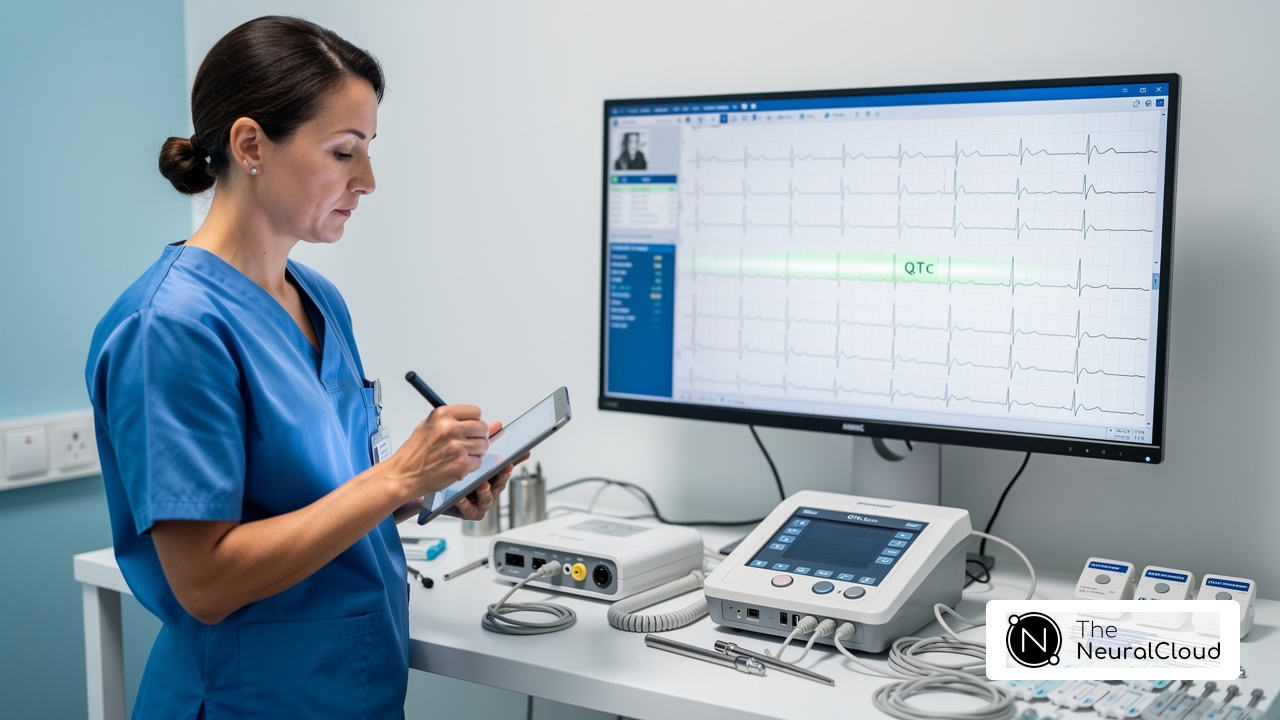
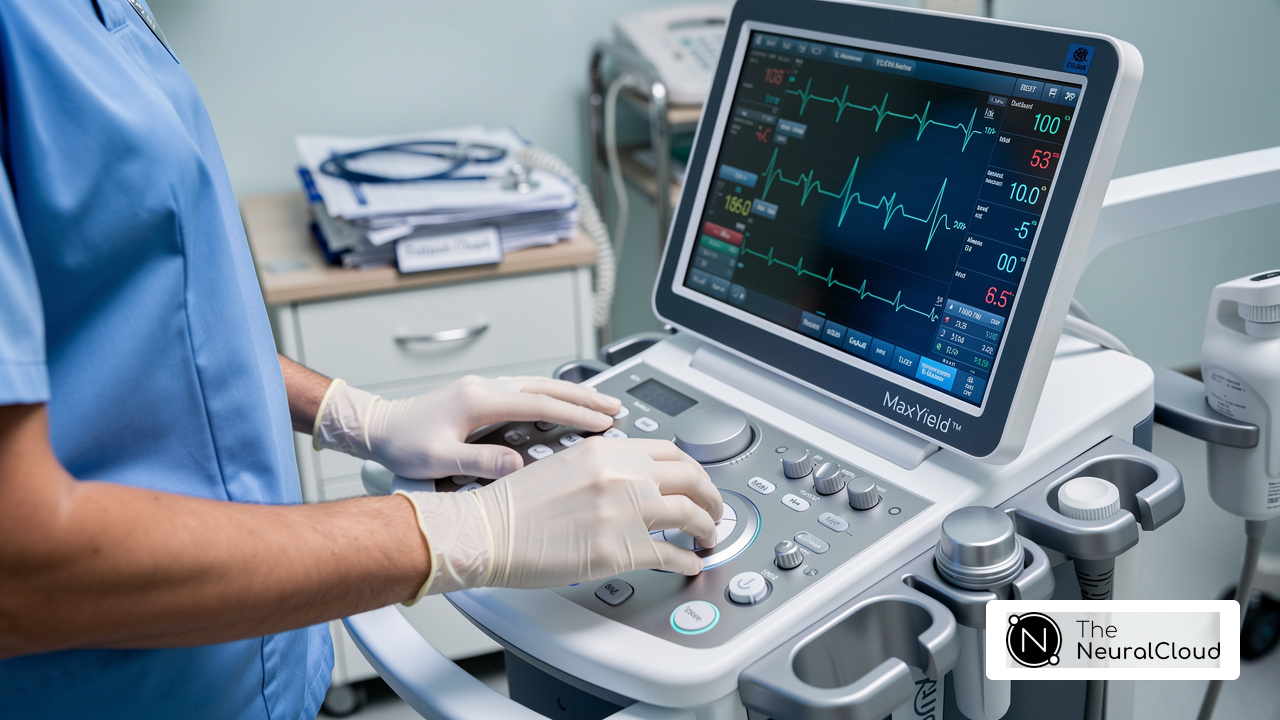
ECG analysis often faces challenges due to noisy signals and inefficient workflows. Neural Cloud Solutions leverages its flagship product, MaxYield, to transform ECG workflows through patented signal mapping algorithms. This technology cleans noisy signals and improves ECG data quality, leading to more accurate diagnoses. By implementing AI in ECG analysis, the company reduces processing time and resources, thereby decreasing the cost of electrocardiogram for healthcare providers. MaxYield™ is device-agnostic, seamlessly capturing ECG recordings from various 1-lead and 3-lead devices, ensuring consistent, clean data across all connected devices. The automation of ECG analysis facilitates faster turnaround times and reduces the need for extensive hardware modifications, thereby establishing a cost-effective solution that impacts the cost of electrocardiogram for medical professionals. As a result, healthcare facilities can save money while enhancing diagnostic accuracy and efficiency in ECG services, which can help lower the cost of electrocardiogram. Notably, on February 18, 2026, Neural Cloud Solutions entered a distribution agreement with Intelimed.ai SpA, further expanding the reach of MaxYield across Latin America and enhancing the potential for improved cardiac care in the region.

Regional Pricing Variations: How Location Affects Electrocardiogram Costs
Navigating the cost of electrocardiogram fluctuations can be a daunting task for healthcare professionals. Prices vary significantly based on geographic location, with urban areas typically facing higher costs due to increased operational expenses and demand for services. For instance, the cost of electrocardiogram performed in a metropolitan hospital can reach approximately $1,500, while at a rural clinic, the cost may be as low as $200. This stark contrast highlights the impact of local competition, living expenses, and healthcare infrastructure on pricing. In Pittsburgh, for example, the cost of electrocardiogram varies from $430 to $1,100, illustrating the diverse pricing landscape influenced by these regional factors.
As healthcare providers embrace innovative technologies like Neural Cloud Solutions' MaxYield™, they can significantly enhance ECG analysis efficiency. MaxYield™ improves diagnostic precision by detecting and tagging essential information in recordings, even amidst significant noise and artifacts. This capability not only streamlines the analysis process but also reduces expenses linked to repeated tests and extended analysis durations. By implementing MaxYield™, practitioners can alleviate some of the financial burdens associated with location-related disparities in the cost of electrocardiogram services. Ultimately, MaxYield™ empowers healthcare providers to deliver high-quality care without the burden of excessive costs tied to ECG analysis.

Insurance Coverage Impact: Understanding How Insurance Affects ECG Costs
Navigating the financial landscape of ECG services can be challenging, especially when insurance coverage plays a pivotal role. The cost of electrocardiogram services is greatly influenced by insurance coverage, often determining the financial burden on individuals. Many insurance plans cover ECG tests when deemed medically necessary, which can significantly lower out-of-pocket expenses. Coverage can vary significantly between different insurance plans. For instance, copayments for ECG tests can range from $10 to $50, depending on the specific insurance provider and policy. Without insurance, individuals can face overwhelming costs, often exceeding $1,500 for the cost of electrocardiogram tests, which highlights the essential need for people to fully comprehend their insurance policies.
Understanding this is key to navigating expenses and making informed healthcare choices. Notably, about 20% of people in the U.S. will experience a major illness or medical expenditure each year, emphasizing the importance of being prepared for unexpected healthcare costs. Additionally, with the recent changes brought by the One Big Beautiful Bill Act (OBBBA), which may affect coverage and financial assistance, it is crucial for patients to stay informed about their insurance options.
Experts recommend that individuals regularly review their insurance policies and seek help with enrollment to ensure they are adequately covered and can effectively manage the cost of electrocardiogram expenses.

Provider Type Influence: How Hospitals vs. Clinics Affect ECG Pricing
The cost of electrocardiogram services varies significantly depending on the type of healthcare provider, creating challenges for patients seeking affordable options. The cost of electrocardiogram services is typically higher at hospitals compared to outpatient clinics or urgent care centers. For instance, the cost of electrocardiogram at a hospital may be approximately $1,500, while at a clinic, it could range from $50 to $200.
Understanding why hospitals charge more for the cost of electrocardiogram services can be confusing due to their higher operational costs. Jamie Cleverley, President of Cleverley and Associates, emphasizes that without industry alignment, variations in data interpretation will persist. Comprehending these differences is essential for individuals seeking services with a low cost of electrocardiogram.
In urban areas, where demand and operational expenses are elevated, individuals may encounter even greater price fluctuations. Therefore, when considering ECG services, it is crucial for individuals to evaluate the type of provider and the cost of electrocardiogram to make informed financial decisions.
Furthermore, the new guidelines from the Centers for Medicare and Medicaid Services (CMS) highlight the significance of price transparency, which can further assist patients in managing the cost of electrocardiogram services. Additionally, combining wearable technology with Neural Cloud Solutions' MaxYield™ platform can improve ECG analysis efficiency by automating labeling and data extraction. This technology tackles common ECG analysis challenges, like inefficiencies and signal artifacts, offering a more efficient and cost-effective solution for healthcare providers.

Technological Advancements: The Cost Implications of Modern ECG Devices
The integration of advanced technologies in ECG devices presents both challenges and opportunities for healthcare providers. While the upfront costs of AI-driven ECG devices can be daunting, the substantial long-term savings they provide can significantly lower the cost of electrocardiogram due to improved diagnostic precision and reduced labor costs.
MaxYield™ effectively maps ECG signals, filtering out noise and pinpointing key features in each heartbeat. This not only streamlines workflows but also reduces the need for extensive manual interpretation. The evolving healthcare technology landscape is pushing for more affordable solutions, particularly addressing the cost of electrocardiogram, that enhance patient care and help manage operational costs.
The incorporation of MaxYield™ into ECG analysis procedures enables swift identification of potentially significant data, further aiding in expense reductions. Industry leaders emphasize that AI-powered ECG models, like MaxYield™, can outperform traditional methods in detecting hidden heart diseases.
Simos Kedikoglou, MD, President and COO at Anumana, noted that "by making early detection tools available across multiple platforms, this collaboration helps clinicians intervene sooner, reflecting a shared commitment to improving outcomes for patients at risk of heart failure."
Ultimately, embracing AI in cardiac diagnostics could redefine the cost of electrocardiogram and significantly improve patient outcomes.

Procedure Complexity: How Detailed ECG Analyses Affect Costs
The cost of electrocardiogram procedures can be complex, influenced by the intricacies of the tests performed. Basic ECG tests are generally affordable, with average cash prices around $50 in various states. However, intricate analyses that require advanced interpretation or continuous monitoring can significantly increase the cost of electrocardiogram, often exceeding $1,500. For instance, detailed ECG analyses, which may include comprehensive assessments of heart rhythm and additional diagnostic insights, are priced higher due to the specialized expertise required for interpretation. In 2026, the projected cost of electrocardiogram analyses is expected to rise significantly, reflecting the growing demand for advanced cardiac diagnostics.
Neural Cloud Solutions' Continuous Learning Model enhances ECG analysis accuracy and efficiency through AI-driven automation, addressing challenges such as inefficiencies, physiological variability, and signal artifacts. With this technology, healthcare professionals can automate tasks, lighten their workload, and boost diagnostic yield, ultimately leading to improved financial planning and resource allocation. Comprehending the particular requirements and the cost of electrocardiogram for each procedure is crucial for both individuals and providers. Healthcare professionals may request ECGs for several reasons:
- Chest pain
- Rapid heartbeat
- Preoperative clearance
A clear grasp of the cost of electrocardiogram can empower both patients and providers to make informed decisions about cardiac care.

Patient Demographics: The Influence of Age and Health on ECG Costs
Understanding the cost of electrocardiogram testing and its financial implications is crucial, especially as patient demographics shift. Patient demographics, especially age and health condition, play a crucial role in determining the cost of electrocardiogram. Elderly individuals or those with prior health issues often require more extensive testing and monitoring, resulting in a significantly higher cost of electrocardiogram. For instance, the cost of electrocardiogram for a young, healthy person might be around $50, whereas an older individual with several health concerns could face fees exceeding $1,500 due to the need for additional tests and assessments. This pricing variation underscores the importance of understanding demographic factors for healthcare professionals assessing costs and planning patient care.
Moreover, integrating advanced technologies such as Neural Cloud Solutions' MaxYield™ enhances ECG analysis efficiency through automated labeling and improved noise filtering. MaxYield™ identifies and labels critical data even in recordings with high levels of noise and artifact, allowing for the salvage of previously obscured sections of lengthy Holter, 1-Lead, and patch monitor recordings. This streamlining reduces operational expenses, enabling healthcare providers to allocate resources more effectively.
The Centers for Disease Control and Prevention forecasts that by 2030, 12.1 million individuals will have atrial fibrillation (AF), a condition linked to higher healthcare expenses and requiring careful monitoring through ECGs. In Florida, the cost of electrocardiogram expenses typically ranges from $70 to $1,200 for individuals without insurance, with an average price of approximately $500. Healthcare professionals must consider these demographic factors, including the possibility for individuals to request self-pay discounts or financial aid, to ensure precise expense evaluations and efficient management of individuals. By leveraging advanced technologies, healthcare professionals can not only manage costs but also enhance patient care outcomes.

Regulatory Compliance: How Healthcare Regulations Influence ECG Pricing
Healthcare regulations impose significant challenges on the cost of electrocardiogram services, affecting both providers and patients. Regulatory compliance often burdens providers with high costs, which can be passed on to patients. For instance, facilities must adhere to strict regulations concerning equipment upkeep and personnel training, leading to increased overall expenses for ECG services. A recent study emphasized that leading hospitals often face significant compliance expenses, with many indicating that adherence to regulations can increase the cost of electrocardiogram by as much as 20%.
Integrating wearable technology with the MaxYield™ platform streamlines processes. This significantly reduces operational expenses through automated ECG labeling and data extraction. This automation improves efficiency and enables suppliers to allocate resources more effectively, ultimately benefiting both suppliers and individuals. Understanding these regulations is crucial for navigating the cost of electrocardiogram pricing and ensuring fair costs for patients.

Follow-Up Care: The Cost Implications of Additional Testing After ECGs
The cost of electrocardiogram significantly impacts the financial implications of follow-up care, affecting both patients and healthcare providers. If an ECG suggests potential cardiac issues, further tests like echocardiograms or stress tests may be needed, leading to higher overall costs. For example, the cost of a follow-up echocardiogram typically ranges from $200 to $1,000, influenced by factors such as the facility's location and the complexity of the test.
It's important for individuals to understand these financial consequences, as it helps them prepare for the potential expenses linked to the cost of electrocardiogram results. Furthermore, the financial burden of additional testing can vary widely, with some individuals facing unexpected costs that may impact their overall healthcare affordability. This unpredictability can lead to financial strain, affecting patients' ability to afford necessary care.
Dr. Dhruv Kazi emphasizes that individuals should feel encouraged to ask their healthcare professionals about the costs of their treatment, especially since financial reimbursement systems can influence the necessity for further tests. As healthcare costs are projected to rise starting in January 2026, understanding these financial implications is crucial for patients navigating their cardiac care.

Market Competition: How Provider Competition Affects ECG Pricing
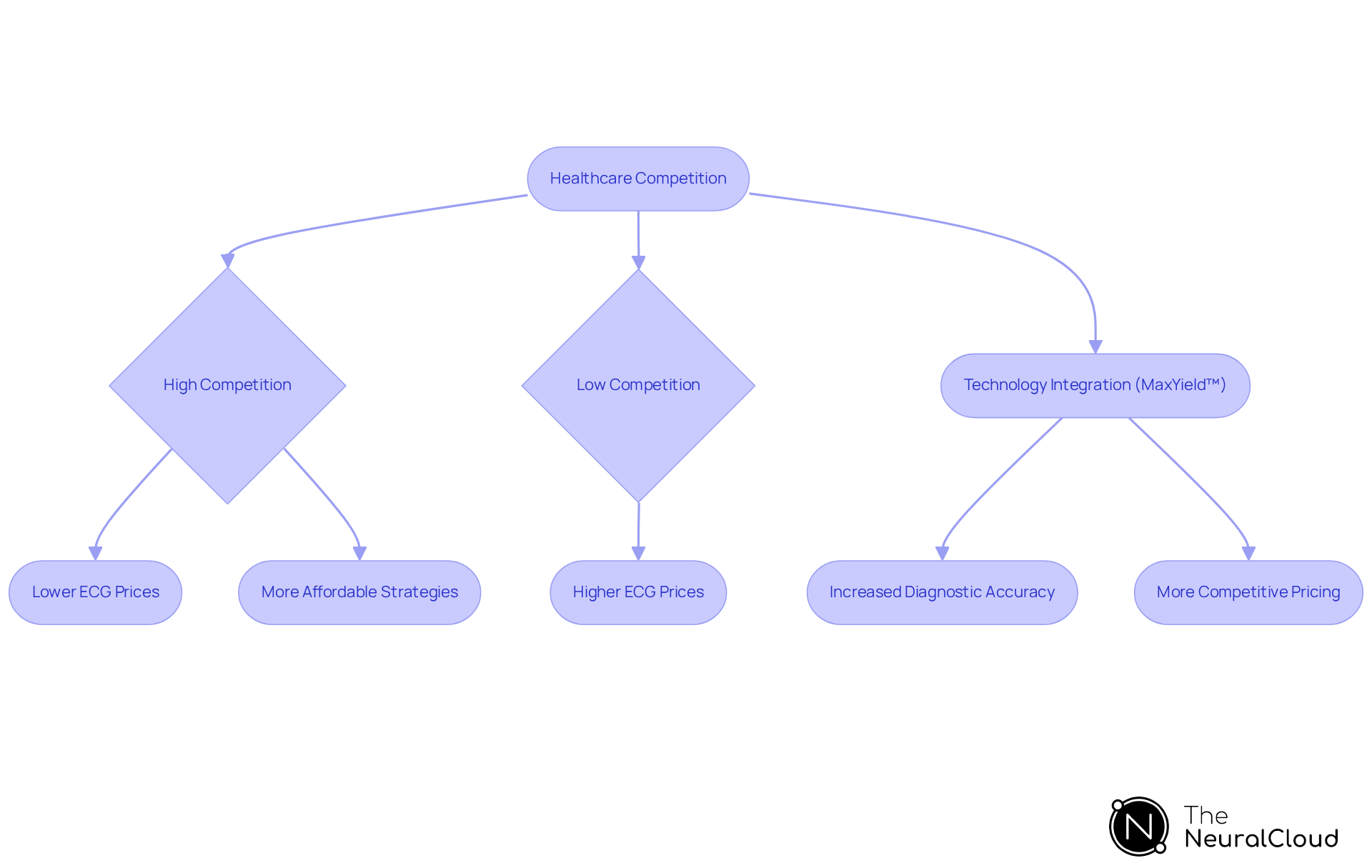
Competition among healthcare entities significantly influences the cost of electrocardiogram pricing, creating a landscape where affordability is paramount. In areas with several suppliers, competitive pressures often lead to reduced prices. For instance, independent clinics frequently provide services for the cost of electrocardiogram at lower prices than hospitals, where costs can be higher due to limited competition. This dynamic encourages practitioners to adopt more affordable pricing strategies to attract patients. Research shows that the cost of electrocardiogram services tends to be higher in less competitive areas. This highlights how crucial competition is for reducing healthcare costs.
The integration of advanced technologies like MaxYield™ enhances ECG analysis efficiency. It allows for automated labeling and improved noise filtering. By rapidly isolating ECG waves from recordings affected by noise and artifacts, MaxYield™ increases diagnostic accuracy and reduces the time and resources needed for analysis. As a result, healthcare professionals can set more competitive prices, which is a win for consumers. As healthcare analysts suggest, fostering competition among providers is essential for enhancing the affordability and accessibility of the cost of electrocardiogram services.
Conclusion
The cost of electrocardiogram (ECG) services is influenced by a variety of factors that can challenge both healthcare providers and patients. This article highlights how advancements in technology, particularly through Neural Cloud Solutions' MaxYield™, can significantly enhance ECG analysis efficiency while reducing overall costs. By tackling challenges such as signal noise and inefficient workflows, MaxYield™ enhances diagnostic accuracy and makes ECG services more affordable in various settings.
Key insights discussed include:
- The substantial variations in ECG pricing based on geographic location.
- Insurance coverage and its critical role in determining out-of-pocket expenses for patients.
- The type of healthcare provider affecting pricing structures.
For instance, urban areas often face higher costs due to increased demand and operational expenses. Additionally, the intricate nature of ECG procedures and the impact of regulatory compliance further complicate pricing structures, emphasizing the need for transparency and informed decision-making in healthcare.
Recognizing these factors allows stakeholders to make informed decisions that can ultimately lower ECG service costs. As healthcare evolves, it's vital for everyone involved to focus on cost efficiency and accessibility, making sure high-quality cardiac care is available to all patients. Staying updated on innovations and insurance options will help both individuals and providers better navigate the complexities of ECG services.
Frequently Asked Questions
What challenges does ECG analysis face?
ECG analysis often encounters challenges due to noisy signals and inefficient workflows.
How does Neural Cloud Solutions improve ECG analysis?
Neural Cloud Solutions uses its product, MaxYield, which employs patented signal mapping algorithms to clean noisy signals and enhance ECG data quality, leading to more accurate diagnoses.
What benefits does MaxYield offer for ECG processing?
MaxYield reduces processing time and resources, thus decreasing the cost of electrocardiograms for healthcare providers. It is device-agnostic, capturing ECG recordings from various 1-lead and 3-lead devices consistently.
How does the automation of ECG analysis impact healthcare facilities?
The automation of ECG analysis facilitates faster turnaround times and reduces the need for extensive hardware modifications, resulting in a cost-effective solution that enhances diagnostic accuracy and efficiency.
What are the regional pricing variations for electrocardiogram services?
The cost of electrocardiograms varies significantly by location. For example, costs in metropolitan hospitals can reach approximately $1,500, while rural clinics may charge as low as $200, influenced by local competition and operational expenses.
How does MaxYield help address regional cost disparities in ECG services?
By improving diagnostic precision and streamlining the analysis process, MaxYield reduces expenses linked to repeated tests and extended analysis durations, helping to alleviate financial burdens associated with location-related disparities.
What role does insurance coverage play in ECG costs?
Insurance coverage greatly influences the cost of ECG services, often determining out-of-pocket expenses. Many plans cover ECG tests when medically necessary, significantly lowering costs for individuals.
What should individuals know about insurance coverage for ECG tests?
Copayments for ECG tests can range from $10 to $50, depending on the insurance provider. Without insurance, costs can exceed $1,500, highlighting the importance of understanding insurance policies.
What recent legislation may affect ECG insurance coverage?
The One Big Beautiful Bill Act (OBBBA) may impact coverage and financial assistance, making it crucial for patients to stay informed about their insurance options.
What advice do experts give regarding insurance policies?
Experts recommend that individuals regularly review their insurance policies and seek assistance with enrollment to ensure adequate coverage and effective management of ECG expenses.
List of Sources
- Neural Cloud Solutions: Enhancing ECG Cost Efficiency with Advanced AI Technology
- tipranks.com (https://tipranks.com/news/company-announcements/ai-ml-innovations-strikes-ecg-tech-reseller-deal-in-european-digital-cardiology)
- New Intelimed deal takes Neural Cloud’s AI heart software into Latin America (https://stocktitan.net/news/AIMLF/neural-cloud-enters-distribution-agreement-with-intelimed-to-expand-rxulcwnbexty.html)
- otcmarkets.com (https://otcmarkets.com/stock/AIMLF/news/Neural-Cloud-Retains-Commission-Wolf-to-Accelerate-US-Commercial-Expansion?id=510004)
- Regional Pricing Variations: How Location Affects Electrocardiogram Costs
- sophiarahmanmd.com (https://sophiarahmanmd.com/ekg-test-cost-without-insurance)
- Business Group on Health Survey: 9% Health Care Cost Increase for 2026 (https://businessgrouphealth.org/newsroom/news-and-press-releases/press-releases/2026-employer-health-care-strategy-survey)
- newchoicehealth.com (https://newchoicehealth.com/places/pennsylvania/pittsburgh/ekg/electrocardiogram)
- ospreypolyclinic.com (https://ospreypolyclinic.com/blog/how-much-does-an-ekg-cost-without-insurance-in-2025)
- Insurance Coverage Impact: Understanding How Insurance Affects ECG Costs
- cbsnews.com (https://cbsnews.com/news/health-insurance-costs-aca-premiums-families)
- 4 “Big, Beautiful Bill” changes that will reshape care in 2026 (https://ama-assn.org/health-care-advocacy/federal-advocacy/4-big-beautiful-bill-changes-will-reshape-care-2026)
- Navigating an Unaffordable Health Insurance Market | Johns Hopkins Bloomberg School of Public Health (https://publichealth.jhu.edu/2026/navigating-an-unaffordable-health-insurance-market)
- FastStats (https://cdc.gov/nchs/fastats/health-insurance.htm)
- Health insurance CEOs grilled on high costs of care in back-to-back House hearings (https://schrier.house.gov/media/in-the-news/health-insurance-ceos-grilled-high-costs-care-back-back-house-hearings)
- Provider Type Influence: How Hospitals vs. Clinics Affect ECG Pricing
- ospreypolyclinic.com (https://ospreypolyclinic.com/blog/how-much-does-an-ekg-cost-without-insurance-in-2025)
- houstonpublicmedia.org (https://houstonpublicmedia.org/npr/2026/02/10/nx-s1-5704792/hospitals-are-posting-prices-for-patients-its-mostly-industry-using-the-data)
- theneuralcloud.com (https://theneuralcloud.com/post/how-much-does-an-ekg-cost-key-factors-to-consider)
- bakerinstitute.org (https://bakerinstitute.org/research/comparing-prices-and-price-transparency-among-top-ranked-hospitals-and-close-competitors-0)
- Technological Advancements: The Cost Implications of Modern ECG Devices
- usa.philips.com (https://usa.philips.com/a-w/about/news/archive/standard/news/press/2025/philips-launches-ecg-ai-marketplace-to-enhance-early-cardiac-diagnosis.html?srsltid=AfmBOoqqWKcgS05Sy8lsywXvRtyp9mR34C8YS4YUOS8wNVPmLPvXt0b2)
- AI-ECG Momentum and Rising Competition Reshape Diagnostic Cardiology in 2026 (https://signifyresearch.net/insights/diagnostic-cardiology-market-bouncing-into-2026)
- AI-powered ECG model outperforms doctors in detecting hidden heart disease (https://news-medical.net/news/20250721/AI-powered-ECG-model-outperforms-doctors-in-detecting-hidden-heart-disease.aspx)
- newsnetwork.mayoclinic.org (https://newsnetwork.mayoclinic.org/discussion/research-study-shows-the-cost-effectiveness-of-ai-enhanced-heart-failure-screening)
- nature.com (https://nature.com/articles/s41746-025-01735-7)
- Procedure Complexity: How Detailed ECG Analyses Affect Costs
- Cost of routine ECG with interpretation and report by state | Sidecar Health (https://cost.sidecarhealth.com/c/routine-ecg-with-interpretation-and-report-cost)
- acc.org (https://acc.org/latest-in-cardiology/articles/2025/07/14/22/24/cms-releases-proposed-2026-medicare-physician-fee-schedule)
- dicardiology.com (https://dicardiology.com/content/cardiac-insight-speaks-out-against-medicare-decision-slash-reimbursement-rates-and-limit)
- finance.yahoo.com (https://finance.yahoo.com/news/ge-healthcare-ecg-ai-imaging-010847179.html)
- statista.com (https://statista.com/statistics/991030/resting-ecg-devices-average-price-forecast-by-region?srsltid=AfmBOoqite1670R4V2qNbHls2LraBv-mk6z4ZEYhKWeb7t7ysCLeIa7t)
- Patient Demographics: The Influence of Age and Health on ECG Costs
- ospreypolyclinic.com (https://ospreypolyclinic.com/blog/how-much-does-an-ekg-cost-without-insurance-in-2025)
- ices.on.ca (https://ices.on.ca/news-releases/more-than-20-of-low-risk-patients-receive-an-ecg-as-part-of-annual-health-exam)
- acc.org (https://acc.org/latest-in-cardiology/journal-scans/2024/03/15/15/56/impact-of-atrial-fibrillation-burden)
- midmark.com (https://midmark.com/medical/resource-library/blog/improved-clinical-outcomes-bringing-ecg-testing-to-the-front-line-of-care)
- ahajournals.org (https://ahajournals.org/doi/10.1161/JAHA.125.044294)
- Regulatory Compliance: How Healthcare Regulations Influence ECG Pricing
- kffhealthnews.org (https://kffhealthnews.org/morning-breakout/hospital-compliance-spotty-on-new-rule-about-cost-disclosures)
- Notable health care laws taking effect in 2026 (https://cmadocs.org/newsroom/news/view/ArticleId/51098/Notable-health-care-laws-taking-effect-in-2026)
- cms.gov (https://cms.gov/newsroom/fact-sheets/hospital-price-transparency-enforcement-updates)
- acc.org (https://acc.org/latest-in-cardiology/articles/2025/07/14/22/24/cms-releases-proposed-2026-medicare-physician-fee-schedule)
- bakerinstitute.org (https://bakerinstitute.org/research/comparing-prices-and-price-transparency-among-top-ranked-hospitals-and-close-competitors-0)
- Follow-Up Care: The Cost Implications of Additional Testing After ECGs
- How Massive Federal Cuts Will Create Unprecedented Challenges for Medi-Cal Patients and Providers - California Health Care Foundation (https://chcf.org/resource/how-massive-federal-cuts-will-create-unprecedented-challenges-medi-cal-patients-providers)
- corporate.dukehealth.org (https://corporate.dukehealth.org/news/financial-reimbursement-increases-cardiac-stress-tests)
- newsroom.heart.org (https://newsroom.heart.org/news/health-care-costs-reach-a-breaking-point)
- 2026 Health Care Cost Surge: What’s Driving the Increase? (https://blog.nisbenefits.com/2026-health-care-cost-surge)
- gov.ca.gov (https://gov.ca.gov/2025/10/02/health-care-costs-for-many-californians-will-nearly-double-in-three-months-because-of-donald-trump-governor-newsom-warns)
- Market Competition: How Provider Competition Affects ECG Pricing
- energycommerce.house.gov (https://energycommerce.house.gov/posts/health-subcommittee-scrutinizes-patient-affordability-competition-and-access-across-the-u-s-provider-landscape)
- med.stanford.edu (https://med.stanford.edu/news/all-news/2014/10/competition-keeps-health-care-costs-low--researchers-find.html)
- healthcaredive.com (https://healthcaredive.com/news/lack-of-provider-competition-raising-healthcare-prices-center-for-american/543702)
- ahip.org (https://ahip.org/news/articles/competition-in-health-care-more-choices-better-quality-and-lower-costs)