Introduction
The rapid evolution of healthcare technology is reshaping how cardiac conditions are diagnosed and managed, particularly through advancements in EKG analysis. For health tech developers, grasping the complexities of Flutter EKG analysis is essential, as it can significantly enhance diagnostic accuracy and improve patient outcomes. However, as the intricacies of arrhythmias like atrial flutter grow, so does the challenge of accurate interpretation. This raises an important question: how can developers utilize advanced technologies to tackle these challenges and optimize cardiac care?
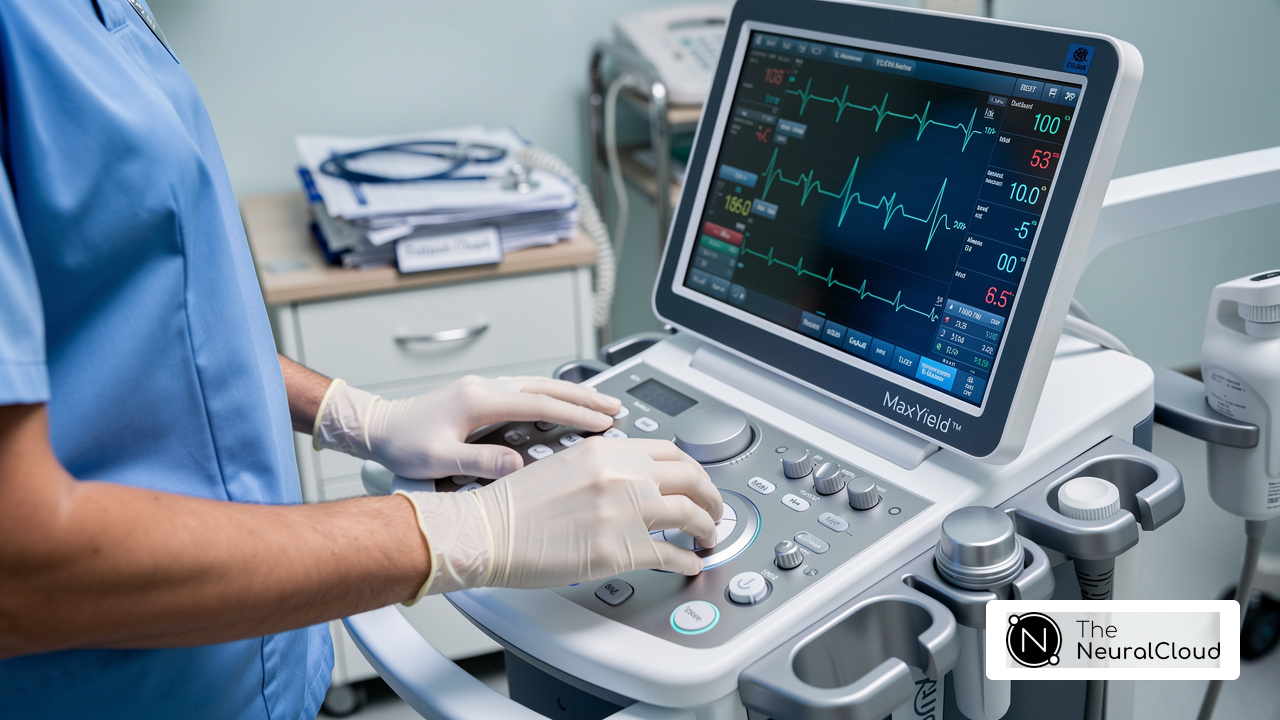
Understanding the challenges in ECG analysis is the first step. The increasing complexity of arrhythmias demands precise interpretation, which can be daunting for healthcare professionals. This is where innovative solutions like the MaxYield™ platform come into play. By offering advanced features tailored for EKG analysis, MaxYield™ aims to streamline the diagnostic process, making it more efficient and reliable.
The MaxYield™ platform boasts several key features that set it apart. These include:
- Enhanced algorithms for arrhythmia detection
- User-friendly interfaces
- Real-time data analysis capabilities
Each of these features contributes to a more accurate assessment of cardiac conditions, ultimately benefiting both healthcare providers and patients.
The advantages of utilizing MaxYield™ are clear. Healthcare professionals can expect improved diagnostic accuracy, reduced interpretation time, and better patient outcomes. By leveraging this platform, developers can help transform cardiac care, ensuring that patients receive timely and effective treatment.
Neural Cloud Solutions: Transforming Flutter EKG Analysis with MaxYield™
Neural Cloud Solutions is at the forefront of revolutionizing heart rhythm analysis through its platform, which automates and enhances ECG signal interpretation. This platform utilizes advanced algorithms to process over 200,000 heartbeats in under five minutes, enabling healthcare professionals to quickly diagnose conditions. Such innovation is essential for improving patient outcomes, demonstrating how AI can significantly boost diagnostic accuracy and streamline workflows.
The integration of AI in EKG analysis not only speeds up the identification of arrhythmias but also improves the overall quality of cardiac data. This technology alleviates the workload on clinicians, allowing them to concentrate on high-level decision-making instead of labor-intensive manual tasks. Experts in the field have noted that AI systems often match or exceed traditional methods in detecting various arrhythmias, including atrial flutter.
Furthermore, the influence of AI on diagnostic accuracy is substantial. Research indicates that AI-enhanced tools can lead to better outcomes for patients. For example, AI models have significantly reduced false positive activations, thereby increasing the reliability of diagnoses. As the healthcare landscape continues to evolve, the ability of platforms like MaxYield™ to integrate seamlessly into healthcare systems will be vital for optimizing patient care and resource allocation.
Key ECG Characteristics of Atrial Flutter
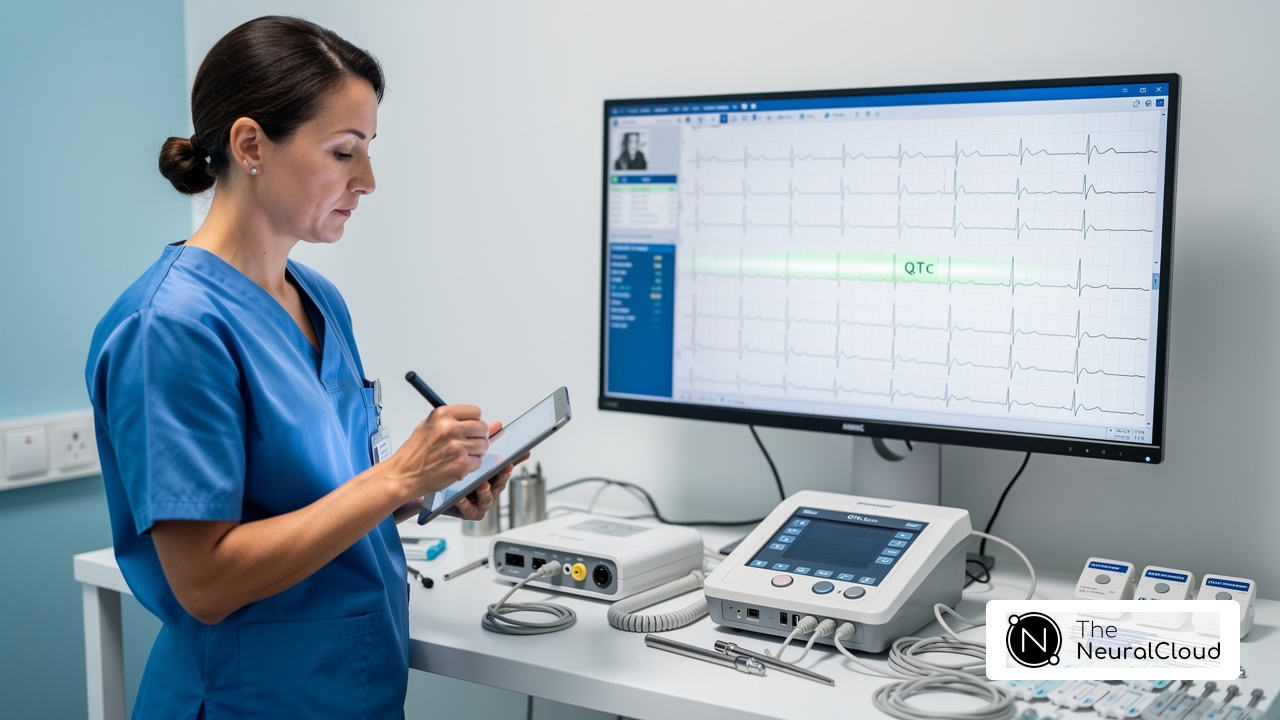
presents a distinct 'sawtooth' pattern of activity in the upper chambers, commonly referred to as F-waves. This pattern is typically observed in leads II, III, and aVF. The heart rate in atrial flutter usually ranges from 240 to 340 beats per minute, and the presence of variable AV block can complicate the interpretation of these rhythms. For healthcare professionals, recognizing these critical characteristics is essential for creating effective algorithms that can differentiate heart rhythm issues from other arrhythmias.
MaxYield™ offers advanced features. It employs sophisticated noise filtering techniques and algorithms, which streamline the process of analyzing ECG data. By utilizing these features, MaxYield™ enables healthcare professionals to identify atrial flutter more accurately. This capability is vital for accurate diagnosis and informed clinical decision-making.
The advantages of using MaxYield™ extend beyond just improved analysis. The platform evolves with each use, continuously enhancing its diagnostic yield. Remarkably, it can analyze large datasets quickly, which greatly accelerates the analysis process. This efficiency not only saves time but also allows healthcare professionals to make timely interventions, ultimately improving outcomes.

Challenges in Identifying Atrial Flutter on EKGs
Recognizing a specific type of arrhythmia on flutter EKGs presents several challenges. Misinterpretation can occur due to overlapping waveforms and variable AV conduction. Additionally, swift heart rates may obscure typical wave patterns, complicating diagnosis. These difficulties highlight the need for advanced solutions in EKG analysis.
The platform addresses these challenges effectively. It features sophisticated algorithms designed to filter out noise and enhance signal clarity. By improving the accuracy of flutter EKG readings, healthcare professionals can make more precise diagnoses, ultimately leading to better patient outcomes.
The advantages of using MaxYield™ are significant. Clinicians benefit from clearer, more reliable data, which aids in timely decision-making. This platform not only streamlines the analysis process but also supports healthcare providers in delivering high-quality care. With MaxYield™, the management of atrial flutter becomes more manageable, allowing for improved patient management.

Importance of P-Wave Identification in Atrial Flutter Diagnosis
Recognizing P-waves accurately is essential for diagnosing atrial flutter, as these waves provide critical insights into the characteristics of arrhythmias. However, in cases of atrial flutter, P-waves can be hidden or entirely absent, often obscured within T-waves, complicating the diagnostic process. Recent advancements in technology have shown promise in improving the accuracy of EKG interpretation. For example, machine learning algorithms have been utilized to enhance P-wave detection, significantly boosting diagnostic confidence and reducing the risk of misdiagnosis.
Statistics reveal that delayed P-wave identification correlates with a two-fold increase in the risk of complications. This underscores the necessity of precise P-wave analysis in clinical settings. As developers focus on creating algorithms that effectively assess P-wave features, they contribute to more reliable EKG readings. Ultimately, this leads to improved patient outcomes, benefiting healthcare professionals and patients alike.

Advanced Algorithms for Enhanced EKG Interpretation
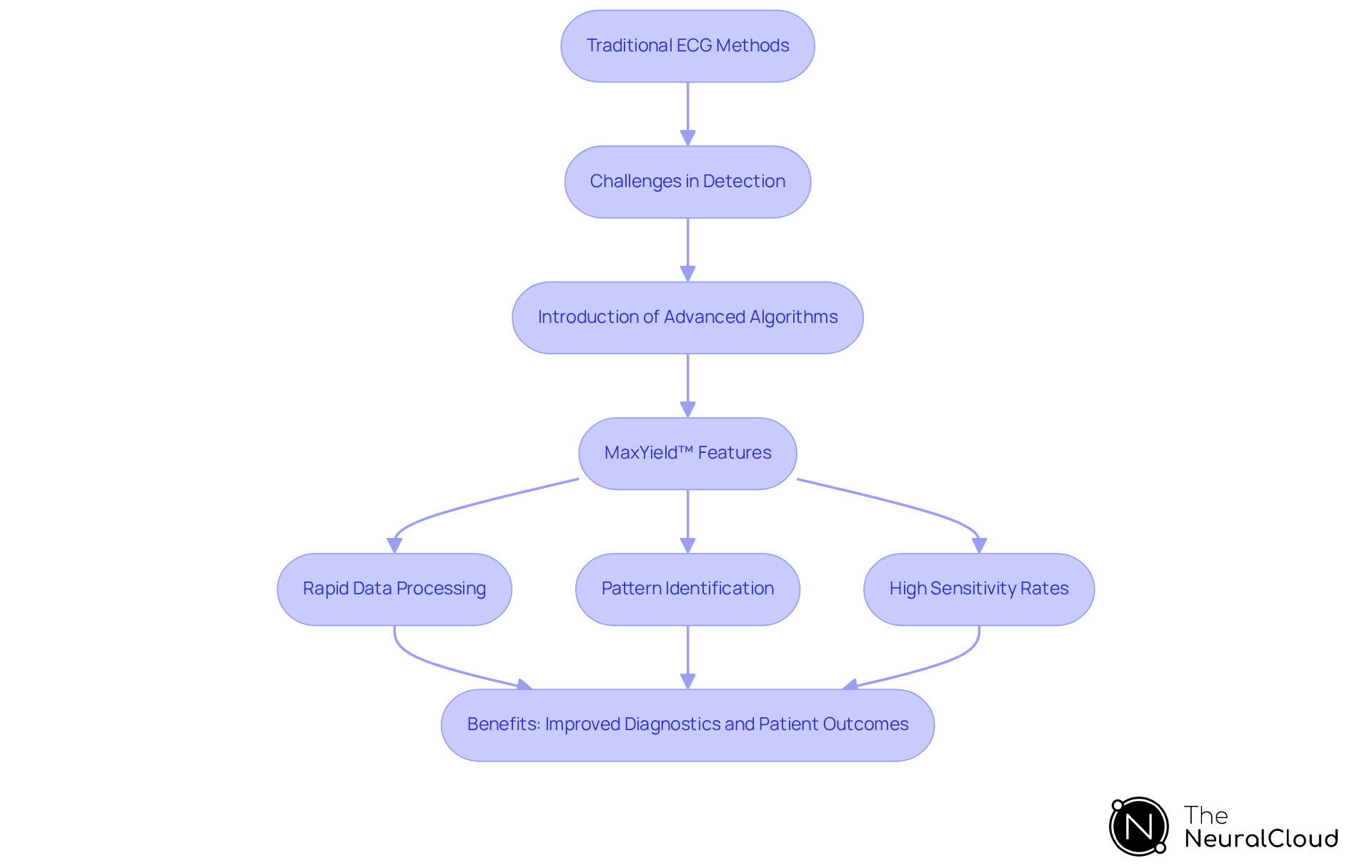
The landscape of healthcare faces significant challenges, particularly in the accurate detection of arrhythmias. Traditional methods often struggle to keep pace with the complexities of data interpretation, leading to potential oversights in diagnosis. This is where advanced algorithms, particularly those utilized in platforms like MaxYield™, come into play.
MaxYield™ leverages cutting-edge machine learning and deep learning techniques to enhance ECG interpretation. Its features include the ability to process extensive datasets rapidly, identifying patterns and anomalies that might elude conventional methods. For example, AI algorithms applied to single-lead ECGs have shown remarkable accuracy and a negative predictive value of 99% in clinical settings. This capability significantly boosts diagnostic accuracy, providing healthcare professionals with reliable tools for patient assessment.
The advantages of integrating advanced algorithms into diagnostic tools are manifold. By improving data analysis, the platform not only enhances diagnostic precision but also improves care delivery. Studies indicate that AI excels in interpreting ECGs, leading to quicker and more precise diagnoses. This efficiency allows healthcare providers to focus on high-level decision-making, ultimately enhancing patient outcomes through earlier intervention and treatment.
Moreover, deep learning models like MaxYield™ can identify heart conditions that may remain asymptomatic until later stages. By transforming noisy recordings into detailed insights, the platform delivers beat-by-beat analysis at an astonishing speed of 200,000 heartbeats in under five minutes. This automation optimizes resource allocation, enabling healthcare experts to concentrate on critical tasks rather than labor-intensive manual analysis.
As machine learning technology continues to evolve, the applications of platforms like MaxYield™ in healthcare are poised to expand, offering even greater potential for improved patient care. The integration of such advanced algorithms not only addresses current challenges but also paves the way for a future where accurate and timely diagnoses are the norm.
Treatment Options for Atrial Flutter
Treatment Options for Atrial Flutter encompasses various strategies, including rate control with beta-blockers and calcium channel blockers, rhythm control through antiarrhythmic medications, and catheter ablation.
- Features of EKG Technology
The technology incorporates advanced ECG technology that significantly enhances the clarity of ECG signals. This feature allows healthcare providers to monitor patients in real-time, providing critical information that informs treatment decisions. - Advantages of Improved ECG Analysis
With improved ECG analysis, healthcare providers can track the effectiveness of treatments more accurately. This capability is essential, especially as ongoing research continues to refine treatment protocols and improve outcomes for patients. - Benefits for Patient Care
By utilizing the advanced technology, healthcare providers can adjust treatment strategies based on patient responses, ultimately leading to better patient care. This is particularly important for individuals who may not be suitable for immediate ablation, as it allows for tailored management of their condition.
As of 2026, updates in the management of heart arrhythmia emphasize the importance of treatment strategies that consider individual patient needs. Cardiologists advocate for a comprehensive approach that combines medication management with lifestyle changes and, when necessary, catheter ablation. This multifaceted strategy not only addresses immediate symptoms but also reduces risks associated with abnormal heart rhythms, such as stroke and heart failure. The evolving landscape of heart rhythm treatment underscores the vital role of health technology developers in creating solutions that enhance monitoring and care.

The Role of Continuous Monitoring in Atrial Flutter Management
Continuous monitoring plays a vital role in effectively managing atrial flutter. It allows healthcare providers to track heart rhythms using technology in real-time, which is essential for timely interventions. Wearable devices and implantable loop recorders, such as cardiac monitors, are key tools in this process, facilitating early detection of arrhythmias and significantly improving patient outcomes. Research indicates that individuals using wearable devices, such as those that monitor heart rate, benefit from enhanced monitoring capabilities, leading to better management of their conditions.
In 2022, the adoption rate rose to 36.36%, showcasing a growing acceptance of these technologies in clinical settings. This trend underscores the opportunity for developers to create solutions that incorporate continuous monitoring, ultimately enhancing patient management and clinical outcomes. One such solution is Neural Cloud Solutions' MaxYield™, which offers advanced noise filtering and distinct wave recognition to improve ECG analysis.
MaxYield™ addresses the limitations of traditional ECG interpretation technology by evolving with each use, ensuring maximum diagnostic yield. As the landscape of cardiac care continues to evolve, integrating advanced technologies, such as artificial intelligence, into management systems supported by cloud solutions will be crucial for optimizing care and outcomes. Healthcare professionals are encouraged to leverage these advancements to refine treatment strategies for individuals.

Integrating EKG Data into Healthcare Systems
Incorporating EKG data into healthcare systems presents several challenges that need addressing to enhance patient outcomes. One major hurdle is ensuring that healthcare providers have access to complete patient information. This integration is essential for seamless data sharing between devices and electronic health records (EHRs), which is vital for informed decision-making. Developers must prioritize interoperability, allowing systems to integrate effortlessly with existing healthcare infrastructures.
The platform addresses these challenges by offering features that enhance ECG analysis. For instance, its technology allows for real-time updates of ECG readings within medical records. This capability not only improves collaboration between primary care teams and specialists but also ensures that all relevant data is readily available for clinical decisions. Furthermore, the platform's design focuses on user-friendliness, making it accessible for healthcare professionals at all levels of technical expertise.
The advantages of adopting the platform are significant. By facilitating data exchange, it ensures that data flows seamlessly across platforms. This interoperability fosters a coordinated approach to care. As health tech developers embrace these principles, they will create more effective tools for patient management that improve management and clinical efficiency, ultimately benefiting patient care.
User Training and Adoption for Effective EKG Technology Use
Effective user training is essential for the successful integration of technology in clinical environments. Healthcare professionals must not only be adept at interpreting flutter EKG data but also at leveraging the technology to its fullest potential. Recent updates in training methodologies emphasize the importance of structured training programs, which have been shown to significantly enhance interpretation accuracy. For instance, studies indicate that structured rotations and simulation-based training can improve competency rates among medical interns, addressing the prevalent educational gaps in EKG interpretation.
Moreover, the design of flutter EKG tools plays a crucial role in user adoption. Integrating intuitive, user-friendly interfaces can enhance learning and increase user confidence, ultimately resulting in better outcomes for patients. Feedback from healthcare professionals highlights that effective training is not just about technical skills; it also requires a supportive environment and accessible resources. By prioritizing these elements, developers can create solutions that empower clinicians to make informed decisions based on accurate data, thereby enhancing overall care for patients.
Neural Cloud Solutions exemplifies this approach by leveraging cutting-edge AI technology to automate ECG analysis, continuously improving accuracy and efficiency through its Continuous Learning Model. This innovative solution addresses common challenges, such as data overload, ensuring that healthcare professionals can rely on crisp, filtered flutter EKG signals for better diagnostic outcomes. Additionally, successful case studies, such as the AI system that improves diagnostic accuracy, illustrate the potential of well-trained professionals utilizing advanced ECG technology. For practical guidance, developers are encouraged to refer to the training manuals and specific use cases associated with the technology, which outline best practices and enhance the training experience.

Future Trends in EKG Analysis for Atrial Flutter
The future of EKG analysis is poised for significant advancements driven by artificial intelligence (AI) and machine learning. These technologies are improving diagnostic accuracy, with wearable devices becoming essential components of clinical workflows. The healthcare sector is witnessing a surge in the adoption of remote monitoring technologies, which is expected to play a crucial role in remote monitoring and ongoing patient engagement. A study from Amsterdam University Medical Centre highlights this trend, revealing that improved algorithms enhance the detection of atrial flutter, identifying 9.6% of cases compared to just 2.3% in standard care. Such findings underscore the potential of wearable devices to capture critical cardiac data.
Health tech developers should focus on these trends, aiming to create innovative solutions that seamlessly integrate AI and machine learning into existing clinical practices. They must also consider the costs associated with implementing advanced technologies, which Duke University estimates could exceed $200,000. The ongoing evolution of these technologies is not solely about enhancing diagnostic capabilities; it also addresses the urgent need for efficient data management in an era where the volume of cardiac data is rapidly increasing. As AI continues to advance, its application in EKG analysis is likely to expand, providing new insights into managing atrial flutter and improving patient outcomes. The integration of AI's advanced technologies will enable healthcare providers to make informed decisions, ultimately transforming the landscape of cardiac care.

Conclusion
The challenges in ECG analysis are significant, often hindering timely and accurate diagnoses. Advanced technologies like Neural Cloud Solutions' MaxYield™ platform address these issues head-on. By automating ECG signal interpretation and integrating artificial intelligence, MaxYield™ enhances diagnostic accuracy and streamlines clinical workflows. This innovation accelerates the identification of critical cardiac events, allowing healthcare professionals to concentrate on high-level decision-making, which ultimately improves patient care.
Key features of the MaxYield™ platform include:
- Rapid Data Processing: Capable of handling vast amounts of data quickly.
- High Sensitivity and Specificity: Ensures accurate detection of arrhythmias.
- Integration with Healthcare Systems: Facilitates continuous monitoring and timely patient management.
These features translate into significant advantages for healthcare providers. With MaxYield™, clinicians can expect improved diagnostic precision, which leads to better patient outcomes. The platform not only addresses current challenges in EKG analysis but also sets the stage for innovative solutions that enhance overall cardiac care.
As the future of EKG analysis unfolds, embracing advancements like MaxYield™ will be crucial for health tech developers and healthcare providers alike. The integration of AI and machine learning into clinical practices not only tackles existing issues but also paves the way for enhanced patient outcomes. By prioritizing continuous learning and effective training, the healthcare sector can fully harness these technologies, ensuring that accurate diagnoses and optimal care become the standard in managing atrial flutter and other cardiac conditions.
Frequently Asked Questions
What is MaxYield™ and how does it transform ECG analysis?
MaxYield™ is a platform developed by Neural Cloud Solutions that automates and enhances ECG signal interpretation. It utilizes advanced AI algorithms to process over 200,000 heartbeats in under five minutes, allowing healthcare professionals to quickly identify critical cardiac events.
What are the benefits of using AI in ECG analysis?
The integration of AI in ECG analysis speeds up the identification of arrhythmias, improves the quality of cardiac data, and alleviates the workload on clinicians. This enables them to focus on high-level decision-making rather than manual tasks. AI algorithms often match or exceed traditional methods in detecting various cardiac conditions.
How does MaxYield™ improve diagnostic accuracy?
MaxYield™ enhances diagnostic accuracy by improving both sensitivity and specificity in ECG analysis. Research indicates that AI-enhanced ECG analysis significantly reduces false positive activations, increasing the reliability of diagnoses.
What are the key ECG characteristics of atrial flutter?
Atrial flutter presents a distinct 'sawtooth' pattern known as F-waves, typically observed in leads II, III, and aVF. The heart rate in atrial flutter ranges from 240 to 340 beats per minute, and variable AV block can complicate interpretation.
How does MaxYield™ assist in analyzing ECG data?
MaxYield™ employs sophisticated noise filtering techniques and automated labeling, transforming noisy recordings into clear insights. This capability enables healthcare professionals to identify critical features in each heartbeat, facilitating accurate diagnosis and informed clinical decision-making.
What challenges exist in identifying atrial flutter on EKGs?
Challenges include misinterpretation due to overlapping waveforms, variable AV conduction, and swift heart rates that may obscure typical wave patterns. These factors complicate accurate diagnoses for clinicians.
How does MaxYield™ address the challenges of flutter EKG analysis?
MaxYield™ features sophisticated algorithms that filter out noise and enhance signal clarity, improving the accuracy of flutter EKG readings. This allows healthcare professionals to make more precise diagnoses and ultimately leads to better patient outcomes.
What are the overall advantages of using MaxYield™ for healthcare providers?
The advantages include clearer, more reliable data for timely decision-making, streamlined analysis processes, and support for delivering high-quality care. MaxYield™ makes the complexities of ECG interpretation more manageable, improving patient management.
List of Sources
- Neural Cloud Solutions: Transforming Flutter EKG Analysis with MaxYield™
- sciencedirect.com (https://sciencedirect.com/science/article/pii/S2688115225001985)
- gehealthcare.com (https://gehealthcare.com/insights/article/ai-and-ecg-interpretation-insights-and-trends-for-today's-cardiologists?srsltid=AfmBOoprkAQLoyhoYO7PJPJP-vkupZCn0AEhdoY_veAuWR2SvlGQmF2a)
- jacc.org (https://jacc.org/doi/10.1016/j.jcin.2025.10.018)
- pmc.ncbi.nlm.nih.gov (https://pmc.ncbi.nlm.nih.gov/articles/PMC10145690)
- Key ECG Characteristics of Atrial Flutter
- bestpractice.bmj.com (https://bestpractice.bmj.com/topics/en-us/183)
- Atrial Flutter (https://litfl.com/atrial-flutter-ecg-library)
- Atrial Flutter: Practice Essentials, Background, Pathophysiology (https://emedicine.medscape.com/article/151210-overview)
- Importance of P-Wave Identification in Atrial Flutter Diagnosis
- ahajournals.org (https://ahajournals.org/doi/10.1161/CIRCEP.121.010435)
- journals.plos.org (https://journals.plos.org/plosone/article?id=10.1371/journal.pone.0278527)
- pmc.ncbi.nlm.nih.gov (https://pmc.ncbi.nlm.nih.gov/articles/PMC8411742)
- link.springer.com (https://link.springer.com/article/10.1186/s12872-025-04920-4)
- pmc.ncbi.nlm.nih.gov (https://pmc.ncbi.nlm.nih.gov/articles/PMC7507358)
- Advanced Algorithms for Enhanced EKG Interpretation
- AI algorithm from the Heart Institute interprets ECGs better than a human (https://montreal.citynews.ca/2026/01/27/ai-algorithm-heart-institute-interprets-ecgs)
- Year in Review: Evidence Around AI in Cardiology Grows (https://tctmd.com/news/year-review-evidence-around-ai-cardiology-grows)
- healio.com (https://healio.com/news/pulmonology/20260121/copd-detected-early-with-aipowered-electrocardiogram-interpretation)
- Treatment Options for Atrial Flutter
- Pulsed Field Ablation: An Emerging Option for Treating Atrial Flutter in Patients with AF (https://consultqd.clevelandclinic.org/pulsed-field-ablation-for-atrial-flutter-in-patients-with-af)
- northside.com (https://northside.com/about/news-center/article-details/a-new-option-for-treating-atrial-fibrillation)
- stormontvail.org (https://stormontvail.org/stormont-vail-health-introduces-breakthrough-afib-treatment)
- int.livhospital.com (https://int.livhospital.com/how-to-treat-heart-flutter-step-by-step-guide-to-atrial-flutter-treatment)
- Heart Rhythm 2025 Showcases New Advancements in Emerging Pulsed Field Ablation Technology - HRS (https://hrsonline.org/news/hr2025-showcases-new-advancements-emerging-paf-technology)
- The Role of Continuous Monitoring in Atrial Flutter Management
- Checking your browser - reCAPTCHA (https://pmc.ncbi.nlm.nih.gov/articles/PMC11890132)
- jamanetwork.com (https://jamanetwork.com/journals/jama/article-abstract/2839710)
- patentpc.com (https://patentpc.com/blog/remote-patient-monitoring-growth-adoption-stats)
- New Study Show Implantable Cardiac Monitors Significantly Improve Care Pathways for Patients with Atrial Fibrillation - HRS (https://hrsonline.org/news/icm-improves-afib-patient-management)
- Smartwatches Help Detect Hidden Dangerous Heart Rhythm Problems, Clinical Trial Finds (https://usnews.com/news/health-news/articles/2026-01-23/smartwatches-help-detect-hidden-dangerous-heart-rhythm-problems-clinical-trial-finds)
- Integrating EKG Data into Healthcare Systems
- AI-Powered ECG Analysis Offers Promising Path for Early Detection of Chronic Obstructive Pulmonary Disease, Say Mount Sinai Researchers (https://mountsinai.org/about/newsroom/2026/ai-powered-ecg-analysis-offers-promising-path-for-early-detection-of-chronic-obstructive-pulmonary-disease-say-mount-sinai-researchers)
- emjreviews.com (https://emjreviews.com/general-healthcare/news/ai-enabled-ecg-helps-identify-undiagnosed-hypertrophic-cardiomyopathy)
- midmark.com (https://midmark.com/newsroom/news-releases/2025/10/16/midmark-digital-ecg-now-available-with-dicom-compatibility)
- finance.yahoo.com (https://finance.yahoo.com/news/scientific-statement-guides-clinicians-integrate-170400832.html)
- User Training and Adoption for Effective EKG Technology Use
- AI-Powered ECG Analysis Offers Promising Path for Early Detection of Chronic Obstructive Pulmonary Disease, Say Mount Sinai Researchers (https://mountsinai.org/about/newsroom/2026/ai-powered-ecg-analysis-offers-promising-path-for-early-detection-of-chronic-obstructive-pulmonary-disease-say-mount-sinai-researchers)
- cureus.com (https://cureus.com/articles/384113-improving-ecg-interpretation-skills-among-healthcare-providers-at-aswan-university-hospitals-a-clinical-audit?score_article=true)
- nature.com (https://nature.com/articles/s41598-025-33969-6)
- Accuracy of Physicians’ Electrocardiogram Interpretation (https://jamanetwork.com/journals/jamainternalmedicine/fullarticle/2771093)
- Future Trends in EKG Analysis for Atrial Flutter
- radai.com (https://radai.com/blogs/its-2026-welcome-to-healthcare-ais-next-act-prove-it-or-move-aside)
- AccurKardia wins FDA clearance for next-generation ECG analysis system | Medical Economics (https://medicaleconomics.com/view/accurkardia-wins-fda-clearance-for-next-generation-ecg-analysis-system)
- 1st synthesized 12-lead ECG to launch in 2026 (https://beckershospitalreview.com/supply-chain/1st-synthesized-12-lead-ecg-to-launch-in-2026)
- drugs.com (https://drugs.com/news/smartwatch-based-screening-improves-detection-new-onset-fib-128440.html)