Introduction
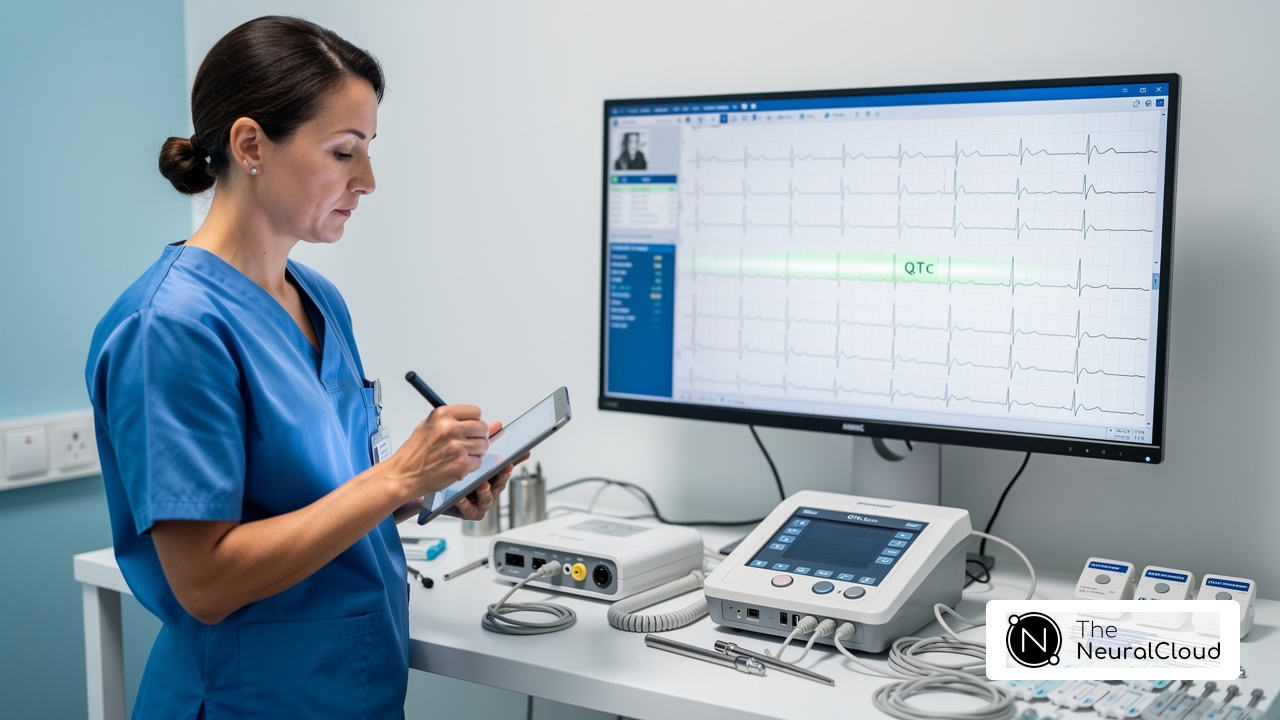
Electrocardiogram (ECG) devices are essential tools in cardiac care, each tailored to address specific diagnostic needs and patient scenarios. As the market for these devices grows, it’s vital for healthcare professionals to grasp their varied functionalities - from traditional resting ECG machines to cutting-edge wearable gadgets. However, challenges such as signal clarity, automation, and integration with existing healthcare systems remain significant hurdles. Clinicians must navigate these complexities to choose the most effective ECG technology for their practices.
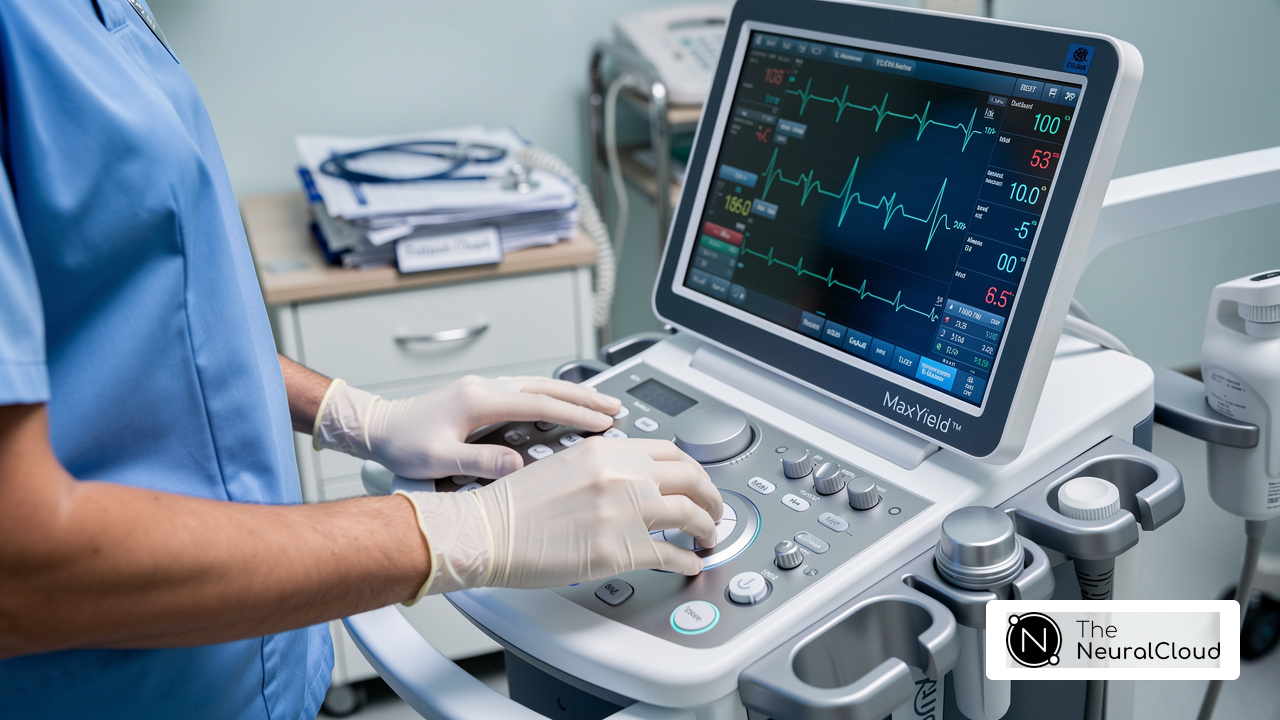
The MaxYield™ platform stands out in this evolving landscape by addressing these challenges head-on. It enhances ECG analysis through advanced signal processing, ensuring clearer readings that can lead to more accurate diagnoses. Additionally, its automation features streamline workflows, allowing clinicians to focus more on patient care rather than manual data interpretation.
The benefits of the MaxYield™ platform extend beyond improved analysis. By integrating seamlessly with existing healthcare systems, it facilitates better data sharing and collaboration among healthcare teams. This not only enhances patient outcomes but also supports clinicians in making informed decisions quickly and efficiently.
In summary, the MaxYield™ platform offers a comprehensive solution for ECG analysis, combining clarity, automation, and integration. For healthcare professionals, this means more reliable diagnostics and improved patient care, ultimately leading to better health outcomes.
Overview of ECG Devices: Types and Functions
Electrocardiogram (ECG) devices are essential tools in cardiac care, categorized by their functionality and application:
- Resting ECG Machines: Standard in clinical settings, these instruments utilize 12 ECG leads to capture the heart's electrical activity at rest, providing a detailed overview of cardiac function. They hold a significant market share, accounting for 41.6% in 2025, due to their non-invasive nature and effectiveness in early diagnosis. The integration of advanced systems enhances the analysis of resting ECG machines by improving noise filtering and wave recognition, ensuring accurate readings even in challenging conditions.
- Holter Monitors: These portable tools continuously record heart activity for 24 to 48 hours, enabling the detection of arrhythmias that may not be evident during a standard ECG. Their ability to monitor patients over extended periods makes them invaluable for diagnosing intermittent cardiac issues. With Holter monitors, advanced noise filtering and clear wave recognition improve the quality of recorded information.
- Event Monitors: Comparable to Holter monitors, these instruments are worn for extended periods but only capture information when prompted by the patient. This feature is particularly useful for capturing sporadic symptoms, enhancing diagnostic accuracy. The platform can enhance the examination of information gathered from these instruments, offering automated labeling and insights that aid clinical decision-making.
- Stress ECG Machines: Designed to assess heart function under physical stress, these instruments are typically utilized during exercise tests. They assess how the heart responds to increased workload, providing critical insights into cardiovascular health. This system can improve the evaluation of stress ECG devices by guaranteeing precise information capture and interpretation, even under high-stress conditions.
- Wearable ECG Gadgets: Comprising smartwatches and fitness trackers, these tools provide real-time heart monitoring and can notify users of irregularities. Their growing popularity reflects a shift towards personal health management, driven by advancements in technology and increased healthcare awareness. This technology enhances the performance of these tools by guaranteeing precise information capture and analysis, even amid interference and artifacts.
- Mobile ECG Equipment: Compact and portable, these instruments facilitate ECG recording in various settings, including home and travel. Their accessibility enhances cardiac monitoring, particularly for patients with chronic conditions. The integration of MaxYield™ into mobile ECG solutions can significantly improve the quality of data collected, making it easier for healthcare providers to monitor patients remotely.
Each variety of ECG equipment serves a unique purpose, addressing diverse patient needs and clinical scenarios, and contributing to the overall growth of the ECG market, projected to reach USD 13.72 billion by 2030.

Feature Comparison: Signal Clarity, Automation, and Integration
Overview of ECG Analysis Challenges
ECG analysis presents several challenges that can hinder accurate heart health assessments. Traditional Holter monitors often struggle with signal interference, leading to unreliable data. Additionally, many ECG devices rely on manual interpretation, which is time-consuming and susceptible to human error. As the demand for precise and efficient ECG analysis grows, innovative solutions are essential.
Features of the MaxYield™ Platform
The MaxYield™ platform stands out with several key features that enhance ECG analysis:
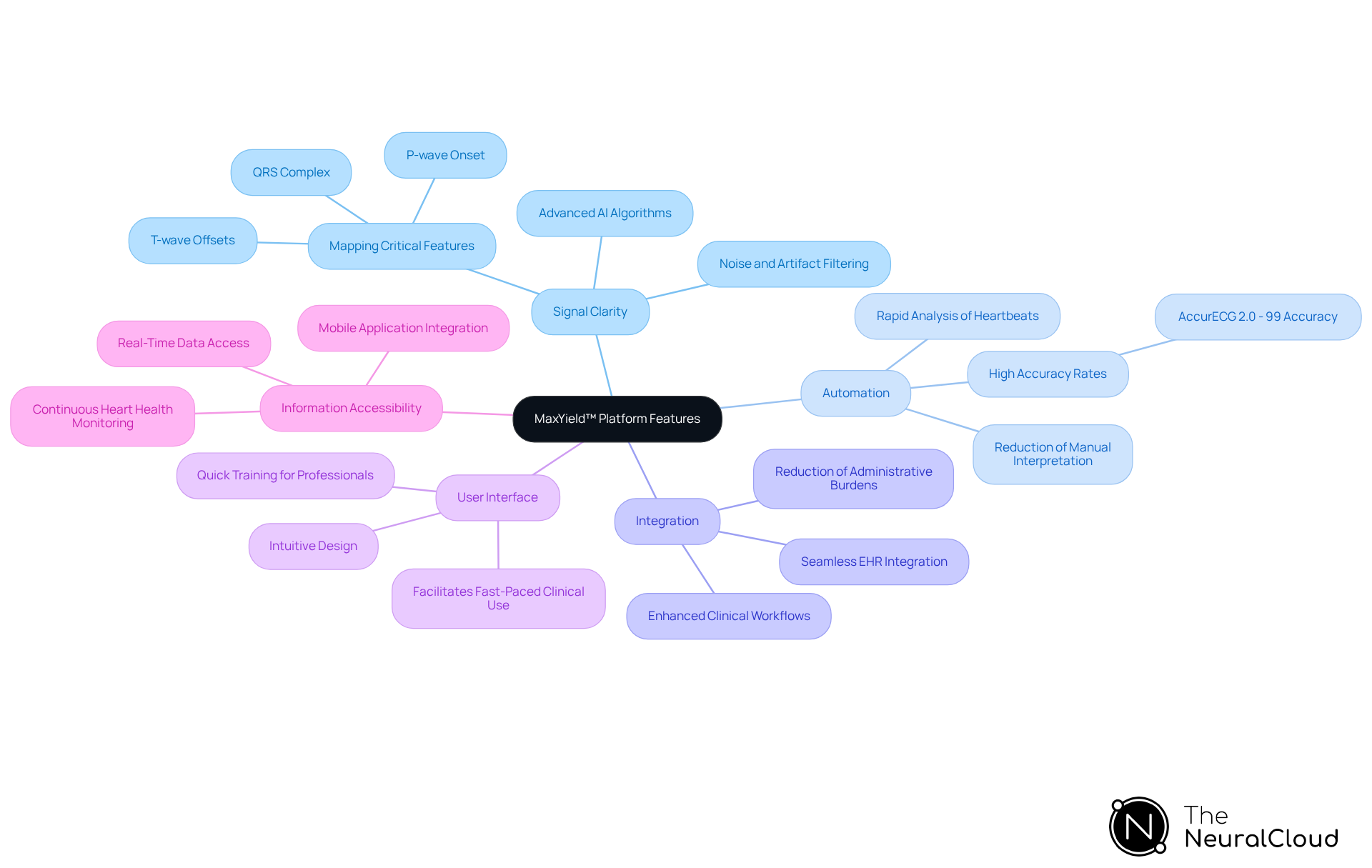
- Signal Clarity: Utilizing advanced AI algorithms, the platform filters out noise and artifacts, ensuring precise readings. This capability significantly improves upon conventional Holter monitors, which frequently face signal interference issues. The system effectively maps ECG signals, isolating and labeling critical features like P-wave, QRS complex, and T-wave onsets and offsets, thereby enhancing data clarity.
- Automation: The platform automates the labeling of ECG waveforms, allowing for rapid analysis of over 200,000 heartbeats in under five minutes. This contrasts sharply with many other tools that still depend on manual interpretation, which can be both slow and error-prone. The introduction of platforms like AccurECG 2.0, achieving 99% accuracy in ECG interpretation, underscores the trend towards automation in ECG analysis.
- Integration: Modern ECG devices increasingly focus on seamless integration with electronic health records (EHR) systems. Devices from Neural Cloud Solutions, for instance, significantly enhance clinical workflows by reducing administrative burdens. In contrast, older models often lack this capability, complicating information management and reducing efficiency.
- User Interface: An intuitive user interface is crucial for effective operation. Devices designed with user-friendly interfaces facilitate quicker training for healthcare professionals, while complex systems can hinder effective use in fast-paced clinical settings. The shift towards more accessible designs is vital as healthcare providers aim to optimize their workflows.
- Information Accessibility: Wearable ECG devices are now offering real-time information access through mobile applications, enabling continuous heart health monitoring for both patients and healthcare providers. This feature is less common in traditional ECG machines, which typically require physical access for data retrieval. The rise of portable devices, such as AliveCor's Kardia 12L, which has expanded its functionalities to include more cardiac assessments, highlights the importance of accessibility in modern ECG technology.
Advantages for Healthcare Professionals
The MaxYield™ platform not only addresses the challenges of ECG analysis but also provides significant advantages for healthcare professionals. By ensuring signal clarity and automating processes, it saves valuable time and reduces the likelihood of errors. The integration with EHR systems streamlines workflows, allowing clinicians to focus more on patient care rather than administrative tasks. Ultimately, the user-friendly interface and real-time data access empower healthcare providers to make informed decisions swiftly, enhancing overall patient outcomes.
Practical Considerations: Adoption, Compliance, and Integration Challenges
Adopting new ECG technology involves several practical considerations:
- Adoption Rates: The readiness of healthcare providers to embrace new ECG equipment often hinges on the perceived benefits relative to costs. Innovative solutions like the MaxYield™ platform from Neural Cloud Solutions may face initial resistance due to the upfront investment required. However, implementing 12 ECG solutions can lead to long-term cost savings through improved workflow efficiency. Notably, the wearable ECG monitors market is projected to grow from $4.78 billion in 2025 to $5.9 billion in 2026, highlighting a growing interest in advanced technologies.
- 12 ECG instruments must comply with various healthcare regulations, including HIPAA for information security and FDA guidelines for medical equipment. Navigating these compliance requirements can present significant challenges for manufacturers and healthcare providers. As of 2026, the cardiology field boasts over 200 FDA-cleared AI algorithms, including those that analyze 12 ECG, reflecting increasing regulatory scrutiny and the necessity for adherence in product development. Platforms like YieldOptimizer streamline information processing, ensuring compliance with these standards.
- Integration with existing systems: Incorporating new devices like the 12 ECG into established clinical workflows and electronic health record (EHR) systems can be complex. Devices that offer robust integration capabilities, such as those from Neural Cloud Solutions, facilitate smoother transitions. The platform automates repetitive tasks and processes data efficiently, including rapid labeling of P, QRS, and T Wave onsets and offsets in CSV format for easy integration into current workflows, minimizing the need for extensive modifications to existing systems.
- Training and Support: Effective training programs are crucial for successful implementation. Devices like the 12 ECG that include comprehensive training and ongoing support are more likely to achieve successful adoption, as they help reduce the learning curve for healthcare professionals. Neural Cloud Solutions emphasizes support for users of the platform, ensuring they can effectively leverage its advanced features.
- Patient Engagement: For wearable ECG equipment, promoting patient involvement is essential. Devices that feature user-friendly interfaces and provide real-time feedback can significantly enhance patient compliance and encourage proactive health management. The platform's capabilities in delivering transparent information sets and clean signals greatly improve patient experiences.

Side-by-Side Evaluation: Pros and Cons of Each ECG Device
Overview of ECG Device Types
ECG devices play a crucial role in monitoring heart health, each with its unique strengths and weaknesses. Understanding these can help healthcare professionals choose the right tool for their patients. Below is a summary of various ECG device types:
- Resting ECG Machines: High accuracy, standard in clinical settings; Limited to resting conditions, less portable
- Holter Monitors: Continuous monitoring, effective for intermittent symptoms; Can be cumbersome, requires patient compliance
- Event Monitors: Targeted data collection, less intrusive; Limited recording time, requires patient activation
- Stress ECG Machines: Evaluates heart under stress, beneficial for exercise testing; Requires specialized setup, may not be suitable for all patients
- Wearable ECG Devices: Real-time monitoring, user-friendly; can leverage MaxYield™ for enhanced clarity and efficiency; Variable accuracy, dependent on user adherence
- Mobile ECG Devices: Portable, convenient for on-the-go monitoring; can utilize MaxYield™ for improved signal quality; May lack comprehensive features of larger machines, potential data security concerns
Challenges in ECG Analysis
Despite the advancements in ECG technology, challenges remain in achieving consistent accuracy and clarity in readings. Many devices, particularly wearables, can struggle with signal quality, impacting their reliability. This is where Neural Cloud Solutions' MaxYield™ platform comes into play.
Features of MaxYield™
MaxYield™ enhances ECG analysis by improving signal clarity and efficiency. It integrates seamlessly with various ECG devices, including wearables and Holter monitors, to provide clearer readings. This platform addresses the limitations of existing technologies, ensuring that healthcare professionals receive the most accurate data possible.
Advantages for Healthcare Professionals
By utilizing MaxYield™, clinicians can expect several benefits:
- Improved Accuracy: Enhanced signal clarity leads to more reliable readings.
- Efficiency in Analysis: Streamlined data processing saves time and resources.
- User-Friendly Interface: Simplifies the interpretation of complex data, making it accessible for all healthcare providers.
In conclusion, integrating MaxYield™ into ECG analysis not only addresses existing challenges but also empowers healthcare professionals to optimize patient care effectively.

Conclusion
In the field of cardiac care, Electrocardiogram (ECG) devices play a crucial role, each type designed to meet specific patient needs. However, ECG analysis often faces challenges such as signal clarity and the need for timely decision-making. The MaxYield™ platform addresses these issues by offering advanced features that enhance ECG analysis, making it a vital tool for healthcare professionals.
The MaxYield™ platform boasts several key features:
- Signal Clarity: It improves the quality of ECG signals, ensuring accurate readings.
- Automation: Automated processes streamline analysis, reducing the time required for interpretation.
- User-Friendly Interface: Designed for ease of use, it allows healthcare providers to navigate the system effortlessly.
These features translate into significant advantages for healthcare professionals. By utilizing the MaxYield™ platform, clinicians can achieve higher diagnostic accuracy, leading to better patient outcomes. Additionally, the platform enhances patient engagement and compliance, as it allows for real-time monitoring and feedback.
As the healthcare landscape evolves, integrating advanced ECG technology like the MaxYield™ platform is essential. By prioritizing these innovations, healthcare providers can ensure they are well-equipped to deliver optimal care in an increasingly complex environment.
Frequently Asked Questions
What are ECG devices and why are they important?
ECG devices, or electrocardiogram devices, are essential tools in cardiac care that capture the heart's electrical activity, helping in the diagnosis and monitoring of heart conditions.
What are the different types of ECG devices?
The main types of ECG devices include Resting ECG Machines, Holter Monitors, Event Monitors, Stress ECG Machines, Wearable ECG Gadgets, and Mobile ECG Equipment.
What is the function of Resting ECG Machines?
Resting ECG Machines are standard in clinical settings and use 12 ECG leads to capture the heart's electrical activity at rest, providing a detailed overview of cardiac function.
What percentage of the ECG market do Resting ECG Machines hold?
Resting ECG Machines are projected to hold a market share of 41.6% in 2025.
How do Holter Monitors work and what are their advantages?
Holter Monitors are portable devices that continuously record heart activity for 24 to 48 hours, allowing for the detection of arrhythmias that may not be visible during a standard ECG.
What distinguishes Event Monitors from Holter Monitors?
Event Monitors capture heart information only when prompted by the patient, making them useful for diagnosing sporadic symptoms, whereas Holter Monitors record continuously.
What is the purpose of Stress ECG Machines?
Stress ECG Machines assess heart function under physical stress, typically during exercise tests, to provide insights into cardiovascular health.
What are Wearable ECG Gadgets and their significance?
Wearable ECG Gadgets, such as smartwatches and fitness trackers, offer real-time heart monitoring and notify users of irregularities, reflecting a shift towards personal health management.
How do Mobile ECG Equipment enhance cardiac monitoring?
Mobile ECG Equipment is compact and portable, allowing for ECG recording in various settings, including home and travel, which is particularly beneficial for patients with chronic conditions.
What is the projected growth of the ECG market by 2030?
The ECG market is projected to reach USD 13.72 billion by 2030, driven by the diverse applications and advancements in ECG technology.
List of Sources
- Overview of ECG Devices: Types and Functions
- researchandmarkets.com (https://researchandmarkets.com/reports/5752037/ecg-devices-market-report?srsltid=AfmBOoobfZfUAaV4U2nVHUfpCvYhKDquJLHxHAlEKqIKylS6w7zAi8qP)
- 1st synthesized 12-lead ECG to launch in 2026 (https://beckershospitalreview.com/supply-chain/1st-synthesized-12-lead-ecg-to-launch-in-2026)
- AI-ECG Momentum and Rising Competition Reshape Diagnostic Cardiology in 2026 (https://signifyresearch.net/insights/diagnostic-cardiology-market-bouncing-into-2026)
- globenewswire.com (https://globenewswire.com/news-release/2026/04/20/3277242/0/en/electrocardiograph-market-insights-and-growth-outlook-2026-2034-rising-adoption-of-wearable-ecgs-spurs-market-growth-in-medical-tech.html)
- Feature Comparison: Signal Clarity, Automation, and Integration
- 1st synthesized 12-lead ECG to launch in 2026 (https://beckershospitalreview.com/supply-chain/1st-synthesized-12-lead-ecg-to-launch-in-2026)
- AI-ECG Momentum and Rising Competition Reshape Diagnostic Cardiology in 2026 (https://signifyresearch.net/insights/diagnostic-cardiology-market-bouncing-into-2026)
- AccurKardia wins FDA clearance for next-generation ECG analysis system | Medical Economics (https://medicaleconomics.com/view/accurkardia-wins-fda-clearance-for-next-generation-ecg-analysis-system)
- globenewswire.com (https://globenewswire.com/fr/news-release/2026/04/20/3277242/28124/en/electrocardiograph-market-insights-and-growth-outlook-2026-2034-rising-adoption-of-wearable-ecgs-spurs-market-growth-in-medical-tech.html)
- Practical Considerations: Adoption, Compliance, and Integration Challenges
- globenewswire.com (https://globenewswire.com/news-release/2026/04/13/3272639/28124/en/wearable-ecg-monitors-industry-to-more-than-double-during-2026-2030-exceeding-13-6-billion-total-revenue-rising-demand-for-ai-driven-diagnostics-and-home-based-cardiac-monitoring.html)
- linkedin.com (https://linkedin.com/pulse/electrocardiogram-ecg-device-market-growth-analysis-20262033-dh8vf)
- FDA clears 12-lead, cable-free home ECG monitoring system (https://cardiovascularbusiness.com/topics/cardiac-imaging/electrocardiography-ecg/fda-clears-12-lead-cable-free-home-ecg-monitoring-system)
- mpo-mag.com (https://mpo-mag.com/breaking-news/fda-clears-new-cardiac-determinations-for-kardia-12l-ecg-system)
- ir.heartbeam.com (https://ir.heartbeam.com/news-events/press-releases/detail/106/heartbeam-provides-update-on-regulatory-path-following-fda)
- Side-by-Side Evaluation: Pros and Cons of Each ECG Device
- ECG market keeps evolving thanks to AI, home monitoring and Epic integration (https://cardiovascularbusiness.com/topics/cardiac-imaging/electrocardiography-ecg/ecg-market-keeps-evolving-thanks-ai-home-monitoring-and-epic-integration)
- universityhealth.com (https://universityhealth.com/news/the-benefits-and-drawbacks-of-wearable-heart-monitors)
- globenewswire.com (https://globenewswire.com/news-release/2026/04/13/3272639/28124/en/wearable-ecg-monitors-industry-to-more-than-double-during-2026-2030-exceeding-13-6-billion-total-revenue-rising-demand-for-ai-driven-diagnostics-and-home-based-cardiac-monitoring.html)