Introduction
Accurate QTc measurement is fundamental to cardiac health, yet it presents a significant challenge for healthcare professionals. Inaccuracies can lead to serious arrhythmias, making it essential to grasp the nuances of both manual and automated measurement techniques. This article delves into best practices that not only improve the precision of QTc assessments but also utilize advanced technology to enhance patient outcomes.
As the field of cardiac care continues to evolve, how can clinicians ensure they are equipped with the most effective tools and knowledge to navigate these complexities?
Understand the QT Interval: Clinical Significance and Measurement Techniques
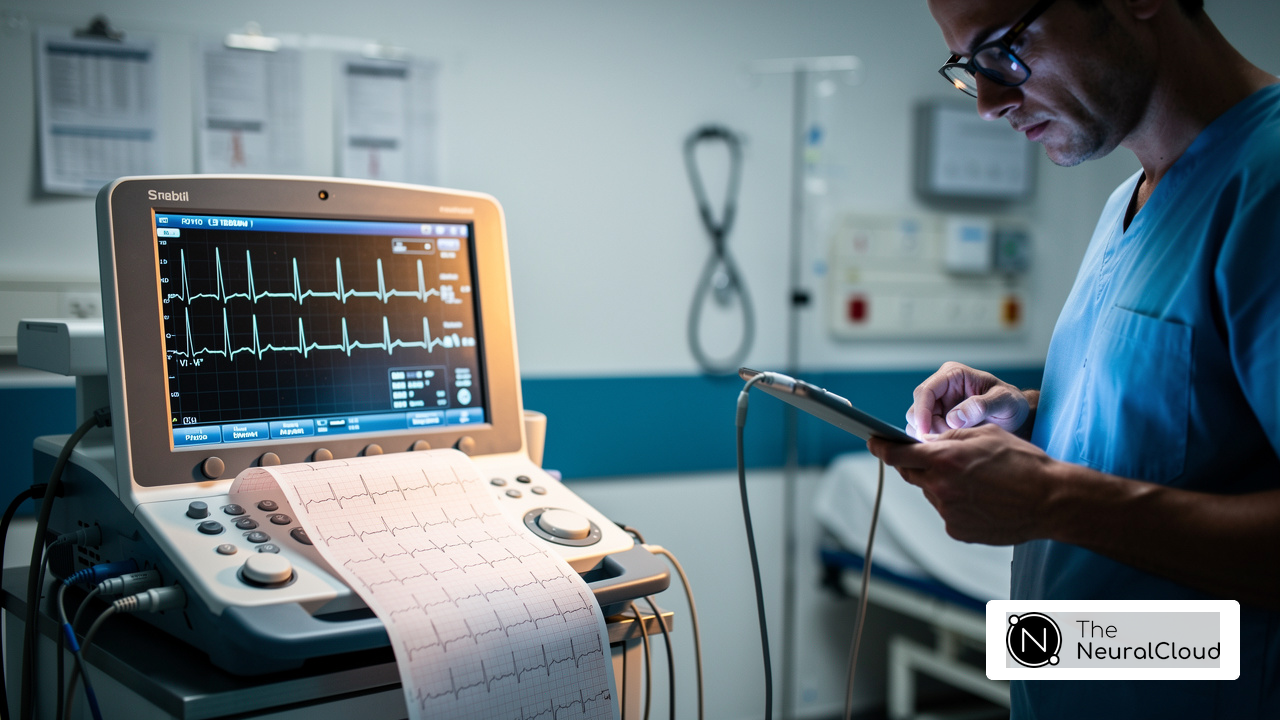
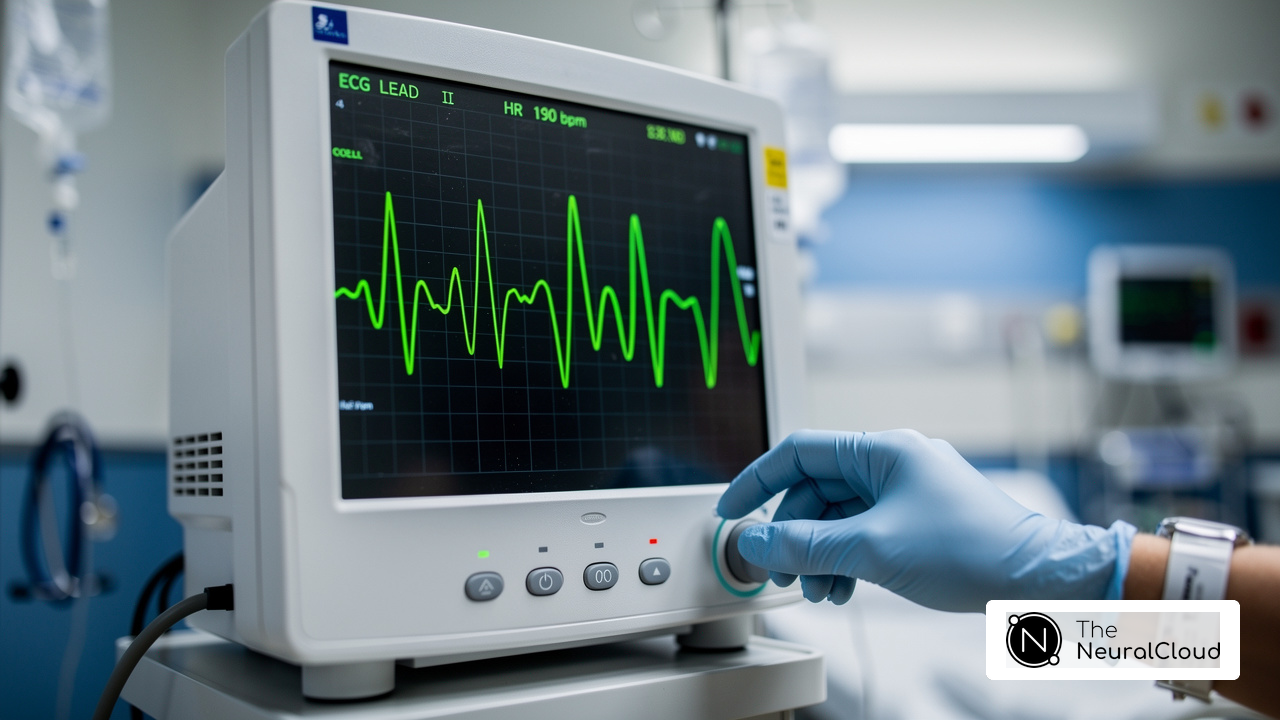
The QT interval indicates the time needed for the heart's ventricles to depolarize and repolarize, which is essential for maintaining a normal heart rhythm. Accurately assessing the QT duration is vital, as it can lead to serious complications, including torsades de pointes. Clinicians typically measure the QT interval from the start of the QRS complex to the end of the T wave. While various measurement tools, such as calipers, are often employed, they can be susceptible to human error, with studies showing variations of up to 70 milliseconds among experts. This variability highlights the need for precision in QT assessments.
Technology, like Neural Cloud Solutions' MaxYield™, presents a promising solution to monitor QTc in each heartbeat, even in recordings with noise. The system can analyze ECG data, providing detailed insights that help clinicians identify cardiac events and make informed clinical decisions. Unlike other devices, MaxYield™ evolves with each use, continuously enhancing its diagnostic capabilities. While devices such as the KardiaMobile 6L have shown high-quality ECG recordings with minimal differences compared to standard 12-lead ECGs, MaxYield™ further improves this capability by effectively addressing challenges related to aberrant T waves and signal noise.
Understanding both manual and automated techniques is essential for clinicians to ensure accurate QTc measurement. This ultimately enhances patient safety and supports safer drug development. By leveraging the advanced features of MaxYield™, healthcare professionals can achieve greater accuracy in ECG analysis, leading to improved clinical decision-making and better patient care.

Utilize Correction Formulas: Comparing Bazett's, Fridericia's, and Other Methods
QTc correction is essential for standardizing QT durations across varying heart rates. The most commonly used formulas include Bazett's, which divides the QT interval by the square root of the RR interval, and Fridericia's, which divides by the cube root. While Bazett's formula is widely used, it has been shown to produce inflated values, leading to significant inaccuracies in QTc calculations. In contrast, Fridericia's formula is preferred due to its superior accuracy across a broader range of heart rates, demonstrating consistent performance in diverse populations.
Recent studies indicate that Bazett's formula can yield inflated QTc values, resulting in unnecessary interventions and misdiagnosis, particularly in patients with fluctuating heart rates. Other formulas, such as Hodges and Rautaharju, may offer specific advantages in certain contexts, but they also come with their own limitations. Clinicians must understand the strengths and weaknesses of each formula to ensure precise measurements, as well as treatment outcomes.
The technology addresses these challenges by integrating wearable technology with advanced algorithms that enhance accuracy. Key features of the platform include:
- Signal Processing: Reduces interference in ECG signals, improving clarity.
- Automation: Streamlines the analysis process, saving time for healthcare professionals.
- Cost Reduction: Lowers operational costs associated with ECG evaluations.
By utilizing the platform, healthcare professionals can achieve more reliable results. This leads to better-informed clinical decisions and improved patient outcomes. The platform's ability to enhance evaluation accuracy ultimately supports healthcare providers in delivering high-quality care.

Leverage Advanced Technology: Enhancing QTc Measurement with AI and Automation
The integration of AI and automation in QTc evaluation addresses significant challenges in cardiology. Traditional methods often suffer from delays, which can hinder timely patient care. Advanced technologies, such as those found in Neural Cloud Solutions' platforms, offer a solution by swiftly and accurately analyzing ECG data. These algorithms identify QT intervals and adjust for heart rate variations with minimal human oversight, streamlining the evaluation process.
MaxYield™ utilizes cutting-edge neural networks and superior noise filtering to automate QTc analysis. This technology not only improves efficiency. Research shows that AI-enhanced devices can achieve a diagnostic accuracy of 93.4%, compared to the 83.1% accuracy of conventional methods. Additionally, the platform supports portable monitoring, allowing healthcare providers to conduct assessments in various settings, enhancing accessibility and convenience.
By adopting these innovative technologies, healthcare professionals can improve diagnostic precision and ultimately enhance patient outcomes. Notably, studies indicate that AI systems demonstrate high negative predictive values: 0.82 in males and 0.92 in females, reinforcing their reliability in clinical practice. The shift towards automation not only streamlines workflows but also empowers clinicians to focus on critical decision-making, optimizing patient care.
Conventional manual assessments can be costly and prone to errors, making the transition to automated solutions with MaxYield™ an appealing choice for modern healthcare. This approach not only transforms long-form assessments but also exemplifies gold standard methodologies that enhance diagnostic accuracy. In summary, the MaxYield™ platform represents a significant advancement in QTc measurement, offering features that lead to improved accuracy, efficiency, and ultimately better patient care.

Embrace Continuous Learning: Staying Updated with Evolving QTc Measurement Practices
In the fast-paced world of cardiology, it is crucial for professionals to stay updated with advancements in technology. Therefore, specialized conferences and workshops focusing on the QT interval are highly encouraged.
Subscribing to relevant journals and online platforms offers valuable insights into new research and emerging practices. Additionally, collaboration in the field fosters knowledge sharing and the development of best practices.
By committing to continuous learning, healthcare providers can enhance their skills and ensure they are well-prepared to deliver top-notch care.
Conclusion
Accurate QTc measurement is essential for effective cardiac care, as it plays a critical role in identifying potential arrhythmias and ensuring patient safety. However, challenges in ECG analysis can hinder this process. The integration of advanced technologies, such as AI and automated ECG analysis, marks a significant advancement in achieving precision in QT assessments. By understanding both manual and automated measurement techniques, healthcare professionals can enhance their diagnostic accuracy and improve overall patient outcomes.
The MaxYield™ platform offers several key features that streamline ECG analysis. It utilizes advanced algorithms to provide precise QTc measurements, reducing the reliance on traditional methods. This platform not only enhances the accuracy of QT assessments but also simplifies the process for healthcare providers. By leveraging MaxYield™, clinicians can access real-time data and insights, which ultimately leads to better-informed decisions in patient management.
The advantages of using MaxYield™ are clear:
- It minimizes the risk of misdiagnosis by providing reliable and accurate QTc measurements.
- It allows healthcare professionals to stay updated with the latest advancements in cardiology, fostering continuous learning and adaptation.
- The platform supports improved patient outcomes by enhancing the safety and effectiveness of management strategies.
In conclusion, embracing best practices and innovative technologies like MaxYield™ is vital for healthcare providers aiming to deliver high-quality cardiac care. By prioritizing accuracy in QTc measurement, clinicians can significantly enhance patient safety and care quality. The commitment to ongoing education and the adoption of cutting-edge tools will ensure that healthcare professionals remain at the forefront of cardiac care, ultimately leading to improved patient health outcomes.
Frequently Asked Questions
What is the QT interval and why is it clinically significant?
The QT interval measures the time required for the heart's ventricles to depolarize and repolarize, which is essential for maintaining a normal heart rhythm. Prolongation of the QT interval can lead to serious arrhythmias, including torsades de pointes.
How do clinicians measure the QT interval?
Clinicians typically measure the QT interval from the start of the QRS complex to the end of the T wave on an ECG.
What are the limitations of manual QT interval measurement techniques?
Manual measurement techniques, such as using calipers, are prone to human error, with studies indicating variations of up to 70 milliseconds among experts, highlighting the need for precision.
What is the role of automated ECG analysis software in measuring the QT interval?
Automated ECG analysis software, like Neural Cloud Solutions' MaxYield™, improves accuracy by quickly isolating and labeling key features in each heartbeat, even in recordings with significant noise and artifacts.
How fast can MaxYield™ analyze heartbeats, and what benefits does it provide?
MaxYield™ can analyze 200,000 heartbeats in under 5 minutes, providing detailed insights that assist clinicians in identifying cardiac events and making informed clinical decisions.
How does MaxYield™ differ from other ECG devices like KardiaMobile 6L?
While KardiaMobile 6L provides high-quality ECG recordings with minimal differences compared to standard 12-lead ECGs, MaxYield™ enhances this capability by effectively addressing challenges related to aberrant T waves and signal noise.
Why is it important for clinicians to understand both manual and automated QT measurement methods?
Understanding both methods is essential for clinicians to ensure accurate QTc measurement, which ultimately enhances patient outcomes and supports safer drug development.
List of Sources
- Understand the QT Interval: Clinical Significance and Measurement Techniques
- pmc.ncbi.nlm.nih.gov (https://pmc.ncbi.nlm.nih.gov/articles/PMC12440451)
- ahajournals.org (https://ahajournals.org/doi/10.1161/CIRCULATIONAHA.119.039598)
- pmc.ncbi.nlm.nih.gov (https://pmc.ncbi.nlm.nih.gov/articles/PMC10711087)
- Resources | AliveCor (https://alivecor.com/biopharma/resources/the-broad-impact-of-qt-monitoring-extending-beyond-cardiac-health-into-diverse-conditions)
- How to: measure the QT interval? (https://escardio.org/communities/councils/genomics/scientific-documents-and-publications/cardiogenomics-insights/volume-9/how-to-measure-the-qt-interval)
- Utilize Correction Formulas: Comparing Bazett's, Fridericia's, and Other Methods
- pmc.ncbi.nlm.nih.gov (https://pmc.ncbi.nlm.nih.gov/articles/PMC12811695)
- iconplc.com (https://iconplc.com/insights/blog/2025/09/17/getting-values-right-which-qt-correction-formula-most-accurate-healthy)
- Leverage Advanced Technology: Enhancing QTc Measurement with AI and Automation
- AI Refines QTc Interval Estimation in Atrial Fibrillation - NYU Langone Health Physician Focus (https://physicianfocus.nyulangone.org/ai-refines-qtc-interval-estimation-in-atrial-fibrillation)
- pmc.ncbi.nlm.nih.gov (https://pmc.ncbi.nlm.nih.gov/articles/PMC12529686)
- pubmed.ncbi.nlm.nih.gov (https://pubmed.ncbi.nlm.nih.gov/36355743)
- Artificial Intelligence–Assisted ECG Interpretation versus Conventional Reporting in Predicting Arrhythmias in Acute Coronary Syndrome: A Diagnostic Accuracy Study (https://healthcare-bulletin.co.uk/article/artificial-intelligence-assisted-ecg-interpretation-versus-conventional-reporting-in-predicting-arrhythmias-in-acute-coronary-syndrome-a-diagnostic-accuracy-study-4252)
- Embrace Continuous Learning: Staying Updated with Evolving QTc Measurement Practices
- ama-assn.org (https://ama-assn.org/practice-management/payment-delivery-models/ongoing-learning-helps-physicians-thrive-and-stay-value)