Introduction
Accurate EKG readings are essential for effective patient care, yet many healthcare professionals face challenges in interpreting electrocardiograms. Understanding key components of ECGs, like the P wave and QRS complex, is crucial for differentiating between normal and abnormal heart rhythms. Unfortunately, only a small percentage of clinicians fully comprehend these fundamentals. This raises an important question: how can healthcare facilities improve their EKG interpretation skills?
- Integrating advanced technologies, such as the MaxYield™ platform, could significantly enhance diagnostic accuracy and ultimately lead to better patient outcomes.
Understand ECG Fundamentals and Components
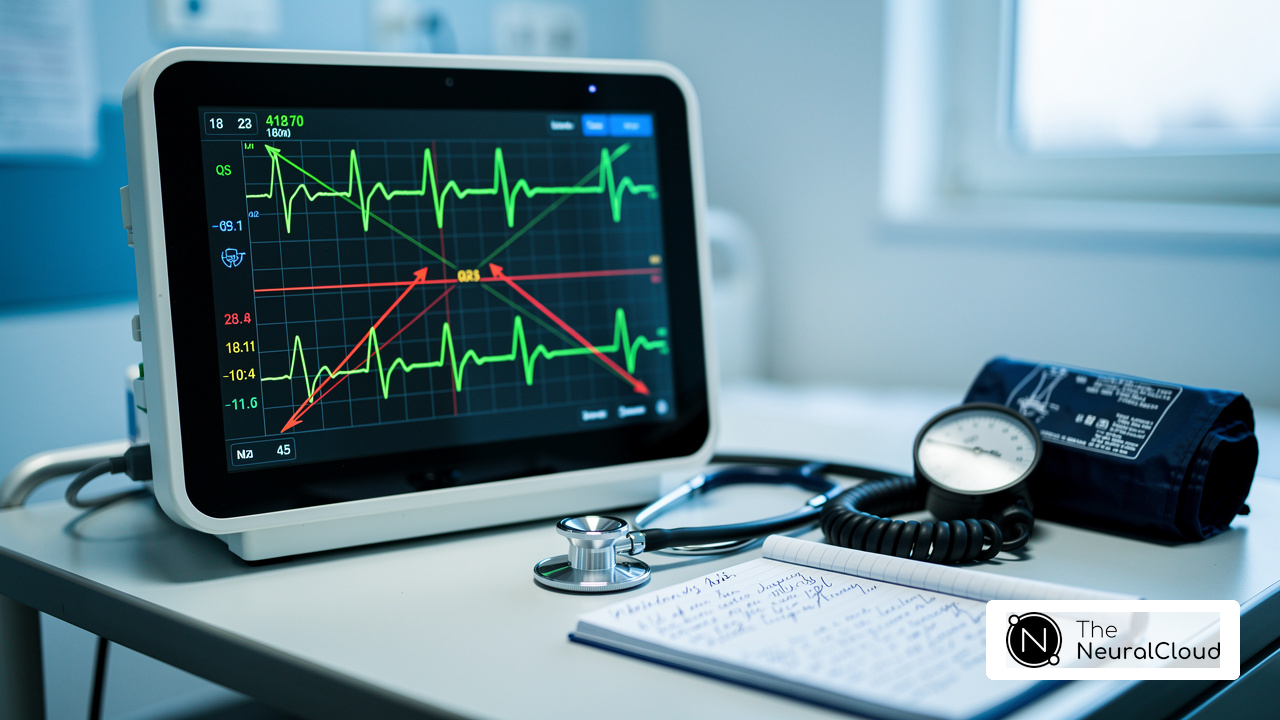
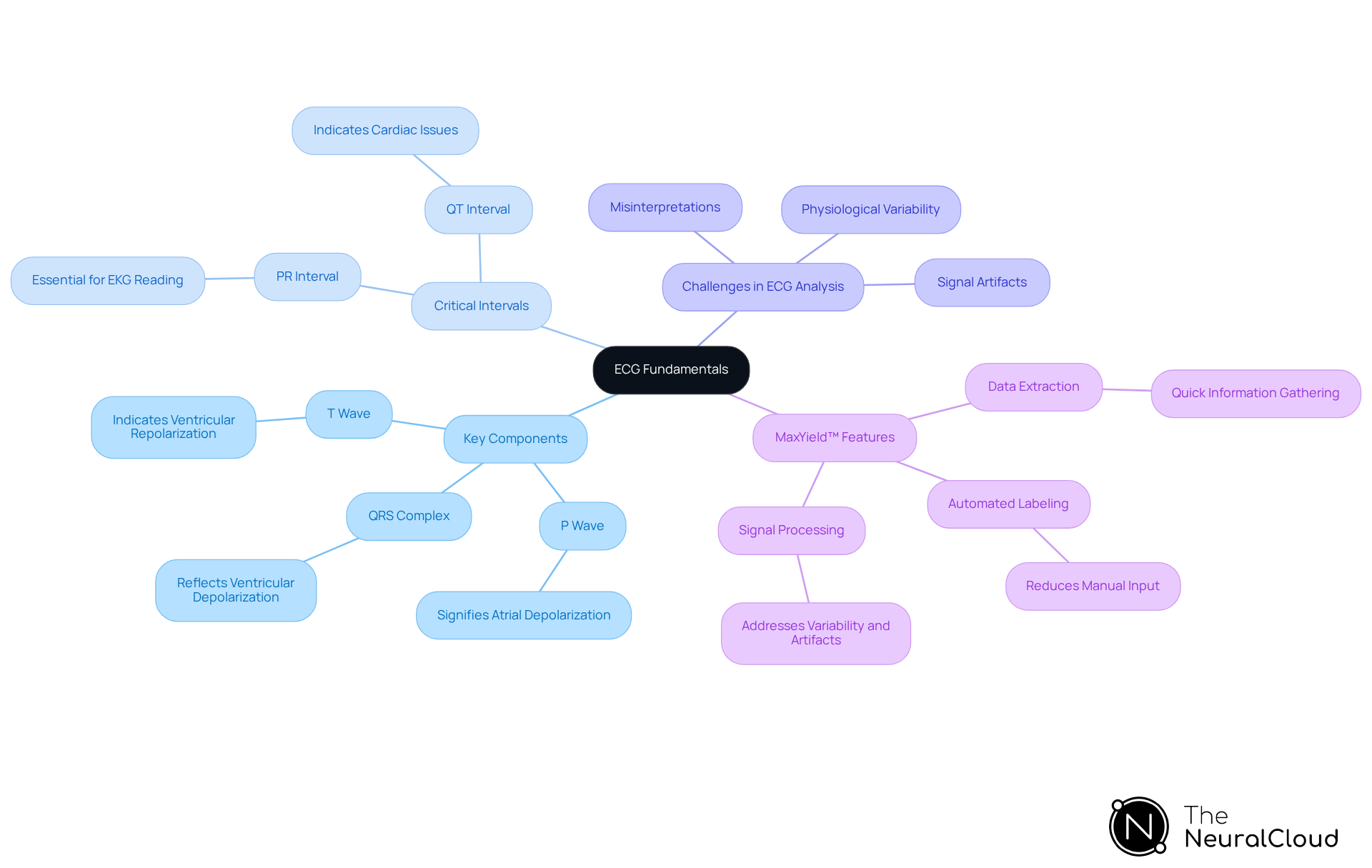
To achieve a good EKG reading, healthcare professionals must thoroughly understand the ECG. An ECG comprises several key elements: the P wave, QRS complex, and T wave, each representing distinct phases of the heart's electrical activity. The P wave signifies atrial depolarization, the QRS complex reflects ventricular depolarization, and the T wave indicates ventricular repolarization. Mastery of these components enables clinicians to effectively discern normal from abnormal heart rhythms, which is crucial for achieving a correct diagnosis.
Moreover, familiarity with ECG interpretation is essential for ensuring a reliable reading, as deviations can signal underlying cardiac issues. Research indicates that only about 67% of healthcare professionals are fully familiar with these components, underscoring the need for robust training programs in ECG education. Resources like the NCBI Bookshelf and various online guides offer detailed explanations and visual aids to help practitioners solidify their understanding of ECG fundamentals.
Challenges in ECG Interpretation
Despite the importance of ECG interpretation, healthcare professionals often face challenges such as noise and signal artifacts that can complicate analysis. These issues can lead to misinterpretations and delayed diagnoses, ultimately affecting patient care and resulting in a poor outcome.
MaxYield™ Features
The 'Neural Cloud Solutions' platform enhances understanding by streamlining ECG evaluation through automation and data extraction. Key features of the MaxYield™ platform include:
- Automation: Reduces manual input, minimizing human error.
- Data Extraction: Quickly gathers relevant information for analysis.
- Signal Processing: Addresses noise and artifacts for clearer readings.
Advantages for Healthcare Professionals
By utilizing MaxYield™, healthcare professionals can process ECG readings more efficiently and accurately. Research has demonstrated that using MaxYield™ can decrease evaluation time by as much as 30%, enabling clinicians to concentrate on patient care rather than manual data management. This foundational knowledge, combined with advanced technology, is vital for success in clinical practice.
Leverage Advanced Technology for Enhanced Clarity
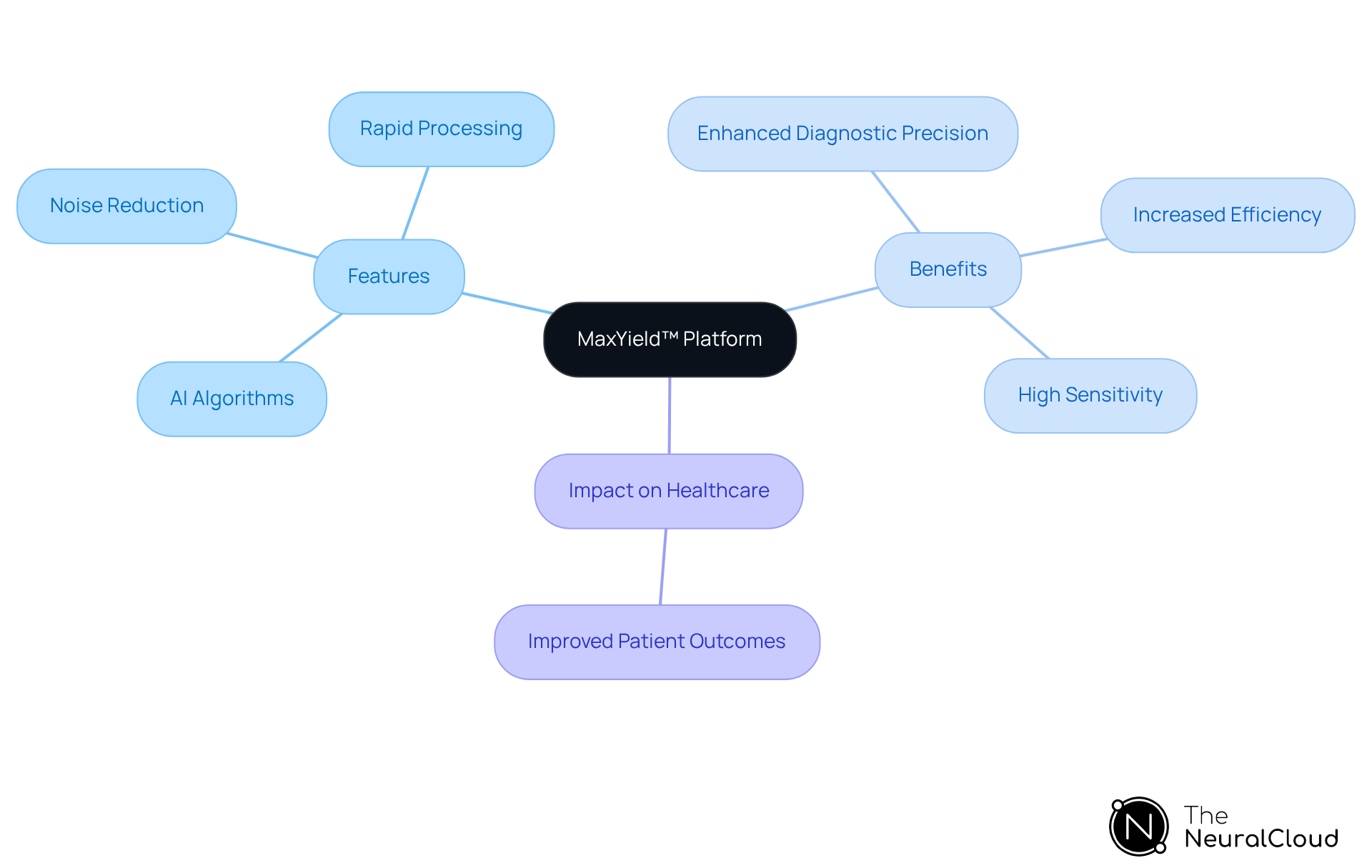
Incorporating advanced technology into ECG evaluation presents significant challenges, especially in obtaining a good EKG reading. Neural Cloud Solutions' MaxYield™ platform addresses these challenges by leveraging automation to automate ECG data processing. This innovative approach effectively reduces noise that can obscure true cardiac signals, which contributes to clearer and more accurate assessments.
Features of MaxYield™:
- Automation: Automates ECG data processing.
- Interference Reduction: Minimizes interference for clearer readings.
- Rapid Analysis: Analyzes over 200,000 heartbeats in under five minutes.
The advantages of using the MaxYield™ platform are substantial. Healthcare professionals can conduct evaluations, which significantly enhances the likelihood of obtaining a good EKG reading. Furthermore, the platform offers analytics, which aids clinicians in diagnosis by quickly identifying abnormalities. This capability facilitates informed decision-making, ultimately improving patient outcomes.
Benefits for Healthcare Professionals:
- Improved Accuracy: Facilities using MaxYield™ report significant improvements in diagnostic accuracy.
- Increased Efficiency: Streamlined workflows allow for quicker patient assessments.
- High Sensitivity: The AI-ECG model has shown a sensitivity of 95% in detecting acute cellular rejection, highlighting the potential of advanced technology.
As the integration of AI in healthcare continues to evolve, adopting advanced tools like MaxYield™ is becoming increasingly vital. These technologies not only improve care quality but also empower healthcare professionals to deliver better patient outcomes.
Integrate ECG Analysis Tools with Clinical Workflows
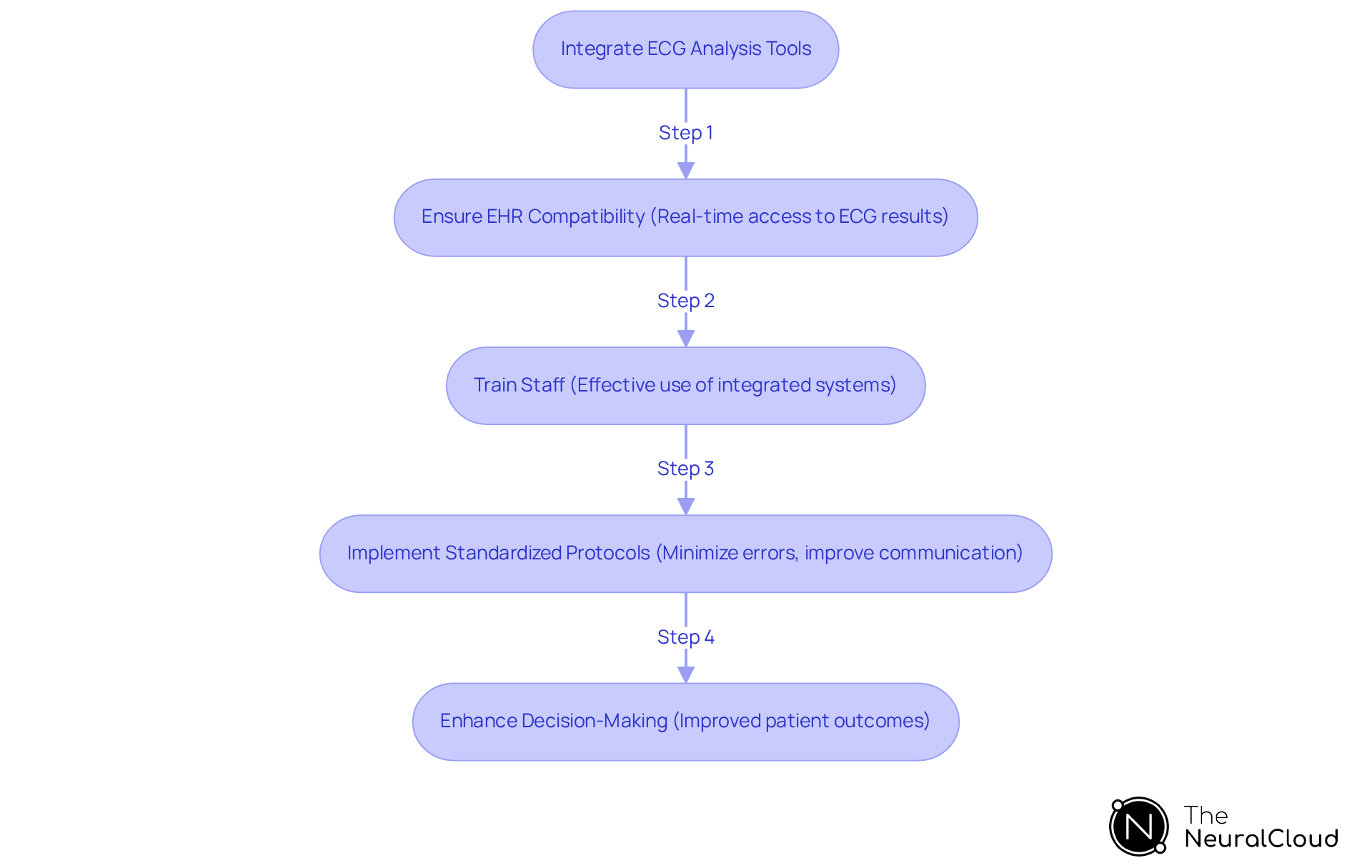
Healthcare facilities face significant challenges in effectively integrating ECG analysis tools into their workflows. To fully harness the benefits of these technologies, it is crucial to ensure compatibility with electronic health records (EHR). This compatibility allows clinicians to access individual patient data and ECG results in real-time, which significantly enhances decision-making speed. Additionally, training staff on the effective use of these integrated systems is vital. Implementing standardized protocols for data entry and documentation can minimize errors and improve communication among healthcare teams.
The MaxYield™ platform exemplifies a solution that addresses these challenges. It can process over 200,000 heartbeats in under five minutes, rapidly labeling P, QRS, and T Wave onsets and offsets. This feature provides beat-by-beat tabulation in CSV format, facilitating easy integration into existing workflows. The platform's advanced noise filtering and wave recognition capabilities, combined with the development of neural network models for complex signal processing, empower clinicians to analyze more data in less time. As a result, healthcare professionals can devote more time to patient care rather than administrative tasks.
The advantages of utilizing MaxYield™ are clear. Facilities that have successfully integrated this platform report significant enhancements in patient care efficiency. Recent trends indicate that the global ECG equipment and management systems market is projected to grow from USD 7.82 billion in 2024 to USD 13 billion by 2033, reflecting a rising demand for integrated solutions that enhance clinical outcomes. Furthermore, studies show that effective user interfaces can increase conversion rates by up to 400%, underscoring the importance of design in medical software.
By prioritizing EHR compatibility and ensuring robust integration, healthcare providers can optimize their operations and achieve better patient outcomes, thereby enhancing the quality of care they deliver. The MaxYield™ platform not only streamlines ECG analysis but also supports healthcare professionals in making informed decisions, ultimately leading to improved patient outcomes.
Train Healthcare Professionals for Effective Use
Educating healthcare professionals in the use of advanced evaluation tools is essential for achieving effective care. However, challenges in ECG analysis often arise due to lengthy and noisy recordings that can obscure critical information. To address these issues, institutions should implement training programs that cover both the theoretical aspects of ECG analysis and practical applications using technology.
The system transforms these lengthy and noisy ECG recordings into clean, crisp signals. By leveraging cutting-edge AI technology, it enhances clarity and speed in ambulatory ECG waveform analysis. This innovative system not only improves efficiency but also significantly improves the likelihood of achieving accurate results for enhanced diagnostic accuracy.
Features of MaxYield™:
- Transforms noisy ECG recordings into clear signals.
- Utilizes AI technology for rapid analysis.
- Provides real-time feedback to clinicians.
Advantages for Healthcare Professionals:
- Increases confidence in ECG interpretation.
- Reduces the time required for analysis.
- Enhances patient outcomes through accurate diagnostics.
Workshops, online courses, and simulation-based training can further enhance clinicians' confidence and competence in obtaining accurate ECG readings. Additionally, ongoing education should be encouraged to keep staff updated on the latest advancements in ECG technology and interpretation techniques. Research indicates that facilities investing in continuous education for their staff see significant improvements in diagnostic accuracy and patient outcomes, particularly when utilizing innovative platforms like MaxYield™.
Conclusion
Achieving a good EKG reading is crucial in healthcare, and it hinges on a comprehensive understanding of ECG fundamentals, the integration of advanced technology, and effective training for healthcare professionals. Clinicians can significantly enhance their ability to interpret heart rhythms accurately by mastering key components of an electrocardiogram, such as the P wave, QRS complex, and T wave. This ultimately leads to improved patient care.
Several best practices have been outlined throughout the article. These include:
- Understanding ECG fundamentals
- Addressing challenges posed by physiological variability and artifacts
- Utilizing platforms like MaxYield™ for streamlined ECG analysis
- Integrating these tools into clinical workflows
Ongoing training programs are essential to equip healthcare professionals with the skills needed to interpret ECGs effectively and confidently.
Prioritizing education and technology in ECG interpretation can transform patient outcomes. As the healthcare landscape continues to evolve, embracing innovative solutions and fostering a culture of continuous learning will be key in enhancing diagnostic accuracy and efficiency. By implementing these best practices, healthcare facilities can ensure they provide the highest quality of care, ultimately leading to better health outcomes for patients.
Frequently Asked Questions
What are the main components of an ECG?
The main components of an ECG are the P wave, QRS complex, and T wave. The P wave signifies atrial depolarization, the QRS complex reflects ventricular depolarization, and the T wave indicates ventricular repolarization.
Why is it important for healthcare professionals to understand ECG components?
Understanding ECG components is crucial for clinicians to effectively discern normal from abnormal heart rhythms, which is essential for achieving a good EKG reading.
What critical intervals should healthcare professionals be familiar with in ECG interpretation?
Healthcare professionals should be familiar with the PR interval and QT interval, as deviations in these intervals can signal underlying cardiac issues.
What percentage of healthcare professionals are fully familiar with ECG components?
Research indicates that only about 67% of healthcare professionals are fully familiar with ECG components.
What challenges do healthcare professionals face in ECG analysis?
Healthcare professionals face challenges such as physiological variability and signal artifacts, which can complicate analysis and lead to misinterpretations and delayed diagnoses.
What features does the MaxYield™ platform offer to enhance ECG evaluation?
The MaxYield™ platform offers features such as automated labeling, data extraction, and signal processing to address physiological variability and artifacts for clearer readings.
How does MaxYield™ benefit healthcare professionals in ECG analysis?
By utilizing MaxYield™, healthcare professionals can process ECG readings more efficiently and accurately, reducing evaluation time by as much as 30% and allowing clinicians to focus more on patient care.
Where can healthcare professionals find resources to improve their understanding of ECG fundamentals?
Resources like the NCBI Bookshelf and various online guides offer detailed explanations and visual aids to help practitioners solidify their understanding of ECG fundamentals.
List of Sources
- Understand ECG Fundamentals and Components
- mdpi.com (https://mdpi.com/2673-3846/2/4/39)
- Performance of an artificial intelligence-powered smartphone application in the UK clinical settings: ECG automation compared to healthcare professionals - PMC (https://pmc.ncbi.nlm.nih.gov/articles/PMC12532542)
- Accuracy of Physicians’ Electrocardiogram Interpretation (https://jamanetwork.com/journals/jamainternalmedicine/fullarticle/2771093)
- Checking your browser - reCAPTCHA (https://pmc.ncbi.nlm.nih.gov/articles/PMC7522782)
- pubmed.ncbi.nlm.nih.gov (https://pubmed.ncbi.nlm.nih.gov/37394202)
- Leverage Advanced Technology for Enhanced Clarity
- AI-Based ECG Analysis Significantly Improves STEMI Detection, Reduces False Activations - American College of Cardiology (https://acc.org/latest-in-cardiology/articles/2025/10/24/16/56/tues-554pm-ai-tct-2025)
- New AI approach set to revolutionize ECG data interpretation in heart disease diagnosis (https://news-medical.net/news/20250219/New-AI-approach-set-to-revolutionize-ECG-data-interpretation-in-heart-disease-diagnosis.aspx)
- News: AI has potential to improve diagnostic accuracy, earlier detection of cardiac conditions, analysis finds | ACDIS (https://acdis.org/articles/news-ai-has-potential-improve-diagnostic-accuracy-earlier-detection-cardiac-conditions)
- Checking your browser - reCAPTCHA (https://pmc.ncbi.nlm.nih.gov/articles/PMC12419789)
- Artificial Intelligence–Assisted ECG Interpretation versus Conventional Reporting in Predicting Arrhythmias in Acute Coronary Syndrome: A Diagnostic Accuracy Study (https://healthcare-bulletin.co.uk/article/artificial-intelligence-assisted-ecg-interpretation-versus-conventional-reporting-in-predicting-arrhythmias-in-acute-coronary-syndrome-a-diagnostic-accuracy-study-4252)
- Integrate ECG Analysis Tools with Clinical Workflows
- pmc.ncbi.nlm.nih.gov (https://pmc.ncbi.nlm.nih.gov/articles/PMC12467541)
- theneuralcloud.com (https://theneuralcloud.com/post/10-essential-features-of-ekg-apps-for-health-tech-developers)
- array.aami.org (https://array.aami.org/doi/full/10.2345/0899-8205-56.1.1)
- academia.edu (https://academia.edu/95726949/Electronic_patient_record_EPR_system_in_South_Africa_information_storage_retrieval_and_share_amongst_clinicians)