Introduction
Integrating ECG viewer technology into healthcare systems can be fraught with challenges that impact patient care and operational efficiency. Yet, organizations face significant hurdles, such as:
- Navigating existing workflows
- Selecting the right technology
- The need for comprehensive training and support
To maximize the benefits of their ECG viewer systems, organizations must navigate these complexities.
Assess Existing Workflows for Seamless Integration
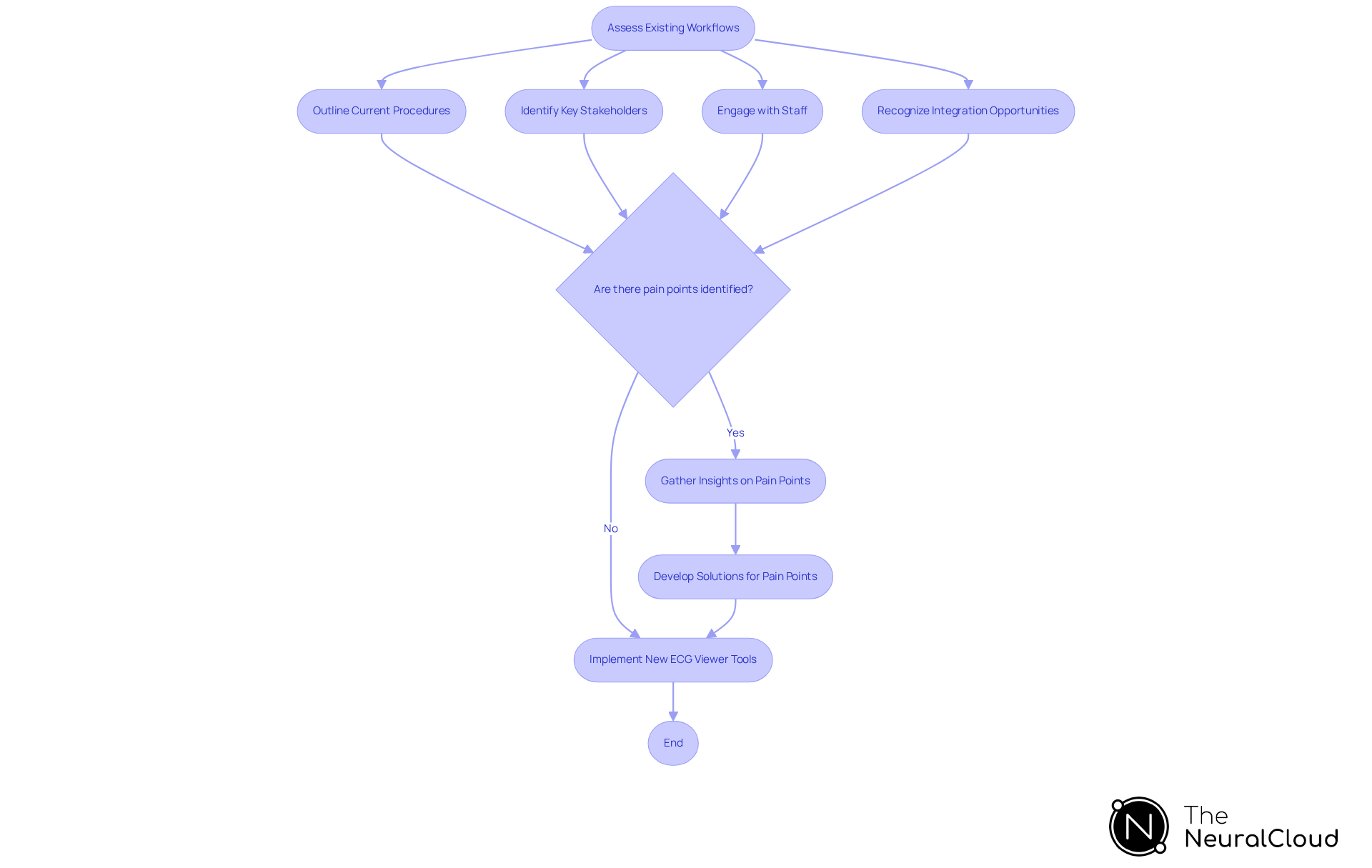
A thorough assessment of current workflows and practices is the first step in integrating new ECG viewer tools. This process involves outlining current procedures, identifying key stakeholders, and recognizing how the new system can enhance efficiency. It's important to engage with staff to gather insights on their pain points and workflow challenges. For instance, if retrieving ECG data requires several steps, the new ECG viewer, powered by MaxYield, can streamline this process with hospital-grade precision from consumer devices, decreasing erroneous complaint tickets and improving remote monitoring confidence.
Utilize tools like flowcharts or process mapping software to visualize workflows and identify integration opportunities. This essential step not only establishes the basis for a smoother transition but also encourages team support, as staff will see how the new system meets their specific requirements, especially in managing individuals at home.
In Canada, best practices for assessing existing workflows in ECG technology integration emphasize the importance of collaboration among healthcare professionals using an ECG viewer. Case studies have shown that successful integration often hinges on understanding the unique challenges faced by Canadian healthcare providers. By tailoring the integration process to local needs and leveraging insights from previous implementations, organizations can enhance operational efficiency and improve patient care outcomes. Additionally, it is crucial to acknowledge the challenges faced in workflow integration, such as resistance to change or inadequate training, to ensure a successful implementation.
Moreover, with MaxYield’s advanced noise filtering and wave recognition capabilities, healthcare providers can automate repetitive tasks, processing more data in less time. This not only enhances the accuracy of the ECG viewer but also aligns with Neural Cloud Solutions Inc.'s commitment to continuous learning and AI-driven automation. For further insights, consider expert endorsements from Dr. Alan Rabinowitz, Dr. Brett Heilbron, and Dr. Marc W. Deyell, who emphasize MaxYield’s precision rivaling human interpretation and its significant noise reduction benefits. Ensuring adherence to regulatory standards not only facilitates compliance but also enhances the credibility of the integration process.
Choose the Right ECG Viewer Technology
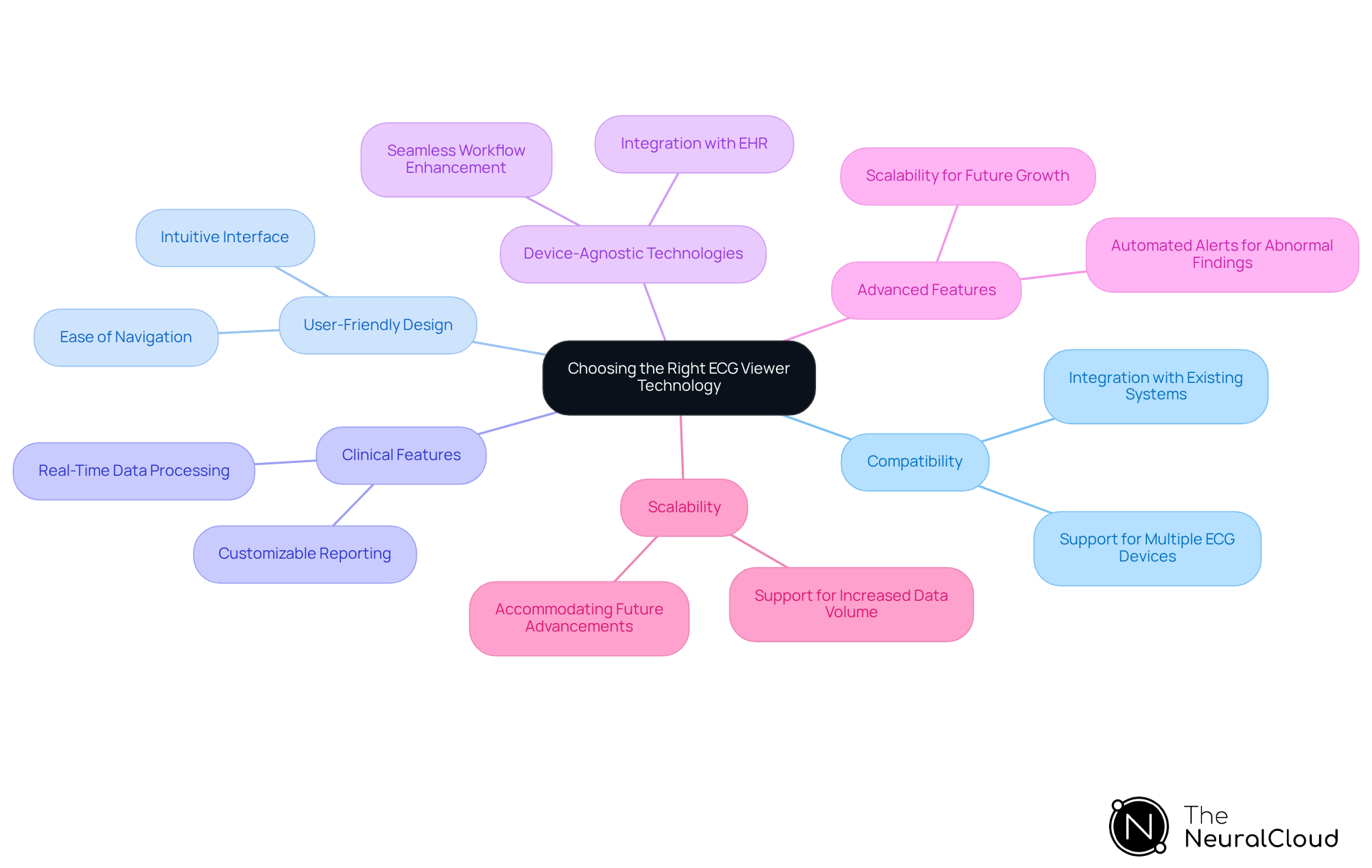
Choosing the right ECG viewer solution can feel overwhelming due to the multitude of options available today. It's essential to consider:
- Compatibility with existing systems
- User-friendly designs
- Features that meet your clinical requirements
Take the time to request demonstrations from different vendors and compare their functionalities to find the best fit for your needs. Device-agnostic technologies enhance workflows by allowing seamless integration with various ECG devices. For instance, a viewer that connects with electronic health records (EHR) can streamline data management, reducing the need for manual data entry and boosting overall efficiency.
Advanced features like real-time data processing and customizable reporting are crucial for optimizing ECG analysis. Scalability is another key factor; the system should accommodate future growth and advancements in ECG analysis. In Canada, where integrating ECGs into health information systems (HIS) is increasingly vital, selecting an ECG viewer that facilitates this integration can lead to improved patient care and operational efficiency. By focusing on these criteria, healthcare providers can enhance their diagnostic capabilities and ultimately improve patient outcomes.
Implement Comprehensive Training and Support Programs
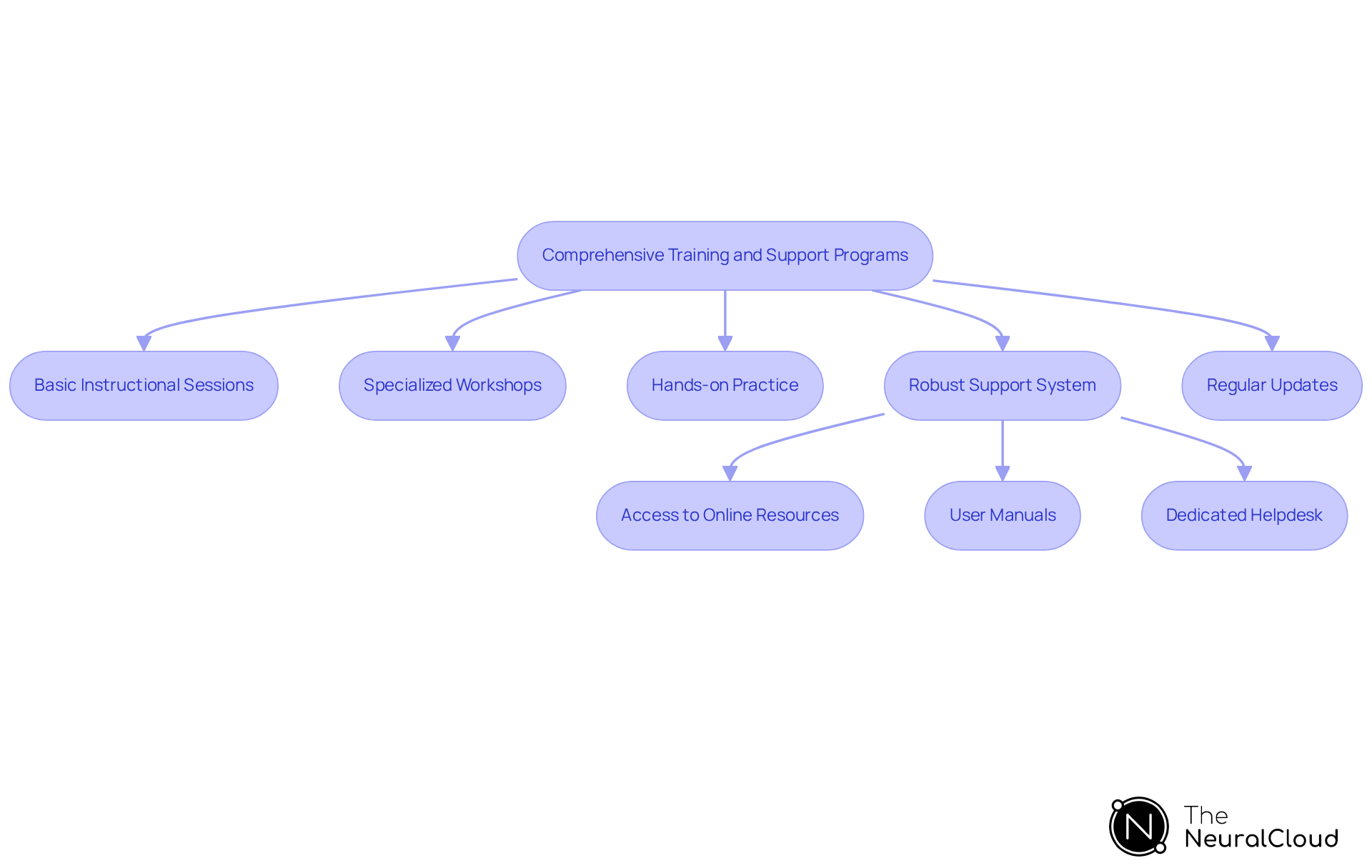
To maximize the benefits of the MaxYield platform, a tailored educational program for diverse user groups is essential. Begin with basic instructional sessions covering the system's key elements, then move on to specialized workshops that delve into specific features and functionalities, such as the innovative Continuous Learning Model that enhances ECG analysis precision and effectiveness through AI-driven automation.
Hands-on practice and real-world scenarios really make a difference in how well users learn. Additionally, establish a robust support system that provides access to online resources, user manuals, and a dedicated helpdesk for troubleshooting. Regular updates to educational materials are crucial to reflect software enhancements and new features, ensuring users maintain proficiency and confidence in utilizing the technology. It's also important to ensure that development programs comply with regulatory standards, including FDA Class II SaMD clearance-pending status and audit-ready documentation supporting GxP inspections.
Statistics show that organizations with extensive development programs report 218% higher income per employee, highlighting the significance of investing in effective educational initiatives. Moreover, a culture of ongoing education promotes better involvement and retention among healthcare personnel, ultimately resulting in enhanced outcomes for those receiving care. For example, the 'User Training and Adoption Strategies for ECG Technologies' case study emphasizes effective training methods that have resulted in significant enhancements in user adoption and care quality.
Furthermore, integrating ECG systems into clinical workflows often presents significant challenges that must be addressed. By applying these best practices, healthcare organizations can ensure that their ECG viewer systems, such as the customizable visualization and reporting tool Insight360, are utilized to their fullest potential, enhancing both operational efficiency and patient care. Expert endorsements from Dr. Alan Rabinowitz, Dr. Brett Heilbron, and Dr. Marc W. Deyell emphasize that MaxYield’s precision rivals human interpretation while significantly reducing noise, further validating the importance of comprehensive training and support. Ultimately, a commitment to comprehensive training can transform ECG analysis, leading to superior patient care and operational success.
Establish Continuous Evaluation and Feedback Mechanisms
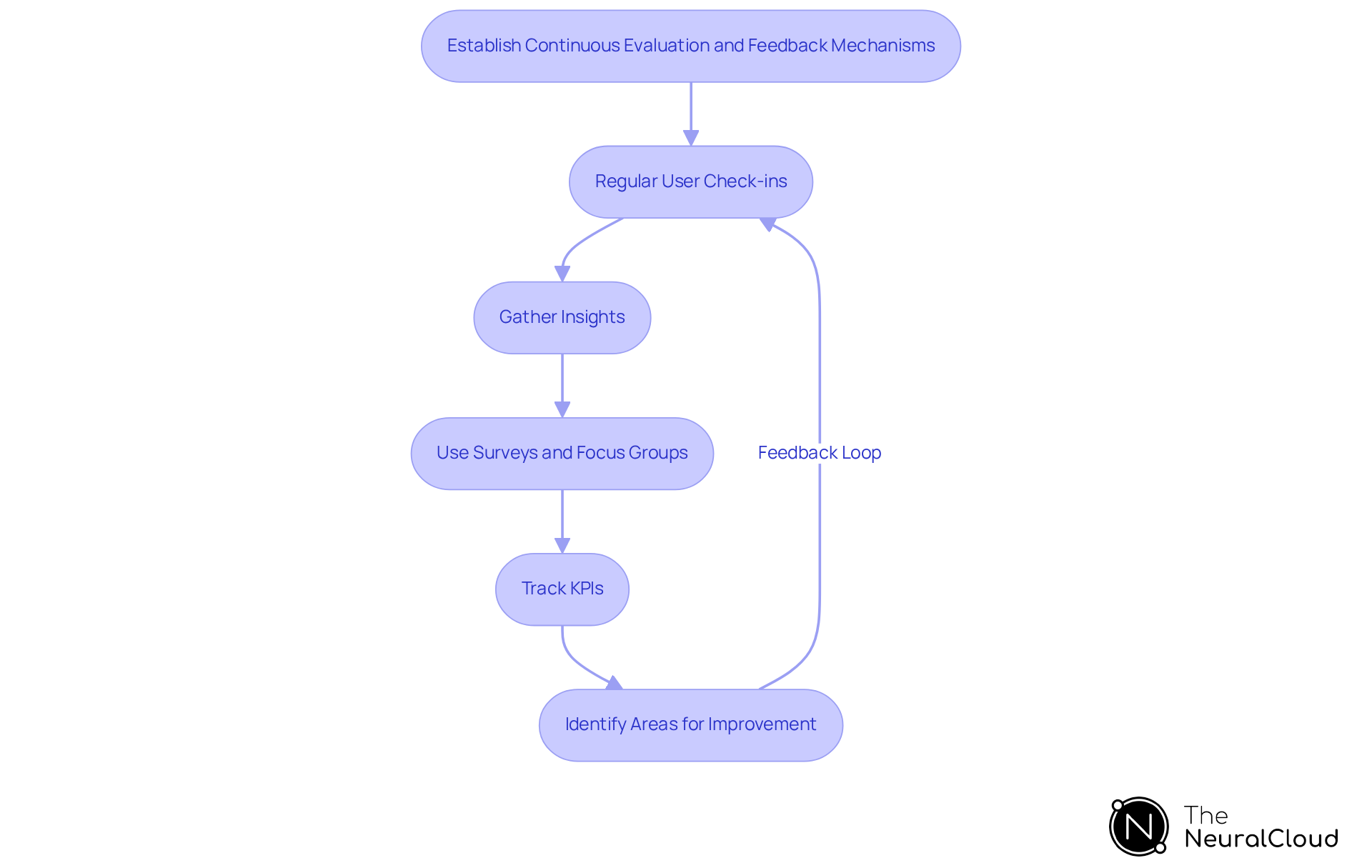
To achieve long-term success, implement continuous evaluation and feedback mechanisms for your system using the ECG viewer. Establish regular check-ins with users to gather insights on their experiences and challenges. Using surveys, focus groups, and performance metrics helps assess how well the system improves workflow efficiency and diagnostic accuracy.
For instance, tracking key performance indicators (KPIs) such as the time taken to generate reports or the accuracy of ECG interpretations can provide valuable data. Additionally, consider regulatory compliance details, such as FDA Class II SaMD clearance-pending status, to enhance credibility and relevance in the Canadian healthcare landscape.
A systematic review published in May 2025 highlighted that wearable devices demonstrated sensitivity for arrhythmia detection ranging from 84% to 95%, underscoring the importance of accurate ECG interpretation in clinical settings. Use this data to identify areas for improvement and inform future training sessions.
By fostering a culture of continuous improvement, you can adapt your technology and processes to better meet the needs of your healthcare team and patients, ultimately enhancing patient outcomes in Canada. Expert endorsements from Dr. Alan Rabinowitz, Dr. Brett Heilbron, and Dr. Marc W. Deyell highlight that MaxYield’s precision rivals human interpretation, making it a valuable asset in your evaluation process. By prioritizing continuous improvement, you can ensure that your technology truly benefits your healthcare team and patients alike.
Conclusion
Integrating ECG viewer technology into healthcare systems presents significant challenges that must be addressed to enhance patient care and operational efficiency. By focusing on the right practices, organizations can ensure that their ECG viewer solutions not only meet clinical requirements but also align with the unique challenges faced by Canadian healthcare providers. Integrating new technology requires a thoughtful approach to transforming workflows, ultimately leading to a more effective and responsive healthcare environment.
The article outlines four best practices essential for successful integration:
- Assessing existing workflows
- Choosing the right technology
- Implementing comprehensive training and support programs
- Establishing continuous evaluation and feedback mechanisms
These practices are crucial for making sure that ECG viewer technologies like MaxYield and Insight360 are used effectively, ultimately leading to improved diagnostic capabilities and patient outcomes. Working closely with healthcare professionals, understanding local needs, and ensuring ongoing education are essential for successful integration.
In conclusion, the integration of ECG viewer technology is not just a technical upgrade; it is an opportunity to enhance the quality of care provided to patients across Canada. By adopting these best practices, healthcare organizations can foster a culture of continuous improvement, ensuring that their systems evolve alongside advancements in technology. Prioritizing these strategies will not only improve healthcare delivery but also ensure that patient care evolves with technological advancements.
Frequently Asked Questions
What is the first step in integrating new ECG viewer tools?
The first step is to assess current workflows and practices, which involves outlining existing procedures, identifying key stakeholders, and recognizing how the new system can enhance efficiency.
Why is it important to engage with staff during the assessment process?
Engaging with staff is crucial to gather insights on their pain points and workflow challenges, which helps in tailoring the new system to meet their specific requirements.
How can tools like flowcharts or process mapping software assist in the integration process?
These tools can visualize workflows and identify integration opportunities, establishing a basis for a smoother transition and encouraging team support.
What are some best practices for assessing existing workflows in ECG technology integration in Canada?
Best practices emphasize collaboration among healthcare professionals, understanding unique challenges faced by Canadian providers, and tailoring the integration process to local needs.
What challenges might organizations face during workflow integration?
Organizations may encounter resistance to change and inadequate training, which can hinder successful implementation.
How does MaxYield enhance the ECG viewer's functionality?
MaxYield enhances functionality through advanced noise filtering and wave recognition capabilities, allowing healthcare providers to automate repetitive tasks and process more data efficiently.
What is the significance of expert endorsements in the integration process?
Expert endorsements from professionals like Dr. Alan Rabinowitz, Dr. Brett Heilbron, and Dr. Marc W. Deyell highlight MaxYield’s precision and noise reduction benefits, enhancing the credibility of the integration process.
Why is adherence to regulatory standards important in the integration of ECG viewer tools?
Adhering to regulatory standards facilitates compliance and enhances the credibility of the integration process, ensuring that the new system meets necessary guidelines.
List of Sources
- Assess Existing Workflows for Seamless Integration
- Trends in ECG Management Systems (https://dicardiology.com/content/trends-ecg-management-systems)
- Why ECG and EMR integration is a critical healthcare technology solution (https://gehealthcare.com/en-ca/insights/article/why-ecg-integration-in-the-emr-is-a-critical-healthcare-technology-solution?srsltid=AfmBOopM-C-0xgP_0kZSngIoFcsCy0f6eQqw0-up10CISoAgXVCnlRJe)
- Viz.ai Launches ECG Platform to Streamline Workflow for Patients with Acute Coronary Syndrome | Diagnostic Imaging (https://diagnosticimaging.com/view/viz-ai-ecg-platform-streamline-workflow-acute-coronary-syndrome)
- theneuralcloud.com (https://theneuralcloud.com/post/best-practices-for-effective-ecg-medical-technology-integration)
- Electronic Health Records Statistics By Healthcare, Data, Management (2026) (https://media.market.us/electronic-health-records-statistics)
- Choose the Right ECG Viewer Technology
- Choosing the Right ECG Machine for Your Healthcare Facility (https://medicalsearch.com.au/buying-guide/choosing-the-right-ecg-machine-for-your-healthcare-facility/f/24928)
- News – Elastic Care Inc. (https://elasticcare.com/news)
- Why ECG integration in the EMR is a critical healthcare technology solution (https://gehealthcare.com/en-us/insights/article/why-ecg-integration-in-the-emr-is-a-critical-healthcare-technology-solution?srsltid=AfmBOorMunxkHPyDKhA2VbRd6DgUaLvtXY57qsPW65SQofDWkahFlDgd)
- ECG Interpretation AI Market Research Report 2034 (https://dataintelo.com/report/ecg-interpretation-ai-market)
- PMcardio: AI ECG & Cardiac Care Platform (https://powerfulmedical.com)
- Implement Comprehensive Training and Support Programs
- Healthcare Employee Training Programs for Better Care (https://echo360.com/articles/top-priorities-healthcare-employee-training)
- New ECG Interpretation Training Modules Now Available | Newswise (https://newswise.com/articles/new-ecg-interpretation-training-modules-now-available)
- theneuralcloud.com (https://theneuralcloud.com/post/best-practices-for-effective-ecg-medical-technology-integration)
- 39 Statistics that Prove the Value of Employee Training (https://lorman.com/blog/post/39-statistics-that-prove-the-value-of-employee-training?srsltid=AfmBOopVtvu5GZ2LKuJzQ0whsV2katmjji2KwiP24eh1FdU9UtgRNV3J)
- Training Medical Practice Staff on New Technology | Physicians Practice (https://physicianspractice.com/view/training-medical-practice-staff-new-technology)
- Establish Continuous Evaluation and Feedback Mechanisms
- New AI model protects patient privacy in ECG data (https://news-medical.net/news/20260616/New-AI-model-protects-patient-privacy-in-ECG-data.aspx)
- The Efficacy of Wearable Cardiovascular Monitoring Devices in Real-Time Arrhythmia Detection: Systematic Review (https://healthcare-bulletin.co.uk/article/the-efficacy-of-wearable-cardiovascular-monitoring-devices-in-real-time-arrhythmia-detection-systematic-review-3415)
- HeartBeam Teams Up With HeartNexus to Deliver Cardiologist-Level ECG Insights Anytime, Anywhere (https://ir.heartbeam.com/news-events/press-releases/detail/103/heartbeam-teams-up-with-heartnexus-to-deliver)