Introduction
Obstruction of blood flow to the heart's anterior wall can lead to severe complications, making the timely diagnosis of anterior myocardial infarction (AMI) crucial for patient survival. Healthcare professionals often face significant challenges in interpreting complex ECG data, especially as heart attack rates continue to rise. This article explores the critical steps for diagnosing AMI using ECG, while also highlighting the integration of advanced technologies like AI to improve diagnostic accuracy. By understanding these challenges and leveraging innovative solutions, healthcare providers can make informed decisions that may ultimately save lives.
Define Anterior Myocardial Infarction and Its Clinical Importance
Obstruction of blood flow to the front wall of the heart, often due to a blockage in the left anterior descending artery, can lead to possible anterior myocardial infarction. This condition is clinically significant, as it may lead to extensive heart muscle damage and severe complications, including possible anterior myocardial infarction, heart failure, or arrhythmias. Timely diagnosis of possible anterior myocardial infarction is crucial, as it enables prompt intervention that can significantly improve patient outcomes.
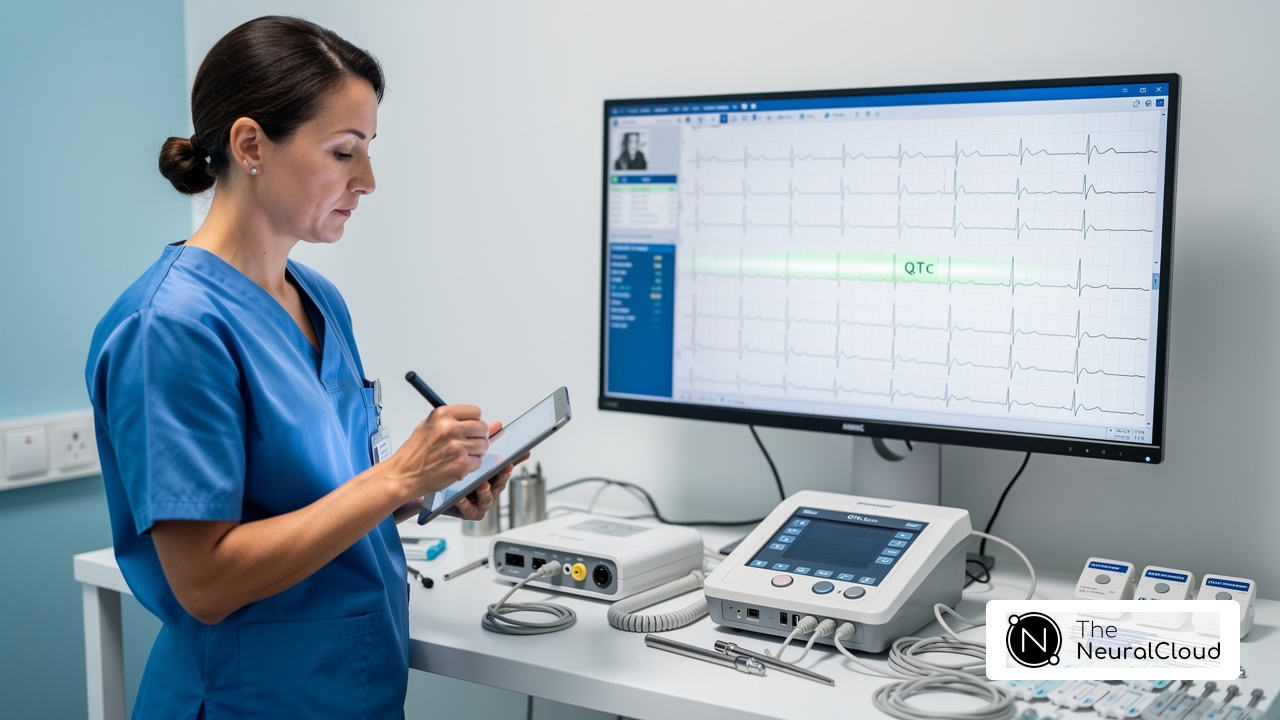
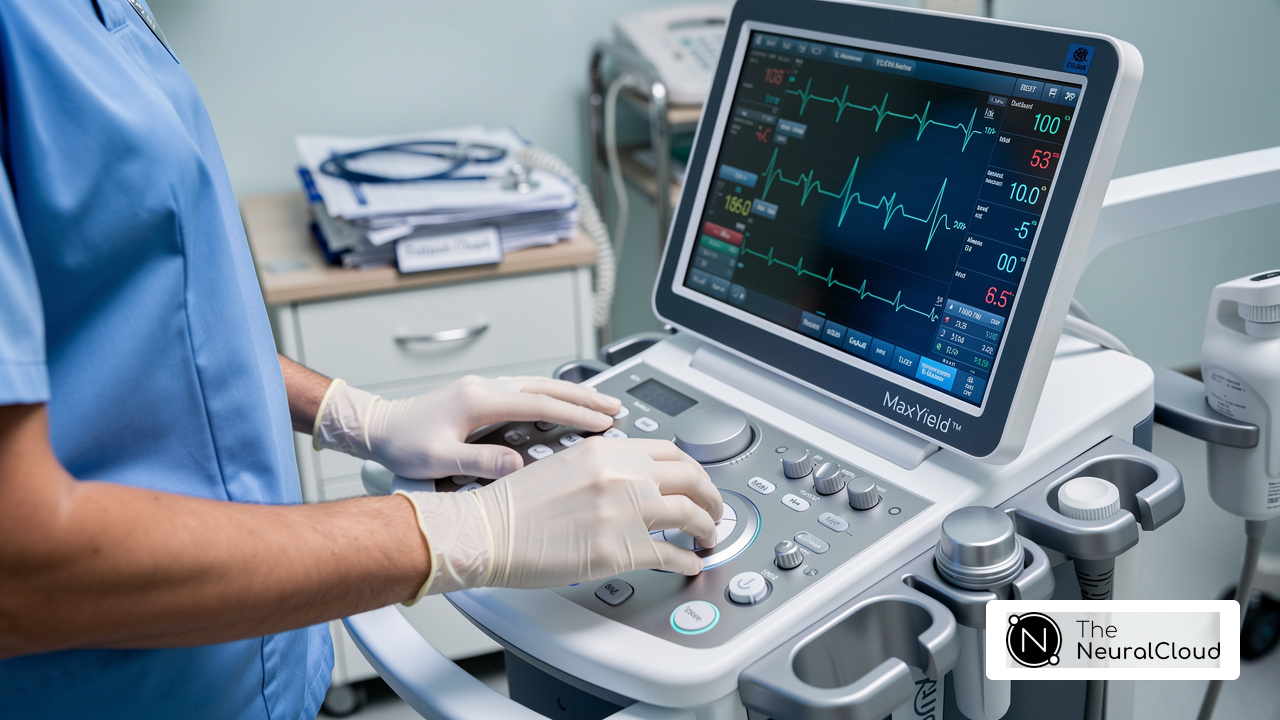
Recent studies highlight the importance of rapid identification of AMI through advanced diagnostic tools. For instance, AI-based ECG interpretation has shown a negative predictive value of 98% and a sensitivity of 77%, enhancing diagnostic accuracy. Neural Cloud Solutions' MaxYield™ platform exemplifies this advancement, utilizing gold standard noise filtering and advanced wave recognition to streamline ECG workflow efficiency. By automating repetitive tasks, it processes more data in less time, allowing healthcare professionals to focus on critical patient care.
Expert opinions, including insights from interventional cardiologist Elad Asher, emphasize that early detection not only facilitates timely treatment but also improves overall prognosis for patients. Understanding the pathophysiology of possible anterior myocardial infarction is essential for clinicians, as it aids in recognizing symptoms and highlights the necessity of immediate ECG analysis in emergency settings. Delays in diagnosis can lead to increased morbidity and mortality rates.
Integrating Neural Cloud Solutions' continuous learning model enhances the accuracy and efficiency of ECG analysis. This ultimately leads to better patient care, as healthcare providers can rely on precise data to make informed decisions. The MaxYield™ platform not only addresses the challenges in ECG analysis but also provides significant advantages for healthcare professionals, ensuring that they can deliver optimal care to their patients.

Identify Key ECG Features of Anterior Myocardial Infarction
Key ECG features indicative of anterior myocardial infarction (AMI) include:
- ST Segment Elevation: Typically observed in leads V1 to V4, ST segment elevation indicates transmural ischemia, which is critical for diagnosing AMI. For a definitive diagnosis, ST segment elevation of at least 1 mm in contiguous leads is required, with women often showing elevations of 1.5 mm in leads V2 and V3. MaxYield™ enhances the detection of these critical elevations by filtering out noise and artifacts, ensuring accurate readings even in challenging conditions.
- Q Waves: The appearance of abnormal Q waves in the same leads indicates myocardial necrosis, a crucial sign of previous myocardial damage. The presence of Q waves can confirm the diagnosis of an old front wall MI, particularly when there is no identifiable R wave in lead V1. MaxYield™'s automated labeling capabilities streamline the identification of these features, allowing for quicker clinical decision-making.
- T-Wave Inversions: These may occur in the later stages of AMI, indicating ongoing ischemia. T-wave inversions can indicate the advancement of the heart attack and are frequently seen as the condition develops. Recent studies have shown that T-wave inversions are prevalent in many AMI cases, emphasizing their importance in ECG interpretation. With MaxYield™, clinicians can analyze these inversions more efficiently, transforming noisy recordings into actionable insights.
- Reciprocal Changes: ST segment depression may be observed in inferior leads (II, III, aVF) due to ischemia of the front wall. Recognizing these reciprocal changes is essential, as they can provide additional context for the diagnosis. MaxYield™ supports this analysis by delivering beat-by-beat insights, enhancing overall workflow efficiency in ECG interpretation.
Understanding these ECG features is crucial for timely diagnosis and treatment of possible anterior myocardial infarction, especially considering the rising prevalence of STEMI hospitalizations among younger women, where traditional risk factors are increasingly common. For instance, the proportion of STEMI hospitalizations in women aged 18 to 34 increased from 4.7% to 5.5% from 2008 to 2019. Recent studies highlight the importance of accurate ECG interpretation in improving patient outcomes and reducing mortality risks associated with delayed treatment. As Dr. Steven Lome observes, "A heart attack in the front wall occurs when front heart tissue typically supplied by the left descending coronary artery experiences damage due to insufficient blood flow.

Apply ECG Analysis Techniques for Accurate Diagnosis
To accurately diagnose anterior myocardial infarction using ECG, follow these essential steps:
- Obtain a 12-lead ECG: Ensure proper lead placement to capture comprehensive cardiac electrical activity, as this is crucial for accurate diagnosis.
- Analyze the Rhythm: Check for regularity and rate; a normal sinus rhythm is expected unless complications arise, which can indicate underlying issues.
- Assess ST Segment Variations: Search for ST segment elevation exceeding 1 mm in two or more adjacent leads (V1-V4), a crucial sign of heart attack.
- Identify Q Waves: Evaluate for the presence of Q waves in the same leads, which may indicate necrosis and verify the diagnosis of anterior heart attack.
- Consider Clinical Context: Correlate ECG findings with patient symptoms and history for a comprehensive assessment. This systematic approach enhances diagnostic accuracy and aligns with expert recommendations for obtaining a 12-lead ECG in emergency settings, ensuring timely and effective patient care.
Challenges in ECG Analysis
ECG analysis can be complex, often requiring healthcare professionals to sift through vast amounts of data to make accurate diagnoses. Traditional methods may lead to delays and inaccuracies, impacting patient outcomes.
Features of MaxYield™
Leveraging Neural Cloud Solutions' MaxYield™ platform can significantly enhance this diagnostic process. MaxYield™ automates ECG analysis, delivering beat-by-beat insights and reducing noise for clearer data. Healthcare experts can incorporate MaxYield™ into their workflow to quickly assess ECG recordings, achieving an accuracy rate of 84% in identifying obstructive heart attacks, greatly surpassing conventional techniques.
Advantages for Healthcare Professionals
Additionally, AI integration can reduce false positives to about 8%, compared to nearly 42% with standard triage, making it a valuable tool for health tech developers. As Federico Nani observed, this AI-driven method shows enhanced precision in recognizing and eliminating occlusive heart attacks compared to traditional diagnostic routes. By utilizing MaxYield™, healthcare professionals can improve diagnostic accuracy, streamline workflows, and ultimately enhance patient care.

Leverage Advanced Technologies for Enhanced ECG Analysis
To enhance ECG analysis for diagnosing possible anterior myocardial infarction, advanced technologies play a crucial role in addressing existing challenges. One such innovation is AI-Powered ECG Interpretation. Platforms like Neural Cloud Solutions' MaxYield™ automate the identification of key ECG features, significantly reducing analysis time while increasing accuracy. This technology boasts a sensitivity of 77% and a specificity of 99% in detecting possible anterior myocardial infarction, demonstrating its effectiveness in clinical settings.
Another important advancement is Real-Time Monitoring. Wearable devices that continuously monitor ECG signals enable immediate detection of abnormalities. These devices facilitate proactive patient management, allowing healthcare providers to respond swiftly to potential cardiac events, ultimately improving patient outcomes.
Data Integration is also essential. Systems that integrate ECG data with electronic health records (EHRs) streamline workflows and enhance comprehensive patient management. This integration ensures that clinicians have access to real-time data, which significantly improves decision-making processes and patient care.
Lastly, Continuous Learning Algorithms are vital for the evolution of diagnostic tools. Technologies that adapt and improve over time ensure that these tools remain aligned with the latest clinical guidelines and research findings. Such advancements not only enhance diagnostic yield but also contribute to improved patient care, allowing for more accurate and timely interventions.

Conclusion
Timely and accurate diagnosis of anterior myocardial infarction (AMI) is crucial for improving patient outcomes and preventing severe complications. This article has outlined the essential steps involved in diagnosing AMI using ECG, emphasizing the integration of advanced technologies that enhance diagnostic precision and efficiency. By leveraging tools such as Neural Cloud Solutions' MaxYield™ platform, healthcare professionals can significantly improve their ECG analysis, ensuring they swiftly and accurately identify critical features indicative of AMI.
Key insights discussed include the identification of specific ECG features such as:
- ST segment elevation
- Abnormal Q waves
- T-wave inversions
These features are vital for diagnosing anterior myocardial infarction. Correlating these findings with clinical context and utilizing advanced AI-driven tools streamlines workflows and enhances decision-making in emergency settings. The role of continuous learning algorithms and real-time monitoring technologies in improving diagnostic accuracy is also significant.
Ultimately, implementing these advanced techniques and tools goes beyond improving diagnostic workflows; it enhances patient care and outcomes. As the prevalence of anterior myocardial infarction continues to rise, particularly among younger populations, adopting best practices for ECG interpretation and integrating cutting-edge technology will be crucial. Healthcare professionals are encouraged to embrace these innovations to ensure timely and effective care, ultimately saving lives and improving the quality of treatment for patients experiencing myocardial infarction.
Frequently Asked Questions
What is anterior myocardial infarction (AMI)?
Anterior myocardial infarction is a condition caused by the obstruction of blood flow to the front wall of the heart, often due to a blockage in the left anterior descending artery, leading to potential heart muscle damage and complications.
Why is the clinical significance of anterior myocardial infarction important?
The clinical significance of anterior myocardial infarction is crucial because it can result in extensive heart muscle damage, heart failure, or arrhythmias. Timely diagnosis is essential for prompt intervention, which can significantly improve patient outcomes.
How can anterior myocardial infarction be diagnosed?
Recent studies emphasize the importance of rapid identification of anterior myocardial infarction through advanced diagnostic tools, such as AI-based ECG interpretation, which enhances diagnostic accuracy with a negative predictive value of 98% and a sensitivity of 77%.
What is the role of Neural Cloud Solutions' MaxYield™ platform in diagnosing AMI?
The MaxYield™ platform utilizes gold standard noise filtering and advanced wave recognition to streamline ECG workflow efficiency, automating repetitive tasks and allowing healthcare professionals to process more data in less time for critical patient care.
What do experts say about the importance of early detection of anterior myocardial infarction?
Experts, including interventional cardiologist Elad Asher, highlight that early detection facilitates timely treatment and improves overall prognosis for patients, underscoring the need for immediate ECG analysis in emergency settings.
What are the consequences of delays in diagnosing anterior myocardial infarction?
Delays in diagnosis can lead to increased morbidity and mortality rates, making it imperative for clinicians to recognize symptoms and conduct immediate ECG analysis.
How does the continuous learning model of Neural Cloud Solutions enhance ECG analysis?
The continuous learning model enhances the accuracy and efficiency of ECG analysis, enabling healthcare providers to rely on precise data for informed decision-making, ultimately leading to better patient care.
List of Sources
- Define Anterior Myocardial Infarction and Its Clinical Importance
- abiomed.com (https://abiomed.com/en-us/about-us/news-and-media/press-releases/stemi-dtu-acc-2026)
- pcronline.com (https://pcronline.com/News/Congress-coverages/ACC/2026/STEMI-Door-to-Unload-primary-LV-unloading-in-anterior-STEMI-without-shock)
- professional.heart.org (https://professional.heart.org/en/meetings/other-cardiovascular-and-stroke-related-conferences/acc-2026-science-news)
- AI outperforms conventional diagnosis for certain types of heart attacks (https://escardio.org/news/press/press-releases/acvc-press)
- STEMI-DTU: Left Ventricular Unloading in Anterior STEMI Without Shock - American College of Cardiology (https://acc.org/latest-in-cardiology/articles/2026/03/25/21/27/sat-930am-stemidtu-acc-2026)
- Identify Key ECG Features of Anterior Myocardial Infarction
- AI outperforms conventional diagnosis for certain types of heart attacks (https://escardio.org/news/press/press-releases/acvc-press)
- STEMI: ST-segment Elevation Myocardial Infarction - The Cardiology Advisor (https://thecardiologyadvisor.com/ddi/stemi-st-elevation-myocardial-infarction)
- Trends and Outcomes of ST‐Segment–Elevation Myocardial Infarction Among Young Women in the United States | Journal of the American Heart Association (https://ahajournals.org/doi/10.1161/JAHA.122.026811)
- AI-based ECG interpretation outperforms standard diagnosis of occlusive myocardial infarction (https://news-medical.net/news/20260323/AI-based-ECG-interpretation-outperforms-standard-diagnosis-of-occlusive-myocardial-infarction.aspx)
- healio.com (https://healio.com/cardiology/learn-the-heart/ecg-review/ecg-topic-reviews-and-criteria/anterior-wall-st-elevation-mi-review)
- Apply ECG Analysis Techniques for Accurate Diagnosis
- drsmithsecgblog.com (https://drsmithsecgblog.com/new-paper-new-insights-into-use-of-12)
- AI improves detection of hard-to-diagnose heart attacks | ICT&health (https://icthealth.org/news/ai-improves-detection-of-hard-to-diagnose-heart-attacks)
- ndtv.com (https://ndtv.com/health/ai-based-ecg-analysis-shows-higher-accuracy-in-identifying-occlusive-heart-attack-study-finds-11244104)
- New study finds AI model improves heart attack detection (https://health.ucdavis.edu/news/headlines/new-study-finds-ai-model-improves-heart-attack-detection/2025/11)
- AI outperforms conventional diagnosis for certain types of heart attacks (https://escardio.org/news/press/press-releases/acvc-press)
- Leverage Advanced Technologies for Enhanced ECG Analysis
- AI-based ECG interpretation outperforms standard diagnosis of occlusive myocardial infarction (https://news-medical.net/news/20260323/AI-based-ECG-interpretation-outperforms-standard-diagnosis-of-occlusive-myocardial-infarction.aspx)
- AI outperforms conventional diagnosis for certain types of heart attacks (https://escardio.org/news/press/press-releases/acvc-press)
- AI-Based ECG Algorithms Show High Accuracy in Predicting STEMI - The Cardiology Advisor (https://thecardiologyadvisor.com/reports/ai-ecg-algorithms-stemi-prediction)
- dicardiology.com (https://dicardiology.com/content/anumana-secures-fda-clearance-ecg-ai-algorithm-early-detection-pulmonary-hypertension)
- The Future of Cardiac Safety: How Wearable ECGs Enhance Patient Monitoring in Drug Trials | Applied Clinical Trials Online (https://appliedclinicaltrialsonline.com/view/future-cardiac-safety-wearable-ecg-enhance-patient-monitoring)