Introduction
Despite the critical role of accurate cardiac monitoring in combating cardiovascular diseases, many healthcare professionals face significant challenges with Holter monitor lead placement. We will explore five essential leads that can significantly enhance the accuracy of Holter monitoring, providing insights into optimal placement techniques and the latest advancements from Neural Cloud Solutions Inc. and MaxYield™ technology.
Many healthcare professionals find Holter monitor lead placement challenging, leading to potential inaccuracies in cardiac monitoring. As the demand for precise cardiac assessments grows, mastering lead placement techniques can enhance diagnostic accuracy and significantly improve patient care.
Neural Cloud Solutions: Transforming Holter Monitoring with MaxYield™
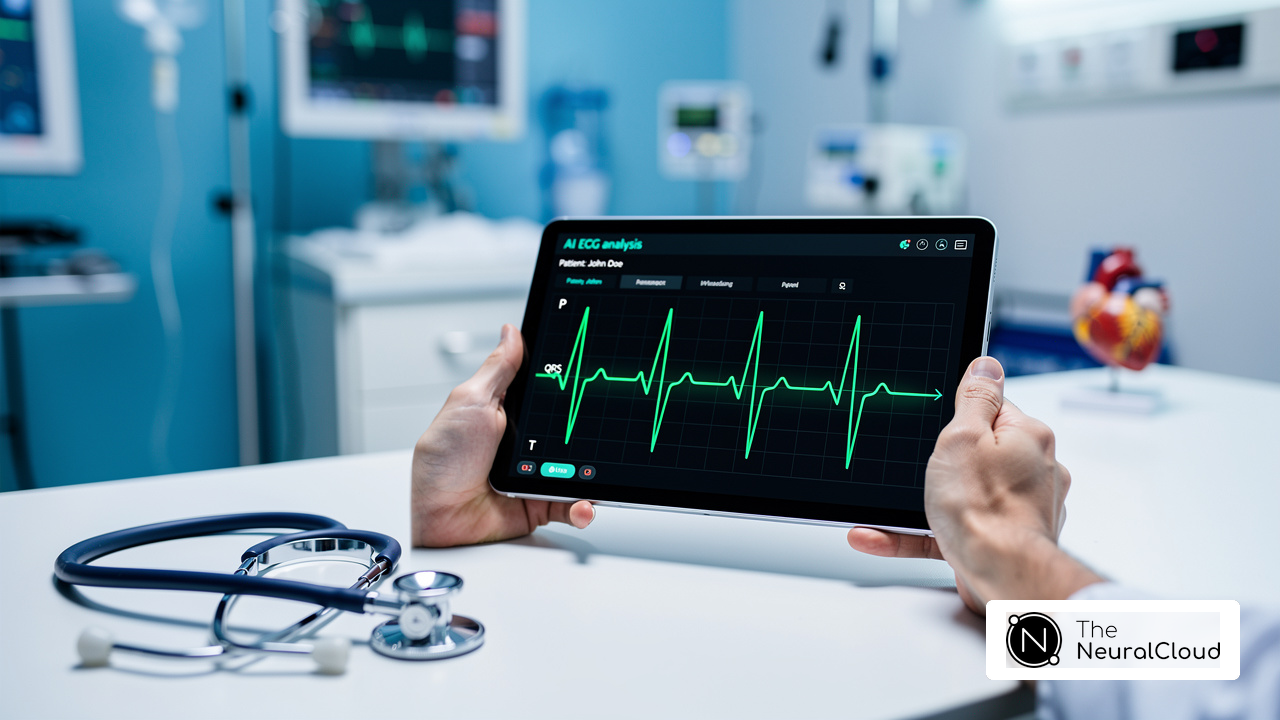
ECG analysis faces significant challenges, including noisy signals and the need for accurate data interpretation. Neural Cloud Solutions is leading the transformation of Holter oversight with its cutting-edge AI-driven platform, MaxYield™. This advanced tool makes ECG workflows better by effectively isolating and cleaning up noisy signals, which is essential for accurate cardiac assessment. Leveraging patented signal mapping algorithms, MaxYield™ delivers high-fidelity cardiac data that is crucial for both medical professionals and researchers. The technology processes raw ECG recordings from different devices, helping clinicians quickly gain actionable insights and improve outcomes for patients.
In recent developments, Neural Cloud Solutions has entered a non-binding agreement with Lakeshore Cardiology to integrate its CardioYield™ AI visualization platform into clinical workflows. This partnership aims to enhance cardiac monitoring and simplify ambulatory workflows through AI-driven ECG analysis. The pilot program is designed to validate the effectiveness of MaxYield™ in real-world healthcare environments, focusing on operational performance and workflow integration.
Statistics indicate that the global AI in cardiology market is projected to grow significantly, with a compound annual growth rate (CAGR) of 31.2% from 2026 to 2033, reaching USD 14.8 billion by 2033. This growth is driven by the rising occurrence of cardiovascular diseases and the demand for advanced tracking solutions. In Canada, incorporating AI technologies in heart rhythm assessment is expected to improve the precision and effectiveness of cardiac diagnostics, ultimately benefiting healthcare providers and patients alike.
Expert opinions highlight the significance of AI-driven technologies in enhancing the assessment processes of Holter monitor leads. For instance, the collaboration between Neural Cloud Solutions and Lakeshore Cardiology is anticipated to redefine ECG analysis standards in clinical settings, showcasing the adaptability and effectiveness of AI platforms in enhancing patient care. As the demand for precise and efficient cardiac monitoring continues to rise, Neural Cloud Solutions remains at the forefront of this evolution, committed to delivering innovative solutions that empower healthcare professionals. As AI technologies evolve, they promise to reshape cardiac diagnostics, ultimately enhancing patient outcomes and healthcare efficiency.

Optimal Lead Placement Techniques for Accurate Holter Monitoring
Accurate readings from a Holter monitor leads hinge on the proper positioning of electrodes, a critical factor in ECG analysis. Let’s explore some effective techniques for optimal electrode positioning:
- Positioning: Ensure that electrodes are placed on clean, dry skin to minimize noise. Standard placement involves positioning electrodes in specific anatomical locations to effectively capture the heart's electrical activity.
- Equidistant Placement: Maintain equidistance from the heart to ensure balanced signal capture. For instance, placing the V4 electrode in the 5th intercostal space at the mid-clavicular line is recommended.
- Avoiding Movement: Instruct patients to refrain from excessive movement during monitoring, as this can displace electrodes and impact data quality. Proper securing of wires with adhesive can help maintain their position.
- Adherence to Guidelines: Adhering to established guidelines for electrode placement is vital for meeting healthcare standards and achieving reliable results. This includes checking the ECG signal on the screen before starting the monitor to confirm proper setup.
- Training and Education: Ongoing training for healthcare professionals on optimal electrode placement techniques is essential, as studies indicate that improper positioning can lead to misleading readings and potential misdiagnosis. Regular workshops and updated training materials can enhance skill levels and improve client outcomes.
Investing in ongoing training for healthcare professionals can significantly enhance the accuracy of Holter monitor leads readings, ultimately improving patient outcomes.

Types of Holter Monitor Leads: Choosing the Right Equipment
Choosing the appropriate Holter monitor leads is essential for accurate cardiac assessments, but it can be a complicated decision for healthcare professionals. Here are the main types:
- 2 to 3-Lead Monitors: These monitors are typically sufficient for basic heart rhythm monitoring and are often used for patients with fewer symptoms. They provide essential data for detecting arrhythmias but may lack the depth needed for complex cases.
- 12-Lead Monitors: Ideal for comprehensive cardiac assessments, these monitors offer detailed insights into the heart's electrical activity. They are essential for diagnosing complex arrhythmias and are widely utilized in Canadian healthcare settings for their accuracy and reliability.
- Extended-Wear Monitors: These devices can record data over longer durations, making them suitable for individuals with intermittent symptoms. They are especially useful in detecting sporadic arrhythmias that may not be recorded during shorter observation periods.
Choosing the right Holter monitor leads can be challenging, particularly when taking into account the various symptoms exhibited by patients. Understanding the specific needs of each patient will guide the choice of monitor type, ensuring that the assessment method meets clinical goals and enhances diagnostic accuracy. Ultimately, choosing the right Holter monitor leads can transform patient outcomes by ensuring precise and timely diagnoses.

Ensuring Lead Quality and Maintenance for Reliable Monitoring
Reliable Holter monitoring hinges on the quality of Holter monitor leads used during the process. Ensuring electrode quality is crucial for accurate readings. Here are essential practices to maintain lead integrity:
- Regular inspection of leads is essential. Conduct thorough checks for any signs of wear and tear before each use to ensure accuracy in readings. Damaged connections can compromise the reliability of the data, necessitating timely replacement to maintain optimal performance.
- Proper storage is also vital. Keep materials in a cool, dry environment to prevent degradation. Avoid exposure to extreme temperatures or moisture, as these factors can significantly affect the functionality and reliability of the materials used.
- Utilizing high-quality adhesive pads is another key practice. This ensures that electrodes remain securely attached to the skin throughout the monitoring period, reducing the risk of signal loss caused by conductor displacement, which is essential for precise data collection.
- Implementing training programs for staff on the importance of maintenance is crucial. Establish protocols for regular quality checks to guarantee that all staff are informed of best practices and can assist in upholding high standards in accuracy.
- Establish feedback mechanisms that allow clinicians to report any issues related to guidance performance. This feedback can help recognize ongoing issues and guide future enhancements in quality and oversight practices.
Statistics indicate that the quality of Holter monitor leads significantly impacts the accuracy of cardiac event recordings. Research shows that inadequate lead maintenance can lead to a 30% increase in false negatives during arrhythmia identification. Moreover, regulatory compliance, including FDA Class II SaMD clearance-pending status, is crucial for ensuring the reliability of observation devices. By adhering to these best practices and leveraging MaxYield from Neural Cloud Solutions Inc., healthcare providers can significantly enhance the reliability of Holter monitoring, leading to better patient outcomes in cardiac care. Implementing these practices not only ensures compliance but also fosters trust in cardiac care outcomes.

Conclusion
Effective use of Holter monitor leads is crucial for accurate cardiac monitoring. MaxYield™ from Neural Cloud Solutions Inc. enhances data quality, leading to improved patient outcomes. By focusing on optimal lead placement, selecting the right equipment, and maintaining lead quality, healthcare professionals can significantly elevate the standards of cardiac diagnostics.
This article highlighted the critical role of proper electrode positioning, the selection of appropriate Holter monitor types, and the necessity of maintaining lead integrity. Techniques such as ensuring equidistant placement, adhering to established guidelines, and investing in ongoing training for healthcare staff are vital for achieving accurate readings. Furthermore, the collaboration between Neural Cloud Solutions and Lakeshore Cardiology exemplifies the potential of AI-driven solutions to redefine cardiac monitoring practices.
As the landscape of cardiac care continues to evolve, embracing best practices in Holter monitoring becomes increasingly essential. Healthcare providers are encouraged to prioritize the implementation of these strategies to enhance diagnostic accuracy and patient care. By prioritizing these strategies, healthcare providers can significantly enhance patient trust and health outcomes across Canada.
Frequently Asked Questions
What is MaxYield™ and how does it improve Holter monitoring?
MaxYield™ is an AI-driven platform developed by Neural Cloud Solutions that enhances ECG workflows by isolating and cleaning up noisy signals, which is essential for accurate cardiac assessment. It utilizes patented signal mapping algorithms to deliver high-fidelity cardiac data for medical professionals and researchers.
How does MaxYield™ process ECG recordings?
MaxYield™ processes raw ECG recordings from various devices, enabling clinicians to quickly gain actionable insights and improve patient outcomes.
What recent partnership has Neural Cloud Solutions entered into?
Neural Cloud Solutions has entered a non-binding agreement with Lakeshore Cardiology to integrate its CardioYield™ AI visualization platform into clinical workflows, aiming to enhance cardiac monitoring and simplify ambulatory workflows through AI-driven ECG analysis.
What is the purpose of the pilot program associated with MaxYield™?
The pilot program is designed to validate the effectiveness of MaxYield™ in real-world healthcare environments, focusing on operational performance and workflow integration.
What is the projected growth of the AI in cardiology market?
The global AI in cardiology market is projected to grow at a compound annual growth rate (CAGR) of 31.2% from 2026 to 2033, reaching USD 14.8 billion by 2033, driven by the rising occurrence of cardiovascular diseases and the demand for advanced tracking solutions.
How will AI technologies impact cardiac diagnostics in Canada?
Incorporating AI technologies in heart rhythm assessment in Canada is expected to improve the precision and effectiveness of cardiac diagnostics, benefiting healthcare providers and patients alike.
What is the significance of AI-driven technologies in Holter monitoring?
AI-driven technologies are significant in enhancing the assessment processes of Holter monitor leads, as demonstrated by the collaboration between Neural Cloud Solutions and Lakeshore Cardiology, which aims to redefine ECG analysis standards in clinical settings.
What is Neural Cloud Solutions' commitment to healthcare professionals?
Neural Cloud Solutions is committed to delivering innovative solutions that empower healthcare professionals, as AI technologies evolve to reshape cardiac diagnostics and enhance patient outcomes and healthcare efficiency.
List of Sources
- Neural Cloud Solutions: Transforming Holter Monitoring with MaxYield™
- AI In Cardiology Market Size And Share Report, 2026-2033 (https://grandviewresearch.com/industry-analysis/artificial-intelligence-in-cardiology-market-report)
- AI/ML Innovations Inc. (CVE:AIML) | (https://webdisclosure.com/press-release/aiml-innovations-inc-cve-aiml-aiml-subsidiary-neuralcloud-signs-non-binding-agreement-with-movesense-to-pilot-ai-powered-ecg-and-holter-reporting-hvMjset2dT3)
- Neural Cloud Signs Reseller Agreement with European Digital Cardiac Monitoring Platform (https://finance.yahoo.com/sectors/healthcare/articles/neural-cloud-signs-reseller-agreement-110000186.html)
- Artificial Intelligence (AI) in Cardiovascular Medicine - Overview (https://mayoclinic.org/departments-centers/ai-cardiology/overview/ovc-20486648)
- AIML subsidiary NeuralCloud Solutions Inc., Signs Non-Binding Commercial Term Sheet with Lakeshore Cardiology to Deploy CardioYield(TM) for AI-Powered Holter Analysis (https://theglobeandmail.com/investing/markets/stocks/AIMLF/pressreleases/36945393/aiml-subsidiary-neuralcloud-solutions-inc-signs-non-binding-commercial-term-sheet-with-lakeshore-cardiology-to-deploy-cardioyieldtm-for-ai-powered-holter-analysis)
- Optimal Lead Placement Techniques for Accurate Holter Monitoring
- ECG Electrode Placement: Risks, Tech, and Growing Demand in 2025- (https://intcomedical.com/news/info/What-You-Need-to-Know-About-ECG-Electrode-Placement-in-2025.html)
- Latest News | How to Fit Your Holter Monitor (https://cardioscan.co.nz/post/how-to-fit-your-holter-monitor)
- Philips data shows extended ECG Holter monitoring can improve diagnostic results (https://philips.com/a-w/about/news/archive/standard/news/articles/2023/20230828-philips-data-shows-extended-ecg-holter-monitoring-can-improve-diagnostic-results.html)
- The Future of Holter Monitoring: How Digital Innovation is Revolutionizing Cardiac Care | LifeSignals® (https://lifesignals.com/the-future-of-holter-monitoring)
- Types of Holter Monitor Leads: Choosing the Right Equipment
- Holter Monitor - StatPearls - NCBI Bookshelf (https://ncbi.nlm.nih.gov/books/NBK538203)
- 12-Lead ECG vs Holter vs Handheld Devices (https://powerfulmedical.com/blog/12-lead-ecg-ambulatory-ecg-holter-and-handheld-devices-which-is-right-for-your-patients)
- Effectiveness of 12-lead ECG versus Holter monitor confirmed in important trial methodology (https://richmondresearchinstitute.org/news/effectiveness-of-12-lead-ecg-versus-holter-monitor-confirmed-in-important-trial-methodology)
- 12-lead vs 3-lead cardiac Holter - When is it recommended to carry it out? (Copy) (https://activeaction.eu/en/component/zoo/item/12-lead-vs-3-lead-cardiac-holter-2)
- Ensuring Lead Quality and Maintenance for Reliable Monitoring
- The Future of Holter Monitoring: How Digital Innovation is Revolutionizing Cardiac Care | LifeSignals® (https://lifesignals.com/the-future-of-holter-monitoring)
- New Data Presented at HRS 2026 Show Short-Term Holter Monitoring Misses a Large Proportion of AF Recurrence Post-Ablation and Clinically Significant Arrhythmias in Pregnancy (https://irhythm2024rd.q4web.com/news/news-details/2026/New-Data-Presented-at-HRS-2026-Show-Short-Term-Holter-Monitoring-Misses-a-Large-Proportion-of-AF-Recurrence-Post-Ablation-and-Clinically-Significant-Arrhythmias-in-Pregnancy/default.aspx)
- Validation of a novel single lead ambulatory ECG monitor – Cardiostat™ – Compared to a standard ECG Holter monitoring | Request PDF (https://researchgate.net/publication/329778812_Validation_of_a_novel_single_lead_ambulatory_ECG_monitor_-Cardiostat-_Compared_to_a_standard_ECG_Holter_monitoring)
- Validation of Adhesive Single-Lead ECG Device Compared with Holter Monitoring among Non-Atrial Fibrillation Patients - PMC (https://pmc.ncbi.nlm.nih.gov/articles/PMC8124998)
- Goodbye to Wires, Hello Better Heart Monitoring (https://willamettevalleymedical.com/in-the-news/2026/01/27/goodbye-to-wires--hello-better-heart-monitoring)