Introduction
The realm of cardiac care is undergoing a transformative shift, driven by advancements in technology and the increasing importance of accurate diagnostics. Among these innovations, the 12-lead ECG stands out as a cornerstone for effective cardiac assessment, offering a comprehensive view of the heart's electrical activity. This article explores seven key insights that illuminate the significance of mastering lead 12 ECG techniques. It examines how enhanced training, cutting-edge AI solutions, and continuous monitoring can elevate patient outcomes. However, with the complexities of ECG interpretation and the potential for misdiagnosis looming large, healthcare professionals must ensure they are equipped to navigate this critical landscape.
Neural Cloud Solutions' MaxYield™: Transforming ECG Analysis with Advanced AI
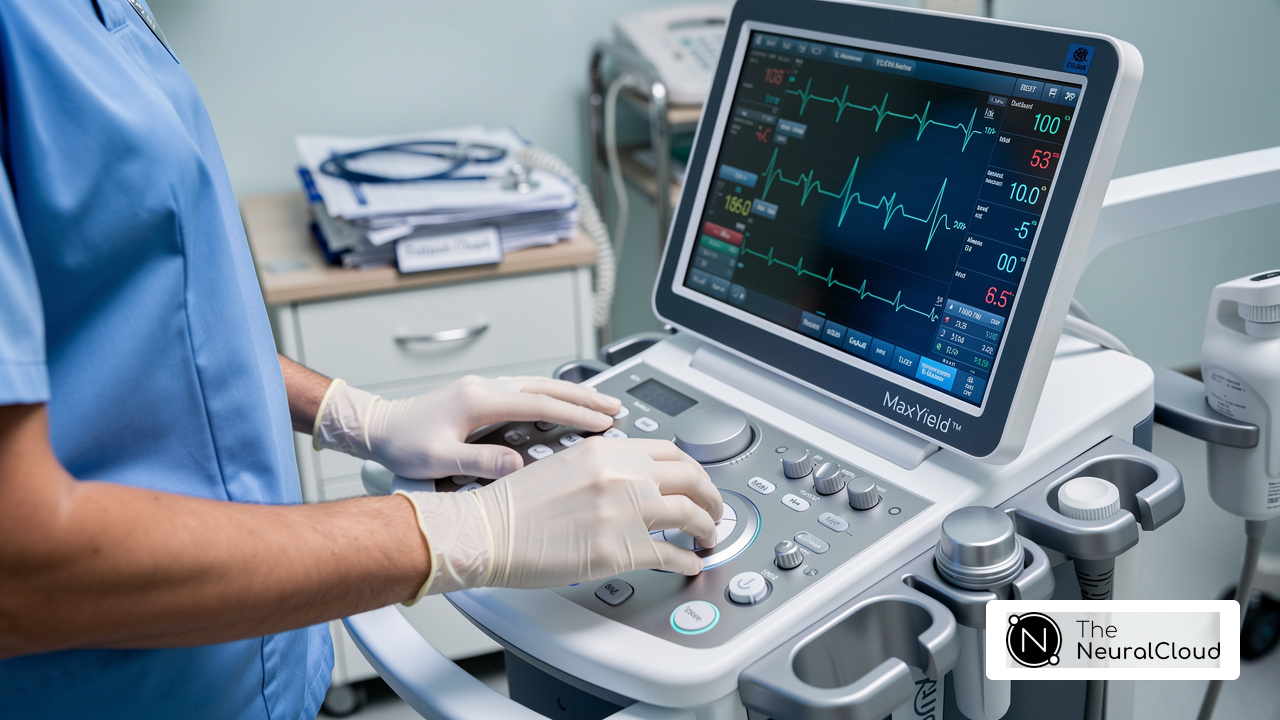
Neural Cloud Solutions' MaxYield™ platform is at the forefront of revolutionizing ECG analysis through the application of advanced AI algorithms that automate the processing of ECG signals. This innovative technology significantly enhances the clarity of ECG data, enabling healthcare professionals to make informed decisions with remarkable speed. Capable of analyzing over 200,000 heartbeats in under five minutes, MaxYield™ delivers precise beat-by-beat analysis, effectively isolating critical features such as P-waves, QRS complexes, and T-wave intervals. This capability not only accelerates the analysis process but also elevates the quality of the data, establishing MaxYield™ as an indispensable tool for clinicians and researchers. Testimonials from leading cardiologists underscore the platform's effectiveness, particularly in streamlining Holter monitor data processing and improving overall clinical workflows. By automating labor-intensive tasks, MaxYield™ allows healthcare providers to focus on high-level decision-making, ultimately enhancing patient care and diagnostic accuracy.
Understanding 12-Lead ECG Configuration: Key to Accurate Cardiac Assessment
The 12-lead ECG configuration requires precise placement of electrodes at designated locations on the body, enabling the capture of the heart's electrical activity from multiple perspectives. This meticulous arrangement is vital for diagnosing a range of cardiac conditions, as it offers a comprehensive view of cardiac function. Accurate lead placement is paramount; mispositioning can result in significant misinterpretations of ECG results, potentially leading to misdiagnosis and inappropriate patient management. For instance, common errors such as the misplacement of precordial electrodes or transposition of connecting cables can obscure true cardiac signals, complicating clinical assessments.
Understanding the underlying anatomy and physiology associated with the 12-lead setup is essential for healthcare professionals. Studies indicate that many nursing staff and students possess reasonable theoretical knowledge but exhibit low accuracy in practical lead placement, highlighting a critical gap in training. In fact, a recent study revealed that only 6.8% of nursing staff achieved perfect scores in knowledge and accuracy regarding ECG lead placement. This underscores the necessity for targeted educational interventions to enhance practical skills and ensure adherence to best practices.
Current best practices emphasize the importance of good electrode contact and skin preparation to achieve high-quality ECG recordings. The standard 12-lead ECG utilizes ten electrodes—four on the limbs and six across the precordium—requiring careful attention to detail. By adhering to established guidelines published in medical journals and continuously improving training programs, healthcare professionals can significantly enhance the accuracy of ECG recordings, ultimately leading to better patient outcomes. Furthermore, ongoing education on the implications of ECG misplacement on patient safety is crucial, as improper lead placement can lead to diagnostic errors and mismanagement of patients. Healthcare professionals are encouraged to engage in continuous training to stay updated on best practices in ECG lead placement.
Identifying Common ECG Patterns: Essential for Diagnosing Cardiac Conditions
Identifying common ECG patterns, such as atrial fibrillation, ventricular tachycardia, and ST-segment elevation, is essential for diagnosing cardiac conditions. Each pattern provides specific information about the heart's electrical activity and can indicate underlying issues such as ischemia or arrhythmias. Healthcare professionals must be adept at recognizing these patterns to make informed clinical decisions. For instance, the presence of ST-segment elevation may suggest an acute myocardial infarction, necessitating immediate intervention.
Clinical Implications of ECG Changes: Insights for Healthcare Professionals
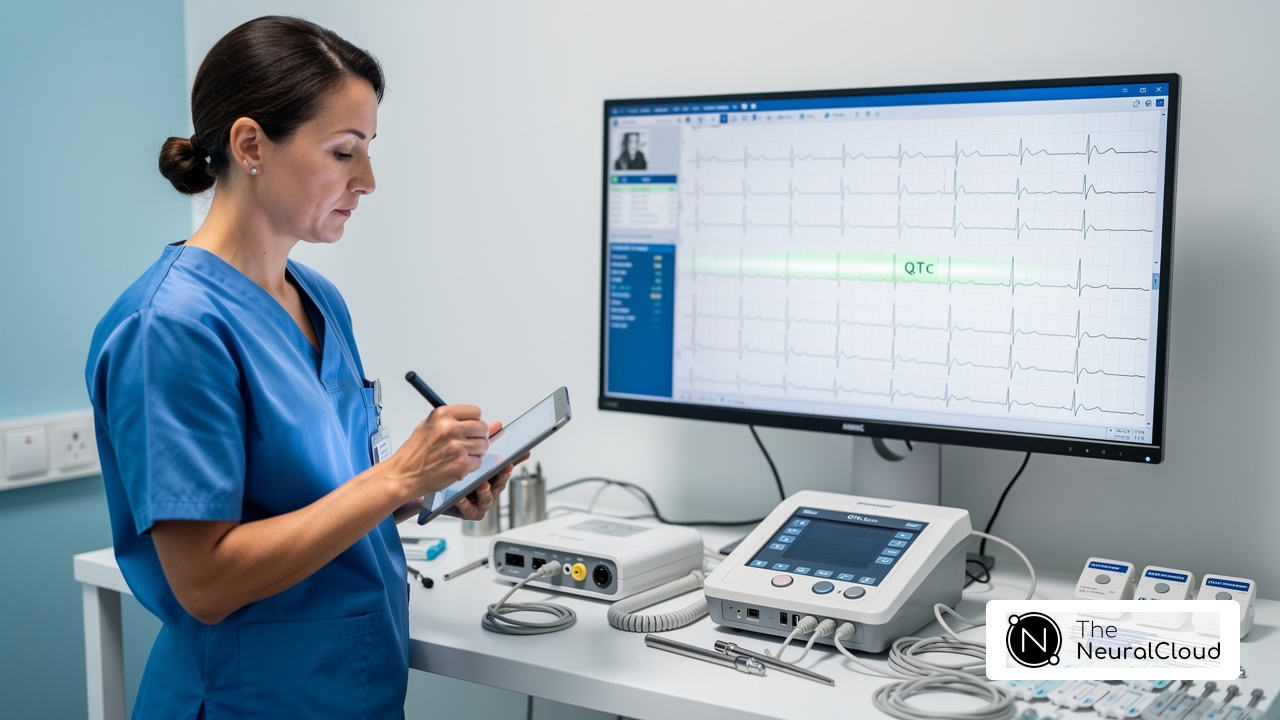
ECG changes can have profound clinical implications, often indicating various cardiac conditions that necessitate prompt attention. For instance, a prolonged QT interval is associated with a three-fold increased risk of life-threatening arrhythmias, particularly in younger adults, where the relative risk of sudden cardiac death can reach 8.0. In older adults, the prevalence of prolonged QTc can reach 43.4% in those aged 65 and older. Additionally, alterations in the QRS complex may signal conduction abnormalities, which can lead to significant clinical consequences if not addressed.
Healthcare professionals must interpret these changes within the broader context of the patient's clinical history and symptoms. For example, patients with a history of cardiovascular disease exhibit a higher prevalence of QTc prolongation at 40.7%, underscoring the importance of thorough ECG analysis in this population. By understanding the implications of ECG findings, clinicians can enhance patient management strategies and improve overall outcomes.
Current research highlights the necessity of regular monitoring for patients at risk of QT prolongation, especially those on medications known to affect the QT interval. As noted in recent studies, the risks associated with QT prolongation are significant, with abnormal QTc prolongation being an independent risk factor for sudden cardiac death. Furthermore, patients with prolonged QTc have a longer median length of stay of 7.2 days compared to 3.3 days for those without, emphasizing the need for healthcare providers to remain vigilant in interpreting ECG changes and adapting management plans accordingly. Regular ECG monitoring is recommended when prescribing QT interval-prolonging medications to mitigate potential risks.
Noise Reduction Techniques in ECG Analysis: Enhancing Signal Clarity
Noise and artifacts can significantly obscure true ECG signals, leading to misinterpretation. Techniques such as digital filtering, adaptive noise cancellation, and advanced signal processing algorithms are crucial for enhancing signal clarity. The MaxYield™ platform employs sophisticated noise reduction methods to ensure that the ECG data is as accurate as possible. By minimizing interference, healthcare professionals can focus on the critical features of the ECG, leading to more reliable diagnoses and better patient outcomes.
Continuous ECG Monitoring: Advancements in Patient Care
Continuous ECG monitoring facilitates real-time evaluation of a patient's cardiac status, delivering essential data that can prompt timely medical interventions. Recent advancements in wearable technology and remote monitoring systems empower healthcare providers to monitor patients' heart rhythms beyond conventional clinical environments. This capability is especially advantageous for individuals with chronic conditions or those at elevated risk for cardiac events. By leveraging continuous monitoring, healthcare professionals can identify abnormalities at an early stage and respond swiftly, significantly enhancing patient care outcomes. For instance, studies indicate that wearable long-term ECG monitoring can achieve a detection rate of 31% for postoperative atrial fibrillation (POAF), compared to just 19% with traditional methods, underscoring the effectiveness of continuous monitoring in capturing transient cardiac events. As the landscape of cardiac monitoring evolves, the integration of advanced AI algorithms into these devices, such as those utilized in Neural Cloud Solutions' MaxYield™ platform, further enhances diagnostic accuracy and efficiency, ensuring that healthcare providers can deliver optimal care. Additionally, addressing challenges posed by noise and signal artifacts is crucial for improving ECG analysis, making platforms like MaxYield™ essential in the current healthcare environment.
Wearable Technology in ECG Monitoring: A Game Changer for Cardiac Health
Wearable technology has revolutionized ECG monitoring, enabling patients to conveniently and continuously track their heart health. Devices like smartwatches and portable ECG monitors deliver real-time data on heart rhythms, facilitating the early detection of arrhythmias and other cardiac issues. This advancement empowers patients to take an active role in their health management while equipping healthcare professionals with critical data for monitoring and managing cardiac conditions. Notably, a single 10-second spot ECG would catch only approximately 7.6% of atrial fibrillation (AF) cases after an alert, highlighting the limitations of traditional ECG methods compared to continuous monitoring with wearables. Furthermore, wearable ECG devices have been shown to detect arrhythmias as accurately as traditional methods like Holter monitors. As the wearable technology landscape evolves, its integration into clinical practice is expected to significantly enhance patient outcomes. With projections indicating that shipments of wearables will exceed 500 million units by 2025 and the global wearables market estimated to reach around $150 billion by 2026, the impact of these devices on patient engagement and empowerment in cardiac health is undeniable. Studies have also shown that 57.2% of participants who received an initial irregular rhythm alert had another irregular rhythm detected within three months, underscoring the importance of these technologies in proactive cardiac care. As we approach 2025, the trend towards incorporating advanced health features in wearables, such as ECG and arrhythmia detection, will likely continue to grow, further solidifying their role in enhancing cardiac health.
Educational Resources for ECG Interpretation: Building Competence in Cardiology
Educational resources play a pivotal role in enhancing ECG interpretation competence among healthcare professionals. Online courses, workshops, and interactive platforms offer essential training in ECG analysis, equipping practitioners with the skills needed for accurate interpretation. For instance, programs that utilize ECG libraries, case studies, and simulation tools have proven effective in reinforcing learning and keeping practitioners abreast of the latest advancements in cardiology. Notably, the average accuracy of ECG interpretation among healthcare providers is only 56.4%, underscoring the critical need for improved training and education in this area. Additionally, Dr. Zimmerman's ECG Interpretation webinar series, beginning on January 15, 2025, represents a current opportunity for healthcare professionals to enhance their skills. By prioritizing education, healthcare professionals can significantly improve their diagnostic accuracy, leading to better patient outcomes and more effective management of cardiac conditions. Continuous learning through these resources not only fosters skill development but also addresses the critical need for proficiency in ECG interpretation, particularly in emergency settings where timely and accurate assessments can save lives.
Managing Interobserver Variability in ECG Interpretation: Ensuring Consistency
Interobserver variability in ECG interpretation can lead to inconsistent diagnoses and treatment decisions. To manage this variability, healthcare professionals should adopt standardized protocols for ECG analysis and interpretation. Training programs that emphasize consistent criteria for identifying ECG patterns can help reduce discrepancies among practitioners. Additionally, utilizing advanced AI tools, such as those offered by Neural Cloud Solutions, can provide objective analysis and support clinicians in making informed decisions, ultimately enhancing the reliability of ECG interpretations.
Future Directions in ECG Technology: Innovations Shaping Cardiac Care
The future of ECG technology is set to undergo remarkable advancements, primarily fueled by innovations in artificial intelligence (AI), machine learning, and wearable devices. These emerging technologies are anticipated to significantly enhance the accuracy and efficiency of ECG analysis, facilitating earlier detection of cardiac conditions. For instance, AI-automated atrial fibrillation diagnosis has shown improved cost-effectiveness and diagnostic performance comparable to experienced cardiologists, with studies indicating a negative predictive value of 99.2% for detecting acute conditions. Additionally, up to 40% of patients are non-responders to cardiac resynchronization therapy, highlighting the critical need for precise diagnostic tools in cardiac care.
Moreover, the integration of telemedicine and remote monitoring solutions is expected to revolutionize patient engagement and care continuity. With platforms like MaxYield™ processing over 200,000 heartbeats in under five minutes, healthcare professionals can leverage real-time data to make informed decisions swiftly. This efficiency not only enhances clinical workflows but also improves patient compliance, as noted by Dr. Pere Blanch, who emphasized the ease of application and comfort of advanced monitoring technologies.
As these technologies evolve, it is crucial for healthcare providers to remain informed and adapt to new tools that enhance diagnostic capabilities and improve patient outcomes. The ongoing development of AI algorithms, which can reduce misdiagnosis rates and optimize patient selection for device therapy, underscores the transformative potential of these innovations in cardiac care.
Conclusion
The exploration of lead 12 ECG technology underscores its essential role in enhancing cardiac assessment and patient care. By prioritizing accurate electrode placement, integrating advanced AI systems such as Neural Cloud Solutions' MaxYield™, and adopting continuous monitoring techniques, healthcare professionals are increasingly empowered to deliver precise diagnoses and effective treatments. The significance of ongoing education and standardized protocols is paramount, as they ensure clinicians remain proficient in accurately interpreting ECG data.
Key insights from this discussion emphasize:
- The necessity for meticulous attention to lead placement to prevent misdiagnoses.
- The benefits of wearable technology in monitoring heart health.
- The transformative impact of AI in streamlining ECG analysis.
Moreover, comprehending common ECG patterns and their clinical implications is vital for timely interventions, ultimately enhancing patient outcomes.
As the field evolves, embracing these innovations and committing to continuous education will be crucial for healthcare providers. The future of ECG technology promises to improve diagnostic accuracy and patient engagement, paving the way for more effective cardiac care. Engaging with these advancements today will shape the landscape of cardiology tomorrow, ensuring that patient safety and care quality remain at the forefront of medical practice.
Frequently Asked Questions
What is the MaxYield™ platform by Neural Cloud Solutions?
MaxYield™ is a platform that utilizes advanced AI algorithms to automate the processing of ECG signals, enhancing the clarity of ECG data and enabling rapid decision-making by medical professionals.
How quickly can MaxYield™ analyze ECG data?
MaxYield™ can analyze over 200,000 heartbeats in under five minutes, providing precise beat-by-beat analysis.
What critical features can MaxYield™ isolate during ECG analysis?
MaxYield™ can effectively isolate critical features such as P-waves, QRS complexes, and T-wave intervals.
How does MaxYield™ improve clinical workflows?
By automating labor-intensive tasks, MaxYield™ allows healthcare providers to focus on high-level decision-making, ultimately enhancing care quality and diagnostic accuracy.
What is the importance of accurate electrode placement in a 12-lead ECG configuration?
Accurate electrode placement is essential for capturing the heart's electrical activity from various perspectives, which is critical for diagnosing heart conditions. Misplacement can lead to significant misinterpretations and potential misdiagnosis.
What are common errors in 12-lead ECG lead placement?
Common errors include misplacement of precordial electrodes and transposition of connecting cables, which can obscure true cardiac signals.
What percentage of nursing staff achieved perfect scores in knowledge and accuracy regarding ECG lead placement according to recent studies?
Only 6.8% of nursing staff achieved perfect scores in both knowledge and accuracy regarding ECG lead placement.
What best practices should healthcare professionals follow for high-quality ECG recordings?
Best practices include ensuring good electrode contact, proper skin preparation, and adherence to established protocols for lead placement.
Why is ongoing education important for healthcare professionals regarding ECG lead placement?
Ongoing education is essential to improve practical skills, ensure adherence to best practices, and understand the implications of ECG misplacement on patient safety.
Why is recognizing common ECG patterns important for healthcare professionals?
Recognizing common ECG patterns, such as atrial fibrillation and ST-segment elevation, is crucial for diagnosing heart conditions and facilitating timely and appropriate treatment.
List of Sources
- Neural Cloud Solutions' MaxYield™: Transforming ECG Analysis with Advanced AI
- nasdaq.com (https://nasdaq.com/articles/heartsciences-inc-reports-fiscal-year-2025-financial-results-and-strategic-advances-ai)
- heart.org (https://heart.org/en/news/2023/11/06/can-ekgs-read-by-ai-save-lives-its-possible-researchers-say)
- Checking your browser - reCAPTCHA (https://pmc.ncbi.nlm.nih.gov/articles/PMC10145690)
- morningstar.com (https://morningstar.com/news/accesswire/1034743msn/aiml-subsidiary-neural-cloud-signs-loi-with-circular-health-to-license-maxyieldtm-ecg-signal-processing)
- Understanding 12-Lead ECG Configuration: Key to Accurate Cardiac Assessment
- droracle.ai (https://droracle.ai/articles/158735/ecg-lead-placemeent)
- journals.rcni.com (https://journals.rcni.com/nursing-standard/how-to-series/how-to-accurately-record-a-12lead-ecg-ns.2025.e12512)
- Accuracy and knowledge in 12-lead ECG placement among nursing students and nurses: a web-based Italian study - PMC (https://pmc.ncbi.nlm.nih.gov/articles/PMC8023103)
- coursehero.com (https://coursehero.com/file/97541490/Electrocardiogram-12-Lead-1pdf)
- Identifying Common ECG Patterns: Essential for Diagnosing Cardiac Conditions
- New AI Tool Beats Standard Approaches for Detecting Heart Attacks (https://upmc.com/media/news/062923-ecg-model-heart-attacks)
- Top 5 MI ECG Patterns You Must Know (https://healio.com/cardiology/learn-the-heart/ecg-review/ecg-interpretation-tutorial/stemi-mi-ecg-pattern)
- AI-powered ECG model outperforms doctors in detecting hidden heart disease (https://news-medical.net/news/20250721/AI-powered-ECG-model-outperforms-doctors-in-detecting-hidden-heart-disease.aspx)
- Spotlight on early detection of 3 heart diseases using ECG-AI - Mayo Clinic News Network (https://newsnetwork.mayoclinic.org/discussion/spotlight-on-early-detection-of-3-heart-diseases-using-ecg-ai)
- Clinical Implications of ECG Changes: Insights for Healthcare Professionals
- AI-powered ECG model outperforms doctors in detecting hidden heart disease (https://news-medical.net/news/20250721/AI-powered-ECG-model-outperforms-doctors-in-detecting-hidden-heart-disease.aspx)
- pmc.ncbi.nlm.nih.gov (https://pmc.ncbi.nlm.nih.gov/articles/PMC12001931)
- sciencedirect.com (https://sciencedirect.com/science/article/pii/S0735109705025659)
- onlinelibrary.wiley.com (https://onlinelibrary.wiley.com/doi/10.1111/ijcp.13250)
- bmccardiovascdisord.biomedcentral.com (https://bmccardiovascdisord.biomedcentral.com/articles/10.1186/s12872-019-1244-7)
- Noise Reduction Techniques in ECG Analysis: Enhancing Signal Clarity
- mdpi.com (https://mdpi.com/2673-3846/5/4/37)
- b-secur.com (https://b-secur.com/blog/heartkey-rhythm-a-revolution-in-cardiac-monitoring)
- sciencedirect.com (https://sciencedirect.com/science/article/pii/S2307187723001773)
- xtalks.com (https://xtalks.com/tempus-scores-fda-clearance-for-ai-ecg-software-to-flag-low-lvef-4329)
- pmc.ncbi.nlm.nih.gov (https://pmc.ncbi.nlm.nih.gov/articles/PMC7660795)
- Continuous ECG Monitoring: Advancements in Patient Care
- sciencedirect.com (https://sciencedirect.com/science/article/pii/S2666501824003210)
- signifyresearch.net (https://signifyresearch.net/insights/clinical-care-news-round-up-january-2025)
- frontiersin.org (https://frontiersin.org/journals/cardiovascular-medicine/articles/10.3389/fcvm.2022.1001883/full)
- jamanetwork.com (https://jamanetwork.com/journals/jamanetworkopen/fullarticle/2783545)
- investors.irhythmtech.com (https://investors.irhythmtech.com/news/news-details/2025/iRhythm-Launches-Zio-Long-Term-Continuous-Monitoring-Service-in-Japan-as-the-Zio-ECG-Recording-and-Analysis-System-Advancing-AI-Powered-Arrhythmia-Detection/default.aspx)
- Wearable Technology in ECG Monitoring: A Game Changer for Cardiac Health
- Top 5 Benefits of Using a Continuous Portable ECG Monitor for Heart Health - Biotricity (https://biotricity.com/2024/10/29/top-5-benefits-of-using-a-continuous-portable-ecg-monitor-for-heart-health)
- medicaleconomics.com (https://medicaleconomics.com/view/cardiosense-wins-fda-clearance-for-wearable-heart-monitor-cardiotag)
- ts2.tech (https://ts2.tech/en/global-wearable-health-tech-news-june-and-july-2025)
- bch.org (https://bch.org/latest-news/2025/june/dr-robert-shapiro-on-wearable-devices-for-heart-)
- techtarget.com (https://techtarget.com/virtualhealthcare/answer/How-Wearables-Can-Enhance-Cardiac-Care-Boost-Patient-Engagement)
- Educational Resources for ECG Interpretation: Building Competence in Cardiology
- Electrocardiogram Interpretation: A Core Competency CR Professionals Need to Improve Care Outcomes (https://newsandviews.aacvpr.org/Full-Article/electrocardiogram-interpretation-a-core-competency-cr-professionals-need-to-improve-care-outcomes-1)
- pmc.ncbi.nlm.nih.gov (https://pmc.ncbi.nlm.nih.gov/articles/PMC11848365)
- hssib.org.uk (https://hssib.org.uk/news-events-blog/report-highlights-concerning-variation-in-paramedic-ecg-education-and-training)
- pmc.ncbi.nlm.nih.gov (https://pmc.ncbi.nlm.nih.gov/articles/PMC10921113)
- journals.lww.com (https://journals.lww.com/annals-of-medicine-and-surgery/fulltext/2024/09000/electrocardiogram__ekg__knowledge_and.25.aspx)
- Future Directions in ECG Technology: Innovations Shaping Cardiac Care
- philips.com (https://philips.com/a-w/about/news/archive/standard/news/articles/2023/20230828-philips-data-shows-extended-ecg-holter-monitoring-can-improve-diagnostic-results)
- signifyresearch.net (https://signifyresearch.net/insights/clinical-care-news-round-up-january-2025)
- Checking your browser - reCAPTCHA (https://pmc.ncbi.nlm.nih.gov/articles/PMC10145690)
- businesswire.com (https://businesswire.com/news/home/20250722113026/en/HeartBeam-Wins-Industry-Innovation-Award-for-Advancing-Remote-Cardiac-Care-With-Groundbreaking-ECG-Technology)
- Spotlight on early detection of 3 heart diseases using ECG-AI - Mayo Clinic News Network (https://newsnetwork.mayoclinic.org/discussion/spotlight-on-early-detection-of-3-heart-diseases-using-ecg-ai)