Introduction
Identifying atrial flutter in EKG analysis poses significant challenges for healthcare professionals, especially as its incidence rises among younger populations in Canada. Mastering effective interpretation techniques is crucial for improving patient outcomes. However, with the rapid advancement of technology, including AI-driven tools like MaxYield™ from Neural Cloud Solutions Inc., clinicians are now equipped to enhance their diagnostic capabilities. Integrating advanced tools like MaxYield™ into practice is essential for enhancing diagnostic accuracy and ultimately improving patient care.
Understand Atrial Flutter: Key Characteristics and Implications
The swift and consistent depolarizations of heart chambers, occurring at rates of 240 to 340 beats per minute, present significant challenges in ECG analysis. Clinically, this condition manifests as a distinct sawtooth pattern on the EKG atrial flutter, particularly evident in the inferior leads (II, III, and aVF). It poses serious risks, including hemodynamic instability and an increased likelihood of thromboembolic events, such as stroke. Recent studies in Canada indicate that heart rhythm disturbances can elevate stroke risk, especially among older individuals, highlighting the need for prompt diagnosis and intervention. Alarmingly, the occurrence of these disturbances is rising among people under 70 years old, underscoring the necessity for healthcare providers to remain vigilant in their evaluations.
Identifying flutter waves is essential for distinguishing heart rhythm disturbances from atrial fibrillation, particularly when analyzing an EKG atrial flutter, which exhibits a more chaotic rhythm. Canadian cardiologists stress how crucial it is to make this distinction, as misdiagnosis can result in ineffective treatment. Additionally, atrial tachycardia may coexist with other arrhythmias, complicating the clinical picture and necessitating a comprehensive approach to patient management.
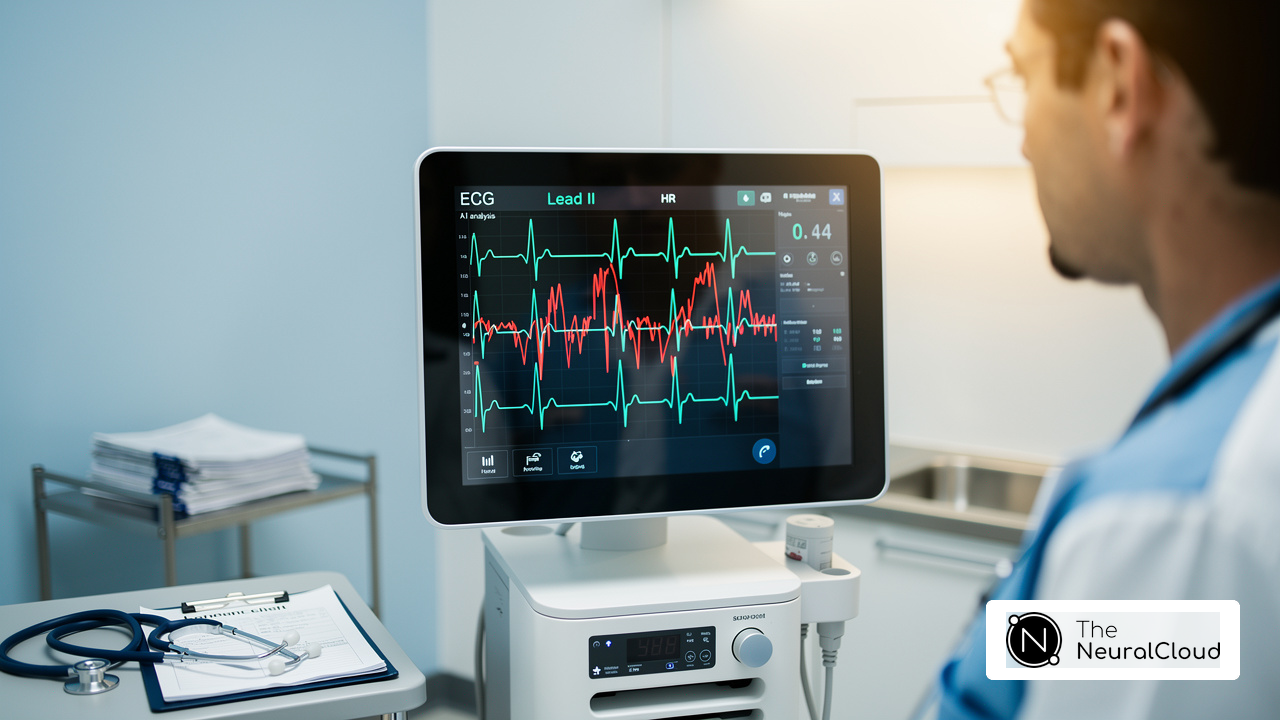
Neural Cloud Solutions Inc.'s MaxYield™ platform enhances ECG analysis efficiency through advanced noise filtering and distinct wave recognition. This allows for the rapid isolation of ECG waves, even in recordings with significant noise and artifacts. Such capabilities are particularly advantageous for accurately identifying oscillation waves, thereby improving diagnostic accuracy. Experts like Dr. Alan Rabinowitz and Dr. Brett Heilbron have noted that MaxYield™'s precision rivals human interpretation, making it an invaluable tool in clinical settings. Furthermore, MaxYield™ is currently pending FDA Class II SaMD clearance, ensuring compliance with regulatory standards.
Familiarity with these key features not only aids in precise diagnosis but also informs treatment planning, ultimately improving outcomes for patients. As the incidence of EKG atrial flutter continues to rise, particularly among younger populations, healthcare professionals must remain vigilant in their assessment and management strategies to mitigate associated health risks. Case studies from Canadian healthcare settings have shown that early intervention can significantly enhance outcomes for individuals, reinforcing the need for accurate and timely diagnosis. With MaxYield™, clinicians can leverage cutting-edge technology to enhance their diagnostic capabilities and improve patient care.

Implement Effective EKG Interpretation Techniques for Atrial Flutter
Interpreting EKGs for atrial flutter presents unique challenges that require precise techniques and advanced tools like MaxYield™ from Neural Cloud Solutions Inc. To effectively interpret EKGs for atrial flutter, clinicians should employ several key techniques, enhanced by the capabilities of MaxYield:
- Employ a 12-lead EKG: This offers a thorough perspective of the heart's electrical activity, enabling improved visualization of wave patterns. The typical rate of P waves in atrial tachycardia ranges from 250 to 350 per minute, usually around 300, which is crucial for accurate identification. With MaxYield™, you can get beat-by-beat evaluations, giving you insights on 200,000 heartbeats in less than 5 minutes.
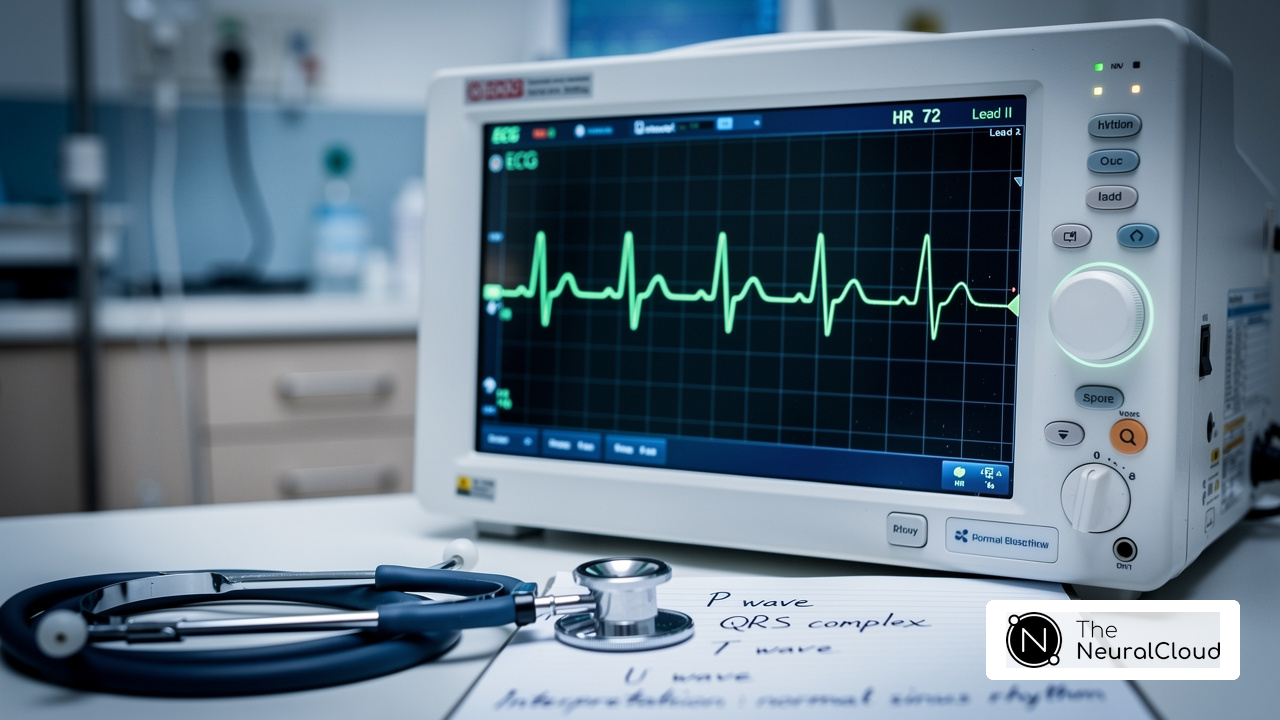
- Identify the 'F' waves: Look for the characteristic sawtooth pattern, particularly in leads II, III, and aVF. T Barill notes that the appearance of more than one P wave between each QRS complex is a somewhat unique condition that can aid in diagnosis. MaxYield™ helps clinicians identify features related to EKG atrial flutter with enhanced clarity, supporting confident clinical decisions.
- Assess the ventricular response: Determine if the ventricular rate is regular or irregular, which can indicate the presence of variable conduction. Atrial tachycardia can result in ventricular rates of 125 to 175 beats per minute, which is crucial for comprehending the patient's condition. The advanced AI-driven analysis of MaxYield™ can streamline this assessment, reducing noise and improving workflow efficiency.
- Distinguish from other arrhythmias: Be aware of the differences between atrial wave and atrial fibrillation, as misdiagnosis can result in treatment errors, which complicates patient care significantly. T Barill emphasizes that with 2:1 conduction, oscillation waves may not be visible, complicating the diagnosis. Utilizing MaxYield™ can help clarify these distinctions through its precise signal mapping capabilities.
- Practice with case studies: Reviewing real-world examples can enhance recognition skills and improve diagnostic confidence. For instance, a case study illustrating the successful application of these techniques can provide practical context and reinforce their importance. MaxYield™ can facilitate this by transforming clean ECG data into interactive dashboards and clinical-ready reports via Insight360.
By mastering these techniques and leveraging the advanced features of MaxYield™, clinicians can significantly reduce the risk of misdiagnosis and improve patient care. Furthermore, citing the NICE clinical guideline CG36, released in 2006, can offer a framework for best practices in EKG interpretation, especially in relation to EKG atrial flutter and other heart rhythm disturbances. Expert endorsements from Dr. Alan Rabinowitz, Dr. Brett Heilbron, and Dr. Marc W. Deyell emphasize that MaxYield™ rivals human interpretation in precision and offers significant noise reduction benefits, making it an invaluable tool for healthcare professionals. With MaxYield™, clinicians not only enhance their diagnostic capabilities but also ensure better patient outcomes through accurate interpretations.

Leverage Advanced Technologies for Enhanced EKG Analysis
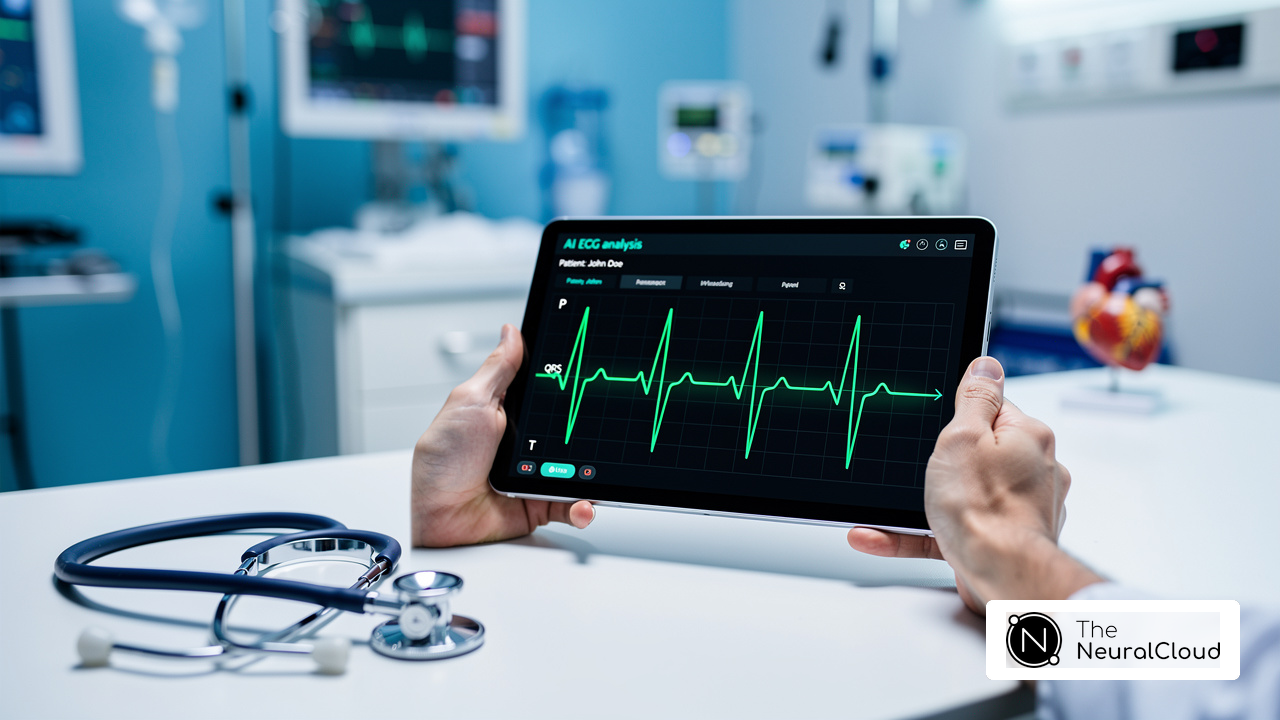
Traditional ECG analysis faces significant challenges, often leading to missed diagnoses and delayed patient care. Cutting-edge technologies, especially AI-driven ECG analysis tools like MaxYield from Neural Cloud Solutions Inc., are transforming the interpretation of EKGs, particularly for diagnosing EKG atrial flutter. MaxYield quickly labels the onsets and offsets of P, QRS, and T Waves. This rapid labeling significantly enhances diagnostic accuracy. These tools leverage machine learning algorithms to detect intricate patterns and anomalies in cardiac signals, including subtle flutter waves that may elude human detection, thereby improving early diagnosis.
Automated systems provide real-time feedback and alerts, allowing clinicians to react quickly to critical changes in a patient's condition. By integrating these technologies into clinical workflows, healthcare professionals can simplify evaluations and lighten their cognitive load, enabling them to focus more on patient care. Furthermore, continuous progress in wearable technology and remote monitoring systems is expanding the range of EKG evaluation, making it more accessible and efficient. In Canada, recent advancements in machine learning applications for EKG evaluation have demonstrated encouraging outcomes, with studies suggesting that AI can improve diagnostic accuracy and decrease the time needed for assessment.
Machine learning offers advantages beyond accuracy. It enables ongoing monitoring, which is crucial for managing patients with atrial flutter and other arrhythmias, including the use of EKG atrial flutter. As these technologies evolve, they hold the potential to transform cardiovascular diagnostics and significantly improve patient outcomes. Experts like Dr. Alan Rabinowitz, Dr. Brett Heilbron, and Dr. Marc W. Deyell emphasize that MaxYield’s precision rivals human interpretation, making it an invaluable tool in modern cardiac diagnostics. Additionally, the noise filtering capabilities and the data wall feature of MaxYield automate repetitive tasks, allowing for the processing of more data in less time, further enhancing workflow efficiency. As MaxYield continues to evolve, it promises to redefine the standards of cardiovascular diagnostics, ensuring better outcomes for patients.

Integrate EKG Analysis Tools Seamlessly into Healthcare Workflows
Integrating EKG evaluation tools into healthcare workflows presents unique challenges that require strategic planning. If you're looking to incorporate EKG evaluation tools into your healthcare workflows, here are some strategies to consider:
- Assess Current Workflows: Identify specific areas for improvement, including data entry, interpretation, and reporting processes.
- Choose Compatible Technologies: Opt for device-agnostic EKG evaluation tools that can seamlessly integrate with existing systems, particularly electronic health records (EHRs), to enhance interoperability.
- Provide comprehensive training to ensure that all staff members receive thorough training on the new tools, emphasizing the critical nature of accurate EKG atrial flutter interpretation for care.
- Establish clear protocols by creating clearly defined procedures detailing when and how to use EKG evaluation tools for diagnosing conditions such as EKG atrial flutter, including guidelines for interpreting results and effectively conveying findings to individuals.
- Monitor and Evaluate Effectiveness: Continuously assess the performance of the integrated tools, collecting feedback from users to identify areas for further improvement.
By neglecting these strategies, healthcare organizations may hinder their ability to provide optimal patient care.

Conclusion
Accurate interpretation of EKG atrial flutter is essential for improving patient outcomes in healthcare settings. Understanding and accurately interpreting EKG atrial flutter directly impacts patient care, as misdiagnosis can lead to serious health risks. Recognizing the unique characteristics of atrial flutter, including its distinct wave patterns and associated health risks, is crucial for clinicians. By using advanced technologies like MaxYield™ from Neural Cloud Solutions Inc., healthcare professionals can enhance their diagnostic capabilities, ensuring timely and effective treatment for patients experiencing this condition.
Key insights discussed include the necessity of employing a comprehensive approach to EKG interpretation. This involves utilizing advanced tools for accurate wave identification and integrating these technologies into existing healthcare workflows. AI-driven solutions play a significant role in improving diagnostic accuracy and workflow efficiency, ultimately leading to better patient care. Continuous training and evaluation of EKG analysis tools are also essential to maintain high standards in clinical practice.
As the prevalence of atrial flutter continues to rise, particularly among younger populations in Canada, it is imperative for healthcare providers to adopt best practices in EKG analysis. By embracing innovative technologies and refining interpretation techniques, clinicians can significantly reduce the risk of misdiagnosis and enhance patient outcomes. Integrating tools like MaxYield™ streamlines the diagnostic process and empowers healthcare professionals to deliver the highest quality of care in managing atrial flutter and other cardiac conditions. Embracing advanced diagnostic tools like MaxYield™ is not just beneficial; it is essential for ensuring optimal patient care in the face of rising atrial flutter cases.
Frequently Asked Questions
What is atrial flutter and how does it manifest on an EKG?
Atrial flutter is characterized by rapid and consistent depolarizations of heart chambers at rates of 240 to 340 beats per minute. On an EKG, it presents as a distinct sawtooth pattern, particularly visible in the inferior leads (II, III, and aVF).
What are the risks associated with atrial flutter?
Atrial flutter poses serious risks, including hemodynamic instability and an increased likelihood of thromboembolic events, such as stroke. Recent studies in Canada indicate that heart rhythm disturbances can elevate stroke risk, especially among older individuals.
Why is it important to distinguish atrial flutter from atrial fibrillation?
Distinguishing atrial flutter from atrial fibrillation is crucial because atrial flutter exhibits a more organized rhythm compared to the chaotic rhythm of atrial fibrillation. Misdiagnosis can lead to ineffective treatment, making accurate identification essential.
How does atrial flutter relate to other arrhythmias?
Atrial flutter may coexist with other arrhythmias, such as atrial tachycardia, complicating the clinical picture and necessitating a comprehensive approach to patient management.
What role does Neural Cloud Solutions Inc.'s MaxYield™ platform play in ECG analysis?
MaxYield™ enhances ECG analysis efficiency through advanced noise filtering and distinct wave recognition, allowing for rapid isolation of ECG waves even in recordings with significant noise and artifacts. This improves diagnostic accuracy for identifying oscillation waves.
What is the current regulatory status of MaxYield™?
MaxYield™ is currently pending FDA Class II SaMD clearance, ensuring compliance with regulatory standards.
How can early intervention impact outcomes for patients with atrial flutter?
Case studies from Canadian healthcare settings have shown that early intervention can significantly enhance outcomes for individuals with atrial flutter, reinforcing the need for accurate and timely diagnosis.
What should healthcare professionals focus on regarding atrial flutter?
Healthcare professionals must remain vigilant in their assessment and management strategies for atrial flutter, especially as its incidence rises among younger populations, to mitigate associated health risks.
List of Sources
- Understand Atrial Flutter: Key Characteristics and Implications
- New study reveals a better way to get the heart back on beat - UBC Faculty of Medicine (https://med.ubc.ca/news/new-study-reveals-a-better-way-to-get-the-heart-back-on-beat)
- Frontiers | The burden of atrial fibrillation/atrial flutter in Europe from 1990 to 2021, with a forecast of incidence through 2044 (https://frontiersin.org/journals/cardiovascular-medicine/articles/10.3389/fcvm.2025.1606024/full)
- Global, regional, and national burden of disease study of atrial fibrillation/flutter, 1990–2019: results from a global burden of disease study, 2019 - BMC Public Health (https://link.springer.com/article/10.1186/s12889-022-14403-2)
- Landmark Canadian-led trial finds many atrial fibrillation patients can stop taking blood thinners (https://ottawaheart.ca/news/landmark-canadian-led-trial-finds-many-atrial-fibrillation-patients-can-stop-taking-blood-thinners)
- Implement Effective EKG Interpretation Techniques for Atrial Flutter
- Atrial Flutter | SkillStat (https://skillstat.com/glossary/atrial-flutter)
- 10 essential tips to detect atrial flutter with 2:1 conduction on ECG (https://ems1.com/medical-monitoring/articles/10-tips-to-never-miss-atrial-flutter-with-21-conduction-OfLh1uxFYefd1iO9)
- Case study 2: full guideline model for atrial fibrillation - Economic modelling of diagnostic and treatment pathways in National Institute for Health and Care Excellence clinical guidelines: the Modelling Algorithm Pathways in Guidelines (MAPGuide) project - NCBI Bookshelf (https://ncbi.nlm.nih.gov/books/NBK261343)
- HeartBeam’s Deep Learning Algorithms Demonstrate High Rates of Accuracy for Detecting Arrhythmias (https://ir.heartbeam.com/news-events/press-releases/detail/102/heartbeams-deep-learning-algorithms-demonstrate-high)
- Leverage Advanced Technologies for Enhanced EKG Analysis
- Clinical Study Shows Cardiomatics AI Technology is Accurate Tool for Assessment of Atrial Fibrillation (https://dicardiology.com/content/clinical-study-shows-cardiomatics-ai-technology-accurate-tool-assessment-atrial)
- AI Screening for Atrial Fibrillation Shows 90% Accuracy at HRS (https://mddionline.com/cardiovascular/ai-powered-atrial-fibrillation-detection-how-machine-learning-is-transforming-cardiac-care-through-ecg-analysis)
- Investigating the Efficacy of AI-Powered Innovations in ECG Analysis and Continuous Heart Monitoring: A Comprehensive Narrative Review - PMC (https://pmc.ncbi.nlm.nih.gov/articles/PMC12419789)
- AI-guided screening uses ECG data to detect a hidden risk factor for stroke - Mayo Clinic News Network (https://newsnetwork.mayoclinic.org/discussion/ai-guided-screening-uses-ecg-data-to-detect-a-hidden-risk-factor-for-stroke)
- Integrate EKG Analysis Tools Seamlessly into Healthcare Workflows
- From Home to Hospital - The Power of Connecting Cardiology Through Integrated ECG (https://gehealthcare.com/en-us/insights/article/from-home-to-hospital-the-power-of-connecting-cardiology-through-integrated-ecg?srsltid=AfmBOoo5Zxbw4-AGlIecTd-ID8JcyQw-grJjzUr89uzSClvVQyfuG5dt)
- Signify Research | Philips launches AI ECG marketplace, global first integration between AliveCor and GE HealthCare, Powerful Medical scores €40 Million ($46m) (https://signifyresearch.net/insights/philips-launches-ai-ecg-marketplace-global-first-integration-between-alivecor-and-ge-healthcare-powerful-medical-scores-e40-million-46m)
- Movesense and NeuralCloud to Pilot AI-Powered ECG and Holter Reporting — Movesense (https://movesense.com/news/2026/02/movesense-and-neuralcloud-to-pilot-ai-powered-ecg-and-holter-reporting)
- Retrospective Analysis of ECG Data Supports Cardiologists' Clinical Judgment (https://gehealthcare.com/en-us/insights/article/retrospective-analysis-of-ecg-data-supports-cardiologists-clinical-judgment?srsltid=AfmBOophwF0SQ5mv-zfcsBJaYmqER-CvLMgIP1R9O2_VK6iePqAmFtka)
- Why ECG and EMR integration is a critical healthcare technology solution (https://gehealthcare.com/en-ca/insights/article/why-ecg-integration-in-the-emr-is-a-critical-healthcare-technology-solution?srsltid=AfmBOop60JVIA3NCABmG63FnFHgLNJWOXfhM_A1a3IHrcTO-ERGmsv9Z)