Introduction
The complexities of Right Bundle Branch Block (RBBB) can lead to significant diagnostic challenges in ECG analysis. For healthcare providers in Canada, grasping the clinical significance of RBBB is crucial. This article explores best practices for implementing RBBB analysis in ECG, highlighting how advanced AI technologies, like Neural Cloud Solutions Inc.'s MaxYield™, can enhance diagnostic accuracy and streamline workflows. By integrating AI, healthcare providers can significantly reduce diagnostic errors and improve patient outcomes. Addressing these challenges is essential for healthcare facilities to harness the full potential of AI in improving ECG analysis.
Understand RBBB and Its Clinical Importance in ECG Analysis
Right Bundle Branch Block presents significant challenges in ECG analysis, impacting diagnostic accuracy and patient care. This condition can be complete or incomplete, each presenting distinct patterns on a 12-lead ECG. Understanding right bundle branch block is essential for healthcare providers, as it may indicate underlying cardiac issues such as myocardial ischemia or structural heart disease. Its clinical importance is underscored by the potential to complicate the interpretation of other ECG findings, necessitating a thorough grasp of its characteristics and implications for patient management.
In Canada, the prevalence of right bundle branch block ranges from 0.2% to 1.3% in the general population, with incidence increasing with age, affecting up to 11.3% of individuals by age 80. This highlights why it's crucial to identify right bundle branch block, especially in older adults, as it can obscure signs of acute coronary syndromes, complicating accurate diagnosis. For instance, a meta-analysis indicated that right bundle branch block is associated with higher overall mortality and cardiac death, particularly in those with heart disease, emphasizing the need for caution in ECG interpretation.
Case studies have demonstrated that right bundle branch block can conceal important diagnostic signs, making it vital for medical professionals to be well-trained in ECG interpretation. Expert opinions in Canadian cardiovascular care stress that understanding the clinical significance of right bundle branch block enhances diagnostic accuracy and informs treatment strategies, ultimately improving patient outcomes. By integrating knowledge of right bundle branch block into clinical practice, healthcare providers can better navigate the complexities of cardiac diagnostics, ensuring timely and effective care for patients.
Neural Cloud Solutions Inc.'s MaxYield™ platform enhances ECG analysis through:
- Automation of ECG analysis
- Delivery of beat-by-beat insights
- Effective noise filtering for clear data
Its continuous learning model evolves with each use, improving diagnostic yield over time. This advanced AI-driven approach not only enhances the precision of ECG interpretations but also optimizes workflows, allowing clinicians to focus on patient care. By leveraging MaxYield™, medical providers can confidently identify new rbbb and its implications, ultimately leading to improved outcomes for individuals.

Integrate AI-Driven Technologies for Enhanced ECG Data Processing
The integration of AI-driven technologies into ECG data processing presents both opportunities and challenges for cardiology. By leveraging machine learning algorithms, medical providers can significantly enhance the accuracy of ECG interpretations, minimize noise, and improve signal quality. For instance, Neural Cloud Solutions' MaxYield platform employs patented signal mapping algorithms to isolate and clean noisy signals, yielding high-fidelity cardiac data. This method speeds up analysis and helps clinicians focus on important insights instead of sifting through raw data.
The implementation of AI-driven solutions can lead to quicker diagnoses, enhanced patient management, and ultimately improved clinical outcomes. However, many medical facilities face hurdles in adopting these advanced technologies. To successfully integrate these technologies, medical facilities should prioritize investments in training and infrastructure that support AI applications, ensuring that staff are well-equipped to utilize these advanced tools effectively.
Furthermore, it is essential to tackle common challenges such as user adoption and adherence to medical regulations, including the FDA Class II SaMD clearance-pending status, to fully benefit from AI in ECG data processing. Addressing these challenges is crucial for unlocking the full potential of AI in enhancing ECG analysis.

Develop Training Programs to Facilitate User Adoption and Compliance
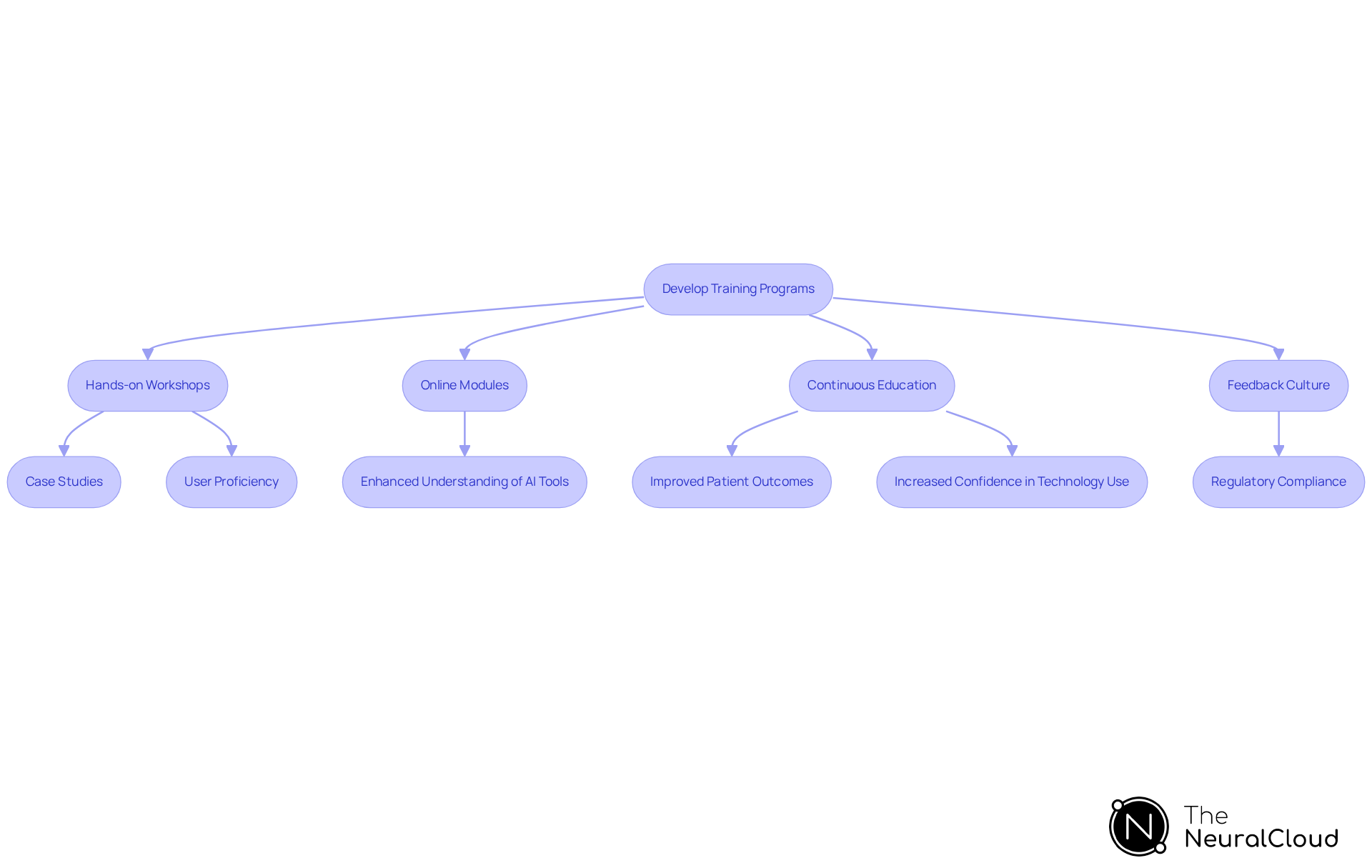
As ECG analysis technologies evolve, the need for comprehensive training programs for medical professionals becomes increasingly critical. To fully utilize the benefits of new RBBB analysis technologies, it's essential to create training programs that educate users on the functionalities and benefits of AI-driven ECG analysis tools like MaxYield™ from Neural Cloud Solutions Inc. These programs should teach users how MaxYield™ quickly labels P, QRS, and T Wave onsets, offsets, and time-series intervals. Training can be most effective when it includes hands-on workshops, online modules, and continuous education opportunities, ensuring proficiency in utilizing these technologies.
For instance, case studies from Canadian medical facilities, such as those in Toronto and Calgary, that have successfully implemented AI-driven ECG tools can significantly enhance understanding and retention of knowledge. Furthermore, fostering a culture of feedback and open communication within training programs can help identify areas for improvement. As María del Castillo noted, AI can provide ongoing support that adapts to the pace, progress, and needs of each learner, which is essential for effective training. With proper training, healthcare professionals can confidently utilize AI-driven ECG tools, leading to improved patient outcomes.
Statistics show that organizations with structured training programs for AI technologies see a 25% improvement in learning outcomes:
- Enhanced understanding of AI tools
- Increased confidence in technology use
- Better patient care outcomes
Additionally, regulatory compliance details, including FDA Class II SaMD clearance-pending status, should be emphasized to ensure adherence to industry standards. Expert endorsements from Dr. Alan Rabinowitz, Dr. Brett Heilbron, and Dr. Marc W. Deyell emphasize that MaxYield™ rivals human interpretation in precision and significantly reduces noise, further validating the need for comprehensive training in utilizing this advanced technology. Ultimately, investing in user education not only enhances compliance but also transforms the quality of patient care delivered.
Establish Continuous Monitoring and Feedback Mechanisms for Improvement
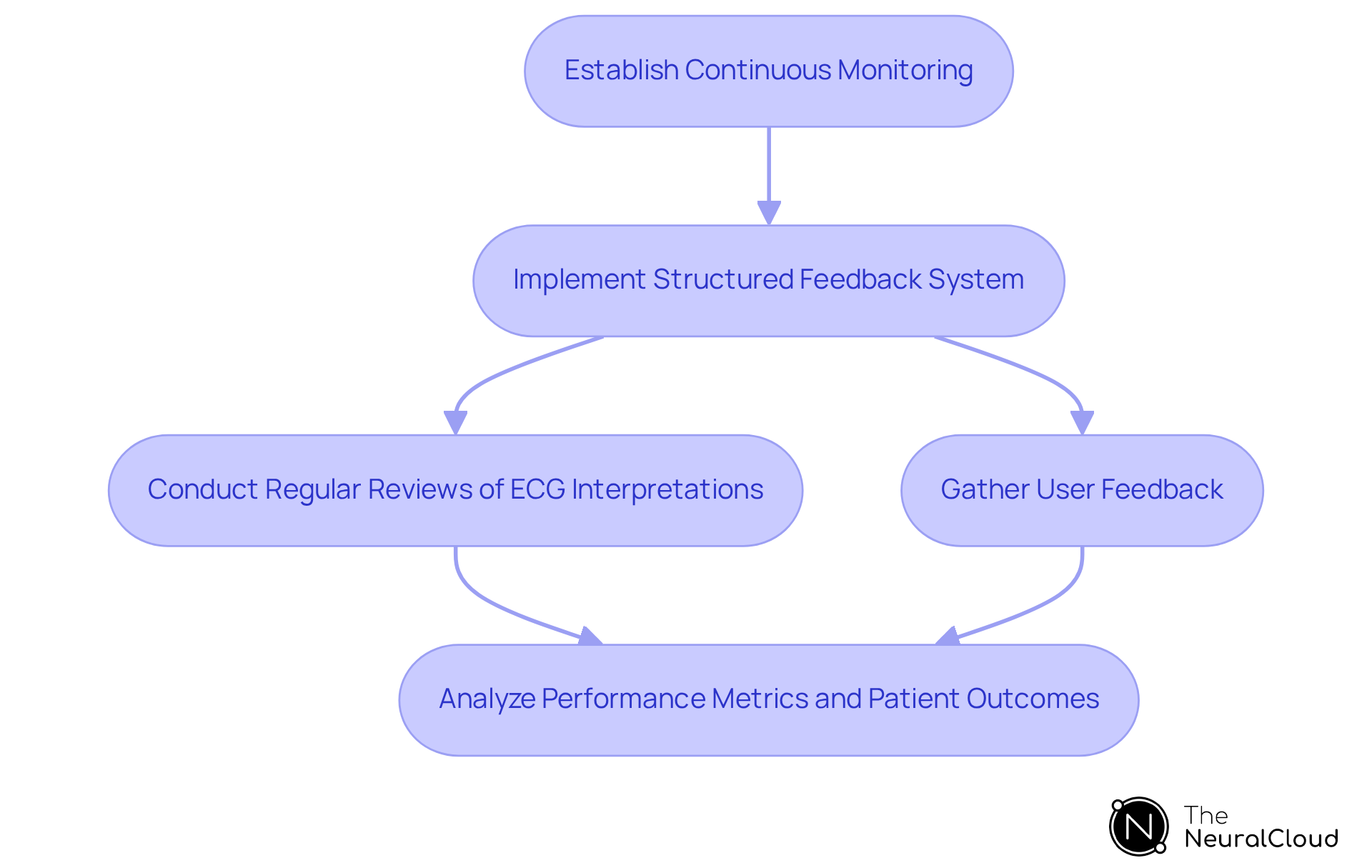
To truly enhance RBBB analysis practices, continuous monitoring and feedback mechanisms are not just beneficial; they are essential. A structured feedback system enables providers to evaluate how well new technologies are working and pinpoint specific areas for improvement. Regular reviews of ECG interpretations, along with user feedback, provide important insights into how well AI-driven ECG tools are performing. For instance, using performance metrics and patient outcomes can significantly inform the effectiveness of these technologies.
Furthermore, cultivating a culture of continuous improvement encourages staff engagement with new technologies and the sharing of experiences. By prioritizing robust monitoring and feedback systems, healthcare facilities can stay at the forefront of ECG analysis advancements and improve patient care outcomes.
Conclusion
Implementing effective RBBB analysis in ECG is crucial for enhancing diagnostic accuracy and improving patient care. Healthcare providers face significant challenges in accurately interpreting ECGs, particularly when it comes to right bundle branch block (RBBB) analysis. By understanding the complexities of RBBB and using advanced technologies like Neural Cloud Solutions Inc.'s MaxYield™, healthcare providers can better navigate the challenges of ECG interpretation. This integration helps streamline workflows and gives clinicians the tools they need to provide timely, precise care.
The article highlights several key strategies for successful implementation, including:
- The integration of AI-driven technologies
- The development of comprehensive training programs
- The establishment of continuous monitoring and feedback mechanisms
Each of these elements plays a vital role in ensuring that medical professionals are equipped to utilize advanced ECG analysis tools effectively, ultimately leading to improved patient outcomes and enhanced diagnostic accuracy. Training and user adoption are crucial for the success of new technologies in clinical settings.
In conclusion, the journey towards improved RBBB analysis in ECG is not just about adopting new technologies; it is about fostering a culture of continuous learning and improvement within healthcare facilities. By prioritizing training, feedback, and the integration of AI, clinicians can enhance their diagnostic capabilities and provide superior care to patients. By embracing these strategies, healthcare facilities can significantly enhance their ECG analysis capabilities, ultimately benefiting patient care and outcomes.
Frequently Asked Questions
What is Right Bundle Branch Block (RBBB) and why is it clinically important?
Right Bundle Branch Block is a condition that presents challenges in ECG analysis, impacting diagnostic accuracy and patient care. It can be complete or incomplete, each showing distinct patterns on a 12-lead ECG. Understanding RBBB is essential as it may indicate underlying cardiac issues such as myocardial ischemia or structural heart disease.
How prevalent is Right Bundle Branch Block in Canada?
The prevalence of Right Bundle Branch Block in Canada ranges from 0.2% to 1.3% in the general population, with the incidence increasing with age. By age 80, it affects up to 11.3% of individuals.
Why is it crucial to identify Right Bundle Branch Block, especially in older adults?
Identifying Right Bundle Branch Block is crucial, particularly in older adults, because it can obscure signs of acute coronary syndromes, complicating accurate diagnosis.
What are the implications of Right Bundle Branch Block on patient outcomes?
A meta-analysis has shown that Right Bundle Branch Block is associated with higher overall mortality and cardiac death, especially in individuals with heart disease. This underscores the need for caution in ECG interpretation.
How can Right Bundle Branch Block affect the interpretation of other ECG findings?
Right Bundle Branch Block can conceal important diagnostic signs, making it vital for medical professionals to be well-trained in ECG interpretation to avoid misdiagnosis.
What role does Neural Cloud Solutions Inc.'s MaxYield™ platform play in ECG analysis?
MaxYield™ enhances ECG analysis through automation, delivery of beat-by-beat insights, and effective noise filtering for clear data. Its continuous learning model improves diagnostic yield over time, allowing clinicians to focus on patient care.
How does MaxYield™ improve the precision of ECG interpretations?
By leveraging advanced AI-driven approaches, MaxYield™ enhances the precision of ECG interpretations and optimizes workflows, ultimately leading to improved outcomes for patients.
List of Sources
- Understand RBBB and Its Clinical Importance in ECG Analysis
- Right Bundle Branch Block - StatPearls - NCBI Bookshelf (https://ncbi.nlm.nih.gov/books/NBK507872)
- Best Quotes of The Only Ekg Book You'Ll Ever Need with Page Numbers By Malcolm S. Thaler (https://bookey.app/book/the-only-ekg-book-you'll-ever-need/quote)
- The Prognostic Significance of Right Bundle Branch Block: A Meta‐analysis of Prospective Cohort Studies - PMC (https://pmc.ncbi.nlm.nih.gov/articles/PMC6490823)
- 101 Powerful ecg quotes to Inspire Your Heart and Soul (https://snugfam.com/ecg-quotes)
- Frontiers | Prevalence of right bundle branch block and its impact on recurrence after ablation in patients with atrial fibrillation (https://frontiersin.org/journals/cardiovascular-medicine/articles/10.3389/fcvm.2026.1790398/full)
- Integrate AI-Driven Technologies for Enhanced ECG Data Processing
- AI-ECG Finds STEMI Faster, Cuts False-Positive Cath Lab Activations (https://tctmd.com/news/ai-ecg-finds-stemi-faster-cuts-false-positive-cath-lab-activations)
- Study Shows AI-Powered ECG Could Help Patients Requiring Lifelong Heart Monitoring (https://dicardiology.com/content/study-shows-ai-powered-ecg-could-help-patients-requiring-lifelong-heart-monitoring)
- Artificial Intelligence and ECG: A New Frontier in Cardiac Diagnostics and Prevention - PMC (https://pmc.ncbi.nlm.nih.gov/articles/PMC12292989)
- New AI Tool Identifies Risk of Future Heart Failure (https://medicine.yale.edu/news-article/new-ai-tool-identifies-risk-of-future-heart-failure)
- Develop Training Programs to Facilitate User Adoption and Compliance
- Medical Training: Is AI Reshaping How Doctors Learn? (https://medscape.com/viewarticle/medical-training-ai-reshaping-how-doctors-learn-2026a1000lj3)
- Top 40 AI Training Stats in 2026 (for Corporate and Education) (https://virtualspeech.com/blog/ai-training-statistics)
- AI in Healthcare Statistics: Latest Data & Facts (https://strategicmarketresearch.com/blogs/ai-in-healthcare-statistics)
- Health Care AI Education | Icahn School of Medicine (https://icahn.mssm.edu/about/artificial-intelligence/education)
- New study analyzes hospitals’ use of AI-assisted predictive tools for accuracy and biases - School of Public Health - University of Minnesota (https://sph.umn.edu/news/new-study-analyzes-hospitals-use-of-ai-assisted-predictive-tools-for-accuracy-and-biases)
- Establish Continuous Monitoring and Feedback Mechanisms for Improvement
- Remote Patient Monitoring and AI: Supporting Patient Health (https://jnj.com/innovation/remote-patient-monitoring)
- 27 Remote Patient Monitoring Statistics Every Practice Should Know (https://blog.prevounce.com/27-remote-patient-monitoring-statistics-every-practice-should-know)
- Remote Patient Monitoring Statistics By Telemedicine, Users, Activities (2026) (https://media.market.us/remote-patient-monitoring-statistics)
- Patient monitoring is evolving with artificial intelligence, sensors, smart technology, more (https://healthcareitnews.com/news/patient-monitoring-evolving-artificial-intelligence-sensors-smart-technology-more)
- Artificial intelligence and remote patient monitoring in US healthcare market: a literature review - PMC (https://pmc.ncbi.nlm.nih.gov/articles/PMC10158563)