Introduction
Choosing the right ECG machine is crucial for healthcare providers, as it can greatly influence patient care and the accuracy of diagnoses. With numerous options available - from comprehensive 12-lead ECG machines to portable handheld devices - understanding the distinct features of each type is vital for making an informed choice. In light of technological advancements and the growing demands of patient care, how can medical professionals ensure they select the most appropriate device for their specific clinical requirements?
Understand the Types of ECG Machines: 12 Lead, Holter, and Handheld Devices
When selecting ECG machines, understanding the various types available is crucial for effective cardiac monitoring:
- The 12 lead ECG machines for sale are the gold standard in clinical environments, capturing data from 12 leads to provide a comprehensive view of the heart's electrical activity. They are essential for accurate diagnosis. Additionally, their integration with healthcare systems enhances diagnostic accuracy and workflow efficiency.
- Holter monitors: Designed for continuous monitoring, are invaluable for detecting intermittent arrhythmias. Their capability to record heart activity over prolonged durations enables a more thorough assessment, significantly influencing diagnosis and management.
- Handheld devices: These compact and portable devices are ideal for quick assessments in diverse settings, including home care. While they usually provide fewer leads than conventional devices, their convenience makes them important for initial assessments and prompt user feedback.
By understanding these types, healthcare providers can choose the most suitable device tailored to individual needs and clinical requirements, ultimately improving patient care.

Evaluate Clinical Needs and Patient Demographics for Optimal Device Selection
When selecting the right ECG machine, it's crucial to consider several key factors:
- Assess the age, health conditions, and specific needs of your client population. For example, pediatric patients may require different lead configurations compared to adults.
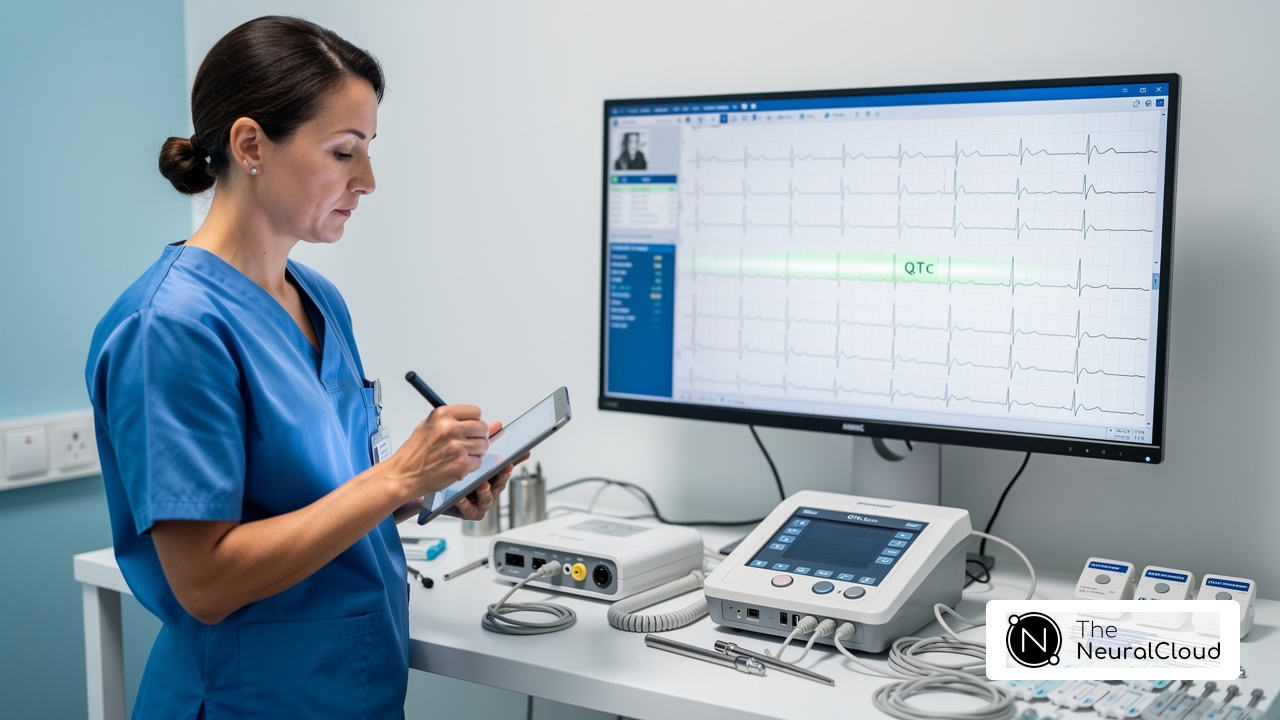
- Identify the primary purpose of the ECG machine. Is it intended for routine check-ups, emergency diagnostics, or long-term monitoring? Each scenario may require distinct features and capabilities. Recent advancements, particularly those offered by Neural Cloud Solutions, have greatly enhanced diagnostic accuracy and efficiency, especially in high-pressure environments. The system employs gold standard noise filtering and automated wave recognition, part of our technology, to streamline processes. This ensures that healthcare professionals can make informed decisions quickly.
- Take into account the expected patient load. Healthcare facilities may benefit from devices that offer quicker processing times and automated features to improve workflow efficiency. The increasing demand for ECG equipment is driven by the rising incidence of heart ailments, making it essential to choose devices that can effectively manage high volumes. With automation, medical providers can automate repetitive tasks, processing more data in less time, which is vital for handling high client volumes.
By aligning the ECG device's capabilities with the needs of the patient population, medical providers can ensure they are equipped to deliver the best possible care. This strategic approach not only enhances diagnostic yield but also supports efficiency in clinical settings.

Integrate ECG Machines with Existing Healthcare Systems for Seamless Workflow
To effectively integrate ECG machines into existing healthcare systems, consider these essential steps:
- Assess Compatibility: Ensure that the ECG device interfaces seamlessly with your existing infrastructure. Choose devices that support standard protocols, which are crucial for interoperability. As of 2023, around 70% of healthcare facilities report compatibility issues, underscoring the significance of compatibility in device selection.
- Streamline Data Management: Implement systems that facilitate data transfer from the ECG machine to the EHR. This approach minimizes manual entry errors and significantly enhances efficiency. Recent studies indicate that medical facilities using automated data transfer experience reduced administrative burdens, allowing clinicians to focus more on patient care.
- Training and Support: Provide comprehensive training on effectively utilizing the integrated systems. This training should cover how to access patient data within the EHR, ensuring that medical professionals can fully leverage the technology. Successful case studies reveal that facilities investing in staff training see improved results in workflow and patient care.
By prioritizing these integration strategies, medical facilities can enhance operational efficiency.

Provide Comprehensive Training and Support for Healthcare Professionals
To ensure healthcare professionals are proficient in using ECG machines effectively, particularly with the capabilities of advanced technology, implementing robust training programs is essential:
- Initial Training Programs: Comprehensive training should be provided for all staff members operating ECG machines. This training must cover basic operation, troubleshooting, and interpretation of results to build a solid foundation, especially in leveraging the machine's advanced AI technology for clarity in ECG analysis.
- Continuous Education: Continuous learning opportunities, such as workshops, online courses, and refresher training sessions, are vital. Keeping staff updated on the latest advancements in ECG technology, including the automated and accurate features of the machines, significantly enhances their skills and confidence. Structured educational interventions can lead to notable improvements in diagnostic accuracy; one trial showed an increase from 50.8% to 61.2% in overall ECG interpretation after targeted training. Eyad Talal Attar emphasizes the need for specialized educational interventions, highlighting how demographic factors can influence diagnostic proficiency.
- Resource Availability: Establishing a repository of resources, including user manuals, troubleshooting guides, and access to technical support, is crucial. This ensures that staff can swiftly address any operational problems, reducing downtime and improving care quality. With advanced technology, medical professionals can interpret clean, crisp signals, further emphasizing the need for effective training.
Investing in comprehensive training and support not only enhances the proficiency of healthcare staff but also results in better outcomes for individuals receiving care and more precise diagnostic results. Continuous education is paramount in adapting to the evolving landscape of healthcare technology, ultimately fostering a culture of excellence in patient care.

Conclusion
Selecting the right ECG machine is a critical decision that can significantly impact patient care and diagnostic accuracy. Understanding the various types of ECG devices - 12 lead, Holter monitors, and handheld devices - enables healthcare providers to make informed choices that align with their clinical needs and patient demographics. Each type serves a unique purpose, from comprehensive diagnostics to continuous monitoring and quick assessments, emphasizing the importance of tailoring selections to specific healthcare environments.
Key considerations in the selection process include:
- Evaluating clinical needs
- Understanding patient demographics
- Ensuring seamless integration with existing healthcare systems
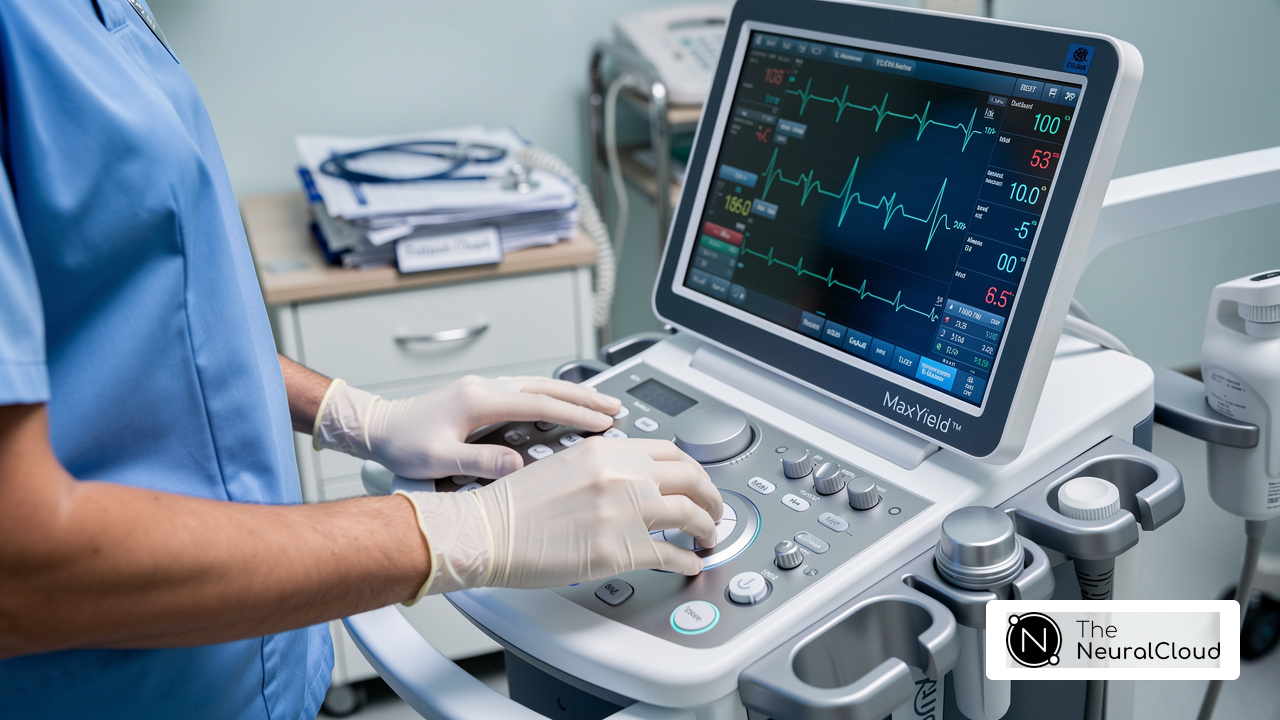
Advanced technologies, such as those offered by MaxYield™, enhance the efficiency and accuracy of ECG analysis. This makes it essential for facilities to choose devices that can handle high patient volumes and streamline workflows. Furthermore, comprehensive training and ongoing support for healthcare professionals are crucial in maximizing the potential of these machines, ultimately leading to improved patient outcomes.
In conclusion, selecting ECG machines should be approached strategically, prioritizing compatibility, training, and the unique requirements of the patient population. By implementing best practices in this area, healthcare providers can enhance diagnostic capabilities, improve operational efficiency, and deliver superior patient care. Embracing these best practices fosters a culture of excellence and positions healthcare facilities to adapt effectively to the evolving landscape of cardiac monitoring technology.
Frequently Asked Questions
What are the main types of ECG machines?
The main types of ECG machines are 12 lead ECG machines, Holter monitors, and handheld ECG devices.
What is the purpose of a 12 lead ECG machine?
A 12 lead ECG machine captures data from 12 leads to provide a comprehensive view of the heart's electrical activity and is essential for diagnosing complex cardiac conditions.
How does AI technology enhance the use of 12 lead ECG machines?
AI technologies enhance the diagnostic accuracy and workflow efficiency of 12 lead ECG machines.
What is a Holter monitor and how does it function?
A Holter monitor is designed for continuous monitoring of heart activity over 24 to 48 hours, allowing for the detection of intermittent arrhythmias that may not be captured by standard ECGs.
Why are Holter monitors important for cardiac health evaluation?
Holter monitors enable a more comprehensive evaluation of an individual's cardiac health, significantly influencing arrhythmia detection and management.
What are handheld ECG devices used for?
Handheld ECG devices are compact and portable, ideal for quick assessments in various settings, including home care.
How do handheld ECG devices compare to conventional devices?
Handheld ECG devices usually provide fewer leads than conventional devices but offer convenience for initial assessments and prompt user feedback.
How can healthcare providers choose the right ECG device?
By understanding the different types of ECG machines, healthcare providers can select the most suitable device tailored to individual needs and clinical requirements, ultimately improving care and outcomes.
List of Sources
- Understand the Types of ECG Machines: 12 Lead, Holter, and Handheld Devices
- ems1.com (https://ems1.com/cardiac-care/calif-county-to-deploy-ai-powered-ecg-devices)
- beckershospitalreview.com (https://beckershospitalreview.com/supply-chain/1st-synthesized-12-lead-ecg-to-launch-in-2026)
- Which ECG device is the right one for your patients? Comparing 12-Lead ECG with Ambulatory ECG Holter and Handheld ECG devices (https://powerfulmedical.com/blog/12-lead-ecg-ambulatory-ecg-holter-and-handheld-devices-which-is-right-for-your-patients)
- biospace.com (https://biospace.com/press-releases/alivecor-announces-fda-clearance-of-new-cardiac-determinations-for-kardia-12l-ecg-system-bringing-total-to-39)
- HeartBeam Receives FDA Clearance for First-Ever, Cable-Free Synthesized 12-Lead ECG for At-Home Arrhythmia Assessment (https://ir.heartbeam.com/news-events/press-releases/detail/107/heartbeam-receives-fda-clearance-for-first-ever-cable-free)
- Evaluate Clinical Needs and Patient Demographics for Optimal Device Selection
- medium.com (https://medium.com/authority-magazine/elizabeth-liebow-of-ecg-consultants-on-5-things-we-must-do-to-improve-the-us-healthcare-system-fb2d145cfa11)
- businesswire.com (https://businesswire.com/news/home/20210818005593/en/Global-Electrocardiogram-Machine-Market-2021-to-2026---Featuring-Koninklijke-Philips-SCHILLER-and-General-Electric-Among-Others---ResearchAndMarkets.com)
- gehealthcare.com (https://gehealthcare.com/insights/article/ecg-for-everyone-why-all-clinicians-should-embrace-electrocardiography?srsltid=AfmBOoogePJiztUUArPXZRGh7Z0cFmoeeOA09cynd2ThxP9Xd3vYLpGk)
- AccurKardia wins FDA clearance for next-generation ECG analysis system | Medical Economics (https://medicaleconomics.com/view/accurkardia-wins-fda-clearance-for-next-generation-ecg-analysis-system)
- Integrate ECG Machines with Existing Healthcare Systems for Seamless Workflow
- AccurKardia wins FDA clearance for next-generation ECG analysis system | Medical Economics (https://medicaleconomics.com/view/accurkardia-wins-fda-clearance-for-next-generation-ecg-analysis-system)
- Top Healthcare Technology Trends in 2026 (https://kissflow.com/solutions/healthcare/healthcare-technology-trends)
- 30+ US Electronic Health Records (EHR) Adoption Statistics for 2026 (https://aptarro.com/insights/us-ehr-adoption-statistics)
- Provide Comprehensive Training and Support for Healthcare Professionals
- pmc.ncbi.nlm.nih.gov (https://pmc.ncbi.nlm.nih.gov/articles/PMC7063641)
- pmc.ncbi.nlm.nih.gov (https://pmc.ncbi.nlm.nih.gov/articles/PMC10922800)
- Checking your browser - reCAPTCHA (https://pmc.ncbi.nlm.nih.gov/articles/PMC12338287)
- frontiersin.org (https://frontiersin.org/journals/medicine/articles/10.3389/fmed.2025.1643572/full)
- gehealthcare.co.uk (https://gehealthcare.co.uk/insights/article/the-ecg--how-can-we-fix-the-training-gap-for-medical-students-and-trainees)