Introduction
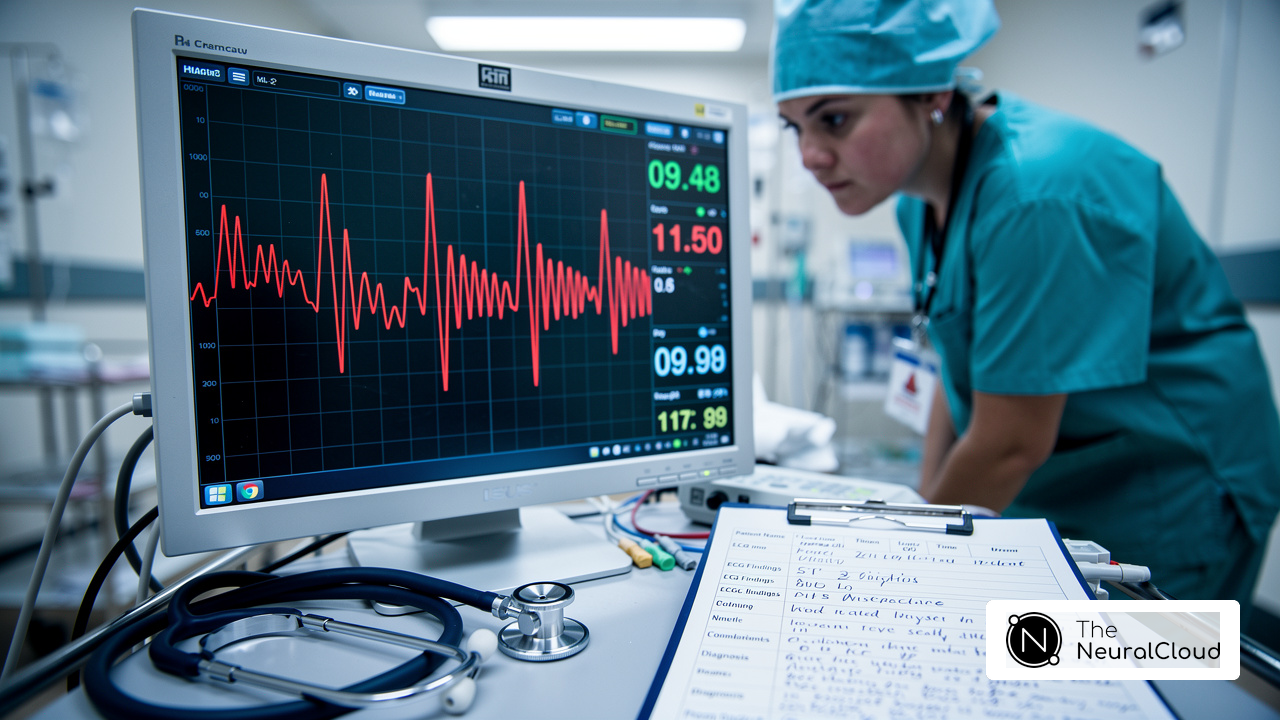
Accurately recognizing ST elevation on telemetry is crucial for improving patient outcomes during acute myocardial infarction (AMI) scenarios. As healthcare technology evolves, integrating advanced monitoring systems like Neural Cloud Solutions' MaxYield has become essential for timely detection and intervention. The challenge lies in ensuring that subtle changes in ST elevation are accurately identified and acted upon promptly.
We will discuss best practices for enhancing ST elevation monitoring, focusing on innovative technologies and training strategies that empower clinicians to respond effectively in critical situations.
Understand the Clinical Significance of ST Elevation in Telemetry
ST elevation is a critical marker for acute myocardial infarction (AMI), especially in STEMI cases, where even minor deviations can lead to significant clinical consequences. Clinicians must recognize that a mere 1-mm change in the ST segment can have serious implications, particularly for high-risk individuals. Ongoing telemetry oversight, enhanced by Neural Cloud Solutions' platform, enables healthcare providers to detect critical changes like ST elevation on telemetry early, promoting timely interventions that can greatly improve patient outcomes.
MaxYield offers hospital-level precision from consumer devices, enabling continuous monitoring without the costs associated with clinical-grade equipment. This cost-effective approach alleviates financial burdens while improving access to essential tracking technologies. Research shows that quickly identifying ST elevation on telemetry leads to faster revascularization efforts, which are crucial for minimizing long-term cardiac damage. The TIMI risk score, which assigns points based on factors such as age and heart rate, plays a vital role in assessing patient risk and guiding treatment decisions. Notably, the occurrence of myocardial infarction (MI) in individuals under 60 years is 3.8%, highlighting the urgency of monitoring ST elevation on telemetry in younger populations.
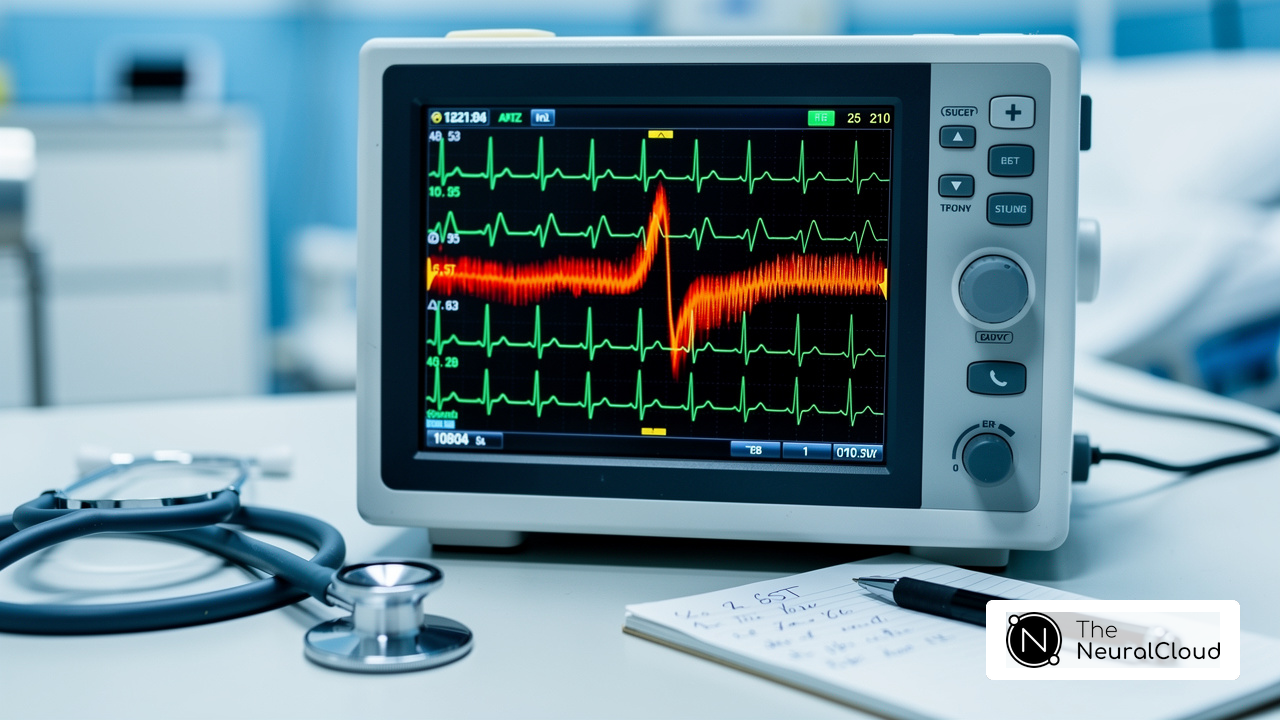
Understanding ST elevation on telemetry and its appearance across different leads is essential for accurate diagnosis and effective treatment planning. For instance, studies indicate that early identification through remote monitoring can lead to better survival rates and fewer complications after AMI. Additionally, one-third of individuals with STEMI experience right ventricular infarction, highlighting the complexity of STEMI presentations and the importance of thorough observation.
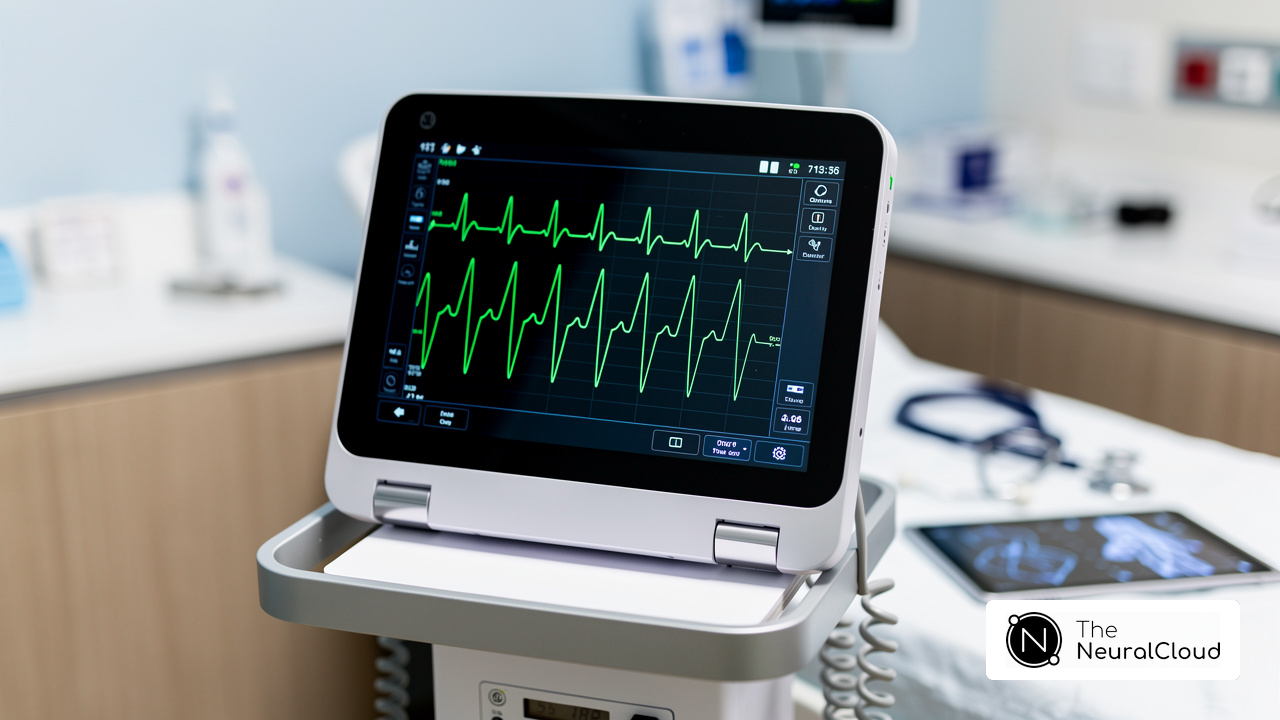
The integration of advanced telemetry systems like YieldMax not only enhances monitoring capabilities but also enables clinicians to respond swiftly, improving patient care during critical moments. The automated ECG analysis from the company transforms noisy recordings into clear insights, facilitating the identification of cardiac events and supporting confident clinical decisions. Furthermore, the Insight360 tool enriches the existing system by providing interactive dashboards and clinical-ready reports, enhancing the overall monitoring experience. Recognizing the importance of ST elevation on telemetry monitoring can be the difference between life and death for patients experiencing AMI.

Implement Advanced Algorithms for Enhanced ST Elevation Detection
Current ECG analysis methods often struggle with noise and artifacts, leading to missed critical cases. To enhance the detection of ST elevation on telemetry, healthcare facilities should implement advanced algorithms that leverage AI and machine learning. These algorithms analyze ECG data in real-time, identifying subtle changes that may indicate ST elevation on telemetry.
For instance, Neural Cloud Solutions' MaxYield technology utilizes patented signal mapping algorithms to enhance signal clarity and reduce noise, resulting in more accurate readings. With MaxYield™, healthcare providers can easily isolate and label critical ECG features, even in recordings with high levels of noise and artifact. This capability ensures that false positives and negatives are minimized.
Additionally, it delivers beat-by-beat analysis, processing 200,000 heartbeats in under five minutes, and can recover previously obscured segments from lengthy Holter, 1-Lead, and patch monitor recordings. By adopting advanced algorithms, healthcare facilities can significantly reduce the risk of missing critical cases.
Regular updates and training are crucial for maintaining algorithm effectiveness and adapting to clinical guidelines. Furthermore, the continuous learning model of MaxYield™ enhances its accuracy and efficiency over time, making it a vital tool for modern healthcare. As healthcare evolves, the continuous learning model of MaxYield™ ensures that critical cases are less likely to be overlooked, ultimately enhancing patient care.

Facilitate User Training and Seamless System Integration
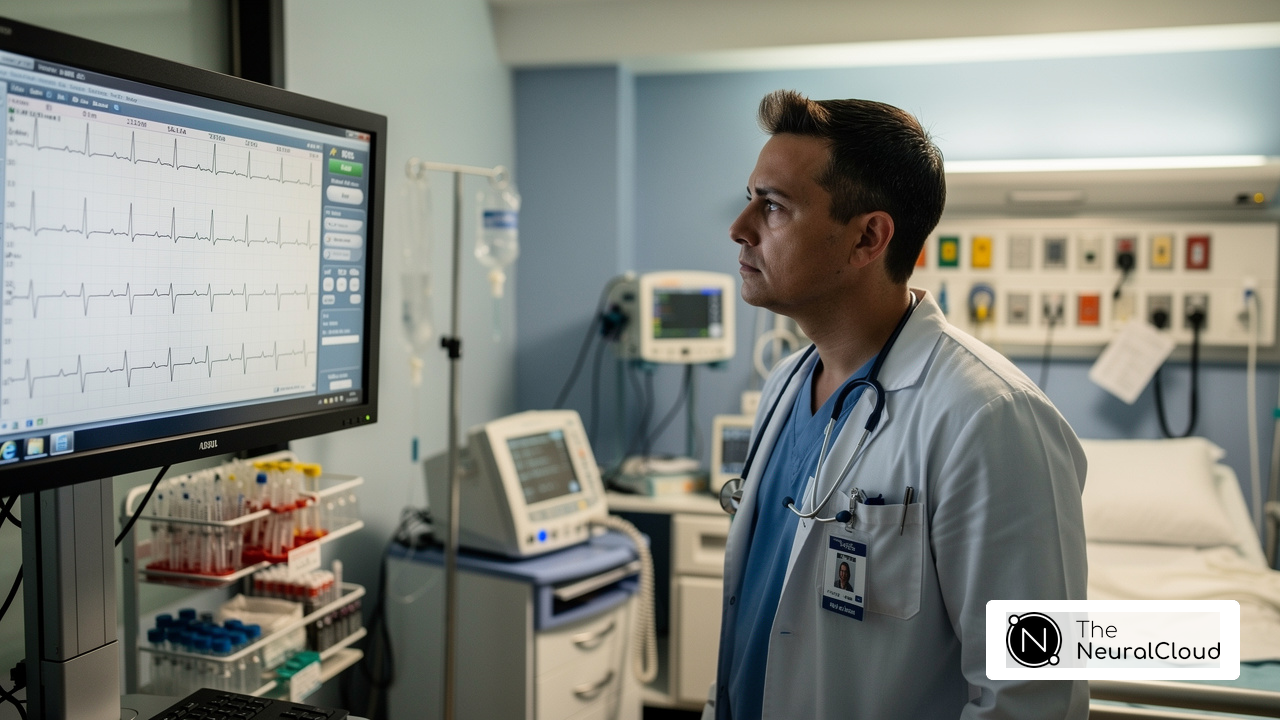
Deploying monitoring systems in healthcare can be challenging without adequate training and support. Healthcare providers should establish comprehensive training programs that cover the operation of telemetry equipment, interpretation of ECG results, and recognition of ST elevation on telemetry. Including clear references to user guides and specific scenarios associated with the platform can further enhance understanding and implementation.
It's also important to ensure these systems integrate smoothly into existing workflows. Tools like Insight360, a customizable visualization and reporting tool, provide dashboards and reports that streamline data interpretation, converting clean ECG data into interactive, clinical-ready reports. Regular refresher courses and hands-on training sessions are essential to keep staff proficient and confident in their skills, ultimately leading to improved outcomes and a reduction in errors.
As the remote patient monitoring market is expected to grow substantially, with a compound annual growth rate of approximately 20% from 2023 to 2028, effectively integrating monitoring systems will be essential for healthcare providers to meet the rising demand for efficient patient care. The advanced features of the MaxYield platform, including automated labeling and versatile signal processing, empower healthcare professionals to analyze more information in less time. This efficiency not only saves time but also enhances the accuracy of cardiac diagnostics, ultimately benefiting patient outcomes.
It's also important to tackle challenges like alarm fatigue and communication breakdowns. As noted by specialists such as Kristin E. Sandau, organized communication protocols are crucial for efficient data transmission oversight. By adopting these best practices, healthcare providers can improve safety and care quality.

Ensure Continuous Monitoring and Real-Time Data Analysis
Timely detection of ST elevation on telemetry and significant cardiac changes presents a critical challenge for healthcare facilities. Continuous telemetry observation is essential for the prompt identification of these changes, necessitating systems that facilitate real-time data analysis. This allows clinicians to quickly respond to abnormalities, which greatly improves patient outcomes.
Neural Cloud Solutions' platform exemplifies the integration of AI-driven analytics, enhancing the monitoring of trends and deviations from baseline ECG readings. Key features include:
- AI-driven analytics for trend monitoring
- Advanced noise filtering
- Precise wave recognition
This system ensures that clinicians receive clear and reliable information, even under challenging conditions. Complementing this, Insight360 transforms MaxYield’s clean ECG data into interactive dashboards and clinical reports, streamlining the evaluation process and supporting effective care for individuals.
A study involving 313 emergency individuals revealed that 34 (11%) exhibited ST elevation on telemetry, underscoring the necessity for vigilant observation in atypical cases. Routine evaluations of oversight methods and adherence to clinical guidelines further strengthen effective supervision, enabling prompt intervention when individuals' conditions change. This proactive approach enhances safety and elevates the quality of care, demonstrating the significant impact of real-time data analysis on telemetry outcomes.
As healthcare evolves, using advanced monitoring solutions becomes crucial for improving clinical performance and helping care teams meet patient needs. Additionally, the unique metrics and premium subscription opportunities offered by MaxYield provide further value, enhancing the overall diagnostic yield and clinical insights.

Conclusion
Recognizing the importance of ST elevation on telemetry presents a significant challenge for enhancing patient care in acute myocardial infarction cases. Leveraging advanced technologies and continuous monitoring allows healthcare providers to improve early detection of critical changes in the ST segment. This ultimately leads to timely interventions that can save lives. As the landscape of healthcare continues to evolve, integrating sophisticated monitoring systems becomes essential to ensure clinicians can respond effectively to patient needs.
Key insights from this discussion highlight the significance of advanced algorithms, user training, and real-time data analysis in improving ST elevation detection. Implementing systems like Neural Cloud Solutions' MaxYield, alongside comprehensive training programs, empowers healthcare professionals to accurately identify subtle changes in ECG readings. These practices not only improve immediate patient outcomes but also foster a culture of safety and efficiency in healthcare settings.
Given the increasing demand for effective patient monitoring, healthcare facilities must adopt these best practices. By prioritizing continuous education and integrating advanced telemetry systems, providers can enhance their capabilities to manage cardiac events effectively. Ultimately, investing in these strategies not only enhances clinical performance but also strengthens the foundation of high-quality care in the dynamic field of health technology.
Frequently Asked Questions
What does ST elevation indicate in a clinical setting?
ST elevation is a critical marker for acute myocardial infarction (AMI), specifically in cases of ST-elevation myocardial infarction (STEMI).
Why is even a 1-mm deviation in the ST segment important?
A 1-mm deviation in the ST segment can have significant clinical implications, particularly among high-risk individuals, making it crucial for clinicians to recognize.
How does continuous telemetry monitoring assist clinicians?
Continuous telemetry monitoring allows clinicians to detect critical changes, such as ST elevation, early, which facilitates timely interventions that can significantly enhance patient outcomes.
What is the relationship between promptly identifying ST rise and patient outcomes?
Research indicates that promptly identifying ST rise is linked to faster revascularization, which helps minimize the risk of long-term cardiac damage.
Why is a comprehensive understanding of ST rise important for clinicians?
A comprehensive understanding of ST rise and its manifestation across various leads is crucial for accurate diagnosis and effective treatment planning.
List of Sources
- Understand the Clinical Significance of ST Elevation in Telemetry
- STEMI: ST-segment Elevation Myocardial Infarction - The Cardiology Advisor (https://thecardiologyadvisor.com/ddi/stemi-st-elevation-myocardial-infarction)
- The global prevalence of myocardial infarction: a systematic review and meta-analysis - BMC Cardiovascular Disorders (https://link.springer.com/article/10.1186/s12872-023-03231-w)
- Outcomes from COVID-19 STEMI Research Study Presented in TCT Late-Breaking Clinical Science Session | Minneapolis Heart Institute Foundation (https://mplsheart.org/news/outcomes-covid-19-stemi-research-study-presented-tct-late-breaking-clinical-science-session)
- Telemetry-assisted early detection of STEMI in patients with atypical symptoms by paramedic-performed 12-lead ECG with subsequent cardiological analysis - PubMed (https://pubmed.ncbi.nlm.nih.gov/26629763)
- Premature Acute Myocardial Infarction Treated With Invasive Revascularization: Comparing STEMI With NSTEMI in a Population-Based Study of Young Patients (https://onlinecjc.ca/article/S0828-282X(24)00521-X/fulltext)
- Study reinforces need for greater coordination in heart attack care (https://newsroom.heart.org/news/study-reinforces-need-for-greater-coordination-in-heart-attack-care)
- Implement Advanced Algorithms for Enhanced ST Elevation Detection
- New AI Tool Beats Standard Approaches for Detecting Heart Attacks (https://upmc.com/media/news/062923-ecg-model-heart-attacks)
- New AI-Powered OMI Detector - JournalFeed (https://journalfeed.org/article-a-day/2024/queen-of-hearts-ai-powered-omi-detector)
- Artificial Intelligence Driven Prehospital ECG Interpretation for the Reduction of False Positive Emergent Cardiac Catheterization Lab Activations (https://powerfulmedical.com/research/ai-driven-prehospital-ecg-interpretation-for-the-reduction-of-false-positive-cathlab-activations)
- AI-ECG Finds STEMI Faster, Cuts False-Positive Cath Lab Activations (https://tctmd.com/news/ai-ecg-finds-stemi-faster-cuts-false-positive-cath-lab-activations)
- New study finds AI model improves heart attack detection (https://health.ucdavis.edu/news/headlines/new-study-finds-ai-model-improves-heart-attack-detection/2025/11)
- Facilitate User Training and Seamless System Integration
- Philips launches smart telemetry platform for cardiac monitoring that provides continuous, enterprise-wide connectivity beyond the bedside (https://usa.philips.com/a-w/about/news/archive/standard/news/press/2025/philips-launches-smart-telemetry-platform-for-cardiac-monitoring-that-provides-continuous-enterprise-wide-connectivity-beyond-the-bedside.html)
- 27 Remote Patient Monitoring Statistics Every Practice Should Know (https://blog.prevounce.com/27-remote-patient-monitoring-statistics-every-practice-should-know)
- Cardiac Telemetry Applications & Patients' Well-Being (https://lightningchart.com/blog/cardiac-telemetry)
- What Happened on Telemetry? | PSNet (https://psnet.ahrq.gov/web-mm/what-happened-telemetry)
- How is Telemetry Monitoring Used in Hospitals? (https://sickbay.com/how-is-telemetry-monitoring-used-in-hospitals)
- Ensure Continuous Monitoring and Real-Time Data Analysis
- ST-Segment Monitoring: Benefits, Barriers, and Pathways to Acceptance (https://clinicalview.gehealthcare.com/white-paper/st-segment-monitoring-benefits-barriers-and-pathways-acceptance)
- Real-Time Healthcare Data: Improving Patient Outcomes (https://vorro.net/the-role-of-real-time-data-in-improving-patient-outcomes)
- Innovations in cardiology take center stage (https://med.uth.edu/blog/2026/02/24/innovations-in-cardiology-take-center-stage)
- Cardinal Health launches new medical device for the continuous monitoring of three essential vital signs in one system (https://newsroom.cardinalhealth.com/2025-06-04-Cardinal-Health-launches-new-medical-device-for-the-continuous-monitoring-of-three-essential-vital-signs-in-one-system)
- Telemetry-assisted early detection of STEMI in patients with atypical symptoms by paramedic-performed 12-lead ECG with subsequent cardiological analysis - PubMed (https://pubmed.ncbi.nlm.nih.gov/26629763)