Introduction
Choosing the right veterinary ECG machine is a vital decision for any practice, as it significantly influences the quality of care provided to animal patients. With approximately 10% of dogs affected by heart disease, effective monitoring of vital signs can be crucial - potentially making the difference between life and death. This guide delves into the essential features and considerations veterinarians should assess to select the best ECG device tailored to their specific needs.
What challenges may arise during the selection process, and how can practices address these to improve patient outcomes?
Identify Essential Features of Veterinary ECG Machines
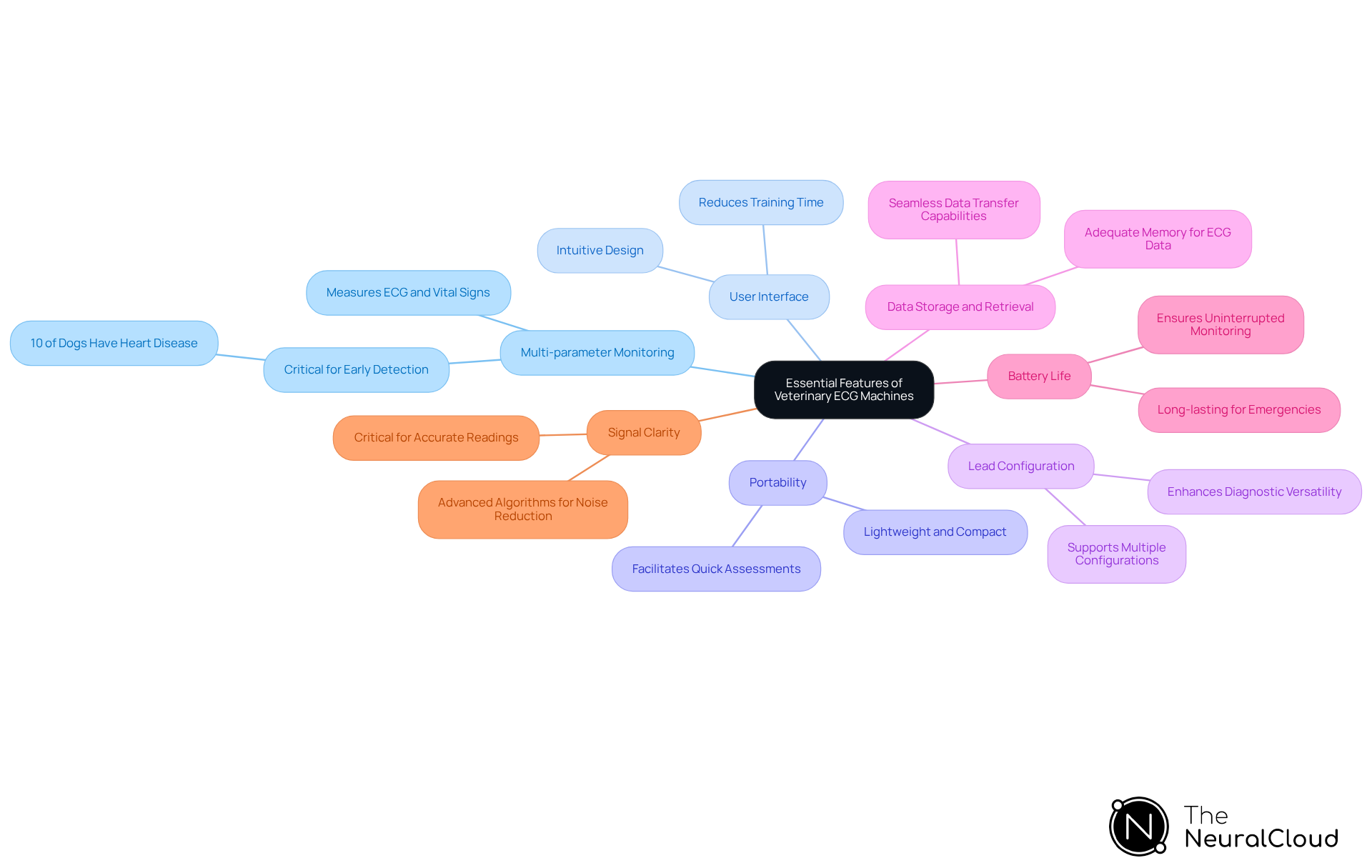
When selecting a veterinary ECG machine, it's important to consider several essential features:
- Functionality: Choose machines that measure ECG alongside other vital signs such as SpO₂, NIBP, and temperature. This integration is crucial, as about 10% of dogs suffer from heart disease, making early intervention necessary.
- User Interface: An intuitive interface simplifies operation, especially for staff who may not be highly trained in technology. This can reduce training time and improve efficiency.
- Portability: For activities requiring mobility, portable machines are ideal. Portable units facilitate quick assessments in various veterinary environments, ensuring timely care.
- Lead Configuration: Machines that support multiple lead configurations can accommodate different animal sizes and types, enhancing diagnostic versatility.
- Storage Capacity: Adequate memory for storing ECG data is vital, along with seamless data transfer capabilities to other systems for thorough analysis. This feature is particularly important in emergency settings where rapid access to patient data can be lifesaving.
- Battery Life: A long-lasting battery is essential for uninterrupted monitoring, especially during emergencies when power sources may be limited.
- Noise Reduction: Machines utilizing advanced technology minimize noise and enhance signal clarity. This ensures accurate readings critical for diagnosing conditions like arrhythmias or ischemia. The integration of these features further streamlines workflow and improves diagnostic yield, allowing for confident clinical decision-making.
Veterinarians emphasize that effective monitoring can significantly improve patient outcomes, as it allows for quicker decision-making and better management of complex cases. By concentrating on these characteristics, you can ensure that the ECG device you select will meet the needs of your veterinary practice.
Assess Your Practice's Unique Requirements
To effectively assess your practice's unique requirements, consider the following steps:
- Identify the equipment: Understand the types of animals you treat - small pets, large animals, or exotics - and their specific ECG needs. Different species may require varying lead configurations or monitoring capabilities, which can significantly impact your choice of a veterinary ECG machine.
- Evaluate the device: Analyze how the machine will fit into your existing workflow. Will it be used primarily in emergencies, routine check-ups, or specialized procedures? This consideration will influence the features you prioritize in the equipment.
- Determine your budget: Establish a budget that aligns with your facility's financial capabilities while also considering the long-term value of investing in a high-quality ECG machine. Practices typically allocate different budgets based on size, with smaller clinics often facing tighter financial constraints for acquiring a device.
- Consider future needs: Anticipate potential growth or changes in your work. Will you expand services that require ECG monitoring in the future? Planning for scalability can help ensure your investment remains relevant.
- Gather Input from Staff: Involve your veterinary team in the decision-making process. Their insights are invaluable in ensuring that the selected equipment meets operational needs and is user-friendly, ultimately enhancing the quality of care provided.
By carefully evaluating these factors, you can choose an ECG machine that not only fulfills your current requirements but also improves your workflow's efficiency and effectiveness.
Evaluate Integration with Existing Systems
To effectively evaluate a veterinary ECG machine's features, consider several key factors that can significantly enhance your practice's operational efficiency.
- Compatibility: The ECG machine must seamlessly connect with your existing veterinary practice management software. This integration not only streamlines data entry but also enhances communication with the veterinary ECG machine, ultimately improving workflow.
- Connectivity: Assess whether the device supports various connection options, such as USB, Bluetooth, or Wi-Fi. These options facilitate easy sharing of ECG data with other devices or systems, which is crucial for timely decision-making in veterinary care.
- Customization: Look for ECG devices that provide APIs (Application Programming Interfaces) for integration. This feature allows for tailored solutions that can adapt to your practice's specific needs, enhancing overall functionality and user experience.
- Support: Evaluate the level of assistance offered by the manufacturer for integration issues. A responsive support team is invaluable in resolving compatibility challenges that may arise during implementation, ensuring a smoother transition.
- User Instruction on Integration: Ensure that the manufacturer provides thorough guidance on effectively integrating the ECG device with existing systems. This instruction is essential for enhancing the system's capabilities and guaranteeing a seamless transition.
By thoroughly assessing these integration aspects, you can choose a veterinary ECG machine that significantly enhances your practice's operational efficiency and improves patient care.

Plan for User Training and Support
To effectively plan for user training and support for your new veterinary ECG machine, follow these essential steps:
- Identify Skills: Start by assessing your staff's current skill levels. Understanding their familiarity with veterinary ECG machines will help pinpoint specific educational needs.
- Develop a Program: Create a structured program that combines hands-on sessions, online resources, and comprehensive manuals. This approach ensures staff members gain a thorough understanding of the functionalities of the veterinary ECG machine.
- Schedule Regular Instruction Sessions: Implement ongoing sessions to keep staff informed about new features or software updates. Regular education is crucial, especially as the technology evolves from 2025 to 2030, underscoring the need for continuous learning in this evolving field.
- Establish a Support System: Set up a robust support system that includes access to resources from the manufacturer and internal resources for troubleshooting common issues. This ensures staff can quickly resolve any challenges they encounter.
- Gather Feedback: After each session, collect feedback from staff to identify areas for improvement. Addressing lingering questions or concerns will enhance the overall effectiveness of the instruction.
By prioritizing user training and support, you can significantly enhance your team's proficiency, ensuring the veterinary ECG machine is used effectively in your practice. As noted by veterinary trainers, understanding the 'why' behind recommendations and the value of training is essential.

Conclusion
Choosing the right veterinary ECG machine is a critical decision that can significantly impact patient care and clinical outcomes. Understanding essential features, evaluating specific practice needs, and planning for effective integration and training are key steps in this process. By focusing on these areas, veterinary professionals can select a device that enhances diagnostic capabilities and operational efficiency.
Key considerations include the machine's multi-parameter monitoring capabilities, user-friendly interface, portability, and integration with existing systems. Assessing unique practice requirements - such as patient demographics and budget constraints - is vital for making an informed choice. Additionally, training and support for staff empower the team to utilize the equipment effectively and adapt to evolving technologies in veterinary medicine.
Ultimately, investing in the right veterinary ECG machine goes beyond merely acquiring equipment; it elevates the standard of care for animals and improves the overall efficiency of veterinary practices. By prioritizing these steps, veterinary professionals can ensure their chosen ECG machine aligns with their goals and enhances the quality of care provided to their patients.
Frequently Asked Questions
What essential features should I consider when selecting a veterinary ECG machine?
Key features to consider include multi-parameter monitoring, user interface, portability, lead configuration, data storage and retrieval, battery life, and signal clarity.
Why is multi-parameter monitoring important in veterinary ECG machines?
Multi-parameter monitoring is crucial as it measures ECG alongside other vital signs like SpO₂, NIBP, and temperature, which is vital for early detection and intervention in heart disease, affecting about 10% of dogs.
How does the user interface impact the use of veterinary ECG machines?
An intuitive user interface simplifies operation, especially for staff who may not be highly trained in technology, reducing training time and enhancing efficiency in clinical settings.
What is the benefit of portability in veterinary ECG machines?
Portable ECG devices are lightweight and compact, making them ideal for quick assessments in various veterinary environments, ensuring timely care.
Why is lead configuration important in ECG machines?
Machines that support multiple lead configurations can accommodate different animal sizes and types, enhancing diagnostic versatility.
What role does data storage and retrieval play in veterinary ECG machines?
Adequate memory for storing ECG data and seamless data transfer capabilities are vital for thorough analysis, particularly in emergency settings where rapid access to patient data can be lifesaving.
How important is battery life in veterinary ECG machines?
A long-lasting battery is essential for uninterrupted monitoring, especially during emergencies when power sources may be limited.
What is the significance of signal clarity in ECG machines?
Machines that utilize advanced algorithms, like those in Neural Cloud Solutions' MaxYield™, minimize noise and enhance signal clarity, ensuring accurate readings critical for diagnosing conditions such as arrhythmias or ischemia.
How can effective multi-parameter monitoring improve patient outcomes in veterinary practice?
Effective multi-parameter monitoring allows for quicker decision-making and better management of complex cases, significantly improving patient outcomes.
List of Sources
- Identify Essential Features of Veterinary ECG Machines
- bionetus.com (https://bionetus.com/events-news)
- linkedin.com (https://linkedin.com/pulse/veterinary-ecg-machine-real-world-5-uses-youll-actually-lavfc)
- midmark.com (https://midmark.com/newsroom/news-releases/2024/02/15/midmark-launches-two-new-multiparameter-monitors)
- dvm360.com (https://dvm360.com/view/new-wireless-veterinary-patient-monitoring-system-launched)
- Assess Your Practice's Unique Requirements
- kentuckyveterinarypracticegroup.com (https://kentuckyveterinarypracticegroup.com/case-studies)
- linkedin.com (https://linkedin.com/pulse/factors-driving-growth-small-animal-ecg-machine-market-eq9qf)
- Ten Famous Quotes About Veterinarians And Their Impact | PetDesk (https://petdesk.com/blog/famous-quotes-about-veterinarians)
- avma.org (https://avma.org/news/11-technologies-veterinary-practices-can-adopt-today)
- Evaluate Integration with Existing Systems
- linkedin.com (https://linkedin.com/pulse/future-veterinary-ecg-systems-market-2026-2033-growth-g7ere)
- gminsights.com (https://gminsights.com/industry-analysis/veterinary-ecg-systems-market)
- midmark.com (https://midmark.com/newsroom/news-releases/2025/10/16/midmark-digital-ecg-now-available-with-dicom-compatibility)
- kalstein.ma (https://kalstein.ma/the-future-of-cardiology-an-in-depth-look-at-ecg-digital-electrocardiograph-by-kalstein)
- Plan for User Training and Support
- software.idexx.com (https://software.idexx.com/resources/blog/why-veterinary-client-education-is-the-key-to-practice-growth)
- datainsightsmarket.com (https://datainsightsmarket.com/reports/veterinary-ecg-machine-1764332)
- Ten Famous Quotes About Veterinarians And Their Impact | PetDesk (https://petdesk.com/blog/famous-quotes-about-veterinarians)
- grandviewresearch.com (https://grandviewresearch.com/industry-analysis/veterinary-ecg-systems-market-report)