Introduction
Managing elevated potassium levels, or hyperkalemia, poses significant challenges for cardiac health, especially in patients with chronic kidney disease. Understanding how hyperkalemia affects the QT interval is crucial for healthcare professionals in Canada. This condition can lead to life-threatening arrhythmias and complicate patient management. Recognizing the impact of hyperkalemia on the QT interval is vital for improving clinical outcomes in Canadian healthcare settings.
Define Hyperkalemia and Its Physiological Impact
Elevated potassium levels in the blood, known as hyperkalemia, pose significant challenges for cardiac health and patient management. This critical electrolyte helps maintain normal cardiac function by influencing the resting membrane potential and action potentials of heart cells. Elevated potassium levels can lead to significant physiological changes, including altered cardiac conduction and an increased risk of arrhythmias. Symptoms can range from mild manifestations, such as muscle weakness and fatigue, to severe complications, including palpitations and cardiac arrest.
Studies show that elevated potassium levels are a significant health issue, especially among individuals with chronic kidney disease (CKD) and heart failure. In Canada, the occurrence of elevated potassium levels is estimated as follows:
- General population: 2.6-2.7%
- Individuals with chronic kidney disease: up to 9.3%
A study involving Canadian patients highlighted the correlation between elevated potassium levels and increased healthcare resource utilization, underscoring the economic burden it places on the healthcare system.
Experts emphasize the need to understand how elevated potassium levels affect cardiac function, specifically addressing the question of does hyperkalemia cause qt prolongation, which may result in life-threatening arrhythmias. Ongoing observation and efficient management approaches are essential for reducing the risks linked to elevated potassium levels, particularly in at-risk groups. Recognizing and addressing the implications of hyperkalemia is vital for improving patient care and reducing healthcare costs.
Neural Cloud Solutions Inc.'s platform enhances ECG analysis efficiency by automating the labeling and data extraction processes. This integration significantly reduces operational costs and addresses challenges such as physiological variability and signal artifacts. It allows for faster processing of ECG data, enabling healthcare professionals to focus on critical decision-making while ensuring accuracy and reliability in interpreting ECG readings affected by hyperkalemia. Furthermore, with FDA Class II SaMD clearance-pending status, the product is positioned to meet regulatory standards, ensuring compliance and audit-ready documentation for GxP inspections. Expert endorsements from Dr. Alan Rabinowitz, Dr. Brett Heilbron, and Dr. Marc W. Deyell further validate the precision of MaxYield™, emphasizing its ability to rival human interpretation and reduce noise in ECG data.

Explore the Mechanisms Linking Hyperkalemia to QT Prolongation
High potassium levels can significantly disrupt cardiac function, leading to serious health risks. The connection between high potassium levels and QT prolongation leads to the inquiry of whether hyperkalemia causes QT prolongation, primarily due to the influence of increased extracellular potassium on cardiac action potentials. High potassium levels reduce the resting membrane potential, leading to depolarization of cardiac cells. This disruption can lead to serious cardiac complications. As hyperkalemia progresses, it heightens the risk of life-threatening arrhythmias due to impaired repolarization, which raises the question: does hyperkalemia cause QT prolongation? Increased potassium levels disrupt the flow of ions during the cardiac cycle, ultimately affecting the normal timing of cardiac repolarization.
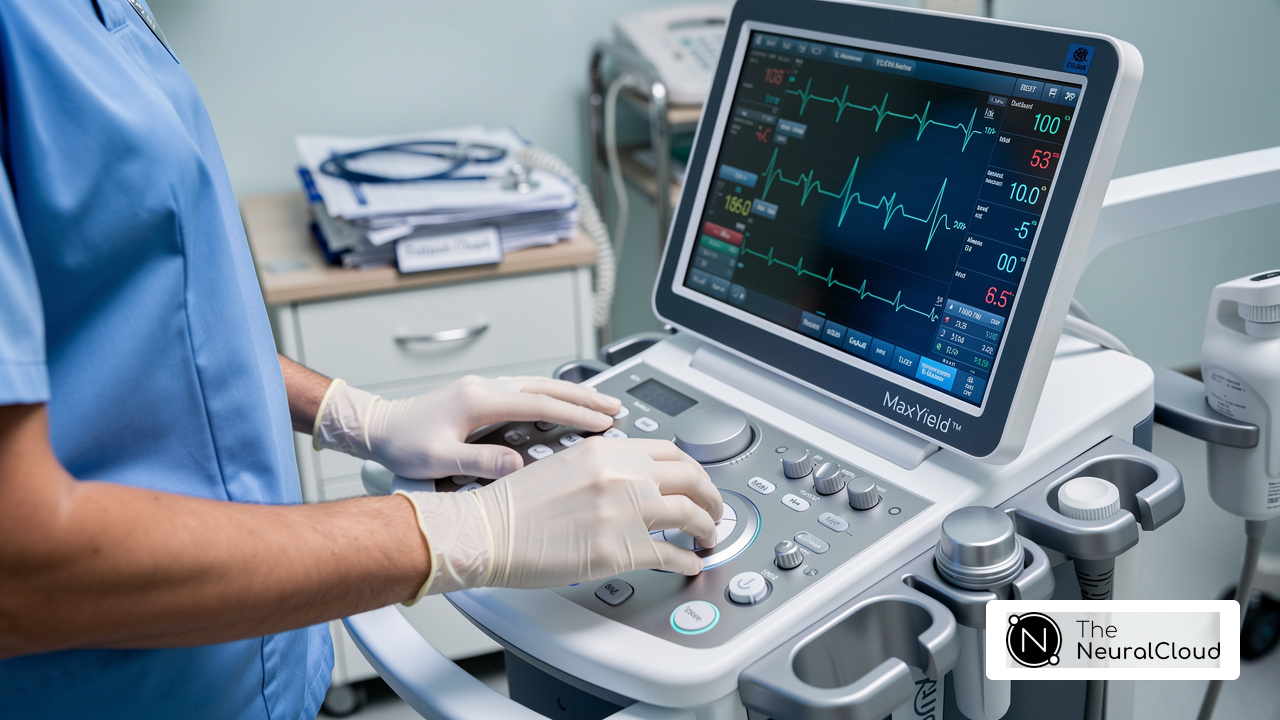
In this context, Neural Cloud Solutions Inc.'s platform plays a crucial role by providing automated ECG analysis that can quickly identify these critical changes. The system maps ECG signals through noise, isolating and labeling key features in every heartbeat, which is essential for detecting the arrhythmias associated with QT prolongation. As Dr. Alan Rabinowitz notes, this product provides precision comparable to human analysis, greatly improving clinical decision-making. By incorporating MaxYield™ into clinical workflows, healthcare professionals can effectively monitor individuals at risk of elevated potassium levels and assess whether hyperkalemia causes QT prolongation, ensuring timely interventions.
Additionally, with the FDA Class II SaMD clearance-pending status and the use of Insight360, a customizable visualization and reporting tool that transforms MaxYield’s clean ECG data into interactive dashboards, clinicians can gain deeper insights into patient data, further supporting effective clinical outcomes.

Identify ECG Changes and Diagnostic Criteria for Hyperkalemia
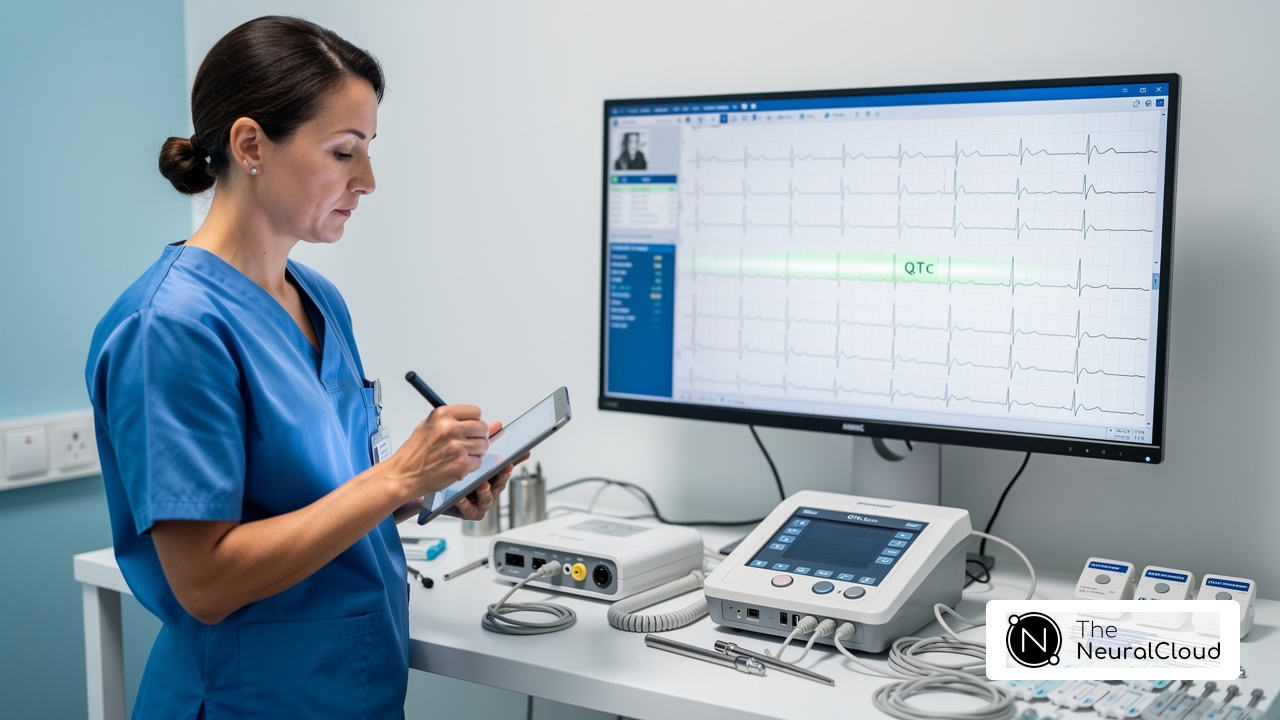
As potassium levels rise, ECG changes can escalate, posing significant challenges for healthcare professionals. ECG changes linked to elevated potassium levels typically advance through distinct stages as potassium concentrations increase. Initial findings often include peaked T waves, which serve as an early indicator of elevated potassium levels. As potassium levels rise, additional changes can occur. These include widening of the QRS complex, prolongation of the PR interval, and eventual loss of P waves. In a study involving 494 individuals, abnormal ECG findings were reported in 61.5% of cases, with peaked T waves observed in 36.2% and wide QRS complexes in 16.8%. These modifications emphasize the essential function of ECG monitoring in identifying elevated potassium levels, particularly in individuals with chronic kidney disease (CKD), where more than 60% displayed ECG irregularities. Diagnostic criteria for high potassium levels encompass both the presence of these ECG changes and laboratory confirmation of elevated serum potassium levels. Clinicians must remain vigilant in monitoring ECG changes in patients with known risk factors for hyperkalemia, as these alterations raise the question of whether hyperkalemia does cause QT prolongation and signal the need for urgent intervention to prevent life-threatening complications.
Neural Cloud Solutions Inc.'s platform enhances the analysis of these ECG changes by employing advanced noise filtering and distinct wave recognition capabilities. This technology allows for the rapid isolation of critical ECG waves, even in recordings affected by baseline wander, movement, and muscle artifacts. As Dr. Alan Rabinowitz observes, 'This product matches human interpretation in precision, cutting down noise and making diagnoses clearer.' Moreover, the platform's algorithm develops with every use, consistently enhancing its precision and effectiveness, which is essential for clinicians evaluating individuals with hyperkalemia. By using this advanced system, healthcare professionals can achieve a higher diagnostic yield. This leads to better patient outcomes. Additionally, it is important to note that the product is currently pending FDA Class II SaMD clearance, ensuring compliance with regulatory standards and supporting audit-ready documentation for GxP inspections. For practical application, users can refer to the user manual for specific use cases and step-by-step instructions on utilizing MaxYield™ effectively in clinical settings.

Assess the Clinical Implications of QT Prolongation in Hyperkalemia
The serious clinical challenges presented by QT prolongation linked to elevated potassium levels raise the important question: does hyperkalemia cause QT prolongation? This condition poses significant risks, including an increased likelihood of life-threatening arrhythmias such as Torsades de Pointes (TdP). A prolonged QT interval indicates delayed repolarization, potentially causing chaotic electrical activity in the heart. Clinicians must recognize the potential for sudden cardiac events in individuals with elevated potassium levels, particularly in understanding whether hyperkalemia causes QT prolongation, especially for those with additional risk factors like underlying heart disease or concurrent use of QT-prolonging medications. Normal QTc intervals are considered to be <450 ms for men and <460 ms for women, while QTc intervals >500 ms indicate a significantly elevated risk of TdP.
To manage this, clinicians might correct potassium levels, keep an eye on ECG changes, and use medications to reduce arrhythmia risks. For instance, a case study involving an 80-year-old female with severely elevated potassium levels highlighted the urgent need for treatment, including intravenous calcium gluconate and hemodialysis, to restore normal potassium levels and resolve ECG abnormalities. This intervention ultimately led to improved cardiac function. Furthermore, tools like the Tisdale risk score can help predict QT prolongation >500 ms, enabling healthcare providers to make informed decisions regarding medication management. Timely identification and management of hyperkalemia are crucial to understand whether hyperkalemia causes QT prolongation, avoid severe complications, and enhance outcomes for individuals.
Healthcare professionals should also inform patients about the symptoms of cardiac arrhythmias and the importance of prompt medical attention. This includes emphasizing the necessity for baseline ECG evaluations for those prescribed QT-prolonging medications. Integrating Neural Cloud Solutions Inc.'s platform offers several key features:
- Advanced noise filtering
- Distinct wave recognition capabilities
These features enhance ECG analysis efficiency. This device-agnostic ECG intelligence layer evolves with each use, ensuring maximum diagnostic yield even in recordings with high levels of noise and artifact. Expert endorsements from Dr. Alan Rabinowitz, Dr. Brett Heilbron, and Dr. Marc W. Deyell highlight MaxYield’s precision, rivaling human interpretation and its ability to reduce noise, thereby improving clinical outcomes. By leveraging MaxYield™, healthcare providers can better manage the complexities associated with the question of whether hyperkalemia causes QT prolongation, ultimately leading to safer patient care.

Conclusion
The connection between hyperkalemia and QT prolongation poses significant challenges for cardiac health and patient safety. Elevated potassium levels can disrupt cardiac function, leading to life-threatening arrhythmias. This necessitates vigilant monitoring and management. The evidence presented highlights how hyperkalemia impacts cardiac conduction and the critical need for healthcare professionals to recognize and address these changes promptly.
Key insights from the article emphasize the mechanisms by which hyperkalemia affects the QT interval, the ECG changes associated with elevated potassium levels, and the clinical implications of QT prolongation. Advanced technologies, including those from Neural Cloud Solutions Inc., play a vital role in enhancing diagnostic accuracy and improving patient outcomes. By integrating these tools into clinical practice, healthcare providers can better manage the complexities of hyperkalemia and its associated risks.
Understanding the link between hyperkalemia and QT prolongation is crucial for patient safety and effective healthcare delivery. Clinicians are encouraged to remain vigilant in monitoring potassium levels and ECG changes, ensuring timely interventions to mitigate risks. By prioritizing education on the symptoms of cardiac arrhythmias and utilizing advanced diagnostic tools, healthcare professionals can significantly reduce the risks associated with hyperkalemia.
Frequently Asked Questions
What is hyperkalemia?
Hyperkalemia refers to elevated potassium levels in the blood, which can significantly impact cardiac health and patient management.
How does hyperkalemia affect cardiac function?
Elevated potassium levels influence the resting membrane potential and action potentials of heart cells, leading to altered cardiac conduction and an increased risk of arrhythmias.
What are the symptoms of hyperkalemia?
Symptoms can range from mild manifestations such as muscle weakness and fatigue to severe complications including palpitations and cardiac arrest.
What is the prevalence of hyperkalemia in Canada?
In the general population, the occurrence of elevated potassium levels is estimated at 2.6-2.7%, while in individuals with chronic kidney disease, it can be as high as 9.3%.
What is the economic impact of hyperkalemia on the healthcare system?
Studies indicate that elevated potassium levels correlate with increased healthcare resource utilization, highlighting the economic burden it places on the healthcare system.
Does hyperkalemia cause QT prolongation?
Experts emphasize the need to understand the relationship between elevated potassium levels and QT prolongation, as this may result in life-threatening arrhythmias.
How can hyperkalemia be managed effectively?
Ongoing observation and efficient management approaches are essential for reducing the risks linked to elevated potassium levels, particularly in at-risk groups.
How does Neural Cloud Solutions Inc. contribute to managing hyperkalemia?
Neural Cloud Solutions Inc.'s platform enhances ECG analysis efficiency by automating labeling and data extraction, allowing healthcare professionals to focus on critical decision-making while ensuring accuracy in interpreting ECG readings affected by hyperkalemia.
What is the regulatory status of MaxYield™?
MaxYield™ is currently pending FDA Class II SaMD clearance, ensuring compliance and audit-ready documentation for GxP inspections.
Who endorses the precision of MaxYield™?
Expert endorsements from Dr. Alan Rabinowitz, Dr. Brett Heilbron, and Dr. Marc W. Deyell validate the precision of MaxYield™, emphasizing its ability to rival human interpretation and reduce noise in ECG data.
List of Sources
- Define Hyperkalemia and Its Physiological Impact
- Hyperkalemia in Chronic Kidney Disease Increases Adverse Cardiovascular Events (https://thecardiologyadvisor.com/news/hyperkalemia-in-chronic-kidney-disease-increases-adverse-cardiovascular-events)
- Hyperkalemia, Disease Severity, Mortality Risk Among ER Patients | Docwire News (https://docwirenews.com/post/hyperkalemia-disease-severity-mortality-risk-among-er-patients)
- Prevalence of Hyperkalemia in Patients With CKD | Docwire News (https://docwirenews.com/post/prevalence-of-hyperkalemia-in-patients-with-ckd)
- Prevalence and economic burden of hyperkalemia in the United States Medicare population (https://tandfonline.com/doi/full/10.1080/03007995.2020.1775072)
- De Novo Hyperkalemia Increases Risks for Death, Hospitalizations (https://renalandurologynews.com/news/hyperkalemia-ups-risk-mortality-cardiovascular-events-hospitalizations-icu)
- Explore the Mechanisms Linking Hyperkalemia to QT Prolongation
- Labs discover new mechanisms that cause irregular heartbeat (https://medicalxpress.com/news/2025-02-labs-mechanisms-irregular-heartbeat.html)
- What is Hyperkalemia: Effects of High Potassium on the Heart (https://cpraedcourse.com/blog/high-potassium-affect-the-heart)
- Hyperkalemia Revisited - PMC (https://pmc.ncbi.nlm.nih.gov/articles/PMC1413606)
- The Electrophysiology of Hypo- and Hyperkalemia - PMC (https://pmc.ncbi.nlm.nih.gov/articles/PMC5399982)
- Mechanisms, Risk Factors, and Management of Acquired Long QT Syndrome: A Comprehensive Review - PMC (https://pmc.ncbi.nlm.nih.gov/articles/PMC3347892)
- Identify ECG Changes and Diagnostic Criteria for Hyperkalemia
- Following the Hyperkalemia Trail: A Case Report of ECG Changes and Treatment Responses | MDedge (https://mdedge.com/fedprac/article/273139/nephrology/following-hyperkalemia-trail-case-report-ecg-changes-and-treatment-responses)
- Management of Hyperkalemia with ECG Changes - CanadiEM (https://canadiem.org/management-hyperkalemia-ecg-changes)
- ECG frequency changes in potassium disorders: a narrative review - PMC (https://pmc.ncbi.nlm.nih.gov/articles/PMC9301030)
- Electrocardiographic Abnormalities in Patients with Hyperkalemia: A Retrospective Study in an Emergency Department in Colombia - PMC (https://pmc.ncbi.nlm.nih.gov/articles/PMC11215665)
- Assess the Clinical Implications of QT Prolongation in Hyperkalemia
- Managing drug-induced QT prolongation in clinical practice - PMC (https://pmc.ncbi.nlm.nih.gov/articles/PMC8237186)
- De Novo Hyperkalemia Increases Risks for Death, Hospitalizations (https://renalandurologynews.com/news/hyperkalemia-ups-risk-mortality-cardiovascular-events-hospitalizations-icu)
- Cardiac Manifestations in a Case of Severe Hyperkalemia - PMC (https://pmc.ncbi.nlm.nih.gov/articles/PMC8012067)