Introduction
The heart is often referred to as the body's engine, tirelessly pumping blood and sustaining life. As the demand for accurate and accessible cardiac monitoring grows, two technologies - Electrocardiography (ECG) and Photoplethysmography (PPG) - emerge as pivotal players in the realm of heart health. This article delves into the distinct characteristics and innovations of these monitoring methods, revealing how advancements like the MaxYield™ platform enhance ECG capabilities while PPG continues to find its place in consumer health devices. However, with such promising developments, a critical question arises: which technology truly meets the evolving needs of both clinical diagnostics and everyday health management?
In the landscape of cardiac monitoring, ECG analysis faces several challenges, including the need for precision and timely data interpretation. The MaxYield™ platform addresses these issues by offering advanced features that streamline ECG analysis. For instance, it incorporates sophisticated algorithms that enhance signal quality and reduce noise, ensuring that healthcare professionals receive accurate readings. Additionally, the platform's user-friendly interface allows for quicker data access and interpretation, which is crucial in clinical settings.
The advantages of the MaxYield™ platform extend beyond just improved accuracy. By facilitating faster decision-making, it empowers healthcare providers to deliver timely interventions, ultimately enhancing patient outcomes. Moreover, the integration of this technology into existing healthcare systems can lead to more efficient workflows, allowing professionals to focus on patient care rather than data management.
In conclusion, as the field of cardiac monitoring evolves, the MaxYield™ platform stands out as a significant advancement in ECG analysis. Its features not only address current challenges but also provide tangible benefits for healthcare professionals, making it a vital tool in both clinical diagnostics and everyday health management.
Define ECG and PPG: Core Principles and Functionality
Electrocardiography (ECG) is a vital diagnostic tool that records the heart's electrical activity over time using electrodes placed on the skin. It offers a comprehensive view of heart rhythm and electrical conduction, making it essential for diagnosing various cardiac conditions. However, ECG analysis faces challenges such as physiological variability and signal artifacts, which can complicate interpretation and affect diagnostic accuracy.
The MaxYield™ platform addresses these challenges by enhancing ECG analysis through advanced noise reduction and automated labeling. This innovative system transforms noisy recordings into detailed insights, delivering beat-by-beat analysis and processing 200,000 heartbeats in under 5 minutes. Such efficiency significantly improves workflow and clinical decision-making for healthcare professionals.
Key features of the MaxYield™ platform include:
- Advanced noise reduction techniques that ensure cleaner signals.
- Automated labeling that streamlines the analysis process.
- Rapid processing capabilities that enhance workflow efficiency.
These features translate into direct benefits for healthcare providers, allowing for more accurate diagnoses and improved patient care. By ensuring clearer data across the entire workflow, MaxYield™ empowers clinicians to make informed decisions swiftly.
In contrast, Photoplethysmography (PPG) is an optical technique that measures blood volume changes in the microvascular bed of tissue, typically using a light source and a photodetector. While the ECG captures the heart's electrical signals, the PPG detects mechanical changes related to blood flow, making both technologies complementary in cardiac assessment. PPG is increasingly utilized in consumer health devices, such as fitness trackers and smartwatches, for continuous heart rate monitoring, showcasing its practicality in everyday health management.
Incorporating insights from experts like Robert A. Harrington, MD, who emphasizes the importance of precise cardiac observation, further underscores the relevance of ECG and PPG in contemporary healthcare.

Contrast ECG and PPG: Technical Methodologies and Applications
Electrocardiography (ECG) involves placing multiple electrodes on a patient's body to capture both ECG and PPG data. While this process can be cumbersome, it provides high-fidelity data essential for diagnosing arrhythmias and other cardiac conditions. ECG is primarily used in clinical settings for acute monitoring and diagnosis, establishing it as the non-invasive gold standard for cardiac assessment. However, challenges such as physiological variability and signal artifacts can complicate the analysis of ECG PPG.
The MaxYield™ platform addresses these challenges effectively. It integrates wearable technology for automated ECG labeling and data extraction, which significantly reduces operational costs and enhances productivity. Key features of MaxYield™ include:
- Automated ECG Labeling: Streamlines the analysis process, saving time for healthcare professionals.
- Data Extraction: Facilitates efficient handling of long-form Holter, Patch, and 1-Lead ECG Monitor recordings.
- Noise Filtering: Minimizes the time spent on cleaning data, allowing for quicker interpretations.
These features translate into substantial advantages for healthcare providers. By boosting throughput and reducing the time spent on noise filtering and annotating, MaxYield™ enables professionals to focus more on patient care rather than administrative tasks. In contrast, photoplethysmography (PPG) is a non-invasive technique that can be easily integrated into wearable devices, enhancing accessibility for continuous assessment in everyday environments.
While ECG remains superior for clinical diagnostics, ECG PPG is increasingly favored for heart rate assessment and evaluating blood flow, especially in consumer health devices. This distinction highlights the critical role of ECG PPG in acute clinical diagnostics versus PPG's growing utility in long-term health monitoring, reflecting current trends in the integration of wearable technology for health management.

Evaluate ECG and PPG: Advantages, Limitations, and Clinical Suitability
ECG is well-known for its high accuracy and ability to diagnose a wide range of cardiac conditions, making it a crucial tool in both emergency and clinical settings. However, the need for trained personnel to place electrodes and interpret results can limit accessibility to ECG PPG systems, especially in resource-limited environments. This is where the MaxYield™ platform from Neural Cloud Solutions comes into play, revolutionizing ECG analysis. By transforming lengthy and noisy recordings into clean, crisp signals through advanced AI technology, it significantly enhances the clarity and speed of ambulatory ECG waveform analysis.
The features of the MaxYield™ platform include:
- Advanced AI Technology: This feature automates the analysis process, reducing the time required for interpretation.
- Enhanced Signal Clarity: It improves the quality of ECG signals, making them easier to read and analyze.
- User-Friendly Interface: Designed for healthcare professionals, it simplifies the workflow, allowing for quicker decision-making.
These advantages translate into direct benefits for healthcare professionals. With improved workflow efficiency and diagnostic precision, the MaxYield™ platform allows for more accurate assessments and timely interventions. User manuals and testimonials highlight how this product not only streamlines processes but also enhances overall patient care.
In contrast, the ECG PPG technology is designed for ease of use and can be seamlessly integrated into consumer devices, enabling continuous monitoring without the need for professional supervision. While PPG has its advantages, such as convenience, it is susceptible to motion artifacts and generally offers lower accuracy than ECG PPG, particularly when it comes to detecting arrhythmias. Therefore, while ECG remains the gold standard for acute diagnostics, the MaxYield™ platform enhances ECG's capabilities, serving as a valuable resource for ongoing health assessment and screening.

Explore Innovations in ECG Analysis: The Impact of Advanced Technologies
Recent advancements in ECG PPG analysis have led to significant improvements in diagnostic accuracy and efficiency, particularly through the integration of AI and machine learning. However, challenges such as physiological variability and signal artifacts have historically complicated this process.
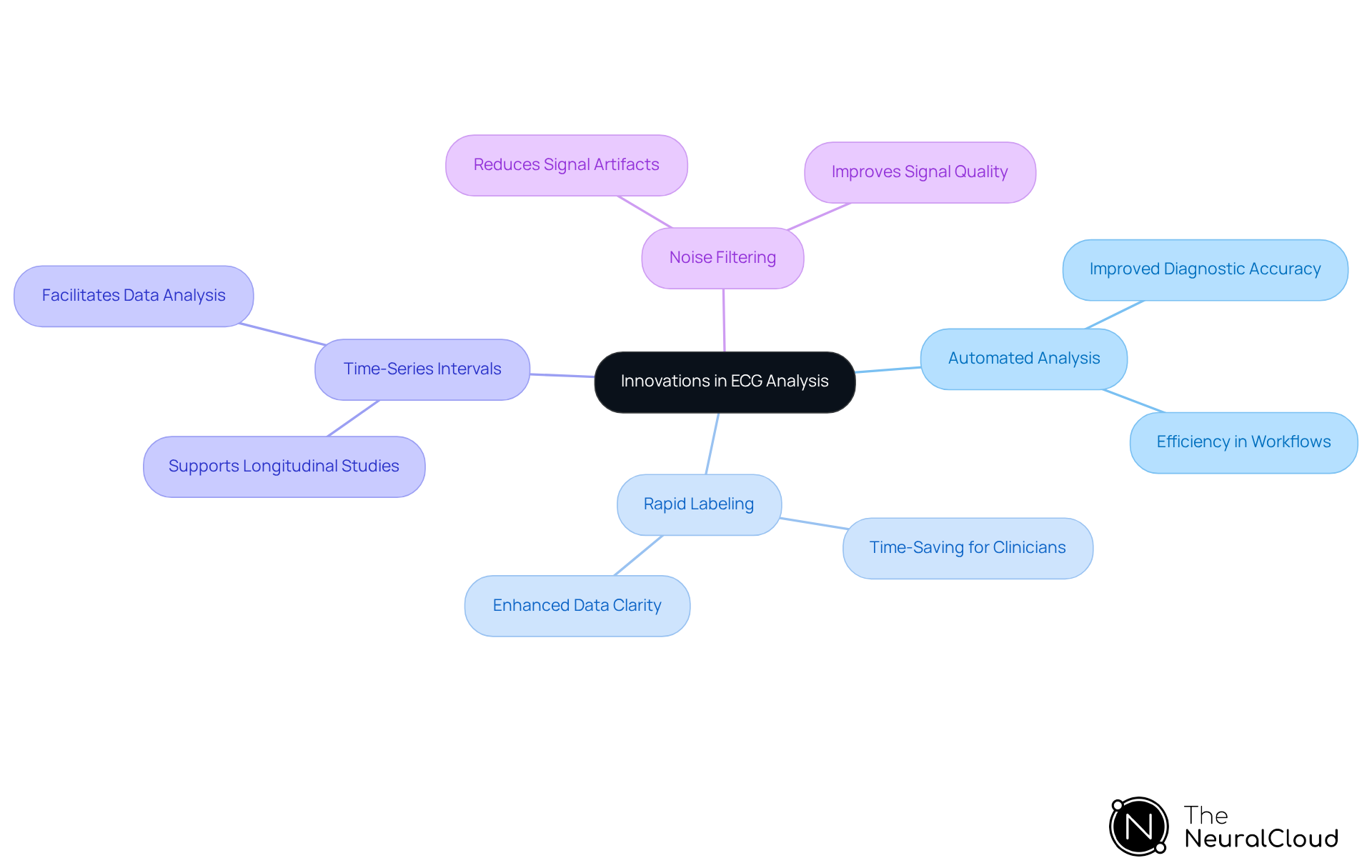
The MaxYield™ platform from Neural Cloud Solutions addresses these challenges head-on. It automates the analysis of ECG PPG signals, allowing for rapid labeling of P, QRS, and T Wave onsets and offsets, as well as time-series intervals in CSV format. This feature allows for seamless integration into existing workflows, facilitating the efficient processing of large datasets.
Key Features of MaxYield™:
- Automated analysis of ECG signals
- Rapid labeling of wave onsets and offsets
- Time-series intervals in CSV format
- Advanced noise filtering capabilities
These features enhance result clarity and streamline workflows, ultimately reducing operational costs by minimizing manual tasks. As a result, healthcare professionals can dedicate more time to high-level decision-making, which leads to better patient outcomes.
Moreover, the continuous learning models employed in these technologies ensure that ECG PPG analysis becomes increasingly precise over time. This sets a new standard in cardiac monitoring, benefiting both healthcare providers and patients alike.
Conclusion
The comparison between Electrocardiography (ECG) and Photoplethysmography (PPG) reveals distinct yet complementary roles these technologies play in cardiac monitoring. ECG is recognized as the gold standard for diagnosing various cardiac conditions due to its high accuracy and comprehensive insights into electrical activity. However, PPG offers a practical solution for continuous monitoring in everyday settings. Innovations such as the MaxYield™ platform enhance ECG capabilities, overcoming traditional challenges and improving diagnostic precision.
Key features of the MaxYield™ platform include:
- AI Technology: Automates analysis for faster results.
- Noise Reduction: Improves signal clarity for more accurate readings.
- Rapid Data Processing: Enables swift decision-making for healthcare professionals.
These innovations streamline ECG analysis and empower healthcare professionals to make informed decisions quickly, ultimately enhancing patient care. The contrasting applications of ECG and PPG highlight the importance of both technologies: ECG excels in clinical diagnostics, while PPG is increasingly favored in consumer health devices for its ease of use and accessibility.
Reflecting on these advancements, it is clear that integrating technology in cardiac monitoring is transforming healthcare. As health management evolves, embracing innovations in ECG and PPG analysis will be crucial for improving patient outcomes and ensuring timely interventions. The ongoing development and application of these technologies underscore their vital role in advancing cardiac care and enhancing overall health management strategies.
Frequently Asked Questions
What is Electrocardiography (ECG)?
Electrocardiography (ECG) is a diagnostic tool that records the heart's electrical activity over time using electrodes placed on the skin. It provides a comprehensive view of heart rhythm and electrical conduction, which is essential for diagnosing various cardiac conditions.
What challenges does ECG analysis face?
ECG analysis faces challenges such as physiological variability and signal artifacts, which can complicate interpretation and affect diagnostic accuracy.
How does the MaxYield™ platform enhance ECG analysis?
The MaxYield™ platform enhances ECG analysis through advanced noise reduction and automated labeling, transforming noisy recordings into detailed insights and delivering beat-by-beat analysis.
What are the processing capabilities of the MaxYield™ platform?
The MaxYield™ platform can process 200,000 heartbeats in under 5 minutes, significantly improving workflow and clinical decision-making for healthcare professionals.
What key features does the MaxYield™ platform offer?
Key features of the MaxYield™ platform include advanced noise reduction techniques, automated labeling to streamline the analysis process, and rapid processing capabilities that enhance workflow efficiency.
What benefits does the MaxYield™ platform provide to healthcare providers?
The MaxYield™ platform allows for more accurate diagnoses and improved patient care by ensuring clearer data across the entire workflow, empowering clinicians to make informed decisions swiftly.
What is Photoplethysmography (PPG)?
Photoplethysmography (PPG) is an optical technique that measures blood volume changes in the microvascular bed of tissue, typically using a light source and a photodetector. It detects mechanical changes related to blood flow.
How do ECG and PPG complement each other in cardiac assessment?
While ECG captures the heart's electrical signals, PPG detects mechanical changes related to blood flow, making both technologies complementary in cardiac assessment.
Where is PPG commonly used?
PPG is increasingly utilized in consumer health devices, such as fitness trackers and smartwatches, for continuous heart rate monitoring, showcasing its practicality in everyday health management.
Who emphasizes the importance of precise cardiac observation in healthcare?
Experts like Robert A. Harrington, MD, emphasize the importance of precise cardiac observation, underscoring the relevance of ECG and PPG in contemporary healthcare.
List of Sources
- Define ECG and PPG: Core Principles and Functionality
- 1st synthesized 12-lead ECG to launch in 2026 (https://beckershospitalreview.com/supply-chain/1st-synthesized-12-lead-ecg-to-launch-in-2026)
- AI-ECG Momentum and Rising Competition Reshape Diagnostic Cardiology in 2026 (https://signifyresearch.net/insights/diagnostic-cardiology-market-bouncing-into-2026)
- FDA clears 12-lead, cable-free home ECG monitoring system (https://cardiovascularbusiness.com/topics/cardiac-imaging/electrocardiography-ecg/fda-clears-12-lead-cable-free-home-ecg-monitoring-system)
- Data presented at ACC.26 further demonstrate the benefits of iRhythm’s Zio® ambulatory ECG portfolio across multiple patient populations as company launches new digital education platform (https://investors.irhythmtech.com/news/news-details/2026/Data-presented-at-ACC-26-further-demonstrate-the-benefits-of-iRhythms-Zio-ambulatory-ECG-portfolio-across-multiple-patient-populations-as-company-launches-new-digital-education-platform/default.aspx)
- Contrast ECG and PPG: Technical Methodologies and Applications
- prevayl.com (https://prevayl.com/community/ecg-vs-ppg-a-comprehensive-comparison)
- electronicsweekly.com (https://electronicsweekly.com/news/products/sensors-products/ppg-vs-ecg-heart-rate-sensors-2023-12)
- mdpi.com (https://mdpi.com/1424-8220/25/18/5745)
- pmc.ncbi.nlm.nih.gov (https://pmc.ncbi.nlm.nih.gov/articles/PMC11853970)
- AI-ECG Momentum and Rising Competition Reshape Diagnostic Cardiology in 2026 (https://signifyresearch.net/insights/diagnostic-cardiology-market-bouncing-into-2026)
- Evaluate ECG and PPG: Advantages, Limitations, and Clinical Suitability
- pmc.ncbi.nlm.nih.gov (https://pmc.ncbi.nlm.nih.gov/articles/PMC11853970)
- prevayl.com (https://prevayl.com/community/ecg-vs-ppg-a-comprehensive-comparison)
- journals.lww.com (https://journals.lww.com/annals-of-medicine-and-surgery/fulltext/2025/04000/comparison_of_diagnostic_accuracy_of.62.aspx)
- academy.fibricheck.com (https://academy.fibricheck.com/hc/en-be/articles/6383416554396-Chapter-4-The-differences-and-similarities-between-ECG-and-PPG)
- revespcardiol.org (https://revespcardiol.org/en-the-rithmi-study-diagnostic-ability-articulo-S1885585720303091)
- Explore Innovations in ECG Analysis: The Impact of Advanced Technologies
- einpresswire.com (https://einpresswire.com/article/899930160/artificial-intelligence-ai-electrocardiogram-ecg-analysis-market-2026-advancing-cardiac-diagnostics)
- ECG market keeps evolving thanks to AI, home monitoring and Epic integration (https://signifyresearch.net/2026/02/13/ecg-market-keeps-evolving-thanks-to-ai-home-monitoring-and-epic-integration)
- globenewswire.com (https://globenewswire.com/news-release/2026/03/29/3264255/0/en/Medical-AI-Named-First-Ever-Recipient-of-ACC-Global-Digital-Health-Award-at-American-College-of-Cardiology-Annual-Scientific-Session.html)
- Checking your browser - reCAPTCHA (https://pmc.ncbi.nlm.nih.gov/articles/PMC12419789)
- jacc.org (https://jacc.org/doi/10.1016/j.jcin.2025.10.018)