Introduction
The world of electrocardiograms (ECGs) is essential for understanding heart health, yet many healthcare professionals find it challenging to navigate the complexities of rhythm identification. Advanced rhythm identifiers can significantly enhance diagnostic capabilities, leading to timely and accurate interventions for patients. However, integrating these innovative tools into existing clinical workflows presents challenges that require strategic solutions.
Healthcare providers can effectively leverage rhythm identifiers to improve patient outcomes while streamlining their processes. The MaxYield™ platform addresses these challenges by offering features that simplify ECG analysis, making it easier for clinicians to identify rhythms accurately. This platform not only enhances the analysis process but also provides direct benefits, such as reducing the time spent on diagnostics and increasing the reliability of results.
By utilizing MaxYield™, healthcare professionals can expect improved efficiency in their workflows and better patient care. The platform's user-friendly interface and robust analytical tools empower clinicians to make informed decisions quickly. As a result, patients receive timely interventions, which can be critical for their health outcomes.
Understand the Importance of Rhythm Identifiers in ECG Analysis
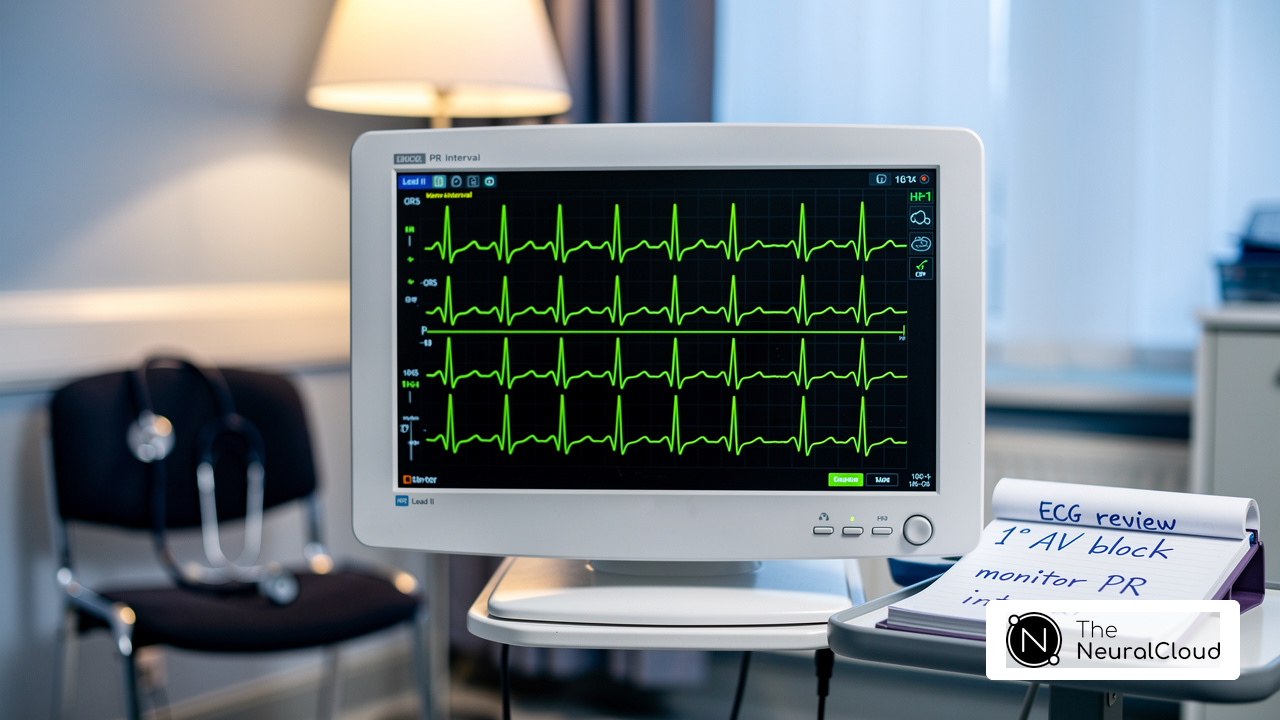
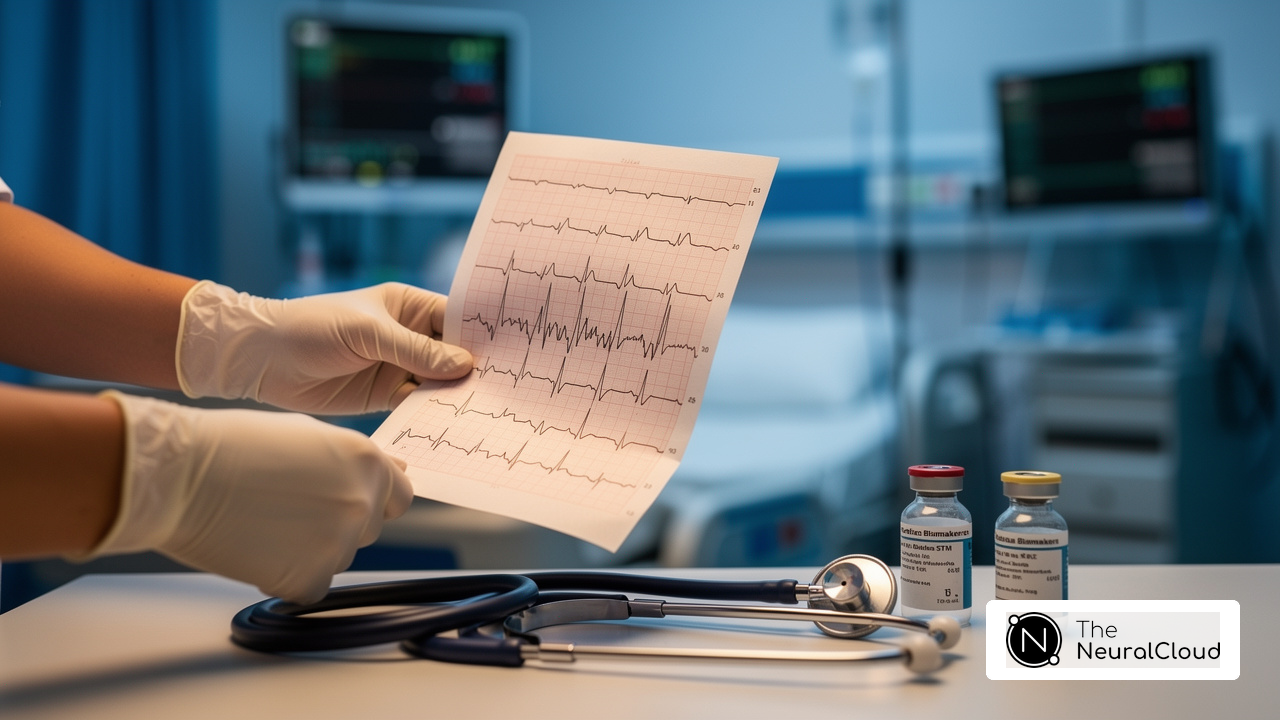
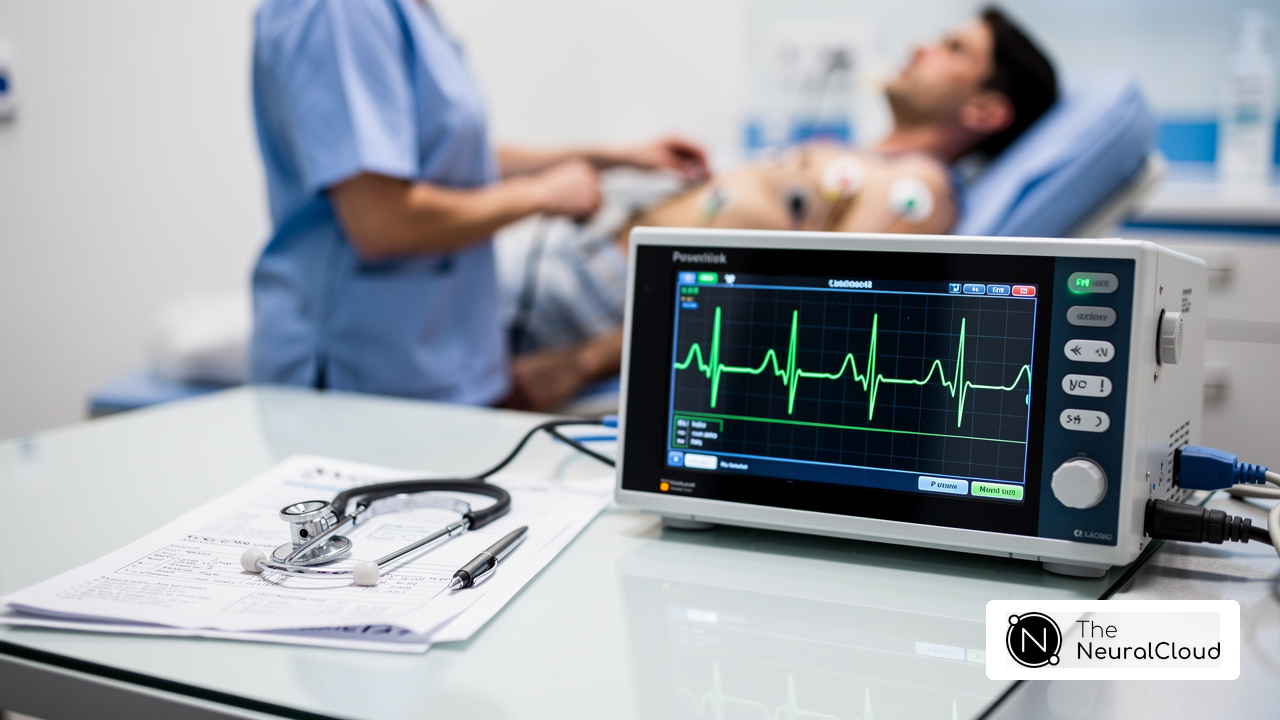
The rhythm identifier in electrocardiograms plays a crucial role in ECG analysis, enabling clinicians to accurately categorize heart patterns essential for diagnosing various cardiac conditions. These markers function as a rhythm identifier, enabling healthcare professionals to swiftly distinguish between normal and irregular patterns, facilitating timely interventions. For example, through pulse markers can significantly lower stroke risk, as AF increases the likelihood of clot formation in the heart. Additionally, the rhythm identifier is vital for identifying arrhythmias that may not be captured by traditional evaluation methods, particularly in urgent situations where quick decision-making is critical.
The MaxYield™ platform, an innovative tool developed by Neural Cloud Solutions, leverages advanced AI-driven features. This platform transforms noisy recordings into clear data, offering beat-by-beat evaluations and generating reports on 200,000 heartbeats in under five minutes. Such capabilities are especially advantageous in emergency settings where rapid decision-making is paramount. By incorporating a rhythm identifier with beat markers into ECG evaluations, MaxYield™ not only enhances diagnostic accuracy but also improves workflow efficiency, enabling clinicians to focus more on patient care rather than manual analysis.
Recent studies indicate that smartwatches equipped with photoplethysmography (PPG) and ECG functionalities improve the detection of hidden heart issues. Doctors have reported recognizing arrhythmias four times more frequently in patients using these devices. This enhanced capability ultimately leads to better outcomes and more efficient healthcare delivery.
Features of MaxYield™:
- Time Reduction: Reduces manual analysis time.
- Data Clarity: Converts noisy data into clear, actionable information.
- Rapid Reporting: Generates comprehensive reports on 200,000 heartbeats in under five minutes.
Advantages for Healthcare Professionals:
- Improved Diagnostic Precision: Enhances the accuracy of identifying cardiac conditions.
- Streamlined Workflow: Allows clinicians to dedicate more time to patient care.
- Enhanced Patient Outcomes: Facilitates better management of heart health through timely interventions.

Integrate Rhythm Identifiers into Clinical Workflows Effectively
Incorporating rhythm identifiers into clinical workflows presents unique challenges for healthcare facilities. To address these, a systematic approach is essential. Start by evaluating existing processes to identify areas where improvements can enhance efficiency. For example, integrating rhythm identifiers into data entry and analysis can streamline operations.
Neural Cloud Solutions offers significant advantages in this regard. This platform rapidly labels P, QRS, and T Wave onsets and offsets, improving data processing. By providing beat-by-beat tabulation in CSV format, it allows for easy integration into existing workflows. Additionally, our team can extract key features from signals recorded by sensors, aiding in the analysis.
Training staff is crucial. Organizing workshops or simulations can help familiarize staff with the technology. Furthermore, creating guidelines for using rhythm identifiers ensures that all team members understand their roles in the process.
Regularly reviewing and updating these protocols based on feedback and technological advancements is vital for maintaining optimal workflow efficiency. By integrating a rhythm identifier into clinical processes, healthcare professionals can enhance diagnostic precision and patient outcomes. Utilizing innovative tools like rhythm identifiers not only improves efficiency but also supports better healthcare delivery.

Leverage Advanced Technology for Enhanced Rhythm Identification
Advanced technologies, particularly artificial intelligence and machine learning, are revolutionizing ECG evaluation by significantly enhancing accuracy. One of the primary challenges in ECG analysis is the ability to accurately detect patterns and anomalies, which can often be missed by human interpretation.
The platform from Neural Cloud Solutions exemplifies this innovation. It features technology that not only speeds up the analysis process but also improves accuracy. With its algorithms and the highlighting of P, QRS, and T Waves, MaxYield™ streamlines workflows and integrates seamlessly with our data wall. This integration automates repetitive tasks, enabling healthcare professionals to process more data in less time.
Moreover, devices equipped with ECG monitoring capabilities facilitate remote monitoring, providing crucial data for long-term patient management. Studies show that smartwatches can detect arrhythmias. This statistic underscores the importance of staying informed about these emerging technologies for healthcare professionals.
Incorporating advancements like the MaxYield™ platform into clinical practice can greatly enhance diagnostic capabilities. Ultimately, this leads to improved patient outcomes, making it essential for healthcare providers to embrace these innovations.
Provide Training and Support for Effective Implementation
To ensure effective implementation of cadence identifiers, healthcare organizations must prioritize robust training and support for their staff. Here are key steps to consider:
- Develop Training Programs: Create programs that cover the fundamentals of rhythm identification, technology utilization, and best practices for implementation.
- Incorporate Hands-On Training: Utilize training sessions, simulations, and case studies to enhance learning outcomes. For instance, a training initiative for paramedics in Nagasaki Prefecture demonstrated a marked improvement in confidence and accuracy in interpreting rhythms, with median scores rising from 3 to 6 points post-training.
- Establish a Support System: Create a platform where staff can seek assistance and share experiences related to beat identification, fostering a collaborative environment.
- Regularly Update Training: Ensure that training content reflects advancements in technology and evolving clinical guidelines, particularly those related to rhythm analysis.
By cultivating a culture of continuous learning and support, healthcare organizations can empower their staff to effectively utilize a rhythm identifier, ultimately enhancing patient care and clinical outcomes.

Conclusion
Incorporating rhythm identifiers into ECG analysis addresses significant challenges in enhancing diagnostic accuracy and improving patient outcomes. These identifiers are essential tools that enable healthcare professionals to quickly distinguish between normal and irregular heart patterns, facilitating timely interventions. By utilizing advanced technologies like the MaxYield™ platform, clinicians can streamline their workflow, allowing them to concentrate on patient care instead of manual data analysis.
The article emphasizes several key aspects, including:
- The role of rhythm identifiers in detecting complex arrhythmias
- The benefits of automated ECG evaluation
- The necessity of integrating these tools into clinical workflows
Furthermore, the adoption of wearable devices equipped with ECG functionalities has demonstrated improved detection of hidden heart issues, highlighting the importance of advanced technology in contemporary healthcare.
Ultimately, embracing these innovations and implementing thorough training programs are crucial for healthcare organizations. By cultivating a culture of continuous learning and support, clinicians will be better prepared to effectively utilize rhythm identifiers, leading to enhanced patient care and improved clinical outcomes. The integration of rhythm identifiers not only simplifies ECG analysis but also marks a significant advancement in cardiac monitoring and treatment within healthcare settings.
Frequently Asked Questions
What is the role of rhythm identifiers in ECG analysis?
Rhythm identifiers in electrocardiograms are crucial for categorizing heart patterns, enabling clinicians to distinguish between normal and irregular patterns, which is essential for diagnosing various cardiac conditions.
How do rhythm identifiers contribute to patient care?
They facilitate timely interventions by allowing healthcare professionals to quickly identify conditions like atrial fibrillation (AF), which can significantly lower stroke risk by preventing clot formation in the heart.
What is the MaxYield™ platform?
MaxYield™ is an automated ECG evaluation tool developed by Neural Cloud Solutions that uses AI-driven features to enhance ECG analysis, transforming noisy recordings into clear insights and generating reports rapidly.
What are the key features of the MaxYield™ platform?
Key features include automated ECG evaluation to reduce manual analysis time, AI-driven insights that convert noisy data into actionable information, and rapid reporting that generates comprehensive reports on 200,000 heartbeats in under five minutes.
What advantages does MaxYield™ provide for healthcare professionals?
It improves diagnostic precision, streamlines workflow allowing more time for patient care, and enhances patient outcomes through better management of heart health with timely interventions.
How do smartwatches with ECG functionalities impact heart issue detection?
Smartwatches equipped with photoplethysmography (PPG) and ECG functionalities help doctors recognize arrhythmias four times more frequently in patients, leading to improved patient outcomes and more efficient healthcare delivery.
List of Sources
- Understand the Importance of Rhythm Identifiers in ECG Analysis
- parade.com (https://parade.com/1187612/michelle-parkerton/quotes-about-heart-disease)
- Smartwatches Help Detect Hidden Dangerous Heart Rhythm Problems, Clinical Trial Finds (https://usnews.com/news/health-news/articles/2026-01-23/smartwatches-help-detect-hidden-dangerous-heart-rhythm-problems-clinical-trial-finds)
- Checking your browser - reCAPTCHA (https://pmc.ncbi.nlm.nih.gov/articles/PMC6051725)
- sciencedaily.com (https://sciencedaily.com/releases/2025/11/251117091142.htm)
- biosignalssolutions.com (https://biosignalssolutions.com/measures-stats-polarecganalysis)
- Integrate Rhythm Identifiers into Clinical Workflows Effectively
- fox59.com (https://fox59.com/business/press-releases/ein-presswire/851820008/rhythmscience-licenses-groundbreaking-ai-algorithm-from-cedars-sinai-to-optimize-heart-failure-treatment)
- myrhythmnow.com (https://myrhythmnow.com/post/unlocking-operational-efficiency-integrating-cardiac-remote-monitoring-into-clinic-and-hospital-workflow)
- academic.oup.com (https://academic.oup.com/jamiaopen/article/doi/10.1093/jamiaopen/ooaf139/8306999)
- Leverage Advanced Technology for Enhanced Rhythm Identification
- AI-Powered ECG Analysis Offers Promising Path for Early Detection of Chronic Obstructive Pulmonary Disease, Say Mount Sinai Researchers (https://mountsinai.org/about/newsroom/2026/ai-powered-ecg-analysis-offers-promising-path-for-early-detection-of-chronic-obstructive-pulmonary-disease-say-mount-sinai-researchers)
- Smartwatches Help Detect Hidden Dangerous Heart Rhythm Problems, Clinical Trial Finds (https://usnews.com/news/health-news/articles/2026-01-23/smartwatches-help-detect-hidden-dangerous-heart-rhythm-problems-clinical-trial-finds)
- newsroom.heart.org (https://newsroom.heart.org/news/an-ai-tool-detected-structural-heart-disease-in-adults-using-a-smartwatch)
- dig.watch (https://dig.watch/updates/new-radar-technology-advances-heart-rhythm-detection)
- advamed.org (https://advamed.org/2025/11/20/new-digital-health-tech-offers-early-detection-of-a-dangerous-heart-condition)
- Provide Training and Support for Effective Implementation
- ECG Case Studies | Interpretation & Answers | Geeky Medics (https://geekymedics.com/ecg-case-studies)
- 42 Training Quotes: Inspirational Words for Learning | ITD World (https://itdworld.com/blog/human-resources/training-quotes-inspirational)
- pmc.ncbi.nlm.nih.gov (https://pmc.ncbi.nlm.nih.gov/articles/PMC12535971)
- ajconline.org (https://ajconline.org/article/S0002-9149(08)01715-3/fulltext)