Introduction
Understanding the complexities of first-degree atrioventricular (AV) block is essential for healthcare professionals. This common cardiac condition can significantly impact patient management. While often perceived as benign, a prolonged PR interval may indicate underlying issues that could lead to severe complications, especially in individuals with heart failure. As the prevalence of first-degree AV block increases in this population, accurately diagnosing and managing the condition becomes crucial to prevent adverse outcomes.
Clinicians face challenges in ECG analysis, particularly in recognizing the implications of first-degree AV block. Innovative approaches are necessary to enhance diagnostic capabilities. By adopting advanced ECG analysis tools, healthcare professionals can improve their ability to identify and interpret prolonged PR intervals. This not only aids in timely diagnosis but also facilitates better patient care.
The MaxYield™ platform offers features that streamline ECG analysis, making it easier for clinicians to detect first-degree AV block. Its user-friendly interface and advanced algorithms provide accurate interpretations, reducing the risk of misdiagnosis. The benefits of utilizing such a platform include improved patient outcomes and enhanced confidence in clinical decision-making.
In conclusion, understanding first-degree AV block is vital for effective patient management. By leveraging innovative diagnostic tools like MaxYield™, healthcare professionals can navigate the complexities of this condition more effectively, ultimately leading to better care for patients.
Define First-Degree Atrioventricular Block
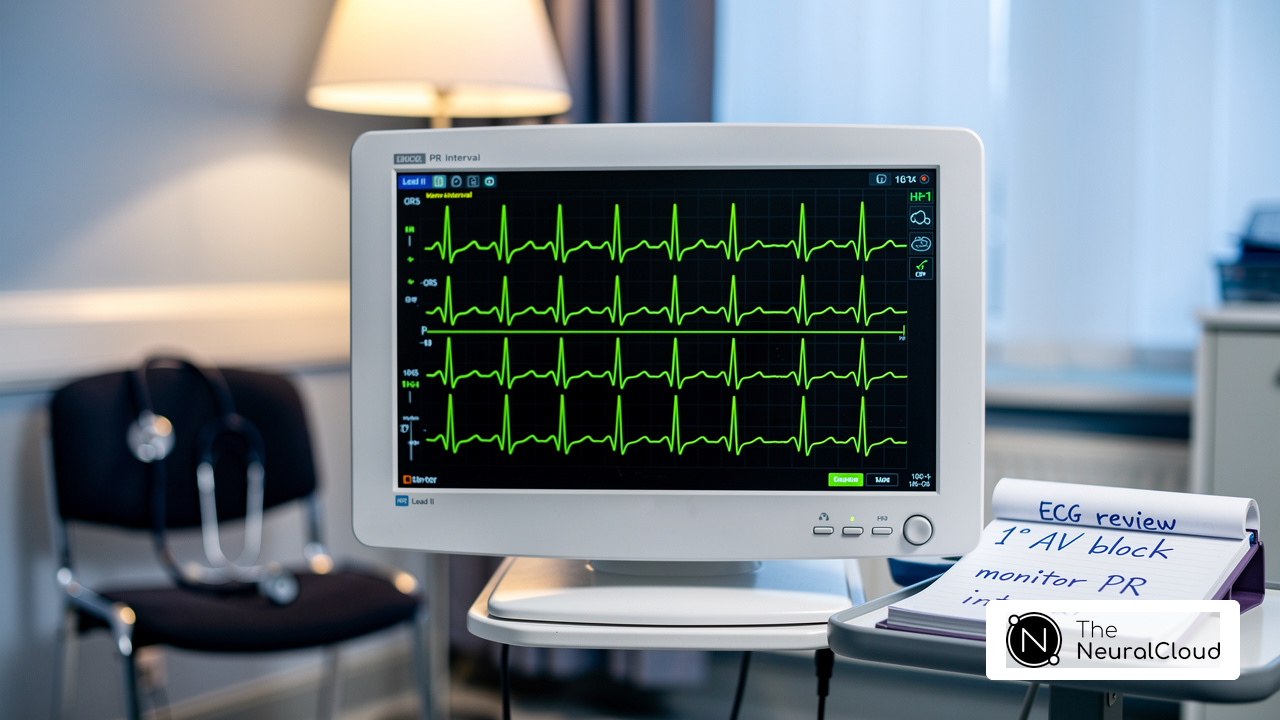
First-degree atrioventricular block, often referred to as first-degree heart delay, is identified by a PR interval exceeding 200 milliseconds on an electrocardiogram (ECG). This condition indicates a delay in the conduction of electrical impulses from the atria to the ventricles, typically occurring without any missed beats. While it is often considered a benign condition, especially in asymptomatic individuals, it can sometimes indicate underlying conduction system disease. Recognizing first-degree AV block is crucial, as it can impact subsequent diagnostic and therapeutic approaches.
Recent studies highlight that a first-degree AV block is associated with an increased risk of atrial fibrillation and other adverse outcomes, particularly in patients with heart failure. For instance, the prevalence of first-degree AV block in the general population is approximately 4%, but this figure rises to between 15% and 51% among those with heart failure. Cardiologists stress the importance of monitoring PR interval duration, as a baseline PR interval exceeding 350 ms correlates with a greater likelihood of needing permanent pacing.
Understanding the implications of first-degree AV block is essential for healthcare professionals, as it can inform clinical decision-making and enhance patient outcomes. Integrating advanced technologies like MaxYield™ can significantly improve this process. The platform automates ECG analysis, providing beat-by-beat insights that facilitate the identification of critical features in ECG recordings.
Features of MaxYield™:
- Automates ECG analysis
- Offers beat-by-beat insights
- Simplifies recognition of key ECG features
Advantages for Healthcare Professionals:
- Reduces time spent on noise filtering and data annotation
- Enhances productivity
- Supports accurate clinical evaluations
- Leads to improved patient outcomes
By streamlining the process, MaxYield™ ultimately contributes to better patient care.

Identify Symptoms and Clinical Significance
often goes unnoticed, but some individuals might feel symptoms like fatigue, dizziness, or palpitations, particularly when the obstruction is significant, indicated by a notably prolonged PR interval. These symptoms can signal underlying heart conditions, as those with considerable first-degree AV block may face an increased risk of progressing to more severe AV block or other arrhythmias. This necessitates careful monitoring and evaluation.
Neural Cloud Solutions' platform addresses the challenges of ECG interpretation by utilizing advanced signal processing and wave recognition technology. This innovative approach transforms lengthy and noisy ECG recordings into clear, interpretable waveforms. As a result, clinicians can achieve greater accuracy in ECG interpretation, which is crucial for assessing symptoms and effectively managing patient care.
Understanding the symptoms, along with the clinical significance, empowers clinicians to evaluate the urgency of intervention and determine the need for further diagnostic testing. By leveraging this platform, healthcare professionals can enhance their decision-making processes, ultimately leading to improved patient outcomes.

Explore Diagnostic Techniques for First-Degree AV Block
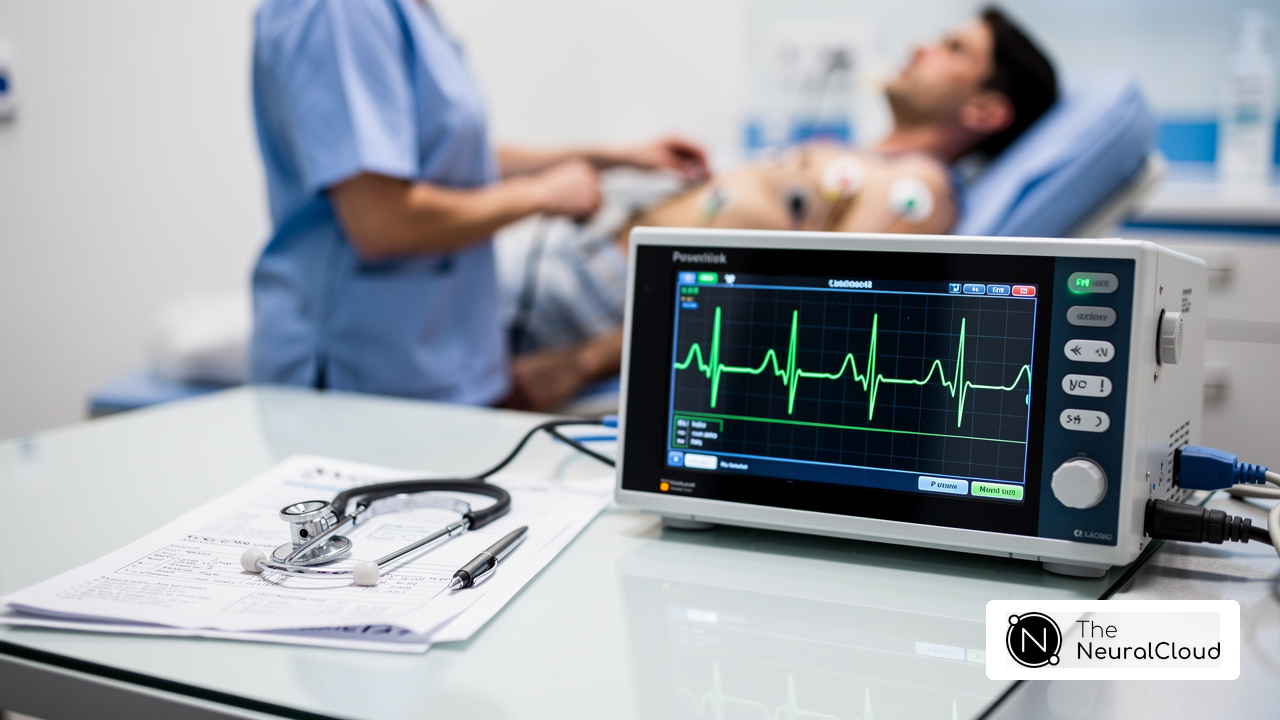
The electrocardiogram (ECG) is the primary diagnostic tool for 1 degree AV block, capturing the heart's electrical activity. Clinicians should look for signs of 1 degree AV block, which is indicated by a consistently prolonged PR interval exceeding 200 milliseconds, with each P wave followed by a QRS complex. However, this condition can present challenges, particularly in identifying intermittent conduction issues that may not be apparent during a standard ECG.
Holter monitoring is particularly valuable, allowing for continuous assessment of heart rhythms over a 24-hour period. This method can reveal intermittent conduction issues that standard ECGs might miss. Additionally, exercise testing can be utilized to observe how the heart behaves under physical exertion, providing further insights into its clinical significance.
To enhance diagnosis, advanced imaging techniques, such as echocardiography, may be employed to exclude structural abnormalities, which can complicate the diagnosis. The system integrates AI algorithms that improve ECG interpretation accuracy by automating the detection of abnormal patterns and employing machine learning. This innovative approach streamlines the diagnostic process, improves the speed of analysis, and increases the reliability of identifying 1 degree AV block.
By utilizing the capabilities of the system, clinicians can tackle challenges in diagnosis, such as physiological variability and signal artifacts. This ensures a more efficient workflow in their practice. User manuals provide essential guidance, further enhancing its application in clinical settings.
Features of MaxYield™:
Advantages for Healthcare Professionals:
- Improved speed of analysis
- Increased reliability in identifying 1 degree AV block
- Enhanced workflow efficiency
In conclusion, the system not only addresses the complexities of diagnosis but also empowers healthcare professionals to make informed clinical decisions.

Outline Management and Treatment Approaches
Management of first-degree AV block primarily focuses on vigilant monitoring, particularly for asymptomatic individuals, as specific treatment is generally unnecessary. According to the American College of Cardiology, most patients with first-degree AV block have a good prognosis without treatment, and monitoring is sufficient.
However, challenges in monitoring can hinder effective management. This is where Neural Cloud Solutions' platform comes into play. The platform offers tools that significantly enhance monitoring capabilities. MaxYield™ rapidly labels P, QRS, and T wave onsets, offsets, and time-series intervals, allowing for beat-by-beat tabulation in CSV format. This feature facilitates easy ingestion into current workflows, streamlining the process for healthcare providers.
For individuals showing symptoms, the initial strategy includes examining and possibly ceasing medications that may worsen AV block issues, particularly in cases of symptomatic bradycardia, such as beta-blockers or calcium channel antagonists. If symptoms persist, further evaluation through electrophysiological studies may be indicated to assess the conduction system's integrity. In symptomatic cases or when there is a progression to higher-degree AV block, including second-degree AV block, the option of pacemaker implantation should be considered, as recommended by the ACC/AHA/HRS guidelines.
Regular follow-up with ECG monitoring is essential to detect any changes in the individual's condition, facilitating timely interventions when necessary. Enhanced by MaxYield™'s advanced noise filtering and wave recognition capabilities, this monitoring becomes even more effective. Notably, cardiologists emphasize that while most patients have a favorable prognosis without treatment, those with significant symptoms may require more proactive management strategies to prevent complications.

Conclusion
First-degree atrioventricular (AV) block is a significant condition that warrants careful attention from healthcare professionals. Understanding its implications, particularly the prolonged PR interval observed on electrocardiograms, is vital for effective clinical decision-making and patient management. This article has explored the key aspects of first-degree AV block, from its definition and symptoms to diagnostic techniques and management strategies, emphasizing the importance of vigilance in monitoring and intervention.
The discussion highlighted that while first-degree AV block is often benign, it can pose risks, especially in patients with underlying heart conditions. One of the challenges in ECG analysis is accurately detecting these conditions. This is where advanced tools like Neural Cloud Solutions' MaxYield™ platform come into play. The platform enhances the accuracy of ECG analysis, enabling clinicians to detect and monitor first-degree AV block more effectively.
MaxYield™ offers several key features:
- Automated pattern detection
- Advanced noise filtering
- Streamlined diagnostic processes
These features not only improve the accuracy of ECG readings but also significantly enhance patient outcomes. By simplifying the diagnostic process, healthcare professionals can focus more on patient care rather than getting bogged down by complex data interpretation.
Ultimately, mastering first-degree AV block can lead to improved patient care through informed monitoring and timely interventions. As healthcare professionals continue to leverage innovative technologies and adhere to current guidelines, the management of first-degree AV block can evolve. This ensures that patients receive the best possible care while minimizing the risks associated with this condition. Embracing these advancements not only enhances clinical practice but also underscores the commitment to prioritizing heart health in patient populations.
Frequently Asked Questions
What is first-degree atrioventricular block?
First-degree atrioventricular (AV) block is characterized by a PR interval exceeding 200 milliseconds on an electrocardiogram (ECG), indicating a delay in the conduction of electrical impulses from the atria to the ventricles, typically without any missed beats.
Is first-degree AV block considered serious?
While first-degree AV block is often regarded as a benign finding, especially in asymptomatic individuals, it can sometimes indicate underlying conduction system disease and may have implications for patient management.
What is the prevalence of first-degree AV block in the general population?
The prevalence of first-degree AV block in the general population is approximately 4%, but it increases to between 15% and 51% among individuals with heart failure.
Why is monitoring the PR interval important?
Monitoring the PR interval is crucial because a baseline PR interval exceeding 350 milliseconds correlates with a higher likelihood of needing permanent pacing and is associated with an increased risk of atrial fibrillation and other adverse outcomes.
How can advanced technologies assist in the analysis of first-degree AV block?
Technologies like Neural Cloud Solutions' MaxYield™ platform can automate ECG analysis, providing beat-by-beat insights that help in the identification of critical features in ECG recordings, thereby enhancing clinical decision-making.
What are some features of the MaxYield™ platform?
MaxYield™ automates ECG analysis, offers beat-by-beat insights, and simplifies the recognition of key ECG features.
What advantages does MaxYield™ provide for healthcare professionals?
MaxYield™ reduces the time spent on noise filtering and data annotation, enhances productivity, supports accurate clinical evaluations, and ultimately leads to improved patient management.
List of Sources
- Define First-Degree Atrioventricular Block
- First-Degree Atrioventricular Block: Background, Pathophysiology, Etiology (https://emedicine.medscape.com/article/161829-overview)
- clinmedjournals.org (https://clinmedjournals.org/articles/ijcc/international-journal-of-clinical-cardiology-ijcc-6-162.php?jid=ijcc)
- pmc.ncbi.nlm.nih.gov (https://pmc.ncbi.nlm.nih.gov/articles/PMC6781332)
- sciencedirect.com (https://sciencedirect.com/science/article/pii/S2405500X16300093)
- Identify Symptoms and Clinical Significance
- First-Degree Atrioventricular Block: Background, Pathophysiology, Etiology (https://emedicine.medscape.com/article/161829-overview)
- bmccardiovascdisord.biomedcentral.com (https://bmccardiovascdisord.biomedcentral.com/articles/10.1186/s12872-019-1202-4)
- Explore Diagnostic Techniques for First-Degree AV Block
- An AI tool detected structural heart disease in adults using a smartwatch (https://newsroom.heart.org/news/an-ai-tool-detected-structural-heart-disease-in-adults-using-a-smartwatch)
- Atrioventricular (AV) Block - The Cardiology Advisor (https://thecardiologyadvisor.com/ddi/av-block-first-second-third-degree)
- bmccardiovascdisord.biomedcentral.com (https://bmccardiovascdisord.biomedcentral.com/articles/10.1186/s12872-019-1202-4)
- Outline Management and Treatment Approaches
- Atrioventricular (AV) Block - The Cardiology Advisor (https://thecardiologyadvisor.com/ddi/av-block-first-second-third-degree)
- researchgate.net (https://researchgate.net/publication/333252457_Safety_and_Efficacy_of_Intracavernosal_Injections_of_AbobotulinumtoxinA_Dysport_as_Add_on_Therapy_to_Phosphosdiesterase_Type_5_Inhibitors_or_Prostaglandin_E1_for_Erectile_Dysfunction-Case_Studies)
- First-Degree Atrioventricular Block Treatment & Management: Approach Considerations, Pacemaker Implantation, Long-Term Monitoring (https://emedicine.medscape.com/article/161829-treatment)
- emedicine.medscape.com (https://emedicine.medscape.com/article/151597-treatment)