Introduction
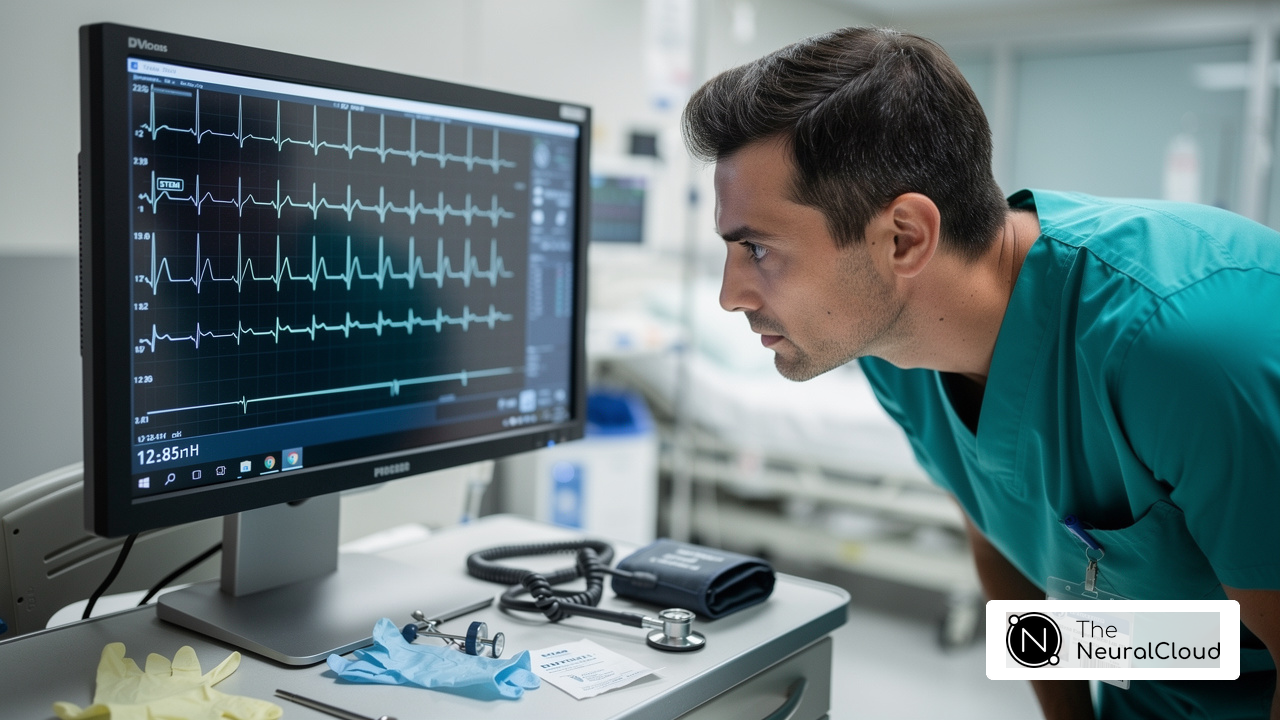
The 12-lead ECG system is a cornerstone in cardiac diagnostics, providing a comprehensive view of the heart's electrical activity. However, mastering this tool presents challenges for healthcare professionals, particularly when interpreting complex data. This complexity can significantly impact patient outcomes, especially in emergencies such as ST segment myocardial infarction (STEMI). To navigate these intricacies effectively, clinicians need robust solutions that enhance their diagnostic capabilities.
Introducing the MaxYield™ platform, designed specifically to address the challenges of ECG analysis. This innovative tool streamlines the interpretation process, allowing healthcare professionals to quickly and accurately assess cardiac conditions. With features that simplify data visualization and enhance clarity, MaxYield™ empowers clinicians to make informed decisions in critical situations.
The advantages of using MaxYield™ are clear:
- By improving the accuracy of ECG interpretations, healthcare professionals can ensure timely diagnoses, ultimately leading to better patient outcomes.
- The platform not only enhances the efficiency of ECG analysis but also supports clinicians in delivering high-quality care, particularly in emergency settings.
In summary, the MaxYield™ platform stands out as an essential tool for healthcare professionals. By mastering its features, clinicians can navigate the complexities of ECG analysis with confidence, ensuring that they provide the best possible care for their patients.
Understand the 12-Lead ECG System and Its Importance
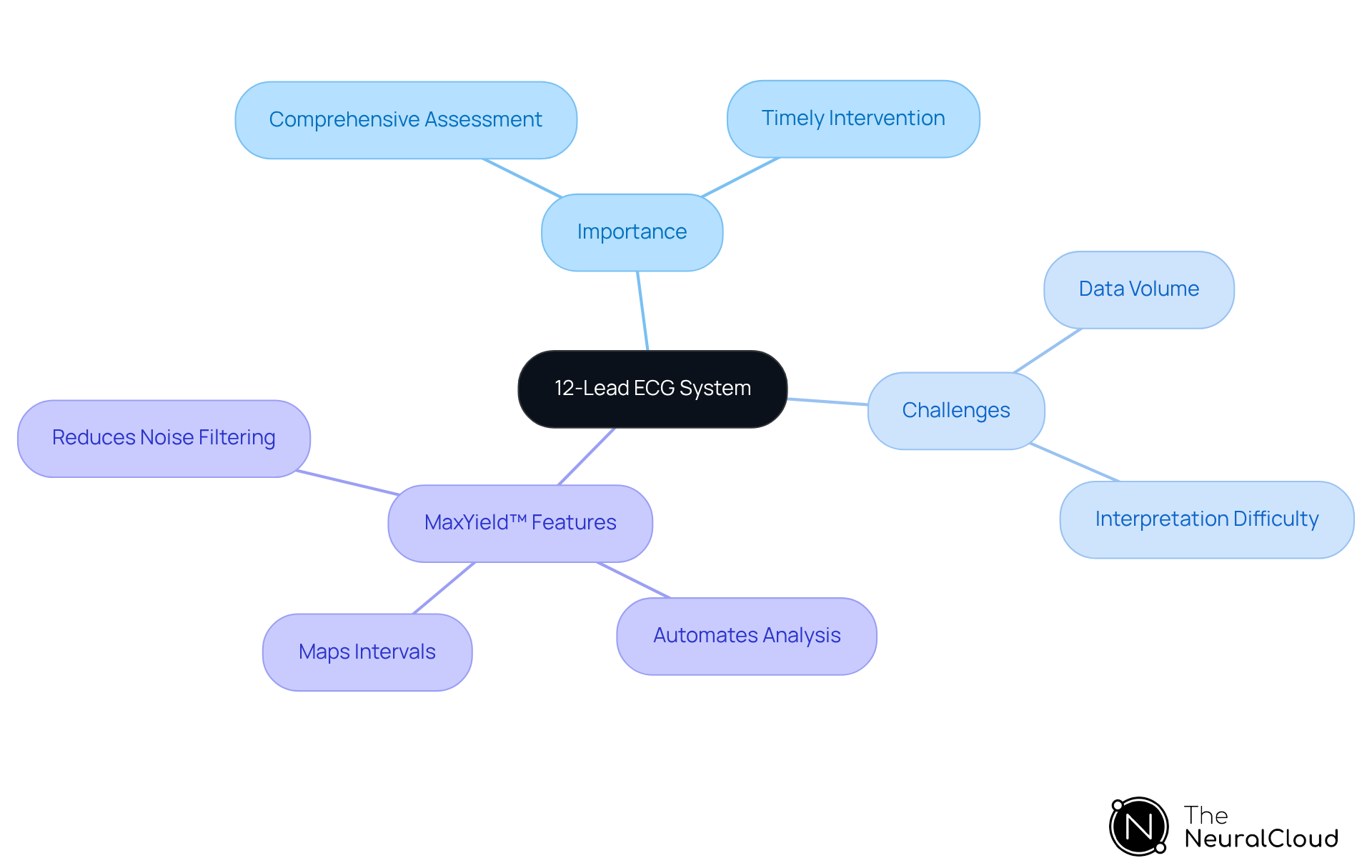
The system is a vital diagnostic tool that captures the heart's electrical activity from multiple angles, providing a comprehensive assessment of cardiac function. Each electrode corresponds to a specific anatomical position, enabling the detection of various cardiac abnormalities. Mastery of this system is crucial for healthcare professionals, as it empowers them to interpret data accurately and make informed clinical decisions.
In emergency situations, the 12-lead ECG is essential for the rapid diagnosis of conditions such as myocardial infarction. Timely intervention in these cases can dramatically influence patient outcomes. Understanding the 12 leads and their respective perspectives of the heart is crucial for effective interpretation, ensuring that clinicians can respond swiftly and appropriately to critical cardiac events.
However, ECG interpretation can be challenging due to the volume of data and the need for precise interpretation. This is where advanced solutions like Neural Cloud Solutions' MaxYield™ come into play.
Features of MaxYield™:
- Automates the labeling and analysis of ECG signals.
- Maps P-wave, QRS complex, and T-wave intervals.
- Reduces time spent on noise filtering and annotation.
Advantages for clinicians:
- Allows focus on critical decision-making.
- Ensures data interpretation is accurate and reliable.
- Completes the analysis of 200,000 heartbeats in less than five minutes.
With MaxYield™, healthcare professionals can enhance their workflow, providing the necessary support for confident clinical decisions.
Identify Key ST Elevation Criteria in ECG Readings
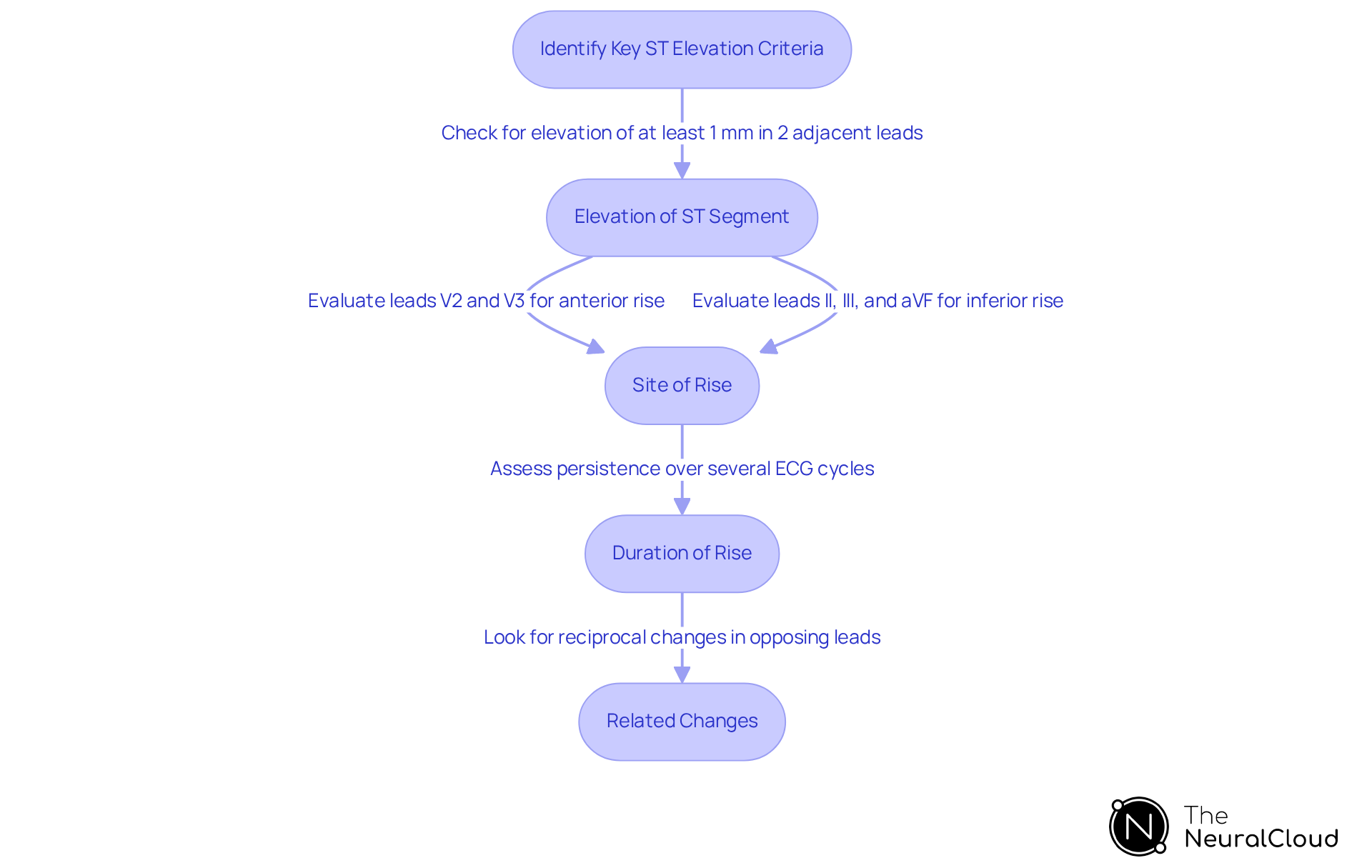
To accurately recognize ST elevation on a 12-lead ECG, clinicians should follow these essential criteria:
- Elevation: The ST segment must be elevated by at least 1 mm in two adjacent recordings. This is a key indicator of potential myocardial infarction.
- Site of rise: Evaluate leads V2 and V3 for ST elevation. For recognizing inferior ST elevation, channels II, III, and aVF are crucial.
- Duration of rise: The rise should be persistent, typically observed over several ECG cycles, indicating ongoing ischemia.
- Related changes: Look for reciprocal changes, which can further substantiate the diagnosis.
Recent guidelines emphasize the importance of recognizing these criteria for ST elevation myocardial infarction, which includes performing a 12 lead ECG with ST elevation. Statistics indicate that in STEMI cases, the elevation is frequently greater than or equal to 2 mm in men and 1.5 mm in women in the V2 and V3 electrodes. This highlights the importance of precise evaluation. Clinicians are encouraged to stay informed about emerging ECG patterns that indicate life-threatening coronary occlusions, as timely recognition can significantly improve patient outcomes.
Analyze ECG Readings for ST Elevation: Step-by-Step Process
-
Prepare the ECG: Start by ensuring the ECG is recorded under optimal conditions. This means obtaining clear signals that are free from interference, which could compromise interpretation. This foundational step is crucial for accurate diagnosis.
The results indicated a need for a consultation to further assess the patient's condition.
-
Recognize the connections: Familiarize yourself with the connections of the ECG and their corresponding anatomical views of the heart. Understanding the lead placements is essential for accurate assessment.
-
Measure the ST portion: Focus on the J-point, the junction between the S wave and the ST portion. Assess the height from the baseline to determine the degree of elevation.
The results of the measurement indicate a need for further evaluation. Evaluate for elevation by verifying that the ST portion is raised by at least 1 mm in two or more adjacent electrodes during a myocardial infarction. This is a crucial criterion for diagnosing ST elevation through a 12-lead ECG.
-
Search for reciprocal alterations: Investigate pathways contrary to those displaying an increase for ST elevation. This can suggest ischemia and provide further diagnostic insight.
-
Document findings: Thoroughly record your observations along with any relevant clinical information to support your diagnosis. This systematic approach enhances your accuracy in identifying ST elevation and aids in effective communication with other healthcare professionals.

Troubleshoot Common ECG Interpretation Challenges
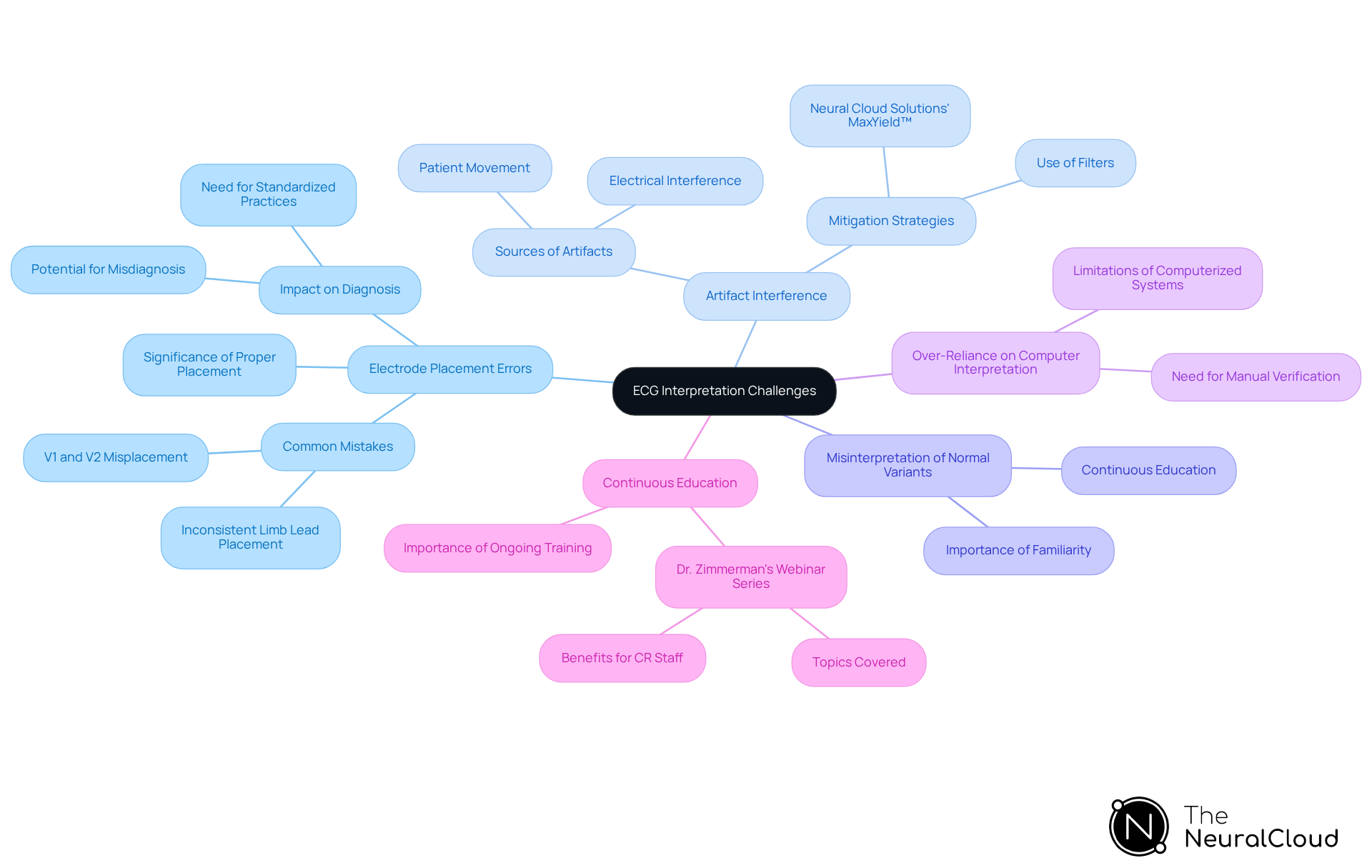
- Electrode Placement Errors: Adhering to proper techniques is crucial. Misplacement can lead to significant inaccuracies in readings, potentially resulting in misdiagnosis or inappropriate treatment. Studies indicate that only 16% of cardiologists correctly place electrodes, highlighting the need for meticulous attention to detail.
- Artifact Identification: Identifying and minimizing artifacts caused by patient movement or electrical interference is essential for accurate readings. Common sources of artifacts include muscle tremors and external electrical signals. Utilizing filters can help mitigate these issues, ensuring clearer ECG signals. Neural Cloud Solutions leverages advanced AI to transform noisy recordings into clean, crisp signals, enhancing clarity in ambulatory ECG waveform analysis.
- Anatomical Variations: Familiarity with normal anatomical variations is vital, as these can sometimes mimic pathological conditions. Training on common normal patterns can aid in distinguishing between benign and concerning findings, reducing the risk of misdiagnosis.
- Over-Reliance on Computer Interpretation: While algorithms can provide valuable insights, they should not replace thorough manual analysis. Research shows that computerized systems misinterpret complex cases, such as atrial fibrillation, in a significant percentage of instances. Always verify computer-generated results with your own clinical judgment. The automated labeling of P-Waves and QRS-onsets by MaxYield™ provides clear inputs that assist in delivering actionable insights, thereby supporting clinicians in their decision-making process.
- Ongoing Education: Engaging in regular training and review sessions is essential for staying updated on best practices and emerging trends in ECG interpretation. Dr. Franklin H. Zimmerman emphasizes that ongoing education is necessary to maintain proficiency, as skills can diminish without practice. His upcoming webinar series starting on January 15, 2025, will provide valuable insights into ECG interpretation, reinforcing the importance of continuous learning. By addressing these challenges, healthcare professionals can enhance their diagnostic accuracy and confidence in interpreting ECGs, particularly with the support of innovative solutions like Neural Cloud Solutions' MaxYield™.
Conclusion
Mastering the 12-lead ECG system, especially in recognizing ST elevation, is essential for healthcare professionals who strive to provide timely and effective patient care. This guide underscores the importance of understanding the heart's electrical activity and the critical role accurate ECG interpretation plays in diagnosing conditions like STEMI. By equipping clinicians with the necessary knowledge and tools, such as the advanced MaxYield™ platform, the potential for improved patient outcomes is significantly enhanced.
Challenges in ECG analysis often stem from issues like improper electrode placement and the misinterpretation of normal variants. The MaxYield™ platform addresses these challenges by offering features that streamline the ECG interpretation process. For instance, it provides clear guidelines for electrode placement and criteria for identifying ST elevation, ensuring that healthcare professionals can perform accurate ECG analyses with confidence.
The advantages of utilizing the MaxYield™ platform are substantial. By integrating technology into ECG analysis, clinicians can enhance their diagnostic capabilities, leading to quicker and more reliable assessments. This not only improves the efficiency of patient care but also contributes to better health outcomes, particularly in cardiac emergencies.
Ultimately, mastering 12-lead ECG interpretation is not merely a skill; it is a vital component of patient care that can save lives. Healthcare professionals are encouraged to embrace ongoing education and leverage innovative tools like MaxYield™ to enhance their diagnostic capabilities. By doing so, they can ensure they are prepared to respond effectively to cardiac emergencies, ultimately benefiting their patients.
Frequently Asked Questions
What is the 12-lead ECG system?
The 12-lead ECG system is a diagnostic tool that captures the heart's electrical activity from multiple angles, allowing for a comprehensive assessment of cardiac function.
Why is the 12-lead ECG system important for healthcare professionals?
Mastery of the 12-lead ECG system is crucial for healthcare professionals as it enables them to interpret data accurately and make informed clinical decisions regarding cardiac health.
How does the 12-lead ECG assist in emergency situations?
In emergencies, the 12-lead ECG with ST elevation is essential for the rapid diagnosis of conditions like ST segment myocardial infarction (STEMI), allowing for timely interventions that can significantly improve patient outcomes.
What challenges are associated with ECG analysis?
ECG analysis can be challenging due to the large volume of data and the necessity for precise interpretation, which can complicate the diagnosis process.
What is the MaxYield™ platform, and how does it help with ECG analysis?
MaxYield™ is an advanced solution that automates the labeling and analysis of ECG signals, maps P-wave, QRS complex, and T-wave intervals, and reduces the time spent on noise filtering and annotation.
What are the advantages of using MaxYield™ for healthcare professionals?
MaxYield™ allows healthcare professionals to focus on critical decision-making, ensures accurate and reliable data interpretation, and can analyze 200,000 heartbeats in less than five minutes.
How does MaxYield™ enhance the efficiency of ECG analysis?
By automating various aspects of ECG analysis, MaxYield™ provides the necessary support for healthcare professionals to make confident clinical decisions quickly and effectively.
List of Sources
- Understand the 12-Lead ECG System and Its Importance
- hmpgloballearningnetwork.com (https://hmpgloballearningnetwork.com/site/eplab/news/heartbeam-receives-fda-clearance-first-ever-cable-free-synthesized-12-lead-ecg-home)
- nasdaq.com (https://nasdaq.com/articles/beat-secures-fda-nod-first-cable-free-home-12-lead-ecg-system)
- mpo-mag.com (https://mpo-mag.com/breaking-news/heartbeam-wins-fda-nod-for-cable-free-12-lead-ecg-for-home-arrhythmia-assessment)
- annemergmed.com (https://annemergmed.com/article/S0196-0644(24)01250-2/fulltext)
- medicalxpress.com (https://medicalxpress.com/news/2025-10-ai-ecg-severe-heart-emergency.html)
- Identify Key ST Elevation Criteria in ECG Readings
- New Guideline on Acute Coronary Syndromes: Key Takeaways (https://consultqd.clevelandclinic.org/new-guideline-on-acute-coronary-syndromes-key-takeaways-for-cardiologists)
- STEMI: ST-segment Elevation Myocardial Infarction - The Cardiology Advisor (https://thecardiologyadvisor.com/ddi/stemi-st-elevation-myocardial-infarction)
- STEMI ECG Criteria: ST-Elevation Thresholds (https://powerfulmedical.com/blog/stemi-ecg-criteria)
- edguidelines.com (https://edguidelines.com/acs-guidelines-2025-the-omi-has-officially-arrived)
- Analyze ECG Readings for ST Elevation: Step-by-Step Process
- tricog.com (https://tricog.com/understanding-stemi-vs-nstemi-in-ecg-interpretation?srsltid=AfmBOoq59ntZfmWUdv28qtY7tMvH3cJl669hHBXN_b7B6u8lK2pyVDsJ)
- ECG data analysis to determine ST-segment elevation myocardial infarction and infarction territory type: an integrative approach of artificial intelligence and clinical guidelines - PMC (https://pmc.ncbi.nlm.nih.gov/articles/PMC11491539)
- Acute ST-Segment Elevation Myocardial Infarction (STEMI) - StatPearls - NCBI Bookshelf (https://ncbi.nlm.nih.gov/books/NBK532281)
- STEMI - Electrocardiogram - M3 Curriculum | SAEM (https://saem.org/about-saem/academies-interest-groups-affiliates2/cdem/for-students/online-education/m3-curriculum/group-electrocardiogram-(ecg)-rhythm-recognition/stemi)
- STEMI ECG Criteria: ST-Elevation Thresholds (https://powerfulmedical.com/blog/stemi-ecg-criteria)
- Troubleshoot Common ECG Interpretation Challenges
- ECG Electrode Placement: Risks, Tech, and Growing Demand in 2025- (https://intcomedical.com/news/info/What-You-Need-to-Know-About-ECG-Electrode-Placement-in-2025.html)
- Electrocardiogram Interpretation: A Core Competency CR Professionals Need to Improve Care Outcomes (https://newsandviews.aacvpr.org/Full-Article/electrocardiogram-interpretation-a-core-competency-cr-professionals-need-to-improve-care-outcomes-1)
- mdpi.com (https://mdpi.com/2673-3846/2/4/39)
- scoop.co.nz (https://scoop.co.nz/stories/GE2408/S00049/enhancing-diagnostic-accuracy-with-proper-12-lead-ecg-electrode-placement.htm)
- products-unlimited.com (https://products-unlimited.com/common-mistakes-in-ecg-interpretation-and-how-to-avoid-them)