Introduction
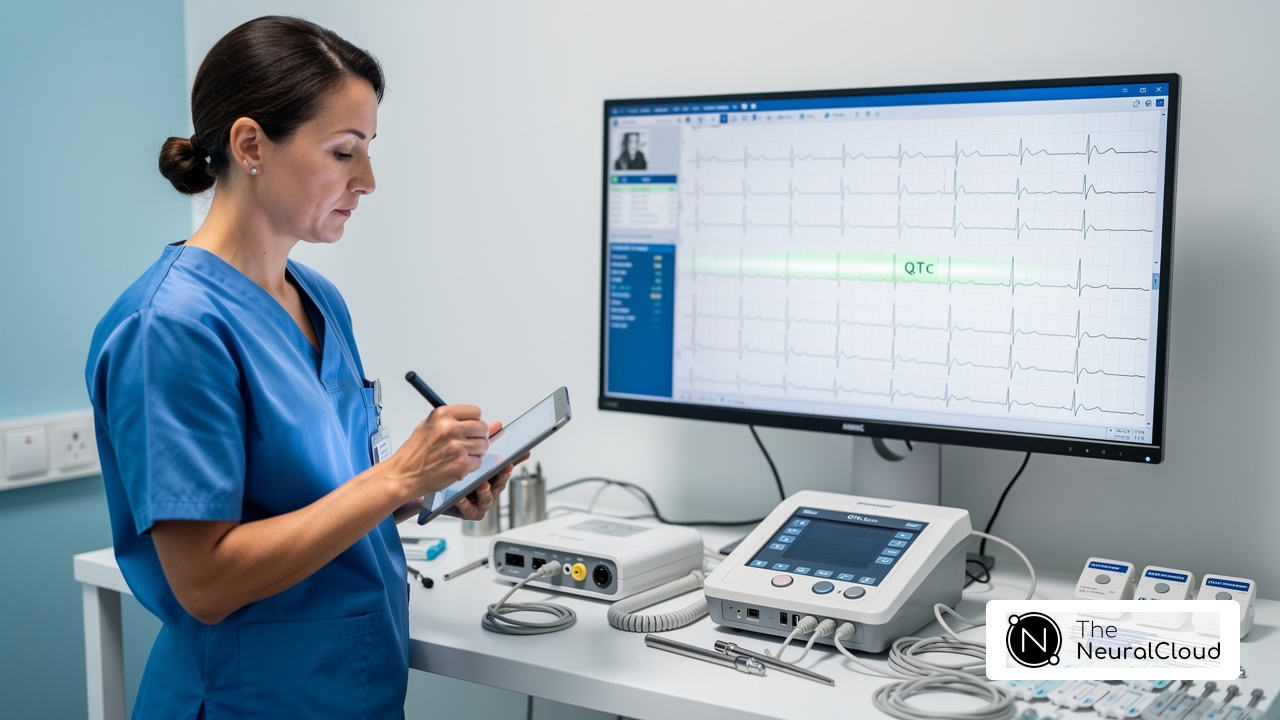
Accurate ECG analysis serves as a cornerstone of effective cardiac diagnostics. However, many healthcare professionals encounter challenges with the complexities of 12-lead ECGs. A solid understanding of lead placement and the nuances of interpreting electrical signals from the heart can greatly enhance diagnostic precision and improve patient outcomes. Despite this, a significant percentage of clinicians misplace leads or rely too heavily on automated systems. This raises an important question: how can medical professionals master the art of 12-lead ECG interpretation in the face of evolving technologies and ongoing challenges?
Understand the Fundamentals of 12-Lead ECG
A 12-lead ECG is a crucial non-invasive diagnostic tool that captures the heart's electrical activity from multiple perspectives, providing a comprehensive assessment of cardiac function. This system comprises 10 electrodes strategically positioned on the body, generating 12 leads, each providing a unique view of electrical conduction.
For instance, leads I, II, and III, known as limb leads, provide a frontal plane view, while precordial leads V1 to V6 reveal information about the horizontal plane. Mastery of these fundamentals is essential for medical professionals, as it enables the accurate identification of abnormalities such as arrhythmias, ischemia, or hypertrophy.
Notably, studies indicate that a significant percentage of healthcare professionals may lack familiarity with these concepts, underscoring the need for improved training. As Stewart Hart aptly noted, 'expert interpretation may be a dying art,' highlighting the importance of skill development for effective cardiac diagnostics.
Furthermore, Nikita Rafie stated, 'The ECG is more than a mere tracing of cardiac electrical activity; it can detect and diagnose various pathologies including arrhythmias, pericardial and myocardial disease, electrolyte disturbances, and pulmonary disease.' This knowledge not only enhances diagnostic accuracy but also empowers clinicians to make informed decisions based on reliable cardiac insights.
Additionally, it is important to recognize that computer technology has become so widespread and relied upon that clinical skills among clinicians is waning, emphasizing the necessity for continuous education in ECG interpretation.

Implement Proper Lead Placement Techniques
To ensure accurate ECG analysis, it is crucial to adhere to the following placement techniques:
- Limb Leads: Position the right arm (RA) and left arm (LA) electrodes just below the clavicle, while placing the right leg (RL) and left leg (LL) electrodes on the lower abdomen near the iliac crest. This placement is essential for capturing the heart's electrical activity effectively.
- Precordial Leads: For V1, place the electrode in the fourth intercostal space at the right sternal border. V2 should be positioned in the fourth intercostal space at the left sternal border. Continue placing V3 to V6 in a horizontal line across the chest, ensuring to capture the heart's electrical signals.
- Skin Preparation: Proper skin preparation is vital to reduce impedance and ensure optimal contact. Clean the skin with alcohol wipes to remove oils and debris, and consider using conductive gel to enhance electrode adhesion.
- Verification: After placement, confirm the connections by checking the ECG waveform for expected patterns. This verification step is essential to ensure that the electrodes are situated accurately and operating correctly, as incorrect placement can result in misinterpretation of the ECG results.
It is essential to emphasize that precise placement of the electrodes is fundamental to reliable ECG analysis. Research suggests that incorrectly positioned V1 and V2 cables can cause false-positive anterior ST elevation or incomplete right bundle branch blocks. Alarmingly, cardiologists position electrodes V1 and V2 in the correct locations in fewer than 20% of instances, emphasizing the prevalence of this issue. Additionally, nurses misplace ECG leads 64% of the time, underscoring the need for adherence to placement guidelines. By following these techniques, healthcare providers can significantly enhance the precision of ECG evaluation with the use of proper lead placement, ultimately improving patient outcomes.

Leverage Advanced Technologies for Enhanced ECG Analysis
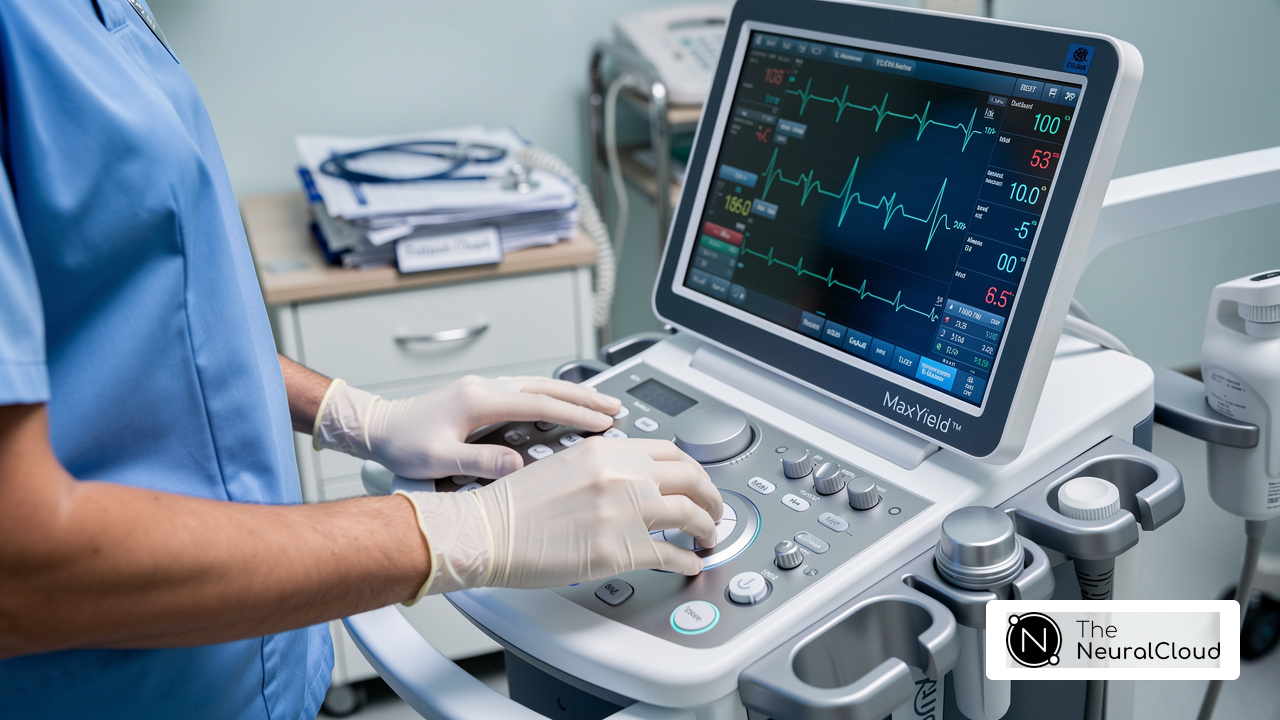
Incorporating advanced technologies into ECG assessment can significantly improve accuracy. The challenges in ECG analysis, such as noise and signal artifacts, necessitate innovative solutions. One such solution is the MaxYield™ platform, which offers several key features designed to enhance interpretation and ultimately benefit healthcare professionals.
- AI-Enhanced Interpretation: The platform utilizes advanced algorithms. These algorithms recognize patterns and anomalies that may escape human detection, issuing alerts for critical conditions such as arrhythmias or ST-segment changes. This capability improves early intervention, with AI algorithms demonstrating the potential to predict future heart failure with 79% accuracy, showcasing their role in proactive healthcare.
- Automated Reporting: MaxYield™ automates the labeling of ECG waveforms and provides beat-by-beat evaluation. This automation allows healthcare professionals to concentrate on patient care. Notably, MaxYield™ processes over 200,000 heartbeats in under five minutes, significantly enhancing workflow efficiency.
- Integration with EHRs: The platform ensures compatibility with EHRs, facilitating seamless data sharing and improved clinical workflows. This integration enhances tracking of patient history and timely interventions, ultimately leading to better patient outcomes.
- Continuous Learning Models: MaxYield™ adopts systems that utilize continuous learning to refine their algorithms over time. This adaptability ensures that the technology evolves with new data, enhancing accuracy and reliability in ECG interpretation. The commitment to Gold Standard methodologies exemplifies how continuous improvement can lead to superior diagnostic capabilities. Furthermore, the increasing adoption of AI underscores the increasing importance and adoption of AI in this field.
- Addressing Challenges: The platform effectively addresses challenges posed by noise and signal artifacts in ECG analysis. This allows medical professionals to concentrate on high-level decision-making instead of manual tasks. As Dr. Zaiqing Nie stated, "This research represents a pivotal moment in the field of cardiovascular medicine. By using the power of large language models, we can make ECG interpretation faster, more accurate, and more accessible to healthcare providers worldwide, potentially saving countless lives."

Conclusion
Mastering the intricacies of 12-lead ECG analysis is essential for healthcare professionals aiming to enhance their diagnostic capabilities. This comprehensive understanding not only aids in the accurate interpretation of cardiac function but also empowers clinicians to identify potential abnormalities effectively. Recognizing the significance of proper lead placement and the fundamentals of ECG provides a solid foundation for delivering high-quality patient care.
The article highlights several key aspects, including:
- The importance of correct electrode positioning to avoid misinterpretations
- The necessity for ongoing education in ECG principles
- The benefits of leveraging advanced technologies such as the MaxYield™ platform
By adhering to established placement guidelines and utilizing innovative tools, healthcare providers can significantly improve the accuracy of their ECG assessments, ultimately leading to better patient outcomes.
As the field of cardiology continues to evolve, embracing these best practices and advancements is crucial. Continuous education on 12-lead ECG techniques and the integration of AI-driven solutions can transform the diagnostic process, ensuring that healthcare professionals remain at the forefront of cardiac care. Engaging with these resources not only enhances individual skills but also strengthens the overall healthcare system, paving the way for improved patient safety and treatment efficacy.
Frequently Asked Questions
What is a 12-lead ECG?
A 12-lead ECG is a non-invasive diagnostic tool that captures the heart's electrical activity from multiple perspectives, providing a comprehensive assessment of cardiac function through 10 strategically positioned electrodes.
How many leads does a 12-lead ECG provide and what do they represent?
A 12-lead ECG generates 12 leads, each offering unique insights into the heart's rhythm and electrical conduction. Limb leads (I, II, III) provide a frontal plane view, while precordial leads (V1 to V6) reveal information about the horizontal plane.
Why is mastering the fundamentals of 12-lead ECG important for medical professionals?
Mastery of 12-lead ECG fundamentals is essential for accurate interpretation of ECG data and identification of abnormalities such as arrhythmias, ischemia, or hypertrophy.
What does research indicate about healthcare professionals' familiarity with ECG principles?
Research indicates that a significant percentage of healthcare professionals may lack familiarity with essential ECG principles, highlighting the need for ongoing education in this area.
What are some pathologies that a 12-lead ECG can help detect?
A 12-lead ECG can detect and diagnose various pathologies, including arrhythmias, pericardial and myocardial disease, electrolyte disturbances, and pulmonary disease.
How has reliance on computer ECG analysis affected clinicians' ECG literacy?
The widespread reliance on computer ECG analysis has led to a waning ECG literacy among clinicians, emphasizing the necessity for continuous education in ECG interpretation.
List of Sources
- Understand the Fundamentals of 12-Lead ECG
- mdpi.com (https://mdpi.com/2673-3846/2/4/39)
- researchgate.net (https://researchgate.net/publication/346113079_Artificial_Intelligence_Machine_Learning_and_Reasoning_in_Health_Informatics-Case_Studies)
- Implement Proper Lead Placement Techniques
- numed.co.uk (https://numed.co.uk/news/best-practices-in-ecg-recording)
- hssib.org.uk (https://hssib.org.uk/news-events-blog/report-highlights-concerning-variation-in-paramedic-ecg-education-and-training)
- Accuracy of ECG chest electrode placements by paramedics: an observational study - PMC (https://pmc.ncbi.nlm.nih.gov/articles/PMC8312365)
- ems1.com (https://ems1.com/medical-monitoring/location-location-location-electrode-placement-matters)
- Assessing the Accuracy of ECG Chest Electrode Placement by EMS and Clinical Personnel Using Two Evaluation Methods | International Journal of Paramedicine (https://internationaljournalofparamedicine.com/index.php/ijop/article/view/2897)
- Leverage Advanced Technologies for Enhanced ECG Analysis
- heart.org (https://heart.org/en/news/2023/11/06/can-ekgs-read-by-ai-save-lives-its-possible-researchers-say)
- New AI approach set to revolutionize ECG data interpretation in heart disease diagnosis (https://news-medical.net/news/20250219/New-AI-approach-set-to-revolutionize-ECG-data-interpretation-in-heart-disease-diagnosis.aspx)
- Checking your browser - reCAPTCHA (https://pmc.ncbi.nlm.nih.gov/articles/PMC10145690)
- Philips Launches ECG AI Marketplace to Enhance Early Cardiac Diagnosis (https://usa.philips.com/a-w/about/news/archive/standard/news/press/2025/philips-launches-ecg-ai-marketplace-to-enhance-early-cardiac-diagnosis.html)
- verifiedmarketreports.com (https://verifiedmarketreports.com/product/ai-ecg-analysis-market)