Introduction
Managing 2nd degree type 2 block presents a unique challenge for healthcare professionals, as it can lead to serious complications if not addressed promptly. This condition, characterized by a stable PR interval with intermittent dropped beats, requires a nuanced understanding of its diagnostic and treatment pathways. Clinicians must find a way to balance timely intervention with comprehensive patient care to reduce risks and improve outcomes. As they navigate the complexities of this arrhythmia, the importance of effective management becomes increasingly clear.
Clarify the Concept of 2nd Degree Type 2 Block
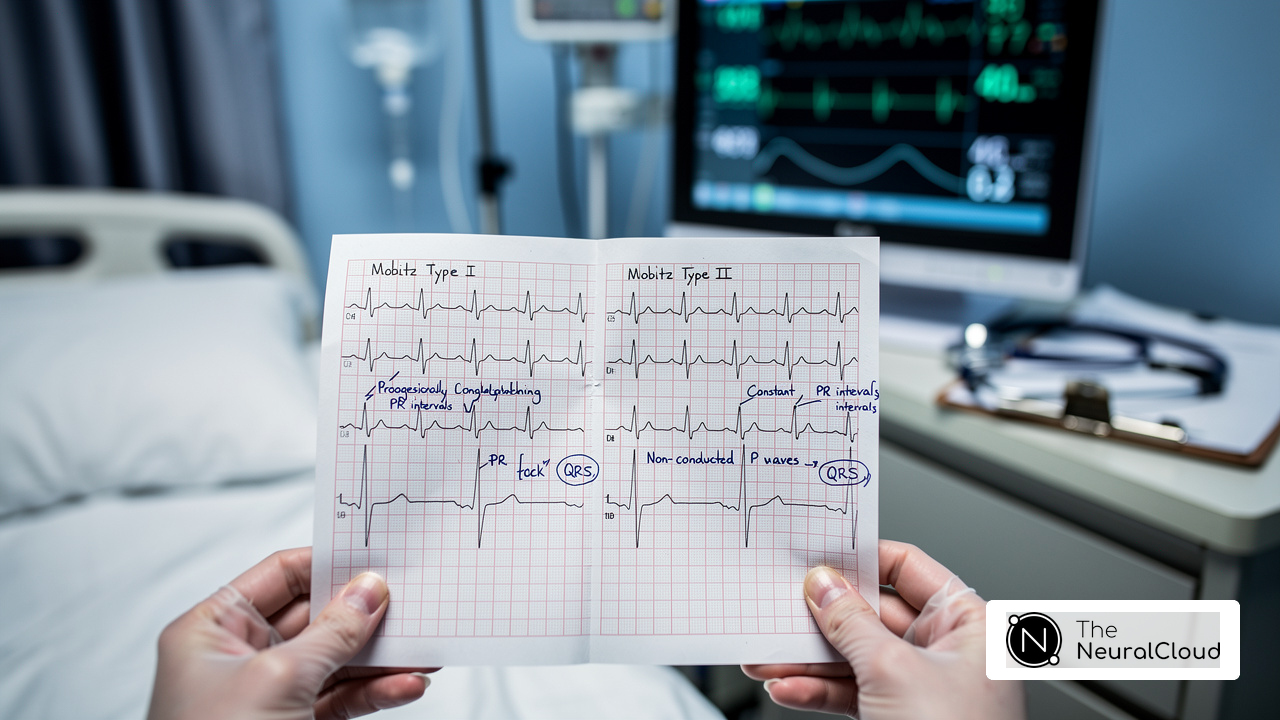
2nd degree type 2 block presents unique challenges for clinicians, particularly due to its potential for progression to more severe heart block forms. This arrhythmia shows a failure of conduction in the His-Purkinje system, often linked to structural damage in the heart's conduction pathways. Unlike Classification I, where the PR interval progressively lengthens before a dropped beat, Classification II maintains a stable PR interval. This stability can make it more dangerous, as it may lead to complete cardiac block. Clinicians must recognize this distinction, as it helps assess the risk of progression and informs management strategies.
Recent studies indicate that second-degree block has a higher risk of complications, such as syncope and sudden cardiac arrest. This necessitates careful monitoring and timely intervention. In Canada, the occurrence of second-degree AV block, particularly the second variant, is reported to be around 0.003%. Ongoing research aims to enhance diagnostic precision and treatment guidelines. Experts emphasize the importance of recognizing the clinical implications of 2nd degree type 2 block, particularly in patients with underlying structural heart disease, where the risk of progression is significantly increased.
Treatment protocols often require the insertion of a permanent pacemaker for symptomatic individuals or those at high risk of progression, particularly in cases of 2nd degree type 2 block. Additionally, addressing reversible causes of nodal block, such as medication adjustments and electrolyte imbalances, is essential for comprehensive care management. Leveraging advanced platforms like MaxYield™ from Neural Cloud Solutions Inc. can significantly enhance the analysis of ECG data in these cases. MaxYield™ uses advanced noise filtering and wave recognition techniques, allowing for the identification and labeling of critical data even in recordings with high levels of noise and artifact.
This capability is particularly beneficial in salvaging previously obscured sections of lengthy Holter, 1-Lead, and patch monitor recordings, thus improving diagnostic accuracy. MaxYield™ provides beat-by-beat evaluation, producing an analysis of 200,000 heartbeats in under 5 minutes, making it an essential tool for clinicians overseeing individuals with Mobitz II block. As noted by experts such as Dr. Alan Rabinowitz and Dr. Brett Heilbron, MaxYield™ rivals human interpretation in precision, enhancing the overall quality of cardiac care. Recognizing the nuances of second-degree AV block is vital for improving patient outcomes in cardiac care.

Outline Diagnostic Procedures for 2nd Degree Type 2 Block
Diagnosing 2nd Degree Type 2 Block presents several challenges that require a systematic approach to ensure accurate identification and management:
- Electrocardiogram (ECG): The primary diagnostic tool, an ECG reveals characteristic patterns of non-conducted P waves. Clinicians should identify a consistent PR interval with sudden drops of QRS complexes, which are indicative of Mobitz Type II. By integrating MaxYield™, healthcare professionals can use advanced noise filtering and clear wave recognition. This enhances the accuracy of ECG readings, even in difficult conditions.
- Patient History: A comprehensive history is essential, including previous cardiac events, medication use, and symptoms such as syncope or dizziness. This information helps in assessing the risk factors and potential underlying causes.
- Physical Examination: Evaluating the individual for signs of hemodynamic instability, such as low blood pressure or altered mental status, is crucial. These signs can dictate the urgency of intervention and management strategies.
- Additional Testing: Depending on the clinical scenario, further tests like echocardiography or electrophysiological studies may be necessary to assess underlying structural cardiovascular disease or conduction system abnormalities. These tests offer valuable insights into the individual's condition and guide treatment decisions.
Recent studies suggest that individuals with 2nd degree type 2 block are at an increased risk of advancing to complete block, requiring close observation and prompt intervention. In Canada, the use of ECG for diagnosing arrhythmias has become increasingly prevalent, with healthcare professionals emphasizing the importance of routine ECGs in identifying potential heart block cases. Moreover, expert views emphasize the necessity for an interprofessional strategy in managing these individuals, ensuring that cardiologists, nurses, and other healthcare providers work together efficiently to enhance outcomes.
These diagnostic steps are essential for confirming Mobitz II and determining the best course of action, which ultimately boosts patient care and safety. Furthermore, MaxYield™ is awaiting FDA Class II SaMD approval, ensuring adherence to regulatory standards, and Insight360 converts MaxYield’s clean ECG data into interactive dashboards, offering a comprehensive view of the individual's condition.

Explore Treatment Strategies for 2nd Degree Type 2 Block
Treating 2nd degree type 2 block presents unique challenges that require a multifaceted approach to ensure optimal patient outcomes. Critical strategies for treatment include:
- Prompt Management: For symptomatic individuals, transcutaneous pacing is frequently initiated to stabilize cardiac rhythm. Atropine may be administered to temporarily elevate pulse rate; however, its effectiveness can vary, necessitating careful evaluation of each individual's condition.
- Given the significant risk of progression to complete cardiac block, most individuals with 2nd degree type 2 block will need a permanent pacemaker. This device keeps a close watch on heart rhythm, helping to maintain proper blood flow and avoid serious complications. The ACC/AHA/HRS guidelines stress that prompt intervention is essential, as research indicates a 36% decrease in the mortality rate for individuals receiving resynchronization therapy compared to guideline-directed medical therapy.
- Addressing Underlying Causes: Identifying and managing reversible causes of the block is crucial. This may involve adjusting medications known to contribute to AV block or treating electrolyte imbalances that could worsen the condition. Expert opinions suggest that a thorough evaluation of these factors can significantly enhance outcomes for individuals.
- Monitoring: Continuous observation in a hospital setting is recommended until the individual is stable. This ensures that any changes in heart rhythm can be promptly addressed, and appropriate follow-up care can be arranged before discharge. Working together, healthcare professionals like cardiologists and nurses play a vital role in providing comprehensive care, as recent studies have shown.
Incorporating Neural Cloud Solutions Inc.'s MaxYield platform can further enhance these strategies by automating ECG labeling and data extraction, significantly reducing operational costs and improving analysis efficiency. The AI-powered algorithms of MaxYield ensure clean signals, which help in accurately interpreting ECG data, thus addressing challenges such as physiological variability and signal artifacts. This integration not only boosts productivity but also enhances patient safety, particularly in the context of Canadian healthcare, where timely intervention can significantly impact patient outcomes. Furthermore, MaxYield is currently pending FDA Class II SaMD clearance, ensuring compliance with regulatory standards, which adds to its credibility in clinical settings. By integrating advanced technologies like MaxYield, healthcare professionals can significantly improve the management of this condition, ultimately leading to better patient care and outcomes.

Emphasize Patient Education and Monitoring
Effectively managing 2nd degree type 2 block hinges on comprehensive patient education, particularly regarding this specific type of condition. Key components include:
- Understanding the Condition: Patients must be informed about type II heart block, including its risks and the necessity of adhering to treatment plans. This understanding can significantly influence their engagement in their own care.
- Recognizing Symptoms: Teaching patients to identify symptoms such as dizziness, syncope, or palpitations is crucial for timely medical intervention. If left untreated, a 2nd degree type 2 block can lead to serious consequences, such as sudden cardiac arrest.
- Lifestyle Modifications: Encouraging heart-healthy lifestyle changes such as a balanced diet, regular exercise, and strict medication adherence can enhance overall cardiovascular health and mitigate risks associated with Mobitz II. Research shows that individuals who adopt these changes report improved health outcomes.
- Regular Follow-Up: Patients should be informed about the importance of consistent follow-up appointments to monitor their condition and make necessary adjustments to their treatment plans. Lifelong follow-up is crucial for all individuals with a 2nd degree type 2 block to ensure ongoing management and prevent complications.
In Canada, tailored educational strategies for Mobitz II arrhythmia have proven effective, emphasizing the need for healthcare providers to build strong relationships with patients. By prioritizing education and consistent follow-up, patients can significantly improve their health outcomes and manage their condition more effectively.

Conclusion
The complexities of managing 2nd degree type 2 block demand careful attention from healthcare professionals. This arrhythmia, characterized by a stable PR interval with intermittent dropped beats, poses significant risks, including progression to complete heart block. Healthcare professionals need to stay alert when diagnosing and treating this condition, utilizing advanced tools like MaxYield™ from Neural Cloud Solutions Inc. to enhance diagnostic accuracy and patient management.
This article outlines essential diagnostic procedures, treatment strategies, and the importance of patient education. Key diagnostic methods include:
- ECG analysis
- Patient history
- Physical examinations
Treatment often necessitates the use of permanent pacemakers and addressing reversible causes. Furthermore, empowering patients through education about their condition, recognizing symptoms, and promoting lifestyle changes is vital for effective management.
By integrating advanced technologies with a comprehensive patient care approach, we can significantly improve the management of 2nd degree type 2 block. By prioritizing timely interventions and fostering strong patient-provider relationships, healthcare professionals can ensure better health outcomes and reduce the risks associated with this serious cardiac condition.
Frequently Asked Questions
What is 2nd degree type 2 block?
2nd degree type 2 block is an arrhythmia characterized by a failure of conduction in the His-Purkinje system, often linked to structural damage in the heart's conduction pathways. It maintains a stable PR interval, which can make it more dangerous as it may lead to complete cardiac block.
How does 2nd degree type 2 block differ from 2nd degree type 1 block?
Unlike 2nd degree type 1 block, where the PR interval progressively lengthens before a dropped beat, 2nd degree type 2 block maintains a stable PR interval. This distinction is crucial for assessing the risk of progression to more severe heart block forms.
What are the risks associated with 2nd degree type 2 block?
Recent studies indicate that 2nd degree type 2 block has a higher risk of complications, such as syncope and sudden cardiac arrest, necessitating careful monitoring and timely intervention.
What is the prevalence of 2nd degree type 2 block in Canada?
The occurrence of second-degree AV block, particularly the second variant, is reported to be around 0.003% in Canada.
What treatment options are available for 2nd degree type 2 block?
Treatment often requires the insertion of a permanent pacemaker for symptomatic individuals or those at high risk of progression. Additionally, addressing reversible causes of nodal block, such as medication adjustments and electrolyte imbalances, is essential for comprehensive care management.
How can advanced platforms like MaxYield™ assist in managing 2nd degree type 2 block?
MaxYield™ from Neural Cloud Solutions Inc. enhances the analysis of ECG data by using advanced noise filtering and wave recognition techniques, allowing for the identification and labeling of critical data even in recordings with high levels of noise and artifact. It provides beat-by-beat evaluation, producing an analysis of 200,000 heartbeats in under 5 minutes.
Why is recognizing the nuances of 2nd degree type 2 block important for patient outcomes?
Recognizing the clinical implications of 2nd degree type 2 block is vital for improving patient outcomes in cardiac care, especially in patients with underlying structural heart disease, where the risk of progression is significantly increased.
List of Sources
- Clarify the Concept of 2nd Degree Type 2 Block
- Second-Degree Atrioventricular Block: Practice Essentials, Background, Pathophysiology (https://emedicine.medscape.com/article/161919-overview)
- Mobitz Type II: What Is It, Diagnosis, Treatment, and More | Osmosis (https://osmosis.org/answers/mobitz-type-II)
- Mobitz type II second-degree atrioventricular block: a commonly overdiagnosed and misinterpreted arrhythmia - PMC (https://pmc.ncbi.nlm.nih.gov/articles/PMC11390567)
- Mobitz II Second-Degree Heart Block During Total Hip Arthroplasty: ACase Report (https://sciencedirect.com/science/article/pii/S2405844024035175)
- Outline Diagnostic Procedures for 2nd Degree Type 2 Block
- Second-Degree Atrioventricular Block - StatPearls - NCBI Bookshelf (https://ncbi.nlm.nih.gov/books/NBK482359)
- Atrioventricular (AV) Block - The Cardiology Advisor (https://thecardiologyadvisor.com/ddi/av-block-first-second-third-degree)
- Frontiers | Mobitz type II second-degree atrioventricular block: a commonly overdiagnosed and misinterpreted arrhythmia (https://frontiersin.org/journals/cardiovascular-medicine/articles/10.3389/fcvm.2024.1450705/full)
- Atrioventricular Blocks – First, Second and Third Degree : Emergency Care BC (https://emergencycarebc.ca/clinical_resource/clinical-summary/atrioventricular-blocks-first-second-and-third-degree)
- Mobitz Type 2 Heart Block Is Frequently Misdiagnosed, and the Consequences Are Serious | Instalab (https://instalab.com/answers/mobitz-type-2?srsltid=AU7gw4UUWdYv_JA5PEoUhn41_QIzIbKoALdmJ02RiMuoh-zmNZqRVuRU)
- Explore Treatment Strategies for 2nd Degree Type 2 Block
- Second-Degree Atrioventricular Block - StatPearls - NCBI Bookshelf (https://ncbi.nlm.nih.gov/books/NBK482359)
- Heart Rhythm 2024 Spotlights New Developments in Cardiac Implantable Electronic Devices and Other Treatments - HRS (https://hrsonline.org/news/hr24-spotlights-new-developments-cieds)
- Pacemaker Indications - StatPearls - NCBI Bookshelf (https://ncbi.nlm.nih.gov/books/NBK507823)
- Permanent Pacemaker Implantation ~ Stat! Cardiologist (https://statcardiologist.com/permanent-pacemaker-implantation)
- Emphasize Patient Education and Monitoring
- Second-Degree Atrioventricular Block: Practice Essentials, Background, Pathophysiology (https://emedicine.medscape.com/article/161919-overview)
- Mobitz Type II: What Is It, Diagnosis, Treatment, and More | Osmosis (https://osmosis.org/answers/mobitz-type-II)
- Second-Degree Atrioventricular Block - StatPearls - NCBI Bookshelf (https://ncbi.nlm.nih.gov/books/NBK482359)
- Do You Know the Symptoms of Heart Block? (https://my.clevelandclinic.org/health/diseases/17056-heart-block)
- Understanding Mobitz Type 2 Heart Block: Symptoms and Care Strategies | amavita Heart and Vascular Health® (https://amavita.health/blog/understanding-mobitz-type-2-heart-block-symptoms-and-care-strategies)