Introduction
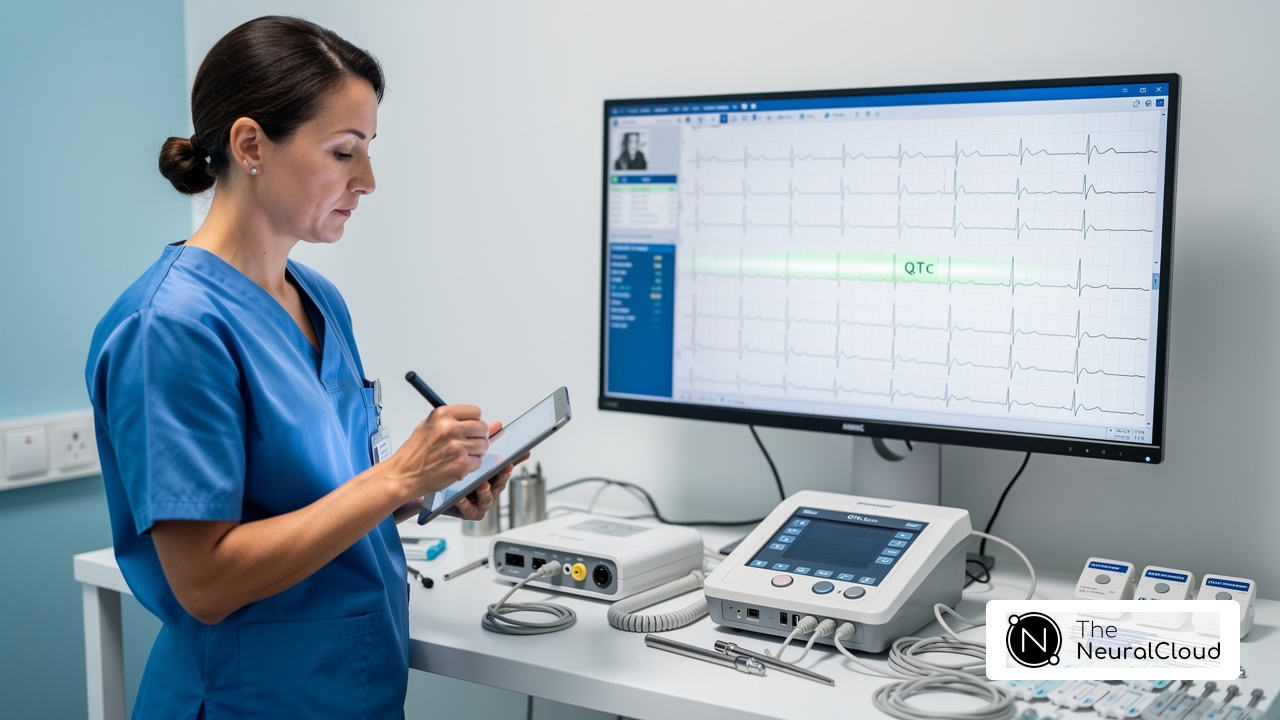
Interpreting ECG strips for atrial flutter can be a daunting task for healthcare professionals. Atrial flutter features distinct 'sawtooth' wave patterns, which can be mistaken for other conditions without careful analysis.
Let’s explore the essential steps for accurately interpreting atrial flutter on ECG strips, highlighting key features and common pitfalls to avoid.
So, how can healthcare professionals ensure precise diagnoses in the complex world of ECG analysis?
Understand Atrial Flutter Characteristics
Atrial tachycardia presents significant challenges in ECG analysis due to its rapid depolarization rates and distinctive wave patterns. This arrhythmia is characterized by 'sawtooth' wave patterns that are prominently visible in leads II, III, and aVF. These oscillating waves, known as F-waves, create a unique pattern that can easily be confused with fibrillation if not examined carefully.
Distinguishing atrial tachycardia from other arrhythmias can be challenging due to overlapping characteristics. Additionally, recognizing varying conduction ratios, such as 2:1 or 4:1, is essential as they can significantly impact ECG interpretation.
Integrating Neural Cloud Solutions' platform allows health tech developers to significantly improve their diagnostic capabilities. This system utilizes sophisticated noise reduction and wave detection to convert noisy recordings into clear insights, enabling precise identification of oscillating waves and other essential features.
Understanding these characteristics and the system's capabilities enhances the precision of ECG analyses, leading to more confident clinical decision-making.

Identify Key ECG Features of Atrial Flutter
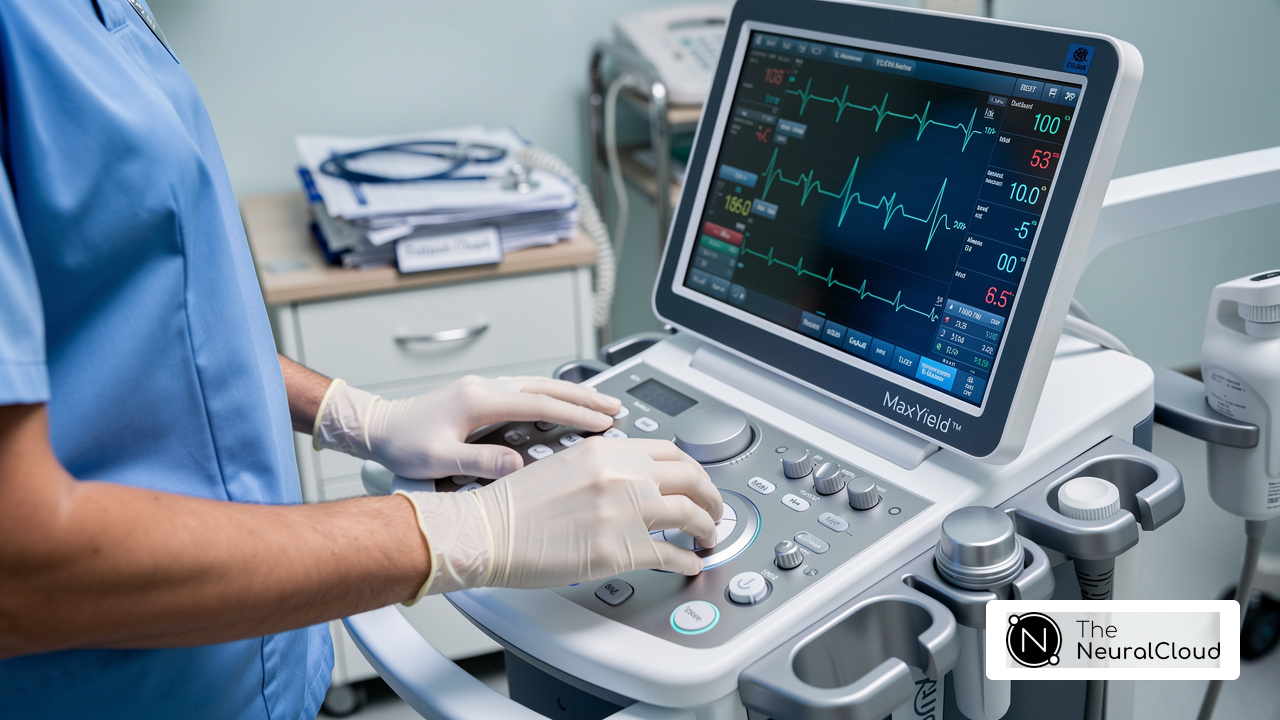
Diagnosing atrial flutter on a flutter ECG strip presents unique challenges that require careful analysis. To accurately identify atrial flutter, focus on the following key features, leveraging the advanced capabilities of MaxYield™ for enhanced analysis:
- Flutter Waves: Look for the characteristic sawtooth pattern of F-waves, particularly in the inferior leads (II, III, aVF). These waves, appearing between the QRS complexes, are crucial for diagnosis. Their existence is essential for differentiating heart rhythm disorders from other arrhythmias. As Dr. Steven Lome points out, the sawtooth pattern is a defining characteristic that distinguishes the flutter of the heart's upper chambers from its fibrillation. MaxYield™ can help automate the identification of these patterns, transforming noisy recordings into clear insights.
- Atrial Rate: Measure the heart rate in the upper chambers, which typically ranges from 240 to 340 beats per minute, with an average of about 300 bpm. This rapid rate defines heart flutter and is crucial for accurate diagnosis. The system delivers beat-by-beat analysis, allowing for quick assessment of heart rates across numerous heartbeats, analyzing up to 200,000 beats in less than 5 minutes.
- Ventricular Response: Assess the ventricular rate, which may vary depending on conduction through the AV node. A common observation is a 2:1 block, resulting in a ventricular rate of approximately 150 bpm. Understanding this relationship is key to managing the condition effectively, as it is frequently observed in clinical practice. The system supports this analysis by providing detailed time-series intervals for each heartbeat.
- Regularity: Note the regularity of the rhythm; atrial flutter usually presents with a regular ventricular response, contrasting with atrial fibrillation, which is characterized by an irregular rhythm. This distinction is critical for treatment planning. The smooth waveforms produced by the system can assist in clearly visualizing these differences.
- QRS Complex: Ensure that the QRS complexes are narrow unless there is a bundle branch block or other conduction abnormality. Looking at the QRS complex shape can give you more clues about the heart's condition. The system enhances diagnostic yield by mapping ECG signals through noise, allowing for precise evaluation of QRS morphology, as well as P-wave and T-wave analysis.
By assessing these characteristics with an advanced tool, you can confidently identify irregular heartbeats on a flutter ECG strip. This enhances your diagnostic precision and improves patient outcomes. For example, effective diagnoses have been achieved by identifying the unique sawtooth pattern and linking it with the patient's symptoms, all enabled by the sophisticated analysis features of the system. With MaxYield™, you can elevate your diagnostic capabilities, ensuring better outcomes for your patients.

Avoid Common Interpretation Mistakes
Misdiagnosing atrial flutter can have serious implications for patient care, making it essential to recognize common pitfalls in the interpretation of a flutter ECG strip. Here are several mistakes to avoid:
- Misidentifying Flutter Waves: Confusing F-waves with P-waves is a frequent error. F-waves are typically more pronounced and exhibit a distinct sawtooth pattern, particularly visible in leads II, III, and aVF. With Neural Cloud Solutions' platform, you can better identify these waves, even when recordings are noisy or have artifacts.
- Ignoring Conduction Ratios: Failing to assess the conduction ratio can mislead the interpretation of the ventricular rate. It’s crucial to determine whether the conduction is 2:1, 3:1, or variable, as this significantly affects the clinical picture. This tool aids in accurately determining these ratios by filtering out noise that may obscure the data.
- Overlooking Patient History: Neglecting to consider the patient's clinical history and symptoms can result in misdiagnosis. Always correlate ECG findings with the patient's overall clinical presentation to ensure accurate assessment.
- Relying Solely on Automated Interpretations: Automated ECG interpretation software can produce errors, particularly in complex cases. Manual verification of findings is essential to avoid misinterpretation. The system addresses this by evolving its algorithms with each use, improving accuracy and efficiency over time, thus reducing reliance on potentially flawed automated outputs.
- Neglecting Lead Placement: If lead placement is off, it can distort the ECG reading and create artifacts that look like arrhythmias. Correct placement according to anatomical landmarks is vital for accurate readings. For instance, V1 and V2 leads should be positioned at the 4th intercostal space, right sternal border, to ensure accurate electrical vectors of cardiac activity.
Statistics indicate that misdiagnosis of atrial flutter, as shown on a flutter ECG strip, can delay necessary treatments, such as anticoagulation therapy for atrial fibrillation, which is often confused with flutter. A study found that 13.2 percent of computer-based rhythm statements required physician revision, underscoring the importance of human expertise in ECG interpretation. By addressing these common pitfalls, healthcare professionals can significantly improve patient care and outcomes.

Leverage Technology for Enhanced ECG Analysis
In the evolving landscape of cardiac care, ECG analysis faces numerous challenges that advanced technologies aim to address:
- AI-Powered ECG Analysis: Neural Cloud Solutions offers advanced technology that employs sophisticated AI algorithms to automate the identification of key ECG features. The software quickly labels the onsets and offsets of P, QRS, and T waves, along with time-series intervals. This significantly cuts down the time needed for manual analysis and boosts diagnostic accuracy. Studies indicate that AI-based ECG interpretation can achieve a sensitivity of 77% and a specificity of 99% in detecting occlusive myocardial infarction, underscoring its effectiveness.
- ECG Interpretation Software: Explore software tools that provide real-time analysis and feedback on ECG readings. This system maps ECG signals through noise, isolating and labeling key features in every heartbeat, which enhances overall interpretation quality. Yet, integrating these AI solutions into clinical workflows isn't without its hurdles, and addressing these is crucial for unlocking their full potential.
- Wearable ECG Devices: Incorporate wearable technology that continuously monitors heart rhythms and provides alerts for abnormal findings. This approach enhances patient monitoring and facilitates timely interventions, ultimately improving patient outcomes. The integration of such devices is crucial for proactive cardiac care.
- Training Simulations: Engage in simulation-based training programs that utilize real ECG data, allowing you to practice interpretation skills in a controlled environment. This hands-on experience is invaluable for developing proficiency and confidence in ECG analysis.
- Continuous Learning Platforms: Stay informed about the latest advancements in ECG interpretation through online courses and webinars that focus on emerging technologies and methodologies. Continuous education is key to maintaining expertise in this rapidly evolving field. Notably, the upcoming ESC Congress in August 2026 will highlight the potential of AI in managing cardiovascular disease, making it an excellent opportunity for learning and integration of new insights into practice.
By integrating these technologies, especially the advanced features of MaxYield™, you can really boost your diagnostic accuracy and lead to better patient outcomes.

Conclusion
Accurate interpretation of a Flutter ECG strip is essential for effective patient management and diagnosis. By understanding the unique characteristics of atrial flutter and leveraging advanced technology, healthcare professionals can significantly enhance their diagnostic capabilities and improve patient outcomes.
Key points discussed include:
- The identification of flutter waves
- Assessment of atrial and ventricular rates
- The importance of recognizing common interpretation mistakes
Misdiagnosis can lead to inappropriate treatment and poor patient outcomes. Using innovative tools like Neural Cloud Solutions and MaxYield™ helps streamline analysis, providing clearer insights and lowering the chances of misdiagnosis. Emphasizing the need for careful analysis and correlation with patient history further ensures a comprehensive approach to ECG interpretation.
The importance of accurate ECG interpretation is clear; it directly influences how patients are managed. By prioritizing advanced technologies and ongoing education, healthcare professionals can transform patient care for those with atrial flutter.
Frequently Asked Questions
What is atrial flutter and how is it characterized in ECG analysis?
Atrial flutter is a type of atrial tachycardia characterized by rapid depolarization rates and distinctive 'sawtooth' wave patterns known as F-waves, which are prominently visible in leads II, III, and aVF.
Why is atrial flutter difficult to distinguish from other arrhythmias?
Atrial flutter can be challenging to distinguish from other arrhythmias due to overlapping characteristics, which may lead to confusion, especially with conditions like fibrillation.
What are the different conduction ratios that are important in ECG interpretation?
Important conduction ratios in ECG interpretation include 2:1 and 4:1 ratios, as they can significantly affect the analysis and understanding of the arrhythmia.
How can Neural Cloud Solutions' platform improve diagnostic capabilities for atrial flutter?
Neural Cloud Solutions' platform enhances diagnostic capabilities by utilizing sophisticated noise reduction and wave detection technologies, which help convert noisy recordings into clear insights, facilitating precise identification of oscillating waves and other critical features.
What is the benefit of understanding atrial flutter characteristics and the capabilities of diagnostic systems?
Understanding atrial flutter characteristics and the capabilities of diagnostic systems improves the precision of ECG analyses, leading to more confident clinical decision-making.
List of Sources
- Understand Atrial Flutter Characteristics
- openpr.com (https://openpr.com/news/4461504/emerging-growth-patterns-driving-expansion-in-the-atrial)
- Heart Rhythm 2025 Features Advances in AI that Enhance Safety of Atrial Fibrillation Treatment - HRS (https://hrsonline.org/news/hr2025-features-advanced-ai-safety-afib-treatment)
- academic.oup.com (https://academic.oup.com/europace/article/28/4/euag036/8505679)
- The biggest cardiac tech news out of the 2026 AF Symposium (https://massdevice.com/biggest-cardiac-news-2026-af-symposium)
- Boston EP Party: Medtech companies share new electrophysiology data at AF Symposium 2026 (https://cardiovascularbusiness.com/topics/cardiac-imaging/ep-lab/boston-ep-party-medtech-companies-share-new-electrophysiology-data-af-symposium-2026)
- Identify Key ECG Features of Atrial Flutter
- theneuralcloud.com (https://theneuralcloud.com/post/what-atrial-flutter-looks-like-on-ecg-key-characteristics-explained)
- nyp.org (https://nyp.org/heart/arrhythmias/atrial-flutter/treatment)
- yourhealthmagazine.net (https://yourhealthmagazine.net/article/heart-disease-stroke-and-diabetes/recognizing-atrial-flutter-on-ekg-key-signs-and-insights)
- healio.com (https://healio.com/cardiology/learn-the-heart/ecg-review/ecg-topic-reviews-and-criteria/atrial-flutter-review)
- bestpractice.bmj.com (https://bestpractice.bmj.com/topics/en-us/183)
- Avoid Common Interpretation Mistakes
- clinicaladvisor.com (https://clinicaladvisor.com/features/whats-wrong-with-computer-generated-ecg-interpretation)
- Computerized Electrocardiogram Rhythm Errors Common, NewYork-Presbyterian/Weill Cornell Study Finds | NYP (https://nyp.org/news/computerized-electrocardiogram-rhythm-errors-common-nyp)
- 10 essential tips to detect atrial flutter with 2:1 conduction on ECG (https://ems1.com/medical-monitoring/articles/10-tips-to-never-miss-atrial-flutter-with-21-conduction-OfLh1uxFYefd1iO9)
- tentabs.in (https://tentabs.in/blogs/news/common-ecg-lead-placement-mistakes-that-affects-diagnosis)
- products-unlimited.com (https://products-unlimited.com/common-mistakes-in-ecg-interpretation-and-how-to-avoid-them)
- Leverage Technology for Enhanced ECG Analysis
- gehealthcare.com (https://gehealthcare.com/en-us/insights/article/ai-and-ecg-interpretation-insights-and-trends-for-todays-cardiologists?srsltid=AfmBOood_aVW4-h1ysIV4hgYB0nYfahI2ZvUDeaCqJGpMqovPKtdX2mx)
- AI Turns ECGs into Powerful Heart Disease Screening Tool (https://insideprecisionmedicine.com/topics/informatics/ai-turns-ecgs-into-powerful-heart-disease-screening-tool)
- AI-based ECG interpretation outperforms standard diagnosis of occlusive myocardial infarction (https://news-medical.net/news/20260323/AI-based-ECG-interpretation-outperforms-standard-diagnosis-of-occlusive-myocardial-infarction.aspx)
- AI-Powered ECG Analysis Offers Promising Path for Early Detection of Chronic Obstructive Pulmonary Disease, Say Mount Sinai Researchers (https://mountsinai.org/about/newsroom/2026/ai-powered-ecg-analysis-offers-promising-path-for-early-detection-of-chronic-obstructive-pulmonary-disease-say-mount-sinai-researchers)