Introduction
In the high-stakes world of cardiac care, timely and accurate ECG analysis is crucial for diagnosing Acute Myocardial Infarction (AMI). AMI remains a leading cause of morbidity and mortality, highlighting the need for precise diagnosis. Recognizing key ECG changes, such as ST-segment elevation and T-wave inversions, can be lifesaving.
Yet, as we embrace advanced technologies like AI and machine learning in ECG interpretation, we must ask ourselves:
- Do these innovations genuinely enhance diagnostic accuracy and patient outcomes,
- or do they risk overshadowing the invaluable expertise of clinicians?
Let’s explore the critical ECG changes in AMI and how technology is reshaping cardiac care for the better.
Define Acute Myocardial Infarction and Its ECG Significance
Acute Myocardial Infarction (AMI) poses significant challenges in timely diagnosis and treatment, making the analysis of acute MI on ECG critical. This condition typically presents with sudden chest pain. Patients may also experience shortness of breath, sweating, and nausea. AMI generates distinct electrical variations in the heart's activity, which can be identified as acute MI on ECG. Identifying these alterations is essential for prompt intervention, as early diagnosis can greatly improve outcomes for individuals.
Key ECG changes associated with AMI include:
- ST-segment elevation
- T-wave inversions
- Pathological Q waves
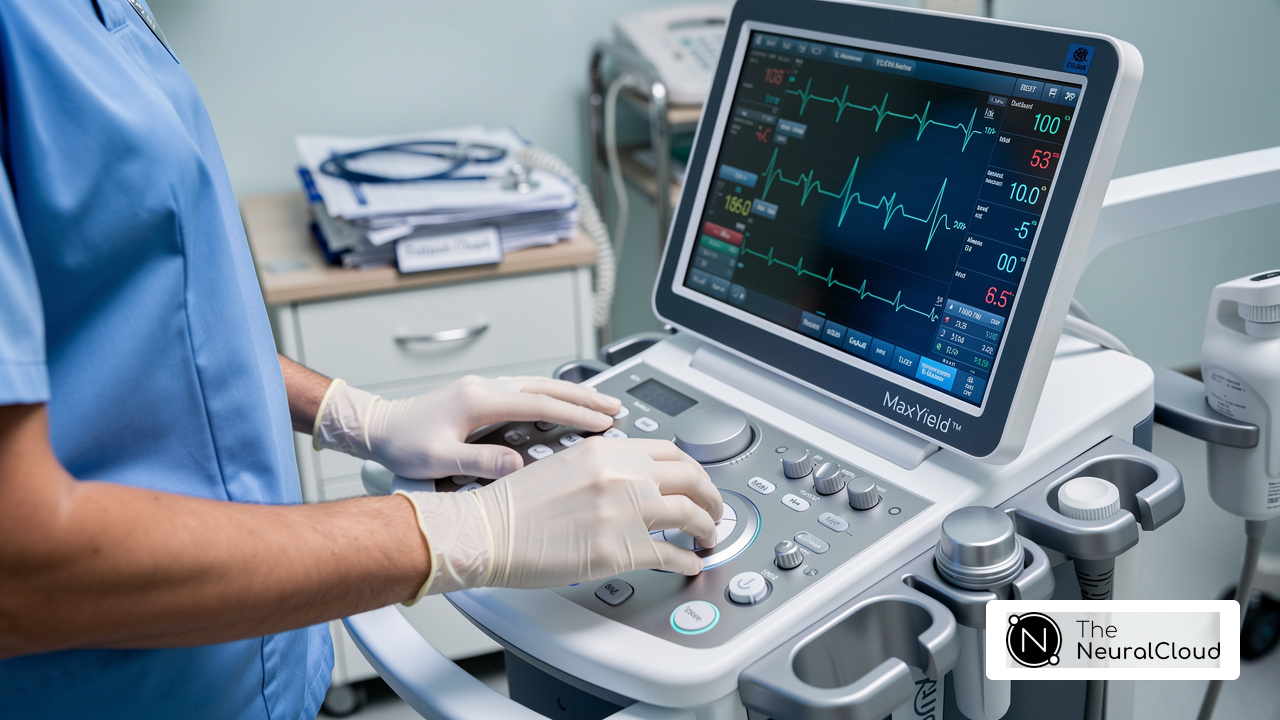
Each of these changes indicates varying degrees of myocardial damage. With over 20 million individuals in the U.S. at risk of a heart attack, the importance of precise ECG interpretation cannot be emphasized enough. Recent studies have shown that AI-based ECG interpretation, such as that provided by Neural Cloud Solutions' MaxYield™, can improve the accuracy of diagnosing ST-elevation myocardial infarction (STEMI). One study revealed that an AI model correctly identified 553 confirmed STEMI cases compared to 427 detected by traditional methods, reducing false positives to about 8% from nearly 42%. This underscores the potential of advanced ECG technologies to enable timely and precise diagnoses, ultimately enhancing care and minimizing erroneous complaint tickets.
Furthermore, the significance of early diagnosis of acute MI on ECG in AMI outcomes cannot be overstated. Delays in treatment can lead to dire consequences for patients. As noted by experts, the best outcomes occur when technology and clinicians collaborate, combining advanced tools with expert medical judgment. Integrating AI-driven ECG interpretation through MaxYield™ into clinical practice streamlines emergency care and enhances overall healthcare delivery by ensuring that patients who truly need intervention receive it without delay, thereby transforming remote patient monitoring and enhancing clinical decision-making.

Identify Key ECG Changes in Acute Myocardial Infarction
In the fast-paced environment of emergency medicine, timely identification of key ECG changes in acute MI on ECG is vital for effective patient care. Key ECG changes in AMI include:
- ST-Segment Elevation: This is the hallmark indicator of ST-Elevation Myocardial Infarction (STEMI), characterized by an elevation of the ST segment in two or more contiguous leads, signaling transmural ischemia. With MaxYield™, identifying ST-segment elevation becomes quicker and more accurate, ensuring that even the slightest variations are captured.
- T-Wave Changes: In the early stages of acute MI on ECG, T waves may become hyperacute, appearing tall and peaked. As the condition progresses, T waves typically invert, which is indicative of acute MI on ECG and myocardial ischemia. Recent studies have indicated that almost 80% of patients needing urgent interventions display new T-wave inversions, which are indicative of acute MI on ECG, highlighting the significance of identifying these variations in clinical practice. MaxYield™'s automated labeling features enable swift recognition of these modifications, aiding prompt clinical decisions.
- Pathological Q Waves: These waves develop over time and signify necrosis of myocardial tissue, often observed in cases of acute MI on ECG. The presence of Q waves in specific leads can help localize the infarction area, providing critical information for treatment decisions related to acute MI on ECG. With MaxYield™, clinicians can efficiently analyze large datasets to pinpoint these critical markers.
- Mutual Adjustments: These modifications may manifest in leads opposite the infarction site, offering additional diagnostic insights that can aid in confirming the diagnosis. MaxYield™ aids in recognizing these reciprocal adjustments through its advanced noise filtering, ensuring clarity in the analysis.
- QT Interval Variations: Lengthening of the QT interval may arise from ischemic alterations, which can indicate acute MI on ECG, affecting the heart's electrical stability and heightening the risk of arrhythmias. MaxYield™ continuously evolves its algorithms to improve the accuracy of QT interval assessments, enhancing diagnostic yield.
Quickly identifying these modifications is crucial; delays can hinder timely treatment like reperfusion therapy, which is essential for preserving myocardial tissue and improving patient outcomes. By incorporating MaxYield™ into clinical workflows, health tech developers can improve ECG analysis efficiency, examining 200,000 heartbeats in under 5 minutes, and facilitate better care. Integrating MaxYield™ into clinical practice not only streamlines ECG analysis but also empowers healthcare professionals to make informed decisions that can save lives.

Utilize Advanced Technologies for Enhanced ECG Analysis
Traditional ECG analysis faces significant challenges, particularly in accurately diagnosing acute MI on ECG. Several key advancements are transforming ECG analysis:
- Artificial Intelligence (AI): AI algorithms quickly sift through ECG data, spotting patterns that human eyes might miss. For instance, AI can detect subtle ST-segment changes and T-wave abnormalities, significantly improving the accuracy of diagnosing acute MI on ECG.
- Machine Learning: Machine learning models trained on extensive datasets can recognize complex ECG patterns linked to various myocardial infarctions, resulting in more precise diagnostics. Recent studies indicate that AI-based ECG interpretation achieved an accuracy rate of 84% in identifying acute MI on ECG, outperforming traditional methods.
- Wearable ECG Devices: Innovations in wearable technology facilitate continuous heart rhythm monitoring, enabling early detection of AMI symptoms. These devices can notify individuals and healthcare providers in real-time about acute MI on ECG, encouraging prompt medical intervention, which is crucial as delays in treatment can triple the risk of death in STEMI cases.
- Cloud-Based ECG Analysis: Platforms like MaxYield allow seamless integration of ECG data from diverse devices, offering a comprehensive view of cardiac health. This technology improves data accessibility and promotes collaborative care among healthcare professionals, streamlining workflows and enhancing outcomes for individuals.
- Visualization Tools: Advanced visualization tools, such as Insight360, empower clinicians to interpret ECG data more effectively by presenting it in customizable formats. This capability simplifies the identification of essential modifications and trends, further enhancing diagnostic accuracy.
By adopting these advanced technologies, healthcare providers can enhance diagnostic accuracy, particularly for identifying acute MI on ECG, and save lives through timely interventions. Embracing these innovations can transform the landscape of cardiac care, ultimately leading to better patient outcomes in AMI cases.

Apply ECG Findings to Clinical Management of Acute Myocardial Infarction
Applying ECG findings effectively is crucial for the clinical management of Acute Myocardial Infarction (AMI), especially since the recognition of acute MI on ECG directly influences patient outcomes. In this context, several critical steps must be followed:
- Prompt Evaluation: Upon identifying ST-segment elevation or other significant changes, prompt evaluation of the individual's clinical status is essential. This includes assessing symptoms, vital signs, and risk factors. In individuals with suspected acute coronary syndrome (ACS), ST elevation on an ECG indicating acute MI suggests a possible blockage in a coronary artery, requiring immediate intervention. The MaxYield™ platform enhances this process by utilizing advanced noise filtering to ensure that critical data is accurately identified, even in recordings with high levels of noise and artifact.
- Reperfusion Therapy: For individuals diagnosed with STEMI, timely reperfusion therapy-like percutaneous coronary intervention (PCI) or thrombolysis-is essential. Delays in this treatment can lead to increased myocardial damage, underscoring the critical need for swift intervention. Recent studies indicate that 93.3% of individuals achieved a door-to-balloon time within 90 minutes, highlighting the importance of rapid action in these cases.
- Monitoring and Follow-Up: Continuous ECG monitoring is vital for spotting any changes in a patient's condition, which helps catch complications like arrhythmias or early signs of acute MI. In fact, 92.0% of all individuals had an ECG acquired within 10 minutes, with lower rates noted in non-chest pain presentations, emphasizing the need for enhanced triage processes. MaxYield™ aids in this by rapidly isolating ECG waves from recordings affected by baseline wander and muscle artifact, ensuring that healthcare providers have access to clear and actionable data.
- Medication management should involve administering suitable medications such as antiplatelets, anticoagulants, and beta-blockers based on ECG findings, particularly in cases of acute MI, to effectively manage the individual's condition. Bringing high-sensitivity cardiac troponin assays into clinical decision-making really boosts how we assess risk and plan treatments.
- Client Education: Instructing individuals about their condition, the importance of ECG results, and lifestyle changes is essential for long-term management and prevention of future cardiac events. Awareness of atypical symptoms, particularly in populations presenting without chest pain, can significantly impact outcomes.
- Collaboration with specialists, such as cardiologists, based on ECG findings can enhance care and ensure comprehensive management of acute MI. The implementation of critical pathways for STEMI management has shown to improve overall treatment efficiency and outcomes.
By effectively applying ECG findings to clinical management, healthcare providers can significantly improve patient outcomes and reduce the risk of complications associated with Acute Myocardial Infarction, leveraging the advanced capabilities of Neural Cloud Solutions' MaxYield™ platform.

Conclusion
Timely diagnosis of Acute Myocardial Infarction (AMI) is crucial, as delays can lead to dire consequences for patients. Accurately interpreting ECG changes linked to AMI, like ST-segment elevation and T-wave inversions, is crucial for healthcare providers. Using advanced technologies such as AI-driven ECG analysis helps clinicians improve diagnostic precision and ensures timely interventions for patients.
Throughout this article, we have highlighted the pivotal role of technology integration in ECG analysis. The advancements in AI and machine learning not only enhance the accuracy of identifying acute MI on ECG but also facilitate quicker decision-making in emergency settings. Wearable ECG devices and cloud-based platforms further improve patient monitoring and management, ensuring that critical data is accessible and actionable. When technology and clinical expertise work together, patient care improves, and the risks of delays decrease.
In conclusion, embracing these innovations in ECG interpretation is not just a technological advancement; it is a transformative approach to cardiac care that can save lives. Healthcare professionals are encouraged to incorporate these advanced tools into their practice, ensuring that every patient experiencing symptoms of AMI receives prompt and effective treatment. Integrating advanced technology in ECG analysis is essential for enhancing patient outcomes and setting new standards in cardiac care.
Frequently Asked Questions
What is Acute Myocardial Infarction (AMI)?
Acute Myocardial Infarction (AMI) is a condition that poses significant challenges in timely diagnosis and treatment, typically presenting with sudden chest pain, shortness of breath, sweating, and nausea.
Why is ECG analysis important for AMI?
The analysis of AMI on ECG is critical because it generates distinct electrical variations in the heart's activity, which can be identified as acute MI. Early diagnosis through ECG can greatly improve outcomes for individuals.
What are the key ECG changes associated with AMI?
Key ECG changes associated with AMI include ST-segment elevation, T-wave inversions, and pathological Q waves, each indicating varying degrees of myocardial damage.
How prevalent is the risk of heart attack in the U.S.?
Over 20 million individuals in the U.S. are at risk of a heart attack, highlighting the importance of precise ECG interpretation.
How can AI improve the diagnosis of AMI on ECG?
AI-based ECG interpretation, such as that provided by Neural Cloud Solutions' MaxYield™, can improve the accuracy of diagnosing ST-elevation myocardial infarction (STEMI). Studies have shown that AI can correctly identify more cases compared to traditional methods while significantly reducing false positives.
What were the findings of the study on AI-based ECG interpretation?
One study revealed that an AI model correctly identified 553 confirmed STEMI cases compared to 427 detected by traditional methods, reducing false positives from nearly 42% to about 8%.
What is the significance of early diagnosis of AMI?
Early diagnosis of acute MI on ECG is crucial as delays in treatment can lead to dire consequences for patients. The best outcomes occur when technology and clinicians collaborate effectively.
How does integrating AI-driven ECG interpretation benefit healthcare delivery?
Integrating AI-driven ECG interpretation through MaxYield™ into clinical practice streamlines emergency care, ensures timely interventions for patients who truly need it, and enhances overall healthcare delivery.
List of Sources
- Define Acute Myocardial Infarction and Its ECG Significance
- icthealth.org (https://icthealth.org/news/ai-ecg-boosts-heart-attack-detection-and-cuts-false-alarms)
- AI outperforms conventional diagnosis for certain types of heart attacks (https://escardio.org/news/press/press-releases/acvc-press)
- New study finds AI model improves heart attack detection (https://health.ucdavis.edu/news/headlines/new-study-finds-ai-model-improves-heart-attack-detection/2025/11)
- finance.yahoo.com (https://finance.yahoo.com/news/heartbeam-announces-first-patient-enrollments-120000934.html)
- AI outperforms conventional diagnosis for certain types of heart attacks (https://medicalxpress.com/news/2026-03-ai-outperforms-conventional-diagnosis-heart.html)
- ndtv.com (https://ndtv.com/health/ai-based-ecg-analysis-shows-higher-accuracy-in-identifying-occlusive-heart-attack-study-finds-11244104)
- Identify Key ECG Changes in Acute Myocardial Infarction
- New Guideline on Acute Coronary Syndromes: Key Takeaways (https://consultqd.clevelandclinic.org/new-guideline-on-acute-coronary-syndromes-key-takeaways-for-cardiologists)
- AI outperforms conventional diagnosis for certain types of heart attacks (https://medicalxpress.com/news/2026-03-ai-outperforms-conventional-diagnosis-heart.html)
- link.springer.com (https://link.springer.com/article/10.1186/s12872-025-05457-2)
- STEMI ECG Criteria: Key Insights into Ischemic ST-Elevation Patterns (https://powerfulmedical.com/blog/stemi-ecg-criteria)
- New guidelines for diagnosis and management of acute coronary… (https://insightplus.mja.com.au/2026/8/new-guidelines-for-diagnosis-and-management-of-acute-coronary-syndromes)
- Utilize Advanced Technologies for Enhanced ECG Analysis
- AI outperforms conventional diagnosis for certain types of heart attacks (https://escardio.org/news/press/press-releases/acvc-press)
- icthealth.org (https://icthealth.org/news/ai-improves-detection-of-hard-to-diagnose-heart-attacks)
- New study finds AI model improves heart attack detection (https://health.ucdavis.edu/news/headlines/new-study-finds-ai-model-improves-heart-attack-detection/2025/11)
- AI-based ECG interpretation outperforms standard diagnosis of occlusive myocardial infarction (https://news-medical.net/news/20260323/AI-based-ECG-interpretation-outperforms-standard-diagnosis-of-occlusive-myocardial-infarction.aspx)
- cdt.amegroups.org (https://cdt.amegroups.org/article/view/152609/html)
- Apply ECG Findings to Clinical Management of Acute Myocardial Infarction
- New guidelines for diagnosis and management of acute coronary… (https://insightplus.mja.com.au/2026/8/new-guidelines-for-diagnosis-and-management-of-acute-coronary-syndromes)
- AI outperforms conventional diagnosis for certain types of heart attacks (https://medicalxpress.com/news/2026-03-ai-outperforms-conventional-diagnosis-heart.html)
- New Guideline on Acute Coronary Syndromes: Key Takeaways (https://consultqd.clevelandclinic.org/new-guideline-on-acute-coronary-syndromes-key-takeaways-for-cardiologists)
- pmc.ncbi.nlm.nih.gov (https://pmc.ncbi.nlm.nih.gov/articles/PMC3990061)