Introduction
Understanding the nuances of acute myocardial infarction (AMI) is crucial for clinicians and developers of ECG analysis tools. Heart attacks continue to be a leading cause of mortality worldwide, making the accurate interpretation of ECG changes vital for improving patient outcomes. This article delves into the essential insights of AMI ECG analysis, particularly how advancements in technology, especially AI, can enhance diagnostic accuracy and treatment strategies.
However, developers face significant challenges in integrating these innovations into their tools. They must ensure that their solutions effectively address the urgent need for timely diagnosis and intervention. By focusing on the features of the MaxYield™ platform, we can explore how it improves ECG analysis and the direct benefits it offers to healthcare professionals.
The MaxYield™ platform provides advanced algorithms that enhance the detection of AMI through precise ECG interpretation. This leads to quicker and more accurate diagnoses, ultimately improving patient care. Furthermore, the platform's user-friendly interface allows healthcare professionals to easily navigate and utilize its features, making it accessible for both technical and non-technical users.
In summary, the integration of AI in ECG analysis not only addresses the challenges faced by developers but also significantly benefits healthcare providers by improving diagnostic accuracy and treatment strategies. As we continue to explore these advancements, it becomes clear that tools like MaxYield™ are essential in responding to the urgent needs of the medical community.
Define Acute Myocardial Infarction and Its Clinical Importance
Acute myocardial infarction ECG analysis reveals that a heart attack occurs when blood flow to a part of the heart is blocked, leading to myocardial ischemia and subsequent tissue death. This condition is often triggered by the rupture of an atherosclerotic plaque, which results in thrombus formation that occludes coronary arteries. Clinically, AMI presents with symptoms such as chest pain, shortness of breath, and diaphoresis. For creators of ECG analysis tools, understanding acute myocardial infarction ECG is crucial, as timely and accurate diagnosis can significantly impact patient outcomes.
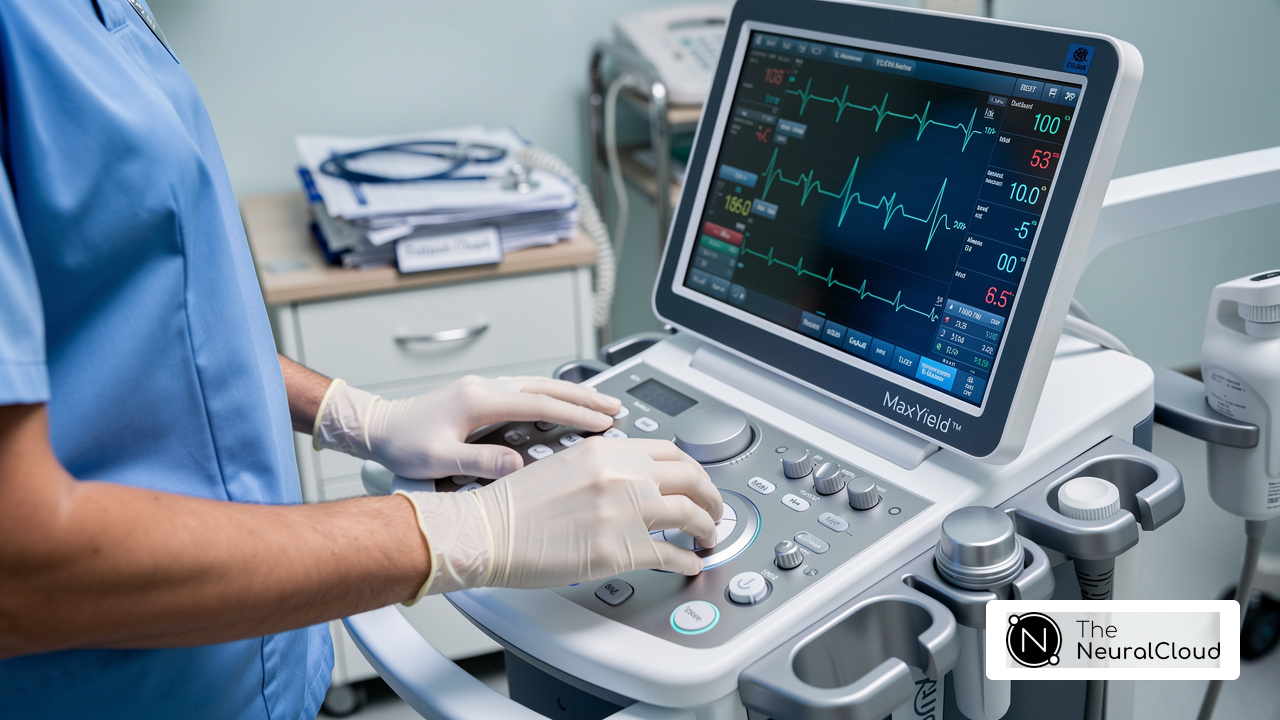
Recent advancements in ECG technology, particularly the integration of artificial intelligence (AI) through platforms like Neural Cloud Solutions' MaxYield™, have shown promise in improving acute myocardial infarction ECG detection. MaxYield™ employs a continuous learning model that evolves with each use, enhancing its accuracy and efficiency over time. This innovative platform analyzes ECG signals amidst noise, isolating and labeling key features in every heartbeat, which is essential for identifying cardiac events. Notably, MaxYield™ can deliver beat-by-beat analysis, processing 200,000 heartbeats in under 5 minutes.
Studies indicate that AI-based ECG platforms, such as MaxYield™, can identify ST-elevation myocardial infarction (STEMI) cases with greater accuracy than traditional methods. For instance, it correctly identified 553 confirmed STEMI cases compared to 427 detected by conventional approaches. The negative predictive value of the AI-based method is an impressive 98%, with only 27 false negatives (2%) and 17 false positives (1%). This improvement in diagnostic accuracy is vital, as timely intervention can drastically reduce mortality rates associated with acute myocardial infarction ECG.
The impact of timely diagnosis on health outcomes cannot be overstated. Delays in treatment for STEMI patients can significantly increase the risk of death, with optimal outcomes arising when technology and clinicians collaborate effectively. AI tools, like those evaluated in research involving over 1,000 individuals, have demonstrated the ability to enhance triage precision, enabling quicker actions and improving survival rates. As emphasized by Bryn Mumma, a UC Davis Health professor, "STEMI is a life-threatening emergency where every minute matters." This underscores the critical nature of swift diagnosis and action. Furthermore, the European Society of Cardiology (ESC) plays a pivotal role in advancing acute cardiovascular care through collaboration among healthcare professionals. This will be highlighted at the upcoming ESC Acute CardioVascular Care 2026 event, where advancements in AI-enabled electrocardiography will be discussed.

Identify Key ECG Changes in Acute Myocardial Infarction
Key ECG changes in acute myocardial infarction ECG are crucial for accurate diagnosis and timely intervention.
ST-Segment Elevation is the hallmark of ST-Elevation Myocardial Infarction (STEMI), indicating transmural ischemia. This change is characterized by an elevation of the ST segment in two or more adjacent leads, which is vital for identifying patients who require prompt treatment.
T-Wave Changes occur early in AMI, where T waves may appear hyperacute, tall, and peaked. As the infarction progresses, T-wave inversion typically follows, reflecting the evolving nature of myocardial injury.
Q-Wave Formation signifies myocardial necrosis, indicating a completed infarction. The emergence of pathological Q waves is critical for understanding the extent of cardiac damage.
ST-Segment Depression is observed in Non-ST-Elevation Myocardial Infarction (NSTEMI) and suggests subendocardial ischemia, necessitating careful monitoring and management.
Developers must ensure their acute myocardial infarction ECG analysis tools accurately detect these changes, as they are essential for diagnosing AMI and guiding appropriate clinical responses. Recent studies highlight the importance of timely intervention; delays in treatment significantly increase mortality risk. For example, if treatment for STEMI exceeds 90 minutes, the risk of death can triple, underscoring the urgency of accurate ECG interpretation in acute care settings.

Explain the Diagnostic Approach to Acute Myocardial Infarction Using ECG
The diagnostic approach to acute myocardial infarction ECG involves several essential steps that can be significantly enhanced by the MaxYield™ platform.
- Initial ECG acquisition: Obtaining a 12-lead ECG promptly upon presentation with chest pain or other acute myocardial infarction ECG symptoms is crucial. Timely acquisition is vital; delays can severely impact patient outcomes. Studies indicate that when treatment for STEMI exceeds 90 minutes, the risk of death increases by approximately three times.
- Analyzing the acute myocardial infarction ECG: Characteristic changes such as ST-segment elevation, T-wave inversions, and Q-wave formation are essential for ECG interpretation. Utilizing established criteria, including the AHA/ACC guidelines, ensures accurate assessment of AMI presence. Notably, AI-based ECG interpretation, like that provided by MaxYield™, has shown to outperform standard diagnostic pathways, correctly identifying obstructive MI in 84% of cases compared to only 42% by traditional methods. MaxYield™ features advanced noise filtering and distinct wave recognition capabilities, allowing for rapid isolation of ECG waves, even in recordings with significant noise and artifacts, thus enhancing diagnostic accuracy.
- Risk Stratification: Evaluating the severity of the infarction based on the number of leads affected and the degree of ST elevation is critical. This evaluation helps establish the urgency of action, which is essential for effective AMI management. The number of leads involved can provide insights into potential complications and necessary interventions.
- Serial ECGs: Conducting serial ECGs to monitor changes over time offers additional insights into the evolving nature of the infarction. This practice enhances understanding of the individual's condition and informs treatment decisions. Continuous monitoring can help identify changes that may require immediate intervention.
Incorporating these steps into ECG analysis tools like MaxYield™ significantly enhances the diagnostic capabilities of healthcare professionals for acute myocardial infarction ECG, facilitating timely and effective treatment for individuals experiencing AMI. As emphasized by leading cardiologists, the initial ECG acquisition is a vital step that can greatly affect outcomes. With MaxYield™, this process is further improved through automation and ongoing learning.

Outline Treatment Strategies for Acute Myocardial Infarction Based on ECG Findings
Treatment strategies for acute myocardial infarction based on ECG findings encompass several key approaches:
- Reperfusion Therapy: Immediate reperfusion therapy is vital for patients experiencing STEMI. This can be achieved through either percutaneous coronary intervention (PCI) or thrombolytic therapy, depending on the elapsed time since symptom onset and the resources available. The 2025 ACC/AHA guidelines highlight that primary PCI is the preferred method, with a significant proportion of patients benefiting from timely intervention.
- Medications: The administration of antiplatelet agents, such as aspirin and clopidogrel, alongside anticoagulants, beta-blockers, and statins, is essential for managing the patient's condition and preventing further complications. The guidelines advocate for dual antiplatelet therapy (DAPT) for those undergoing PCI, with newer P2Y12 inhibitors recommended over clopidogrel to enhance patient outcomes.
- Monitoring and support through continuous acute myocardial infarction ECG monitoring is crucial for detecting arrhythmias or changes in the patient's condition. Supportive care, including oxygen therapy and effective pain management, should be provided to stabilize the patient. The use of advanced tools for acute myocardial infarction ECG analysis can facilitate real-time monitoring, thereby improving clinical decision-making.
- Long-term Management: Once stabilized, patients should be assessed for secondary prevention strategies, which include lifestyle modifications and cardiac rehabilitation. Early referral to cardiac rehabilitation programs is emphasized to boost participant engagement and improve long-term outcomes, addressing the current low enrollment rates.
By comprehensively understanding these treatment strategies, developers can create ECG analysis tools that not only aid in diagnosis but also enhance clinical decision-making, ultimately leading to improved patient outcomes.

Conclusion
Acute myocardial infarction (AMI) presents significant challenges in timely diagnosis and intervention, making the understanding of ECG changes crucial for healthcare professionals and developers of diagnostic tools. Accurate ECG interpretation is essential in identifying AMI, particularly with the rise of AI-driven platforms like MaxYield™, which enhance diagnostic precision and improve patient outcomes.
The MaxYield™ platform offers several key features that revolutionize ECG analysis:
- AI-Driven Insights: Utilizes advanced algorithms to detect critical ECG changes, such as ST-segment elevation and T-wave inversions, ensuring timely intervention.
- Enhanced Diagnostic Precision: Outperforms traditional methods, allowing healthcare providers to make informed decisions quickly.
- User-Friendly Interface: Designed for both technical and non-technical users, facilitating ease of use in acute care settings.
These features translate into significant advantages for healthcare professionals. By integrating MaxYield™ into clinical practice, providers can expect:
- Faster Diagnosis: Reducing delays that can lead to increased mortality rates.
- Improved Patient Outcomes: Supporting effective treatment strategies for AMI through accurate ECG analysis.
- Increased Confidence: Empowering healthcare teams with reliable tools for critical decision-making.
As cardiovascular care evolves, it is imperative for developers to focus on creating ECG analysis tools that not only facilitate accurate diagnosis but also support effective treatment strategies for AMI. Embracing innovative technologies like MaxYield™ will be essential for enhancing patient survival rates and overall health outcomes. Timely and precise ECG interpretation is not just a technical requirement; it is a life-saving necessity in managing acute myocardial infarction.
Frequently Asked Questions
What is acute myocardial infarction (AMI)?
Acute myocardial infarction (AMI) occurs when blood flow to a part of the heart is blocked, leading to myocardial ischemia and tissue death. It is often triggered by the rupture of an atherosclerotic plaque, resulting in thrombus formation that occludes coronary arteries.
What are the common symptoms of acute myocardial infarction?
Common symptoms of acute myocardial infarction include chest pain, shortness of breath, and diaphoresis (sweating).
Why is understanding acute myocardial infarction ECG important for creators of ECG analysis tools?
Understanding acute myocardial infarction ECG is crucial for creators of ECG analysis tools because timely and accurate diagnosis can significantly impact patient outcomes.
How has technology improved the detection of acute myocardial infarction?
Recent advancements in ECG technology, particularly through the integration of artificial intelligence (AI) with platforms like Neural Cloud Solutions' MaxYield™, have improved acute myocardial infarction ECG detection by enhancing accuracy and efficiency in identifying cardiac events.
What capabilities does the MaxYield™ platform offer for ECG analysis?
The MaxYield™ platform offers continuous learning that evolves with each use, analyzes ECG signals amidst noise, isolates and labels key features in every heartbeat, and can deliver beat-by-beat analysis, processing 200,000 heartbeats in under 5 minutes.
How does the accuracy of AI-based ECG platforms compare to traditional methods?
AI-based ECG platforms, like MaxYield™, have demonstrated greater accuracy in identifying ST-elevation myocardial infarction (STEMI) cases compared to traditional methods, correctly identifying 553 confirmed STEMI cases compared to 427 detected by conventional approaches.
What is the negative predictive value of the AI-based ECG method?
The negative predictive value of the AI-based ECG method is 98%, with only 27 false negatives (2%) and 17 false positives (1%).
Why is timely diagnosis critical for patients with STEMI?
Timely diagnosis is critical for patients with STEMI because delays in treatment can significantly increase the risk of death, and optimal outcomes arise when technology and clinicians collaborate effectively.
What role does the European Society of Cardiology (ESC) play in acute cardiovascular care?
The European Society of Cardiology (ESC) plays a pivotal role in advancing acute cardiovascular care through collaboration among healthcare professionals, which will be highlighted at the upcoming ESC Acute CardioVascular Care 2026 event, focusing on advancements in AI-enabled electrocardiography.
List of Sources
- Define Acute Myocardial Infarction and Its Clinical Importance
- AI outperforms conventional diagnosis for certain types of heart attacks (https://escardio.org/news/press/press-releases/acvc-press)
- New study finds AI model improves heart attack detection (https://health.ucdavis.edu/news/headlines/new-study-finds-ai-model-improves-heart-attack-detection/2025/11)
- docwirenews.com (https://docwirenews.com/tag/myocardial-infarction)
- med.uth.edu (https://med.uth.edu/blog/2025/12/02/groundbreaking-study-shows-ai-benefits-in-heart-attack-detection)
- Myocardial Infarction News - Cardiology | MedPage Today (https://medpagetoday.com/cardiology/myocardialinfarction)
- Identify Key ECG Changes in Acute Myocardial Infarction
- New study finds AI model improves heart attack detection (https://health.ucdavis.edu/news/headlines/new-study-finds-ai-model-improves-heart-attack-detection/2025/11)
- AI outperforms conventional diagnosis for certain types of heart attacks (https://escardio.org/news/press/press-releases/acvc-press)
- Client Challenge (https://nature.com/articles/s41598-021-85674-9)
- ECGs in Acute Myocardial Infarction | ACLS Training (https://aclsmedicaltraining.com/ecg-in-acute-myocardial-infarction)
- STEMI: ST-segment Elevation Myocardial Infarction - The Cardiology Advisor (https://thecardiologyadvisor.com/ddi/stemi-st-elevation-myocardial-infarction)
- Explain the Diagnostic Approach to Acute Myocardial Infarction Using ECG
- AI outperforms conventional diagnosis for certain types of heart attacks (https://escardio.org/news/press/press-releases/acvc-press)
- Advanced STEMI Detection and Improved Cath Lab Activation Through Notifications (https://powerfulmedical.com/blog/advanced-stemi-detection-and-improved-cath-lab-activation-and-ecg-transmission-through-notifications)
- New study finds AI model improves heart attack detection (https://health.ucdavis.edu/news/headlines/new-study-finds-ai-model-improves-heart-attack-detection/2025/11)
- pmc.ncbi.nlm.nih.gov (https://pmc.ncbi.nlm.nih.gov/articles/PMC12284675)
- AI-based ECG interpretation outperforms standard diagnosis of occlusive myocardial infarction (https://news-medical.net/news/20260323/AI-based-ECG-interpretation-outperforms-standard-diagnosis-of-occlusive-myocardial-infarction.aspx)
- Outline Treatment Strategies for Acute Myocardial Infarction Based on ECG Findings
- New Guideline on Acute Coronary Syndromes: Key Takeaways (https://consultqd.clevelandclinic.org/new-guideline-on-acute-coronary-syndromes-key-takeaways-for-cardiologists)
- hvt-journal.com (https://hvt-journal.com/articles/art597)
- acc.org (https://acc.org/latest-in-cardiology/journal-scans/2021/12/02/15/43/reperfusion-therapies-and-inhospital)
- uscjournal.com (https://uscjournal.com/articles/immediate-pharmacology-current-era-reperfusion-therapy?language_content_entity=en)
- In-Hospital STEMI Patients Face Reperfusion Delays and Worse Outcomes (https://tctmd.com/news/hospital-stemi-patients-face-reperfusion-delays-and-worse-outcomes)