Introduction
Healthcare professionals face significant challenges in accurately diagnosing atrial flutter, a condition that can lead to severe complications like stroke and heart failure. By mastering the interpretation of ECG strips, clinicians can significantly enhance their diagnostic capabilities and improve patient outcomes. Given the complexities of ECG features, how can healthcare providers accurately identify atrial flutter without getting lost in the details?
We’ll explore essential techniques and advanced tools that can help clinicians tackle the challenges of diagnosing atrial flutter effectively.
Define Atrial Flutter and Its Clinical Relevance
Understanding atrial tachycardia is essential due to its potential complications. Atrial tachycardia is a fast heart rhythm caused by reentrant circuits in the atria, creating a unique electrical pattern. This condition poses serious risks, including stroke and heart failure, if not treated promptly. It's important for healthcare providers to understand this arrhythmia's effects so they can act quickly and improve patient care.
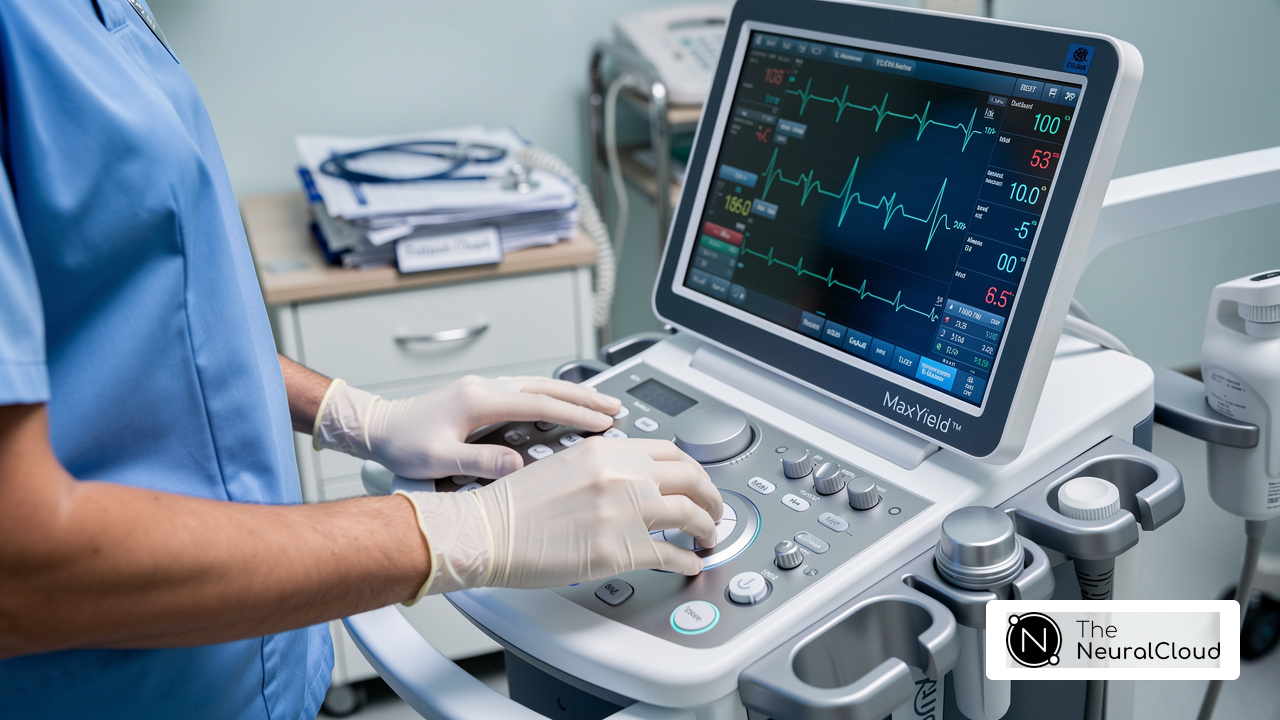
The MaxYield™ platform enhances this process by automating ECG analysis, allowing for rapid and accurate identification of patterns on the aflutter ECG strip. With its advanced noise reduction capabilities and adaptive algorithms, this technology transforms noisy recordings into clear insights, enabling healthcare professionals to make informed clinical decisions swiftly. The platform provides beat-by-beat analysis, delivering detailed insights into each heartbeat, including P-wave, QRS complex, and T-wave metrics. By integrating wearable technology with MaxYield™, the efficiency of ECG analysis is significantly improved, reducing operational costs and enhancing diagnostic yield, ultimately leading to better patient care.

Identify Key ECG Features of Atrial Flutter
Accurate ECG analysis is essential for effective diagnosis and management of heart rhythm disturbances, yet it often presents significant challenges for healthcare professionals. Key ECG features of atrial flutter include:
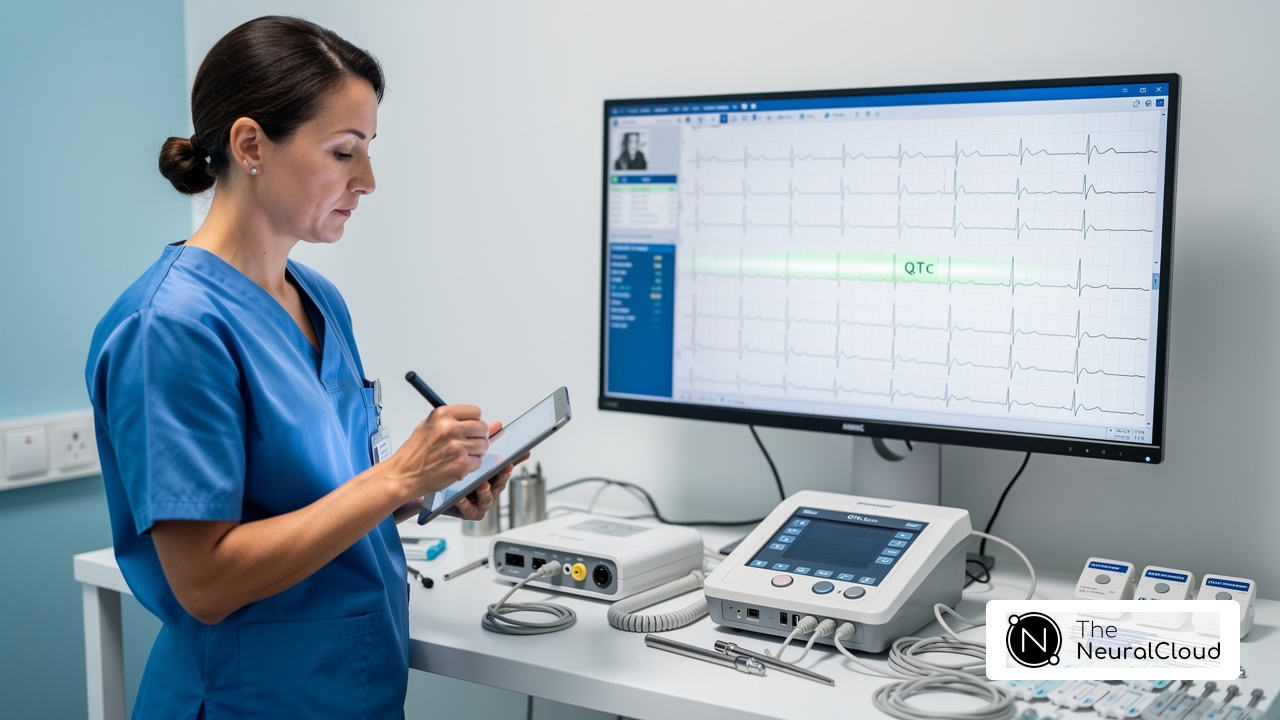
- Regular Atrial Activity: Atrial flutter typically presents with a regular atrial rate of approximately 300 bpm, which is a consistent pattern observable on the ECG. The hallmark of heart rhythm disturbance is the 'sawtooth' pattern of waveforms (F-waves), most prominently seen in the inferior leads (II, III, aVF) on an aflutter ECG strip. This pattern is essential for distinguishing heart rhythm disturbances from other arrhythmias, especially heart fibrillation, which shows irregular rhythms.
- Narrow QRS Complex: The QRS complexes are usually narrow, measuring less than 0.12 seconds, unless a bundle branch block is present. This feature assists in the recognition of heart rhythm disturbances.
- Loss of Isoelectric Baseline: The baseline may seem undulating due to ongoing heart chamber activity, making the interpretation of the underlying ventricular rhythm more complex. This loss of the isoelectric baseline is a key diagnostic feature.
By understanding these key features, healthcare professionals can enhance their diagnostic accuracy and improve patient care.

Interpret Atrial Flutter ECG Strips: Step-by-Step Guide
Interpreting aflutter ECG strips can be complex, but following a structured approach simplifies the process. To effectively interpret these strips, adhere to the following steps:
- Assess the Rhythm: Determine if the rhythm is regular or irregular. Atrial tachycardia typically shows a regular rhythm, often defined by a consistent heart rate of around 300 beats per minute. This system allows clinicians to quickly identify rhythm patterns, enhancing the assessment process.
- Calculate the Heart Rate: Count the number of QRS complexes in a 6-second strip and multiply by 10 to estimate the heart rate. In atrial tachycardia, the ventricular rate can change depending on the conduction ratio, often noted as 2:1, 3:1, or 4:1 blocks. This leads to ventricular rates of roughly 150 bpm, 100 bpm, and 75 bpm, respectively. MaxYield™ can automate this calculation, reducing the potential for human error.
- Identify P Waves: Look for flutter waves instead of distinct P waves. These F-waves usually appear as a sawtooth pattern, particularly in leads II, III, and aVF, indicating heart chamber depolarization. The advanced wave recognition capabilities of this system assist in accurately identifying these patterns, even in noisy recordings.
- Measure the PR Interval: In atrial flutter, the PR interval can vary or even be absent. This is due to how conduction occurs through the AV node, which is key to understanding the rhythm's behavior. This tool can highlight these intervals, providing clarity in interpretation.
- Evaluate the QRS Complex: Ensure that the QRS complexes are narrow, typically less than 0.12 seconds, and assess their morphology for any abnormalities that may indicate underlying issues. The platform's noise filtering enhances the visibility of QRS complexes, aiding in accurate evaluation.
- Document Findings: Keeping track of your findings is crucial for making informed clinical decisions and managing patient care effectively. MaxYield™ facilitates efficient documentation through automated labeling, ensuring no critical data is overlooked.
- Identify the Lack of an Isoelectric Line: Observe that in a specific heart rhythm disturbance, there is usually no isoelectric line between QRS complexes, which is a crucial diagnostic characteristic. The platform can help visualize this absence, reinforcing diagnostic accuracy.
- Consider Possible Complications: Be aware that heart rhythm issues are linked to a heightened risk of embolic stroke, necessitating careful patient management. Utilizing this system can enhance monitoring and management strategies, ultimately improving patient outcomes.
By adhering to this organized method and employing sophisticated tools such as Neural Cloud Solutions' platform, healthcare providers can boost their diagnostic precision and enhance patient care results in managing heart rhythm disturbances.

Leverage Advanced Tools for Enhanced ECG Analysis
Traditional ECG analysis often leads to delays in diagnosis due to manual interpretation and the complexity of data. To enhance ECG analysis for atrial flutter, consider the following advanced tools:
- AI-Powered ECG Interpretation Software: Solutions like MaxYield™ leverage sophisticated AI algorithms to analyze ECG data, delivering rapid and precise interpretations that assist clinicians in identifying atrial flutter and other arrhythmias. This system maps ECG signals through noise, isolating and labeling key features in every heartbeat. As a result, it significantly reduces the time required for analysis, enabling healthcare providers to make informed decisions swiftly. You can easily integrate the output into your current workflows since it’s provided in CSV format.
- Visualization Tools: Platforms such as Insight360 provide customizable dashboards and reporting features that enhance the visualization of ECG trends and patterns. These tools facilitate easier interpretation, allowing clinicians to quickly identify anomalies and track patient progress over time. Studies have shown that effective visualization tools can improve diagnostic accuracy, making them essential in clinical settings.
- Wearable Technology: Continuous monitoring devices provide real-time data on heart rhythms, enabling early detection of atrial flutter episodes, which can be visualized on an aflutter ECG strip. This proactive approach improves patient management by allowing for timely interventions and adjustments to treatment plans.
- Telemedicine Solutions: Remote monitoring and telehealth platforms enhance access to ECG interpretation, enabling specialists to review and analyze ECGs from various locations. This flexibility not only improves diagnostic accuracy but also streamlines workflows, making it easier for healthcare providers to collaborate and share insights.
By adopting advanced tools like MaxYield™, healthcare providers can not only enhance diagnostic accuracy but also significantly improve patient care.

Conclusion
Navigating the complexities of atrial flutter ECG interpretation is essential for healthcare professionals committed to delivering timely patient care. By understanding the unique characteristics of atrial flutter and utilizing advanced diagnostic tools, clinicians can significantly enhance their diagnostic capabilities and improve patient outcomes.
Key insights discussed in this article include the identification of specific ECG features, such as the regular atrial activity and the distinctive sawtooth pattern of F-waves. Additionally, the step-by-step guide for interpreting atrial flutter ECG strips emphasizes the importance of a structured approach, ensuring that healthcare providers can accurately assess and document findings. The integration of innovative technologies like MaxYield™ and other advanced tools further streamlines the analysis process, allowing for rapid and accurate diagnoses.
Understanding atrial flutter ECG strips can be daunting for many healthcare professionals due to the intricate details involved. As healthcare continues to evolve with the introduction of advanced technologies, embracing these tools is essential for improving diagnostic accuracy and enhancing patient management. By prioritizing education and the adoption of sophisticated analysis methods, healthcare professionals can better navigate the complexities of atrial flutter, ultimately leading to improved patient care and outcomes.
Frequently Asked Questions
What is atrial flutter?
Atrial flutter is a type of atrial tachycardia characterized by a fast heart rhythm caused by reentrant circuits in the atria, leading to a unique electrical pattern.
Why is understanding atrial flutter clinically relevant?
Understanding atrial flutter is crucial due to its potential complications, such as stroke and heart failure, which can occur if the condition is not treated promptly.
How does the MaxYield™ platform assist in the analysis of atrial flutter?
The MaxYield™ platform automates ECG analysis, allowing for rapid and accurate identification of patterns in the atrial flutter ECG strip, enhancing the speed and accuracy of clinical decisions.
What features does the MaxYield™ platform offer?
The platform features advanced noise reduction capabilities, adaptive algorithms, and beat-by-beat analysis, providing detailed insights into each heartbeat, including P-wave, QRS complex, and T-wave metrics.
How does integrating wearable technology with MaxYield™ improve ECG analysis?
Integrating wearable technology with MaxYield™ significantly improves the efficiency of ECG analysis, reduces operational costs, and enhances diagnostic yield, ultimately leading to better patient care.
List of Sources
- Define Atrial Flutter and Its Clinical Relevance
- Three Major Studies May Shift Care for A-Fib, Heart Attack and Pulmonary Embolism - ChristianaCare News (https://news.christianacare.org/2026/04/three-major-studies-may-shift-care-for-a-fib-heart-attacks-and-pulmonary-embolism)
- academic.oup.com (https://academic.oup.com/ehjcr/article-abstract/10/3/ytag127/8498087)
- medtechdive.com (https://medtechdive.com/news/4-studies-to-know-from-hrs-2026/818561)
- finance.yahoo.com (https://finance.yahoo.com/sectors/healthcare/articles/data-heart-rhythm-2026-highlight-170000617.html)
- Cleveland Clinic-led Trial Shows Pulsed Field Ablation Procedure More Effective Than Medications for Persistent Atrial Fibrillation (https://newsroom.clevelandclinic.org/2026/04/25/cleveland-clinic-led-trial-shows-pulsed-field-ablation-procedure-more-effective-than-medications-for-persistent-atrial-fibrillation)
- openheart.bmj.com (https://openheart.bmj.com/content/12/2/e003543)
- healthmonix.com (https://healthmonix.com/mips_quality_measure/2026-326-mips-measure-atrial-fibrillation-and-atrial-flutter-chronic-anticoagulation-therapy)
- Identify Key ECG Features of Atrial Flutter
- theneuralcloud.com (https://theneuralcloud.com/post/what-atrial-flutter-looks-like-on-ecg-key-characteristics-explained)
- Atrial Flutter (https://litfl.com/atrial-flutter-ecg-library)
- bestpractice.bmj.com (https://bestpractice.bmj.com/topics/en-us/183)
- Atrial Flutter Workup: Approach Considerations, Electrocardiography, Diagnostic Aids (https://emedicine.medscape.com/article/151210-workup)
- emedicine.medscape.com (https://emedicine.medscape.com/article/151210-overview)
- investors.irhythmtech.com (https://investors.irhythmtech.com/news/news-details/2026/New-Data-Presented-at-HRS-2026-Show-Short-Term-Holter-Monitoring-Misses-a-Large-Proportion-of-AF-Recurrence-Post-Ablation-and-Clinically-Significant-Arrhythmias-in-Pregnancy/default.aspx)
- Interpret Atrial Flutter ECG Strips: Step-by-Step Guide
- Atrial Flutter ECG Interpretation #312 (https://practicalclinicalskills.com/lesson-ekg/7/atrial-flutter)
- Atrial Flutter (https://litfl.com/atrial-flutter-ecg-library)
- bestpractice.bmj.com (https://bestpractice.bmj.com/topics/en-us/183)
- NCBI - WWW Error Blocked Diagnostic (https://ncbi.nlm.nih.gov/books/NBK540985)
- aerjournal.com (https://aerjournal.com/articles/atrial-flutter-typical-and-atypical-review?language_content_entity=en)
- aclsonline.us (https://aclsonline.us/rhythms/atrial-flutter)
- healio.com (https://healio.com/cardiology/learn-the-heart/ecg-review/ecg-topic-reviews-and-criteria/atrial-flutter-review)
- int.livhospital.com (https://int.livhospital.com/how-to-treat-heart-flutter-step-by-step-guide-to-atrial-flutter-treatment)
- Leverage Advanced Tools for Enhanced ECG Analysis
- AI Screening for Atrial Fibrillation Shows 90% Accuracy at HRS (https://mddionline.com/cardiovascular/ai-powered-atrial-fibrillation-detection-how-machine-learning-is-transforming-cardiac-care-through-ecg-analysis)
- PMcardio: AI ECG & Cardiac Care Platform (https://powerfulmedical.com)
- Wearable cardiac monitor technology landscape 2026 (https://patsnap.com/resources/blog/articles/wearable-cardiac-monitor-technology-landscape-2026)
- AI-ECG Momentum and Rising Competition Reshape Diagnostic Cardiology in 2026 (https://signifyresearch.net/insights/diagnostic-cardiology-market-bouncing-into-2026)