Introduction
Clinicians face significant challenges in accurately interpreting ST elevation in ECGs, particularly when distinguishing between anterior and posterior myocardial infarction presentations. Mastering these differences not only enhances diagnostic accuracy but also significantly impacts patient outcomes in acute care settings. Misdiagnosis and delayed treatment can arise from overlooked variations in ST elevation, posing serious risks to patient care. By employing effective strategies, healthcare professionals can enhance their diagnostic accuracy and ultimately improve patient outcomes in acute care settings.
Define ST Elevation Myocardial Infarction (STEMI) and Its Importance in ECG Interpretation
ST Elevation Myocardial Infarction presents significant challenges in timely diagnosis and treatment, making accurate ECG interpretation essential. This condition is marked by the elevation of the ST segment on a 12-lead ECG, indicating a full-thickness myocardial injury due to complete coronary artery occlusion. Specifically, this elevation is defined as an increase of at least 1 mm in two contiguous leads, measured at the J point. Identifying ST elevation myocardial infarction is vital. Prompt diagnosis and intervention can significantly reduce the risks associated with heart attacks. Recent findings from the North American COVID-19 Myocardial Infarction (NACMI) registry reveal that patients with COVID-19 and heart attacks face a 67% higher one-year mortality rate compared to those without COVID-19, underscoring the urgency of accurate ECG interpretation.
The ST segment changes reflect the underlying ischemic process, making it essential for clinicians to interpret these signals accurately to initiate appropriate treatment swiftly. Expert insights from Dr. Alan Rabinowitz, Dr. Brett Heilbron, and Dr. Marc W. Deyell highlight that effective identification of acute myocardial infarction can lead to significantly enhanced patient outcomes, especially in high-risk groups.
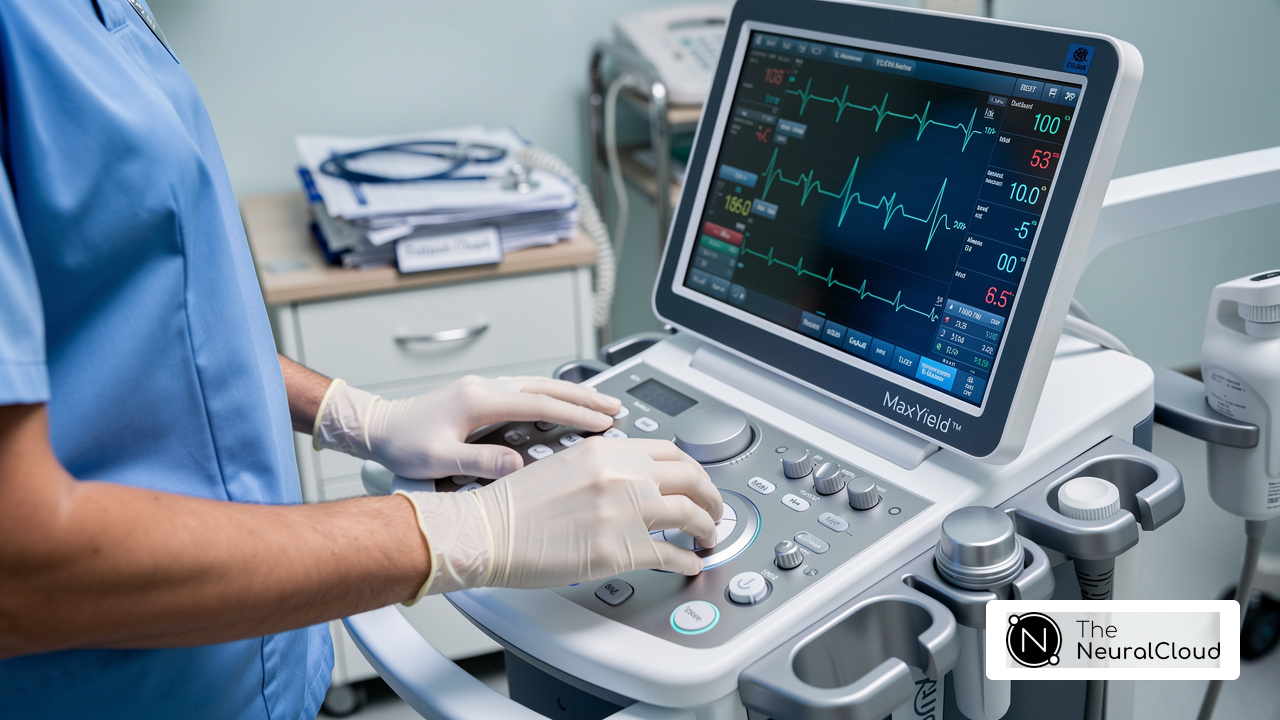
MaxYield technology from Neural Cloud Solutions Inc. improves ECG analysis by learning and evolving with each use, making it more accurate and efficient. Furthermore, ongoing monitoring of cardiovascular risk factors for heart attack survivors, especially those with COVID-19, is vital for enhancing long-term care and outcomes. This highlights the importance of integrating advanced ECG analysis technologies like MaxYield in clinical practice. Additionally, Neural Cloud Solutions Inc. is committed to regulatory compliance, with FDA Class II SaMD clearance-pending status and audit-ready documentation supporting GxP inspections.

Identify Key Features of Anterior ST Elevation on ECG
Anterior ST Elevation poses significant challenges in ECG analysis, particularly in leads V1 to V4. Key features include:
- ST Segment Elevation: An elevation of at least 1 mm in these leads is a hallmark of anterior STEMI, often accompanied by Q wave formation, which indicates myocardial necrosis.
- Reciprocal Changes: ST segment depression in the inferior leads (II, III, aVF) can signify the extent of myocardial damage and is crucial for assessing the severity of the condition.
- Morphological Changes: The ST segment may appear convex or straight, and the presence of T wave inversions can further support the diagnosis. Identifying these characteristics is crucial for distinguishing between anterior vs posterior ST elevation STEMI and other conditions, such as early repolarization or pericarditis.
Front STEMIs make up a large part of acute coronary syndrome cases, and diagnosing them quickly is crucial for better patient outcomes. In Canada, studies indicate that precise identification of anterior ST elevation is essential, as it can result in timely intervention and improved survival rates. For example, a recent study emphasized that 78% of paramedics accurately recognized acute front wall myocardial infarction, highlighting the significance of training and awareness in ECG interpretation.
Case studies have demonstrated the variability in ECG presentations, with some patients exhibiting ST elevation that mimics anterior STEMI due to other conditions. Misinterpretation of ECGs can lead to serious consequences for patient care. Therefore, healthcare professionals must be well-versed in the nuances of ECG interpretation to avoid misdiagnosis and ensure appropriate treatment. Mastering the interpretation of anterior vs posterior ST elevation can be the difference between life and death for patients experiencing acute coronary events.

Recognize Distinctive Characteristics of Posterior ST Elevation on ECG
Recognizing posterior ST elevation on a standard 12-lead ECG can be challenging, yet it is crucial for accurate diagnosis. Key characteristics to recognize include:
- Lead Placement: To accurately assess for posterior ST elevation, additional leads (V7-V9) should be placed on the back. A crucial indicator is ST segment elevation of at least 0.5 mm in these electrodes, which confirms posterior involvement.
- Tall R Waves: In positions V1-V3, the presence of tall R waves can indicate posterior myocardial involvement. This finding is often associated with ST segment depression in the anterior electrodes, indicating a complex interplay of ischemic changes.
- T Wave Changes: T wave inversions may also be observed, signaling ischemia. Identifying these characteristics is crucial for diagnosing posterior myocardial infarction, which can happen alongside inferior or lateral heart attacks.
Recent studies indicate that posterior myocardial infarction accounts for approximately 15% to 21% of acute myocardial infarctions, highlighting the importance of vigilant ECG interpretation. In Canada, the detection rates of posterior ST elevation in standard 12-lead ECGs remain a concern, as many cases go unrecognized due to the subtlety of the changes. For example, a study showed that ST-elevation myocardial infarction was identified solely in synthesized electrodes in 7% of patients, correlating with increased rates of cardiac complications.
Case studies emphasize the need for maintaining a low threshold for additional evaluation with posterior leads, especially in patients presenting with atypical symptoms or equivocal ECG changes. This approach is crucial for timely diagnosis and effective management of posterior myocardial infarction. Ultimately, it can improve patient outcomes.

Compare and Contrast Anterior vs Posterior ST Elevation: Clinical Implications and Diagnostic Strategies
When comparing anterior and posterior ST elevation, distinct clinical implications and diagnostic strategies come into focus:
- Location of Infarction: Anterior STEMI typically results from occlusion of the left anterior descending artery, leading to a larger area of myocardial damage and a higher risk of complications. In contrast, posterior myocardial infarction may arise from inferior or lateral occlusions and can be more challenging to diagnose due to its subtle presentation.
ECG characteristics reveal that anterior vs posterior ST elevation is evident, with anterior myocardial infarction showing distinct ST segment elevation in the front electrodes, while posterior myocardial infarction may require additional electrodes for accurate identification. The occurrence of reciprocal alterations in the inferior electrodes is a crucial diagnostic characteristic for front wall myocardial infarction, while tall R waves in V1-V3 indicate anterior vs posterior ST elevation involvement. The MaxYield™ platform from Neural Cloud Solutions Inc. improves this analysis through advanced noise filtering and wave recognition, enabling quick isolation of ECG waves, even in noisy recordings. This capability is crucial for salvaging previously obscured sections of lengthy Holter, 1-Lead, and patch monitor recordings, thereby improving diagnostic accuracy.
- Management Strategies: Quick identification of front wall myocardial infarction often results in prompt reperfusion treatment, such as angioplasty or thrombolysis. For posterior myocardial infarction, clinicians must maintain a high index of suspicion and may need to utilize posterior leads to confirm the diagnosis, particularly in the context of anterior vs posterior ST elevation. Understanding the differences in anterior vs posterior ST elevation is crucial for optimizing patient outcomes in acute coronary syndrome. According to experts such as Dr. Alan Rabinowitz and Dr. Brett Heilbron, MaxYield™ can match human interpretation in precision, cutting down noise and boosting the efficiency of ECG analysis.
Recent studies suggest that front wall myocardial infarction represents 30-33% of all acute coronary syndromes, with incidence rates differing among Canadian patients. The documented mortality rate for ST elevation myocardial infarction was between 5.0-8.0% in 2006, emphasizing the seriousness of complications linked to front wall ST elevation myocardial infarction and underscoring the necessity for swift intervention. The trial found that complications in anterior myocardial infarction are often more severe, but it also indicated that combining mechanical left ventricular unloading with a delay before percutaneous coronary intervention (PCI) did not increase major bleeding or vascular complications compared to immediate PCI. In contrast, posterior STEMI, while less common, can lead to serious outcomes if not promptly identified. As such, healthcare professionals must be equipped with the knowledge and tools to differentiate between these two presentations effectively, especially given the challenges in diagnosis due to variability in ECG presentation. Leveraging MaxYield™ can significantly aid in overcoming these challenges, ensuring that clinicians have access to the most accurate and reliable data for decision-making. Equipping healthcare professionals with the right tools, like MaxYield™, is essential for improving diagnostic accuracy and patient outcomes.

Conclusion
The ability to accurately interpret anterior versus posterior ST elevation in ECGs is essential for effective clinical practice. Identifying ST elevation myocardial infarction (STEMI) accurately is crucial for patient outcomes, as timely diagnosis and intervention can mitigate the risks associated with heart attacks. Understanding the nuances of these two presentations enhances diagnostic accuracy and ensures that appropriate treatment strategies are employed swiftly.
Key insights from the article include:
- Distinct characteristics of anterior ST elevation, indicating larger myocardial damage due to left anterior descending artery occlusion.
- Posterior ST elevation, which may present more subtly and often requires additional leads for accurate diagnosis.
The integration of advanced technologies like MaxYield from Neural Cloud Solutions Inc. can further enhance ECG analysis, allowing for improved detection and interpretation of these critical changes.
Differentiating between anterior and posterior ST elevation is crucial for providing the best care in acute coronary syndrome. Healthcare professionals must remain vigilant and well-equipped with the latest diagnostic tools and knowledge to ensure timely and effective management of myocardial infarctions. By embracing advanced diagnostic technologies, healthcare professionals can enhance their ability to save lives in critical situations.
Frequently Asked Questions
What is ST Elevation Myocardial Infarction (STEMI)?
ST Elevation Myocardial Infarction (STEMI) is a condition characterized by the elevation of the ST segment on a 12-lead ECG, indicating full-thickness myocardial injury due to complete coronary artery occlusion.
How is ST elevation defined on an ECG?
ST elevation is defined as an increase of at least 1 mm in two contiguous leads, measured at the J point on a 12-lead ECG.
Why is accurate ECG interpretation important for STEMI?
Accurate ECG interpretation is crucial for timely diagnosis and treatment of STEMI, which can significantly reduce the risks associated with heart attacks.
What recent findings highlight the urgency of accurate ECG interpretation in the context of COVID-19?
Findings from the North American COVID-19 Myocardial Infarction (NACMI) registry indicate that patients with COVID-19 and heart attacks have a 67% higher one-year mortality rate compared to those without COVID-19.
What do expert insights suggest about the identification of acute myocardial infarction?
Experts like Dr. Alan Rabinowitz, Dr. Brett Heilbron, and Dr. Marc W. Deyell emphasize that effective identification of acute myocardial infarction can lead to significantly improved patient outcomes, particularly in high-risk groups.
How does MaxYield technology from Neural Cloud Solutions Inc. enhance ECG analysis?
MaxYield technology improves ECG analysis by learning and evolving with each use, making it more accurate and efficient.
Why is ongoing monitoring of cardiovascular risk factors important for heart attack survivors?
Ongoing monitoring of cardiovascular risk factors is vital for enhancing long-term care and outcomes for heart attack survivors, especially those with COVID-19.
What is Neural Cloud Solutions Inc.'s commitment regarding regulatory compliance?
Neural Cloud Solutions Inc. is committed to regulatory compliance, holding FDA Class II SaMD clearance-pending status and maintaining audit-ready documentation to support GxP inspections.
List of Sources
- Define ST Elevation Myocardial Infarction (STEMI) and Its Importance in ECG Interpretation
- STEMI patients with COVID-19 were 67% more likely to die at one year than those without coronavirus, registry reveals - Cardiovascular News (https://cardiovascularnews.com/stemi-patients-with-covid-19-were-67-more-likely-to-die-at-one-year-than-those-without-coronavirus-registry-reveals)
- New ST-elevation myocardial infarction protocol trial data provide deeper insight into patient outcomes (https://medicalxpress.com/news/2026-04-st-elevation-myocardial-infarction-protocol.html)
- COVID-19 and Severe Heart Attack Increase Mortality by 25% After One Year, More than Double Pre-Pandemic Rates | SCAI (https://scai.org/media-center/news-and-articles/covid-19-and-severe-heart-attack-increase-mortality-25-after-one)
- COVID-19 Amplifies 1-Year STEMI Mortality Following Hospitalization | HCPLive (https://hcplive.com/view/covid-19-amplifies-1-year-stemi-mortality-following-hospitalization)
- News - Canadian Vigour Centre (https://thecvc.ca/news)
- Identify Key Features of Anterior ST Elevation on ECG
- Acute Anterior STEMI: A Challenging Diagnosis (https://hmpgloballearningnetwork.com/site/emsworld/article/10986290/acute-anterior-stemi-challenging-diagnosis)
- What Is a STEMI? (https://my.clevelandclinic.org/health/diseases/22068-stemi-heart-attack)
- Acute ST-Segment Elevation Myocardial Infarction (STEMI) - StatPearls - NCBI Bookshelf (https://ncbi.nlm.nih.gov/books/NBK532281)
- ST Elevation: Telling Pathology from the Benign Patterns - PMC (https://pmc.ncbi.nlm.nih.gov/articles/PMC4776946)
- Recognize Distinctive Characteristics of Posterior ST Elevation on ECG
- ECG Changes in a Case of Posterior Myocardial Infarction in the Presence of Right Bundle Branch Block (https://cureus.com/articles/52556-ecg-changes-in-a-case-of-posterior-myocardial-infarction-in-the-presence-of-right-bundle-branch-block)
- Posterior Myocardial Infarction (https://litfl.com/posterior-myocardial-infarction-ecg-library)
- Posterior Myocardial Infarction - StatPearls - NCBI Bookshelf (https://ncbi.nlm.nih.gov/books/NBK553168)
- Compare and Contrast Anterior vs Posterior ST Elevation: Clinical Implications and Diagnostic Strategies
- New ST-elevation myocardial infarction protocol trial data provide deeper insight into patient outcomes (https://medicalxpress.com/news/2026-04-st-elevation-myocardial-infarction-protocol.html)
- ST-segment Elevation Myocardial Infarction: Challenges in Diagnosis (https://uscjournal.com/articles/st-segment-elevation-myocardial-infarction-challenges-diagnosis?language_content_entity=en)