Introduction
Conventional monitoring methods often miss critical arrhythmias, jeopardizing patient safety and outcomes. Recognizing these irregular heartbeats is vital, as they can result in serious complications like stroke and heart failure.
Let’s explore why mastering arrhythmia identification on ECG is crucial for effective cardiac care, examining the latest technologies and strategies that empower healthcare professionals to enhance diagnostic accuracy and patient outcomes.
So, how can clinicians navigate the complexities of ECG interpretation to detect these life-threatening conditions promptly?
Define Arrhythmias and Their Clinical Importance
Arrhythmias pose significant challenges in cardiac care, often going undetected with traditional monitoring methods, such as arrhythmia on ECG. These irregular heartbeats can manifest as tachycardia (too fast), bradycardia (too slow), or erratic patterns. Recognizing these conditions is crucial. They can lead to severe health complications such as stroke, heart failure, and sudden cardiac death. The clinical significance of identifying irregular heartbeats is underscored by their prevalence; studies suggest that around 5% of the general population may experience some form of irregular heartbeat. In Canada, atrial fibrillation alone affects about 200,000 individuals annually, with projections indicating a substantial increase in cases by 2050. Early detection of arrhythmia on ECG is essential, as it can dramatically enhance patient outcomes. For instance, a recent study involving 486 pregnant women revealed that 37.7% had arrhythmias, with many significant cases detected only after extended monitoring. This shows that short-duration Holter monitoring often misses significant arrhythmia on ECG, highlighting the need for medical professionals to be skilled at identifying these conditions to mitigate risks and improve cardiovascular health.
MaxYield from Neural Cloud Solutions Inc. offers several key features that enhance ECG accuracy from consumer-grade devices:
- Provides hospital-grade ECG accuracy
- Ensures clean PPG data to address the 'garbage-in/garbage-out' issue
- Reduces error variance and delivers near-clinical vitals
This is especially important in the Canadian context, where medical professionals require precise tools to manage patient care effectively. MaxYield empowers clinicians to detect arrhythmia on ECG with greater accuracy and efficiency. Moreover, the platform's adherence to FDA Class II SaMD clearance-pending status and its audit-ready documentation facilitate GxP inspections, ensuring that medical providers can trust the data they receive. As Dr. Alan Rabinowitz notes, MaxYield's precision rivals human interpretation, significantly reducing noise and enhancing the clarity of ECG analysis. This transformative approach not only improves patient outcomes but also fosters stronger patient confidence in remote care. By leveraging advanced technology like MaxYield, healthcare professionals can significantly enhance their diagnostic capabilities and improve patient care.

Identify Arrhythmias Through ECG Patterns
Healthcare professionals face significant challenges in recognizing arrhythmia on ECG patterns, necessitating a deep understanding of distinctive waveforms associated with various conditions. Key arrhythmias include:
- Atrial Fibrillation (AF): This condition is marked by an irregularly irregular rhythm and the absence of distinct P waves, resulting in chaotic electrical activity within the atria. Recent studies indicate that wearable devices, such as the Apple Watch, have demonstrated over 98% accuracy in detecting AF in confirmed cases, highlighting the potential for early intervention.
- Ventricular Tachycardia (VT): In fact, the SCREEN-AF study showed that wearable monitors, such as Zio by iRhythm, can boost AF detection rates tenfold compared to standard care. This highlights just how crucial it is to accurately identify waveforms in clinical settings.
- Bradycardia: Defined as a heart rate of fewer than 60 beats per minute, bradycardia can be identified by prolonged intervals between QRS complexes. Understanding these patterns is crucial, as they can indicate health issues such as arrhythmia on ECG that may require immediate attention.
By mastering these ECG patterns, clinicians can swiftly evaluate and react to potentially life-threatening heart rhythm disorders, such as arrhythmia on ECG, ultimately improving patient outcomes and enhancing the effectiveness of cardiac care. With MaxYield™, medical professionals can transform noisy recordings into detailed insights, delivering beat-by-beat analysis of 200,000 heartbeats in under 5 minutes. This advanced AI-driven platform not only helps identify these irregular heartbeats but also supports confident clinical decisions by providing clear waveforms and comprehensive data. Dr. Alan Rabinowitz emphasizes that MaxYield™ matches human interpretation in accuracy, proving to be an essential resource for clinicians. By incorporating MaxYield™ into their processes, medical providers can improve their capacity to identify and react to irregular heartbeats effectively. Furthermore, MaxYield™ is pending FDA Class II SaMD clearance and is complemented by Insight360, a customizable visualization tool that transforms clean ECG data into interactive dashboards and clinical-ready reports. By leveraging MaxYield™, clinicians can enhance their diagnostic capabilities, ultimately leading to better patient care and outcomes.

Integrate Advanced Technologies for Enhanced ECG Analysis
Traditional ECG analysis presents significant challenges that can hinder timely and accurate diagnoses. The integration of advanced technologies, such as AI and machine learning, into ECG analysis significantly enhances diagnostic capabilities. For instance:
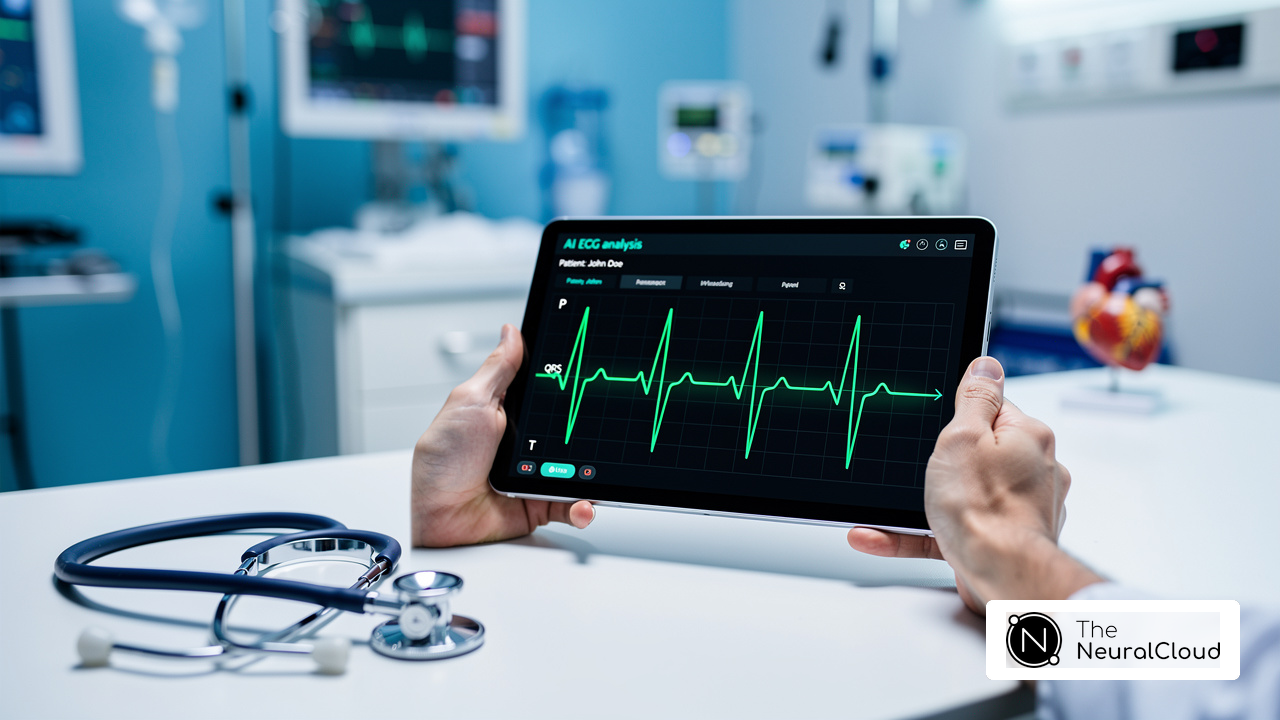
- AI Algorithms: Neural Cloud Solutions Inc.'s MaxYield™ employs sophisticated algorithms that analyze ECG data in real-time, achieving a 99.1% negative predictive value for left ventricular systolic dysfunction (LVSD) and near-perfect sensitivity in identifying serious arrhythmias. This not only enhances diagnostic precision but also lessens the workload on healthcare professionals, enabling them to concentrate on care for individuals.
- Wearable Devices: Innovations in wearable ECG technology, such as the Apple Watch, facilitate continuous patient monitoring and have demonstrated the ability to capture irregular heartbeat events in twice as many patients compared to traditional patch monitors. This method allows for continuous data collection, enabling analysis of arrhythmias even outside traditional clinical environments.
- Automated Reporting Tools: Tools like Insight360 leverage AI outputs to generate customizable reports and visualizations, simplifying the interpretation of complex data for clinicians. This capability improves decision-making processes and facilitates timely interventions, making it easier for providers to act on critical findings.
- MaxYield™ Features: MaxYield™ effectively filters out noise from ECG signals, allowing for precise isolation and labeling of critical features in each heartbeat. It transforms noisy recordings into detailed insights, delivering beat-by-beat analysis of 200,000 heartbeats in less than 5 minutes. This advanced noise filtering and wave recognition capability enables medical providers to identify cardiac events confidently, displaying smooth waveforms that support clinical decision-making.
With MaxYield™, healthcare professionals can make quicker, more accurate decisions, ultimately improving patient outcomes. By utilizing these technologies, including the continuous learning model of MaxYield™, providers can significantly enhance outcomes for individuals through timely and precise detection of arrhythmia on ECG, addressing critical gaps in cardiovascular care.

Address Challenges in ECG Technology Implementation
Implementing advanced ECG technologies in Canada faces significant hurdles that must be addressed to improve patient care:
- Integration with Existing Systems: Achieving compatibility between new ECG technologies and current electronic health record (EHR) systems can be challenging. A thorough assessment of existing infrastructure is essential to identify necessary adjustments and facilitate smooth integration, particularly adherence to interoperability standards. Neural Cloud Solutions Inc.'s MaxYield™ serves as a device-agnostic ECG intelligence layer that integrates seamlessly via API, SDK, or CDK without requiring hardware changes, streamlining this process and embodying gold standard methodologies for noise filtering and automation.
- Training and Education: Adequate training for healthcare professionals is critical for the effective use of new technologies. This ongoing education can significantly reduce resistance to change, ensuring staff are well-equipped to utilize advanced ECG systems. The automation features of MaxYield™ can help ease the learning curve by providing clear data sets and clean signals, allowing for more intuitive use.
- Data Privacy Concerns: As digital health solutions expand, protecting individual data becomes increasingly important. Neural Cloud Solutions Inc. prioritizes data privacy, ensuring compliance with regulatory standards and maintaining audit-ready documentation for GxP inspections.
Statistics reveal:
- 35% of individuals without diabetes or chronic kidney disease exhibited clinically actionable arrhythmias.
- 39% of individuals with diabetes alone had clinically actionable arrhythmia on ECG.
- Nearly two-thirds of individuals in the obesity cohort faced heightened risks, with severe obesity correlating to a nearly threefold increase in the detection of arrhythmia on ECG.
These figures highlight the urgency of overcoming integration challenges to enhance patient outcomes.
Expert endorsements from Dr. Alan Rabinowitz, Dr. Brett Heilbron, and Dr. Marc W. Deyell emphasize that MaxYield™'s precision rivals human interpretation, particularly in noise reduction, which is crucial for accurate detection of arrhythmia on ECG.
Case studies demonstrate the challenges encountered in implementing portable ECG devices within medical environments. For instance, the integration of portable ECG devices with existing systems requires adherence to interoperability standards, which can complicate implementation. By proactively addressing these challenges, healthcare providers can maximize the benefits of advanced ECG technologies, ultimately leading to improved patient care.

Conclusion
Accurate identification and management of arrhythmias on ECG are crucial for improving patient outcomes in cardiac health. The risks posed by arrhythmias, which can lead to serious health issues, necessitate a thorough understanding of their clinical significance and the advanced technologies available to aid in their detection. Using tools like MaxYield from Neural Cloud Solutions Inc., healthcare professionals can greatly enhance their diagnostic abilities, ensuring that irregular heartbeats are identified swiftly and accurately.
This article shared key insights about the types of arrhythmias, their ECG patterns, and the challenges of traditional ECG analysis. The integration of advanced technologies, such as AI-driven platforms and wearable devices, has proven to enhance the accuracy and efficiency of arrhythmia detection. Moreover, addressing implementation challenges, including system integration and staff training, is crucial for maximizing the benefits of these innovations in clinical practice.
Ultimately, mastering arrhythmia detection on ECG is vital. With the rising prevalence of these conditions, especially in Canada, healthcare providers must embrace advanced technologies and ongoing education to improve patient outcomes. By prioritizing the integration of tools like MaxYield, clinicians can transform their approach to cardiac care, ensuring they are equipped to meet the evolving demands of patient health and safety.
Frequently Asked Questions
What are arrhythmias and why are they clinically important?
Arrhythmias are irregular heartbeats that can occur as tachycardia (too fast), bradycardia (too slow), or erratic patterns. They are clinically important because they can lead to severe health complications such as stroke, heart failure, and sudden cardiac death. Early detection is crucial for improving patient outcomes.
How prevalent are arrhythmias in the general population?
Studies suggest that around 5% of the general population may experience some form of irregular heartbeat. In Canada, atrial fibrillation alone affects about 200,000 individuals annually, with projections indicating a significant increase in cases by 2050.
What challenges do traditional monitoring methods face in detecting arrhythmias?
Traditional monitoring methods, such as short-duration Holter monitoring, often miss significant arrhythmias. For example, a study involving 486 pregnant women found that 37.7% had arrhythmias, many of which were only detected after extended monitoring.
How does MaxYield from Neural Cloud Solutions Inc. enhance ECG accuracy?
MaxYield provides hospital-grade ECG accuracy, ensures clean PPG data to address the 'garbage-in/garbage-out' issue, and reduces error variance to deliver near-clinical vitals. This is crucial for effective patient care in Canada.
What is the significance of FDA Class II SaMD clearance-pending status for MaxYield?
The FDA Class II SaMD clearance-pending status and audit-ready documentation of MaxYield facilitate GxP inspections, ensuring that medical providers can trust the data they receive for accurate diagnosis and patient management.
How does MaxYield improve the clarity of ECG analysis?
According to Dr. Alan Rabinowitz, MaxYield's precision rivals human interpretation, significantly reducing noise and enhancing the clarity of ECG analysis, which ultimately improves patient outcomes and fosters confidence in remote care.
List of Sources
- Define Arrhythmias and Their Clinical Importance
- Global Surge in Heart Rhythm Disorders Sparks Call to Action (https://dicardiology.com/content/global-surge-heart-rhythm-disorders-sparks-call-action)
- Global surge in serious heart rhythm disorders sparks urgent call to action from experts: 1 in 3 people at risk (https://escardio.org/news/press/press-releases/global-surge-in-serious-heart-rhythm-disorders-sparks-urgent-call-to-action-from)
- New Granting Body to Make Major Investment in Arrhythmia Research (https://ottawaheart.ca/the-beat/news/new-granting-body-make-major-investment-arrhythmia-research)
- libin.ucalgary.ca (https://libin.ucalgary.ca/news/ucalgary-research-may-lead-new-guidelines-treating-atrial-fibrillation)
- New Data Presented at HRS 2026 Show Short-Term Holter Monitoring Misses a Large Proportion of AF Recurrence Post-Ablation and Clinically Significant Arrhythmias in Pregnancy (https://irhythm2024rd.q4web.com/news/news-details/2026/New-Data-Presented-at-HRS-2026-Show-Short-Term-Holter-Monitoring-Misses-a-Large-Proportion-of-AF-Recurrence-Post-Ablation-and-Clinically-Significant-Arrhythmias-in-Pregnancy/default.aspx)
- Identify Arrhythmias Through ECG Patterns
- FDA, EU Clear Fitbit ECG to Detect Atrial Fibrillation (https://tctmd.com/news/fda-eu-clear-fitbit-ecg-detect-atrial-fibrillation)
- Apple Watch Captures More Pediatric Arrhythmia Events (https://hrsonline.org/news/apple-watch-captures-more-pediatric-arrhythmia-events)
- CardioComm Solutions` Technology Selected for Public ECG Based Atrial Fibrillation Screening in 10,000 Canadians for the Heart and Stroke Foundation (https://hmpgloballearningnetwork.com/site/eplab/news/cardiocomm-solutions-technology-selected-public-ecg-based-atrial-fibrillation-screening-10000-c)
- Study Published in JAMA Cardiology Finds Zio by iRhythm Proactively Identifies Atrial Fibrillation, Increases Detection Tenfold (https://investors.irhythmtech.com/news/news-details/2021/Study-Published-in-JAMA-Cardiology-Finds-Zio-by-iRhythm-Proactively-Identifies-Atrial-Fibrillation-Increases-Detection-Tenfold/default.aspx)
- Integrate Advanced Technologies for Enhanced ECG Analysis
- AI-powered electrocardiogram detects early signs of heart failure (https://medicalxpress.com/news/2026-05-ai-powered-electrocardiogram-early-heart.html)
- Researchers Find Wearable Technology Helps Capture Pediatrics Arrhythmia Events Compared to Traditional Patch Monitors (https://dicardiology.com/content/researchers-find-wearable-technology-helps-capture-pediatrics-arrhythmia-events-compared)
- AI could safely replace human analysis of ambulatory ECG - News - PHRI (https://phri.ca/draimartini)
- Address Challenges in ECG Technology Implementation
- theneuralcloud.com (https://theneuralcloud.com/post/best-practices-for-12-lead-ecg-portable-device-implementation)
- Data presented at ACC.26 further demonstrate the benefits of iRhythm’s Zio® ambulatory ECG portfolio across multiple patient populations as company launches new digital education platform (https://investors.irhythmtech.com/news/news-details/2026/Data-presented-at-ACC-26-further-demonstrate-the-benefits-of-iRhythms-Zio-ambulatory-ECG-portfolio-across-multiple-patient-populations-as-company-launches-new-digital-education-platform/default.aspx)
- 6 Trends In ECG Systems (https://dicardiology.com/article/6-trends-ecg-systems)
- USA ECG Equipment Market: Expansion, Drivers, and Challenges (2026-2035) (https://linkedin.com/pulse/usa-ecg-equipment-market-expansion-drivers-challenges-xtmhf)