Introduction
Developers must navigate the complexities of ECG interpretation to enhance diagnostic accuracy in arrhythmias. By mastering the fundamental components of ECG signals and employing systematic analysis techniques, developers can significantly improve their algorithms and ultimately patient outcomes.
As cardiology evolves with AI and machine learning, developers face the daunting task of balancing innovation with regulatory standards in ECG analysis. By mastering ECG fundamentals, developers can equip themselves with the knowledge and tools necessary to navigate this complex field.
Understand Basic ECG Components for Arrhythmia Identification
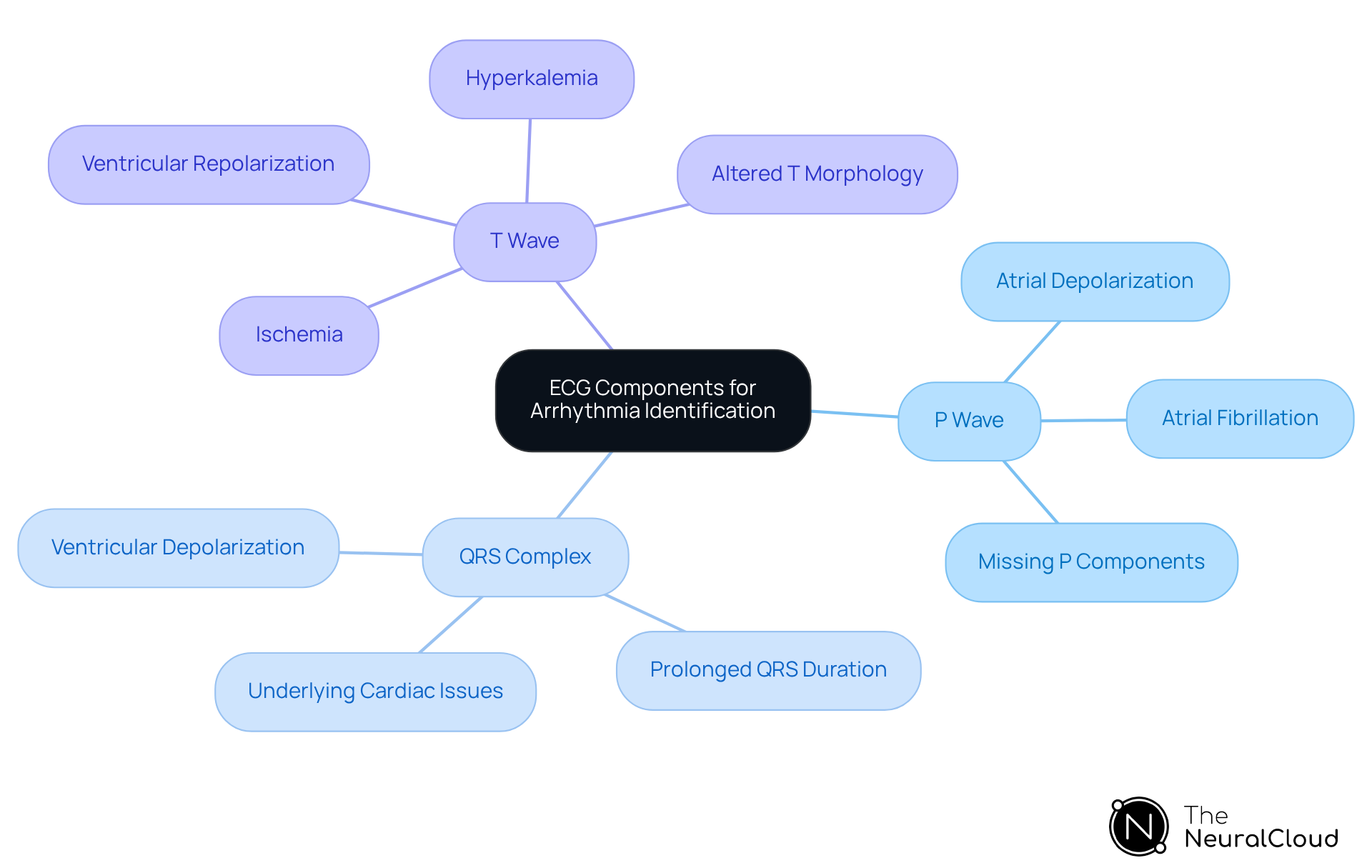
To effectively identify arrhythmias in ECG interpretation, developers must understand the fundamental elements of an ECG signal, which includes the P component, QRS complex, and T component. Each element corresponds to specific electrical activities of the heart, playing a crucial role in arrhythmia detection.
- P Wave: This component represents atrial depolarization and is vital for identifying atrial arrhythmias. Irregularities in the P component can suggest conditions like atrial fibrillation, where P components may be missing.
- QRS Complex: Signifying ventricular depolarization, the QRS complex is essential for diagnosing ventricular arrhythmias. A prolonged QRS duration can suggest underlying cardiac issues, necessitating further investigation.
- T Wave: Reflecting ventricular repolarization, the T signal can provide insights into conditions like hyperkalemia or ischemia. Alterations in the T shape morphology may indicate significant cardiac events.
Developers should familiarize themselves with the normal ranges and characteristics of these components, as deviations can indicate various arrhythmias. For instance, a prolonged QT interval may suggest a risk for torsades de pointes, while absent P waves can indicate atrial fibrillation. Grasping these elements allows programmers to design algorithms that precisely identify possible arrhythmias in ECG information, improving diagnostic abilities and patient results.
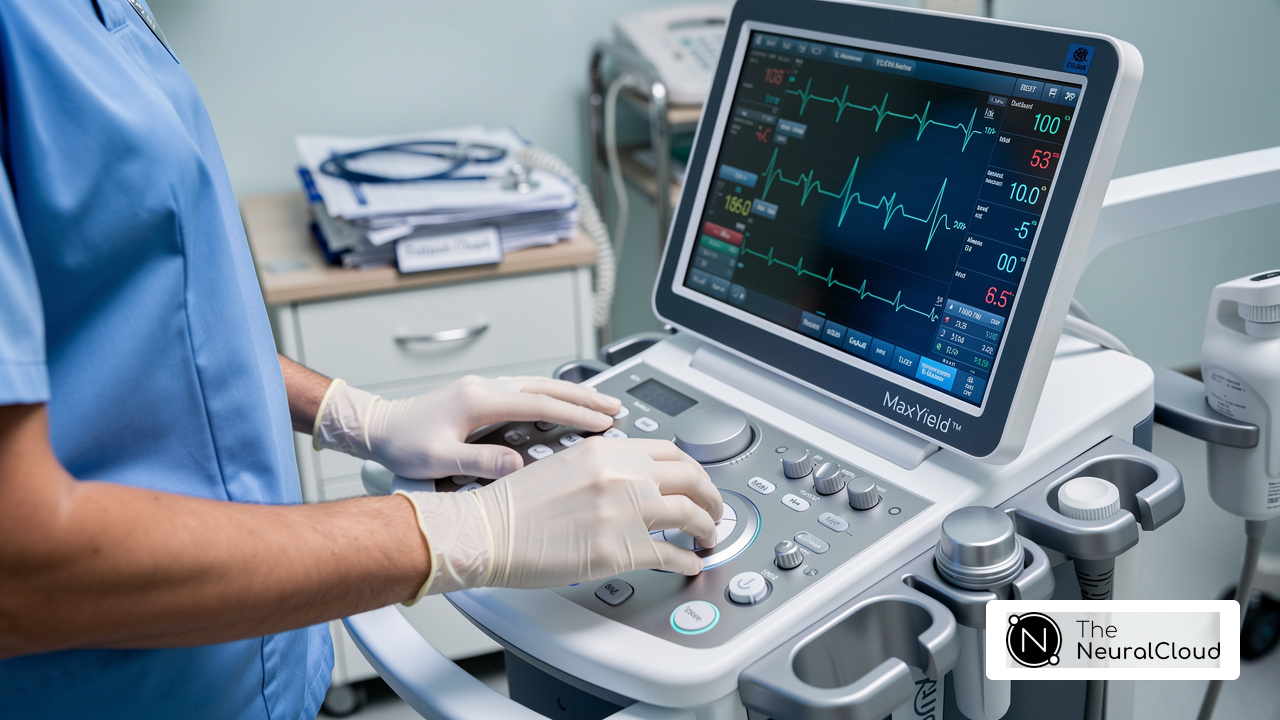
'Neural Cloud Solutions' MaxYield™ platform significantly enhances ECG information accuracy by mapping ECG signals through noise, isolating and labeling key features in every heartbeat. With this capability, noisy recordings become clear insights, providing detailed analysis of 200,000 heartbeats in under 5 minutes. Developers can integrate advanced noise reduction and adaptive algorithms, ensuring consistent, clean information across all connected devices. This not only improves the accuracy of arrhythmias ECG interpretation but also supports confident clinical decision-making.
Additionally, the customizable visualization and reporting tool, Insight360, transforms MaxYield’s clean ECG information into interactive dashboards and clinical-ready reports, further enhancing the presentation of analysis. Statistics show that AI can achieve a diagnostic classification accuracy of 94% in heartbeats and has demonstrated an accuracy of 99.2% in detecting ventricular arrhythmias. A case study on an AI-enhanced ECG model revealed its effectiveness in identifying structural heart disease, underscoring the practical application of understanding these components. As Manuel Marina-Breysse noted, "In the future, artificial intelligence is expected to play an increasingly important role in ECG diagnosis and management, as more data become available and more sophisticated algorithms are developed."
It's important for developers to recognize common pitfalls, like misinterpreting T wave changes or missing subtle P wave abnormalities, as these can result in diagnostic errors. By mastering these ECG components and leveraging the capabilities of MaxYield™ and Insight360, programmers can significantly enhance their algorithms' precision, ultimately improving patient care.
Implement a Systematic Approach to ECG Rhythm Analysis
Accurate ECG interpretations are essential, yet many healthcare professionals face challenges in arrhythmias ECG interpretation that can compromise patient care. To enhance the accuracy of ECG interpretations, developers should adopt a systematic approach to rhythm analysis, which includes several key steps:
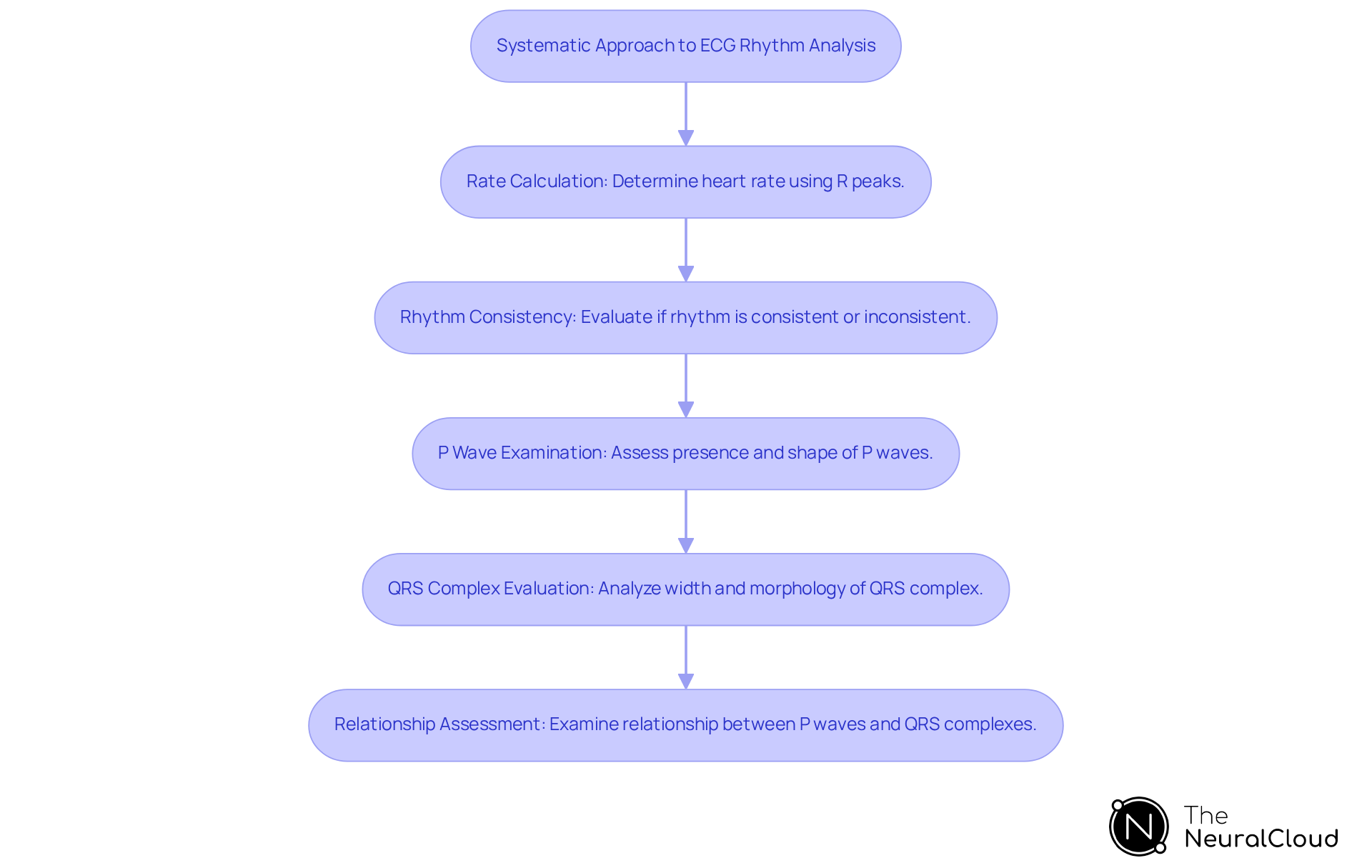
- Rate Calculation: Determine the heart rate by counting the number of R peaks within a specified time frame. For regular rhythms, the heart rate can be determined using the large squares method by dividing 300 by the number of large squares between R peaks. Alternatively, the small squares method can be utilized, where the heart rate is calculated by dividing 1500 by the number of small squares between R peaks.
- Rhythm Consistency: Evaluate if the rhythm is consistent or inconsistent by measuring the intervals between R peaks. Regular rhythms exhibit consistent intervals, while irregular rhythms may indicate underlying arrhythmias.
- P Wave Examination: Assess the presence and shape of P waves. A consistent P signal suggests normal atrial activity, whereas variations in shape or absence may indicate arrhythmias such as atrial fibrillation.
- QRS Complex Evaluation: Analyze the width and morphology of the QRS complex. A wide QRS complex may suggest a ventricular origin of the rhythm, which is critical for accurate diagnosis.
- Relationship Assessment: Examine the relationship between P waves and QRS complexes to identify any dissociation, which is often seen in conditions like third-degree heart block.
The increasing rate of cardiovascular disease highlights the critical need for precise ECG analysis. Following this systematic approach helps developers create reliable ECG interpretation tools. These tools assist healthcare professionals in diagnosing arrhythmias through ECG interpretation effectively. The MaxYield™ platform from Neural Cloud Solutions is crucial in this process, using advanced noise filtering and unique wave recognition capabilities. It identifies and labels essential information even in recordings with high levels of noise and artifacts, allowing for the recovery of previously obscured sections of lengthy Holter, 1-Lead, and patch monitor recordings. Additionally, the continuous learning model of MaxYield™ ensures that its accuracy and efficiency improve over time. As Alan Foreman, CEO and Co-Founder of Neural Cloud Solutions, emphasizes, "One person dies every 33 seconds from cardiovascular disease (CVD) in the United States, and by 2050, the total cost of CVD is expected to triple, reaching $1.851 trillion." This underscores the urgency of accurate ECG interpretations in improving patient outcomes. Furthermore, the Insight360 tool transforms MaxYield’s clean ECG information into interactive dashboards and clinical-ready reports, enhancing the overall analysis experience. With tools like MaxYield™, healthcare professionals can transform ECG analysis, ultimately leading to better patient outcomes and more effective cardiac care.
Leverage Advanced Technology for Enhanced ECG Interpretation
Traditional ECG analysis often struggles with accuracy and speed, leading to potential misdiagnoses and delayed treatments. Incorporating advanced technology into arrhythmias ECG interpretation can significantly enhance diagnostic capabilities. Developers should consider the following technologies:
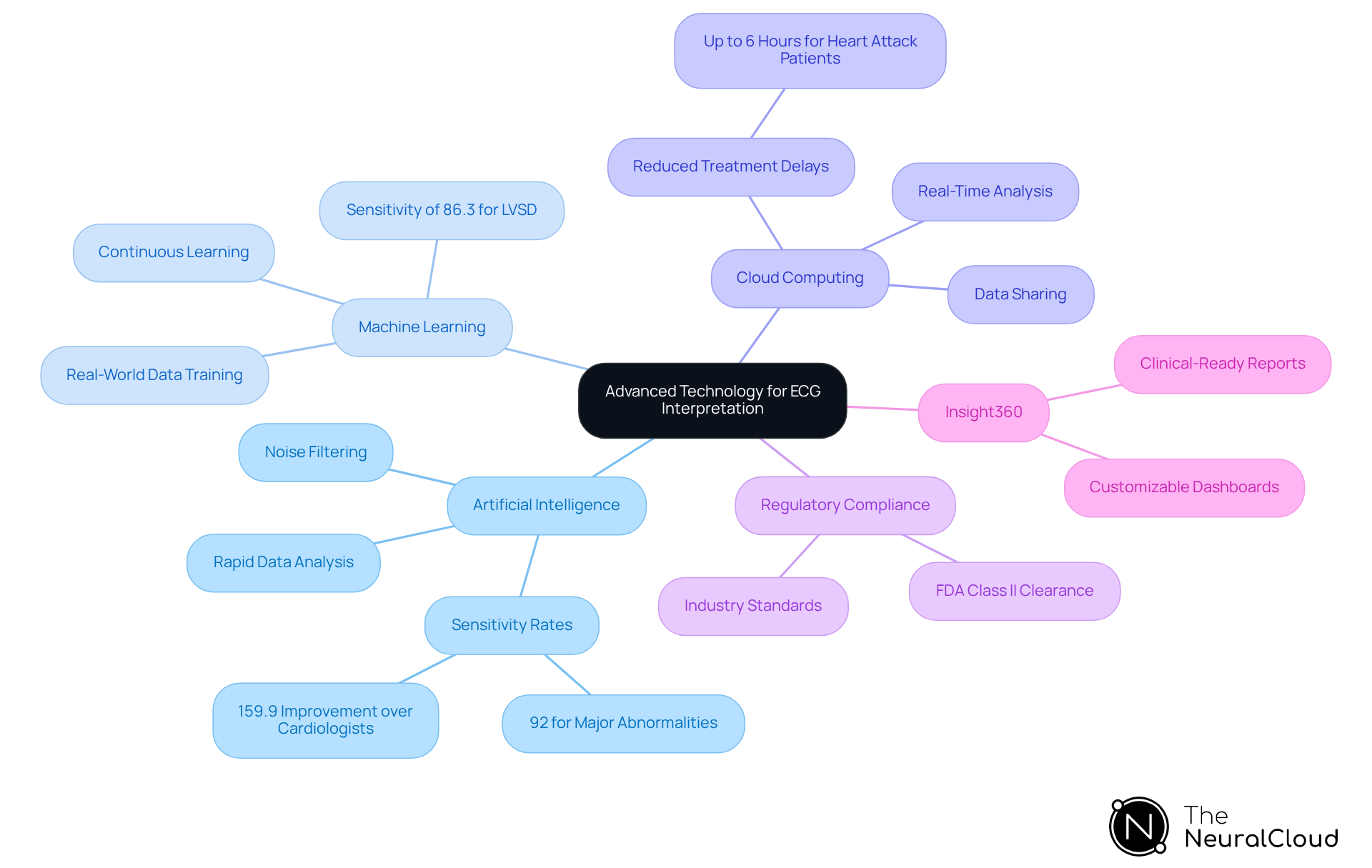
- Artificial Intelligence (AI): AI algorithms can analyze vast amounts of ECG data rapidly, identifying patterns that may elude human detection. For instance, AI can discern subtle changes in the QRS complex indicative of arrhythmias, improving diagnostic precision. Recent studies have shown that AI-driven ECG analysis can achieve sensitivity rates of up to 92% in detecting major abnormalities, surpassing traditional methods. Neural Cloud Solutions' MaxYield™ leverages AI to enhance this process, utilizing advanced noise filtering and distinct wave recognition to improve diagnostic yield even in challenging recordings.
- Machine Learning: By training models on extensive datasets, machine learning enhances the accuracy of arrhythmia detection over time. Applying supervised learning methods enables programmers to enhance their algorithms using real-world ECG information, resulting in ongoing advancement in diagnostic results. A deep neural network (DNN) model, for example, demonstrated a sensitivity of 86.3% in diagnosing left ventricular systolic dysfunction (LVSD), showcasing the potential of machine learning in clinical settings. With MaxYield™, the continuous learning model adapts and improves with every use, ensuring accuracy and efficiency in ECG analysis.
- Cloud Computing: Utilizing cloud-based platforms facilitates the storage and processing of large ECG datasets, enabling real-time analysis and sharing among healthcare professionals. This collaborative approach not only streamlines workflows but also enhances patient outcomes by allowing for timely interventions. For instance, cloud solutions have been instrumental in reducing treatment delays for heart attack patients by up to six hours, as evidenced by recent implementations in healthcare systems. With MaxYield™, creators can integrate a device-agnostic ECG intelligence layer seamlessly via API, SDK, or CDK, enhancing workflow efficiency without requiring hardware changes.
- Regulatory Compliance: It is essential to consider regulatory compliance, including the FDA Class II SaMD clearance-pending status, to ensure that the developed tools meet industry standards and can be effectively utilized in clinical settings.
- Insight360: Additionally, incorporating Insight360 as a customizable visualization tool can transform MaxYield’s clean ECG data into interactive dashboards and clinical-ready reports, further enhancing data presentation and reporting capabilities.
By utilizing these technologies, especially the innovative features of Neural Cloud Solutions' MaxYield™, creators can build robust tools for arrhythmias ECG interpretation that enhance diagnostic accuracy and optimize workflows for healthcare providers. The integration of these advanced technologies not only enhances diagnostic capabilities but also paves the way for a new standard in patient care.
Engage in Continuous Education and Training for ECG Proficiency
In the rapidly evolving field of cardiology, the ability to accurately perform arrhythmias ECG interpretation is more crucial than ever for healthcare professionals. To maintain proficiency in arrhythmias ECG interpretation, professionals must prioritize continuous education and training. This can encompass several key approaches:
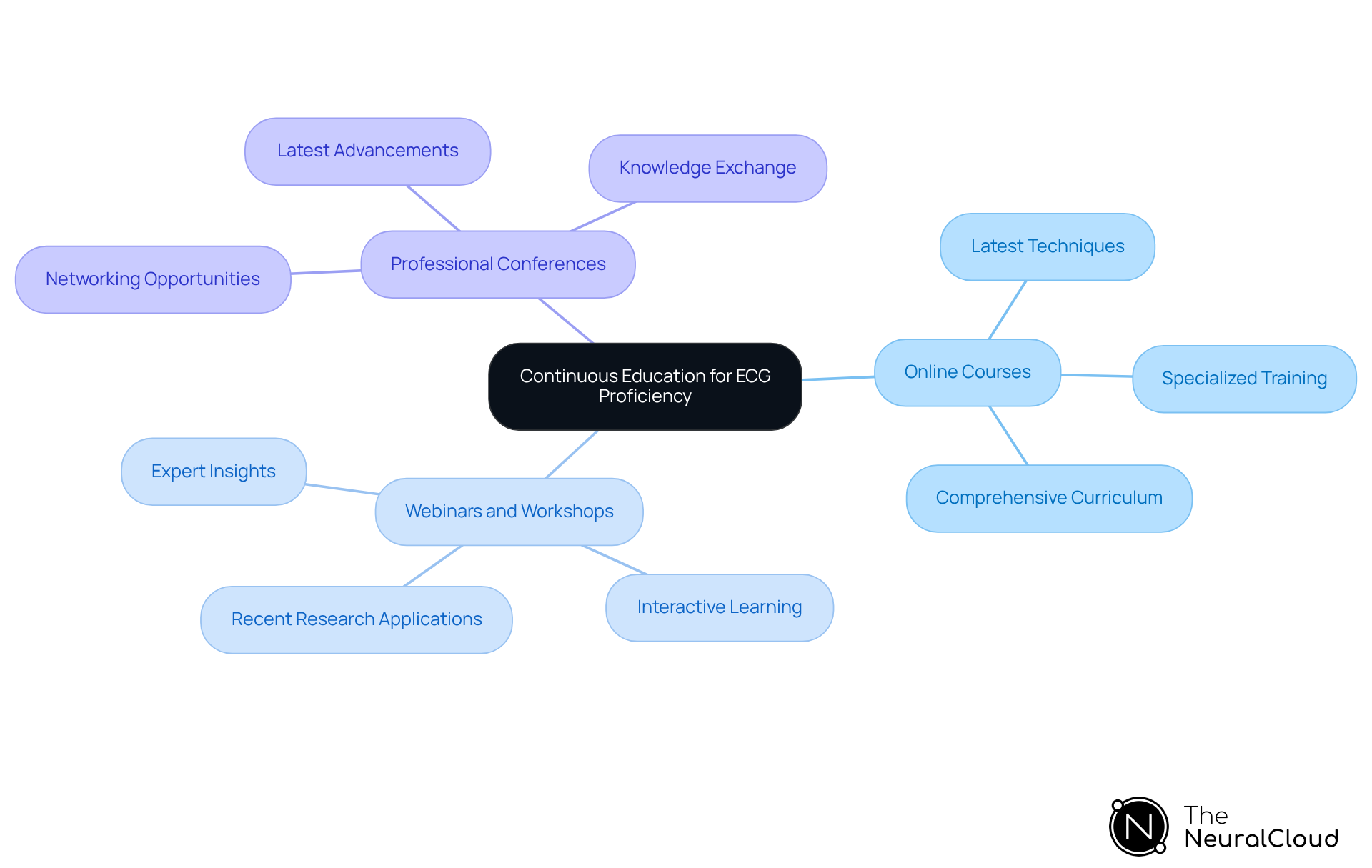
- Online Courses: Engaging in specialized ECG interpretation courses is essential for staying updated on the latest techniques and technologies. These courses provide comprehensive training tailored for healthcare professionals, enhancing their understanding of complex cardiac conditions through arrhythmias ECG interpretation.
- Webinars and Workshops: Participating in live webinars and workshops led by cardiology experts provides valuable insights into recent research findings and practical applications of new technologies. These interactive sessions foster a deeper understanding of the nuances in arrhythmias ECG interpretation.
- Professional Conferences: Attending cardiology conferences, such as the American College of Cardiology (ACC) Annual Scientific Session, allows professionals to network with peers and learn about the latest advancements in ECG technology and interpretation. These events serve as excellent opportunities for professional growth and knowledge exchange.
The importance of continuous education is underscored by a study demonstrating significant improvements in arrhythmias ECG interpretation performance among participants who engaged in structured educational programs. For instance, average scores for interpretation performance increased from 11.89 to 15.56 out of 20 after an 18-week training program, highlighting the effectiveness of ongoing education.
Without a commitment to ongoing education, healthcare professionals risk falling behind in their ability to provide optimal patient care through accurate arrhythmias ECG interpretation.
Conclusion
Developers face significant challenges in mastering arrhythmias for accurate ECG interpretation, which is crucial for improving patient outcomes. By understanding the fundamental components of ECG signals, using systematic analysis approaches, leveraging advanced technologies, and committing to continuous education, developers can significantly enhance their ECG interpretation capabilities.
Key insights from the article include:
- Recognizing the P wave, QRS complex, and T wave in diagnosing various arrhythmias.
- Implementing a systematic approach to rhythm analysis, including rate calculation and rhythm consistency evaluation.
- Integrating advanced technologies like AI and machine learning through platforms such as Neural Cloud Solutions' MaxYield™.
Without a commitment to ongoing education, developers risk falling behind in their ability to provide accurate diagnoses, ultimately affecting patient care. Healthcare professionals must commit to ongoing education and training to keep up with the latest advancements in ECG interpretation. By embracing continuous learning and advanced technologies, healthcare professionals can transform their ECG interpretation skills, leading to better patient care and outcomes.
Frequently Asked Questions
What are the basic components of an ECG signal important for arrhythmia identification?
The basic components of an ECG signal include the P wave, QRS complex, and T wave. Each component corresponds to specific electrical activities of the heart and is crucial for detecting arrhythmias.
What does the P wave represent in an ECG?
The P wave represents atrial depolarization and is vital for identifying atrial arrhythmias. Irregularities in the P component can indicate conditions such as atrial fibrillation, where P waves may be absent.
What is the significance of the QRS complex in ECG interpretation?
The QRS complex signifies ventricular depolarization and is essential for diagnosing ventricular arrhythmias. A prolonged QRS duration may suggest underlying cardiac issues that require further investigation.
How does the T wave contribute to ECG analysis?
The T wave reflects ventricular repolarization and can provide insights into conditions like hyperkalemia or ischemia. Changes in the T wave morphology may indicate significant cardiac events.
Why is it important for developers to understand normal ranges and characteristics of ECG components?
Understanding normal ranges and characteristics is crucial because deviations can indicate various arrhythmias. For example, a prolonged QT interval may suggest a risk for torsades de pointes, while absent P waves can indicate atrial fibrillation.
How does the MaxYield™ platform enhance ECG information accuracy?
The MaxYield™ platform enhances ECG information accuracy by mapping ECG signals through noise, isolating and labeling key features in every heartbeat. This capability allows for clearer insights from noisy recordings, providing detailed analysis of 200,000 heartbeats in under 5 minutes.
What role does the Insight360 tool play in ECG analysis?
Insight360 transforms MaxYield’s clean ECG information into interactive dashboards and clinical-ready reports, enhancing the presentation of analysis for better clinical decision-making.
What is the diagnostic accuracy of AI in ECG interpretation?
AI can achieve a diagnostic classification accuracy of 94% in heartbeats and has demonstrated an accuracy of 99.2% in detecting ventricular arrhythmias.
What common pitfalls should developers be aware of in ECG interpretation?
Developers should recognize common pitfalls such as misinterpreting T wave changes or missing subtle P wave abnormalities, as these can lead to diagnostic errors.
How can mastering ECG components improve patient care?
By mastering ECG components and leveraging the capabilities of MaxYield™ and Insight360, programmers can enhance their algorithms' precision, ultimately improving patient care and diagnostic outcomes.
List of Sources
- Understand Basic ECG Components for Arrhythmia Identification
- pmc.ncbi.nlm.nih.gov (https://pmc.ncbi.nlm.nih.gov/articles/PMC10145690)
- AI-Based ECG Analysis Significantly Improves STEMI Detection, Reduces False Activations - American College of Cardiology (https://acc.org/latest-in-cardiology/articles/2025/10/24/16/56/tues-554pm-ai-tct-2025)
- AI-powered ECG model outperforms doctors in detecting hidden heart disease (https://news-medical.net/news/20250721/AI-powered-ECG-model-outperforms-doctors-in-detecting-hidden-heart-disease.aspx)
- Exploring The Latest Breakthroughs & Advancements In ECG Tech | Executive Electrocardiogram Education (https://ecgedu.com/latest-advancements-in-ecg-tech)
- Implement a Systematic Approach to ECG Rhythm Analysis
- Heart Rate Calculation from ECG (Electrocardiogram) (https://linkedin.com/pulse/heart-rate-calculation-from-ecg-electrocardiogram-dilini-hellarawa-hinqc)
- ECG Rate Interpretation (https://litfl.com/ecg-rate-interpretation)
- FDA clears new suite of ECG evaluation tools (https://cardiovascularbusiness.com/topics/cardiac-imaging/electrocardiography-ecg/fda-clears-new-suite-ecg-evaluation-tools)
- CV Physiology | Determining Heart Rate from the Electrocardiogram (https://cvphysiology.com/arrhythmias/a020)
- The latest innovations in ECG technology and analysis - Norav Medical (https://noravmedical.com/advancements-in-ecg-technology-exploring-the-latest-innovations-in-ecg-analysis)
- Leverage Advanced Technology for Enhanced ECG Interpretation
- AI dramatically improves the detection of severe heart attacks (https://cardiovascularbusiness.com/topics/artificial-intelligence/ai-dramatically-improves-detection-severe-heart-attacks)
- AI-Based ECG Analysis Significantly Improves STEMI Detection, Reduces False Activations - American College of Cardiology (https://acc.org/latest-in-cardiology/articles/2025/10/24/16/56/tues-554pm-ai-tct-2025)
- AI ECG Interpretation Rivals Cardiologists (https://powerfulmedical.com/blog/how-is-ai-transforming-ecg-interpretation)
- AI and ECG Interpretation: Insights and Trends for Cardiologists (https://gehealthcare.com/en/insights/article/ai-and-ecg-interpretation-insights-and-trends-for-todays-cardiologists?srsltid=AfmBOorgXW60e7zX1vieXxhUi2770g3eZZext5yJJt9K_qONhAtI_j8f)
- A systematic review on the impact of artificial intelligence on electrocardiograms in cardiology - PubMed (https://pubmed.ncbi.nlm.nih.gov/39674006)
- Engage in Continuous Education and Training for ECG Proficiency
- The Importance Of ECG Interpretation In Critical Care Settings | Tricog Health (https://tricog.com/the-importance-of-ecg-interpretation-in-critical-care-settings?srsltid=AfmBOorn-ZfjWim7Hdn6lCuv-IeSUfBJlbTNSba9SidOxNZwzyNY-Rhw)
- Effectiveness of electrocardiogram interpretation education program using mixed learning methods and webpage - BMC Medical Education (https://link.springer.com/article/10.1186/s12909-024-05960-8)