Introduction
As cardiac care becomes increasingly complex, understanding atrial paced ECG is crucial for healthcare professionals. This article will explore the fundamental concepts, mechanisms, and advanced analysis techniques of atrial pacing, providing valuable insights for clinicians, researchers, and diagnostic facilities across Canada. As the landscape of cardiac technology evolves, professionals face ongoing challenges in accurately interpreting these vital readings. Addressing these challenges is vital for improving patient outcomes in cardiac care.
Clarify Atrial Pacing Concepts and Their Importance in ECG
Understanding the atrial paced ECG is crucial for accurate interpretation, especially in patients with bradycardia or upper chamber dysfunction. Atrial stimulation, as seen in an atrial paced ECG, involves the electrical activation of the upper chambers to induce contraction. The key components are as follows:
- Pacing Spike: This sharp vertical line on the ECG precedes the P wave, indicating the pacemaker's electrical impulse.
- The P Wave in an atrial paced ECG signifies atrial depolarization, occurring after the stimulation pulse.
- The successful stimulation of the atria is confirmed by a visible P wave in the atrial paced ECG, indicating effective stimulation.
- Loss of Capture is a situation that occurs when the pacing spike fails to generate a P wave on the atrial paced ECG, indicating possible problems with the pacemaker or lead.
Recognizing these components helps effectively diagnose heart rhythm issues or problems related to atrial paced ECG. For instance, the Micra Transcatheter Stimulation System has shown a 63% decrease in significant complications compared to conventional transvenous pacemakers. This highlights the importance of efficient heart stimulation in enhancing patient outcomes. Experts emphasize that understanding these timing concepts is vital for healthcare professionals, directly influencing clinical decisions and patient management in cardiovascular care. Recent studies have demonstrated that advancements in heart rhythm technology can lead to improved synchronization and overall cardiac function, underscoring the necessity for ongoing education in this field.

Explain Mechanisms of Atrial-Paced ECGs and Timing Cycles
Accurate interpretation of the atrial paced ECG is crucial for effective patient management, yet many healthcare professionals face challenges in understanding the underlying mechanisms. The function of an atrial paced ECG relies on specific timing cycles that govern the sequence of electrical events in the heart, making it essential for accurate interpretation. Key concepts include:
- Pacing Modes: Various modes, such as AAI and DDD, dictate how the pacemaker interacts with the heart's natural rhythm. In AAI mode, the pacemaker stimulates the atrium only when intrinsic activity is absent, which is particularly relevant for patients with sick sinus syndrome (SSS).
- Timing Intervals: The intervals between rhythm peaks and following P waves are essential for assessing pacemaker performance. For instance, the A-A interval measures the duration between two successive heart stimulation bursts, which can indicate the effectiveness of atrial capture. In a recent case analysis, heart stimulation signals were noted at a frequency of 90 bpm, showing 100% heart capture with small P waves, although the PR interval gradually increased, resulting in dropped QRS complexes.
- AV Delay: The duration between the upper heart chamber and ventricular contractions is essential for preserving synchrony in dual-chamber stimulation. If the AV delay ends without a detected QRS complex, the pacemaker provides a ventricular stimulation signal, indicating a loss of AV conduction. This mechanism ensures that both chambers of the heart receive the necessary stimulation, as observed in instances where both upper chamber and ventricular stimulation spikes occur before each QRS complex, ensuring effective ventricular activation.
Comprehending these mechanisms enables healthcare professionals to evaluate the effectiveness of atrial stimulation accurately and identify potential issues in atrial paced ECG readings. For example, the DANPACE trial emphasized the significance of rhythm management strategies, revealing a 1.7% annual risk of AV block development in SSS patients, which affects the decision between AAI and DDD modes. By grasping these concepts, clinicians can enhance patient outcomes through improved ECG interpretation and management. Additionally, MaxYield™ enhances this process by mapping ECG signals through noise, isolating and labeling key features in every heartbeat. With its ability to deliver beat-by-beat analysis of 200,000 heartbeats in less than 5 minutes, MaxYield™ supports confident clinical decisions by providing detailed insights into cardiac events. Expert endorsements from Dr. Alan Rabinowitz, Dr. Brett Heilbron, and Dr. Marc W. Deyell highlight MaxYield’s precision, rivaling human interpretation and significantly reducing noise, thus revolutionizing ECG analysis for healthcare professionals. This automated, scalable solution not only improves clarity and efficiency but also addresses traditional limitations in ECG analysis, making it an invaluable tool in the Canadian healthcare landscape. Furthermore, it is important to note that MaxYield™ is currently pending FDA Class II SaMD clearance, ensuring compliance with regulatory standards. By leveraging MaxYield™, clinicians can not only enhance their ECG interpretation skills but also significantly improve patient care outcomes in a rapidly evolving healthcare environment.

Guide Analysis of Atrial-Paced ECGs Using Advanced ECG Tools
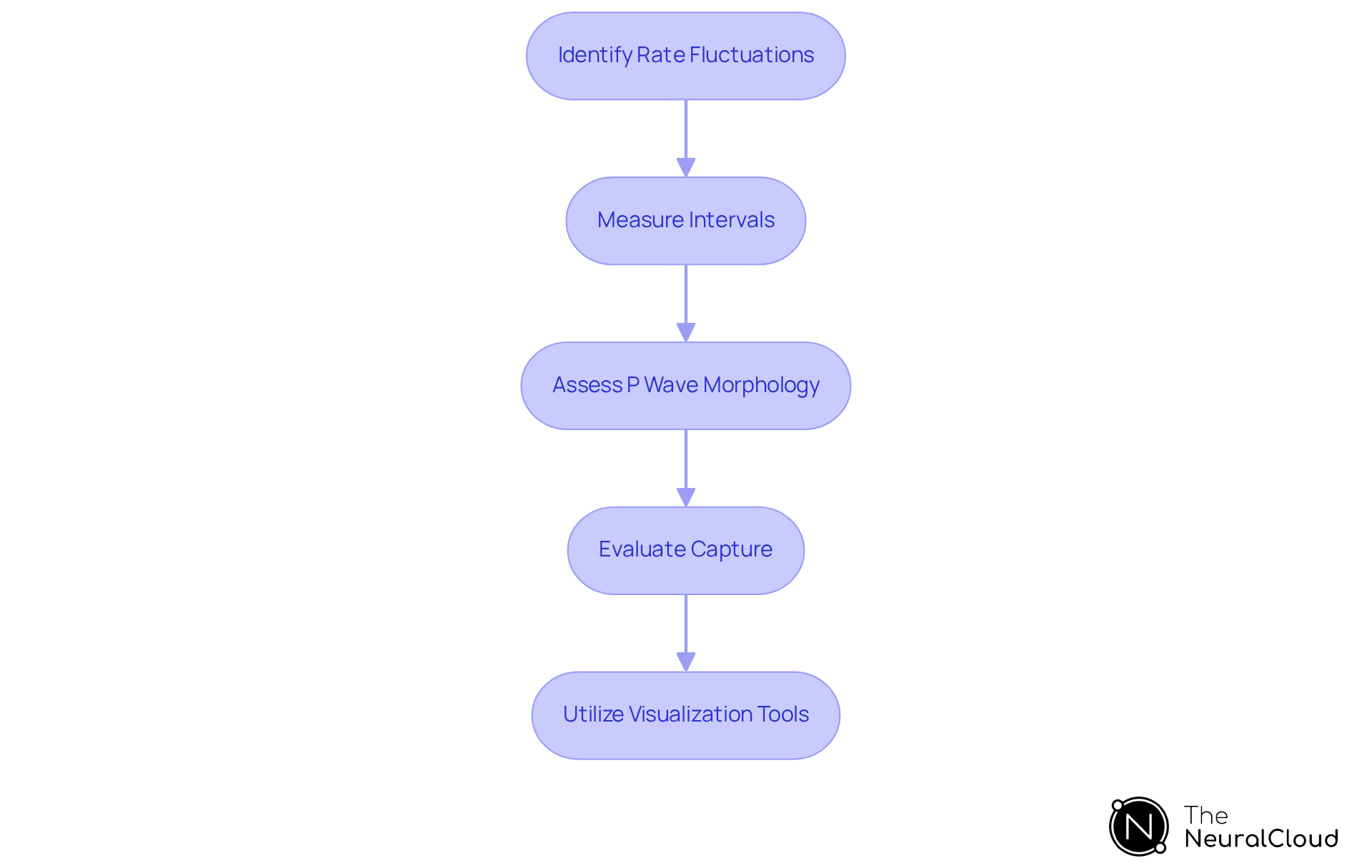
Analyzing atrial paced ECG can be challenging without the right tools and techniques. Here’s a structured guide to elevate your analysis using Neural Cloud Solutions Inc.'s MaxYield:
- Identify Rate Fluctuations: Utilize MaxYield's automated capabilities to easily recognize rate fluctuations, which is crucial for establishing the rate and evaluating capture efficiency.
- Measure Intervals: Use calipers or digital tools to accurately measure the A-A interval and PR interval, aiding in the assessment of timing and effectiveness.
- Assess P Wave Morphology: Examine the shape and duration of the P wave after the stimulation peak. Variations in morphology can signal issues such as lead displacement or myocardial ischemia, which are critical for patient management in the context of atrial paced ECG. MaxYield's advanced algorithms enhance clarity in this analysis.
- Evaluate Capture: Ensure that each rhythm spike corresponds with a P wave. Loss of capture necessitates further investigation into the pacemaker's functionality to prevent complications. MaxYield's beat-by-beat analysis supports this evaluation.
- Utilize Visualization Tools: Leverage Insight360, the customizable visualization and reporting tool, to create interactive dashboards that highlight trends and anomalies in performance data, turning MaxYield’s clear ECG data into ready-to-use clinical reports.
By mastering these techniques with MaxYield, healthcare professionals can enhance diagnostic accuracy and patient management in heart rhythm scenarios. Experts like Dr. Alan Rabinowitz, Dr. Brett Heilbron, and Dr. Marc W. Deyell have noted that MaxYield’s precision rivals that of human interpretation, along with its ability to reduce noise. Additionally, it is important to note that MaxYield is currently pending FDA Class II SaMD clearance, ensuring compliance with regulatory standards and supporting audit-ready documentation for GxP inspections.
Address Challenges and Solutions in Atrial-Paced ECG Analysis
The analysis of atrial paced ECG poses distinct challenges that can hinder accurate interpretation, necessitating effective solutions. Here are common issues and their solutions:
- Loss of Capture: If pacing spikes do not consistently result in P waves, it is crucial to check lead placement and pacemaker settings. Adjustments may be necessary to ensure effective stimulation, as inconsistent pacing can lead to significant patient risks, highlighting the need for precise management strategies. Statistics indicate that these incidents are a growing concern in Canada, underscoring the need for effective management strategies.
- Misinterpretation of Rhythm: Atrial stimulation can resemble other arrhythmias, such as fibrillation. With MaxYield™, advanced algorithms adapt with every use, boosting diagnostic yield and accuracy, helping to distinguish between genuine heart stimulation and other rhythms, thereby lowering the chance of misdiagnosis.
- Timing Issues: Variability in timing intervals may indicate device malfunction. Regular calibration and maintenance of ECG equipment are essential to ensure accurate readings and reliable performance.
- Artifact Confusion: Pacing artifacts can obscure underlying rhythms, complicating analysis. Utilizing filtering techniques in ECG software, such as those provided by MaxYield™, enhances signal clarity and reduces noise. This platform is designed to salvage previously obscured sections of lengthy Holter, 1-Lead, and patch monitor recordings, ensuring that critical data is not lost.
By tackling these challenges head-on, healthcare professionals can sharpen their skills in analyzing atrial paced ECGs, resulting in more accurate diagnoses for patients. As Dr. Alan Rabinowitz notes, "MaxYield™ rivals human interpretation in precision, making it an invaluable tool for clinicians." Furthermore, with FDA Class II SaMD clearance-pending status, Neural Cloud Solutions Inc. is committed to providing audit-ready documentation supporting GxP inspections, ensuring compliance and reliability in ECG analysis. By leveraging advanced tools like MaxYield™, clinicians can significantly improve diagnostic accuracy, ultimately enhancing patient outcomes.

Conclusion
Mastering atrial paced ECG is crucial for healthcare professionals dedicated to improving cardiovascular patient care. Understanding key components such as pacing spikes, P waves, and the implications of loss of capture is essential. By mastering these concepts, clinicians can make informed decisions that directly impact patient outcomes, particularly in cases of bradycardia or upper chamber dysfunction.
The discussion highlights various mechanisms and timing cycles that govern atrial pacing. This includes pacing modes and timing intervals. These insights are crucial for evaluating pacemaker performance and ensuring effective atrial stimulation. Furthermore, advanced tools like MaxYield™ and Insight360 facilitate accurate analysis and interpretation of atrial paced ECGs, ultimately improving diagnostic precision and patient management.
Clinicians often struggle with accurately interpreting atrial paced ECGs, leading to potential misdiagnoses. In light of these challenges, it is vital for clinicians to leverage innovative solutions and technologies. By adopting advanced tools, clinicians can significantly enhance their diagnostic accuracy and patient care in the Canadian healthcare landscape. It's crucial for clinicians to recognize the importance of ongoing education and adapting to new technologies.
Frequently Asked Questions
What is the significance of understanding atrial pacing concepts in ECG interpretation?
Understanding atrial pacing concepts is crucial for accurate interpretation of ECGs, especially in patients with bradycardia or upper chamber dysfunction, as it directly influences clinical decisions and patient management in cardiovascular care.
What does a pacing spike indicate in an atrial paced ECG?
A pacing spike is a sharp vertical line on the ECG that precedes the P wave, indicating the electrical impulse generated by the pacemaker to stimulate the atria.
What does the P wave represent in an atrial paced ECG?
The P wave in an atrial paced ECG signifies atrial depolarization, occurring after the pacing spike, and confirms successful stimulation of the atria.
What is 'Loss of Capture' in the context of atrial pacing?
Loss of Capture occurs when the pacing spike fails to generate a P wave on the atrial paced ECG, indicating potential issues with the pacemaker or lead.
How does the Micra Transcatheter Stimulation System compare to conventional transvenous pacemakers?
The Micra Transcatheter Stimulation System has shown a 63% decrease in significant complications compared to conventional transvenous pacemakers, highlighting the importance of efficient heart stimulation for better patient outcomes.
Why is ongoing education in heart rhythm technology important for healthcare professionals?
Ongoing education in heart rhythm technology is vital as advancements can lead to improved synchronization and overall cardiac function, which is essential for effective patient care in cardiovascular settings.
List of Sources
- Clarify Atrial Pacing Concepts and Their Importance in ECG
- Heart Rhythm 2024 Spotlights New Developments in Cardiac Implantable Electronic Devices and Other Treatments - HRS (https://hrsonline.org/news/hr24-spotlights-new-developments-cieds)
- Medtronic Receives Health Canada Licence for Micra™ Av, the World’s Smallest Pacemaker Which Can Now Treat Av Block (https://canadanews.medtronic.com/2020-12-21-Medtronic-Receives-Health-Canada-Licence-for-Micra-TM-Av-the-Worlds-Smallest-Pacemaker-Which-Can-Now-Treat-Av-Block)
- News - Cardiac Rhythm News (https://cardiacrhythmnews.com/news)
- NYU Winthrop Hospital Implants New Generation of Leadless Pacemakers, Among First-Ever Cardiac Procedures of Its Kind in U.S. (https://nyulangone.org/news/nyu-winthrop-hospital-implants-new-generation-leadless-pacemakers-among-first-ever-cardiac-procedures-its-kind-us)
- Explain Mechanisms of Atrial-Paced ECGs and Timing Cycles
- Atrial-Paced, Ventricular-Sensed Rhythms (https://ecglectures.com/blog/atrial-paced-ventricular-sensed-rhythms)
- Pacemaker Rhythms – Normal Patterns (https://litfl.com/pacemaker-rhythms-normal-patterns)
- AAI(R) or DDD(R) – Which Pacing Mode is Right for Your Patients? (https://cardiovascular.abbott/us/en/hcp/products/cardiac-rhythm-management/blog/aai-r-ddi-r-pacing-mode-sick-sinus-syndrome.html)
- Guide Analysis of Atrial-Paced ECGs Using Advanced ECG Tools
- AI proves better than humans at analyzing long-term ECG recordings in large international study (https://medicalxpress.com/news/2025-02-ai-humans-term-ecg-large.html)
- Canada Diagnostic Electrocardiograph/ECG Market Size, Share,Trends, Growth Analysis Report, 2030 (https://marketsandmarkets.com/Market-Reports/geography/diagnostic-ecg-global-market/canada)
- News - Cardiac Rhythm News (https://cardiacrhythmnews.com/news)
- Performance of an artificial intelligence-powered smartphone application in the UK clinical settings: ECG automation compared to healthcare professionals - PMC (https://pmc.ncbi.nlm.nih.gov/articles/PMC12532542)
- Address Challenges and Solutions in Atrial-Paced ECG Analysis
- A Cautionary Tale on Atrial Capture Management, Biventricular Pacing, and Recurrent Asystole (https://innovationsincrm.com/cardiac-rhythm-management/articles-2019/october/1477-atrial-capture-management-biventricular-pacing-recurrent-asystole)
- Loss of Right Atrial Pacing Lead Capture Due to Myocardial Infarction Obscuring Diagnosis on Electrocardiogram - PMC (https://pmc.ncbi.nlm.nih.gov/articles/PMC9334149)
- Causes of Failure to Capture in Pacemakers and Implantable Cardioverter-defibrillators (https://innovationsincrm.com/cardiac-rhythm-management/articles-2020/february/1541-failure-to-capture-in-pacemakers-and-icds)
- Loss of capture of conduction system pacemaker caused by fibrosis surrounding the lead: a case report - BMC Cardiovascular Disorders (https://link.springer.com/article/10.1186/s12872-023-03656-3)