Introduction
AV paced non capture presents a significant challenge in cardiac care, where ineffective stimulation by pacemakers can lead to serious patient complications.
Let’s explore how we can effectively identify and manage this phenomenon, providing clinicians with valuable insights into the physiological and technical aspects of AV paced non capture.
How can healthcare providers use innovative tools like MaxYield™ to enhance ECG analysis and improve patient outcomes when facing this complex issue?
Define AV Paced Non Capture: Physiological and Technical Insights
AV paced non capture poses a significant challenge in cardiac care, as it indicates that pacemakers are failing to effectively stimulate heart contractions. This condition can arise from several factors:
- Lead displacement
- Elevated capture thresholds
- Intrinsic cardiac conduction abnormalities
The physiological basis of this phenomenon hinges on the precise timing of the stimulation signal, which must align perfectly to stimulate myocardial depolarization effectively. Clinically, this is evident on an ECG as stimulation spikes that do not produce corresponding QRS complexes, indicating a lack of response from the heart to the stimulation signal.
Understanding how rhythm control works and the AV node's role is essential for clinicians reviewing ECGs in pacemaker patients. For instance, lead dislodgement or malposition are common acute causes of loss of capture immediately after device insertion. Additionally, electrolyte imbalances, particularly hyperkalemia, can raise the threshold for stimulation, complicating the capture process. Patients reliant on pacing face significant risks when capture is lost, often requiring urgent medical attention, highlighting the importance of timely monitoring and intervention to avert serious complications.
Moreover, pacemaker-associated dysrhythmias, such as pacemaker-mediated tachycardia (PMT) and lead dislodgement dysrhythmia, are crucial for understanding the broader context of AV Paced Non Engagement. In this regard, Neural Cloud Solutions' MaxYield™ platform plays a pivotal role by employing advanced noise filtering and distinct wave recognition capabilities. MaxYield™ identifies and labels critical data even in recordings with high levels of noise and artifact, allowing for rapid isolation of ECG waves from recordings affected by baseline wander, movement, and muscle artifact. This technology can recover previously hidden sections of lengthy Holter, 1-Lead, and patch monitor recordings, thus improving the accuracy of ECG interpretation in complex situations like AV Paced Non Detection.
Case studies illustrate the implications of AV paced non capture in cardiac physiology. For example, one study emphasized the need for immediate management of electrolyte abnormalities to restore capture, while another highlighted the critical role of regular device interrogation in identifying rhythm abnormalities. These insights underscore the necessity for healthcare providers to be well-versed in the potential causes and management strategies for loss of capture, ensuring improved outcomes and safety. By leveraging the capabilities of MaxYield™, clinicians can enhance their diagnostic accuracy, ultimately leading to better patient outcomes. Furthermore, the continuous improvement of the MaxYield™ algorithm ensures that its accuracy and efficiency evolve with each use, reinforcing its value in clinical settings.

Analyze Clinical Implications of AV Paced Non Capture in ECG Readings
The challenges posed by AV paced non-capture can significantly impact patient care and outcomes. If a pacemaker fails to capture, the heart might return to its intrinsic rhythm. This rhythm can be bradycardic or irregular, depending on the underlying condition. Such changes can lead to symptoms like dizziness, syncope, or even cardiac arrest in severe cases. Monitoring patients with pacemakers can be challenging, especially when signs of inadequate perfusion are present.
Understanding the frequency and context of non-capture events is essential for guiding adjustments in timing strategies. For example, increasing output or repositioning leads may be necessary to improve capture rates. Case studies illustrate these challenges:
- One case highlighted a ventricular paced rhythm with intermittent failure to capture, indicating a potential malfunction in the pacemaker's ability to effectively stimulate the ventricles.
- Another case demonstrated a runaway pacemaker scenario, where rapid pacing spikes failed to excite the ventricles due to low amplitude spikes, underscoring the complexities of pacing management.
Statistical data further emphasizes the importance of addressing AV paced non-capture. Output failure occurs when a paced stimulus is not generated, leading to decreased or absent pacemaker function. Additionally, studies indicate that approximately 30% of individuals with pacemakers experience non-capture events, complicating the clinical picture, as retrograde P waves may be misinterpreted as native atrial activity. Ignoring AV paced non-capture can lead to serious complications for patients. Therefore, proactive management and thorough ECG interpretation are essential for optimizing patient outcomes in those with pacemakers.
Furthermore, Neural Cloud Solutions' MaxYield™ platform, along with Insight360, plays a crucial role in addressing these challenges. By leveraging advanced noise filtering and distinct wave recognition, MaxYield™ can transform lengthy and noisy ECG recordings into clean, crisp signals, facilitating accurate interpretation and enhancing clinical decision-making.

Implement Step-by-Step Identification of AV Paced Non Capture Using MaxYield
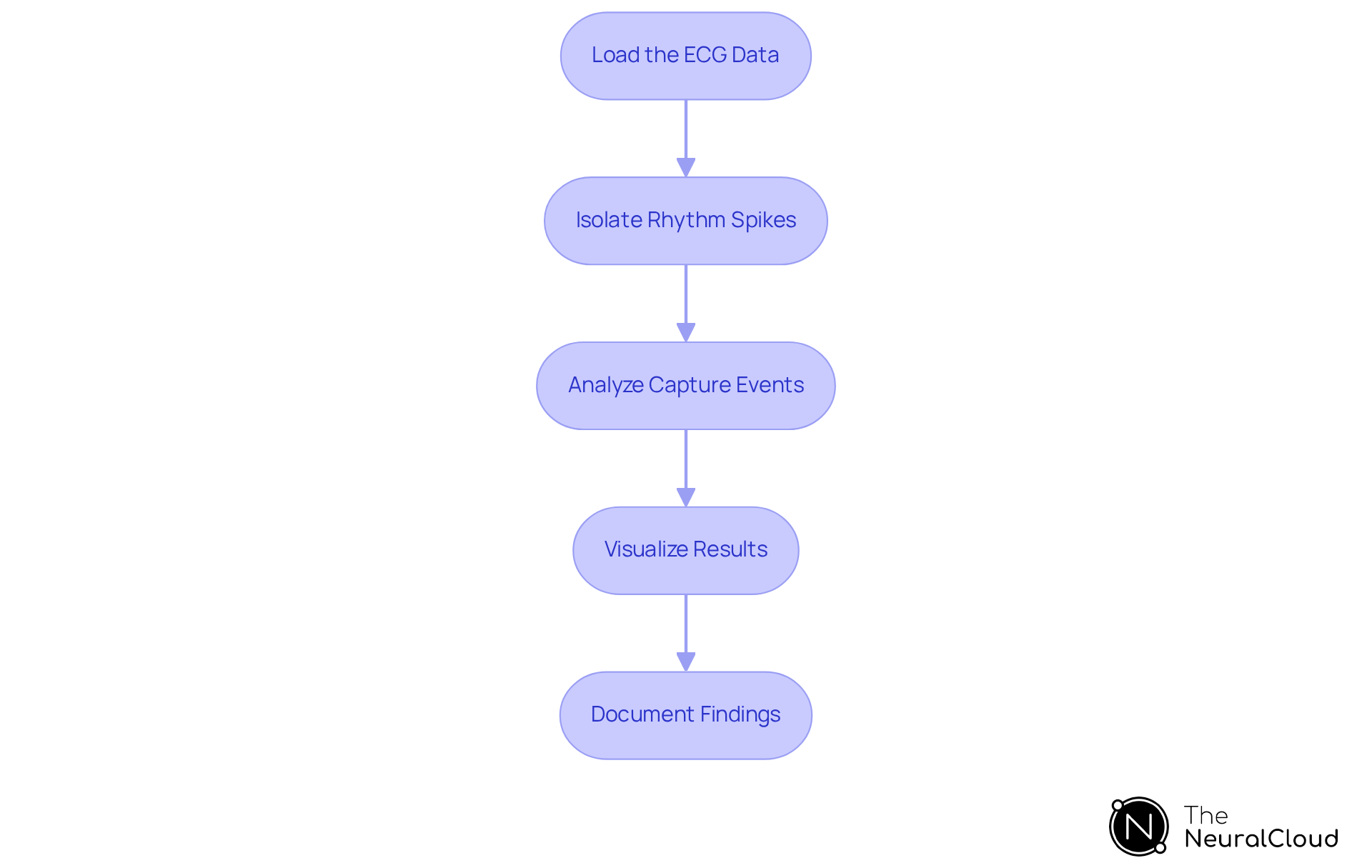
Identifying AV paced non capture events can be challenging for clinicians, but MaxYield provides a systematic approach to streamline this process. To identify AV Paced Non Seizure using MaxYield, follow these steps:
- Load the ECG Data: Import the raw ECG recordings into MaxYield, ensuring the data originates from reliable sources such as Holter monitors or wearable devices.
- Isolate Rhythm Spikes: Leverage MaxYield’s patented signal mapping algorithms to effectively isolate rhythm spikes from the ECG signal. This step is essential for differentiating between paced and intrinsic beats.
- Analyze Capture Events: Review the intervals following each rhythm spike. A QRS complex that does not follow a stimulation spike within the expected timing window indicates a non-capture event.
- Visualize Results: Utilize the Insight360 tool, a customizable visualization and reporting feature, to generate interactive dashboards and clinical-ready reports that represent the pacing events, aiding in the identification of non-capture patterns over time.
- Document Findings: Record the frequency and context of non-capture events for further analysis and clinical decision-making. This method helps clinicians accurately identify av paced non capture, which allows for timely interventions.
For more information on regulatory compliance, including FDA Class II SaMD clearance-pending status, and to explore MaxYield’s capabilities, contact Neural Cloud Solutions Inc. for free trials or personalized walkthroughs.
Employ Advanced Techniques for Mitigating AV Paced Non Capture Effects
Clinicians face significant challenges in managing AV Paced Non Capture, but several advanced techniques can help mitigate these effects:
- Adjust Speed Thresholds: Regular evaluation and modification of speed thresholds are essential. Increasing the pacemaker output can help ensure adequate myocardial depolarization, particularly when av paced non capture events are frequent.
- Utilize Adaptive Algorithms: Implementing adaptive algorithms allows for dynamic adjustments based on the patient’s changing cardiac conditions. These algorithms optimize timing parameters in real-time, significantly reducing the risk of av paced non capture.
- Monitor Lead Positioning: Correct positioning and functionality of stimulation leads are crucial. Routine follow-ups and imaging methods can assist in detecting lead displacements that may result in av paced non capture, ensuring consistent effectiveness.
- Educate Patients: Patient education on the signs and symptoms of av paced non capture is vital. Empowering individuals to report unusual symptoms can facilitate timely interventions, enhancing overall care.
- Leverage AI tools like MaxYield™ to facilitate ongoing monitoring of ECG data in order to identify signs of av paced non capture. MaxYield™ provides automated analysis that filters noise and recognizes distinct waves. This helps clinicians recover obscured sections from Holter, 1-Lead, and patch monitor recordings. Additionally, the customizable visualization and reporting tool, Insight360, transforms MaxYield’s clean ECG data into interactive dashboards and clinical-ready reports. This proactive method enables prompt modifications to timing strategies, enhancing outcomes for individuals.
By incorporating these advanced techniques, clinicians can greatly improve the effectiveness of pacing therapies. For example, research has indicated that adaptive algorithms can result in a 58% decrease in the occurrence of persistent atrial fibrillation, showcasing their potential influence on healthcare. Furthermore, regulatory compliance details, such as FDA Class II SaMD clearance-pending status, are essential for ensuring that these technologies meet necessary standards. Expert opinions, such as those from Luigi Padeletti, emphasize the importance of recognizing non-capture symptoms for timely interventions. By implementing these strategies, clinicians not only enhance pacing effectiveness but also contribute to improved patient care and outcomes.

Conclusion
Understanding AV paced non capture is essential for clinicians, as it poses significant challenges in cardiac care. This condition, characterized by the failure of pacemakers to stimulate heart contractions effectively, can lead to serious complications if not addressed promptly. By utilizing advanced technologies such as Neural Cloud Solutions' MaxYield™, healthcare providers can enhance their diagnostic capabilities and improve patient outcomes.
The article emphasizes the physiological and technical aspects of AV paced non capture, highlighting the importance of timely monitoring and intervention. Key insights include the identification of causes such as lead displacement and electrolyte imbalances, as well as the clinical implications of non-capture events. A systematic approach to identifying these events using MaxYield™ is outlined, showcasing how clinicians can apply advanced algorithms and visualization tools to streamline ECG analysis and enhance decision-making.
Ultimately, the significance of understanding and managing AV paced non capture cannot be overstated. By adopting advanced techniques and utilizing innovative tools, clinicians can mitigate the risks associated with this condition, ensuring better care for patients reliant on pacing therapies. Embracing these strategies not only enhances diagnostic precision but also empowers clinicians to provide superior patient care.
Frequently Asked Questions
What is AV paced non capture?
AV paced non capture refers to a condition where pacemakers fail to effectively stimulate heart contractions, which can be identified by stimulation spikes on an ECG that do not produce corresponding QRS complexes.
What are the common causes of AV paced non capture?
Common causes include lead displacement, elevated capture thresholds, and intrinsic cardiac conduction abnormalities. Additionally, electrolyte imbalances, particularly hyperkalemia, can complicate the capture process.
Why is the timing of the stimulation signal important in AV paced non capture?
The timing of the stimulation signal is crucial because it must align perfectly to stimulate myocardial depolarization effectively. Misalignment can lead to a lack of response from the heart.
What are the clinical implications of losing capture in patients reliant on pacing?
Patients who lose capture face significant risks and often require urgent medical attention. Timely monitoring and intervention are essential to prevent serious complications.
How does the MaxYield™ platform assist in managing AV paced non capture?
Neural Cloud Solutions' MaxYield™ platform employs advanced noise filtering and distinct wave recognition capabilities to identify and label critical data in ECG recordings, improving the accuracy of interpretation in complex situations like AV paced non detection.
What role do pacemaker-associated dysrhythmias play in understanding AV paced non capture?
Dysrhythmias such as pacemaker-mediated tachycardia (PMT) and lead dislodgement dysrhythmia are important for understanding the broader context of AV paced non engagement and can complicate the management of patients.
What are some management strategies for addressing AV paced non capture?
Management strategies include immediate correction of electrolyte abnormalities and regular device interrogation to identify rhythm abnormalities, ensuring improved outcomes and safety for patients.
How does the continuous improvement of the MaxYield™ algorithm benefit clinical settings?
The continuous improvement of the MaxYield™ algorithm enhances its accuracy and efficiency with each use, reinforcing its value in clinical settings for better diagnostic outcomes.
List of Sources
- Define AV Paced Non Capture: Physiological and Technical Insights
- Causes of Failure to Capture in Pacemakers and Implantable Cardioverter-defibrillators (https://innovationsincrm.com/cardiac-rhythm-management/articles-2020/february/1541-failure-to-capture-in-pacemakers-and-icds)
- AI-Driven Analysis Finds AFib Burden Not Tied to Stroke Risk in Pacemaker Patients (https://hrsonline.org/news/ai-analysis-afib-burden)
- Pacemaker Malfunction (https://litfl.com/pacemaker-malfunction-ecg-library)
- Pacemaker Malfunction: Background, Pathophysiology, Etiology (https://emedicine.medscape.com/article/156583-overview)
- Analyze Clinical Implications of AV Paced Non Capture in ECG Readings
- Pacemaker Malfunction (https://litfl.com/pacemaker-malfunction-ecg-library)
- Pacemaker Malfunction in a Patient With Congestive Heart Failure and Hypertension (https://cureus.com/articles/135395-pacemaker-malfunction-in-a-patient-with-congestive-heart-failure-and-hypertension)
- 2023 HRS/APHRS/LAHRS guideline on cardiac physiologic pacing for the avoidance and mitigation of heart failure (https://heartrhythmjournal.com/article/S1547-5271(23)02026-X/fulltext)
- Adaptive Pacemaker Fails in HFpEF (https://medpagetoday.com/meetingcoverage/acc/103464)
- Implement Step-by-Step Identification of AV Paced Non Capture Using MaxYield
- MaxYield-ECG (https://theneuralcloud.com/maxyield-ecg)
- AIML Hits Key Regulatory Benchmark with 510(k) Filing for MaxYield(TM) Signal Enhancement Platform (https://biospace.com/press-releases/aiml-hits-key-regulatory-benchmark-with-510k-filing-for-maxyieldtm-signal-enhancement-platform)
- Revolutionary AI-Powered ECG Platform MaxYield Seeks FDA Clearance: What This Means for Digital Health (https://stocktitan.net/news/AIMLF/aiml-hits-key-regulatory-benchmark-with-510-k-filing-for-max-yield-mj718ol7q93m.html)
- AIML Subsidiary Neural Cloud Signs LOI with Circular Health to License MaxYield(TM) ECG Signal Processing (https://finance.yahoo.com/news/aiml-subsidiary-neural-cloud-signs-110000257.html)
- AIML Subsidiary NeuralCloud Enters Research Services Agreement with Baker Heart and Diabetes Institute to Support AI-Driven ECG Analysis (https://nasdaq.com/press-release/aiml-subsidiary-neuralcloud-enters-research-services-agreement-baker-heart-and)
- Employ Advanced Techniques for Mitigating AV Paced Non Capture Effects
- FDA clears AI-powered platform that personalizes care during TAVR, cardiac pacing procedures (https://cardiovascularbusiness.com/topics/clinical/structural-heart-disease/tavr/fda-clears-ai-powered-platform-personalizes-care-during-tavr-cardiac-pacing-procedures)
- Automatic pacing output optimization system causes pacing failure: Two case reports - PMC (https://pmc.ncbi.nlm.nih.gov/articles/PMC11116948)
- Late-Breaking Clinical Trial Results Show Medtronic-Exclusive Pacemaker Algorithm Significantly Delays Atrial Fibrillation (https://tctmd.com/news/late-breaking-clinical-trial-results-show-medtronic-exclusive-pacemaker-algorithm)
- Medtronic Pacing Algorithm Improves Delivery of Cardiac Resynchronization Therapy (https://dicardiology.com/content/medtronic-pacing-algorithm-improves-delivery-cardiac-resynchronization-therapy)
- Medtronic initiates global pivotal study of cardiac pacing in a new patient population (https://prnewswire.com/news-releases/medtronic-initiates-global-pivotal-study-of-cardiac-pacing-in-a-new-patient-population-302555905.html)