Introduction
Despite advancements in cardiology, the challenge of accurately interpreting ST elevation remains a critical concern that can impact patient outcomes. For health tech developers, mastering the intricacies of ST elevation and its borderline cases is essential for creating innovative diagnostic tools that enhance patient care. Yet, with the ongoing struggle to interpret subtle ST changes, developers must consider how their solutions can tackle the complexities of ECG analysis and ultimately enhance clinical outcomes.
Define ST Elevation and Its Clinical Significance
Understanding ST displacement is vital for effective ECG analysis and timely patient care. ST displacement signifies an upward shift of the ST segment on an electrocardiogram (ECG) and serves as a crucial marker for myocardial injury or infarction. Its clinical significance lies in its association with acute coronary syndrome, particularly ST-Elevation Myocardial Infarction (STEMI). Misinterpretation of ST rise can delay critical interventions, jeopardizing patient outcomes. Current guidelines emphasize the need for accurate ST rise identification. A minimum increase of 1 mm in at least two adjacent leads is a key diagnostic criterion for STEMI.
For health tech developers, grasping these parameters is essential for creating diagnostic tools that can effectively identify and analyze ST changes. Successful implementations of ECG tools, such as Neural Cloud Solutions' MaxYield™, have shown enhanced precision in identifying ST rise, thereby enabling prompt treatment. Timely interventions, like primary percutaneous coronary intervention (PCI) within the first 120 minutes, can greatly lower mortality rates from myocardial infarction. This underscores the urgency of accurate ST rise detection for effective treatment.
The significance of reliable ST segment detection is essential for effective cardiac diagnostic tools. Furthermore, the MaxYield™ platform offers unique metrics and premium subscription opportunities that enhance its value proposition. As we progress through 2026, the focus on enhancing ECG diagnostics through advanced technology, including the continuous learning model of MaxYield™, remains paramount, ensuring that health tech solutions contribute to better patient care and outcomes. As technology evolves, the integration of reliable ST segment detection will be crucial for advancing cardiac care.

Identify Criteria for Borderline ST Elevation in ECGs
Interpreting borderline ST elevation on a 12-lead ECG presents significant challenges for healthcare professionals. Borderline ST elevation is defined as a rise of the ST segment that is less than 1 mm in two contiguous leads. This subtle rise can be difficult to interpret, as it may sometimes be associated with borderline ST elevation rather than indicating acute myocardial infarction. Developers should focus on the following criteria:
- Measurement Thresholds: For men under 40 years old, ST elevation of 0.5 mm to 1 mm is significant in leads V2 and V3, while 0.5 mm in other leads is also noteworthy.
- Contiguous Leads: The height must be present in at least two contiguous leads to be considered significant.
- Clinical Context: Patient symptoms and history are crucial, as slight ST elevation can occur in conditions such as early repolarization or pericarditis.
Timely diagnosis requires performing an ECG within 10 minutes of a patient's presentation, as delays can lead to misdiagnosis. In fact, one in two heart attacks is misdiagnosed at the first point of contact. By grasping these standards, developers can refine their algorithms to precisely identify borderline cases. This misdiagnosis can delay critical treatment, impacting patient outcomes significantly. Utilizing the features of MaxYield™, developers can:
- Map ECG signals through noise
- Provide beat-by-beat analysis
This ensures that subtle ST changes are identified accurately. Rapid recognition of a STEMI is crucial to optimizing patient outcomes when it comes to morbidity and mortality. By refining algorithms to detect these subtle changes, developers can significantly improve diagnostic accuracy and patient care.

Utilize Advanced Tools for Analyzing Borderline ST Elevation
Accurate diagnosis of borderline ST elevation remains a significant challenge in ECG analysis, often resulting in delayed treatment and adverse patient outcomes. To effectively analyze borderline ST elevation, developers should consider incorporating advanced tools and methodologies that leverage the latest in technology and research:
- AI and Machine Learning Algorithms: These technologies can be trained to recognize patterns associated with borderline ST elevation, significantly enhancing diagnostic accuracy. For instance, convolutional neural networks (CNNs) can analyze ECG waveforms to identify subtle changes suggesting marginal conditions. A study carried out at UC Davis Medical Center showed that the AI ECG model enhanced sensitivity to 92% and specificity to 81% in identifying ST changes, surpassing conventional techniques.
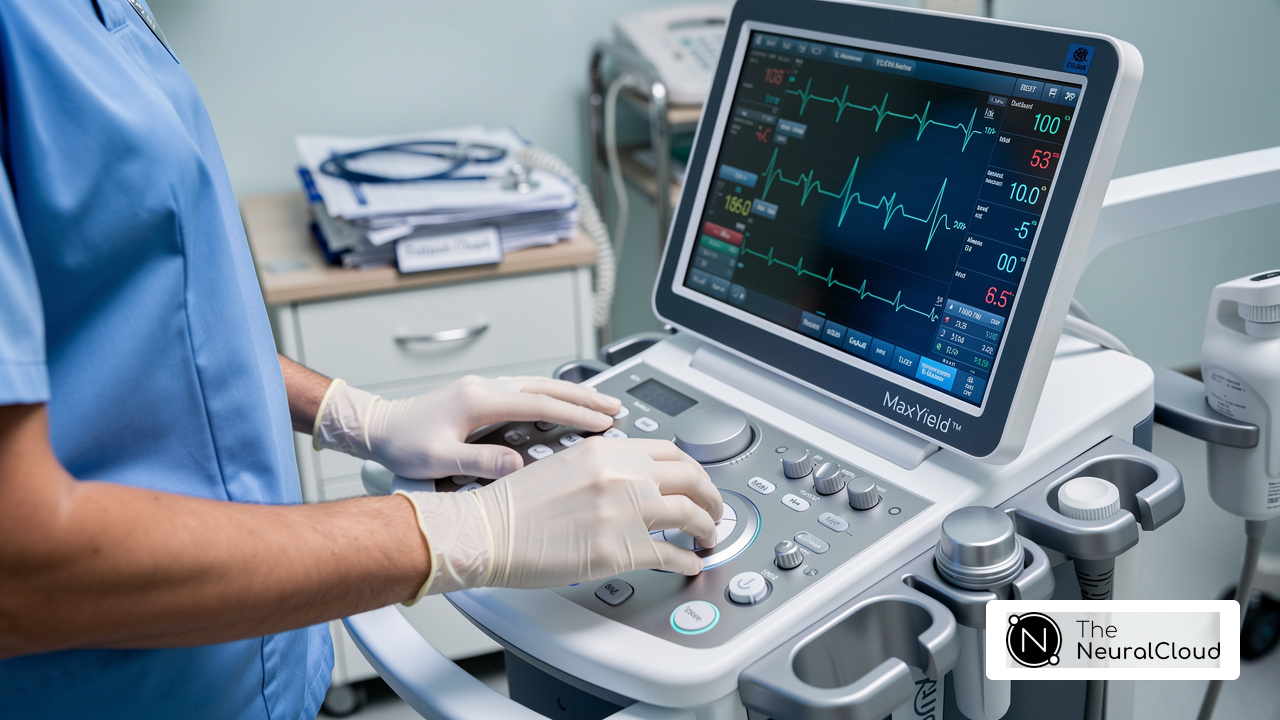
- Automated ECG Interpretation Software: Implementing software like Neural Cloud Solutions' MaxYield™, which automatically flags marginal ST rise and provides detailed analysis of P-wave, QRS complex, and T-wave intervals, can streamline the diagnostic process. MaxYield™ maps ECG signals through noise, isolating and labeling key features in every heartbeat. This allows healthcare providers to prioritize critical cases, reducing the risk of delays in treatment. Studies show that when treatment exceeds 90 minutes, the risk of death is approximately three times greater in STEMI individuals.
- Integration with Existing Systems: New tools, such as MaxYield™, must seamlessly integrate with existing ECG systems and workflows. This integration enhances usability for healthcare professionals, ensuring that they can adopt these technologies without extensive retraining or workflow disruptions.
- Real-time Data Analysis: Tools that offer real-time analysis, such as MaxYield™, allow clinicians to make prompt decisions based on marginal ST height findings. This capability is crucial in emergency situations, where timely intervention can significantly enhance outcomes for individuals.
By adopting MaxYield™, clinicians can enhance diagnostic accuracy and improve patient outcomes. Utilizing advanced tools like Neural Cloud Solutions' MaxYield™ enables developers to identify marginal ST rise and provide actionable insights for clinicians. This ultimately enhances patient care and outcomes.

Interpret Findings and Implications for Patient Management
Interpreting ambiguous ST rise findings can be challenging, requiring a deep understanding of each patient's clinical context. Here are key considerations for health tech developers:
- Clinical Decision-Making: Borderline ST elevation may necessitate further diagnostic testing, such as cardiac biomarkers or imaging studies, to rule out acute myocardial infarction. Developers should ensure their tools provide comprehensive reports that facilitate these decisions, enhancing the clinician's ability to act swiftly and accurately.
- Risk Stratification: Understanding the implications of marginal ST rise is crucial for effective patient management. For instance, individuals showing chest discomfort and slight ST rise may need more careful observation and possible intervention. Recent studies indicate that these individuals often face increased risks, underscoring the need for precise risk stratification tools.
- Guidelines and Protocols: Familiarity with current clinical guidelines, including the 2025 updates from the American College of Cardiology, is essential for developers. These guidelines stress the significance of a high index of clinical suspicion and the necessity for customized management strategies for individuals with borderline ST elevation, ensuring that care tools align with best practices.
- Feedback Mechanisms: Incorporating feedback mechanisms within diagnostic tools can significantly enhance clinical decision-making. These features enable clinicians to refine their interpretations based on real-time data and results, ultimately improving diagnostic accuracy and care management over time.
By addressing these considerations, developers can significantly enhance the effectiveness of ECG analysis tools, ultimately leading to better patient outcomes.

Conclusion
The challenges in accurately interpreting ST elevation pose significant risks for health tech developers focused on enhancing cardiac care. Misinterpretation of ST segment displacement on ECGs can significantly hinder the diagnosis of ST-Elevation Myocardial Infarction (STEMI). Delayed interventions due to these misinterpretations underscore the need for precise detection tools that can greatly improve patient outcomes.
Key insights discussed include:
- The criteria for identifying borderline ST elevation
- The importance of timely ECG analysis
- The integration of advanced technologies like AI and machine learning for improved diagnostic accuracy
Platforms such as Neural Cloud Solutions' MaxYield™ play a crucial role in refining the interpretation of subtle ST changes, ultimately leading to better risk stratification and patient management strategies.
In conclusion, by focusing on precise detection and timely intervention, the healthcare community can transform patient outcomes and mitigate the risks associated with myocardial infarction.
Frequently Asked Questions
What is ST elevation in an electrocardiogram (ECG)?
ST elevation refers to an upward shift of the ST segment on an ECG, which is a crucial marker for myocardial injury or infarction.
Why is ST elevation clinically significant?
ST elevation is clinically significant because it is associated with acute coronary syndrome, particularly ST-Elevation Myocardial Infarction (STEMI). Accurate identification of ST rise is essential for timely patient care and intervention.
What is the diagnostic criterion for STEMI related to ST elevation?
The diagnostic criterion for STEMI requires a minimum increase of 1 mm in the ST segment in at least two adjacent leads on an ECG.
How can misinterpretation of ST elevation affect patient outcomes?
Misinterpretation of ST elevation can delay critical interventions, jeopardizing patient outcomes and potentially increasing mortality rates from myocardial infarction.
What role do health tech developers play in relation to ST elevation?
Health tech developers need to understand ST elevation parameters to create diagnostic tools that can effectively identify and analyze ST changes, improving patient care.
What is the importance of timely interventions for ST elevation?
Timely interventions, such as primary percutaneous coronary intervention (PCI) within the first 120 minutes of symptom onset, can significantly lower mortality rates from myocardial infarction.
What is the MaxYield™ platform and its significance?
The MaxYield™ platform is an ECG diagnostic tool that enhances the precision of identifying ST rise, thereby enabling prompt treatment and improving patient outcomes.
How does the continuous learning model of MaxYield™ contribute to cardiac care?
The continuous learning model of MaxYield™ focuses on enhancing ECG diagnostics through advanced technology, ensuring that health tech solutions contribute to better patient care and outcomes as technology evolves.
List of Sources
- Define ST Elevation and Its Clinical Significance
- STEMI: ST-segment Elevation Myocardial Infarction - The Cardiology Advisor (https://thecardiologyadvisor.com/ddi/stemi-st-elevation-myocardial-infarction)
- STEMI ECG Criteria: ST-Elevation Thresholds (https://powerfulmedical.com/blog/stemi-ecg-criteria)
- Cover Story | Acute Coronary Syndromes: New Perspectives, New Data - American College of Cardiology (https://acc.org/latest-in-cardiology/articles/2024/06/01/01/42/cover-story-acute-coronary-syndromes-new-perspectives-new-data)
- news-medical.net (https://news-medical.net/news/20260226/Heart-attack-deaths-increase-in-young-adults-especially-women.aspx)
- Identify Criteria for Borderline ST Elevation in ECGs
- STEMI - Electrocardiogram - M3 Curriculum | SAEM (https://saem.org/about-saem/academies-interest-groups-affiliates2/cdem/for-students/online-education/m3-curriculum/group-electrocardiogram-(ecg)-rhythm-recognition/stemi)
- STEMI ECG Criteria: ST-Elevation Thresholds (https://powerfulmedical.com/blog/stemi-ecg-criteria)
- STEMI and STEMI Equivalents, i.e. Who Needs the Cath Lab Now! — Taming the SRU (https://tamingthesru.com/blog/grand-rounds/stemi)
- Utilize Advanced Tools for Analyzing Borderline ST Elevation
- New study finds AI model improves heart attack detection (https://health.ucdavis.edu/news/headlines/new-study-finds-ai-model-improves-heart-attack-detection/2025/11)
- STEMI ECG Criteria: ST-Elevation Thresholds (https://powerfulmedical.com/blog/stemi-ecg-criteria)
- AI-Based ECG Analysis Significantly Improves STEMI Detection, Reduces False Activations - American College of Cardiology (https://acc.org/latest-in-cardiology/articles/2025/10/24/16/56/tues-554pm-ai-tct-2025)
- Interpret Findings and Implications for Patient Management
- New Guideline on Acute Coronary Syndromes: Key Takeaways (https://consultqd.clevelandclinic.org/new-guideline-on-acute-coronary-syndromes-key-takeaways-for-cardiologists)