Introduction
Understanding bundle branch block (BBB) is crucial for healthcare professionals dealing with cardiac health. This condition disrupts the heart's electrical conduction pathways, which can significantly affect patient outcomes and treatment strategies. Clinicians face the challenge of accurately identifying BBB in ECG readings, often complicated by noise and artifacts.
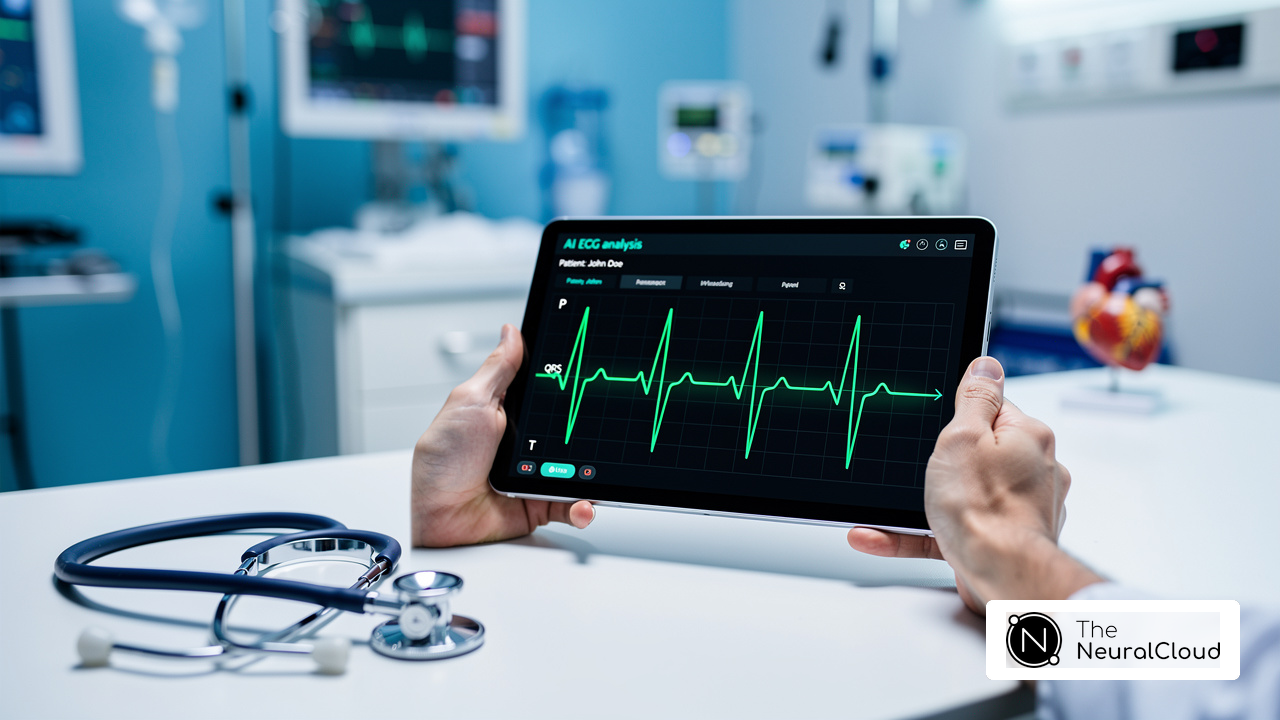
To address these challenges, the MaxYield™ platform offers innovative features designed to enhance ECG analysis. By improving the clarity of EKG readings, it allows healthcare professionals to make more accurate diagnoses. The platform's advanced algorithms filter out noise, ensuring that clinicians can focus on the critical aspects of the ECG.
The advantages of using MaxYield™ are clear:
- It not only streamlines the interpretation process but also leads to better patient care.
- With enhanced diagnostic accuracy, healthcare professionals can implement more effective treatment strategies, ultimately improving patient outcomes.
Incorporating tools like MaxYield™ into clinical practice can transform the way clinicians approach ECG analysis, making it a vital resource in the pursuit of precision in cardiac health.
Define Bundle Branch Block and Its Importance in ECG Analysis
is a condition characterized by a delay or blockage in the electrical conduction pathways of the heart, specifically within the right or left bundle branches. This disruption can result in a wide QRS complex on an ECG, indicating that the ventricles are not contracting in a synchronized manner. Understanding bundle branch block is crucial for healthcare professionals, as it can signal underlying heart conditions, influence treatment decisions, and affect patient outcomes. Accurate identification of bundle branch block on an ECG is essential, especially in recordings that may be impacted by noise and artifacts.
Neural Cloud Solutions' technology addresses these challenges by employing advanced algorithms and distinct wave recognition. This innovative technology allows for the rapid isolation of ECG waves, even in difficult conditions. The primary features of MaxYield™ include:
- Advanced filtering to enhance signal clarity.
- Distinct wave recognition for accurate analysis.
The advantages of using MaxYield™ are significant for healthcare professionals. By improving ECG interpretation, clinicians can better evaluate the likelihood of arrhythmias and other cardiac complications. This capability is vital for effective cardiac care, as recent studies indicate that patients with left bundle branch block face a considerably higher risk of heart failure. Specifically, 47.7% of individuals with baseline left bundle branch block develop heart failure, compared to 28.9% of those without it. Furthermore, left bundle branch block is associated with a fourfold increase in the left ventricular ejection fraction decline, underscoring its importance in clinical assessment.
In summary, the MaxYield™ technology not only enhances the accuracy of ECG analysis but also supports clinicians in making informed decisions regarding patient care. Accurate identification of bundle branch block on an ECG is crucial for diagnosing and managing other cardiac complications, ultimately improving patient outcomes.

Explain the Mechanism of Bundle Branch Block in Cardiac Conduction
The organ's electrical conduction system includes specialized pathways that ensure the rapid transmission of electrical impulses, which facilitates coordinated contractions of the heart's chambers. When a bundle branch block occurs, conduction through either the right or left bundle branch is disrupted. This disruption often arises from ischemia, cardiomyopathy, or structural cardiovascular abnormalities. As a result, the affected ventricle contracts later than the other, leading to a delay in ventricular contraction, which is evident as a widened QRS complex on the EKG.
Research indicates that bundle branch block plays a significant role in the development of heart disease. Studies have shown that bundle branch block is associated with an increased risk of adverse outcomes, including heart failure and overall mortality. Understanding these mechanisms is crucial for interpreting the clinical implications of bundle branch block, as they can significantly impact patient management.
Ongoing research into the underlying mechanisms highlights the importance of careful monitoring and management of patients, particularly those with ischemic cardiac conditions. This proactive approach can help reduce potential complications and improve patient outcomes.

Identify Symptoms and Clinical Significance of Bundle Branch Block
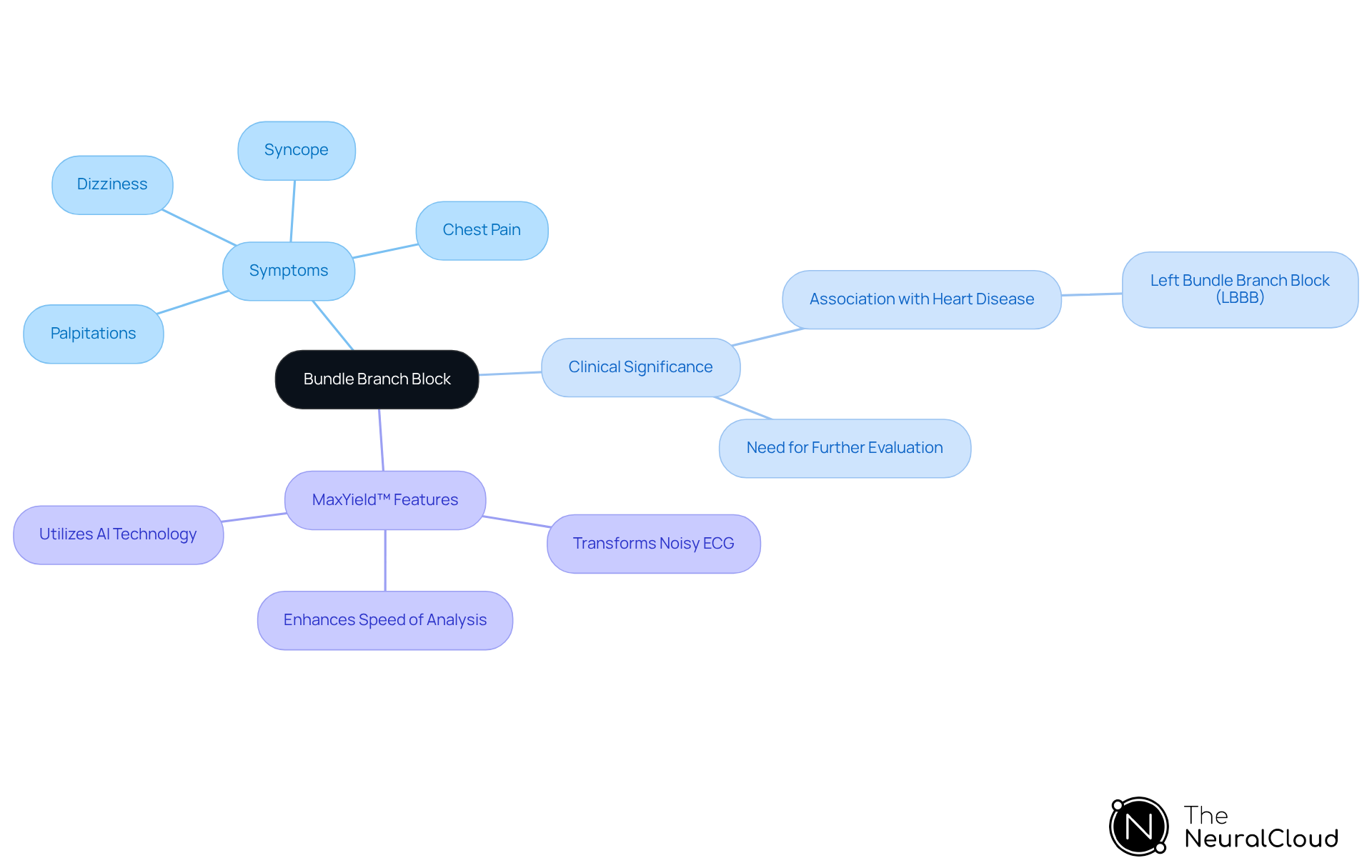
Many patients with bundle branch block may not show any symptoms, particularly when the block is isolated and not linked to other cardiac issues. However, some individuals might experience symptoms like palpitations, dizziness, syncope, or chest pain. The clinical significance of bundle branch block is closely tied to its association with underlying heart disease, especially coronary artery disease, which can signal more serious conditions. Therefore, clinicians need to assess the patient's overall health, including symptoms and contributing factors, to decide if further evaluation is necessary, such as cardiac imaging, to exclude other issues.
The technology from Neural Cloud Solutions addresses the challenges faced in ECG analysis. This innovative technology transforms lengthy and noisy recordings into clean, crisp signals, significantly enhancing the clarity and speed of ambulatory ECG waveform analysis. By utilizing advanced AI algorithms, MaxYield™ improves the accuracy of detecting conditions like arrhythmias, enabling healthcare professionals to make informed decisions more efficiently.
Features of MaxYield™:
- Transforms noisy ECG recordings into clear signals.
- Enhances the speed of ECG waveform analysis.
- Utilizes AI algorithms for improved accuracy.
Advantages for Healthcare Professionals:
- Reduces the burden of signal artifacts and inefficiencies.
- Streamlines the analysis process, enabling focus on critical decision-making.
- Facilitates quicker diagnosis and treatment planning for patients.
In summary, the integration of MaxYield™ into clinical practice not only revolutionizes ECG analysis but also empowers clinicians to provide better patient care through enhanced diagnostic capabilities.
Interpret EKG Readings for Bundle Branch Block Using Advanced Technologies
Interpreting EKG readings for bundle branch block presents several challenges, particularly in recognizing specific patterns within the QRS complex. A key indicator of bundle branch block is a QRS duration, which exceeds 120 ms and exhibits distinct characteristics that differ between right and left bundle branch blocks. These complexities can lead to misinterpretations, making accurate analysis crucial for effective patient care.
The platform from Neural Cloud Solutions addresses these challenges by utilizing advanced AI algorithms to automate the detection and interpretation of critical EKG patterns. This platform processes over 200,000 heartbeats in under five minutes, allowing clinicians to quickly identify abnormalities. Such rapid analysis is essential for timely interventions, ultimately enhancing patient outcomes.
Key features of the platform include:
- Automation in a short time
- Integration of AI to minimize human error
The advantages of using the platform are significant. By streamlining workflows, it not only reduces the risk of misdiagnosis but also improves diagnostic accuracy. Recent studies show that misdiagnosis rates drop to about 8%, compared to nearly 42% with traditional methods. This underscores the platform's potential to transform EKG interpretation, making it an invaluable tool for healthcare professionals.

Conclusion
Understanding bundle branch block (BBB) and its implications in ECG analysis is crucial for effective cardiac care. This condition, marked by delayed electrical conduction in the heart's bundle branches, can lead to significant clinical outcomes if not accurately identified. Advanced technologies, such as the MaxYield™ platform, enhance healthcare professionals' ability to detect and interpret BBB, ultimately improving patient management and outcomes.
The article outlines the mechanisms of bundle branch block, its symptoms, and the clinical significance linked to underlying cardiac conditions. It highlights the importance of accurate ECG interpretation, especially in identifying wide QRS complexes indicative of BBB. The integration of AI-driven solutions like MaxYield™ streamlines the analysis process and reduces the risk of misdiagnosis, enabling clinicians to make informed decisions swiftly.
Given the findings presented, ongoing education and the adoption of innovative technologies are vital for healthcare practitioners. By prioritizing the accurate interpretation of bundle branch block EKGs, clinicians can significantly enhance patient care, reduce complications, and improve cardiovascular health outcomes. Embracing these advancements is crucial for navigating the complexities of cardiac diagnostics in an ever-evolving medical landscape.
Frequently Asked Questions
What is Bundle Branch Block (BBB) and how does it affect an ECG?
Bundle Branch Block is a condition characterized by a delay or blockage in the electrical conduction pathways of the heart, specifically within the right or left bundle branches. This disruption can result in a wide QRS complex on an ECG, indicating that the ventricles are not contracting in a synchronized manner.
Why is understanding Bundle Branch Block important for healthcare professionals?
Understanding BBB is crucial for healthcare professionals as it can signal underlying cardiac issues, influence treatment decisions, and impact patient outcomes.
What challenges are associated with identifying Bundle Branch Block on an ECG?
Accurate identification of Bundle Branch Block on an ECG is essential, especially in recordings that may be impacted by noise and artifacts, which can obscure the ECG signals.
How does Neural Cloud Solutions' MaxYield™ platform assist in ECG analysis?
The MaxYield™ platform addresses challenges in ECG analysis by employing advanced noise filtering and distinct wave recognition, allowing for the rapid isolation of ECG waves, even in difficult conditions.
What are the primary features of the MaxYield™ platform?
The primary features of MaxYield™ include advanced noise filtering to enhance signal clarity and distinct wave recognition for accurate identification of cardiac events.
What are the advantages of using MaxYield™ for healthcare professionals?
By improving the precision of identifying Bundle Branch Block EKG, MaxYield™ enables clinicians to better evaluate the likelihood of arrhythmias and other cardiac complications, which is vital for effective cardiac care.
What is the risk associated with left Bundle Branch Block (LBBB)?
Patients with left Bundle Branch Block face a considerably higher risk of heart failure, with 47.7% of individuals with baseline LBBB developing heart failure, compared to 28.9% of those without it. LBBB is also associated with a fourfold increase in the risk of left ventricular ejection fraction (LVEF) decline.
How does accurate identification of Bundle Branch Block improve patient outcomes?
Accurate identification of Bundle Branch Block on an ECG is essential for assessing the risk of arrhythmias and other cardiac complications, ultimately leading to improved patient outcomes through informed clinical decisions.
List of Sources
- Define Bundle Branch Block and Its Importance in ECG Analysis
- ajmc.com (https://ajmc.com/view/left-bundle-branch-block-may-be-key-indicator-of-progressive-heart-failure)
- pmc.ncbi.nlm.nih.gov (https://pmc.ncbi.nlm.nih.gov/articles/PMC6713172)
- upstate.edu (https://upstate.edu/news/articles/2025/2025-08-11-zipes.php)
- Late-Breaking Clinical Trials at Heart Rhythm 2025 Showcase Promising Outcomes for Left Bundle Branch Area Pacing in Heart Failure Treatment - HRS (https://hrsonline.org/news/lcbt-showcase-promising-outcomes-left-bundle-branch-area-pacing)
- ahajournals.org (https://ahajournals.org/doi/10.1161/01.CIR.98.22.2494)
- Explain the Mechanism of Bundle Branch Block in Cardiac Conduction
- pmc.ncbi.nlm.nih.gov (https://pmc.ncbi.nlm.nih.gov/articles/PMC8197312)
- news-medical.net (https://news-medical.net/news/20250108/Age-related-decline-in-cardiac-conduction-system-regeneration-increases-arrhythmia-risk-after-heart-attack.aspx)
- newsroom.heart.org (https://newsroom.heart.org/news/aha-media-alert-information-and-resources-on-heart-rhythm-issues-and-pacemakers)
- karger.com (https://karger.com/ced/article/doi/10.1159/000543258/919105/Association-of-Right-Bundle-Branch-Block-with)
- ahajournals.org (https://ahajournals.org/doi/10.1161/JAHA.124.038344)
- Identify Symptoms and Clinical Significance of Bundle Branch Block
- hra.nhs.uk (https://hra.nhs.uk/planning-and-improving-research/application-summaries/research-summaries/the-clinical-progression-of-an-asymptomatic-left-bundle-branch-block)
- ajmc.com (https://ajmc.com/view/left-bundle-branch-block-may-be-key-indicator-of-progressive-heart-failure)
- Late-Breaking Clinical Trials at Heart Rhythm 2025 Showcase Promising Outcomes for Left Bundle Branch Area Pacing in Heart Failure Treatment - HRS (https://hrsonline.org/news/lcbt-showcase-promising-outcomes-left-bundle-branch-area-pacing)
- pmc.ncbi.nlm.nih.gov (https://pmc.ncbi.nlm.nih.gov/articles/PMC5358299)
- Interpret EKG Readings for Bundle Branch Block Using Advanced Technologies
- Artificial Intelligence–Assisted ECG Interpretation versus Conventional Reporting in Predicting Arrhythmias in Acute Coronary Syndrome: A Diagnostic Accuracy Study (https://healthcare-bulletin.co.uk/article/artificial-intelligence-assisted-ecg-interpretation-versus-conventional-reporting-in-predicting-arrhythmias-in-acute-coronary-syndrome-a-diagnostic-accuracy-study-4252)
- New study finds AI model improves heart attack detection (https://health.ucdavis.edu/news/headlines/new-study-finds-ai-model-improves-heart-attack-detection/2025/11)
- academic.oup.com (https://academic.oup.com/eurheartj/article-abstract/doi/10.1093/eurheartj/ehaf784.4525/8307917)
- AI Model May Reduce False-Positive STEMI Alerts in ED - The Cardiology Advisor (https://thecardiologyadvisor.com/reports/ai-model-may-reduce-false-positive-stemi-alerts-in-ed)