Introduction
Understanding the complexities of Bundle Branch Block (BBB) is crucial for health tech developers focused on improving cardiac care. This condition disrupts the heart's electrical signals, potentially leading to serious complications such as heart failure and arrhythmias. Therefore, accurate diagnosis and timely intervention are essential. As technology advances, particularly with AI-driven ECG analysis, developers face a pressing question: how can they effectively leverage these innovations to enhance patient outcomes and streamline clinical workflows?
The challenges in ECG analysis are significant. Traditional methods often struggle with accuracy and speed, which can delay critical interventions. The MaxYield™ platform addresses these issues head-on. It offers advanced features that enhance ECG analysis, providing healthcare professionals with the tools they need to make informed decisions quickly.
By utilizing the MaxYield™ platform, developers can expect several advantages:
- The platform improves the accuracy of ECG readings, reducing the risk of misdiagnosis.
- It streamlines clinical workflows, allowing healthcare providers to focus more on patient care rather than administrative tasks.
- Ultimately, these benefits lead to better patient outcomes and more efficient healthcare delivery.
Define Bundle Branch Block: Understanding the Basics
Bundle Branch Block (BBB) is a condition characterized by a delay or obstruction in the heart's electrical conduction pathways, specifically within the bundle branches that transmits impulses to the ventricles. This disruption can present as either a complete or partial block, significantly affecting the heart's efficiency in pumping blood. The two primary types of bundle branch block are right bundle branch block and left bundle branch block.
RBBB is identified by a QRS duration exceeding 120 ms, displaying a distinctive 'M' morphology in position V1 and a 'W' shape in position V6. This condition leads to delayed activation of the right ventricle, resulting in secondary R peak production in right precordial electrodes (V1-V3) and a broad, slurred S form in lateral electrodes. Conversely, LBBB is marked by prominent S deflections in position V1 and broad monophasic R formations in lateral positions (I, aVL, V5-V6). The QRS in lead V1 is deflected 'down' from the J-point, indicating a reversal in the normal direction of septal depolarization.
Recent studies underscore the clinical significance of bundle branch block, particularly in patient management. For instance, T wave deflection discordance, where the T deflection opposes the terminal deflection of the QRS complex, can signal underlying ischemia or myocardial infarction. Grasping these nuances is vital for health tech developers, as it informs the design and functionality of algorithms to accurately identify and manage these conditions.
Neural Cloud Solutions' platform utilizes advanced analytics. This platform allows for the transformation of noisy recordings into detailed insights. MaxYield™ can deliver beat-by-beat analysis of up to 200,000 heartbeats in less than 5 minutes, which is essential for accurately diagnosing conditions like bundle branch block. This capability aids clinicians in making informed decisions and supports confident clinical decision-making.
Furthermore, the identification of left bundle branch block emphasizes the importance of thorough diagnostic criteria, which requires a comprehensive evaluation for further differentiation. Technologies like HeartLogic also play a crucial role in risk stratifying patients with BBB, as highlighted by experts in the field.

Explore Clinical Implications: Why Bundle Branch Block Matters
Bundle Branch Block (BBB) presents significant clinical challenges, particularly by heightening the risk of arrhythmias, which can lead to severe complications. Patients with BBB face an especially elevated risk of adverse outcomes, particularly when underlying heart conditions are present. Research shows that Bundle Branch Block correlates with a 2.9 times increased risk of cardiovascular mortality and a 1.4 times increased risk for all-cause mortality. Notably, around 33% of heart failure patients exhibit Bundle Branch Block, with its occurrence rising alongside the severity of left ventricular failure.
Real-world data emphasizes the urgency of addressing these clinical issues. For instance, patients with suspected coronary artery disease (CAD) who undergo nuclear testing experience a 50% increase in adverse events. Moreover, Bundle Branch Block can mask critical ST-segment changes essential for diagnosing acute myocardial infarction, complicating clinical evaluations and potentially delaying necessary interventions.
The implications of Bundle Branch Block extend beyond mortality; it also raises the likelihood of arrhythmias, such as atrial fibrillation and ventricular tachycardia. This complex risk profile underscores the need for precise diagnosis and timely intervention, highlighting the importance for health tech developers to create solutions that enhance patient outcomes and streamline clinical workflows.
ECG technology, developed by Neural Cloud Solutions, addresses these critical challenges by transforming lengthy and noisy ECG recordings into clear, actionable signals. Its advanced noise filtering and automation capabilities significantly improve the accuracy of ECG interpretation while enhancing workflow efficiency. This means healthcare professionals can manage patients with Bundle Branch Block more effectively, ultimately leading to better patient outcomes.

Diagnose Bundle Branch Block: ECG Interpretation Techniques
Diagnosing bundle branch block presents challenges for healthcare professionals, particularly in ECG analysis. Key indicators to look for include the morphology of the QRS complex, which is typically widened (greater than 120 milliseconds) when a block is present. For right bundle branch block (RBBB), the ECG may reveal an RSR' pattern in leads V1-V3. In contrast, left bundle branch block (LBBB) is characterized by a broad, monophasic R wave in lateral leads (I, aVL, V5, V6) and the absence of Q waves.
To assist clinicians, developers should ensure that their tools incorporate algorithms capable of identifying these specific patterns. This capability not only facilitates timely diagnoses but also improves the overall quality of patient care. By integrating advanced technologies, developers can better navigate the complexities of ECG interpretation, ultimately leading to more effective treatment strategies.

Utilize Advanced Technologies: Enhancing ECG Analysis for Bundle Branch Block
Advanced technologies, particularly AI solutions, are transforming ECG analysis, especially for cardiac monitoring. These innovations tackle the challenges of detecting abnormal patterns, significantly reducing human error and speeding up the analysis process.
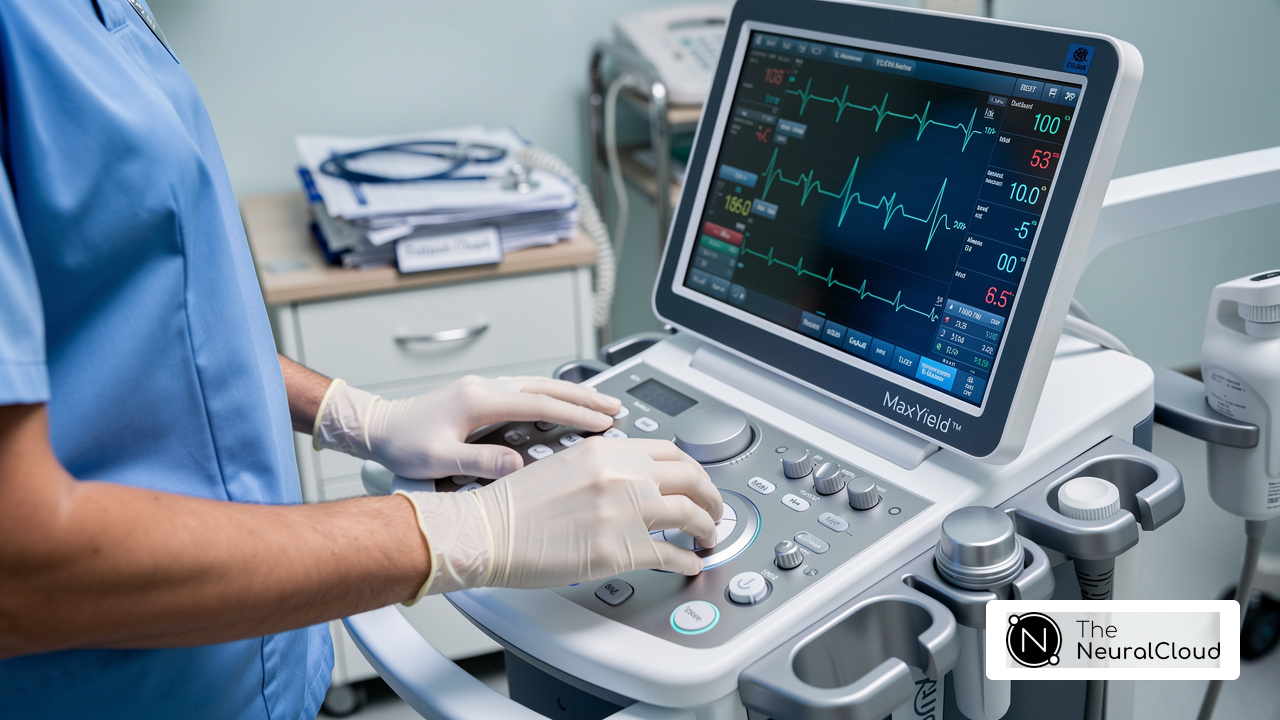
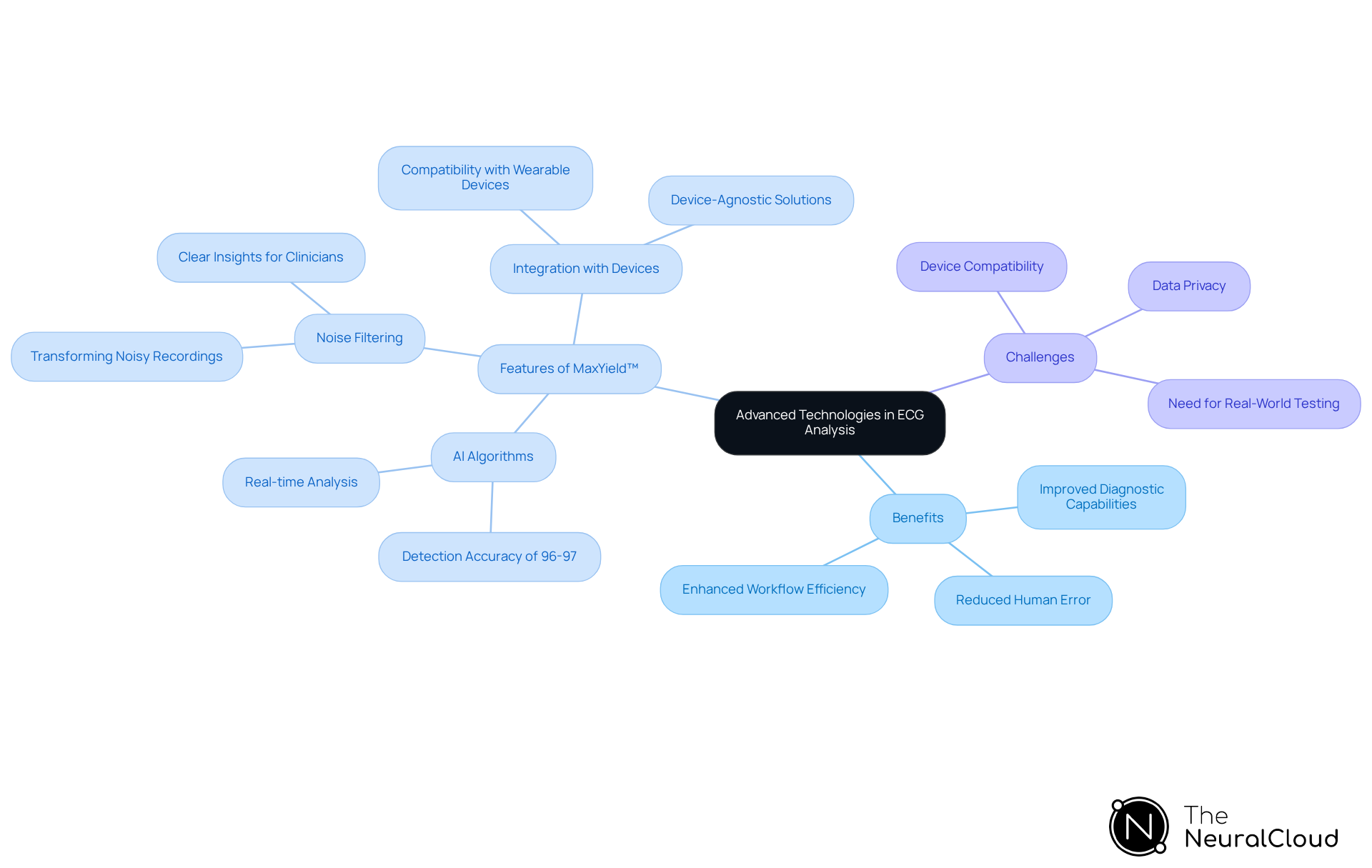
The platform from Neural Cloud Solutions exemplifies this shift. It employs sophisticated AI algorithms to swiftly process ECG data, accurately identifying key features and anomalies. With a focus for irregular heart rhythms and diagnostics, MaxYield™ enhances productivity in healthcare through automated, scalable, and device-agnostic solutions. It seamlessly integrates with various ECG devices, including standard monitors, patch monitors, and wearables.
One of the standout features of MaxYield™ is its advanced noise filtering capabilities. This technology streamlines workflows by transforming noisy recordings into clear insights, enabling clinicians to make confident decisions based on reliable cardiac data. While integrating new technologies does present challenges, such as data privacy concerns and device compatibility issues, MaxYield™ effectively addresses these through its robust features.
By adopting solutions like MaxYield™, health tech developers can significantly enhance diagnostic capabilities. This support empowers clinicians to make informed decisions based on reliable cardiac insights. Ultimately, this shift not only improves patient outcomes but also streamlines clinical workflows and reduces healthcare staff workload. Therefore, it is imperative for developers to embrace these advancements in their products.
Conclusion
Understanding Bundle Branch Block (BBB) is crucial for health tech developers aiming to improve cardiovascular care. This condition, characterized by delays in the heart's electrical conduction system, can significantly impact patient outcomes, particularly when associated with left bundle branch block (LBBB). The complexities of diagnosing and managing BBB underscore the need for advanced technologies that enhance diagnostic accuracy and clinical decision-making.
Challenges in ECG Analysis
The diagnosis of bundle branch blocks presents significant challenges. Traditional ECG analysis can be time-consuming and prone to human error, leading to misinterpretations that may affect patient care. As healthcare professionals strive for precision, the demand for innovative solutions becomes increasingly evident.
Features of MaxYield™ Platform
Neural Cloud Solutions' MaxYield™ platform addresses these challenges head-on. This advanced AI-driven tool streamlines ECG analysis by automating the interpretation process, allowing for quicker and more accurate assessments. Key features include:
- Automated ECG Interpretation: Reduces the risk of human error and speeds up the diagnostic process.
- Real-time Data Analysis: Provides immediate insights, enabling timely clinical decisions.
- User-friendly Interface: Designed for ease of use, making it accessible for both technical and non-technical users.
Advantages for Healthcare Professionals
The benefits of the MaxYield™ platform are substantial. By enhancing the accuracy of ECG interpretations, healthcare professionals can:
- Improve Patient Outcomes: Timely and precise diagnoses lead to better treatment strategies.
- Increase Efficiency: Streamlined processes allow for more patients to be seen without compromising care quality.
- Support Clinical Decision-Making: Access to reliable data empowers healthcare providers to make informed choices.
In light of these developments, it is essential for health tech developers to prioritize the integration of advanced diagnostic technologies in their solutions. By doing so, they can enhance the accuracy of ECG interpretations, ultimately leading to improved patient outcomes and more efficient healthcare delivery. The ongoing evolution in the management of bundle branch block represents not just a technical advancement but a significant step toward better cardiovascular health for patients worldwide.
Frequently Asked Questions
What is Bundle Branch Block (BBB)?
Bundle Branch Block (BBB) is a condition characterized by a delay or obstruction in the heart's electrical conduction pathways, particularly within the bundle branches that transmit impulses to the ventricles.
What are the two primary types of Bundle Branch Block?
The two primary types of Bundle Branch Block are Right Bundle Branch Block (RBBB) and Left Bundle Branch Block (LBBB).
How is Right Bundle Branch Block (RBBB) identified?
RBBB is identified by a QRS duration exceeding 120 ms, a distinctive 'M' morphology in position V1, and a 'W' shape in position V6, leading to delayed activation of the right ventricle.
What are the characteristics of Left Bundle Branch Block (LBBB)?
LBBB is marked by prominent S deflections in position V1 and broad monophasic R formations in lateral positions (I, aVL, V5-V6), with the QRS in lead V1 deflected 'down' from the J-point.
Why is understanding Bundle Branch Block clinically significant?
Understanding Bundle Branch Block is clinically significant for risk stratification in heart failure, as certain patterns like T deflection discordance can indicate underlying ischemia or myocardial infarction.
How does the MaxYield™ platform enhance ECG analysis?
The MaxYield™ platform enhances ECG analysis by utilizing advanced noise filtering and wave recognition techniques, allowing for rapid analysis of ECG signals and transforming noisy recordings into detailed insights.
What is the analysis capability of the MaxYield™ platform?
MaxYield™ can deliver beat-by-beat analysis of up to 200,000 heartbeats in less than 5 minutes, which is essential for accurately diagnosing conditions like bundle branch block.
What is the importance of a 12-lead ECG in diagnosing Bundle Branch Block?
A 12-lead ECG is crucial for thorough diagnostic criteria and further differentiation of left bundle branch block from other conditions.
How do technologies like HeartLogic contribute to patient management with BBB?
Technologies like HeartLogic play a significant role in risk stratifying patients with Bundle Branch Block, aiding in the identification and management of the condition.
List of Sources
- Define Bundle Branch Block: Understanding the Basics
- Understanding Bundle Branch Blocks (https://medictests.com/units/bundle-branch-blocks-right-left-complete-vs-incomplete)
- bostonscientific.com (https://bostonscientific.com/en-US/medical-specialties/electrophysiology/heartlogic-heart-failure-diagnostic/case-studies.html)
- texasheart.org (https://texasheart.org/heart-health/heart-information-center/topics/bundle-branch-block)
- Explore Clinical Implications: Why Bundle Branch Block Matters
- bostonscientific.com (https://bostonscientific.com/en-US/medical-specialties/electrophysiology/heartlogic-heart-failure-diagnostic/case-studies.html)
- ncbi.nlm.nih.gov (https://ncbi.nlm.nih.gov/books/NBK482167)
- Checking your browser - reCAPTCHA (https://pmc.ncbi.nlm.nih.gov/articles/PMC4531556)
- jamanetwork.com (https://jamanetwork.com/journals/jamanetworkopen/fullarticle/2837337)
- Utilize Advanced Technologies: Enhancing ECG Analysis for Bundle Branch Block
- Checking your browser - reCAPTCHA (https://pmc.ncbi.nlm.nih.gov/articles/PMC12419789)
- sciencedirect.com (https://sciencedirect.com/science/article/pii/S1936879825026007)