Introduction
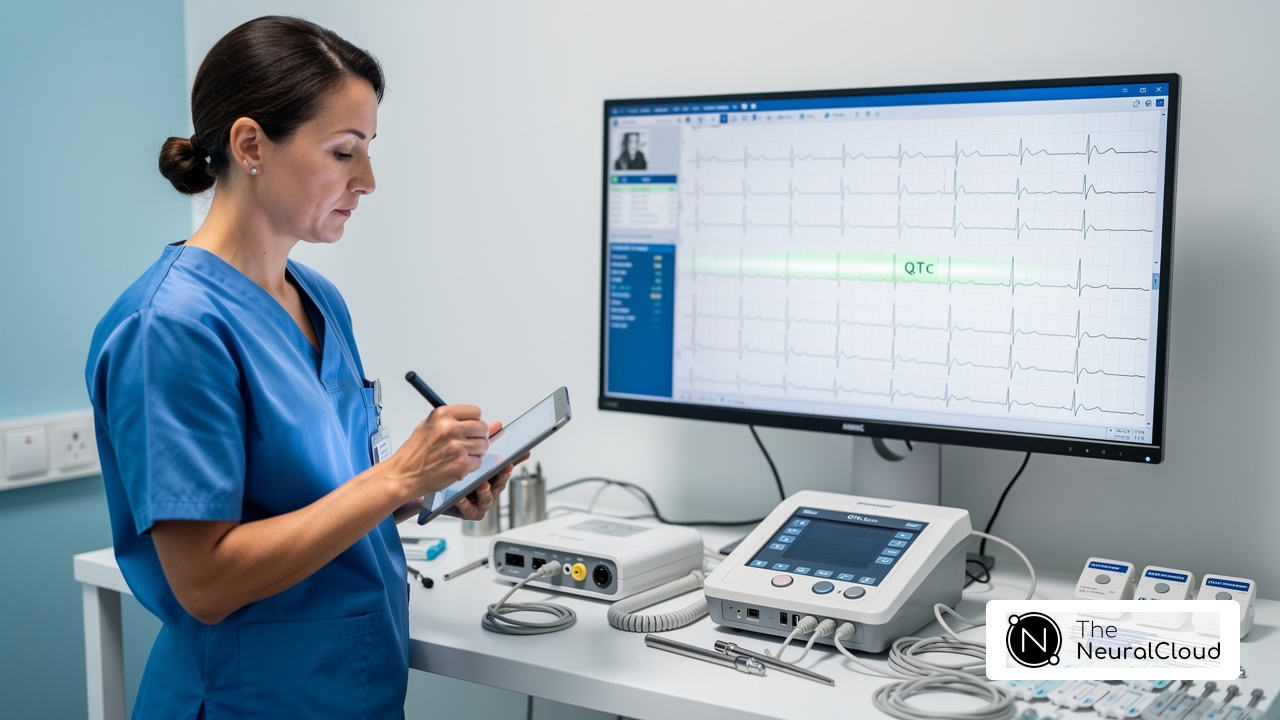
Healthcare professionals face significant challenges in accurately interpreting cardiac arrhythmias, a skill that is vital for patient care. Mastering best practices allows clinicians to improve diagnostic accuracy and provide timely interventions. With rapid advancements in technology and AI tools, practitioners must find effective ways to enhance their ECG analysis skills. This evolving landscape presents both opportunities and challenges for healthcare providers aiming to deliver the best possible outcomes for their patients.
Implement a Systematic Approach to ECG Interpretation
Healthcare professionals face significant challenges in cardiac arrhythmia ECG interpretation, which can impact diagnostic accuracy and patient outcomes. Implementing a systematic approach is crucial for enhancing diagnostic capabilities. This method involves several key steps:
- Assess the Quality of the Tracing: Ensure that the ECG is free from artifacts and that the leads are properly placed. A clear tracing is crucial for the accurate cardiac arrhythmia ECG interpretation. With advanced algorithms, practitioners can achieve hospital-grade accuracy even in consumer wearables.
- Calculate the Heart Rate: Use the R-R interval method or the 300 rule to determine the heart rate. This provides a swift summary of the patient's cardiac condition, backed by reliable, clear data across all linked devices.
- Determine the Rhythm: Identify whether the rhythm is regular or irregular by measuring the distance between R waves. The device-agnostic ECG intelligence layer integrates seamlessly, allowing for accurate rhythm assessment without requiring hardware changes.
- Analyze Waveforms and Intervals: Examine the P wave, QRS complex, and T wave for morphology and duration. Pay attention to the PR interval and QT interval, as deviations can indicate underlying pathology. This solution helps healthcare professionals minimize error variance in downstream models, ensuring that vital indicators of cardiac arrhythmia ECG interpretation or other cardiac problems are not overlooked.
By adopting this structured method, healthcare professionals can significantly enhance their diagnostic accuracy and patient care. As Dr. Alan Rabinowitz observes, 'This system's precision rivals human interpretation, significantly reducing noise and enhancing clarity in ECG data.' For those interested in exploring these advanced capabilities further, Neural Cloud Solutions Inc. invites you to contact us for free trials or personalized walkthroughs of MaxYield and Insight360, which offers customizable visualization and reporting tools to transform clean ECG data into actionable insights.

Analyze Key Waveforms and Intervals for Accurate Diagnosis
Understanding key waveforms in cardiac arrhythmia ECG interpretation is often complex, yet essential for accurate cardiac diagnosis. Key waveforms and intervals in an ECG provide essential insights into cardiac function, making their understanding crucial for accurate diagnosis:
- P Wave: This waveform represents atrial depolarization. Analyzing its morphology and duration is vital, as abnormalities can indicate conditions such as left atrial enlargement (LAE) or other atrial pathologies. Studies show that the prevalence of LAE is approximately 6.02% in men and 6.78% in women among individuals aged over 35 years, highlighting the importance of P wave analysis in this demographic. With MaxYield™, you get beat-by-beat insights that make spotting abnormalities much easier.
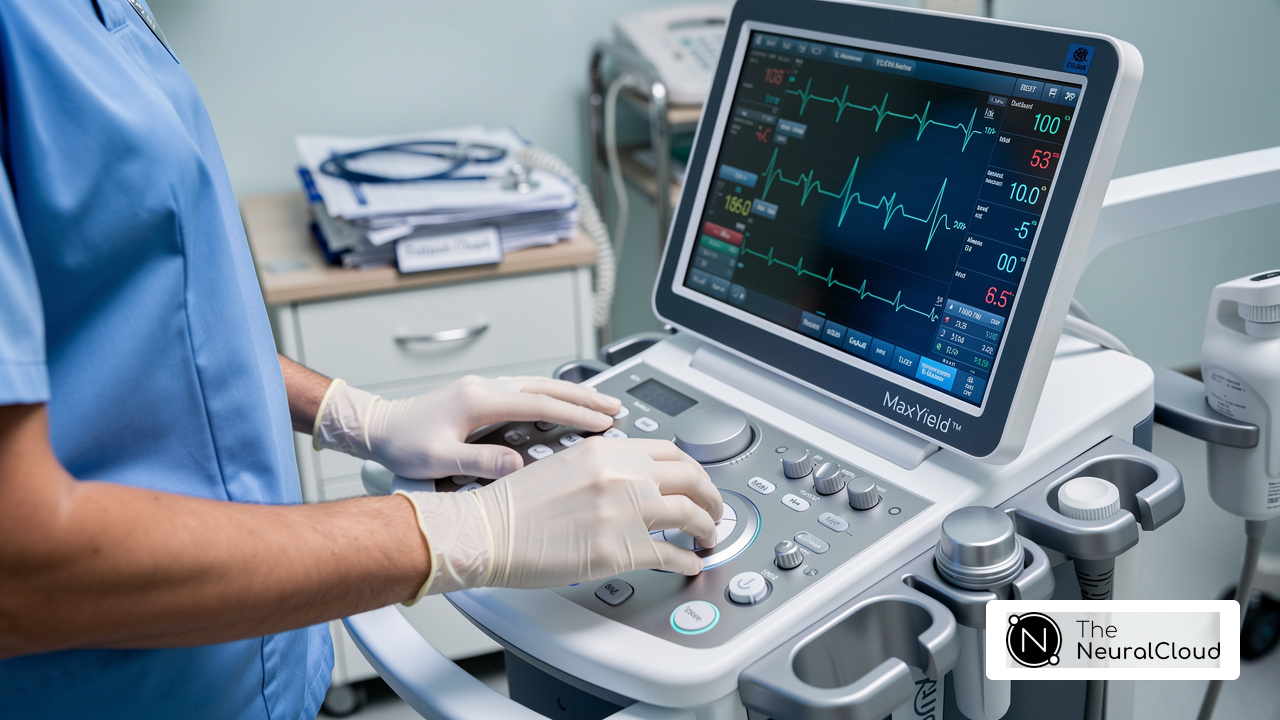
- QRS Complex: Reflecting ventricular depolarization, the QRS complex's width and morphology are critical for diagnosis. A wide QRS, exceeding 0.10 seconds, may suggest a bundle branch block or ventricular hypertrophy, both of which are significant indicators in the context of cardiac arrhythmia ECG interpretation related to cardiovascular health. Monitoring QRS duration is essential, as an increase of 8 ms or more is linked to a 56% increased risk of major adverse cardiovascular events (MACE) over time. Thanks to MaxYield™'s advanced noise filtering, even noisy recordings can reveal critical data clearly.
- T Wave: This waveform indicates ventricular repolarization. Changes in T wave morphology can signal ischemia or electrolyte imbalances, which are crucial for timely intervention in cardiac arrhythmia ECG interpretation. The MaxYield™ platform supports clinicians by providing clear waveforms that enhance diagnostic confidence.
- PR Interval: The time from the onset of the P wave to the start of the QRS complex; a prolonged PR interval may indicate first-degree heart block, necessitating further evaluation. MaxYield™ aids in the precise measurement of this interval, ensuring accurate assessments.
- QT Interval: Representing the time taken for ventricular depolarization and repolarization, a prolonged QT interval can increase the risk of life-threatening arrhythmias, underscoring the need for careful monitoring. With MaxYield™, clinicians can efficiently analyze QT intervals, enhancing patient safety.
Focusing on these key elements helps practitioners boost their diagnostic accuracy and improve patient outcomes, particularly in cardiac arrhythmia ECG interpretation within Canadian healthcare. Expert endorsements from Dr. Alan Rabinowitz, Dr. Brett Heilbron, and Dr. Marc W. Deyell highlight that MaxYield™ competes with human analysis in precision and significantly reduces noise, making it an invaluable tool for health tech developers. For those interested in exploring MaxYield™ further, Neural Cloud Solutions Inc. invites you to contact us for free trials or personalized walkthroughs.

Leverage AI Technologies for Enhanced ECG Analysis
AI technologies are revolutionizing the cardiac arrhythmia ECG interpretation process, enhancing both diagnostic accuracy and efficiency. Clinicians face significant challenges in ECG analysis, often hindered by lengthy and noisy recordings. To effectively leverage AI in ECG interpretation, consider these best practices:
- Utilize AI-powered software to enhance cardiac arrhythmia ECG interpretation by implementing AI-driven ECG analysis tools that can automatically detect arrhythmias and other abnormalities. These advanced systems transform lengthy and noisy ECG recordings into clean, crisp signals, allowing clinicians to analyze vast amounts of data quickly and providing actionable insights. Notably, studies have shown that the AI model reduced false positives to about 8%, compared to nearly 42% with standard triage, underscoring the effectiveness of AI in improving diagnostic accuracy. As Dr. Alan Rabinowitz states, "The precision in noise reduction of this system rivals that of human interpretation, making it an invaluable tool for clinicians."
- Integrate AI with Existing Workflows: Ensure that AI tools, such as advanced analytics, are compatible with current ECG systems to facilitate seamless integration. This allows for real-time analysis and reduces the need for extensive retraining, which is crucial for user adoption.
- Continuous Learning: Use AI systems that learn from new data inputs to improve their accuracy over time. This continuous learning model enhances the accuracy and efficiency of cardiac arrhythmia ECG interpretation by adapting to new patterns and conditions. For instance, long-term ECG diagnosis increased detection rates of significant arrhythmias by 209% compared to traditional methods, highlighting the importance of continuous learning in AI systems. Additionally, MaxYield is currently pending FDA Class II SaMD clearance, ensuring compliance with regulatory standards.
- Combine Human Expertise with AI Insights: Encourage collaboration between AI tools and healthcare professionals. While AI can improve analysis, human understanding remains essential for context and clinical decision-making. Experts, including Dr. Brett Heilbron, stress that AI models, such as those created by Neural Cloud Solutions, can compete with human understanding in cardiac arrhythmia ECG interpretation, particularly in noise reduction and precision.
By adopting these practices, healthcare providers can significantly improve their ECG analysis abilities, leading to better patient outcomes. By embracing AI-driven solutions, healthcare providers can enhance their diagnostic capabilities, ultimately saving lives in critical situations.

Prioritize Continuous Education and Training for Practitioners
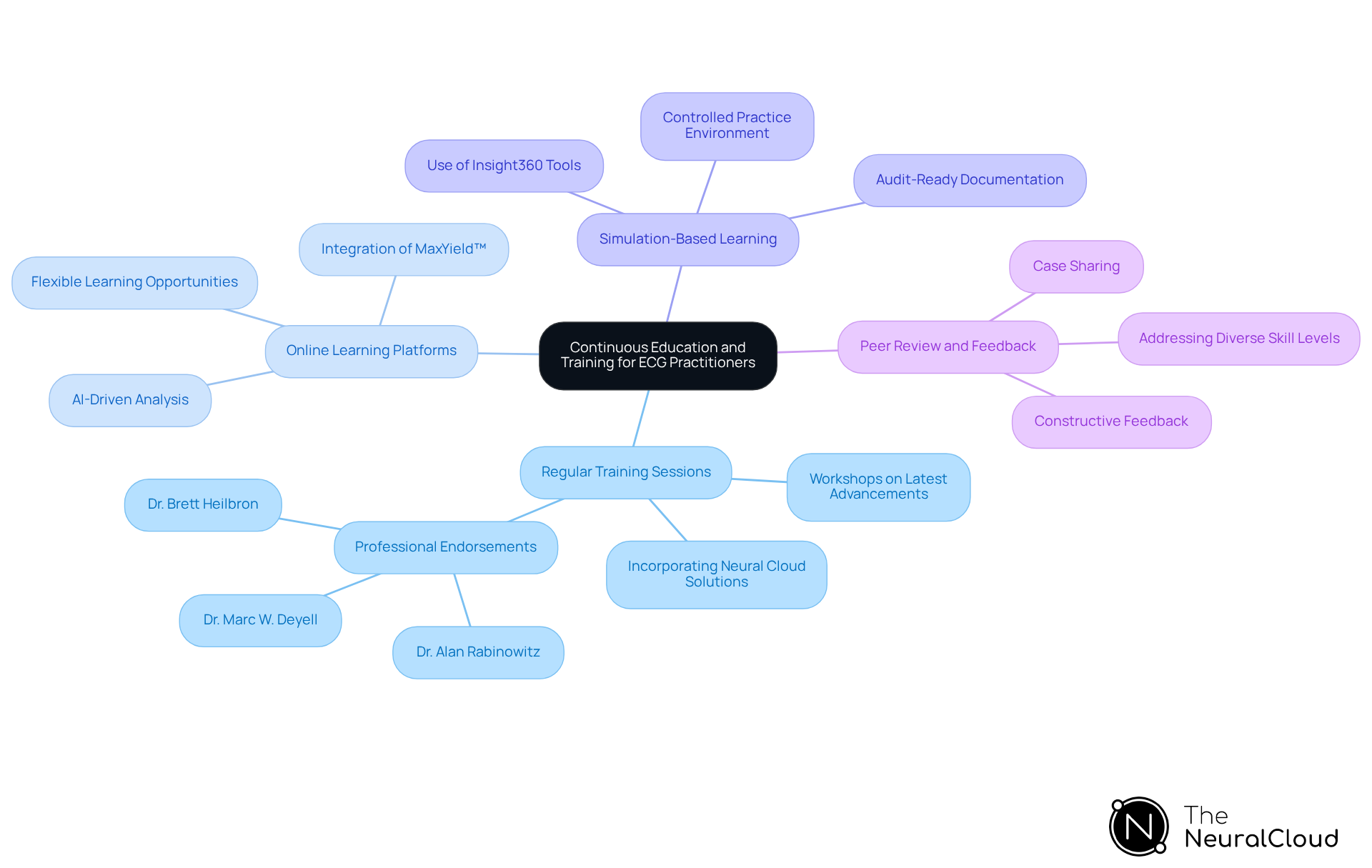
As technology evolves, the need for ongoing education in ECG analysis becomes increasingly critical for healthcare professionals. Implementing best practices can significantly enhance professional development and improve patient care outcomes:
- Regular Training Sessions: Conduct workshops and training sessions that focus on the latest advancements in ECG technology and analysis techniques. Keeping professionals informed about best methods and new trends is essential, especially since 92.3% of healthcare workers in the control group show interest in enhancing their ECG analysis skills. Incorporating insights from Neural Cloud Solutions can enhance these sessions. The Continuous Learning Model shows how the algorithm evolves with each use, maximizing diagnostic yield. Furthermore, professional endorsements from Dr. Alan Rabinowitz, Dr. Brett Heilbron, and Dr. Marc W. Deyell highlight MaxYield’s accuracy, which is comparable to human analysis, along with its noise reduction advantages.
- Online Learning Platforms: Leverage online courses and webinars that offer flexible learning opportunities. These platforms provide access to a wide variety of resources and expert insights, catering to the diverse needs of professionals across Canada. Highlighting the integration of MaxYield™ can demonstrate how automated labeling and AI-driven analysis streamline ECG assessment while ensuring compliance with FDA Class II SaMD clearance-pending status.
- Simulation-Based Learning: Integrate simulation training that enables professionals to practice ECG analysis in a controlled setting. This practical method boosts confidence and skill, acknowledging that only 23.5% of nursing participants in a study carried out in Addis Ababa, Ethiopia, showed good knowledge in ECG analysis. Utilizing tools like Insight360 can transform clean ECG data into interactive dashboards, enhancing the learning experience and providing audit-ready documentation supporting GxP inspections.
- Peer Review and Feedback: Establish a peer review system where professionals can share cases and receive constructive feedback. This collaborative method promotes a culture of ongoing enhancement, which is essential considering that 80% of the control group had not participated in prior training sessions regarding ECG analysis and the diverse skill levels among nursing professionals. By incorporating feedback on the use of Neural Cloud Solutions' technology, professionals can better grasp its effect on their analytical abilities.
Investing in continuous education not only enhances skills but also directly impacts patient care quality.
Conclusion
Navigating the complexities of ECG analysis can be daunting for many healthcare professionals. Mastering cardiac arrhythmia ECG interpretation is essential for enhancing diagnostic accuracy and improving patient outcomes. By using a systematic approach, practitioners can navigate the complexities of ECG analysis more effectively. This helps ensure that critical indicators are not overlooked. Using this structured methodology along with advanced tools like MaxYield™ and Insight360 helps clinicians deliver precise and actionable insights. This ultimately transforms patient care.
Key insights discussed throughout the article include:
- Understanding waveforms and intervals
- Leveraging AI technologies
- Prioritizing continuous education
The analysis of P waves, QRS complexes, and T waves, along with the integration of AI-driven solutions, significantly enhances the diagnostic process. Furthermore, ongoing training and professional development are crucial for keeping healthcare providers informed about the latest advancements in ECG interpretation. This ensures they remain at the forefront of cardiac care.
In conclusion, embracing these best practices not only elevates the standard of ECG interpretation but also underscores the critical role of continuous learning in the healthcare landscape. Investing in education and innovative technologies is essential for enhancing diagnostic capabilities and improving patient care.
Frequently Asked Questions
What challenges do healthcare professionals face in ECG interpretation?
Healthcare professionals encounter significant challenges in cardiac arrhythmia ECG interpretation, which can negatively impact diagnostic accuracy and patient outcomes.
Why is a systematic approach important for ECG interpretation?
A systematic approach is crucial for enhancing diagnostic capabilities, allowing healthcare professionals to improve their accuracy in interpreting ECGs.
What is the first step in a systematic approach to ECG interpretation?
The first step is to assess the quality of the tracing, ensuring it is free from artifacts and that the leads are properly placed for accurate interpretation.
How can advanced algorithms assist in ECG interpretation?
Advanced algorithms can help practitioners achieve hospital-grade accuracy in ECG interpretation, even when using consumer wearables.
How do you calculate the heart rate from an ECG?
The heart rate can be calculated using the R-R interval method or the 300 rule, providing a quick summary of the patient's cardiac condition.
What is involved in determining the rhythm of an ECG?
Determining the rhythm involves identifying whether it is regular or irregular by measuring the distance between R waves.
What role does the device-agnostic ECG intelligence layer play in ECG interpretation?
The device-agnostic ECG intelligence layer integrates seamlessly to allow for accurate rhythm assessment without requiring hardware changes.
What should be analyzed in the waveforms and intervals of an ECG?
The P wave, QRS complex, and T wave should be examined for morphology and duration, along with the PR interval and QT interval, as deviations can indicate underlying pathology.
How does a structured method in ECG interpretation benefit healthcare professionals?
A structured method helps minimize error variance in downstream models, ensuring that vital indicators of cardiac arrhythmia or other cardiac problems are not overlooked.
What does Dr. Alan Rabinowitz say about the precision of this systematic approach?
Dr. Alan Rabinowitz observes that the system's precision rivals human interpretation, significantly reducing noise and enhancing clarity in ECG data.
How can healthcare professionals explore advanced ECG interpretation capabilities?
Healthcare professionals can contact Neural Cloud Solutions Inc. for free trials or personalized walkthroughs of MaxYield and Insight360, which offer customizable visualization and reporting tools.
List of Sources
- Implement a Systematic Approach to ECG Interpretation
- Electrocardiogram competency of Canadian emergency medicine residents: curriculum gaps and opportunities for improvement - Canadian Journal of Emergency Medicine (https://link.springer.com/article/10.1007/s43678-026-01194-3)
- Automatic ECG Quality Assessment Techniques: A Systematic Review - PMC (https://pmc.ncbi.nlm.nih.gov/articles/PMC9689601)
- How to interpret the ECG: A systematic approach – The Cardiovascular (https://ecgwaves.com/topic/systematic-clinical-ecg-interpretation-review-guide)
- 7.3 A Systematic Approach to Interpreting an ECG – Nursing Advanced Skills (https://wtcs.pressbooks.pub/nursingadvancedskills/chapter/7-3-a-systematic-approach-to-interpreting-an-ecg)
- A simple ECG interpretation method to cope during a terrible night shift – ECG tips and tricks (https://clinicalview.gehealthcare.com/webinar/simple-ecg-interpretation-method-cope-during-terrible-night-shift-ecg-tips-and-tricks)
- Analyze Key Waveforms and Intervals for Accurate Diagnosis
- Prevalence of left atrial enlargement and its risk factors in general Chinese population - PMC (https://pmc.ncbi.nlm.nih.gov/articles/PMC4779233)
- theneuralcloud.com (https://theneuralcloud.com/post/master-qrs-morphology-a-step-by-step-guide-for-health-tech-developers)
- Reliable P wave detection in pathological ECG signals - PMC (https://pmc.ncbi.nlm.nih.gov/articles/PMC9023481)
- Leverage AI Technologies for Enhanced ECG Analysis
- New study finds AI model improves heart attack detection (https://health.ucdavis.edu/news/headlines/new-study-finds-ai-model-improves-heart-attack-detection/2025/11)
- theneuralcloud.com (https://theneuralcloud.com/post/best-practices-for-effective-ecg-diagnosis-using-ai-solutions)
- Revolutionising Acute Cardiac Care With Artificial Intelligence: Opportunities and Challenges (https://onlinecjc.ca/article/S0828-282X(24)00443-4/fulltext)
- Prioritize Continuous Education and Training for Practitioners
- Caring for Canadians: Canada’s Future Health Workforce – The Canadian Health Workforce Education, Training and Distribution Study - Canada.ca (https://canada.ca/en/health-canada/services/health-care-system/health-human-resources/workforce-education-training-distribution-study.html)
- Southlake Health pioneers 4D technology with special access from Health Canada (https://hospitalnews.com/southlake-health-pioneers-4d-technology-with-special-access-from-health-canada)
- (PDF) The Impact of Electrocardiogram Interpretation Training Program on Intern Nursing Students' Competencies: A Quasi-Experimental Study (https://researchgate.net/publication/382378443_The_Impact_of_Electrocardiogram_Interpretation_Training_Program_on_Intern_Nursing_Students'_Competencies_A_Quasi-Experimental_Study)
- Study Shows Promising Results for ECG Technology (https://dicardiology.com/content/study-shows-promising-results-ecg-technology)