Introduction
Understanding the nuances of ECG analysis is crucial for healthcare professionals, especially when it comes to distinguishing between concordant and discordant readings. These concepts are vital not only for diagnosing conditions like myocardial infarction but also for enhancing the overall accuracy of cardiac assessments. However, a significant challenge persists: how can practitioners effectively apply these principles in real-world scenarios to ensure timely and accurate patient care?
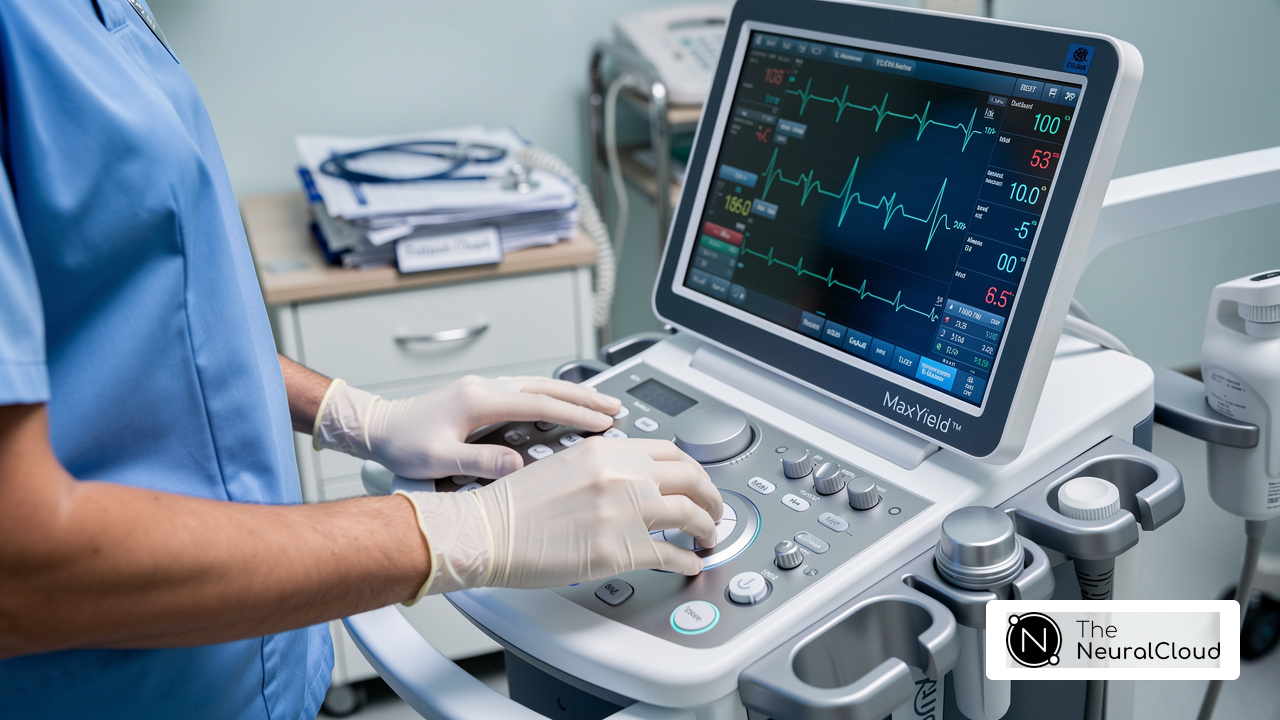
This article explores the definitions and clinical implications of these readings, alongside advanced technologies that can elevate ECG interpretation. By focusing on the MaxYield™ platform, we will highlight its features, advantages, and the direct benefits it offers to healthcare professionals. Ultimately, this discussion aims to improve patient outcomes through better ECG analysis.
Define Concordance and Discordance in ECG Analysis
In ECG analysis, understanding concordant vs discordant ECG is crucial for accurate interpretation. Concordance refers to the alignment of the QRS pattern and ST segment changes, where both move in the same direction. For example, when the QRS wave is predominantly positive, the ST segment will also show an increase. Conversely, discordance occurs when these two components move in opposite directions; a positive QRS pattern may be accompanied by ST segment depression.
Grasping these definitions is essential, especially in diagnosing conditions such as myocardial infarction (MI) and other cardiac abnormalities. Recent studies highlight that inappropriate patterns in concordant vs discordant ECG are highly predictive of acute myocardial infarction. This underscores the significance of these concepts in clinical settings, as they can guide healthcare professionals in making informed decisions.
By recognizing the patterns of concordance and discordance, practitioners can enhance their ECG analysis skills, leading to better patient outcomes. Understanding these concepts not only improves diagnostic accuracy but also fosters a deeper comprehension of cardiac health.

Explore the Sgarbossa Criteria for ECG Interpretation
The Sgarbossa Criteria are crucial for diagnosing acute myocardial infarction in patients with left bundle branch block (LBBB). These criteria include three main components:
- Concordant ST rise of 1 mm or more in leads with a positive QRS waveform, indicating potential myocardial injury.
- Concordant ST depression of 1 mm or more in leads V1-V3, which may signify ischemia.
- Excessively discordant ST rise, characterized by ST rise exceeding 5 mm in leads with a negative QRS pattern, highlighting significant myocardial infarction.
Mastering these criteria is vital for enhancing diagnostic accuracy, particularly in complex cases where traditional methods might fall short. The MaxYield™ platform from Neural Cloud Solutions addresses these challenges by employing advanced noise reduction and artifact handling techniques. This ensures that ECG data remains clear and reliable, even amidst physiological variability.
With these capabilities, the Sgarbossa Criteria can be applied more effectively, enabling health tech developers to achieve improved diagnostic accuracy and streamline clinical workflows. The AI models within the platform are designed to adapt to the physiological variability present in ECG waveforms, ensuring effective analysis of diverse ECG patterns.
- Advanced noise reduction techniques
- Artifact handling for clearer data
- Adaptability to physiological variability
Advantages for Healthcare Professionals:
- Enhanced diagnostic accuracy
- Improved clinical workflows
- Reliable ECG analysis across diverse patterns
By leveraging the MaxYield™ platform, healthcare professionals can navigate the complexities of ECG analysis with greater confidence and precision.

Apply Concordance and Discordance Insights in Clinical Practice
In clinical practice, recognizing concordant vs discordant ECG readings is crucial for effective decision-making in diagnosing cardiac conditions. For example, in the context of concordant vs discordant ECG, when an ECG displays concordant ST elevation, it often indicates an acute myocardial infarction (MI), necessitating immediate intervention. On the other hand, observing concordant vs discordant ECG may indicate alternative conditions, such as left ventricular hypertrophy or pericarditis.
Clinicians should integrate these insights into their assessments, as they can significantly influence the prioritization of further testing or treatment options based on ECG findings. By understanding these patterns, healthcare professionals can enhance their diagnostic accuracy and improve patient outcomes. This approach not only streamlines the decision-making process but also ensures that appropriate interventions are implemented in a timely manner.

Utilize Advanced Technology for Enhanced ECG Analysis
ECG analysis presents several challenges, particularly in terms of accuracy and speed. The MaxYield™ platform addresses these issues by harnessing advanced technology and AI algorithms to automate the interpretation process. This innovative platform can process over 200,000 heartbeats in under five minutes, identifying critical features such as P-waves, QRS complexes, and T-wave intervals with remarkable precision.
By integrating MaxYield™ into clinical workflows, healthcare professionals can significantly reduce manual errors and enhance diagnostic yield. This allows clinicians to focus on high-level decision-making, ultimately streamlining ECG interpretation and empowering them to deliver timely and effective patient care. Additionally, MaxYield™ rapidly labels P, QRS, and T Wave onsets, offsets, and time-series intervals, providing beat-by-beat tabulation in CSV format for easy integration into existing workflows.
Recent studies have shown that AI-based ECG analysis can improve STEMI detection rates, reducing false positives from nearly 42% to about 8%. This underscores the platform's potential to transform emergency cardiovascular care. As the healthcare landscape increasingly embraces automated solutions, the MaxYield™ platform stands out as a vital tool for enhancing ECG interpretation and improving patient outcomes.
Moreover, MaxYield™ supports the discovery of new digital biomarkers across various industries, further showcasing its versatility and impact. With its clear advantages, the platform not only enhances the efficiency of ECG analysis but also contributes to better healthcare delivery.

Conclusion
Understanding the distinctions between concordant and discordant ECG readings is crucial for accurate cardiac assessments. These concepts not only aid in interpreting ECG patterns but also play a vital role in diagnosing critical conditions like myocardial infarction. By mastering these principles, healthcare professionals can enhance their diagnostic capabilities and improve patient care outcomes.
ECG analysis presents challenges, particularly in distinguishing between concordance and discordance. The MaxYield™ platform addresses these challenges by offering advanced features that streamline ECG interpretation. It enhances the clarity of readings, allowing for quicker and more accurate diagnoses. This technology empowers healthcare professionals to make informed decisions, ultimately benefiting patient outcomes.
Key insights include:
- The definitions of concordance and discordance
- The significance of the Sgarbossa Criteria in diagnosing myocardial infarction
- The advantages of utilizing the MaxYield™ platform
Each of these elements underscores the importance of integrating these insights into clinical practice. By doing so, healthcare professionals can ensure timely interventions and improve decision-making processes.
Ultimately, applying insights from concordance and discordance, combined with cutting-edge technology, can transform ECG analysis and patient management. Embracing these advancements not only bolsters diagnostic accuracy but also fosters a proactive approach to cardiac health. Healthcare professionals are encouraged to leverage these tools and knowledge to enhance their practice, ensuring they provide the highest standard of care in an ever-evolving clinical landscape.
Frequently Asked Questions
What is concordance in ECG analysis?
Concordance in ECG analysis refers to the alignment of the QRS pattern and ST segment changes, where both components move in the same direction. For example, a predominantly positive QRS wave will show an increase in the ST segment.
What is discordance in ECG analysis?
Discordance in ECG analysis occurs when the QRS pattern and ST segment changes move in opposite directions. For instance, a positive QRS pattern may be accompanied by ST segment depression.
Why are concordance and discordance important in ECG analysis?
Understanding concordance and discordance is crucial for accurate ECG interpretation, particularly in diagnosing conditions such as myocardial infarction (MI) and other cardiac abnormalities.
How do concordant and discordant patterns relate to myocardial infarction?
Recent studies indicate that inappropriate patterns of concordance and discordance are highly predictive of acute myocardial infarction, emphasizing their significance in clinical settings.
How can recognizing concordance and discordance improve ECG analysis skills?
By recognizing these patterns, practitioners can enhance their ECG analysis skills, leading to better diagnostic accuracy and improved patient outcomes.
List of Sources
- Define Concordance and Discordance in ECG Analysis
- emra.org (https://emra.org/emresident/article/ecg-challenge-july-aug-sept-2024)
- pmc.ncbi.nlm.nih.gov (https://pmc.ncbi.nlm.nih.gov/articles/PMC12998530)
- ecgweekly.com (https://ecgweekly.com/weekly-workout/concordance-vs-discordance-decoding-advanced-ecg-patterns)
- ekgdx.com (https://ekgdx.com/blog/sgarbossa-criteria-and-concordance-vs-discordance-in-simple-words)
- ems1.com (https://ems1.com/ems-products/medical-monitoring/articles/concordance-discordance-and-sgarbossas-criteria-hFAub5ncXt7FQQUz)
- Explore the Sgarbossa Criteria for ECG Interpretation
- New ECG Criteria for Acute Myocardial Infarction in Patients With Left Bundle Branch Block | Journal of the American Heart Association (https://ahajournals.org/doi/10.1161/JAHA.120.017119)
- Sgarbossa Criteria: Diagnosing OMI on ECG (https://powerfulmedical.com/blog/sgarbossa-criteria)
- New algorithm effectively diagnoses acute MI in left bundle branch block (https://healio.com/news/cardiology/20200708/new-algorithm-effectively-diagnoses-acute-mi-in-left-bundle-branch-block)
- litfl.com (https://litfl.com/sgarbossa-criteria-ecg-library)
- healthcare-bulletin.co.uk (https://healthcare-bulletin.co.uk/article/comparison-of-barcelona-criteria-and-modified-sgarbossa-criteria-for-the-diagnosis-of-acute-myocardial-infarction-in-patients-with-left-bundle-branch-block-2553)
- Apply Concordance and Discordance Insights in Clinical Practice
- AI-based ECG interpretation outperforms standard diagnosis of occlusive myocardial infarction (https://news-medical.net/news/20260323/AI-based-ECG-interpretation-outperforms-standard-diagnosis-of-occlusive-myocardial-infarction.aspx)
- academic.oup.com (https://academic.oup.com/ehjcr/article/10/3/ytag166/8509488)
- pubmed.ncbi.nlm.nih.gov (https://pubmed.ncbi.nlm.nih.gov/41104696)
- PMcardio Reports Positive RCT Results and Late-Breaking Clinical Science for STEMI Detection (https://powerfulmedical.com/blog/pmcardio-reports-positive-rct-results-and-late-breaking-clinical-science-for-stemi-detection)
- pmc.ncbi.nlm.nih.gov (https://pmc.ncbi.nlm.nih.gov/articles/PMC6775389)
- Utilize Advanced Technology for Enhanced ECG Analysis
- AI-Based ECG Analysis Significantly Improves STEMI Detection, Reduces False Activations - American College of Cardiology (https://acc.org/latest-in-cardiology/articles/2025/10/24/16/56/tues-554pm-ai-tct-2025)
- New study finds AI model improves heart attack detection (https://health.ucdavis.edu/news/headlines/new-study-finds-ai-model-improves-heart-attack-detection/2025/11)
- Mayo Clinic Cardiovascular Medicine artificial intelligence group's researchers develop AI-ECG to detect obstructive sleep apnea - Mayo Clinic (https://mayoclinic.org/medical-professionals/cardiovascular-diseases/news/mayo-clinic-cardiovascular-medicine-artificial-intelligence-groups-researchers-develop-ai-ecg-to-detect-obstructive-sleep-apnea/mac-20594007)
- tempus.com (https://tempus.com/resources/content/articles/ai-revolution-electrocardiography-ecg-ai-insights?srsltid=AfmBOop_xYwc-pxC4pPU6PKimpkkNgr6gnxoR6dpppDRfgOFI3JMRQvM)