Introduction
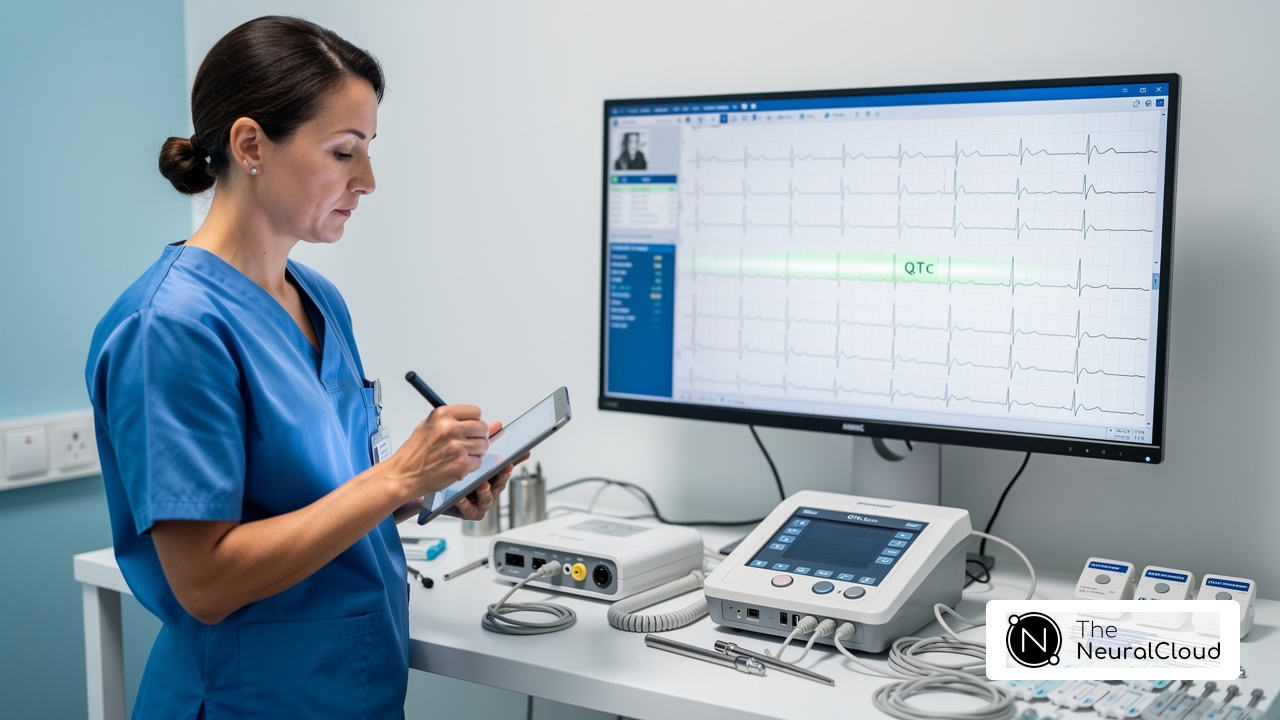
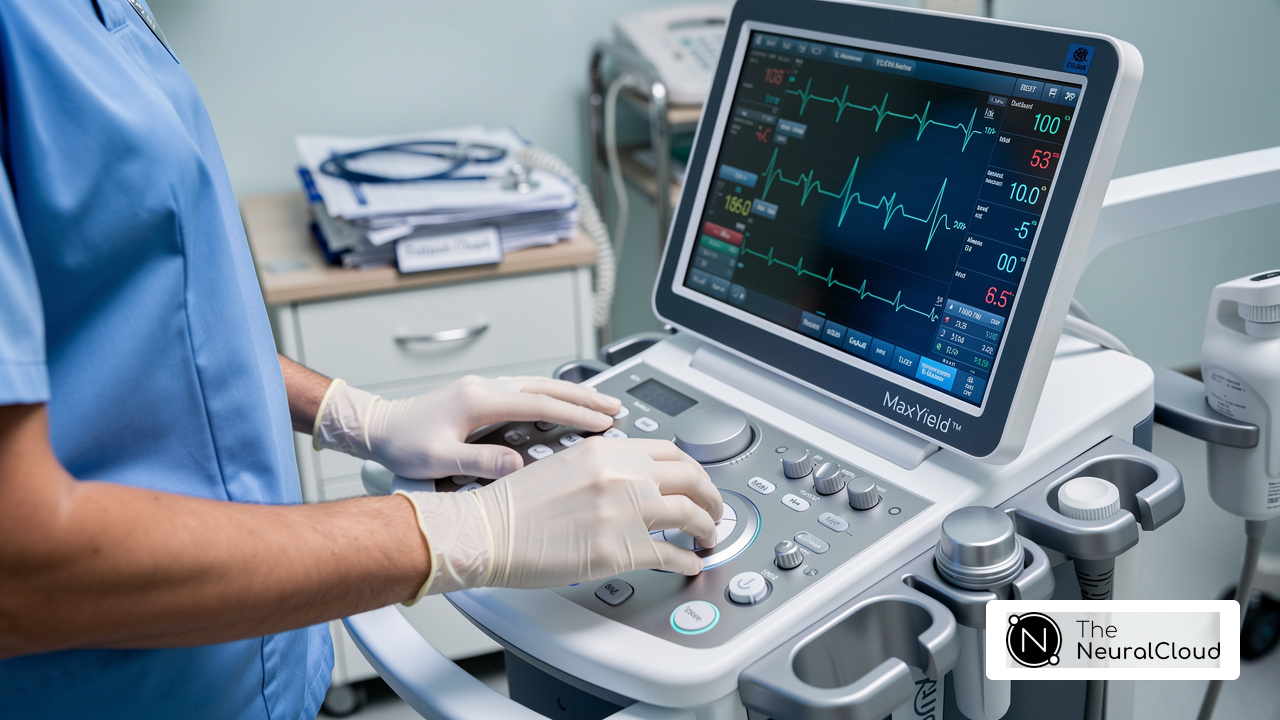
Understanding the complexities of heart rate determination on an ECG is crucial for improving patient care and outcomes. This guide explores essential techniques for accurately calculating heart rate, highlighting how factors like ECG paper speed can influence readings and interpretations. Given the prevalence of irregular rhythms and potential artifacts, healthcare professionals must ensure precision in their calculations. This article examines established methods and innovative solutions, such as Neural Cloud Solutions' MaxYield™ technology, which enhance ECG analysis and address common challenges faced in practice.
Understand ECG Paper Speeds
ECG paper typically moves at a specific speed, which is crucial for accurate measurements. Each small box on the ECG paper represents 0.04 seconds, while each large box, consisting of five small boxes, indicates 0.2 seconds. Understanding these time intervals is essential for correctly and effectively interpreting heartbeats. For example, calculating heart rate involves measuring the distance between two R waves (the peaks of the QRS complexes), which allows for the calculation of pulse frequency based on the number of boxes between them. If the paper speed changes, the calculations will also shift, requiring adjustments in how heart rate is assessed.
Using the formula, where 300 is divided by the number of large squares between R-R intervals, offers a quick and reliable calculation for regular rhythms. However, challenges such as noise and signal artifacts can complicate calculations. This is where Neural Cloud Solutions' technology comes into play. It addresses these challenges by rapidly isolating ECG waves, even in recordings affected by baseline wander and muscle artifacts.
Features of MaxYield™:
- Advanced noise filtering.
- Rapid isolation of ECG waves.
- Enhanced signal clarity.
Advantages for clinicians:
The advanced noise filtering of MaxYield™ significantly enhances the precision of heart rate calculations. This makes a solid understanding of ECG paper speeds even more critical for accurate interpretation, as it directly impacts diagnosis and the evaluation of cardiac function and rhythm. By utilizing MaxYield™, clinicians can ensure more reliable assessments, ultimately leading to better patient outcomes.
Calculate Heart Rate Using Established Methods
can be challenging, but several established methods exist, each offering unique advantages, especially when enhanced by Neural Cloud Solutions' technology.
This technique involves counting the number of large boxes between two consecutive R waves. The pulse in beats per minute (bpm) is calculated by dividing 300 by this number. For example, if there are 3 large boxes between R waves, the pulse is 300/3 = 100 bpm. This method is quick and effective for regular rhythms, particularly when automated through MaxYield™, ensuring accuracy and efficiency.
In this approach, the number of small boxes between two R waves is counted. The pulse frequency is determined by dividing 1500 by this count. For instance, if there are 30 small boxes, the pulse would be 1500/30 = 50 bpm. This method provides precise calculations, especially useful in clinical settings, and can be adapted for different scenarios.
This technique counts the number of R waves in a 6-second interval, corresponding to 30 large squares. The pulse is then calculated by multiplying this figure by 10. For instance, if 5 R waves are recorded in 6 seconds, the pulse is 5 x 10 = 50 bpm. This method is particularly beneficial for assessing irregular rhythms, allowing for timely interventions, and is further optimized by the adaptability of MaxYield™.
These methods are crucial for determining heart rate during various medical situations, such as emergencies and routine check-ups. The integration of technology enhances these approaches, providing healthcare professionals with tools that revolutionize ECG analysis.

Adapt Calculations for Different Paper Speeds
When the ECG paper speed deviates from the standard 25 mm/sec, it is crucial:
- Faster Paper Speeds: At a speed of 50 mm/sec, each small section represents 0.02 seconds. To determine the pulse, divide 1500 by the number of tiny boxes between R waves. For example, if there are 10 small blocks, the pulse would be 150 bpm. This is achieved by mapping ECG signals through interference, isolating essential features in each heartbeat, and providing beat-by-beat analysis. This ensures precise measurements, even at higher speeds.
- Slower Paper Speeds: If the speed decreases to 12.5 mm/sec, each small section represents 0.08 seconds. Here, divide 750 by the count of tiny boxes between R waves to calculate the pulse. For instance, 15 small squares would yield a pulse of 100 bpm. These calculations help identify heart rates, ensuring robust and reliable analysis even at slower speeds.
- General Rule: Always verify the heart rate before performing calculations. This guarantees precision in measurements, which is vital for effective clinical decision-making. Adjusting calculations based on paper speed variations is essential, as inaccuracies can lead to misinterpretations, particularly in irregular rhythms like atrial fibrillation. Understanding these adjustments can significantly enhance accuracy and improve patient outcomes. Additionally, employing the general formula can yield an estimated pulse of 80 bpm, and by swiftly emphasizing potentially significant ECG information, underscoring the necessity of precise calculations.
Troubleshoot Common Calculation Issues
When calculating heart rate from an ECG, several common issues may arise that can complicate calculations:
- Miscounts can pose a challenge for heart rate calculation. The 300 or 1500 methods should be avoided, as they assume a regular rhythm. Instead, the 6-second method is recommended for irregular rhythms. This process of counting R waves over a 6-second interval provides a more precise measurement, especially in cases like atrial fibrillation, where the rhythm can vary significantly.
- Accurate counting of intervals between R waves is crucial. In fast rhythms, R waves may be closely spaced, increasing the risk of miscounts. It’s essential to verify your counts to ensure accuracy in heart rate determination, as even minor errors can lead to substantial differences in pulse estimation.
- Before calculating, it is essential to check the paper speed, especially when interpreting results. ECG recordings typically operate at 25 mm/s or 50 mm/s. If the speed differs from the standard, adjust your calculations accordingly. For instance, at 50 mm/s, each small square represents 0.02 seconds, effectively doubling the pulse computation if not accounted for.
- Be alert for artifacts that may resemble R waves, potentially skewing results. If an artifact is suspected, review the ECG strip for consistency and clarity in the context of heart rhythm. Anomalies in the waveform can obscure true R waves, necessitating a careful examination to ensure accurate interpretation.

Conclusion
Determining heart rate from an ECG is a vital skill for healthcare professionals, requiring a clear understanding of ECG paper speeds and effective calculation methods. Mastery of these concepts not only facilitates accurate pulse assessments but also enhances overall cardiac function evaluation, ensuring that patients receive optimal care.
However, ECG analysis presents challenges, including noise interference and irregular rhythms, which can complicate accurate heart rate determination. This is where advanced technology, such as Neural Cloud Solutions' MaxYield™ platform, comes into play.
Features of MaxYield™:
- Noise Reduction: Effectively minimizes interference, allowing for clearer ECG readings.
- Rhythm Analysis: Adapts to various heart rhythms, ensuring accurate assessments across different patient scenarios.
- User-Friendly Interface: Simplifies the ECG analysis process, making it accessible for both seasoned professionals and those new to the field.
Advantages for Healthcare Professionals:
- Improved Diagnostic Accuracy: By overcoming common challenges, MaxYield™ enhances the reliability of heart rate assessments.
- Timely Medical Interventions: Accurate heart rate determination enables quicker responses to patient needs, ultimately leading to better outcomes.
- Enhanced Diagnostic Capabilities: Understanding ECG paper speeds and employing reliable calculation methods empowers clinicians to navigate the complexities of ECG analysis effectively.
Ultimately, the ability to accurately determine heart rate on ECG is crucial for timely medical interventions and better patient outcomes. By embracing innovative solutions like MaxYield™, healthcare professionals can ensure they provide the highest standard of care in any clinical setting.
Frequently Asked Questions
What is the standard speed of ECG paper?
ECG paper typically moves at a standard speed of 25 mm/sec.
How do the time intervals on ECG paper work?
Each small box on the ECG paper represents 0.04 seconds, while each large box, consisting of five small boxes, indicates 0.2 seconds.
Why is understanding ECG paper speeds important?
Understanding ECG paper speeds is essential for determining heart rate on ECG and effectively interpreting heartbeats.
How is heart rate determined on an ECG?
Heart rate is determined by measuring the distance between two R waves (the peaks of the QRS complexes) and calculating pulse frequency based on the number of boxes between them.
What method can be used for calculating heart rate on ECG?
The Large Square Method can be used, where 300 is divided by the number of large squares between R-R intervals for quick and reliable calculations of regular rhythms.
What challenges can complicate ECG analysis?
Challenges such as noise and signal artifacts can complicate ECG analysis.
How does MaxYield™ help with ECG analysis?
MaxYield™ addresses challenges in ECG analysis by rapidly isolating ECG waves, even in recordings affected by baseline wander and muscle artifacts.
What are the features of MaxYield™?
Features of MaxYield™ include advanced noise filtering capabilities, rapid isolation of ECG waves, and effectiveness in recordings with baseline wander and muscle artifacts.
What advantages does MaxYield™ offer to healthcare professionals?
The advanced noise filtering of MaxYield™ enhances the precision of pulse calculations, making it critical for accurate interpretation and evaluation of cardiac function and rhythm, ultimately leading to better patient outcomes.
List of Sources
- Understand ECG Paper Speeds
- ECG Rate Interpretation (https://litfl.com/ecg-rate-interpretation)
- geekymedics.com (https://geekymedics.com/understanding-an-ecg)
- mesimedical.com (https://mesimedical.com/insights/how-to-interpret-the-ecg)
- oreateai.com (https://oreateai.com/blog/understanding-ecg-tracing-the-importance-of-paper-speed/f0f6a960953a0794f0f020a46a164af1)
- Calculate Heart Rate Using Established Methods
- Real-world heart rate norms in the Health eHeart study - PMC (https://pmc.ncbi.nlm.nih.gov/articles/PMC6592896)
- emjreviews.com (https://emjreviews.com/cardiology/news/smart-ecg-shirt-monitors-heart-rate-recovery-predicts-cardiovascular-risk)
- dig.watch (https://dig.watch/updates/new-radar-technology-advances-heart-rhythm-detection)
- germanjournalsportsmedicine.com (https://germanjournalsportsmedicine.com/archive/archive-2019/issue-7-8/validation-and-comparison-of-three-different-heart-rate-measuring-methods-during-treadmill-performance-diagnostics)
- med.stanford.edu (https://med.stanford.edu/news/all-news/2017/05/fitness-trackers-accurately-measure-heart-rate-but-not-calories-burned.html)
- Adapt Calculations for Different Paper Speeds
- emjreviews.com (https://emjreviews.com/cardiology/news/smart-ecg-shirt-monitors-heart-rate-recovery-predicts-cardiovascular-risk)
- ECG Rate Interpretation (https://litfl.com/ecg-rate-interpretation)
- oreateai.com (https://oreateai.com/blog/decoding-the-heartbeat-a-practical-guide-to-calculating-heart-rate-from-ecgs/940d7040731f5504fbdce7767c147bd1)
- Troubleshoot Common Calculation Issues
- ECG Rate Interpretation (https://litfl.com/ecg-rate-interpretation)
- ecgbook.com (https://ecgbook.com/heart-rate-ecg)
- squigglylines.substack.com (https://squigglylines.substack.com/p/how-to-calculate-the-heart-rate)
- CV Physiology | Determining Heart Rate from the Electrocardiogram (https://cvphysiology.com/arrhythmias/a020)
- emergencymedicinecases.com (https://emergencymedicinecases.com/ecg-computer-interpretation-errors)