Introduction
Inaccurate ECG analysis can lead to critical delays in treating ST-Elevation Myocardial Infarction (STEMI), a condition that requires swift intervention. As the prevalence of STEMI continues to pose significant challenges in cardiovascular health, understanding the key ECG changes associated with this condition becomes essential for health tech developers. The intricate nature of ECG interpretation often leads to misdiagnosis, complicating timely interventions. This misdiagnosis can delay critical treatment, impacting patient outcomes. What if developers could use advanced technologies to boost diagnostic accuracy and improve patient outcomes?
Define STEMI and Its Importance in ECG Analysis
Accurate ECG analysis is vital for timely intervention in ST-Elevation Myocardial Infarction, as understanding the ECG changes in STEMI is crucial for distinguishing true cases from false alarms. ST-Elevation Myocardial Infarction (STEMI) is a critical form of heart attack caused by the complete blockage of a coronary artery, leading to significant myocardial ischemia. This condition is characterized by ECG changes in STEMI, specifically ST-segment elevation in certain leads, indicating transmural myocardial injury. The importance of identifying ECG changes in STEMI during ECG analysis cannot be overstated, as prompt recognition is essential for improving patient outcomes. Recent studies reveal that 58% of patients activated for heart attack treatment were confirmed cases, while 42% were false alarms, highlighting the urgent need for accurate diagnostic tools.
In Canada, STEMI prevalence is a significant concern. Mortality rates within 30 days range from 2.5% to 10%. Furthermore, advancements in AI-driven ECG evaluation promise to reduce false-positive rates significantly, from 41.8% to just 7.9%. This enhancement boosts the efficiency of emergency care. Experts emphasize that integrating AI tools into clinical workflows can substantially shorten treatment times and optimize patient transfers, making the development of such technologies a priority for health tech developers.
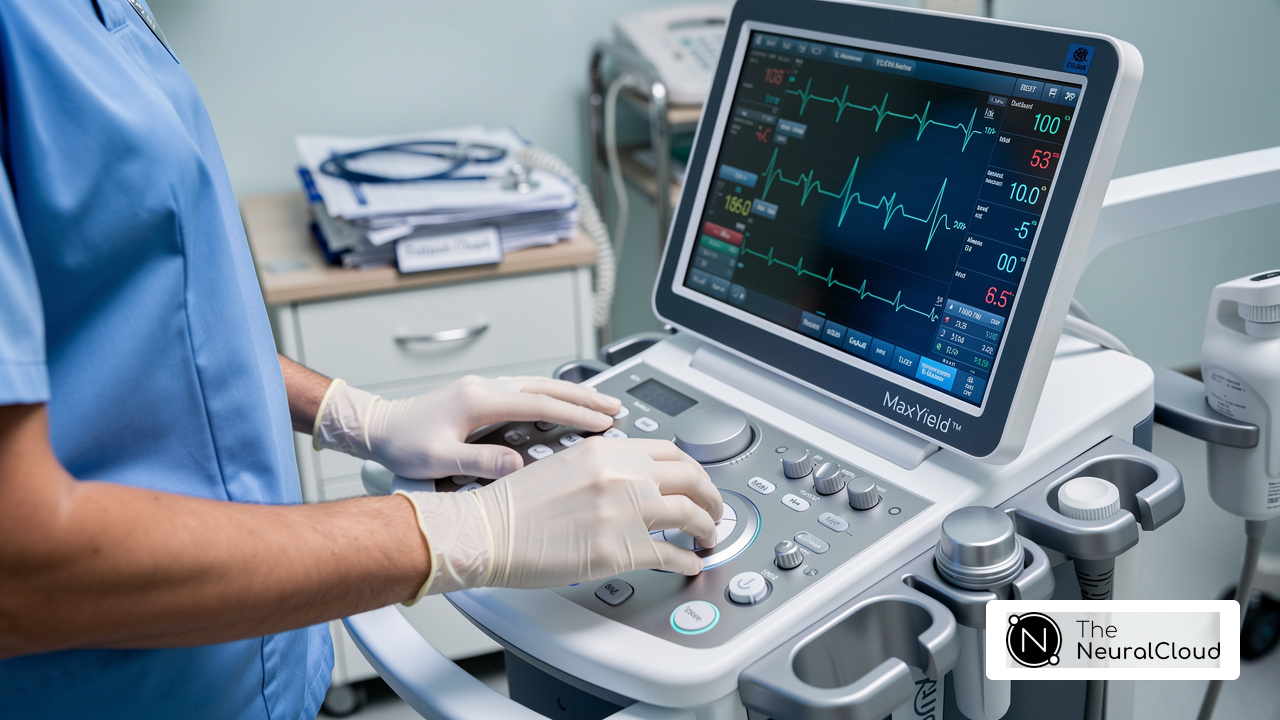
Understanding the nuances of STEMI and the ECG changes in STEMI is crucial for creating effective solutions that address the challenges in cardiovascular care. Neural Cloud Solutions Inc.'s MaxYield platform exemplifies this transformation by ensuring clean PPG data and hospital-grade accuracy for wearable devices. With its advanced noise reduction features, MaxYield tackles motion noise and facilitates cross-device consistency, which is vital for reliable ECG evaluation. Experts like Dr. Alan Rabinowitz and Dr. Brett Heilbron endorse MaxYield for its precision, rivaling human interpretation, and its ability to enhance clinical decision-making through automated, scalable ECG analysis. Additionally, MaxYield is currently pending FDA Class II SaMD clearance, ensuring compliance with regulatory standards and supporting audit-ready documentation for GxP inspections. As healthcare continues to evolve, leveraging advanced technologies like MaxYield will be essential in improving patient outcomes in cardiovascular care.

Identify Key ECG Changes in STEMI: Patterns and Implications
Accurate ECG analysis remains a significant challenge in the medical field, particularly in identifying ECG changes in STEMI. Key ECG changes in STEMI include:
- ST-Segment Elevation: The hallmark of STEMI, characterized by an elevation of the ST segment in two or more contiguous leads. For men, the ST segment elevation must be at least 2 mm in at least 2 contiguous leads, while for women, it should be at least 1.5 mm in leads V2 and V3. This indicates myocardial injury and requires immediate medical attention.
- Hyperacute T Waves: Frequently the first indication of an ST-elevation myocardial infarction, these T waves appear peaked and are usually observed in the early hours of the occurrence, which are crucial for identifying ECG changes in STEMI. Their recognition is critical for timely diagnosis and intervention.
- Q Waves: As the infarction evolves, pathological Q waves may develop, which are among the ECG changes in STEMI that indicate necrosis of myocardial tissue. The presence of Q waves can signify a more advanced stage of myocardial damage.
- Reciprocal Changes: These may appear in leads opposite to the area of infarction, providing additional diagnostic clues regarding ECG changes in STEMI. Their presence raises the probability of a heart attack diagnosis, while their absence does not exclude it.
Recognizing these patterns is essential for developers aiming to create diagnostic tools that accurately interpret ECG changes in STEMI and facilitate timely interventions. Recent studies highlight the significance of identifying unusual presentations and subtle ECG changes, which can greatly influence outcomes for individuals. For example, a 2021 study emphasized that conventional criteria for myocardial infarction had a sensitivity of only 41% for identifying OMI, underscoring the need for vigilance in ECG interpretation. Furthermore, the Sgarbossa criteria can assist in diagnosing ST-elevation myocardial infarction in individuals with left bundle branch block (LBBB), further improving diagnostic precision.
Neural Cloud Solutions' MaxYield™ platform revolutionizes ECG analysis by automating the identification and labeling of critical data, including:
- Advanced noise filtering
- Wave recognition capability
- Rapid isolation of ECG waves
These features allow for the salvaging of previously obscured sections of lengthy Holter, 1-Lead, and patch monitor recordings. Experts like Dr. Alan Rabinowitz and Dr. Brett Heilbron endorse MaxYield™ for its precision, rivaling human interpretation, and its ability to enhance clinical decision-making.
By embracing advanced tools like MaxYield™, healthcare professionals can significantly enhance their diagnostic capabilities and ultimately improve patient care.

Recognize Diagnostic Challenges and Common Pitfalls in STEMI Interpretation
Interpreting ECGs for STEMI poses significant diagnostic challenges that can affect patient outcomes:
- Variability in Presentation: STEMI can manifest with atypical ECG changes, complicating diagnosis. For instance, left bundle branch block (LBBB) can mimic STEMI patterns, leading to potential misdiagnosis. This variability highlights the critical need for accurate interpretation of the ECG changes in STEMI. Misdiagnosis can lead to dire consequences, affecting hundreds of thousands of lives each year. Neural Cloud Solutions Inc.'s MaxYield™ platform addresses this challenge by utilizing advanced noise filtering and distinct wave recognition, allowing for the identification and labeling of critical data even in recordings with high levels of noise and artifact. Some patients may show only subtle ECG changes in STEMI, such as ST-segment elevations or reciprocal changes, which can be easily overlooked by clinicians, resulting in delayed treatment. It’s clear that healthcare providers need better training and awareness to catch the subtle ECG changes in STEMI. MaxYield™ enhances ECG analysis efficiency by rapidly isolating ECG waves from recordings affected by baseline wander, movement, and muscle artifact, ensuring that subtle changes are not missed.
- False Positives: Conditions such as pericarditis or early repolarization can produce ST elevations that may be confused with a myocardial infarction, contributing to unnecessary interventions. Addressing these false positives is crucial, as they can lead to significant resource drain in hospitals. The continuous learning model of MaxYield™ evolves with each use, improving its accuracy and efficiency over time, which helps mitigate the risk of false positives.
- Training Gaps: Inconsistent training among healthcare providers can lead to variability in ECG interpretation skills, further complicating accurate diagnosis. Dr. Anthony Kashou stresses that providing proper and sufficient training for all practitioners on the waveforms most indicative of NSTEMI can help greatly. Incorporating MaxYield™ into training programs can provide healthcare professionals with a powerful tool that rivals human interpretation, as noted by experts like Dr. Alan Rabinowitz and Dr. Brett Heilbron, who highlight its precision and noise reduction benefits.
Developers must tackle these challenges head-on to improve the reliability of ECG interpretation tools. Incorporating insights from case studies, such as the impact of computerized ECG interpretation, can illustrate the practical implications of these challenges and support healthcare professionals in making accurate diagnoses to improve patient care.

Leverage Advanced Technologies for Enhanced ECG Analysis in STEMI
Despite advancements in medical technology, addressing ECG changes in STEMI remains a challenge that demands innovative solutions. To enhance ECG analysis, developers can leverage several advanced technologies:
- Artificial Intelligence (AI): AI algorithms analyze ECG data in real-time, identifying patterns indicative of STEMI with remarkable accuracy. Recent studies show that AI-ECG achieved a sensitivity of 92% and a specificity of 81%, significantly outperforming traditional methods.
- Deep Learning: Utilizing convolutional neural networks (CNNs) enhances the detection of subtle ECG changes in STEMI that may indicate a type of heart attack, effectively reducing false negatives. This technology has been validated in multiple clinical environments, demonstrating its robustness across diverse patient groups.
- Integration with Wearable Devices: Incorporating ECG analysis into wearable technology allows for continuous monitoring and early detection of heart attacks, enabling timely intervention. It's vital to act quickly; delays over 90 minutes can triple the risk of death.
- Cloud-Based Solutions: Implementing cloud technology facilitates the sharing of ECG data among healthcare providers, improving collaboration and diagnostic accuracy. This interconnectedness is essential for ensuring that critical information is readily available for timely decision-making.
Integrating these technologies not only speeds up the diagnosis of STEMI but also improves the assessment of ECG changes in STEMI, leading to better patient care. By embracing these technologies, healthcare professionals can significantly enhance their diagnostic capabilities and improve patient outcomes.

Conclusion
For health tech developers, mastering ECG analysis in ST-Elevation Myocardial Infarction (STEMI) is crucial for improving diagnostic accuracy and patient outcomes. The article emphasizes the critical role of precise ECG analysis in identifying STEMI, highlighting the need for advanced technologies like Neural Cloud Solutions Inc.'s MaxYield platform. By leveraging AI and deep learning, developers can create tools that not only improve the detection of subtle ECG changes but also streamline clinical workflows, ultimately leading to timely interventions.
Key insights discussed include the importance of recognizing specific ECG patterns associated with STEMI, such as:
- ST-segment elevation
- Hyperacute T waves
- Reciprocal changes
The article also highlights the diagnostic challenges healthcare providers face, as they often struggle with the variability in ECG presentations, leading to potential misdiagnoses. By integrating advanced technologies and ensuring proper training for clinicians, this integration not only enhances diagnostic accuracy but also fosters better patient outcomes.
The advancements in ECG analysis for STEMI are more than just technological innovations; they mark a significant step forward in improving cardiovascular health in Canada. As the healthcare landscape evolves, embracing these innovations will be crucial for clinicians, researchers, and device manufacturers alike. The call to action is clear: prioritize the development and integration of advanced ECG analysis tools to ensure that timely and accurate diagnoses become the standard, ultimately saving lives and improving patient care in the face of cardiovascular emergencies.
Frequently Asked Questions
What is STEMI and why is it important in ECG analysis?
ST-Elevation Myocardial Infarction (STEMI) is a critical form of heart attack caused by the complete blockage of a coronary artery, leading to significant myocardial ischemia. Accurate ECG analysis is vital for timely intervention in STEMI, as understanding the ECG changes is crucial for distinguishing true cases from false alarms.
What are the key ECG changes associated with STEMI?
The key ECG change associated with STEMI is ST-segment elevation in certain leads, which indicates transmural myocardial injury.
What is the significance of accurately identifying ECG changes in STEMI?
Accurately identifying ECG changes in STEMI is essential for improving patient outcomes, as prompt recognition can lead to timely interventions that are critical in emergency care.
What are the statistics regarding false alarms in heart attack treatments?
Recent studies indicate that 58% of patients activated for heart attack treatment were confirmed cases of STEMI, while 42% were false alarms, highlighting the urgent need for accurate diagnostic tools.
How prevalent is STEMI in Canada and what are the associated mortality rates?
STEMI prevalence is a significant concern in Canada, with mortality rates within 30 days ranging from 2.5% to 10%.
How can AI-driven ECG evaluation improve the diagnosis of STEMI?
Advancements in AI-driven ECG evaluation promise to reduce false-positive rates significantly, from 41.8% to just 7.9%, thereby boosting the efficiency of emergency care.
What role does Neural Cloud Solutions Inc.'s MaxYield platform play in ECG analysis?
Neural Cloud Solutions Inc.'s MaxYield platform ensures clean PPG data and hospital-grade accuracy for wearable devices, tackling motion noise and facilitating cross-device consistency, which is vital for reliable ECG evaluation.
Who endorses the MaxYield platform and what are its benefits?
Experts like Dr. Alan Rabinowitz and Dr. Brett Heilbron endorse MaxYield for its precision, which rivals human interpretation, and its ability to enhance clinical decision-making through automated, scalable ECG analysis.
What is the regulatory status of the MaxYield platform?
MaxYield is currently pending FDA Class II SaMD clearance, ensuring compliance with regulatory standards and supporting audit-ready documentation for GxP inspections.
List of Sources
- Define STEMI and Its Importance in ECG Analysis
- Acute ST-Segment Elevation Myocardial Infarction (STEMI) - StatPearls - NCBI Bookshelf (https://ncbi.nlm.nih.gov/books/NBK532281)
- AI-ECG Finds STEMI Faster, Cuts False-Positive Cath Lab Activations (https://tctmd.com/news/ai-ecg-finds-stemi-faster-cuts-false-positive-cath-lab-activations)
- New study finds AI model improves heart attack detection (https://health.ucdavis.edu/news/headlines/new-study-finds-ai-model-improves-heart-attack-detection/2025/11)
- AI-Based ECG Analysis Significantly Improves STEMI Detection, Reduces False Activations - American College of Cardiology (https://acc.org/latest-in-cardiology/articles/2025/10/24/16/56/tues-554pm-ai-tct-2025)
- Artificial intelligence may speed heart attack diagnosis and treatment (https://newsroom.heart.org/news/artificial-intelligence-may-speed-heart-attack-diagnosis-and-treatment)
- Identify Key ECG Changes in STEMI: Patterns and Implications
- AI-ECG Finds STEMI Faster, Cuts False-Positive Cath Lab Activations (https://tctmd.com/news/ai-ecg-finds-stemi-faster-cuts-false-positive-cath-lab-activations)
- OMI-nously Yours: Is it time to re-think Code STEMI? (https://emottawablog.com/2026/08/omi-nously-yours-is-it-time-to-re-think-code-stemi)
- STEMI: ST-segment Elevation Myocardial Infarction - The Cardiology Advisor (https://thecardiologyadvisor.com/ddi/stemi-st-elevation-myocardial-infarction)
- STEMI ECG Criteria: ST-Elevation Thresholds (https://powerfulmedical.com/blog/stemi-ecg-criteria)
- STEMI - Electrocardiogram - M3 Curriculum | SAEM (https://saem.org/about-saem/academies-interest-groups-affiliates2/cdem/for-students/online-education/m3-curriculum/group-electrocardiogram-(ecg)-rhythm-recognition/stemi)
- Recognize Diagnostic Challenges and Common Pitfalls in STEMI Interpretation
- Avoiding STEMI and NSTEMI Misdiagnoses with Fast, Accurate ECG Interpretation (https://gehealthcare.com/content/gehealthcare/language-masters/en/insights/article/avoiding-stemi-and-nstemi-misdiagnoses-with-fast-accurate-ecg-interpretation.html?srsltid=AfmBOoqh7Q08MivEQkzyzyU-4A2iRcoRuKqRK2XQ6gI90c8FayweSzWN)
- AI-ECG Finds STEMI Faster, Cuts False-Positive Cath Lab Activations (https://tctmd.com/news/ai-ecg-finds-stemi-faster-cuts-false-positive-cath-lab-activations)
- Burden of serious harms from diagnostic error in the USA (https://qualitysafety.bmj.com/content/33/2/109)
- Report identifies risks in ambulance ECG interpretation and timely STEMI diagnosis — HSSIB (https://hssib.org.uk/news-events-blog/report-identifies-risks-in-ambulance-ecg-interpretation-and-timely-stemi-diagnosis)
- Leverage Advanced Technologies for Enhanced ECG Analysis in STEMI
- New study finds AI model improves heart attack detection (https://health.ucdavis.edu/news/headlines/new-study-finds-ai-model-improves-heart-attack-detection/2025/11)
- AI-ECG Finds STEMI Faster, Cuts False-Positive Cath Lab Activations (https://tctmd.com/news/ai-ecg-finds-stemi-faster-cuts-false-positive-cath-lab-activations)
- Queen of Hearts: AI ECG for STEMI & OMI (https://powerfulmedical.com/pmcardio-stemi)
- AI-Based ECG Analysis Significantly Improves STEMI Detection, Reduces False Activations - American College of Cardiology (https://acc.org/latest-in-cardiology/articles/2025/10/24/16/56/tues-554pm-ai-tct-2025)