Introduction
In a rapidly evolving healthcare landscape, mastering ECG interpretation is crucial for developers aiming to improve patient outcomes. The need for innovative ECG analysis tools that accurately interpret cardiac data is more pressing than ever. Yet, developers face a significant challenge in mastering ECG interpretation as technology advances rapidly. This article explores essential practices and resources that empower health tech creators to enhance their ECG learning. By doing so, they can effectively navigate the complexities of modern cardiac care.
Understand the Fundamentals of ECG
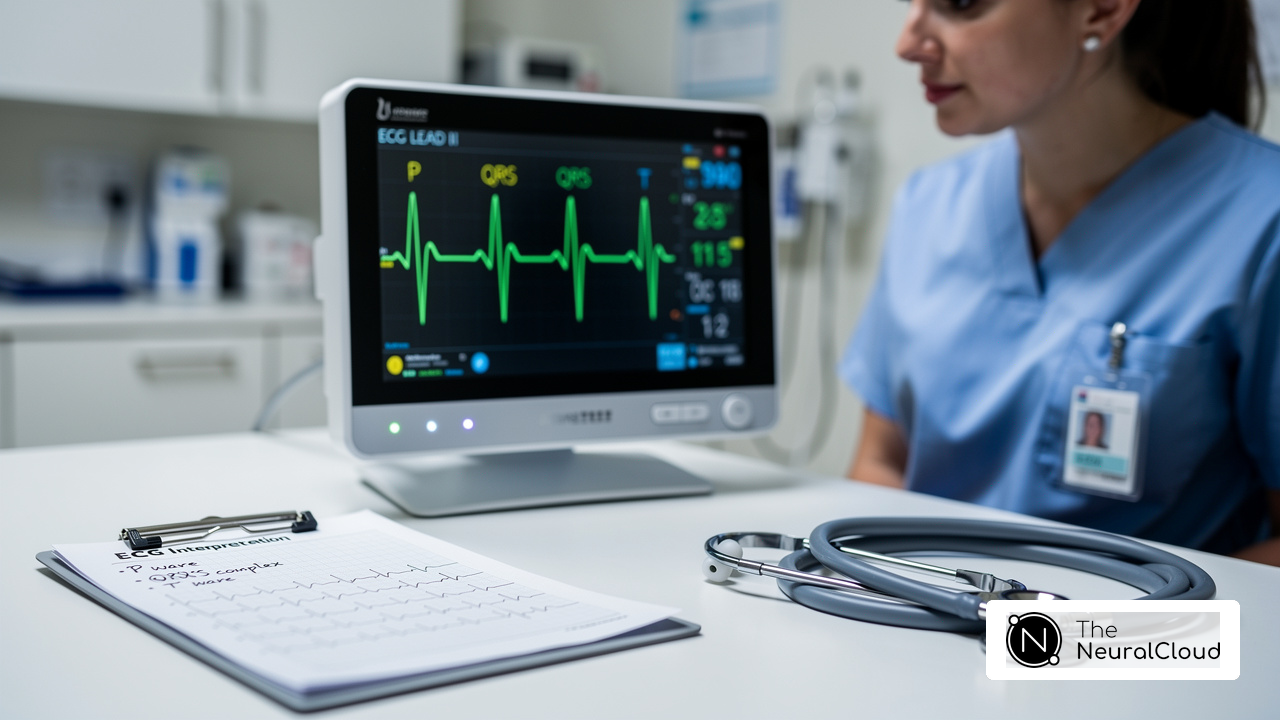
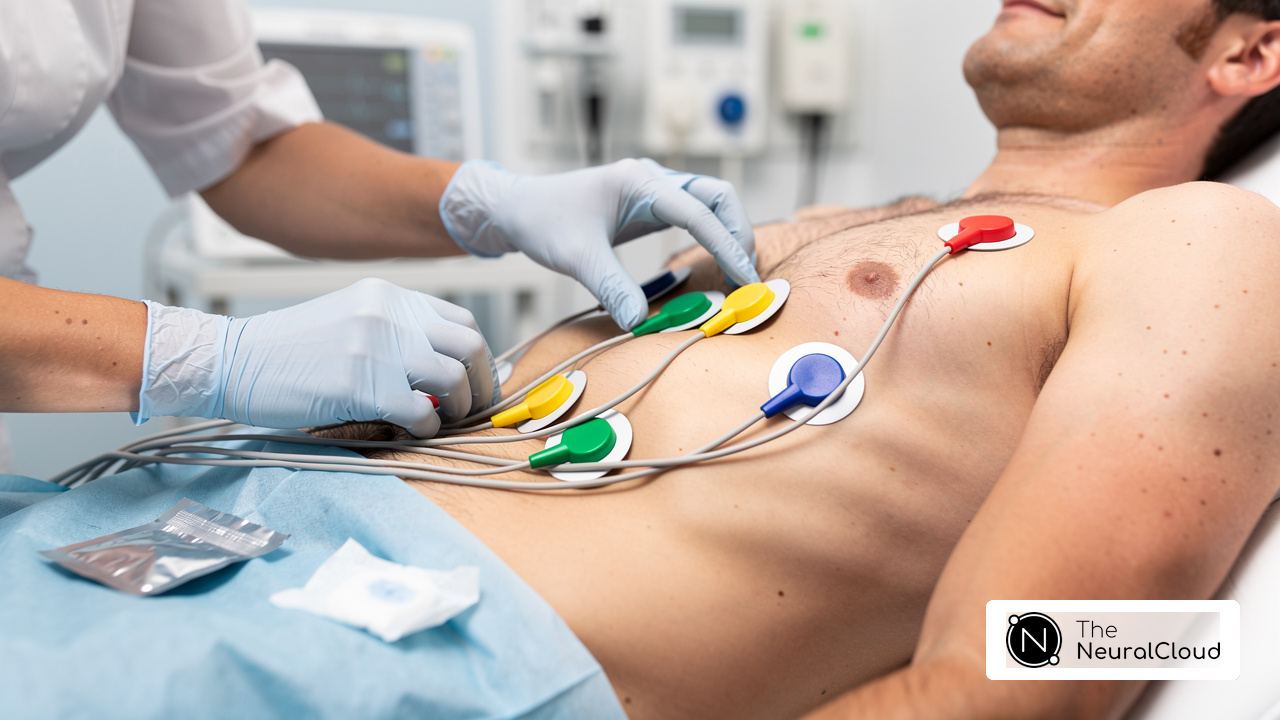
If you want to develop effective health tech solutions, it's essential to grasp the fundamentals of electrocardiography (ECG). This means understanding the heart's electrical activity and the roles of the P, QRS, and T waves in reflecting cardiac function. Knowing how to place leads correctly and set up a standard 12-lead ECG is crucial for accurate analysis. Developers can enhance their foundational knowledge by utilizing resources such as online courses and textbooks that cover heart anatomy, the conduction system, rhythm interpretation, and also take advantage of ECG learning free. Engaging with platforms like ECG Made Simple or Medmastery can offer opportunities for ECG learning free of charge.
Recent studies from Canada show that healthcare professionals who understand ECG waveform components achieve higher diagnostic accuracy. Their average assessment score is 62%, while those less familiar score only 47%. This underscores the need for health tech creators to master these fundamentals. Doing so will help them develop effective ECG analysis tools that accurately interpret arrhythmias and other cardiac issues, ultimately improving patient outcomes. By incorporating this foundational knowledge, creators can ensure their products are not only innovative but also clinically relevant and effective.

Apply Structured Techniques for ECG Interpretation
Developers in health technology face significant challenges in achieving precise ECG analysis, which is crucial for accurate diagnostics. A systematic approach encompasses several key steps:
- Rate Assessment: Calculate the heart rate by counting the number of large squares between R waves and applying the formula 300 divided by the number of large squares.
- Rhythm Analysis: Determine the regularity of the rhythm by assessing the intervals between R waves.
- Waveform Description: Analyze the morphology of P waves, QRS complexes, and T waves to identify any abnormalities.
- Conduction Analysis: Evaluate PR intervals and QRS durations to detect conduction delays or blocks.
Developers can take advantage of ECG learning free by exploring libraries and online resources to get comfortable with these techniques. For instance, platforms like Geeky Medics offer step-by-step guides that can be integrated into training modules, promoting ECG learning free for users of ECG technology. By utilizing these organized methods, developers can build applications that not only aid in understanding but also inform users on best practices, ultimately resulting in enhanced patient care.
Studies reveal that using structured ECG analysis techniques can greatly boost diagnostic accuracy. AI models, such as those powered by Neural Cloud Solutions Inc.'s advanced technology, have demonstrated a sensitivity of 92% compared to 71% for standard triage, and specificity improved to 81% from 29%. A study involving 1,032 patients with suspected STEMI highlighted the practical application of AI in ECG interpretation, showcasing the effectiveness of structured techniques in improving patient outcomes. Additionally, the area under the curve for the AI ECG model was reported at 0.94, indicating strong diagnostic performance. This highlights the significance of incorporating advanced analytical tools, which are currently awaiting FDA Class II SaMD clearance, into ECG workflows, ensuring that developers are prepared to provide high-quality solutions that address the changing demands of cardiac care.
The system maps ECG signals through noise, isolating and labeling key features in every heartbeat, transforming noisy recordings into detailed insights. With its capability to provide beat-by-beat analysis of 200,000 heartbeats in under 5 minutes, this system supports assured clinical decisions by assisting the reader in recognizing cardiac events and showcasing smooth waveforms. Furthermore, the continuous learning model of the system enhances accuracy and efficiency over time, addressing challenges in ECG analysis such as inefficiencies, physiological variability, and signal artifacts. Expert endorsements from Dr. Alan Rabinowitz, Dr. Brett Heilbron, and Dr. Marc W. Deyell highlight MaxYield’s accuracy comparable to human analysis and its noise reduction advantages, making it an essential resource for health tech creators.
By integrating MaxYield™ and its customizable visualization and reporting tool, Insight360, creators can transform clean ECG data into interactive dashboards and clinical-ready reports, ultimately enhancing workflow efficiency and patient care.

Leverage Advanced Technologies for Enhanced Learning
The integration of advanced technologies into ECG education and analysis presents significant challenges and opportunities for health tech developers. AI and machine learning can quickly analyze large ECG datasets, spotting patterns and anomalies that human analysis might overlook. For instance, AI models trained on extensive datasets have shown improved accuracy in detecting arrhythmias, which helps reduce false positives.
Developers should consider using platforms that offer ECG learning free through AI-assisted analysis, providing real-time feedback and learning opportunities. Additionally, incorporating virtual reality (VR) and augmented reality (AR) technologies can create immersive learning environments for ECG learning free, allowing users to practice ECG analysis in a risk-free setting. By leveraging these advanced technologies, developers can create solutions that boost learning and lead to better clinical outcomes through more accurate ECG analysis.
Recent studies indicate that AI-driven ECG interpretation can achieve diagnostic accuracy comparable to that of experienced cardiologists, with some models showing a 31% improvement in detecting ST-elevation myocardial infarctions. Moreover, applying machine learning in ECG analysis enhances the recognition of subtle abnormalities, which is crucial for timely and effective patient management. As the landscape of cardiovascular care continues to evolve, embracing these technologies will be essential for health tech developers aiming to improve healthcare delivery and patient outcomes. Notably, Neural Cloud Solutions Inc.'s product exemplifies this potential by transforming lengthy and noisy ECG recordings into clean, crisp signals, with FDA Class II SaMD clearance-pending status. Expert endorsements from Dr. Alan Rabinowitz, Dr. Brett Heilbron, and Dr. Marc W. Deyell highlight that MaxYield™ competes with human assessment in precision and provides substantial noise reduction advantages, further reinforcing its role in transforming ECG analysis. As these technologies advance, they will redefine the standards of ECG analysis and patient care in the healthcare industry.

Engage in Continuous Education and Training
Many health tech professionals struggle with ECG analysis due to insufficient ongoing education and training. Engaging in accredited ECG courses, attending workshops, and participating in online webinars focused on the latest advancements in cardiology technology are essential steps. Ongoing education is vital for boosting skills and enhancing patient care, as numerous studies have shown.
Resources such as the ECG Academy and Medmastery provide structured courses that cover both foundational knowledge and advanced techniques in ECG interpretation. Additionally, joining professional organizations and forums enables individuals to connect with peers, exchange insights, and stay informed about emerging trends and technologies.
Statistics show that 84% of senior executives believe that learning is essential, underscoring the need for ongoing educational involvement among health tech professionals in Canada to address skill gaps and improve product development. By committing to ongoing education, developers can significantly enhance their skills, contribute to better patient care, and adapt to the evolving landscape of cardiovascular technology. Furthermore, addressing the hidden costs associated with employing undereducated staff is critical, as these costs can compromise patient safety and care quality.
Using Neural Cloud Solutions' platform can significantly improve ECG analysis efficiency. The system transforms lengthy and noisy recordings into clean, crisp signals, utilizing a continuous learning model that evolves with each use to maximize diagnostic yield. This AI-driven automation not only enhances precision but also reduces the workload for programmers, allowing them to focus on delivering high-quality patient care. Expert endorsements from Dr. Alan Rabinowitz, Dr. Brett Heilbron, and Dr. Marc W. Deyell highlight that this product rivals human interpretation in accuracy and effectively minimizes noise, making it an essential resource for health technology creators. Integrating MaxYield™ not only enhances ECG analysis but also positions developers as leaders in the evolving landscape of cardiovascular technology.

Conclusion
Navigating the complexities of ECG interpretation is essential for health tech developers striving to create reliable diagnostic tools. However, many developers struggle with the complexities of ECG interpretation. Understanding the fundamentals of electrocardiography, applying structured techniques for analysis, leveraging advanced technologies, and committing to continuous education can significantly enhance their contributions to patient care and outcomes.
The article emphasizes the importance of foundational knowledge in ECG, highlighting how a solid grasp of heart rhythms and waveform components can lead to improved diagnostic accuracy. Structured techniques, such as rate assessment and waveform description, are essential for precise analysis, while advanced technologies like AI and machine learning offer innovative solutions that can transform ECG interpretation. Staying updated through continuous education helps health tech professionals keep pace with cardiology advancements, which is great for their careers and patient health.
As the landscape of cardiovascular care evolves, failing to adapt could lead to outdated practices and missed opportunities for improving patient care. Health tech developers are encouraged to actively seek out resources, engage in ongoing training, and utilize cutting-edge technologies to refine their skills. Ultimately, the commitment to mastering ECG interpretation can redefine the future of patient care and healthcare innovation.
Frequently Asked Questions
What is the importance of understanding ECG fundamentals for health tech solutions?
Understanding ECG fundamentals is essential for developing effective health tech solutions as it involves grasping the heart's electrical activity and the roles of the P, QRS, and T waves in reflecting cardiac function.
What are the key components of a standard 12-lead ECG?
The key components of a standard 12-lead ECG include the correct placement of leads and understanding the heart's electrical activity as represented by the P, QRS, and T waves.
How can developers enhance their knowledge of ECG?
Developers can enhance their knowledge of ECG by utilizing resources such as online courses and textbooks that cover heart anatomy, the conduction system, rhythm interpretation, and engaging with platforms like ECG Made Simple or Medmastery for free ECG learning opportunities.
What do recent studies from Canada indicate about healthcare professionals' understanding of ECG?
Recent studies from Canada indicate that healthcare professionals who understand ECG waveform components achieve higher diagnostic accuracy, with an average assessment score of 62% compared to 47% for those less familiar with ECG.
Why is mastering ECG fundamentals important for health tech creators?
Mastering ECG fundamentals is important for health tech creators as it enables them to develop effective ECG analysis tools that accurately interpret arrhythmias and other cardiac issues, ultimately improving patient outcomes.
List of Sources
- Understand the Fundamentals of ECG
- Study Shows Promising Results for ECG Technology (https://dicardiology.com/content/study-shows-promising-results-ecg-technology)
- Bridging ECG learning with emerging technologies: Advancing clinical excellence (https://mayoclinic.elsevierpure.com/en/publications/bridging-ecg-learning-with-emerging-technologies-advancing-clinic)
- theneuralcloud.com (https://theneuralcloud.com/post/best-practices-for-effective-ecg-diagnosis-using-ai-solutions)
- theneuralcloud.com (https://theneuralcloud.com/post/10-key-insights-on-ekg-peaked-t-waves-for-health-tech-developers)
- Exploring The Latest Breakthroughs & Advancements In ECG Tech | Executive Electrocardiogram Education (https://ecgedu.com/latest-advancements-in-ecg-tech)
- Apply Structured Techniques for ECG Interpretation
- AI-Based ECG Analysis Significantly Improves STEMI Detection, Reduces False Activations - American College of Cardiology (https://acc.org/latest-in-cardiology/articles/2025/10/24/16/56/tues-554pm-ai-tct-2025)
- PMcardio: AI ECG & Cardiac Care Platform (https://powerfulmedical.com)
- Breakthrough in heart health: A new approach to interpreting ECG data using large language models (https://eurekalert.org/news-releases/1073406)
- Leverage Advanced Technologies for Enhanced Learning
- AI ECG Interpretation Rivals Cardiologists (https://powerfulmedical.com/blog/how-is-ai-transforming-ecg-interpretation)
- How AI is impacting electrocardiography and ECG interpretation for a more accurate diagnosis of cardiovascular diseases (https://tempus.com/resources/content/articles/ai-revolution-electrocardiography-ecg-ai-insights)
- Machine learning in healthcare: Uses, benefits and pioneers in the field - EIT Health (https://eithealth.eu/news-article/machine-learning-in-healthcare-uses-benefits-and-pioneers-in-the-field)
- Engage in Continuous Education and Training
- Why Continuing Education (CE) is so Important and Worth the Cost for Healthcare Professionals and Providers - HPC International, INC (https://home.hpcinternationalinc.com/corporate-savings-strategies/why-continuing-education-ce-is-so-important-and-worth-the-cost-for-healthcare-professionals-and-providers)
- Why Continuing Education is Key for Healthcare Professionals – AIHCP (https://aihcp.net/2025/02/10/why-continuing-education-is-key-for-healthcare-professionals)
- Addressing the need for continuing education (https://usa.philips.com/healthcare/article/continuing-education-for-healthcare-professionals)
- The Importance of Continuous Education in Healthcare (https://healthmanagement.org/c/healthmanagement/IssueArticle/the-importance-of-continuous-education-in-healthcare)
- The Importance of Continuing Education in Healthcare: Staying Up-to-Date for Better Patient Care (https://lifework.edu/blog/the-importance-of-continuing-education-in-healthcare-staying-up-to-date-for-better-patient-care)