Introduction
Identifying NSTEMI through ECG presents significant challenges due to its often subtle signs. This critical form of acute coronary syndrome requires a deep understanding of its characteristics and the latest technological advancements that can enhance diagnostic accuracy.
Healthcare professionals face the ongoing challenge of using advanced tools to accurately identify NSTEMI and reduce the risks of misdiagnosis. As they strive to improve patient care, the question remains: how can they effectively leverage these cutting-edge tools to ensure timely and accurate identification of NSTEMI?
Define NSTEMI: Key Concepts and Clinical Significance
Diagnosing ECG NSTEMI presents unique challenges that can complicate timely treatment. ECG NSTEMI is a critical type of acute coronary syndrome (ACS) that is characterized by myocardial ischemia without the classic ST-segment elevation seen in STEMI.
- Definition: NSTEMI arises from a partial blockage of a coronary artery, leading to diminished blood flow to the heart muscle. This can result in myocardial damage or necrosis associated with ECG NSTEMI.
- Clinical Presentation: Patients typically exhibit symptoms such as chest pain, dyspnea, and diaphoresis. These manifestations may be subtler compared to those of STEMI, complicating prompt identification.
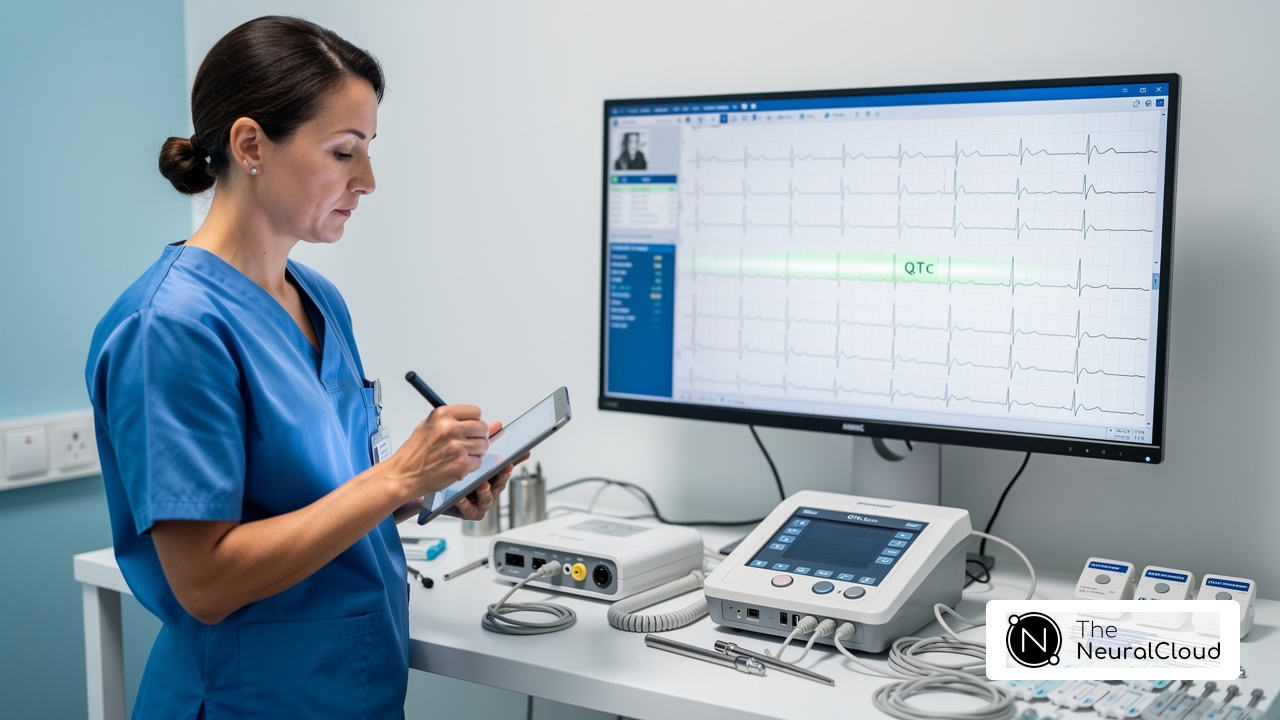
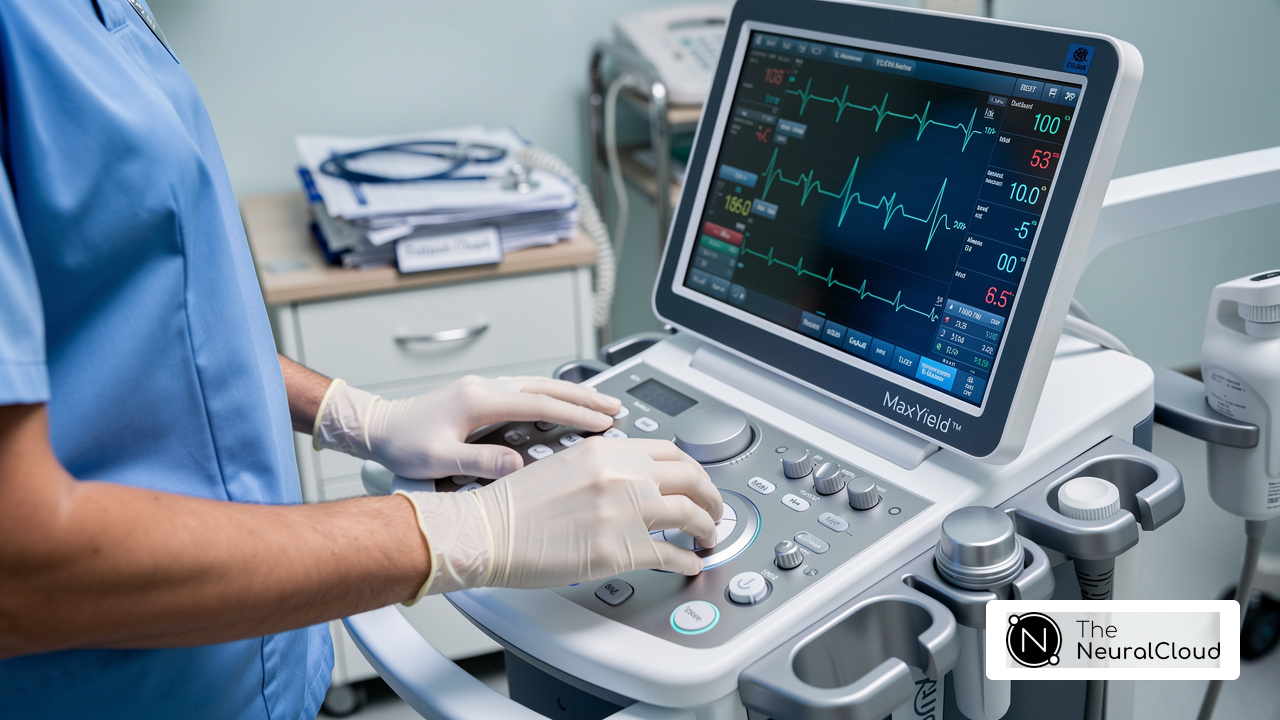
The diagnostic criteria for confirming ECG NSTEMI rely on elevated cardiac biomarkers, particularly troponin levels, along with the absence of ST-segment elevation. Understanding these criteria is crucial for making accurate diagnoses and providing effective treatment. The integration of advanced technologies like Neural Cloud Solutions' MaxYield™ platform can significantly enhance this process. MaxYield™ utilizes advanced noise reduction and unique wave detection to improve the clarity of ECG readings, enabling more precise identification of ECG NSTEMI.
- Clinical significance: ECG NSTEMI carries significant risks, including morbidity and mortality. Prompt recognition and management are essential to prevent complications such as heart failure or arrhythmias. Recent studies show that around 87.1% of individuals with type 1 NSTEMI undergo invasive coronary angiography, with 66.1% receiving percutaneous coronary intervention (PCI). By leveraging MaxYield™, healthcare professionals can streamline ECG analysis, reduce operational costs, and enhance diagnostic accuracy, ultimately leading to better patient outcomes.

Identify ECG Patterns: Recognizing NSTEMI Characteristics
Accurate identification of non-ST elevation myocardial infarction (NSTEMI) presents significant challenges due to the subtlety of ECG NSTEMI changes. Key characteristics include:
- ST-Segment Changes: Transient ST-segment depression or T-wave inversions are critical indicators of ischemia in NSTEMI patients. While these changes may be subtler than those observed in STEMI, they are essential for diagnosis.
- Lead Specificity: Assessing leads II, III, and aVF is vital for identifying inferior wall ischemia, while leads V2-V4 are crucial for anterior wall ischemia. Understanding the significance of lead placement enhances diagnostic accuracy.
- Comparison with STEMI: Unlike STEMI, non-ST elevation myocardial infarction does not exhibit persistent ST-segment elevation. Familiarity with these distinctions is crucial to prevent misdiagnosis.
- Clinical Correlation: Correlating ECG findings with clinical symptoms and biomarkers is crucial for accurate diagnosis. This comprehensive approach ensures a thorough evaluation of the individual's condition, facilitating timely and effective treatment.
Recent studies underscore the significance of these ECG changes in the evaluation of ECG NSTEMI, highlighting that AI-based interpretation of ECG NSTEMI can significantly improve the accuracy of identifying occlusive myocardial infarction, achieving a sensitivity of 77% and specificity of 99%. This underscores the potential of advanced technology to improve clinical outcomes for patients.

Leverage Technology: Enhancing ECG Analysis with Advanced Tools
Advanced technology in ECG analysis boosts diagnostic accuracy and efficiency. Key tools include:
- AI-Powered ECG Platforms: Platforms like Neural Cloud Solutions' MaxYield™ automate ECG analysis, improving signal clarity and processing large volumes of data rapidly. This means we can analyze each heartbeat, which is key for quick diagnoses. Notably, studies have shown that the AI model reduces false positives to about 8%, compared to nearly 42% with standard triage. This underscores its effectiveness in improving diagnostic accuracy. MaxYield™ identifies and labels critical data, even in noisy recordings. This ensures that important sections of lengthy Holter, 1-Lead, and patch monitor recordings are not lost. MaxYield™ learns continuously, improving its diagnostic yield with every use.
- Automated Waveform Labeling: Utilizing advanced algorithms, these platforms can automatically label essential features of the ECG, such as P-waves, QRS complexes, and T-wave intervals. This automation reduces the burden on clinicians and minimizes the potential for human error, leading to more reliable results. In fact, 58% of individuals reviewed were confirmed to have ECG NSTEMI, while 42% were false alarms, which highlights the importance of precise ECG analysis. The adaptive algorithm of MaxYield™ evolves with each use, continuously improving its accuracy and efficiency.
Wearable ECG devices enable real-time monitoring and continuous observation, providing immediate feedback for timely interventions for individuals at risk of ECG NSTEMI. This proactive approach is crucial. Delays in treatment can raise mortality risk significantly. Studies show that if treatment takes longer than 90 minutes, the risk of death triples. As Bryn Mumma, a professor of emergency medicine, states, "Accurate diagnosis and rapid treatment to restore blood flow are critical, and any tool that speeds up this process can help us save more lives."
- Data Integration: It is essential that the technology employed integrates seamlessly with existing clinical workflows. MaxYield™'s noise filtering and automated processing features simplify workflows, ensuring effective data sharing and collaboration among healthcare professionals, enhancing overall care and results.

Avoid Misdiagnosis: Understanding Risks and Consequences
Misdiagnosis of ECG NSTEMI poses significant risks to patient outcomes. Key points to consider include:
- Clinical Risks: Delayed or incorrect diagnosis can lead to inadequate treatment, raising the risk of complications like heart failure, arrhythmias, or even death. For example, a study showed that individuals misdiagnosed with ECG NSTEMI had a door-to-angiography time that was five times longer than those diagnosed accurately, which correlates with increased mortality risks.
- Impact on Treatment Decisions: Indeed, 34% of individuals evaluated for ECG NSTEMI were misdiagnosed, leading to lower rates of recommended therapies and a higher risk of premature death. Misdiagnosis may lead to inappropriate management strategies, such as delaying necessary interventions or administering ineffective treatments.
Training and awareness through ongoing education and training for healthcare professionals on ECG NSTEMI diagnosis are crucial. This includes understanding the limitations of ECG interpretation and the importance of correlating clinical findings with diagnostic tests. Research indicates that previous heart failure, atypical chest pain, and late presentation significantly increase the odds of misdiagnosis, underscoring the need for heightened awareness.
Case studies should be examined to demonstrate the outcomes of misdiagnosis, emphasizing the necessity for vigilance and comprehensive evaluation in individuals presenting with symptoms suggestive of ECG NSTEMI. For example, one case involved a patient who was initially misdiagnosed and later returned with worsening symptoms, ultimately leading to severe heart damage and death. These cases underscore how vital timely and accurate diagnosis is in managing acute coronary syndromes.

Conclusion
Accurate diagnosis of NSTEMI is a challenge that can significantly impact patient management. Understanding the definition, clinical significance, and diagnostic criteria of NSTEMI is crucial for healthcare professionals. Integrating advanced technologies, such as the MaxYield™ platform, can significantly enhance diagnostic precision and efficiency, ultimately leading to better patient outcomes.
Key insights from this discussion highlight the importance of recognizing specific ECG patterns, such as ST-segment changes and lead specificity, in diagnosing NSTEMI. The role of AI-powered tools in reducing misdiagnosis rates and improving the clarity of ECG readings cannot be overstated. Misdiagnosing NSTEMI can lead to serious health risks, making accurate recognition vital. Furthermore, the potential consequences of misdiagnosis underscore the necessity for continuous education and awareness among clinicians to improve diagnostic accuracy.
In summary, the integration of advanced ECG technologies and a thorough understanding of NSTEMI characteristics are essential for enhancing patient care. By adopting these technologies, healthcare professionals can significantly improve patient care. As the landscape of cardiac care evolves, embracing these innovations will not only streamline diagnostic processes but also save lives. Staying updated on these advancements is crucial for healthcare professionals aiming to enhance patient care and outcomes.
Frequently Asked Questions
What is NSTEMI?
NSTEMI, or Non-ST-Elevation Myocardial Infarction, is a type of acute coronary syndrome characterized by myocardial ischemia due to a partial blockage of a coronary artery, resulting in reduced blood flow to the heart muscle without the classic ST-segment elevation seen in STEMI.
What are the common symptoms of NSTEMI?
Common symptoms of NSTEMI include chest pain, dyspnea (shortness of breath), and diaphoresis (excessive sweating). These symptoms may be subtler compared to those of STEMI, making prompt identification more challenging.
How is NSTEMI diagnosed?
NSTEMI is diagnosed based on elevated cardiac biomarkers, particularly troponin levels, in conjunction with the absence of ST-segment elevation on an ECG.
What role does technology play in diagnosing NSTEMI?
Advanced technologies like Neural Cloud Solutions' MaxYield™ platform enhance the diagnosis of NSTEMI by utilizing noise reduction and unique wave detection to improve the clarity of ECG readings, allowing for more precise identification.
Why is prompt recognition and management of NSTEMI important?
Prompt recognition and management of NSTEMI are crucial to prevent serious complications such as heart failure or arrhythmias, which can lead to increased morbidity and mortality.
What treatments are commonly administered for NSTEMI?
Recent studies indicate that approximately 87.1% of individuals with type 1 NSTEMI undergo invasive coronary angiography, and 66.1% receive percutaneous coronary intervention (PCI) as part of their treatment.
How can MaxYield™ benefit healthcare professionals in managing NSTEMI?
MaxYield™ can streamline ECG analysis, reduce operational costs, and enhance diagnostic accuracy, ultimately leading to better patient outcomes in the management of NSTEMI.
List of Sources
- Define NSTEMI: Key Concepts and Clinical Significance
- scai.org (https://scai.org/media-center/news-and-articles/new-stemi-dtu-data-provide-deeper-insight-patient-outcomes)
- 2025 ACC/AHA/ACEP/NAEMSP/SCAI Guideline for the Management of Patients With Acute Coronary Syndromes (https://professional.heart.org/en/science-news/2025-guideline-for-the-management-of-patients-with-acute-coronary-syndromes)
- ebmedicine.net (https://ebmedicine.net/topics/cardiovascular/NSTEMI)
- Large Variability in Use of Invasive Strategy for Type 1 NSTEMI: NCDR (https://tctmd.com/news/large-variability-use-invasive-strategy-type-1-nstemi-ncdr)
- tctmd.com (https://tctmd.com/news/early-invasive-treatment-may-help-highest-risk-women-nste-acs)
- Identify ECG Patterns: Recognizing NSTEMI Characteristics
- AI-based ECG interpretation outperforms standard diagnosis of occlusive myocardial infarction (https://news-medical.net/news/20260323/AI-based-ECG-interpretation-outperforms-standard-diagnosis-of-occlusive-myocardial-infarction.aspx)
- medscape.com (https://medscape.com/viewarticle/ai-shows-promise-rapid-nstemi-diagnosis-2025a10009pw)
- Large Variability in Use of Invasive Strategy for Type 1 NSTEMI: NCDR (https://tctmd.com/news/large-variability-use-invasive-strategy-type-1-nstemi-ncdr)
- New guidelines for diagnosis and management of acute coronary… (https://insightplus.mja.com.au/2026/8/new-guidelines-for-diagnosis-and-management-of-acute-coronary-syndromes)
- acc.org (https://acc.org/latest-in-cardiology/journal-scans/2026/02/25/19/29/nstemi-algorithm)
- Leverage Technology: Enhancing ECG Analysis with Advanced Tools
- New study finds AI model improves heart attack detection (https://health.ucdavis.edu/news/headlines/new-study-finds-ai-model-improves-heart-attack-detection/2025/11)
- AI-Powered ECG Analysis Offers Promising Path for Early Detection of Chronic Obstructive Pulmonary Disease, Say Mount Sinai Researchers (https://mountsinai.org/about/newsroom/2026/ai-powered-ecg-analysis-offers-promising-path-for-early-detection-of-chronic-obstructive-pulmonary-disease-say-mount-sinai-researchers)
- ECG market keeps evolving thanks to AI, home monitoring and Epic integration (https://signifyresearch.net/2026/02/13/ecg-market-keeps-evolving-thanks-to-ai-home-monitoring-and-epic-integration)
- AI improves detection of hard-to-diagnose heart attacks | ICT&health (https://icthealth.org/news/ai-improves-detection-of-hard-to-diagnose-heart-attacks)
- globenewswire.com (https://globenewswire.com/news-release/2026/04/13/3272639/28124/en/wearable-ecg-monitors-industry-to-more-than-double-during-2026-2030-exceeding-13-6-billion-total-revenue-rising-demand-for-ai-driven-diagnostics-and-home-based-cardiac-monitoring.html)
- Avoid Misdiagnosis: Understanding Risks and Consequences
- academic.oup.com (https://academic.oup.com/eurheartj/article/44/Supplement_2/ehad655.1532/7393898)
- acc.org (https://acc.org/latest-in-cardiology/articles/2024/10/01/01/42/business-of-medicine-misdiagnosis-lessons-learned-from-a-cardiology-malpractice-case)
- pmc.ncbi.nlm.nih.gov (https://pmc.ncbi.nlm.nih.gov/articles/PMC10356100)