Introduction
Navigating the complexities of ECG paced rhythms is essential for health tech developers focused on advancing cardiac care solutions.
With the rise of advanced technologies, mastering the intricacies of pacing modes and their characteristics can significantly improve diagnostic accuracy and patient outcomes.
As ECG analysis evolves, developers face challenges with noise interference that can hinder reliable interpretations.
This article explores essential tools and techniques that empower health tech developers to master ECG paced rhythms, enhancing cardiac monitoring and diagnostics in Canada.
Clarify ECG Paced Rhythm Fundamentals
Understanding ECG paced rhythm is essential for effective cardiac care and health tech solutions. ECG paced rhythms are generated when an artificial pacemaker stimulates the heart to ensure an adequate heart rate. Grasping the fundamental components of paced rhythms is crucial for effective analysis and integration into health tech solutions:
- Pacing Spike: This initial electrical impulse from the pacemaker appears on the ECG as a sharp vertical line preceding the P wave (in atrial pacing) or the QRS complex (in ventricular pacing). Typically, in Canada, stimulation spikes last about 2 ms, with bipolar leads generating smaller spikes than unipolar leads.
- Capture: Successful capture occurs when the heart muscle responds to the stimulation spike, resulting in a contraction. If there’s no corresponding P wave or QRS complex after a stimulation spike, it indicates capture failure, which is critical for diagnosing pacemaker issues. In clinical practice, identifying periods of no stimulation spikes is essential to prevent complications.
- Paced Rhythm Characteristics: The rhythm can be consistent or inconsistent, influenced by the tempo mode and underlying cardiac conditions. For example, ECG paced rhythm frequently shows a left bundle branch block (LBBB) appearance, with stimulation spikes occurring before each QRS complex. Comprehending these patterns is essential for programmers to accurately analyze and interpret ECG data.
Incorporating regulatory compliance details, such as FDA Class II SaMD clearance-pending status, is essential for credibility. Recent case studies in Canadian healthcare highlight the significance of recognizing these characteristics. For instance, a patient with a dual chamber pacemaker exhibited an ECG paced rhythm that was normal, confirming the expected morphology with pacing spikes preceding each QRS complex. Additionally, expert opinions emphasize the importance of a systematic approach to ECG interpretation, ensuring that critical details are not overlooked.
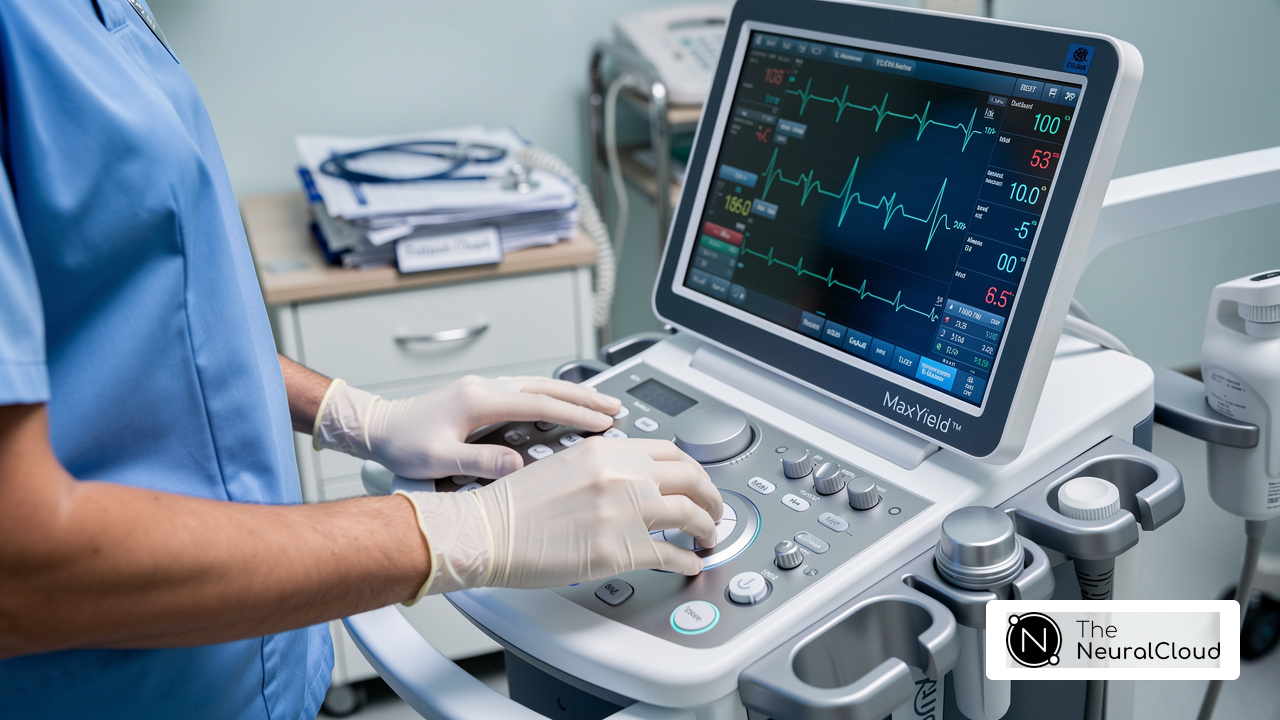
When health tech creators master these fundamentals, they can truly enhance their solutions, ensuring accurate monitoring and diagnostics in cardiac care. Utilizing MaxYield’s advanced automated ECG analysis features, creators can convert noisy recordings into detailed insights, allowing beat-by-beat examination of 200,000 heartbeats in under 5 minutes. This not only enhances clarity but also supports confident clinical decision-making. As Dr. Alan Rabinowitz notes, "MaxYield’s precision rivals human interpretation, significantly reducing noise and improving diagnostic yield." By utilizing MaxYield, creators can ensure that their ECG data is clean and actionable, ultimately leading to improved outcomes for individuals. This mastery not only enhances diagnostic accuracy but also directly impacts patient care and outcomes.

Explore Types of Pacing Modes and Their Characteristics
Pacing modes are crucial for effective heart rhythm management, yet they present unique challenges in the analysis of ECG paced rhythm. Understanding these modes is vital for developers in the health tech sector:
- Atrial Pacing (AAI): The pacemaker stimulates the atria and senses atrial activity, making it suitable for individuals with insufficient atrial rates, particularly in cases of sinus node dysfunction. With MaxYield™, developers can enhance AAI interpretation accuracy by filtering out noise and artifacts that obscure atrial signals. This addresses physiological variability factors like age and health conditions.
- Ventricular Pacing (VVI): This mode stimulates the ventricles and detects ventricular activity, frequently utilized in individuals with complete heart block to ensure effective heart contractions. Goyal A emphasizes the importance of closed-loop monitoring in managing individuals with cardiac pacemakers, highlighting the need for precise pacing strategies. MaxYield™'s advanced noise reduction capabilities ensure that VVI data is interpreted with high fidelity, even in challenging recording conditions.
- Dual Chamber Pacing (DDD): This mode paces both the atria and ventricles, allowing for more synchronized heart contractions. It is advantageous for individuals with atrioventricular block, as it aids in sustaining a coordinated heart rhythm. The MINERVA study demonstrated a 61% reduction in the progression of permanent atrial fibrillation (AF) among individuals with bradycardia, underscoring the effectiveness of DDD in optimizing outcomes. By utilizing MaxYield™, developers can further enhance the analysis of DDD timing, ensuring that physiological variability is accounted for in ECG interpretations.
- Rate-Responsive Control: This mode modifies the speed based on the individual's activity level, offering a more physiological reaction to changing demands. It enhances exercise tolerance and overall patient well-being by ensuring that the heart rate meets metabolic needs. MaxYield™ allows for real-time adjustments and precise evaluations of rate-responsive rhythms, effectively tackling signal artifact challenges.
In Canada, the MINERVA study's findings emphasize the essential role of choosing suitable rhythm modes, demonstrating a 52% decrease in AF-related hospitalizations and emergency room visits. By comprehending these rhythm modes and utilizing the features of MaxYield™, creators can design more efficient tools for ECG paced rhythm analysis customized to the unique requirements of various patient groups, ultimately improving healthcare delivery and patient results. Furthermore, understanding possible complications linked to rhythm methods, like pacemaker syndrome, is essential for creators to consider when designing their solutions. Expert endorsements from Dr. Alan Rabinowitz, Dr. Brett Heilbron, and Dr. Marc W. Deyell highlight that MaxYield™ competes with human interpretation in accuracy and greatly minimizes noise, rendering it an essential resource for health tech creators.

Apply Advanced Tools for ECG Analysis of Paced Rhythms
Noise interference in ECG recordings presents significant challenges for accurate analysis, impacting clinical decision-making. To effectively analyze ECG paced rhythms, developers can leverage several advanced tools and techniques:
- MaxYield™ Platform: This AI-driven tool enhances the identification of pacing spikes and other critical features in ECG recordings, even in the presence of noise. MaxYield™ effectively navigates through noise to pinpoint and label essential features like P-wave, QRS complex, and T-wave onsets and offsets for each heartbeat, delivering beat-by-beat analysis of 200,000 heartbeats in less than 5 minutes. This capability empowers clinicians to swiftly identify cardiac events, bolstering their confidence in clinical decisions. Additionally, MaxYield™ is currently pending FDA Class II SaMD clearance, ensuring compliance with regulatory standards.
- Automated Algorithms: Implementing algorithms for ECG paced rhythm classification significantly improves the accuracy of ECG interpretation. These algorithms can automatically detect pacing spikes and assess capture rates, thereby reducing the workload for healthcare professionals. MaxYield™'s automated noise filtering and wave recognition streamline this process, allowing for efficient data handling.
- Visualization Tools: Platforms like Insight360 enable creators to design customizable dashboards and reports that visualize ECG data trends. This functionality aids clinicians in making informed decisions based on real-time data. Insight360 transforms MaxYield™'s clean ECG data into interactive dashboards and clinical-ready reports, enhancing the overall workflow.
- Machine Learning Techniques: Incorporating machine learning enhances the predictive capabilities of ECG analysis tools, allowing for better detection of arrhythmias and other abnormalities associated with ECG paced rhythm. MaxYield™'s advanced algorithms adapt to physiological variability, ensuring robust analysis even in challenging conditions.
By applying these advanced tools, healthcare professionals can enhance their diagnostic capabilities, ultimately leading to improved patient care and outcomes. Expert endorsements from professionals such as Dr. Alan Rabinowitz, Dr. Brett Heilbron, and Dr. Marc W. Deyell emphasize MaxYield™’s precision rivaling human interpretation and its noise reduction benefits.

Conclusion
Health tech developers face challenges in understanding ECG paced rhythms, which are crucial for enhancing cardiac care solutions. By mastering the fundamentals of pacing spikes, capture, and the characteristics of paced rhythms, developers can significantly improve the accuracy of their ECG analyses. Knowing these concepts helps developers integrate technology better into clinical practice and focus on improving patient outcomes.
The article delves into various pacing modes, including AAI, VVI, DDD, and rate-responsive control, highlighting their unique characteristics and the importance of selecting the appropriate mode for individual patient needs. Advanced tools such as MaxYield™ and Insight360 streamline ECG analysis, reduce noise, and enhance diagnostic accuracy. These tools empower developers to create solutions that are efficient and compliant with regulatory standards, ultimately benefiting clinicians and patients alike.
In conclusion, the advancements in ECG analysis tools and techniques present a significant opportunity for health tech developers to refine their offerings. By leveraging these insights and technologies, creators can contribute to a future where cardiac care is more precise, efficient, and patient-centered. By embracing these advancements, developers can ensure that cardiac care evolves to meet the needs of patients and clinicians alike.
Frequently Asked Questions
What is ECG paced rhythm?
ECG paced rhythm is generated when an artificial pacemaker stimulates the heart to maintain an adequate heart rate. It is essential for effective cardiac care and health tech solutions.
What is a pacing spike in ECG?
A pacing spike is the initial electrical impulse from the pacemaker, appearing on the ECG as a sharp vertical line before the P wave (in atrial pacing) or the QRS complex (in ventricular pacing). In Canada, these spikes typically last about 2 ms, with bipolar leads producing smaller spikes than unipolar leads.
What does capture mean in the context of ECG paced rhythm?
Capture refers to the successful response of the heart muscle to a stimulation spike, resulting in a contraction. If there is no corresponding P wave or QRS complex after a stimulation spike, it indicates capture failure, which is critical for diagnosing pacemaker issues.
What are the characteristics of paced rhythm?
The characteristics of paced rhythm can be consistent or inconsistent, influenced by the tempo mode and underlying cardiac conditions. It often shows a left bundle branch block (LBBB) appearance, with stimulation spikes occurring before each QRS complex.
Why is it important to recognize ECG paced rhythm characteristics?
Recognizing these characteristics is essential for programmers to accurately analyze and interpret ECG data, which can prevent complications and ensure effective cardiac care.
What role does regulatory compliance play in ECG analysis?
Incorporating regulatory compliance details, such as FDA Class II SaMD clearance-pending status, is crucial for establishing credibility in health tech solutions.
How does MaxYield enhance ECG analysis?
MaxYield offers advanced automated ECG analysis features that allow creators to convert noisy recordings into detailed insights, enabling beat-by-beat examination of 200,000 heartbeats in under 5 minutes, which enhances clarity and supports confident clinical decision-making.
What is the significance of mastering ECG paced rhythm fundamentals for health tech creators?
Mastering these fundamentals enhances diagnostic accuracy and directly impacts patient care and outcomes, ensuring accurate monitoring and diagnostics in cardiac care.
List of Sources
- Clarify ECG Paced Rhythm Fundamentals
- Paced Rhythms | ECG Stampede (https://ecgstampede.com/glossary/paced-rhythms)
- Pacemaker Troubleshooting: Common Clinical Scenarios - PMC (https://pmc.ncbi.nlm.nih.gov/articles/PMC5067035)
- Paced or Non-Paced? Examining an Electrocardiogram Rythm (https://innovationsincrm.com/cardiac-rhythm-management/articles-2017/june/1047-examining-an-electrocardiogram-rythm)
- Pacemaker Essentials: How to Interpret a Pacemaker ECG - CanadiEM (https://canadiem.org/pacemaker-essentials-interpret-pacemaker-ecg)
- Pacemaker Rhythms – Normal Patterns (https://litfl.com/pacemaker-rhythms-normal-patterns)
- Explore Types of Pacing Modes and Their Characteristics
- Pacemaker Types and Selection - StatPearls - NCBI Bookshelf (https://ncbi.nlm.nih.gov/books/NBK556011)
- Late-Breaking Clinical Trial Results Show New Pacemaker Algorithm Significantly Delays Atrial Fibrillation (https://dicardiology.com/content/late-breaking-clinical-trial-results-show-new-pacemaker-algorithm-significantly-delays)
- Late Breaking Clinical Trial Results Show Significant Delay in Atrial Fibrillation Disease Progression with Medtronic-Exclusive Pacing Features (https://news.medtronic.com/2013-11-18-Late-Breaking-Clinical-Trial-Results-Show-Significant-Delay-in-Atrial-Fibrillation-Disease-Progression-with-Medtronic-Exclusive-Pacing-Features)
- Apply Advanced Tools for ECG Analysis of Paced Rhythms
- Cardiologs ECG Analysis Platform Receives FDA Clearance (https://dicardiology.com/product/cardiologs-ecg-analysis-platform-receives-fda-clearance)
- ECG Interpretation AI Market Research Report 2034 (https://dataintelo.com/report/ecg-interpretation-ai-market)
- AIML Hits Key Regulatory Benchmark with 510(k) Filing for MaxYield(TM) Signal Enhancement Platform (https://biospace.com/press-releases/aiml-hits-key-regulatory-benchmark-with-510k-filing-for-maxyieldtm-signal-enhancement-platform)
- News - Cardiac Rhythm News (https://cardiacrhythmnews.com/news)
- MaxYield-ECG (https://theneuralcloud.com/maxyield-ecg)