Introduction
In healthcare technology, accurately interpreting ECG results is crucial for effective patient care. As health tech developers face the complexities of cardiac analysis, a systematic approach becomes essential for enhancing diagnostic precision. With the rapid evolution of technology and the increasing volume of data, developers must ensure their ECG interpretation methods are both accurate and efficient. This article explores best practices for mastering ECG results interpretation, detailing essential steps and innovative technologies that can elevate cardiac diagnostics standards.
Adopt a Systematic Approach to ECG Interpretation
To effectively interpret ECG results, health tech developers should adopt a systematic approach that encompasses the following steps:
- Verify the patient's identity and clinical history before analyzing the ECG. This ensures contextualized and relevant interpretations, reducing the risk of misdiagnosis.
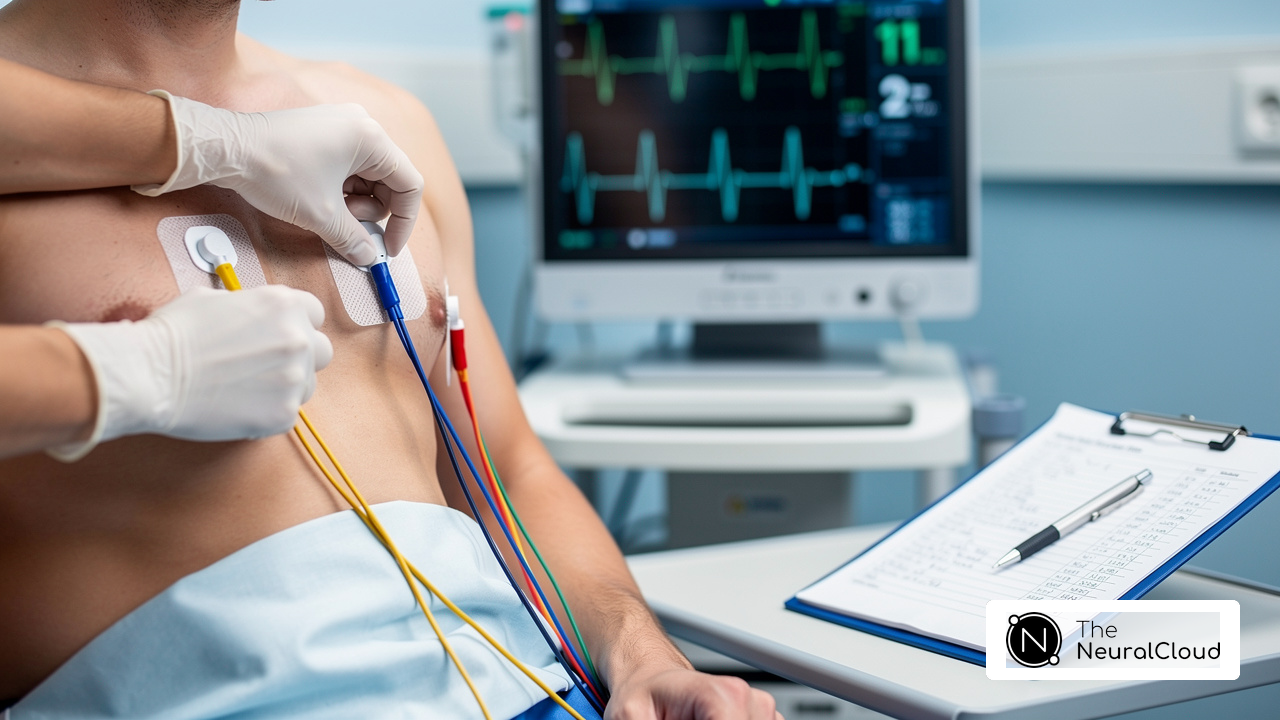
- Check the quality and placement of the leads. Poor lead placement can lead to misinterpretation, resulting in inappropriate clinical decisions.
- Determine the heart rate by counting the number of QRS complexes within a specific time frame. This step is crucial for assessing cardiac function and identifying potential arrhythmias.
- Analyze the rhythm for irregularities, such as those indicative of atrial fibrillation or other conditions. This analysis is essential for timely intervention.
- Examine the P waves, QRS complexes, and T waves for abnormalities. Each component provides critical information about the heart's electrical activity, aiding in the identification of conditions like bundle branch blocks or myocardial infarction. This allows for the isolation of ECG waves even in recordings with significant noise and artifacts, ensuring that previously hidden parts of extensive Holter and patch monitor recordings can be recovered, thus improving diagnostic accuracy.
- Maintain a detailed record of the interpretation process, including any anomalies detected. This documentation facilitates further review and supports clinical decision-making, ensuring continuity of care.
Participating in upcoming webinars, such as the one scheduled for January 15, 2025, can also enhance skills in ECG interpretation.

Evaluate Key ECG Components for Accurate Diagnosis
Health tech developers face significant challenges in ECG interpretation, which can impact diagnostic accuracy. To address these issues, advanced platforms like Neural Cloud Solutions' MaxYield™ offer innovative solutions that enhance results interpretation. By focusing on results interpretation, developers can ensure more precise diagnoses.
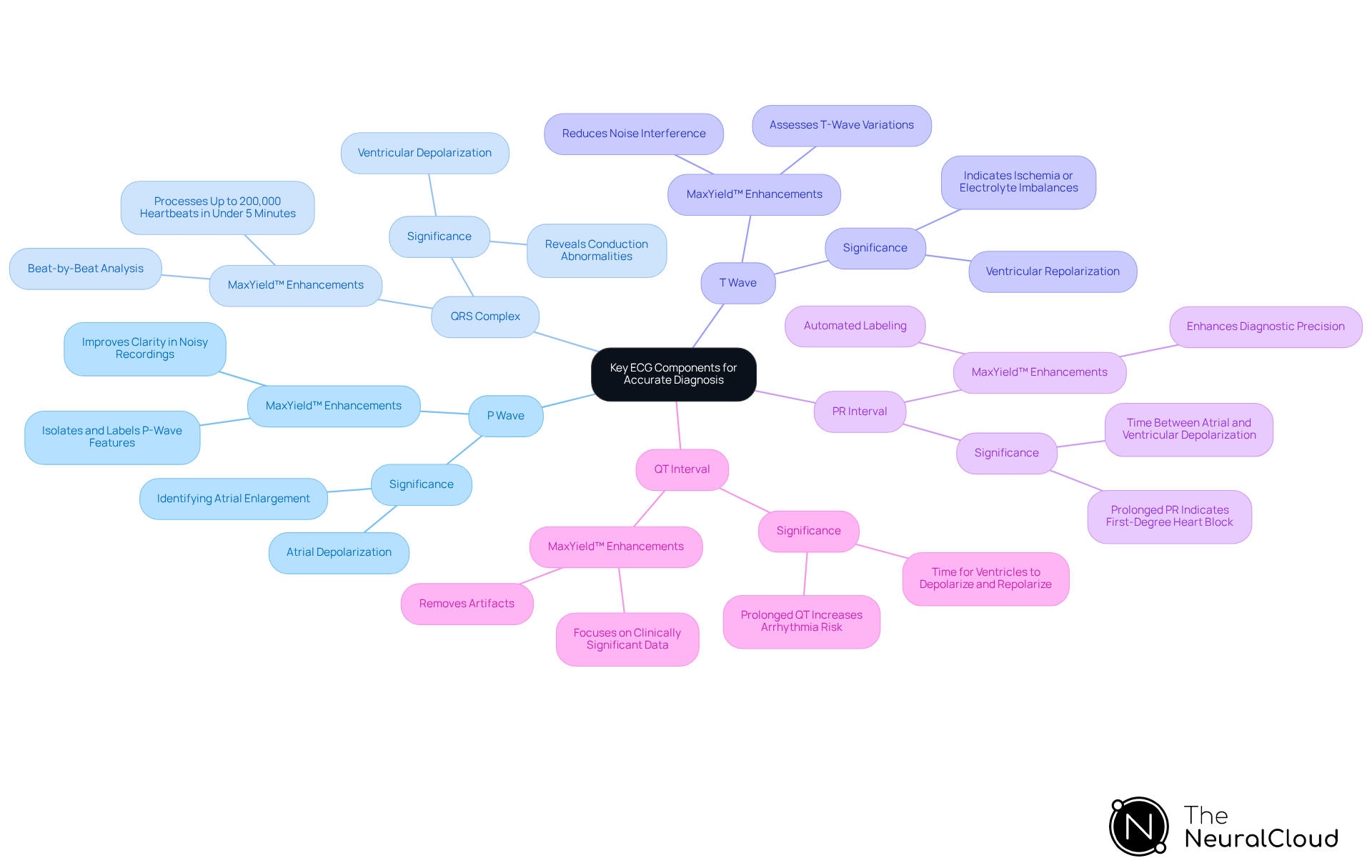
P-wave: This component represents atrial depolarization. Analyzing the P-wave is crucial for identifying atrial enlargement or other abnormalities. MaxYield™ enhances the P-wave analysis by isolating and labeling P-wave features, even in noisy recordings, ensuring clarity and precision.
QRS complex: Indicating ventricular depolarization, the QRS complex's duration and morphology can reveal conduction abnormalities, such as bundle branch blocks. MaxYield™ provides beat-by-beat analysis that aids in QRS feature identification, enabling quick identification of QRS features across multiple heartbeats and processing up to 200,000 heartbeats in under 5 minutes.
T-wave: Reflecting ventricular repolarization, changes in the T-wave can indicate ischemia or electrolyte imbalances. With MaxYield™, creators can confidently assess T-wave variations, supported by clear waveforms and reduced noise interference, which enhances diagnostic accuracy and reliability.
PR interval: This interval measures the time between the onset of atrial depolarization and ventricular depolarization. Prolonged PR intervals may suggest first-degree heart block. MaxYield™'s automated labeling simplifies the assessment of PR intervals, thereby enhancing diagnostic accuracy as well as speed and efficiency.
QT interval: Representing the time taken for the ventricles to depolarize and repolarize, a prolonged QT interval can increase the risk of arrhythmias. MaxYield™ addresses challenges in examining QT intervals by removing artifacts, which enhances the analysis and allows creators to focus on clinically significant data.
By thoroughly assessing these components with the assistance of MaxYield™, developers can significantly improve the precision of their tools for ECG interpretation, leading to better clinical outcomes.
Leverage Advanced Technology for Enhanced ECG Analysis
To maximize the effectiveness of ECG analysis, developers should consider several advanced technologies:
- Machine learning algorithms can analyze ECG data in real-time, identifying patterns and anomalies that might be missed by human interpretation. This significantly enhances diagnostic accuracy. According to Gareth Jones, the healthcare AI market is projected to exceed $27.12 billion by 2025, reflecting a growing reliance on AI technologies in healthcare.
- Automated systems, such as Neural Cloud Solutions' technology, filter out noise and artifacts from ECG signals. This system identifies and labels essential data, even in recordings with significant interference, ensuring high-quality analysis. As the algorithm develops with each application, it consistently enhances precision and efficiency, embodying the solutions that streamline workflow.
- Cloud technology facilitates the storage and processing of ECG data, allowing for scalable solutions that efficiently handle large volumes of information. This approach enables quick access and analysis, which is crucial as healthcare organizations increasingly adopt digital transformation strategies.
- Applications that seamlessly integrate with wearable ECG monitors enable continuous monitoring and immediate feedback to healthcare providers. This improves patient management and outcomes. A recent study indicated that patients using wearable ECG devices experienced a 30% improvement in timely interventions, underscoring the significance of wearable technology in healthcare.
- Intuitive visualization tools assist clinicians in quickly interpreting ECG results. Effective visualization enhances decision-making capabilities, enabling healthcare professionals to act swiftly on critical insights derived from ECG data. As telehealth becomes central to healthcare delivery, nearly 70% of patients prefer providers offering virtual care, making visualization tools increasingly vital.
By utilizing these technologies, including the advanced noise filtering and wave recognition features of Neural Cloud Solutions' MaxYield™, developers can create innovative solutions that significantly improve the precision and efficiency of ECG analysis.

Contextualize ECG Findings with Clinical Insights
Health tech developers face significant challenges in ensuring that their ECG analysis tools are grounded in clinical insights. To address these challenges, the platform offers several key features that enhance and improve patient outcomes.
- Integrating Data: The platform allows clinicians to input relevant information, including patient history. This integration is crucial, as research indicates that prior exposure to certain ECG conditions enhances diagnostic precision. By providing contextual information, the platform enhances the accuracy of diagnoses.
- Utilizing Guidelines: MaxYield™ aligns ECG analysis with established guidelines and protocols from organizations like the ACC and AHA. This adherence to best practices is vital for maintaining high diagnostic precision. Evidence suggests that structured approaches, such as those offered by the platform, lead to improved outcomes.
- Incorporating Real-Time Data: The platform enables the integration of patient data, including vital signs and lab results. This holistic view of the patient's condition allows for more accurate assessments and timely interventions, particularly in acute settings, enhancing care delivery. The platform enhances this capability by quickly labeling ECG waveforms and delivering clear data sets, resulting in improved diagnostic precision.
- Facilitating Collaboration: MaxYield™ promotes collaboration among healthcare providers, allowing them to discuss and review ECG findings collectively. This collaborative environment fosters improved diagnostic accuracy, as the interpretation of ECG results enhances clinical decision-making through shared insights.
- Providing Educational Resources: The platform offers training materials to help clinicians understand the implications of various ECG findings in patient care. This education is essential, equipping healthcare professionals with the knowledge necessary for effective practice. As noted by expert Vanessa Celeste Burch, participants are more likely to make correct ECG diagnoses if they have encountered the condition during prior clinical training.
By contextualizing ECG findings with clinical insights and leveraging Neural Cloud Solutions' Continuous Learning Model, developers can significantly enhance the utility of their tools. This ultimately leads to better patient care, making the platform an invaluable resource for healthcare professionals.

Conclusion
Adopting a systematic approach to ECG interpretation is essential for health tech developers who want to enhance diagnostic accuracy and improve patient outcomes. By following structured steps - from confirming patient details to documenting findings - developers can ensure that ECG analyses are thorough and precise. This reduces the likelihood of misdiagnosis and facilitates effective clinical decision-making.
Key components of ECG interpretation, such as the P wave, QRS complex, and T wave, provide vital insights into cardiac function. The MaxYield™ platform exemplifies how innovation can streamline ECG analysis. It utilizes advanced technologies like AI algorithms, automated signal processing, and cloud-based solutions, allowing for more accurate and efficient interpretations. This makes it easier for developers to create tools that support healthcare professionals in delivering high-quality care.
Incorporating clinical insights into ECG interpretation is not just a best practice; it is crucial for achieving meaningful improvements in patient care. By integrating patient history, adhering to clinical guidelines, and fostering collaboration among healthcare providers, developers can ensure that their ECG analysis tools are both technically sound and contextually relevant. As the healthcare landscape continues to evolve, embracing these practices and technologies will be vital for advancing the field of ECG interpretation and ultimately enhancing patient outcomes.
Frequently Asked Questions
What is the systematic approach to ECG interpretation recommended for health tech developers?
The systematic approach includes confirming patient details, assessing ECG leads, calculating heart rate, evaluating rhythm regularity, analyzing waveforms, and documenting findings.
Why is it important to confirm patient details before interpreting ECG results?
Verifying the patient's identity and clinical history ensures contextualized and relevant interpretations, reducing the risk of misdiagnosis.
What should be assessed regarding the ECG leads?
The quality and placement of the leads should be checked, as poor lead placement can lead to misinterpretation and inappropriate clinical decisions.
How do you calculate the heart rate from an ECG?
The heart rate is determined by counting the number of QRS complexes within a specific time frame, which is crucial for assessing cardiac function and identifying potential arrhythmias.
What does evaluating rhythm regularity involve?
It involves analyzing the rhythm for irregularities, such as those indicative of atrial fibrillation or other conditions, which is essential for timely intervention.
What components of the ECG waveforms should be analyzed?
The P waves, QRS complexes, and T waves should be examined for abnormalities, as each component provides critical information about the heart's electrical activity.
How does the MaxYield™ platform assist in ECG waveform analysis?
The MaxYield™ platform utilizes advanced noise filtering and distinct wave recognition capabilities to isolate ECG waves, even in recordings with significant noise and artifacts, improving clarity and precision.
Why is documenting findings important in ECG interpretation?
Maintaining a detailed record of the interpretation process, including any anomalies detected, facilitates further review and supports clinical decision-making, ensuring continuity of care.
How can health tech developers enhance their ECG analysis skills?
Developers can enhance their skills by leveraging the continuous learning model of Neural Cloud Solutions' platform and participating in upcoming webinars, such as the one scheduled for January 15, 2025.
List of Sources
- Adopt a Systematic Approach to ECG Interpretation
- Electrocardiogram Interpretation: A Core Competency CR Professionals Need to Improve Care Outcomes (https://newsandviews.aacvpr.org/Full-Article/electrocardiogram-interpretation-a-core-competency-cr-professionals-need-to-improve-care-outcomes-1)
- squigglylines.substack.com (https://squigglylines.substack.com/p/the-systematic-approach-to-ecg-interpretation)
- How to interpret the ECG: A systematic approach – The Cardiovascular (https://ecgwaves.com/topic/systematic-clinical-ecg-interpretation-review-guide)
- med.libretexts.org (https://med.libretexts.org/Bookshelves/Nursing/Nursing_Advanced_Skills_(OpenRN)/07:_Interpret_Basic_ECG/7.03:_A_Systematic_Approach_to_Interpreting_an_ECG)
- Mastering EKG interpretation: 10 steps for accurate rhythm identification (https://ems1.com/ems-products/medical-monitoring/articles/ecg-interpretation-10-steps-for-rhythm-identification-HlbOvohuSltPKAL2)
- Evaluate Key ECG Components for Accurate Diagnosis
- mdpi.com (https://mdpi.com/2673-3846/2/4/39)
- Checking your browser - reCAPTCHA (https://pmc.ncbi.nlm.nih.gov/articles/PMC12338287)
- sciencedirect.com (https://sciencedirect.com/science/article/pii/S154752712502243X)
- heartrhythmjournal.com (https://heartrhythmjournal.com/article/S1547-5271(25)02243-X/fulltext)
- mesimedical.com (https://mesimedical.com/insights/how-to-interpret-the-ecg)
- Leverage Advanced Technology for Enhanced ECG Analysis
- AI-ECG Momentum and Rising Competition Reshape Diagnostic Cardiology in 2026 (https://signifyresearch.net/insights/diagnostic-cardiology-market-bouncing-into-2026)
- finance.yahoo.com (https://finance.yahoo.com/news/ge-healthcare-ecg-ai-imaging-010847179.html)
- ECG market keeps evolving thanks to AI, home monitoring and Epic integration (https://cardiovascularbusiness.com/topics/cardiac-imaging/electrocardiography-ecg/ecg-market-keeps-evolving-thanks-ai-home-monitoring-and-epic-integration)
- AI-Powered ECG Analysis Offers Promising Path for Early Detection of Chronic Obstructive Pulmonary Disease, Say Mount Sinai Researchers (https://mountsinai.org/about/newsroom/2026/ai-powered-ecg-analysis-offers-promising-path-for-early-detection-of-chronic-obstructive-pulmonary-disease-say-mount-sinai-researchers)
- Top Healthcare Technology Trends in 2026 (https://kissflow.com/solutions/healthcare/healthcare-technology-trends)
- Contextualize ECG Findings with Clinical Insights
- cboothinnovations.com (https://cboothinnovations.com/compliance)
- pmc.ncbi.nlm.nih.gov (https://pmc.ncbi.nlm.nih.gov/articles/PMC8336410)
- pulsetoday.co.uk (https://pulsetoday.co.uk/clinical-feature/clinical-areas/cardiovascular/clinical-conundrums-unexpected-computerised-ecg-interpretation)
- gehealthcare.com (https://gehealthcare.com/insights/article/advances-in-ecg-technology-in-2022-retaining-a-key-role-for-patient-care?srsltid=AfmBOopzj7RnKPIDe3oiL5F3Wlkyw6T1zdb3u4Om1C69BlJNHc1Q77aD)
- acc.org (https://acc.org/guidelines)