Introduction
Understanding ST elevation on an ECG is crucial for timely diagnosis and intervention in life-threatening conditions like STEMI, where every second counts. The rising incidence of ST elevation hospitalizations, particularly among younger demographics, underscores the urgent need for accurate detection tools. Developers face the challenge of enhancing their ECG analysis platforms to not only identify ST elevation but also to minimize misinterpretations and improve patient outcomes.
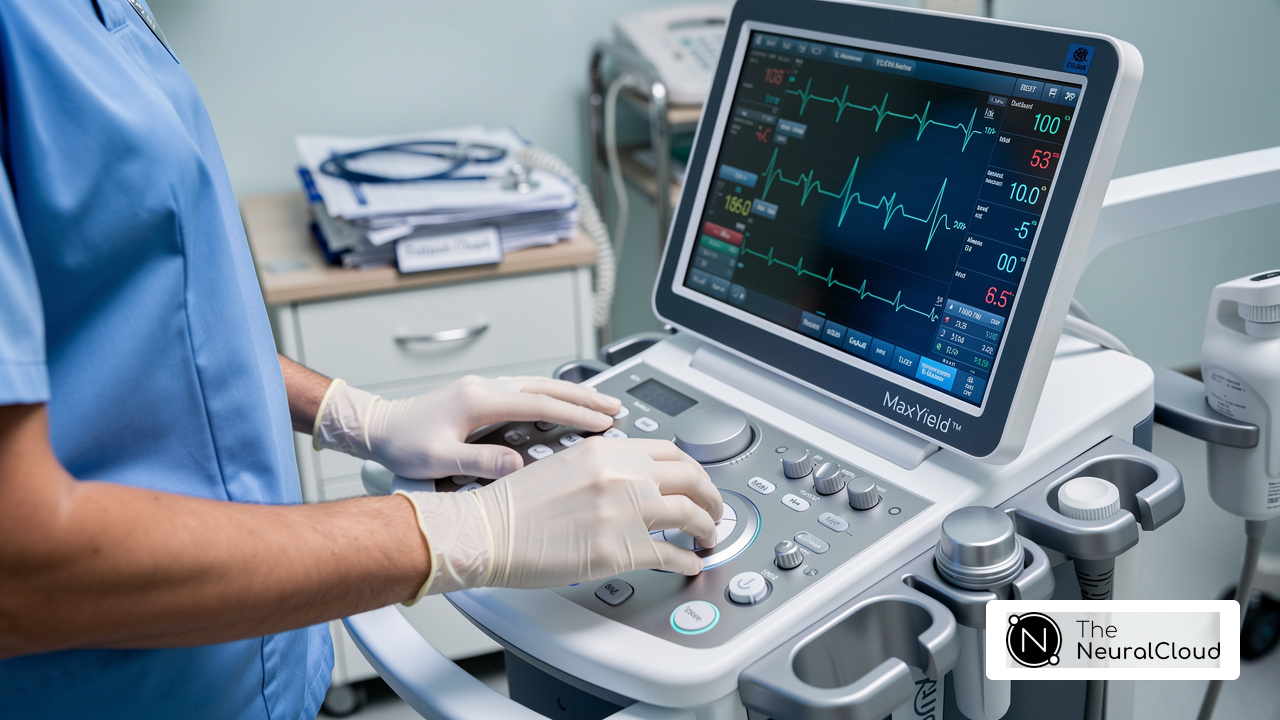
The MaxYield™ platform addresses these challenges by offering advanced features that enhance ECG analysis. Its sophisticated algorithms are designed to accurately detect ST elevation, reducing the likelihood of false positives and negatives. This precision is vital for healthcare professionals who rely on accurate data to make informed decisions quickly.
One of the key advantages of the MaxYield™ platform is its user-friendly interface, which simplifies the analysis process. Healthcare professionals can easily navigate the platform, allowing for quicker assessments and interventions. This efficiency translates directly into improved patient outcomes, as timely diagnosis can significantly impact treatment effectiveness.
Incorporating visual aids such as diagrams or infographics can further enhance understanding of complex information related to ST elevation. By visually representing data, the MaxYield™ platform not only aids in analysis but also supports educational efforts among healthcare providers, ensuring they are well-equipped to interpret ECG results accurately.
In summary, the MaxYield™ platform stands out by addressing the critical challenges in ECG analysis. Its features not only improve detection accuracy but also streamline the workflow for healthcare professionals, ultimately benefiting patient care.
Define ST Elevation and Its Clinical Importance
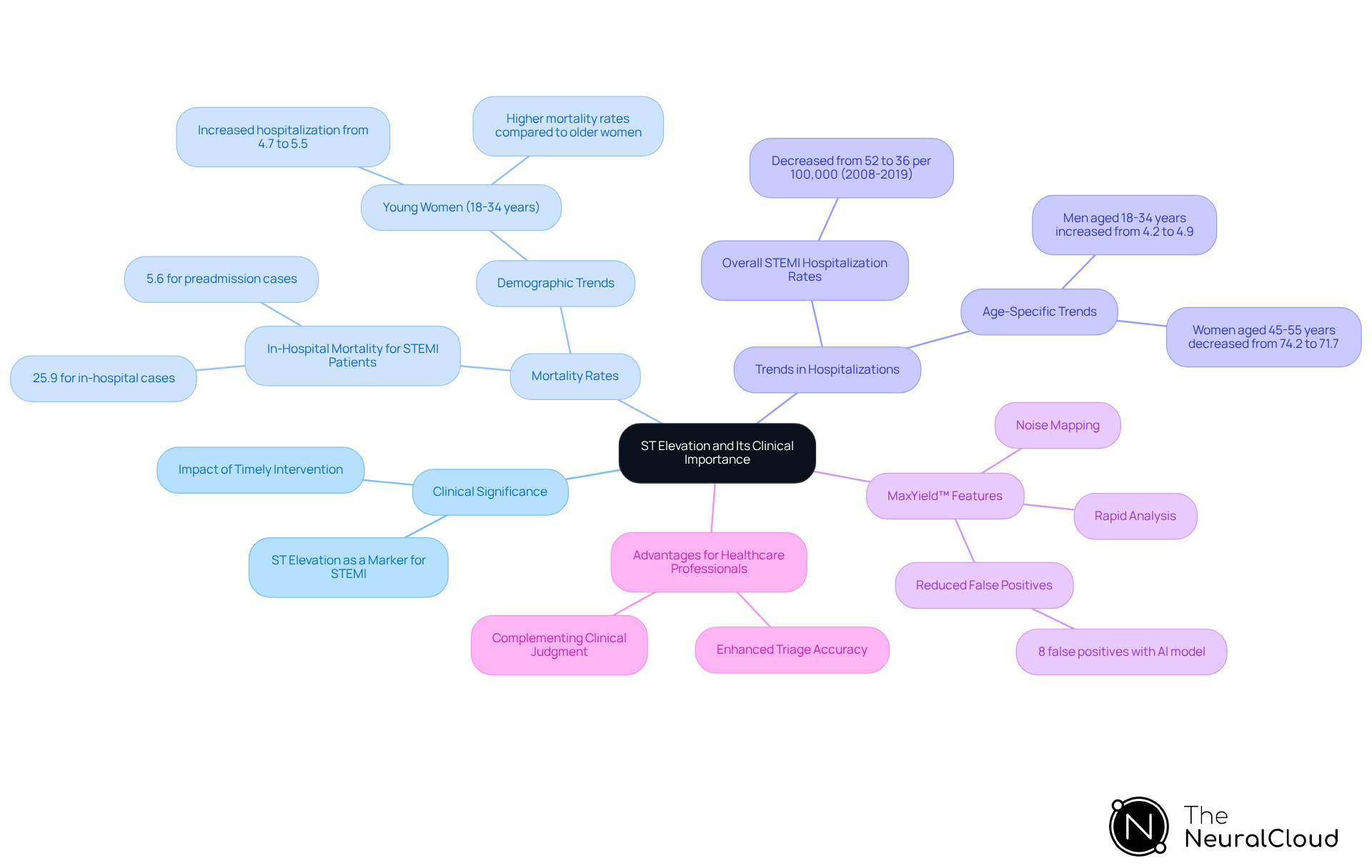
An ECG shows an upward displacement of the ST segment, which is a vital marker for diagnosing conditions like myocardial infarction. This elevation signals a serious disruption in blood flow to the heart muscle, often due to a blockage in one or more coronary arteries. If not treated promptly, it can lead to irreversible myocardial damage. Recent studies reveal that in-hospital mortality for STEMI patients is significantly higher than for those with preadmission STEMI, highlighting the need for timely intervention. For example, in-hospital mortality rates reached 25.9%, compared to just 5.6% for preadmission cases.
Moreover, the prevalence of STEMI has risen from 4.7% to 5.5% in recent years, indicating a concerning trend that calls for increased awareness. Developers of ECG analysis tools must focus on accuracy, as this directly influences the algorithms used to identify and interpret cardiac events. The MaxYield™ tool exemplifies this focus, offering advanced features that enhance ECG analysis.
Features of MaxYield™:
- Noise Mapping: MaxYield™ maps ECG signals through noise, isolating and labeling key features in every heartbeat.
- Rapid Analysis: It delivers beat-by-beat analysis, processing 200,000 heartbeats in under 5 minutes.
- Enhanced Detection: This capability significantly lowers false positives, with one study showing that an AI-based ECG model accurately identified 553 confirmed STEMI cases, improving diagnostic reliability.
Advantages for Healthcare Professionals:
The integration of AI tools, such as those offered by Neural Cloud Solutions, enhances triage accuracy. However, as emphasized by Mumma, it's crucial to interpret AI results cautiously and ensure these tools complement clinical judgment. This advancement underscores the need for developers to create solutions that not only detect ST changes but also facilitate swift clinical decision-making, ultimately improving patient outcomes.
Interpret ST Elevation: Key Criteria and Characteristics
To accurately interpret ST elevation, developers need to understand several key criteria:
- Magnitude: ST elevation is generally defined as an elevation of at least 1 mm in limb leads or 2 mm in precordial leads. This threshold is essential for identifying ST elevation.
- Contiguity: ST elevation must be present in two or more contiguous leads to be deemed significant. This requirement confirms that the height is not an artifact but indicative of a potential cardiac event.
- Morphology: The shape of the ST segment can vary; it may be convex, concave, or straight, each indicating different underlying conditions. Recognizing these shapes is crucial for accurate diagnosis.
- Clinical Context: Symptoms such as chest pain or shortness of breath accompanying an ECG with ST elevation can suggest an acute coronary syndrome. Developers should ensure their algorithms assess these criteria to enhance diagnostic accuracy and support timely intervention.
Recent guidelines underscore the importance of these traits in interpreting ST changes related to ECG with ST elevation, reinforcing the necessity for developers to integrate these insights into their systems.

Utilize MaxYield™ for Enhanced ECG Analysis of ST Elevation
ECG analysis presents several challenges, particularly in accurately detecting abnormalities such as ST elevation. The platform addresses these issues with its sophisticated algorithms, offering healthcare professionals a robust solution for improving ECG interpretation.
- Automated Detection: One of the standout features of MaxYield™ is its ability to autonomously recognize ST rise by analyzing signals in real-time. This significantly reduces the reliance on manual interpretation, allowing for quicker diagnosis. The algorithm continuously evolves with each use, enhancing both accuracy and efficiency in ECG analysis.
- Noise Reduction: Another key advantage is the platform's noise reduction capabilities, which enhance signal clarity. By effectively isolating ECG waves from recordings affected by baseline wander, movement, and muscle artifacts, MaxYield™ ensures reliable detection of ST elevation, even in challenging conditions. This capability salvages previously obscured sections of lengthy recordings, providing clearer insights.
- Thorough Reporting: Developers can leverage MaxYield™ to generate reports that highlight findings related to ST elevation. The platform allows for quick labeling of P, QRS, and T wave onsets and offsets, along with the specific leads involved. This beat-by-beat tabulation is available in CSV format, facilitating easy integration into existing workflows and enabling users to analyze more data in less time.
- Integration Capabilities: Finally, MaxYield™ seamlessly integrates into existing healthcare systems, promoting efficient data sharing and collaboration. By utilizing this platform, developers can significantly enhance the accuracy and efficiency of ECG analysis, ultimately supporting confident clinical decision-making.
Identify Common Pitfalls in ST Elevation Interpretation
Developers need to be aware of several common pitfalls when interpreting ST Elevation:
- False Positives: Conditions like early repolarization and left ventricular hypertrophy can mimic ST Elevation, leading to incorrect diagnoses. Research indicates that false positive rates can reach up to 41.8% when using traditional methods. This underscores the need for accurate diagnostic tools.
- Electrode Misplacement: Incorrect placement of ECG electrodes can significantly distort readings. For instance, errors in lead placement can lead to misinterpretation of ST changes observed on an ECG with ST Elevation, resulting in unnecessary interventions or missed diagnoses. Developers should prioritize precise placement protocols in their systems.
- Artifact Interference: Electrical noise or patient movement can obscure true ECG signals with ST Elevation. Implementing robust algorithms in analysis tools is crucial for ensuring clarity in ECG readings. Artifacts can lead to misdiagnosis and delayed treatment. The MaxYield platform excels in this area, utilizing advanced noise filtering and distinct wave recognition to isolate ECG waves from recordings affected by noise and artifacts.
- Ignorance of Clinical Context: Overlooking the patient's clinical history and symptoms can lead to misinterpretation of ST Elevation. Algorithms should be designed to incorporate clinical data, enhancing diagnostic accuracy and enabling healthcare professionals to make informed decisions based on comprehensive data. Furthermore, integrating clinical insights within MaxYield™ streamlines workflows and automates repetitive tasks, ultimately improving the efficiency of ECG analysis.

Conclusion
Mastering ECG interpretation, especially regarding ST elevation, is crucial. This elevated ST segment is a key indicator of serious cardiac conditions like STEMI, where timely recognition and intervention can significantly improve patient outcomes. As healthcare evolves, integrating advanced tools like MaxYield™ is essential for enhancing diagnostic accuracy and enabling healthcare professionals to respond swiftly to critical situations.
This article has provided key insights into the clinical importance of ST elevation, the features of the MaxYield™ platform, and common pitfalls in interpreting ECG readings. It emphasizes the need for developers to create robust algorithms that not only detect ST changes but also incorporate clinical context to minimize false positives. By utilizing advanced noise filtering and automated detection, platforms like MaxYield™ empower healthcare providers to make informed decisions, ultimately leading to better patient care.
In conclusion, advancing ECG analysis technology is vital for addressing the challenges of ST elevation interpretation. Developers should prioritize integrating comprehensive diagnostic criteria and clinical context within their tools. As ST elevation-related conditions become more prevalent, the demand for accurate and efficient diagnostic solutions grows increasingly urgent. Embracing these innovations will enhance clinical workflows and significantly improve patient outcomes during cardiovascular emergencies.
Frequently Asked Questions
What is ST elevation in an ECG?
ST elevation in an ECG shows an upward displacement of the ST segment, indicating a serious disruption in blood flow to the heart muscle, often due to a blockage in one or more coronary arteries.
Why is ST elevation clinically important?
ST elevation is crucial for diagnosing conditions like ST-Rise Myocardial Infarction (STEMI). If not treated promptly, it can lead to irreversible myocardial damage.
What are the in-hospital mortality rates for STEMI patients?
Recent studies indicate that in-hospital mortality rates for STEMI patients can reach 25.9%, compared to 5.6% for patients with preadmission STEMI, highlighting the need for timely intervention.
Has the prevalence of STEMI hospitalizations among young women changed recently?
Yes, the prevalence of STEMI hospitalizations among young women aged 18 to 34 years has increased from 4.7% to 5.5% in recent years, indicating a concerning trend.
What is the MaxYield™ platform?
The MaxYield™ platform is an advanced ECG analysis tool that focuses on accurately detecting ECG with ST elevation, enhancing the identification and interpretation of cardiac events.
What features does the MaxYield™ platform offer?
MaxYield™ offers several features including noise mapping to isolate key ECG signals, rapid analysis processing 200,000 heartbeats in under 5 minutes, and reduced false positives, with an AI-based model accurately identifying STEMI cases and lowering false positives to about 8%.
How does advanced AI improve triage accuracy in healthcare?
The integration of advanced AI models, such as those from Neural Cloud Solutions, enhances triage accuracy, but it is important to interpret AI results cautiously and ensure these tools complement clinical judgment.
What is the overall goal of developing ECG analysis tools like MaxYield™?
The goal is to create solutions that not only detect ST changes but also facilitate swift clinical decision-making, ultimately improving patient outcomes.
List of Sources
- Define ST Elevation and Its Clinical Importance
- New study finds AI model improves heart attack detection (https://health.ucdavis.edu/news/headlines/new-study-finds-ai-model-improves-heart-attack-detection/2025/11)
- Trends and Outcomes of ST‐Segment–Elevation Myocardial Infarction Among Young Women in the United States | Journal of the American Heart Association (https://ahajournals.org/doi/10.1161/JAHA.122.026811)
- Artificial intelligence may speed heart attack diagnosis and treatment (https://newsroom.heart.org/news/artificial-intelligence-may-speed-heart-attack-diagnosis-and-treatment)
- In-Hospital STEMI Patients Face Reperfusion Delays and Worse Outcomes (https://tctmd.com/news/hospital-stemi-patients-face-reperfusion-delays-and-worse-outcomes)
- pmc.ncbi.nlm.nih.gov (https://pmc.ncbi.nlm.nih.gov/articles/PMC12646341)
- Interpret ST Elevation: Key Criteria and Characteristics
- sciencedirect.com (https://sciencedirect.com/science/article/pii/S0914508723002861)
- journals.lww.com (https://journals.lww.com/em-news/fulltext/2020/10000/news__a_new_paradigm_for_ami_management.2.aspx)
- 2025 ACC/AHA/ACEP/NAEMSP/SCAI Guideline for the Management of Patients With Acute Coronary Syndromes (https://professional.heart.org/en/science-news/2025-guideline-for-the-management-of-patients-with-acute-coronary-syndromes)
- New Guideline on Acute Coronary Syndromes: Key Takeaways (https://consultqd.clevelandclinic.org/new-guideline-on-acute-coronary-syndromes-key-takeaways-for-cardiologists)
- jacc.org (https://jacc.org/doi/10.1016/j.jacc.2025.01.018)
- Utilize MaxYield™ for Enhanced ECG Analysis of ST Elevation
- sciencedirect.com (https://sciencedirect.com/science/article/pii/S1936879825026007)
- ems1.com (https://ems1.com/cardiac-care/calif-county-to-deploy-ai-powered-ecg-devices)
- socalcycling.com (https://socalcycling.com/2026/01/21/aiml-subsidiary-neuralcloud-enters-pilot-with-cornerstone-physiotherapy-to-deploy-maxyield-and-insight360-for-elite-athlete-cardiac-performance-testing)
- pmc.ncbi.nlm.nih.gov (https://pmc.ncbi.nlm.nih.gov/articles/PMC8995511)
- linkedin.com (https://linkedin.com/posts/echopoint-medical-ltd_heartx-cardiovascular-accelerator-announces-activity-7381383641614012416-RLUS)
- Identify Common Pitfalls in ST Elevation Interpretation
- AI outperforms conventional diagnosis for certain types of heart attacks (https://escardio.org/news/press/press-releases/acvc-press)
- New study finds AI model improves heart attack detection (https://health.ucdavis.edu/news/headlines/new-study-finds-ai-model-improves-heart-attack-detection/2025/11)
- AI-ECG Finds STEMI Faster, Cuts False-Positive Cath Lab Activations (https://tctmd.com/news/ai-ecg-finds-stemi-faster-cuts-false-positive-cath-lab-activations)
- icthealth.org (https://icthealth.org/news/ai-ecg-boosts-heart-attack-detection-and-cuts-false-alarms)
- AI-based ECG model linked to reduction in false positives for heart attack (https://healio.com/news/cardiology/20251030/aibased-ecg-model-linked-to-reduction-in-false-positives-for-heart-attack)