Introduction
While understanding ejection fraction (EF) is essential for health technology developers, the real challenge lies in translating this knowledge into effective patient care solutions. Ejection fraction serves as a key indicator of cardiac health, with normal values ranging from 50-55%. This metric not only aids in diagnosing heart conditions but also informs the design of innovative monitoring tools that can enhance patient care.
Developers often struggle to translate the importance of ejection fraction into actionable tools that can mitigate risks associated with low EF values. Failure to effectively integrate this knowledge may lead to inadequate monitoring and management of patients with low normal EF values, ultimately impacting their health outcomes.
Without practical solutions that address the risks of low normal EF values, patient outcomes may remain compromised, highlighting the urgent need for innovation in this area.
Define Ejection Fraction and Its Importance in Cardiac Health
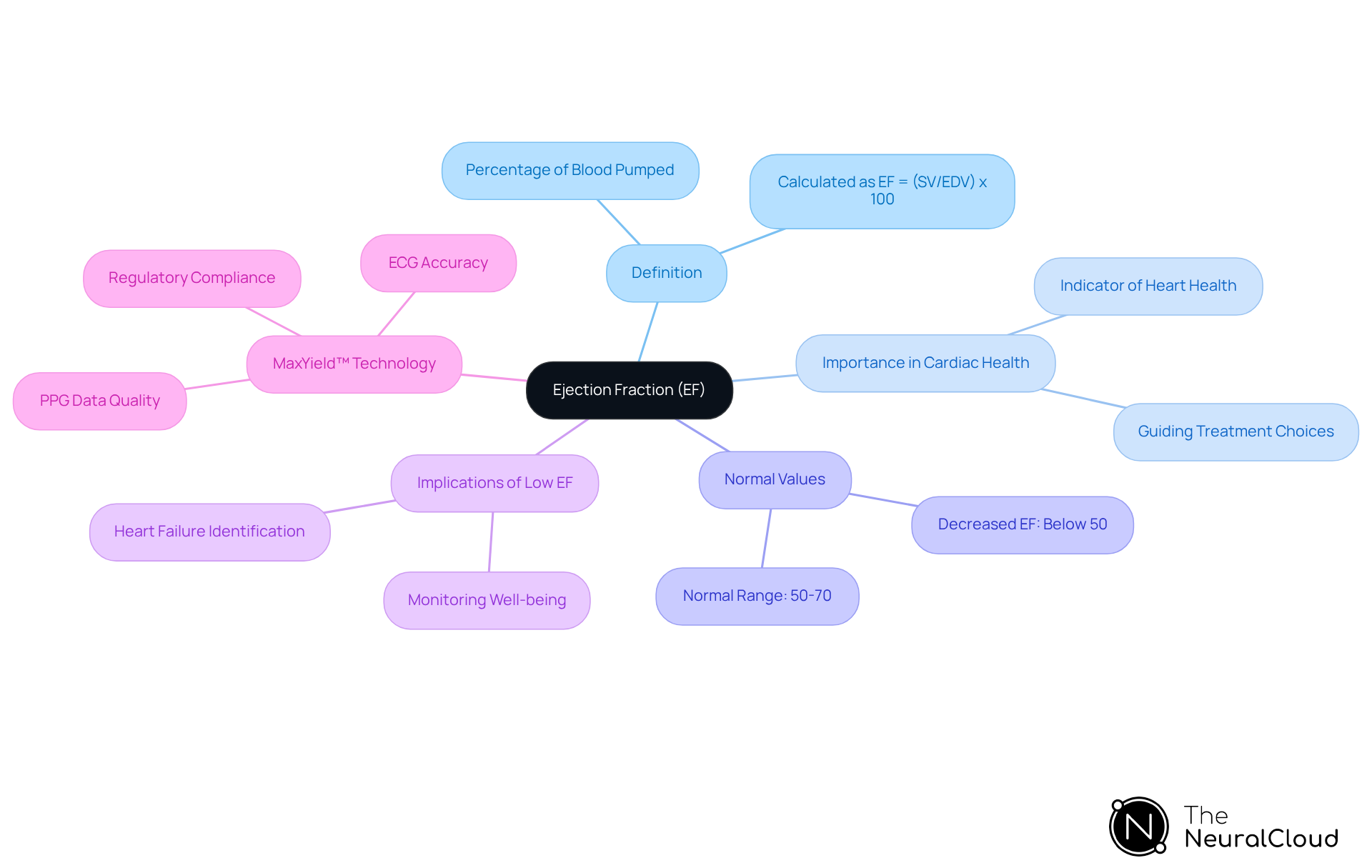
Understanding ejection fraction (EF) is essential for medical technology developers, as it serves as a vital indicator of cardiac health. EF measures the percentage of blood pumped from the left ventricle with each heartbeat, making it a key metric in cardiac health assessment. Normal values for ejection fraction are typically considered to be between 50-55%. Comprehending EF is crucial for identifying conditions such as heart failure. A decreased ejection fraction below 50-55% can indicate underlying cardiac problems, making it a critical metric for monitoring individual well-being and guiding treatment choices. By incorporating precise EF measurements into wellness technologies, developers can enhance diagnostic capabilities and improve individual outcomes.
Neural Cloud Solutions' MaxYield™ platform plays a pivotal role in this integration by providing hospital-grade ECG accuracy from consumer-grade devices. With its advanced algorithms, MaxYield™ ensures clean PPG data and reduces noise, allowing for precise EF calculations. This feature is vital for developers who want to ensure their cardiac insights are both accurate and trustworthy. As Dr. Alan Rabinowitz notes, "MaxYield™ rivals human interpretation in precision, making it an invaluable tool for clinicians." Moreover, the platform's automated ECG analysis boosts workflow efficiency, allowing developers to concentrate on enhancing care for individuals.
Integrating MaxYield™ into wellness technologies not only supports precise EF measurements but also aligns with regulatory compliance, including FDA Class II SaMD clearance-pending status and audit-ready documentation for GxP inspections. This guarantees that medical technology developers can confidently utilize MaxYield™ in their solutions. By integrating MaxYield™, developers can enhance the accuracy of cardiac assessments, ultimately transforming the quality of patient care.
Explore Normal Ejection Fraction Values: Understanding 50-55%
Understanding ejection fraction (EF) values is crucial for assessing cardiac health and preventing serious conditions. Normal EF values are classified as follows:
- An EF of 50% to 70% is considered normal.
- Values between 55% and 70% are categorized as optimal.
- Specifically, an ejection fraction of 50-55 is classified as low normal.
This lack of symptoms can lead to an underestimation of risk, as individuals with an ejection fraction of 50-55 may not exhibit obvious symptoms but are at a heightened risk for developing cardiac failure.
It's important for medical technology developers to grasp this understanding, as it informs the design of diagnostic tools capable of accurately assessing and monitoring patients at risk. For instance, technologies that can identify subtle changes in EF are crucial for early intervention, potentially averting the progression to more severe cardiovascular conditions.
In Canada, these classifications significantly impact how healthcare professionals monitor cardiovascular health and tailor treatment strategies. Case studies suggest that regular observation of EF can lead to prompt modifications in treatment, improving patient results and lessening the strain of cardiac issues. By closely monitoring EF, healthcare professionals can make informed decisions that enhance patient care and outcomes.

Assess Health Implications of Ejection Fraction 50-55%: Risks and Management
An ejection fraction 50-55% indicates a low normal range, heightening the risk of cardiac dysfunction and related cardiovascular issues. Patients in this category often experience symptoms like fatigue, shortness of breath, and reduced exercise tolerance. Understanding these implications is vital for developers looking to create effective monitoring and management tools.
Recent statistics show that cardiac dysfunction continues to be a major health issue, especially among elderly groups, leading to 425,147 fatalities in the U.S. in 2022, which represents 45% of cardiovascular deaths. In Canada, the prevalence of heart failure is expected to rise, with projections estimating that approximately 6.7 million Americans currently have heart failure, a number that could increase to 11.4 million by 2050.
To effectively manage individuals with an ejection fraction 50-55, strategies should include:
- Regular monitoring
- Lifestyle changes
- Possible pharmacological interventions
Technologies that facilitate remote observation and offer immediate feedback can empower individuals to take proactive measures in managing their condition, ultimately improving overall wellness outcomes. Integrating these technologies into existing medical systems can improve user engagement and adherence to treatment plans, addressing the challenges faced by developers in enhancing medical delivery.

Implement Strategies to Improve Ejection Fraction: Lifestyle and Medical Interventions
Many individuals face challenges in improving their ejection fraction 50-55, which is crucial for heart health. Improving ejection fraction 50-55 can be effectively achieved through a combination of lifestyle changes and medical interventions, particularly in the Canadian context. Key strategies include:
- Regular Exercise: Engaging in both aerobic and strength training exercises has been shown to enhance cardiac function and improve EF. Studies indicate that structured workout plans can greatly boost cardiovascular health, especially in individuals with heart failure. In Canada, research has demonstrated that those participating in regular exercise programs experience a significant rise in ejection fraction 50-55, which leads to improved overall cardiovascular well-being.
- Dietary Modifications: Adopting a heart-healthy diet rich in fruits, vegetables, whole grains, and lean proteins supports overall cardiovascular health. Research highlights that dietary changes can lead to an improved ejection fraction 50-55, particularly when combined with other lifestyle modifications. Canadian studies have indicated that individuals who adhere to dietary guidelines, such as those outlined by the Heart and Stroke Foundation of Canada, see measurable improvements in their ejection fraction 50-55.
- Medication Management: For certain individuals, medications like ACE inhibitors, beta-blockers, and diuretics are crucial for enhancing cardiac function. Recent guidelines from the 2026 AHA/ACC/ADA/ASN highlight the significance of optimizing medication regimens to improve outcomes in failure management. In Canada, healthcare providers are encouraged to follow these guidelines to ensure that patients receive the most effective treatment options available.
- Weight Management: Maintaining a healthy weight reduces strain on the cardiovascular system. This can lead to improvements in ejection fraction 50-55. Evidence indicates that weight reduction in overweight individuals with cardiac issues can significantly improve their ejection fraction 50-55. Canadian health initiatives encourage weight management as an essential aspect of cardiovascular care, with programs aimed at assisting individuals in attaining and sustaining a healthy weight.
- Immunization: It is essential for individuals with cardiac issues to obtain vaccinations against influenza and pneumonia, as these can worsen cardiovascular conditions. The Canadian Cardiovascular Society advises yearly flu vaccinations for individuals with cardiac failure to avoid complications.
Health tech developers can leverage these strategies by creating applications that provide personalized exercise plans, dietary recommendations, and medication reminders. Such tools empower patients to take control of their heart health, ultimately leading to better management of their condition and improved quality of life. By adopting these strategies, individuals can significantly enhance their heart health and overall well-being.

Conclusion
The understanding of ejection fraction (EF) is essential for health tech developers, especially when considering the critical 50-55% range that indicates low normal values. This metric is a key sign of cardiac health that developers need to pay attention to, guiding the development of technologies that can accurately assess and monitor patients at risk of heart failure. Leveraging advanced platforms like Neural Cloud Solutions' MaxYield™ allows developers to enhance diagnostic capabilities, leading to more precise and reliable cardiac insights.
Recognizing the implications of an ejection fraction of 50-55% is crucial, as it can lead to increased risks of cardiac dysfunction. Managing this condition effectively involves regular monitoring, lifestyle changes, and timely medical interventions. By integrating these insights into health technology solutions, developers can empower patients to take proactive steps in managing their heart health, ultimately improving outcomes and quality of life.
In conclusion, the significance of ejection fraction in cardiac health cannot be overstated. As the prevalence of heart failure continues to rise, particularly in Canada, the need for effective monitoring and management tools becomes increasingly critical. Health tech developers are encouraged to embrace innovative strategies that not only enhance ejection fraction but also contribute to the overall well-being of individuals. By focusing on these advancements, the healthcare community can significantly mitigate the impact of cardiovascular diseases and promote healthier lives for all.
Frequently Asked Questions
What is ejection fraction (EF) and why is it important in cardiac health?
Ejection fraction (EF) measures the percentage of blood pumped from the left ventricle with each heartbeat. It is a vital indicator of cardiac health, with normal values typically between 50-55%. Understanding EF is crucial for identifying conditions such as heart failure, as a decreased EF below 50-55% can indicate underlying cardiac problems.
How does ejection fraction relate to heart failure?
A decreased ejection fraction below the normal range of 50-55% can indicate underlying cardiac issues, including heart failure. Monitoring EF is essential for assessing individual well-being and guiding treatment choices.
What role does Neural Cloud Solutions' MaxYield™ platform play in measuring ejection fraction?
Neural Cloud Solutions' MaxYield™ platform provides hospital-grade ECG accuracy from consumer-grade devices, ensuring precise EF calculations. Its advanced algorithms enhance the quality of PPG data and reduce noise, making EF measurements more accurate and trustworthy.
How does MaxYield™ improve workflow efficiency for clinicians?
MaxYield™ offers automated ECG analysis, which boosts workflow efficiency. This allows clinicians and developers to focus on enhancing care for individuals rather than spending excessive time on manual data interpretation.
What regulatory compliance does MaxYield™ support?
MaxYield™ aligns with regulatory compliance, including FDA Class II SaMD clearance-pending status and audit-ready documentation for GxP inspections. This ensures that medical technology developers can confidently integrate MaxYield™ into their solutions.
How can integrating MaxYield™ into wellness technologies benefit patient care?
By incorporating MaxYield™ into wellness technologies, developers can enhance the accuracy of cardiac assessments, which ultimately transforms the quality of patient care by providing reliable and precise cardiac health insights.
List of Sources
- Define Ejection Fraction and Its Importance in Cardiac Health
- Less than a quarter of heart failure with reduced ejection fraction patients receive recommended therapy | Newswise (https://newswise.com/articles/less-than-a-quarter-of-heart-failure-with-reduced-ejection-fraction-patients-receive-recommended-therapy)
- Ejection fraction: An important heart test-Ejection fraction: What does it measure? (https://mayoclinic.org/tests-procedures/ekg/expert-answers/ejection-fraction/faq-20058286)
- New Joint Scientific Statement on Ejection Fraction Released by Leading Heart Failure Organisations (https://escardio.org/news/press/press-releases/new-joint-scientific-statement-on-ejection-fraction-released-by-leading-heart-failure-organisations)
- How’s Your Ejection Fraction? (https://my.clevelandclinic.org/health/articles/16950-ejection-fraction)
- Explore Normal Ejection Fraction Values: Understanding 50-55%
- New Joint Scientific Statement on Ejection Fraction Released by Leading Heart Failure Organisations (https://escardio.org/news/press/press-releases/new-joint-scientific-statement-on-ejection-fraction-released-by-leading-heart-failure-organisations)
- Ejection fraction: An important heart test-Ejection fraction: What does it measure? (https://mayoclinic.org/tests-procedures/ekg/expert-answers/ejection-fraction/faq-20058286)
- How’s Your Ejection Fraction? (https://my.clevelandclinic.org/health/articles/16950-ejection-fraction)
- New Joint Scientific Statement on Ejection Fraction Released by Leading Heart Failure Organizations | HFSA (https://hfsa.org/new-joint-scientific-statement-ejection-fraction-released-leading-heart-failure-organizations)
- Assess Health Implications of Ejection Fraction 50-55%: Risks and Management
- Heart Failure Society of America (HFSA) Scientific Statement: Update on Device Based Therapies in Heart Failure (https://hfsa.org/hf-stats-2025-heart-failure-epidemiology-and-outcomes-statistics)
- Guidelines & Clinical Updates | CHFS (https://heartfailure.ca/education/guidelines-clinical-updates)
- CCS/CHFS Heart Failure Guidelines Update: Defining a New Pharmacologic Standard of Care for Heart Failure With Reduced Ejection Fraction - PubMed (https://pubmed.ncbi.nlm.nih.gov/33827756)
- Implement Strategies to Improve Ejection Fraction: Lifestyle and Medical Interventions
- How New Research Is Changing the Understanding of HFrEF Treatment (https://cvrti.utah.edu/how-new-research-is-changing-the-understanding-of-hfref)
- Lifestyle Changes for Heart Failure (https://heart.org/en/health-topics/heart-failure/treatment-options-for-heart-failure/lifestyle-changes-for-heart-failure)
- ACC Releases 2026 Expert Consensus Decision Pathway on HFpEF (https://thecardiologyadvisor.com/news/acc-2026-expert-consensus-decision-pathway-hfpef)
- For heart failure patients, improvement may not be enough to stop treatment (https://divisionofresearch.kaiserpermanente.org/heart-failure-improved-treatment)