Introduction
Navigating the complexities of EKG heart block poses significant challenges for health tech developers focused on improving patient care. As the demand for accurate and timely cardiac monitoring grows, integrating advanced technologies like Neural Cloud Solutions Inc.'s MaxYield™ platform presents a unique opportunity to enhance EKG analysis and user training.
Developers often struggle to grasp the complexities of heart block types and their underlying physiological mechanisms. This lack of understanding can lead to ineffective diagnostic tools that do not meet clinician and patient needs. Addressing these challenges is essential for developing solutions that genuinely enhance cardiac monitoring and patient outcomes.
Define Heart Block Types: First, Second, and Third-Degree
Understanding the varying degrees of EKG heart block is vital for effective ECG analysis and patient management. Heart block is categorized into three degrees based on the severity of the conduction delay:
-
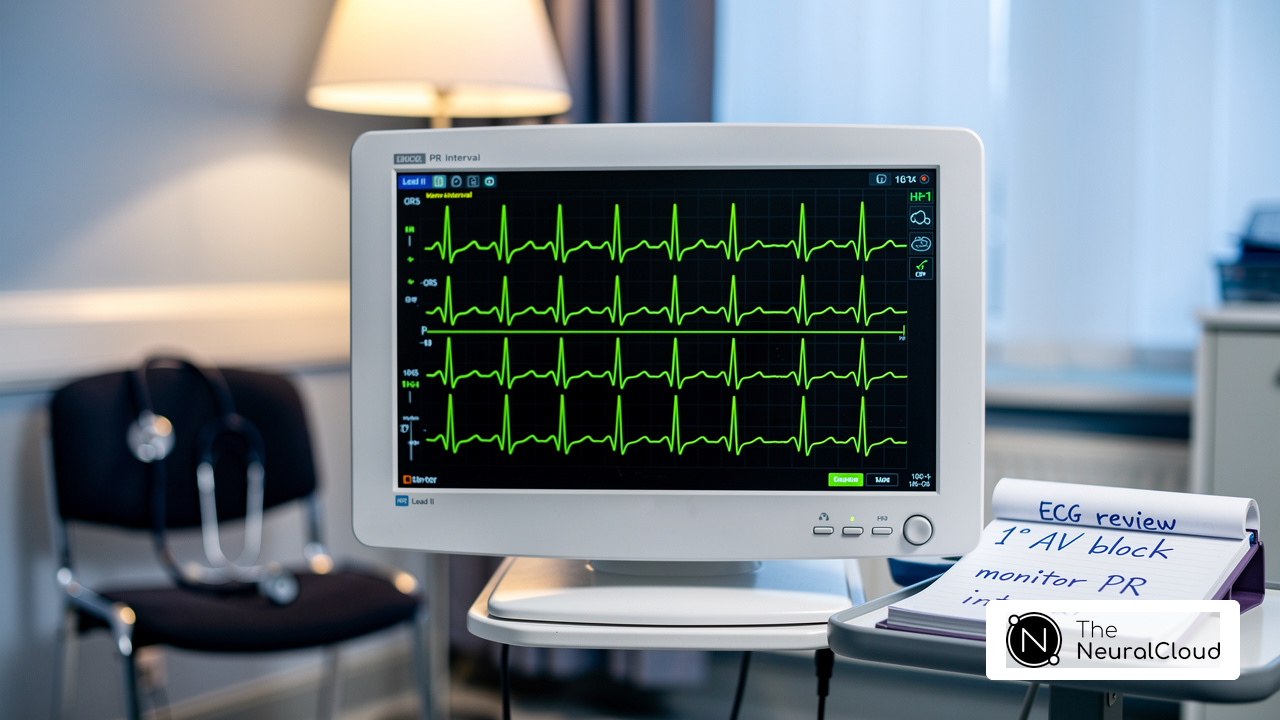
EKG heart block, or First-Degree Heart Block, is characterized by a prolonged PR interval on the ECG, indicating a delay in the electrical signal from the atria to the ventricles. It is often asymptomatic and typically does not require treatment. However, monitoring is crucial to prevent potential progression to more severe types of EKG heart block, especially in older adults.
-
Second-Degree Heart Block: This type is further divided into two subtypes:
- Type I (Wenckebach): The PR interval progressively lengthens until a QRS complex is dropped. This type is often benign but requires monitoring for potential progression.
- Type II: The PR interval remains constant, but some QRS complexes are dropped. This subtype is more serious and may necessitate the implantation of a pacemaker, especially if the patient exhibits symptoms such as dizziness or syncope.
-
Third-degree cardiac blockage, commonly referred to as EKG heart block, occurs when impulses can't travel from the atria to the ventricles, leading to independent atrial and ventricular rhythms. It is a medical emergency that often requires immediate intervention, such as pacemaker insertion, to prevent severe complications, including sudden cardiac death.
Understanding these differences helps developers create accurate diagnostic tools for identifying and classifying types of EKG heart block in clinical settings. Recent studies emphasize the significance of accurate ECG analysis in managing cardiac issues, particularly EKG heart block, especially in individuals from Canada, where timely and accurate ECG analysis can lead to better patient outcomes and management strategies. For example, a study revealed that individuals with first-degree atrioventricular conduction delay and prolonged QRS exhibited the highest mortality rates, highlighting the necessity for careful monitoring and intervention strategies. Furthermore, case studies from Canadian cardiologists highlight the essential role of precise classification in deciding suitable management and treatment routes for patients with different levels of cardiac obstruction, particularly in cases involving EKG heart block. The implications of accurate classification extend beyond diagnosis, shaping the future of cardiac care and patient survival rates.

Explain Heart Block Physiology: Mechanisms and Implications
Cardiac disruption poses significant challenges due to disturbances in the heart's electrical conduction system, particularly affecting the atrioventricular (AV) node. Several key factors contribute to this condition:
- Ischemia: Insufficient blood flow to the heart muscle can compromise conduction pathways, resulting in heart block. Recent Canadian studies emphasize the prevalence of ischemic cardiovascular disease, impacting around 6.99% of Canadians aged 20 and above. This highlights the significance of monitoring ischemic conditions concerning cardiac obstruction.
- Fibrosis: Age-related changes or scarring from prior myocardial infarctions can interfere with normal conduction. These delays make it harder to diagnose cardiac issues promptly, complicating the identification of cardiac obstruction in clinical environments.
- Medications: Certain pharmacological agents, including beta-blockers and calcium channel blockers, may slow conduction through the AV node, further contributing to cardiac conduction issues.
The consequences of cardiac obstruction are significant, potentially resulting in bradycardia, syncope, or even sudden cardiac arrest in severe instances. Understanding these mechanisms is essential for developing effective algorithms that can accurately detect and interpret cardiac interruptions, such as EKG heart block, on ECGs. By utilizing insights from cardiology specialists, developers can enhance the accuracy of their systems, ultimately improving health outcomes and ensuring timely interventions.
Neural Cloud Solutions Inc.'s MaxYield™ platform enhances this process by automating ECG analysis, providing advanced noise filtering and wave recognition capabilities. MaxYield™ maps ECG signals through noise, isolating and labeling key features in every heartbeat, which is essential for identifying cardiac events. It delivers beat-by-beat analysis, outputting an analysis of 200,000 heartbeats in less than 5 minutes. As Dr. Alan Rabinowitz notes, "MaxYield™ rivals human interpretation in precision, significantly reducing noise and enhancing the clarity of ECG data." This feature helps developers build better algorithms that can adapt to physiological variability and signal artifacts, overcoming traditional limitations in ECG analysis. Furthermore, with FDA Class II SaMD clearance-pending status, MaxYield™ ensures compliance and reliability in clinical settings. By incorporating MaxYield™ into their platforms, developers can ensure that their solutions are equipped to manage the complexities of cardiac obstruction detection, ultimately leading to enhanced clinical decision-making and improved patient care.

Leverage AI Technologies: Integrate MaxYield for Enhanced EKG Analysis
The integration of AI technologies like MaxYield into ECG analysis addresses significant challenges in cardiac monitoring. Here are key practices for leveraging this technology:
- Signal Cleaning: MaxYield uses advanced algorithms to clean up noisy ECG signals, which is essential for accurately detecting cardiac obstructions. This clarity allows clinicians to make informed decisions based on reliable data.
- Real-Time Analysis: The implementation of MaxYield facilitates real-time processing of ECG data, providing immediate feedback that accelerates clinical decision-making. This feature is especially valuable in urgent care, where every second counts for timely interventions.
- Data Structuring: MaxYield transforms raw ECG recordings into structured data formats, simplifying interpretation and integration into electronic health records (EHRs). This structured approach boosts workflow efficiency and enhances individual patient management.
- Customizable Dashboards: Utilizing Insight360, healthcare professionals can create tailored visualizations that highlight trends and anomalies in ECG data. This customization aids in identifying EKG heart block patterns, allowing for more precise diagnostics.
Adopting these AI-driven practices allows health tech developers to greatly improve their diagnostic capabilities, leading to better patient care outcomes across Canada.

Facilitate User Training: Overcome Adoption Challenges in EKG Tools
Many healthcare professionals face challenges in adopting EKG tools, primarily due to insufficient training and support. To facilitate effective training, developers should consider the following best practices:
- Hands-On Workshops: Conduct interactive workshops where users can practice using the EKG tools in a controlled environment. This approach builds confidence and familiarity with the technology, which is essential for effective utilization in clinical settings. As Dr. Tim Sandle notes, hands-on experience is crucial for healthcare professionals to feel comfortable with new technologies. Furthermore, integrating Neural Cloud Solutions Inc.'s MaxYield™ can enhance these workshops by providing real-time feedback through its Continuous Learning Model, which evolves with each use to maximize diagnostic yield.
- Comprehensive Training Materials: Provide detailed manuals, video tutorials, and quick reference guides that users can access at any time. This supports ongoing learning and troubleshooting, allowing users to become proficient in using the tools. According to Saleema Khimji, having accessible resources is vital for continuous education in the fast-evolving field of EKG heart block technology. The inclusion of MaxYield™'s capabilities in these materials can further aid understanding, showcasing its ability to filter noise and improve accuracy.
- Feedback Mechanisms: Implement systems for users to provide feedback on their training experience and the tools themselves. This can help identify areas for improvement and enhance user satisfaction, ensuring that the tools meet the needs of healthcare professionals. Engaging users in this way can lead to better adoption rates, as highlighted by recent trends in EHR adoption in Canada. Utilizing insights from MaxYield™ can also inform these feedback mechanisms, allowing for continuous improvement of the training process.
- Continuous Education: Offer refresher courses and updates on new features or best practices to keep users engaged and informed about the latest advancements in EKG technology. This commitment to continuous learning fosters a culture of innovation and adaptability among healthcare providers, which is essential in addressing challenges such as EKG heart block faced in the Canadian healthcare system. By leveraging the evolving capabilities of Neural Cloud Solutions Inc.'s Continuous Learning Model, developers can ensure that users remain at the forefront of EKG technology advancements.
Ultimately, prioritizing user training can transform the way EKG tools are integrated into clinical practice, ensuring better patient care and outcomes.

Conclusion
Navigating the complexities of EKG heart block presents significant challenges for health tech developers aiming to enhance patient care through innovative diagnostic tools. By understanding the different types of heart block and their physiological implications, developers can leverage advanced technologies like MaxYield™ to create solutions that enhance the accuracy and efficiency of cardiac monitoring.
Key insights from the article highlight the importance of distinguishing between first, second, and third-degree heart blocks, as well as the physiological mechanisms that contribute to these conditions. Integrating AI technologies streamlines ECG analysis and boosts clinicians' ability to make real-time decisions. Furthermore, prioritizing user training through hands-on workshops and comprehensive resources ensures that healthcare professionals are well-equipped to utilize these advanced tools effectively.
In conclusion, prioritizing continuous learning and adaptation is essential for mastering EKG heart block detection, not just the technology itself. By embracing best practices in development and training, health tech developers can play a pivotal role in transforming cardiac care in Canada, ultimately leading to better patient outcomes and a more resilient healthcare system.
Frequently Asked Questions
What is heart block and how is it categorized?
Heart block is a condition characterized by a delay in the electrical signals from the atria to the ventricles, categorized into three degrees based on the severity of the conduction delay.
What is First-Degree Heart Block?
First-Degree Heart Block is identified by a prolonged PR interval on the ECG, indicating a delay in electrical signals. It is often asymptomatic and typically does not require treatment, but monitoring is essential to prevent progression to more severe types.
What are the subtypes of Second-Degree Heart Block?
Second-Degree Heart Block is divided into two subtypes: Type I (Wenckebach), where the PR interval progressively lengthens until a QRS complex is dropped, often benign but requires monitoring; and Type II, where the PR interval remains constant but some QRS complexes are dropped, which is more serious and may require a pacemaker if symptoms like dizziness or syncope occur.
What is Third-Degree Heart Block?
Third-Degree Heart Block occurs when impulses cannot travel from the atria to the ventricles, resulting in independent atrial and ventricular rhythms. It is a medical emergency that often requires immediate intervention, such as pacemaker insertion, to prevent severe complications.
Why is understanding heart block types important for patient management?
Understanding the different types of heart block is crucial for effective ECG analysis and patient management, as it helps in creating accurate diagnostic tools and determining suitable management and treatment routes for patients.
How does accurate ECG analysis impact patient outcomes in Canada?
Accurate ECG analysis is significant in managing cardiac issues, particularly EKG heart block, as it can lead to better patient outcomes and management strategies. Studies have shown that individuals with certain conduction delays exhibit higher mortality rates, emphasizing the need for careful monitoring and intervention.
What role do Canadian cardiologists play in managing heart block?
Canadian cardiologists highlight the importance of precise classification of heart block types in deciding appropriate management and treatment strategies, which can significantly influence patient survival rates and overall cardiac care.
List of Sources
- Define Heart Block Types: First, Second, and Third-Degree
- Types of Heart Block | Mass General Brigham (https://massgeneralbrigham.org/en/about/newsroom/articles/heart-block-types)
- Heart block (https://heartandstroke.ca/heart-disease/conditions/heart-block)
- Atrioventricular (AV) Block - The Cardiology Advisor (https://thecardiologyadvisor.com/ddi/av-block-first-second-third-degree)
- Third-Degree Atrioventricular Block (Complete Heart Block): Background, Etiology, Pathophysiology (https://emedicine.medscape.com/article/162007-overview)
- First-Degree Atrioventricular Block: Background, Pathophysiology, Etiology (https://emedicine.medscape.com/article/161829-overview)
- Explain Heart Block Physiology: Mechanisms and Implications
- Heart Disease in Canada - Canada.ca (https://canada.ca/en/public-health/services/publications/diseases-conditions/heart-disease-canada.html)
- Prevalence of heart failure by province/territory Canada 2022-2023| Statista (https://statista.com/statistics/882593/heart-failure-prevalence-canada-by-province?srsltid=AfmBOorKdVNKekU0pRWao3LvUUdXjHM9QzLVq8Zgn8PL-lVDg5NijTzE)
- Heart failure in Canada complex incurable and on the rise (https://heartandstroke.ca/what-we-do/media-centre/news-releases/heart-failure-in-canada-complex-incurable-and-on-the-rise)
- Heart disease prevalence in Canada 2000-2023| Statista (https://statista.com/statistics/881873/diagnosed-heart-disease-prevalence-canada?srsltid=AfmBOooRTC2DLGaEVQGslcxP6YI7e0-Y2wXk1-dF4fYRjpjqh42Zpi5F)
- Heart Failure Due to High-Degree Atrioventricular Block: How Frequent Is It and What Is the Cause? (https://onlinecjc.ca/article/S0828-282X(21)00252-X/abstract)
- Leverage AI Technologies: Integrate MaxYield for Enhanced EKG Analysis
- medicaleconomics.com (https://medicaleconomics.com/view/fda-cleared-ai-tool-flags-hidden-heart-disease-from-a-standard-ecg)
- AI and ECG Interpretation: The next era of cardiology starts here (https://clinicalview.gehealthcare.com/article/ai-and-ecg-interpretation-next-era-cardiology-starts-here)
- pmc.ncbi.nlm.nih.gov (https://pmc.ncbi.nlm.nih.gov/articles/PMC10145690)
- Facilitate User Training: Overcome Adoption Challenges in EKG Tools
- Clinician Adoption: How HealthTech Can Overcome Key Barriers - MedCity News (https://medcitynews.com/2025/04/clinician-adoption-how-healthtech-can-overcome-key-barriers)
- News Releases & Announcements (https://medtechcanada.org/news-releases-announcements.html?id=6)
- Canada’s health-care system lags others in adopting basic tech. Chains of clinics say they have the solution - The Logic (https://thelogic.co/news/canadas-health-care-system-lags-others-in-adopting-basic-tech-chains-of-clinics-say-they-have-the-solution)
- Canada’s healthcare innovation is stuck in pilot limbo (https://digitaljournal.com/article/canadas-healthcare-innovation-is-stuck-in-pilot-limbo)
- National Trends in Hospital and Physician Adoption of Electronic Health Records (https://healthit.gov/data/quickstats/national-trends-hospital-and-physician-adoption-electronic-health-records)