Introduction
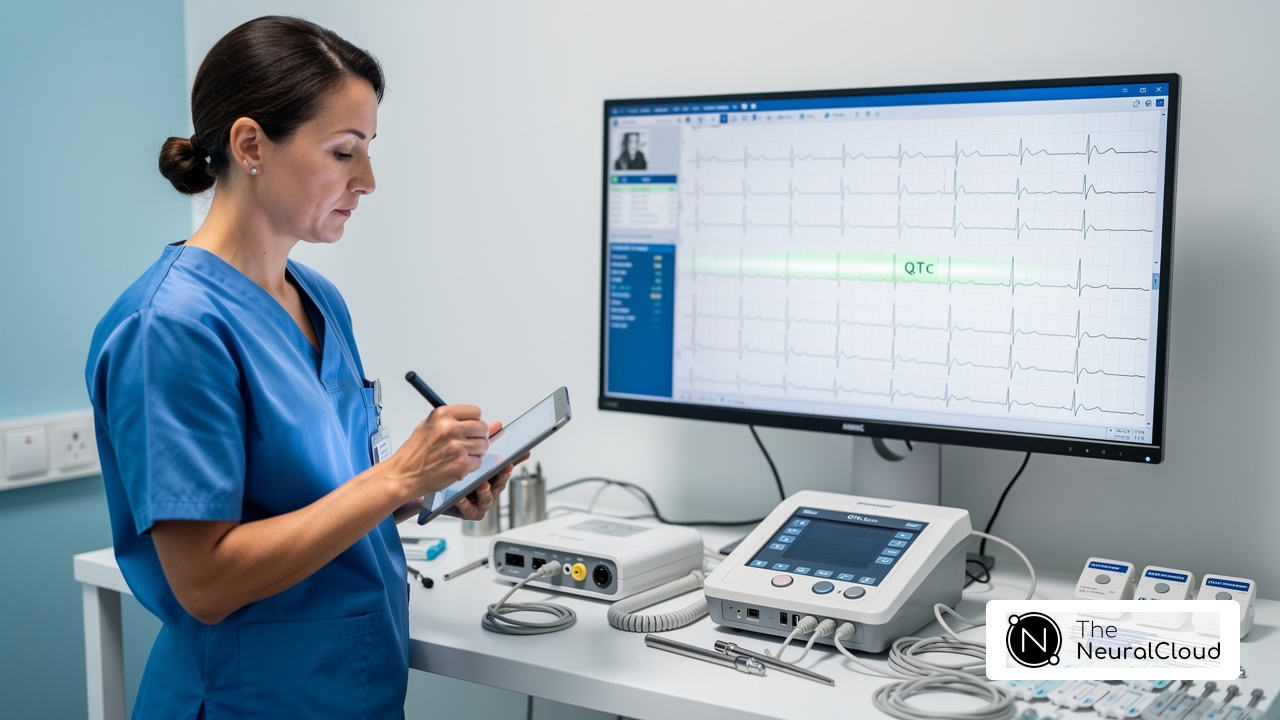
Interpreting EKG strips effectively is crucial for healthcare professionals, especially in high-pressure situations like Advanced Cardiac Life Support (ACLS). As cardiac care evolves, a systematic approach to ECG analysis is essential for enhancing diagnostic accuracy and improving patient outcomes. With the growing complexities in cardiac rhythms and advanced technologies, how can providers effectively interpret EKG strips and steer clear of common pitfalls?
We’ll explore best practices for interpreting ACLS EKG strips, focusing on:
- Essential techniques
- Key rhythms
- How innovative tools can elevate clinical performance
Adopt a Systematic Approach to ECG Interpretation
To master EKG interpretation, healthcare professionals must navigate various challenges that can complicate accurate assessments. A systematic approach is essential, and it includes the following steps:
- Rate: Calculate the heart rate by counting the number of QRS complexes in a 6-second interval and multiplying by 10. This method provides a quick estimate of the heart rate, which is crucial for assessing patient status.
- Beat: Assess the regularity of the beat by measuring the intervals between R-R peaks. A consistent interval indicates a regular beat, essential for identifying arrhythmias.
- P Waves: Identify the presence and morphology of P waves. In normal sinus rhythm, each QRS complex should be preceded by a P wave, indicating proper atrial depolarization.
- PR Interval: Measure the PR interval to ensure it falls within the normal range of 0.12 to 0.20 seconds. Prolongation may suggest a block, impacting treatment decisions.
- QRS Complex: Evaluate the width and morphology of the QRS complex. A normal QRS duration is less than 0.12 seconds; wider complexes may indicate conduction delays or other pathologies.
- ST Segment and T Waves: Analyze the ST segment for elevation or depression, which can indicate ischemia or infarction, and assess T wave morphology for abnormalities that may signal underlying cardiac issues.
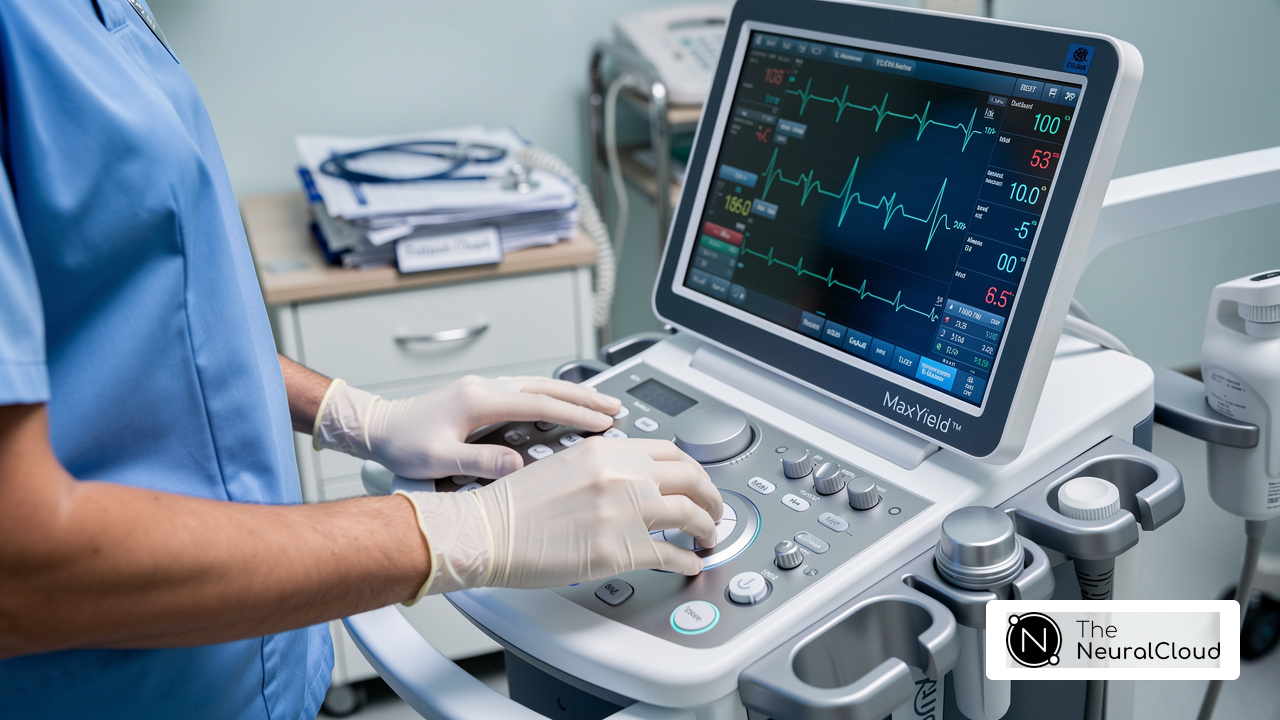
Research shows that systematic ECG analysis boasts a pooled sensitivity of 0.82 and specificity of 0.83 for AI-ECG models, highlighting its effectiveness. As Dr. Girish Nadkarni observes, 'Artificial intelligence is enhancing the capacity for ECG analysis in an exciting and compelling new manner to identify heart issues and track heart health.' With the MaxYield™ platform, healthcare professionals can achieve hospital-grade ECG accuracy from consumer devices, further enhancing their diagnostic capabilities.
Following this structured method helps practitioners boost their diagnostic accuracy, allowing for quicker and more effective responses in cardiac emergencies. It's also important to be aware of potential pitfalls, such as misinterpretations that can arise from biases in ECG readings. The systematic interpretation of ECGs not only improves individual assessments but also elevates the standard of patient care in cardiology.

Identify Key Cardiac Rhythms and Their Characteristics
Recognizing key cardiac rhythms is essential for ACLS providers, especially when utilizing advanced technologies like Neural Cloud Solutions' MaxYield™ platform to enhance ACLS EKG strips analysis. Here are critical rhythms to recognize:
- Normal Sinus Rhythm: This rhythm is characterized by a heart rate of 60-100 bpm, a steady pattern, and a consistent P wave preceding each QRS complex.
- Atrial Fibrillation: This pattern appears as an irregularly irregular sequence with no distinguishable P waves. Atrial fibrillation is a serious concern because it raises the risk of blood clots, and the number of cases has jumped from 33.5 million in 2010 to 59 million in 2019. Projections indicate a further rise of more than 60% by 2050, emphasizing the urgency for healthcare providers to acknowledge this pattern in emergency settings. Failure to detect Atrial Fibrillation can result in life-threatening conditions, underscoring the need for effective ECG analysis tools like MaxYield™. MaxYield™ helps by filtering out noise and clarifying ECG signals, making it easier to spot these important patterns.
- Ventricular Fibrillation: This condition is marked by disordered electrical activity with no effective heartbeat, necessitating prompt defibrillation to restore normal function.
- Asystole: The absence of electrical activity in the heart represents a critical emergency that requires advanced interventions.
- Ventricular Tachycardia: This rhythm is defined by a rapid heart rate exceeding 100 bpm originating from the ventricles, with treatment varying based on the presence of a pulse.
- Bradycardia: A heart rate of less than 60 bpm, which may require intervention if the patient is symptomatic.
By mastering these rhythms and leveraging the capabilities of MaxYield™, healthcare providers can use ACLS EKG strips to make informed decisions and initiate appropriate treatments swiftly. Regular pulse checks and seeking medical advice for any irregularities can significantly safeguard patient health, reinforcing the importance of vigilance in recognizing these critical cardiac rhythms.

Leverage Advanced Technology for Enhanced EKG Analysis
Healthcare professionals often face challenges in accurately interpreting ECG data due to noise and signal interference, which can hinder effective diagnosis. Incorporating advanced technology into EKG analysis can significantly enhance diagnostic accuracy and workflow efficiency. Here are some best practices:
- Utilize AI-Powered Tools: Implement AI-driven software like MaxYield™, which enhances signal clarity and reduces noise. This allows for more precise interpretations. MaxYield™ enhances ECG signals by filtering out noise, allowing for clear identification of key features in each heartbeat. It can deliver beat-by-beat analysis of 200,000 heartbeats in less than 5 minutes. This capability reflects a significant improvement in detection rates, as evidenced by the Queen of Hearts AI model, which identified 92% of true STEMIs on the first ECG assessment compared to 71% under standard triage.
- Integrate with Existing Systems: Ensure that new technologies can seamlessly integrate with current ECG systems and workflows. This integration minimizes disruptions and enhances usability. For instance, the use of AI-enhanced ECG tools has reduced false-positive cath lab activations from 42% to 8%, as noted by Dr. Jake D. Hoyne.
- Use Visualization Tools: Employ tools like Insight360 to create customizable dashboards that visualize trends and key metrics. These visualizations can assist medical professionals in identifying critical patterns in patient data more efficiently, aiding in quicker decision-making.
- Regularly Update Software: Keep all ECG analysis software updated to benefit from the latest algorithms and features that improve accuracy and efficiency. Continuous updates ensure that medical providers are equipped with the most effective diagnostic tools available, such as MaxYield™'s evolving algorithm that enhances accuracy and efficiency over time.
- Train Staff on New Technologies: It's essential to train staff on these advanced technologies to fully harness their benefits. Providing training sessions for medical professionals ensures they can utilize new tools effectively in practice. This training empowers staff to leverage these tools for improved patient outcomes.
By utilizing these technologies, including MaxYield™, medical providers can enhance their EKG analysis abilities with a focus on acls ekg strips, resulting in better patient care and more efficient workflows. A recent study led to 11 new diagnoses of hypertrophic cardiomyopathy (HCM), demonstrating the real-world impact of integrating advanced technology in acls ekg strips analysis. The integration of advanced technologies like MaxYield™ not only enhances diagnostic capabilities but also transforms patient care in meaningful ways.

Commit to Continuous Education and Training in EKG Interpretation
Healthcare professionals face the ongoing challenge of keeping their EKG analysis skills sharp in a rapidly evolving field. To enhance their skills, they can adopt several effective strategies:
- Attend Workshops and Seminars: Regular participation in workshops focused on the latest advancements in ECG analysis and technology is essential for staying informed.
- Participate in Online Learning: Utilizing online platforms that offer courses and certifications in EKG analysis can greatly improve knowledge and skills.
- Practice with ACLS EKG Strips: Practicing regularly with ACLS EKG strips reinforces learning and improves pattern recognition. Advanced tools like Neural Cloud Solutions' MaxYield™ can enhance this practice by automating labeling and filtering noise, allowing for clearer analysis of complex ECG data.
- Join Professional Organizations: Membership in professional organizations provides access to valuable resources, networking opportunities, and updates on best practices in cardiology.
- Seek Feedback: Actively seeking feedback from peers and mentors helps identify areas for improvement in understanding skills.
By embracing continuous education and leveraging innovative tools like MaxYield™, healthcare providers can significantly elevate their EKG interpretation capabilities with ACLS EKG strips, ultimately benefiting patient outcomes.

Conclusion
In emergency settings, the ability to interpret EKGs accurately can mean the difference between life and death for patients. A systematic approach is essential. Key steps include:
- Calculating heart rate
- Assessing rhythm regularity
- Identifying critical cardiac rhythms
By integrating advanced technologies like the MaxYield™ platform, practitioners can enhance their diagnostic capabilities, leading to improved patient care and outcomes.
Throughout the article, we discussed essential techniques for interpreting EKG strips, including:
- Recognizing various cardiac rhythms such as Atrial Fibrillation and Ventricular Tachycardia
- The need for continuous education and training
Emphasizing the integration of AI-powered tools and regular practice with ACLS EKG strips reinforces the message that staying updated with current guidelines and best practices is vital for accurate diagnoses.
By committing to mastering EKG interpretation, healthcare professionals not only enhance their skills but also raise the standard of care for their patients. They are encouraged to embrace these strategies and tools, ensuring they are well-equipped to navigate the complexities of cardiac emergencies and provide the best possible outcomes for their patients.
Frequently Asked Questions
What is the systematic approach to ECG interpretation?
The systematic approach to ECG interpretation involves several steps: calculating the heart rate, assessing the regularity of the beat, identifying P waves, measuring the PR interval, evaluating the QRS complex, and analyzing the ST segment and T waves.
How do you calculate the heart rate using an ECG?
To calculate the heart rate, count the number of QRS complexes in a 6-second interval and multiply that number by 10. This provides a quick estimate of the heart rate.
Why is it important to assess the regularity of the beat in an ECG?
Assessing the regularity of the beat by measuring the intervals between R-R peaks is essential for identifying arrhythmias. A consistent interval indicates a regular beat.
What should be noted about P waves in an ECG?
The presence and morphology of P waves should be identified. In normal sinus rhythm, each QRS complex should be preceded by a P wave, indicating proper atrial depolarization.
What is the normal range for the PR interval in an ECG?
The normal range for the PR interval is between 0.12 to 0.20 seconds. Prolongation of the PR interval may suggest a block, which can impact treatment decisions.
What is the significance of the QRS complex in an ECG?
The QRS complex should be evaluated for its width and morphology. A normal QRS duration is less than 0.12 seconds; wider complexes may indicate conduction delays or other pathologies.
How do you analyze the ST segment and T waves in an ECG?
The ST segment should be analyzed for elevation or depression, which can indicate ischemia or infarction. T wave morphology should also be assessed for abnormalities that may signal underlying cardiac issues.
What are the benefits of a systematic ECG analysis?
Systematic ECG analysis has a pooled sensitivity of 0.82 and specificity of 0.83 for AI-ECG models, enhancing diagnostic accuracy and enabling quicker and more effective responses in cardiac emergencies.
How does artificial intelligence contribute to ECG analysis?
Artificial intelligence enhances the capacity for ECG analysis by improving the identification of heart issues and tracking heart health, as noted by Dr. Girish Nadkarni.
What potential pitfalls should be considered in ECG interpretation?
Potential pitfalls include misinterpretations that can arise from biases in ECG readings. Being aware of these can improve individual assessments and elevate the standard of patient care in cardiology.
List of Sources
- Adopt a Systematic Approach to ECG Interpretation
- Accuracy of Physicians’ Electrocardiogram Interpretation (https://jamanetwork.com/journals/jamainternalmedicine/fullarticle/2771093)
- ACC: Don’t Mandate ECG Screening for Athletes (https://medscape.com/viewarticle/dont-mandate-ecg-cardiovascular-screening-athletes-american-2026a10005dq)
- The diagnostic accuracy of artificial intelligence enhanced electrocardiography for the detection of cardiac dysfunction (https://explorationpub.com/Journals/ec/Article/101293)
- Breakthrough in heart health: A new approach to interpreting ECG data using large language models (https://eurekalert.org/news-releases/1073406)
- healthcareitnews.com (https://healthcareitnews.com/news/mount-sinai-ai-model-allows-language-based-ecg-readings)
- Identify Key Cardiac Rhythms and Their Characteristics
- Global surge in serious heart rhythm disorders sparks urgent call to action from experts: 1 in 3 people at risk (https://escardio.org/news/press/press-releases/global-surge-in-serious-heart-rhythm-disorders-sparks-urgent-call-to-action-from)
- cardiacrhythmnews.com (https://cardiacrhythmnews.com)
- powershealth.org (https://powershealth.org/about-us/newsroom/health-library/2026/01/23/smartwatches-help-detect-hidden-dangerous-heart-rhythm-problems-clinical-trial-finds)
- Leverage Advanced Technology for Enhanced EKG Analysis
- Three New Studies Show Viz.ai’s Cardio Suite Speeds Detection of Cardiac Disease and Improves Patient Follow-Up (https://viz.ai/news/three-new-studies-show-viz-ais-cardio-suite-speeds-detection-of-cardiac-disease-and-improves-patient-follow-up)
- AI-Enabled ECG Analysis Improves Diagnostic Accuracy and Reduces False STEMI Activations: A Multicenter U.S. Registry | PMcardio: AI-Powered ECG Interpretation | Powerful Medical (https://powerfulmedical.com/research/ai-enabled-ecg-analysis-improves-diagnostic-accuracy-and-reduces-false-stemi-activations-a-multicenter-u-s-registry)
- AI-powered electrocardiogram detects early signs of heart failure (https://utsouthwestern.edu/newsroom/articles/year-2026/may-ai-powered-electrocardiogram.html)
- AI-ECG Finds STEMI Faster, Cuts False-Positive Cath Lab Activations (https://tctmd.com/news/ai-ecg-finds-stemi-faster-cuts-false-positive-cath-lab-activations)
- Commit to Continuous Education and Training in EKG Interpretation
- ASNC News - ASNC (https://asnc.org/news-publications/press-releases)
- 25 Continuing Education Statistics and Trends for 2026 (https://ecarebehavioralinstitute.com/blog/continuing-education-statistics)
- New ECG Interpretation Training Modules Now Available | Newswise (https://newswise.com/articles/new-ecg-interpretation-training-modules-now-available)
- gehealthcare.com (https://gehealthcare.com/en-us/insights/article/the-ecg---how-can-we-fix-the-training-gap-for-medical-students-and-trainees?srsltid=AfmBOooF_8YDfl-rEqUcGBZi9jEsqBlCFD7yNr19jX_vwTqlTPy6JCvP)
- Effectiveness of electrocardiogram interpretation education program using mixed learning methods and webpage - BMC Medical Education (https://link.springer.com/article/10.1186/s12909-024-05960-8)