Introduction
Extensive anterior infarction is a serious condition that can lead to significant cardiac complications, primarily due to the blockage of the left descending artery. For healthcare professionals, understanding its clinical implications is crucial. Timely diagnosis through electrocardiogram (ECG) analysis can greatly enhance patient outcomes. However, as ECG interpretation becomes more complex, accurately identifying key features and distinguishing between various cardiac conditions poses a challenge.
This is where advanced AI tools like Neural Cloud Solutions' MaxYield™ come into play. MaxYield™ offers a range of features designed to streamline the diagnostic process. By leveraging sophisticated algorithms, it enhances the accuracy of ECG analysis, allowing clinicians to identify critical conditions more swiftly. This not only improves diagnostic precision but also empowers healthcare professionals to make informed decisions in a timely manner.
The advantages of using MaxYield™ are significant. Clinicians benefit from reduced interpretation time, leading to quicker interventions for patients. Additionally, the platform's user-friendly interface ensures that both technical and non-technical users can navigate it effectively. With MaxYield™, healthcare professionals can enhance their diagnostic capabilities, ultimately leading to better patient care.
Define Extensive Anterior Infarction and Its Clinical Relevance
indicates significant myocardial damage, primarily caused by the occlusion of the left descending artery. This condition is clinically important, as it can lead to severe complications like heart failure, arrhythmias, and sudden cardiac death. ECG features are essential for improving patient outcomes. The electrocardiogram (ECG) plays a vital role in diagnosing this type of heart attack, offering real-time insights into the heart's electrical activity. It allows clinicians to assess the extent of myocardial damage and informs treatment decisions.
Research indicates that patients with considerable frontal damage often show symptoms that correlate with their clinical condition, underscoring the need for accurate diagnosis. Furthermore, case studies demonstrate that early detection through ECG can lead to more effective treatments, ultimately enhancing recovery and minimizing the risk of adverse events.
As cardiac care evolves, integrating advanced AI tools like Neural Cloud Solutions' MaxYield™ can significantly enhance ECG analysis. This system employs machine learning and automation techniques to boost workflow efficiency, enabling healthcare professionals to swiftly identify and respond to critical situations such as extensive anterior infarction.
Features of MaxYield™:
- Transforms noisy recordings into detailed insights.
- Provides beat-by-beat analysis of 200,000 heartbeats in under 5 minutes.
Advantages for Healthcare Professionals:
- Supports confident clinical decision-making.
- Improves diagnostic accuracy.
By streamlining ECG interpretation, MaxYield™ empowers clinicians to deliver better care and enhances overall patient management.

Identify Key ECG Features of Extensive Anterior Infarction
Key ECG features of Extensive Anterior Infarction include:
- ST Elevation: This feature is prominently observed in leads V1 to V6, indicating acute injury to the anterior wall of the heart. In cases of extensive infarction, elevation is significant. Guidelines specify that elevation must be at least 2 mm in men and 1.5 mm in women in contiguous leads. This system enhances analysis by rapidly isolating and labeling these critical features, ensuring that clinicians can make informed decisions quickly. The system delivers analysis of 200,000 heartbeats in under 5 minutes, significantly improving diagnostic efficiency.
- Q Waves: The development of pathological Q waves in the same leads signifies necrosis of myocardial tissue. This finding is crucial for verifying the degree of tissue damage, as the absence of recognizable R waves in leads V1 and V2 may suggest an old anterior wall heart attack. The advanced algorithms of the system adaptively enhance over time, ensuring precise recognition of these changes.
- T Wave Inversion: Frequently seen in the impacted leads, T wave inversion signifies ischemia and is a typical characteristic following a myocardial infarction. This change can provide insights into the severity and duration of ischemic events. With MaxYield™, the system allows for efficient analysis, reducing the time needed for interpretation.
- Reciprocal Changes: ST segment depression may be noted in inferior leads (II, III, aVF) as a result of the anterior infarction. These reciprocal changes are crucial for distinguishing between various types of heart attacks and understanding the overall cardiac condition. MaxYield™ supports this differentiation by filtering noise and enhancing signal clarity, ensuring that even subtle changes are captured.
Identifying these characteristics is crucial for prompt diagnosis and intervention, as extensive infarction can lead to serious complications, including cardiogenic shock and arrhythmias. Notably, around 33% of heart attacks are a specific type called STEMI, highlighting the importance of accurate ECG interpretation in clinical practice. By incorporating this advanced solution into their workflow, health tech developers can enhance the efficiency and accuracy of ECG analysis, ultimately improving patient outcomes.

Utilize Advanced AI Tools for Enhanced ECG Analysis
In the realm of ECG analysis, traditional methods often face challenges such as time constraints and the potential for human error. Advanced tools, like Neural Cloud Solutions' MaxYield™ platform, address these issues by automating critical processes that enhance efficiency.
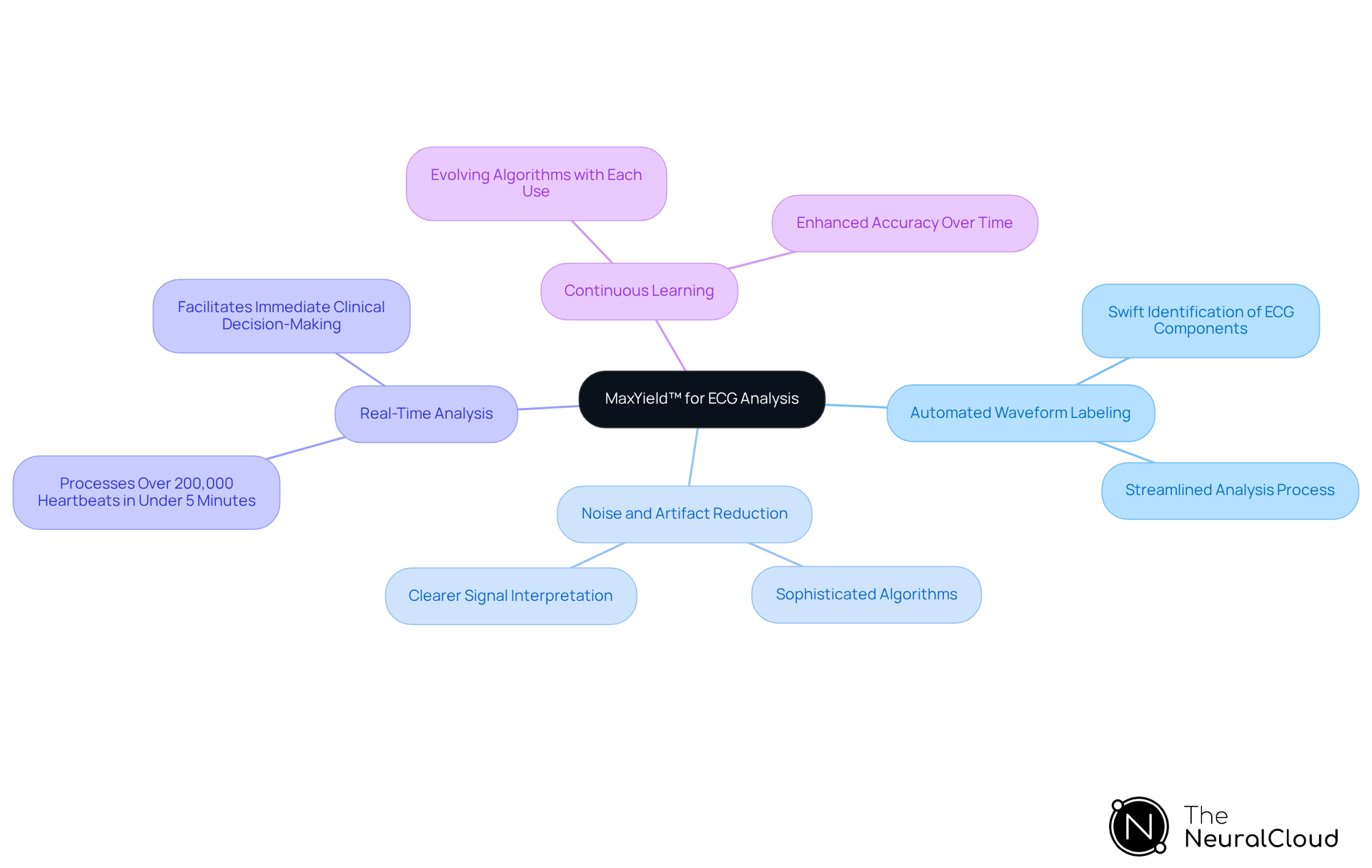
Key Features of MaxYield™:
- Identification: This feature swiftly identifies and labels essential ECG components, including P-waves, QRS complexes, and T-waves, which streamlines the analysis process.
- Noise Filtering: Utilizing sophisticated algorithms, the platform effectively filters out noise and artifacts, ensuring clearer signal interpretation and more reliable data.
- High Throughput: Capable of processing over 200,000 heartbeats in under five minutes, the platform facilitates immediate clinical decision-making in critical situations.
- Adaptive Algorithms: The platform's algorithms evolve with each use, enhancing accuracy and diagnostic confidence over time.
By integrating these advanced tools into clinical workflows, healthcare professionals can significantly boost their diagnostic capabilities. This addresses the challenges posed by traditional methods, ultimately leading to better outcomes.
Address Challenges in ECG Interpretation of Anterior Infarction
Interpreting ECGs for anterior infarction can present several challenges:
- Noise interference, leading to misinterpretation. The MaxYield™ platform features advanced algorithms and distinct wave recognition, which helps mitigate this issue by rapidly isolating ECG waves from recordings with high levels of noise and artifact.
- Atypical presentations. Patients may present with atypical ECG patterns, complicating diagnosis. Familiarity with these variations is essential to improve diagnostic yield, ensuring that healthcare professionals can adapt to different presentations.
- Confounding conditions, such as pericarditis or left ventricular hypertrophy. A thorough clinical history and additional tests are necessary for accurate diagnosis. By leveraging the capabilities of MaxYield™, clinicians can enhance diagnostic accuracy, leading to improved patient outcomes.

Conclusion
Recognizing the significance of extensive anterior infarction is crucial for effective cardiac care. This condition, marked by substantial damage to the heart's anterior wall, necessitates timely diagnosis and intervention to prevent severe complications. The role of electrocardiograms (ECGs) is paramount, as they provide vital insights into the heart's electrical activity and help guide clinical decisions.
However, ECG analysis can present challenges, including the need for rapid interpretation and the potential for human error. This is where the MaxYield™ platform comes into play. It enhances ECG analysis by utilizing advanced algorithms that streamline the interpretation process. Key features of MaxYield™ include:
- Automated detection of critical ECG changes
- Real-time analysis
- User-friendly interfaces that simplify the workflow for healthcare professionals
The advantages of using MaxYield™ are significant. By improving diagnostic accuracy and efficiency, this platform allows clinicians to respond swiftly to critical situations. Enhanced interpretative skills lead to timely and effective treatment for patients, ultimately improving health outcomes. The integration of AI in ECG diagnostics represents a significant advancement in cardiac care, addressing traditional challenges and empowering healthcare professionals.
In conclusion, the future of cardiac management lies in the fusion of clinical expertise and cutting-edge technology. Embracing innovations like MaxYield™ not only refines the diagnostic process but also paves the way for better health outcomes in patients facing extensive anterior infarction. As we move forward, the collaboration between technology and healthcare will be essential in delivering optimal patient care.
Frequently Asked Questions
What is extensive anterior infarction?
Extensive anterior infarction indicates significant myocardial damage in the front wall of the heart, primarily caused by the occlusion of the left descending artery.
Why is extensive anterior infarction clinically important?
It is clinically important because it can lead to severe complications such as heart failure, arrhythmias, and further myocardial damage. Timely recognition and intervention are essential for improving patient outcomes.
How is extensive anterior infarction diagnosed?
Diagnosis is primarily done through an electrocardiogram (ECG), which provides real-time insights into the heart's electrical activity and helps assess the extent of myocardial damage.
What role does ECG play in managing extensive anterior infarction?
The ECG allows clinicians to analyze specific alterations that correlate with the patient's clinical condition, leading to more effective management strategies and enhancing recovery.
What are the benefits of early detection of extensive anterior infarction through ECG?
Early detection through ECG can lead to more effective management strategies, ultimately enhancing recovery and minimizing the risk of adverse events.
How can advanced AI tools improve ECG analysis for extensive anterior infarction?
Advanced AI tools like Neural Cloud Solutions' MaxYield™ platform enhance ECG analysis by employing gold standard noise filtering and automation techniques, which improve workflow efficiency and enable swift identification of critical situations.
What features does the MaxYield™ platform offer?
MaxYield™ transforms noisy recordings into detailed insights and provides beat-by-beat analysis of 200,000 heartbeats in under 5 minutes.
What advantages does MaxYield™ provide for healthcare professionals?
It supports confident clinical decision-making and improves patient outcomes through timely interventions by streamlining ECG analysis.
List of Sources
- Define Extensive Anterior Infarction and Its Clinical Relevance
- news-medical.net (https://news-medical.net/news/20251215/Circadian-control-of-neutrophils-limits-heart-damage-after-myocardial-infarction.aspx)
- acc.org (https://acc.org/Latest-in-Cardiology/Articles/2024/06/01/01/42/Cover-Story-Acute-Coronary-Syndromes-New-Perspectives-New-Data)
- thecardiologyadvisor.com (https://thecardiologyadvisor.com/news/new-fda-approved-treatment-significantly-reduces-infarct-size-in-mi-patients)
- vcuhealth.org (https://vcuhealth.org/news/one-year-after-a-heart-attack-vcu-patient-runs-in-two-races)
- pmc.ncbi.nlm.nih.gov (https://pmc.ncbi.nlm.nih.gov/articles/PMC10122825)
- Identify Key ECG Features of Extensive Anterior Infarction
- STEMI: ST-segment Elevation Myocardial Infarction - The Cardiology Advisor (https://thecardiologyadvisor.com/ddi/stemi-st-elevation-myocardial-infarction)
- healio.com (https://healio.com/cardiology/learn-the-heart/ecg-review/ecg-topic-reviews-and-criteria/anterior-wall-st-elevation-mi-review)
- pmc.ncbi.nlm.nih.gov (https://pmc.ncbi.nlm.nih.gov/articles/PMC6636365)
- mdsearchlight.com (https://mdsearchlight.com/heart-health/anterior-myocardial-infarction-heart-attack)
- Utilize Advanced AI Tools for Enhanced ECG Analysis
- mdpi.com (https://mdpi.com/2076-3417/15/17/9376)
- theneuralcloud.com (https://theneuralcloud.com/post/10-key-benefits-of-single-lead-ecg-for-health-tech-developers)
- theneuralcloud.com (https://theneuralcloud.com/post/7-essential-ekg-leads-for-accurate-cardiac-monitoring)
- Address Challenges in ECG Interpretation of Anterior Infarction
- Main artifacts in electrocardiography - PMC (https://pmc.ncbi.nlm.nih.gov/articles/PMC6931710)
- heartkey.io (https://heartkey.io/resources/case-study-enhancing-the-efficiency-and-accuracy-of-ecg-interpretation-through-digital-denoising-with-heartkey)
- theneuralcloud.com (https://theneuralcloud.com/post/10-key-artefact-ecg-issues-and-their-solutions)