Introduction
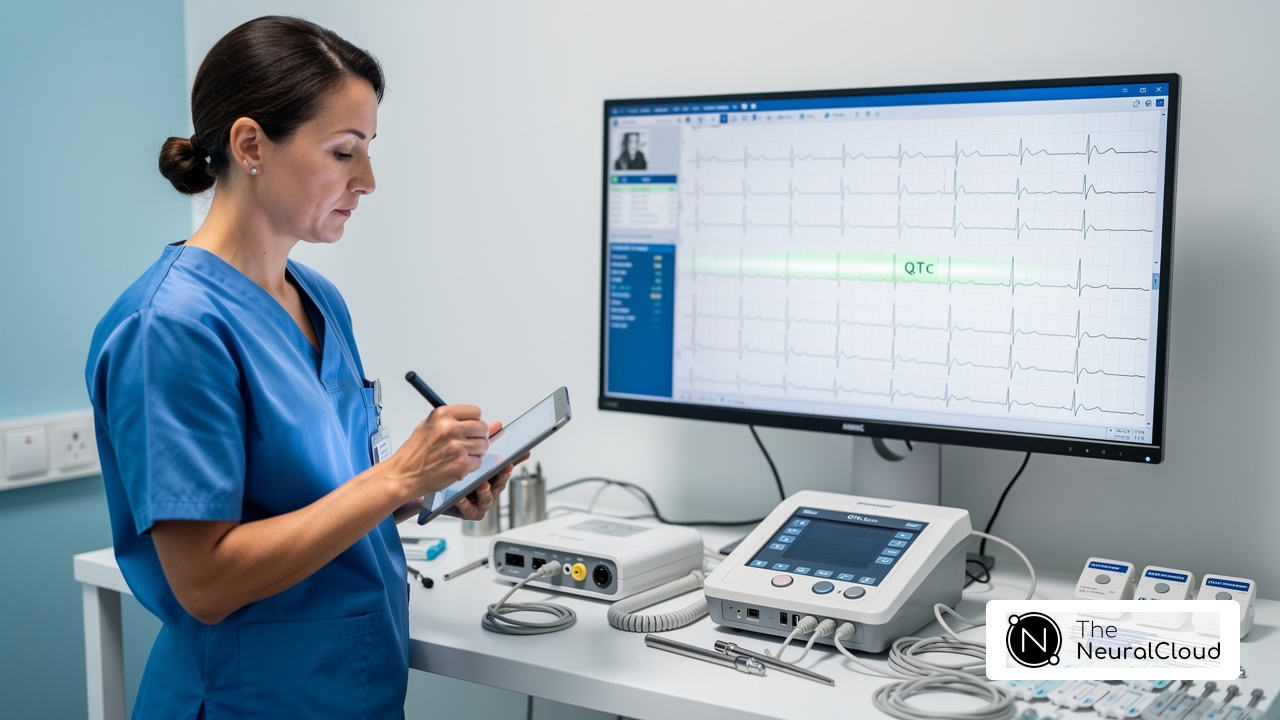
Accurate heart rhythm identification is crucial for effective patient management in cardiology, but many healthcare professionals find EKG interpretation challenging. Let’s explore effective strategies for mastering EKG accuracy, focusing on:
- Rhythm regularity
- Essential EKG components
- How to identify ectopic beats
Clinicians can enhance their diagnostic skills and improve patient outcomes by mastering EKG interpretation in light of evolving technology.
Assess Rhythm Regularity and Heart Rate
Accurate heart rhythm identification is crucial for effective patient management, especially when interpreting EKG strips. To precisely evaluate beat regularity and pulse rate, start by measuring the R-R intervals on the EKG strip. In regular rhythms, these intervals should remain consistent, while irregular rhythms will exhibit variability. Here are some effective methods to calculate heart rate:
- Large Block Method: Count the number of large squares between two R peaks and divide 300 by this number to obtain the pulse in beats per minute (bpm).
- Small Box Method: Count the number of small squares between two R peaks and divide 1500 by this number for a more precise heart rate.
- 6-Second Method: Count the number of R peaks in a 6-second strip and multiply by 10. This method is especially beneficial for irregular patterns.
Regularly evaluating pulse and rhythm is vital for heart rhythm identification, especially for detecting conditions such as atrial fibrillation, marked by an irregular rhythm and absent P waves, and bradycardia, which can greatly influence patient management and treatment choices. Notably, bradycardia prevalence differs among age categories, with increased occurrences seen in older populations. Implementing these heart rhythm identification methods in clinical practice has demonstrated an enhancement in diagnostic accuracy, highlighting the significance of precise R-R interval measurement in EKG interpretation. Ultimately, mastering these heart rate calculation methods can significantly enhance diagnostic accuracy and patient outcomes.

Analyze Key EKG Components
When analyzing EKG components, understanding their implications is essential for effective patient management. Here are the key elements to focus on:
- P Wave: This signal represents atrial depolarization. Evaluating its morphology and duration is crucial; a normal P component is usually upright and lasts less than 0.12 seconds. Recent research highlights just how important P wave morphology can be for clinical decisions, as variations can signal underlying atrial abnormalities that may influence patient management.
- QRS Complex: This complex indicates ventricular depolarization and should be narrow (less than 0.12 seconds) with a consistent morphology. If you notice widening or notching, it could point to serious cardiac problems that need attention. Studies show that QRS complex abnormalities are prevalent in patients with heart disease, emphasizing the need for careful interpretation in clinical settings.
- T Wave: Reflecting ventricular repolarization, the T form should be asymmetrical and upright in most leads. Inverted T patterns may indicate ischemia or other cardiac conditions. In practice, getting T wave analysis right can make all the difference in how quickly we respond to patients in distress, particularly in those presenting with chest pain or other acute symptoms.
By systematically evaluating these components, clinicians can effectively perform heart rhythm identification to identify arrhythmias, ischemic changes, and other cardiac abnormalities, facilitating timely and appropriate interventions. By mastering these evaluations, healthcare professionals can significantly enhance patient care and outcomes in cardiology.

Identify Rhythm Origin and Ectopic Beats
Effective patient management in cardiology relies on accurate heart rhythm identification of rhythms and ectopic beats. To achieve this, follow these essential steps:
- Determine the Beat: Assess whether the beat is sinus or non-sinus. Sinus patterns originate from the sinoatrial node, while non-sinus patterns may arise from ectopic foci. This distinction can significantly impact patient management.
- Look for Ectopic Beats: Identify any premature atrial contractions (PACs) or premature ventricular contractions (PVCs). These disruptions might point to serious heart issues, which means we need to adjust our management strategies accordingly.
- Utilize Lead II for Rhythm Analysis: Lead II is often the most effective lead for visualizing P waves and assessing atrial activity. This aids in differentiating between atrial and ventricular ectopic beats, enhancing diagnostic accuracy.
By carefully pinpointing the origins of rhythms and ectopic beats, clinicians can improve heart rhythm identification, allowing them to tailor their management strategies and ensure patients receive the precise care they need for their unique arrhythmias. This precision in diagnosis not only improves patient care but also enhances the overall effectiveness of treatment strategies.

Stay Current with EKG Developments
In a field where technology evolves rapidly, healthcare professionals must adapt to ensure they provide the best care possible. To remain at the forefront of EKG developments, they should adopt the following strategies:
- Engage in Continuous Education: Participate in workshops, webinars, and conferences dedicated to EKG interpretation and advancements in cardiology technology. This engagement is crucial for staying informed about best practices and emerging trends in the field.
- Follow Relevant Journals and Publications: Subscribe to leading cardiology journals and publications that offer insights into the latest research and clinical guidelines. Keeping abreast of new findings and recommendations is essential for informed practice.
- Utilize Online Resources: Take advantage of online platforms that provide courses and training modules on EKG interpretation. Many organizations offer free or low-cost resources that can significantly enhance your skills and knowledge.
When healthcare professionals prioritize ongoing education, they not only sharpen their diagnostic skills but also enhance the quality of care they provide to their patients.

Conclusion
Healthcare professionals face significant challenges in accurately interpreting ECGs, which can impact patient management and outcomes. By systematically assessing rhythm regularity and analyzing key EKG components, healthcare professionals can enhance their interpretation skills. This improvement leads to better patient outcomes, allowing for timely and effective interventions.
The article emphasizes the importance of:
- Measuring R-R intervals
- Understanding the nuances of P waves
- Analyzing QRS complexes
- Recognizing T waves
- Identifying ectopic beats
These elements are crucial for diagnosing conditions such as atrial fibrillation and bradycardia, which can have serious implications for treatment strategies. Additionally, staying current with EKG developments through continuous education and relevant literature is vital for maintaining high standards of care.
In conclusion, by prioritizing ongoing education and embracing advancements in EKG technology, clinicians can transform their approach to cardiac care, ultimately enhancing patient safety and outcomes.
Frequently Asked Questions
Why is accurate heart rhythm identification important?
Accurate heart rhythm identification is crucial for effective patient management, especially when interpreting EKG strips, as it aids in diagnosing and treating various heart conditions.
How can R-R intervals be used to evaluate heart rhythm regularity?
R-R intervals on the EKG strip are measured to assess beat regularity; consistent intervals indicate a regular rhythm, while variability suggests an irregular rhythm.
What is the Large Block Method for calculating heart rate?
The Large Block Method involves counting the number of large squares between two R peaks on an EKG strip and dividing 300 by this number to obtain the heart rate in beats per minute (bpm).
How does the Small Box Method differ from the Large Block Method?
The Small Box Method requires counting the number of small squares between two R peaks and dividing 1500 by this number for a more precise heart rate calculation.
What is the 6-Second Method, and when is it particularly useful?
The 6-Second Method involves counting the number of R peaks in a 6-second strip and multiplying by 10. It is especially beneficial for calculating the heart rate in irregular patterns.
What heart conditions can be detected through rhythm evaluation?
Conditions such as atrial fibrillation, characterized by an irregular rhythm and absent P waves, and bradycardia, which can significantly affect patient management and treatment choices, can be detected through rhythm evaluation.
How does the prevalence of bradycardia vary among age groups?
Bradycardia prevalence differs among age categories, with increased occurrences observed in older populations.
What is the significance of mastering heart rate calculation methods in clinical practice?
Mastering these heart rate calculation methods enhances diagnostic accuracy and improves patient outcomes by facilitating better heart rhythm identification and management.
List of Sources
- Assess Rhythm Regularity and Heart Rate
- New study finds AI model improves heart attack detection (https://health.ucdavis.edu/news/headlines/new-study-finds-ai-model-improves-heart-attack-detection/2025/11)
- scribd.com (https://scribd.com/document/853569311/Case-Study-Mastering-Electrocardiography-ECG)
- ECG Case Studies | Interpretation & Answers | Geeky Medics (https://geekymedics.com/ecg-case-studies)
- Analyze Key EKG Components
- Normal Electrocardiography (ECG) Intervals: Normal Electrocardiography Intervals (https://emedicine.medscape.com/article/2172196-overview)
- ndtv.com (https://ndtv.com/health/ai-based-ecg-analysis-shows-higher-accuracy-in-identifying-occlusive-heart-attack-study-finds-11244104)
- AI-Powered ECG Analysis Offers Promising Path for Early Detection of Chronic Obstructive Pulmonary Disease, Say Mount Sinai Researchers (https://mountsinai.org/about/newsroom/2026/ai-powered-ecg-analysis-offers-promising-path-for-early-detection-of-chronic-obstructive-pulmonary-disease-say-mount-sinai-researchers)
- Breakthrough in heart health: A new approach to interpreting ECG data using large language models (https://eurekalert.org/news-releases/1073406)
- Identify Rhythm Origin and Ectopic Beats
- ECG Case Studies | Interpretation & Answers | Geeky Medics (https://geekymedics.com/ecg-case-studies)
- Stay Current with EKG Developments
- Mastering EKG Training: Essential Skills for Healthcare Providers (https://americanmedicalcompliance.com/general/mastering-ekg-training-essential-skills-for-healthcare-providers)
- Breakthrough in heart health: A new approach to interpreting ECG data using large language models (https://eurekalert.org/news-releases/1073406)
- ECG Case Studies | Interpretation & Answers | Geeky Medics (https://geekymedics.com/ecg-case-studies)
- 25 Continuing Education Statistics and Trends for 2026 (https://ecarebehavioralinstitute.com/blog/continuing-education-statistics)